Yesterday in class, on the worksheet you completed, you were required to select a phrase or sentence from your interview and introduce it with a signal phrase. You were also required to compose a complete annotated bibliographic entry. (See the assignment handout or the copy posted in Blackboard for annotated bibliographic entry requirements.)
Although you are not required to transcribe your complete interview, I encourage you to do so. If you decide that you want to include in your annotated bibliography and/or final essay a phrase or sentence other than the one you included on your worksheet, having a file of your complete interview will enable you to easily copy and paste lines from your interview into your essay and/or your bibliography.
Transcripts of my own interviews with students are included below as models for your own.
Interview with Jesse Brewer
Q: Jesse, what experience did you have with playing Scrabble before you encountered the game in English 1103?
A: So, whenever I would go up to my grandmother and grandfather’s house in Pennsylvania, we would play Scrabble pretty consistently there. We had a lot of fun playing Scrabble at my grandmother’s house whenever I was a young child.
Q: Has Scrabble changed your perspective on reading and/or writing? If so, how?
A: While I wouldn’t necessarily say it has changed my perspective on reading or writing, it has most certainly introduced me to new words which allows me to read or write more capably in everyday situations.
Q: Will you continue to play Scrabble after the conclusion of the semester?
A: Yes, my grandmother is still going to want to play it every summer.
Interview with Ava Salvant
Q: Ava, what experience did you have with playing Scrabble before you played it in English 1103?
A: I didn’t have any experience with Scrabble beforehand. I didn’t know how to play it at all.
Q: Has Scrabble changed your perspective on reading and/or writing? If so, how?
A: Probably it has influenced my ability to write. Not always when you sit down to write do you know the exact words you want to say. You kind of have to go with the flow. You have to put as many words as you can down on the board in Scrabble or on the paper when writing.
Q: Will you continue to play Scrabble after the end of the semester?
A: I might come back to it a few times to refresh or just use as a pastime.
Additional Sources
At the beginning of yesterday’s class, I distributed copies of four articles, each of which focuses on one of the aspects of the course. If you choose one of those aspects as the subject of your final essay and annotated bibliography, the corresponding article will be the one that serves as the starting point for your research. (See item two under the Assignment Directions on page two of the assignment handout.) If you were absent yesterday, download copies from Blackboard and print them. The titles, authors, and subjects are listed below.
“Blogs vs. Term Papers” by Matt Richel (blogging in the classroom)
“The Case for Writing Longhand” by Sarah Bahr (writing longhand)
“Scrabble is a Lousy Game” by Jonathan Kay (playing Scrabble)
Wordplay Day! To prepare for class, revisit the Dictionary and World Builder pages on the Scrabble website. Also review the blog posts devoted to Scrabble tips.
Your final essay and annotated bibliography will focus on one of the authors we have studied or one of elements of the course, including (1) blogging in the classroom, (2) limiting screen time, (3) writing longhand, and (4) playing Scrabble. As a starting point, you will conduct a short personal interview that will serve as one of the sources for your project. If you decide that you do not want to use the interview that you conduct today, you are welcome to include another one in your project. Keep in mind, however, that the interview you include in your project must be conducted with a student currently enrolled in section twenty or twenty-one, and the subject of the interview must be the subject of your project.
Questions to ask your interviewee include the following:
What experience, if any, did you have with the subject (the reading or the aspect of the course) before you encountered it in English 1103?
Has it changed your perspective on reading and/or writing? If so, how?
Will you continue to pursue the subject (read more work by the author, continue the classroom practice or activity) after the conclusion of the semester?
After you conduct your interview, compose on the worksheet provided a sentence in which you introduce a quotation from the interview with a signal phrase or clause, such as, According to . . . , or [insert first and last name] notes or observes or points out that . . . .” Your quotation will not be followed by a parenthetical citation because it is a form of oral communication (without page or paragraph numbers). See the sample on your worksheet.
Follow your quotation with annotated bibliography entry in this format:
Annotated Bibliography*
Last Name, First Name. Interview. Conducted by Your First Name Your Last Name. Day Month Year.
*Note that you will use the header annotated bibliography, not works cited, in your final essay and annotated bibliography.
Below the work cited/bibliography entry, compose a one-paragraph summary of the interview followed by a second shorter paragraph that identifies the student by class and major (or undeclared) and addresses what role the interview might serve in a larger project. Would it serve as a point of comparison or contrast to another source? Would it support or challenge an idea presented in another source? See the model below.
Sample Quotation with Signal Clause
English 1103 student Jesse Brewer observes that Scrabble has expanded his vocabulary, saying it has “introduced me to new words, which allows me to read and write more capably in everyday life.”
Sample Annotated Bibliographic Entry
Brewer, Jesse. Interview. Conducted by Jane Lucas. 20 Oct. 2023.
English 1103 student Jesse Brewer recounts how he has played Scrabble for most of his life. Ever since he was a young child, he has played the game with his grandparents whenever he visited their home in Pennsylvania. Brewer will continue to play Scrabble after the end of the semester because the game remains a tradition in his family. In his words, “[M]y grandmother is still going to want to play it every summer.” Brewer also notes that the game has expanded his vocabulary, saying it has “introduced me to new words, which allows me to read and write more capably in everyday life.”
Brewer is a freshman computer science major at High Point University, where he is currently enrolled in English 1103, section 20. His remarks on vocabulary building highlight the game’s verbal benefits, and his observations on Scrabble as a family tradition serve as a point of contrast to that of some other students,’ such as Ava Salvant’s, who have not played Scrabble before playing it as a weekly exercise in English 1103.
Note that the first paragraph of the bibliography entry, the summary, is written in present tense and third person. Also note that after the first mention of the interviewee’s name, he is referred to by last name.
The annotated bibliographic entry for your interview will be shorter than your other entries because (1) you are annotating a brief interview, and (2) your classmate does not have the credentials that you will list in the annotations for your other sources.
The complete final essay/annotated bibliography assignment appears below.
Overview
An annotated bibliography is a list of sources on a subject that includes a summary of each source. Some bibliographies include additional information, such as the authors’ credentials. That is the type of bibliography that you will compose along with your final essay for the course.
Key Features
Your final essay, which is an introductory essay of three or more paragraphs that (1) presents the subject of your bibliography, and (2) addresses your purpose for compiling it. In other words: What drives your research? What interests you about the subject, and what question/s do you seek to answer about your subject?
A complete MLA-style bibliography entry for each source.
A one-paragraph summary of each source followed by a shorter second paragraph that presents the writer’s credentials and addresses the purpose that the source might serve in a larger project. Would it serve as a point of comparison or contrast to another source? Would it support or challenge an idea presented in another source? Is it a secondary source that sheds light on the meaning of a primary source? The last question pertains primarily to bibliographies that focus on one of the writers studied in the course.
Preliminary Work—What to Complete in Class Today
Personal Interview
Your final essay and annotated bibliography will focus on one of the authors we have studied or one of elements of the course, including (1) blogging in the classroom, (2) limiting screen time, (3) writing longhand, and (4) playing Scrabble. As a starting point, you will conduct a short personal interview that will serve as one of the sources for your project. If you decide that you do not want to use the interview that you conduct today, you are welcome to include another one in your project. Keep in mind, however, that the interview you include in your project must be conducted with a student currently enrolled in section 20 or 21, and the subject of the interview must be the subject of your project.
Begin by conducting a short personal interview and composing an annotated bibliographic entry for the interview. For more information, see the paragraphs under the header PRELIMINARY WORK—What to Complete in Class Today.
Compose an annotated bibliographic entry for the source that serves as the starting point for your research. See the list of texts that follows.
Use the HPU Libraries site, https://www.highpoint.edu/library/, and Google Scholar to locate a minimum of three additional reliable and relevant print sources (articles, essays, and/or books) devoted to the same subject. Compose your summaries and commentaries in complete sentences, introduce any quotations with signal phrases, and include parenthetical citations where needed. Your bibliography must include five sources, four of which must be print. (Your personal interview is a nonprint source.) If you wish to include an additional non-print source, such as a video, you may include that as a sixth source.
After you have composed your annotated bibliography entries, write an introductory essay that (1) presents the subject of your bibliography, and (2) addresses your purpose for compiling it. In other words: What drives your research? What question do you seek to answer about your subject? Also, (3) What larger project might develop from your bibliography? Would it be a project for a course in psychology, science, education, or another discipline? Address all five of your sources in your essay, and quote at least two of them.
Note: Though your introductory essay will precede your annotated bibliography, you will compose it last because you will need to re-read and summarize your sources before you will know how to address them in your essay.
Directions for Researching, Drafting, Revising, and Submitting
Devote today’s class primarily to conducting a personal interview and composing an annotated bibliography entry for the interview. You will have two additional Wednesdays to work in class on your final essay and annotated bibliography before you post your revision to Blackboard and to your WordPress blog.
Before class on the due date: Post a copy of your revision to Blackboard and to your blog. In your blog post, omit the first-page information included in your file submitted to Blackboard (your name, professor’s name, course and section, and date). Add to your blog post an image that documents some part of your writing process away from the screen, such as the summary of your source in your journal, today’s worksheet, or a page of your draft. Also add an embedded link to a relevant web site. Even though your work for this assignment will take place primarily in front of the screen, your writing process still involves putting pen to paper, and photographic documentation of that on your blog is a requirement of the assignment.
An A final essay and annotated bibliography includes these components:
An introductory essay of three or more paragraphs that (1) presents the subject of your bibliography, and (2) addresses your purpose for compiling it. In other words: What drives your research? What question do you seek to answer about one of the subjects that you’ve studied in the course or about one aspect of the course? Also, (3) what larger project might develop from your bibliography? Would it be a project for a course in science, psychology, education, or another discipline?
A complete works cited/bibliographic entry for a minimum of five reliable and relevant sources, four of which are print. Alphabetize the list by the writers’ last names.
A one-paragraph summary of each source followed by a shorter paragraph of commentary that presents the writer’s credentials.
An A final essay and annotated bibliography complies with the requirements above and is also cohesive and relatively free of surface errors.
A B final essay and annotated bibliography effectively meets all of the requirements above but may be flawed by minor issues of organization and/or surface errors.
A C final essay and annotated bibliography meets most but not all of the requirements above and may also be flawed by issues of organization and/or surface errors.
A D final essay and annotated bibliography meets only a few of the requirements above and may also be flawed by issues of organization and/or surface errors.
An F final essay and annotated bibliography fails to meet the requirements above and may also be flawed by substantial issues of organization and/or surface errors.
Next Up
Wordplay Day! To prepare for class, revisit the Dictionary and World Builder pages on the Scrabble website. Also review the blog posts devoted to Scrabble tips.
Tomorrow morning, before you begin your initial work on your final essay and annotated bibliography, we will revisit Stephen King‘s “Strawberry Spring” and discuss the answers to your collaborative exercise on the story.
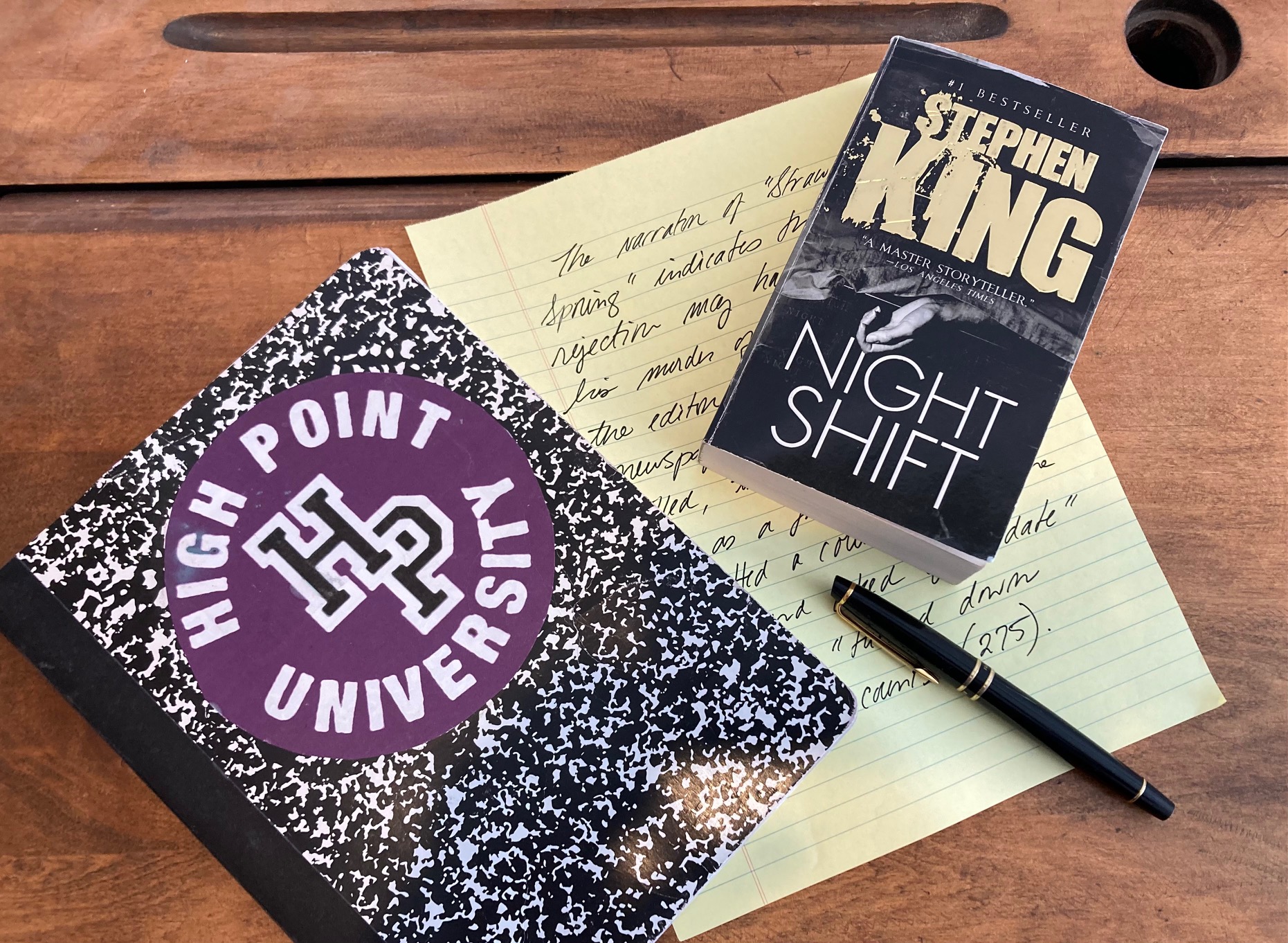
For that exercise, I asked you to determine whether you could identify any details that indicate why the narrator may have murdered any of his victims. Although there is no indication that the narrator knew Gale Cermann, Adelle Parkins, or Marsha Curran, he did know Ann Bray, which he reveals after he tells the readers that she was editor of the school newspaper: “In the hot, fierce bubblings of my freshman youth I had submitted a column idea to the paper and asked for a date–turned down on both counts” (275).
I also asked you to identify words and phrases that illustrate how the story is not only a horror story but also a commentary on war, the Vietnam War in particular, and the Vietnam era. Some of the words and phrases you may have identified include these:
(ice) sculpture of Lyndon Johnson . . . “cried melted tears” (269)
In addition to those questions on your assignment sheet, I asked you to try to identify the two literary allusions in King’s story. The first is an allusion to J.R.R. Tolkein‘s The Lord of the Rings trilogy: “You half expected to see Gollum or Frodo or Sam go hurrying past” (269). The second is an allusion to a poem by Carl Sandburg, titled–perhaps unsurprisingly–“The Fog” (272).
Next Up
In class tomorrow, you will complete an exercise as part of your initial work on your final essay and annotated bibliography. Details TBA.
Today in class we will read Stephen King‘s short story “Strawberry Spring,” which was published in Ubris magazine in 1968 and included in King’s first short story collection, Night Shift (1978).
For the collaborative exercise that you will complete after we read the story, I will ask you to determine whether you can identify any details that indicate why the narrator may have murdered any of his victims. Although there is no indication that the narrator knew Gale Cerman, Adelle Parkins, or Marsha Curran, he did know Ann Bray.
I will also ask you to identify words and phrases that illustrate how the story is not only a horror story but also a commentary on war, the Vietnam War in particular, and the Vietnam era.
Lastly, I will ask you to try to identify the two literary allusions in King’s story. We will address these questions near the end of class today or at the beginning of class on Wednesday, and I will post the answers on my blog.
Next Up
We will review “Strawberry Spring” at the beginning of Wednesday’s class, and you will have the remainder of the period to begin your initial work for your final essay and annotated bibliography.
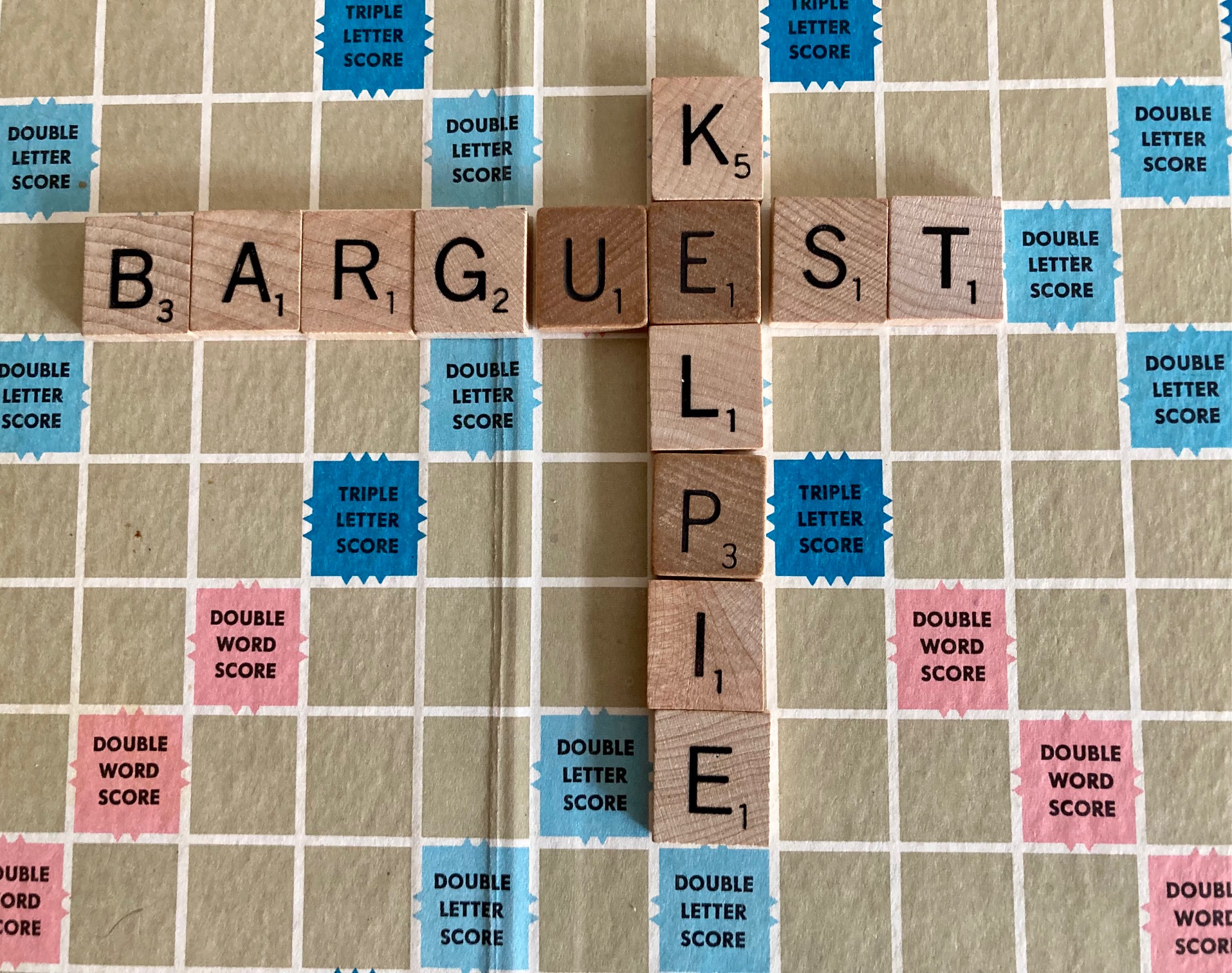
Since tomorrow’s Wordplay Day is our last before Halloween, today’s Scrabble blog post is devoted to words for ghosts. Two of the words (banshee and eidolon) are seven letters long, enabling a player or team to Scrabble, or bingo, earning an additional fifty points for the play. Another two are eight letters long (barguest and fairyism) and can be formed by adding letters to a word played previously.
banshee: a female spirit in Gaelic folklore that wails to warn of a family member’s imminent death. Note that this word is featured in Stephen King’s short story “Strawberry Spring,” which we examined in class yesterday.
barguest: a goblin (also barghest)
bogy: a goblin
daimon: a spirit (also daemon and demon)
eidolon: a phantom or specter
fairyism: the quality of being like a fairy (not really a ghost but a great word)
haint: a ghost
kelpie: a water sprite in Scottish folklore known for drowning sailors
wraith: a ghost of a person, often appearing just before that person’s death
zombi: a zombie
Next Up
Wordplay Day! To prepare for class, revisit the Dictionary and World Builder pages on the Scrabble website. Also review the blog posts devoted to Scrabble tips, including this one.
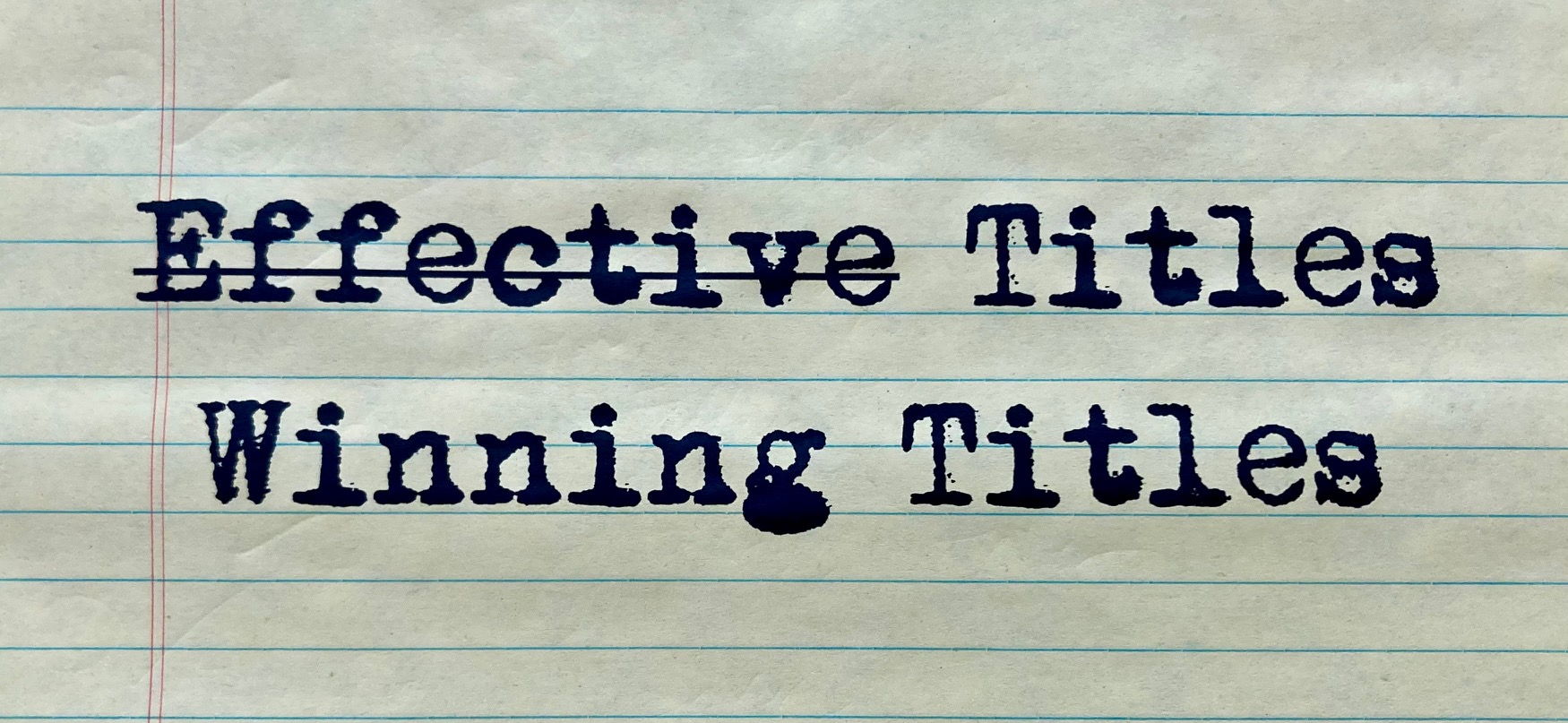
After you submitted your midterm reflections, I published a blog post featuring a list of your titles and gave you the opportunity to weigh in on your classmates’ titles and earn bonus points to boot. This post offers you a similar opportunity. (See the directions that follow.)
As I noted in my previous “Winning Titles” post, titles are important because they contain the first words of yours that a reader will encounter. First, a title should be descriptive; it should evoke an image in the reader’s mind. It should also be relevant to your subject; it should convey something about the writing to follow. Lastly, it should be intriguing; it should create in the reader a desire to keep reading. With those traits in mind, review the titles of your classmates’ analyses listed below. Which of ones of these are the most effective and why?
“Adding Impact to Injury”
“All Good Things Must Come to an End”
“The Back Story of ‘Back Story'”
“Breaking Down ‘The Falling Man'”
“A Closer Look into ‘The Blind Side'”
“The Death of School”
“A Decision of Fate”
“The Emotional Landscape of Football”
“Fear Factor”
“A Few Seconds Can Make a Difference”
“A Frozen Moment in Free Fall”
“Frozen in Time”
“How Fear Changed Football”
“Humor and Characterization in ‘Me Talk Pretty One Day'”
“Last Moments”
“Learning: A Significant Part of Life”
“The Light in a Field of Darkness”
“Light, Language, Life”
“Lost in Translation”
“Lost in the Moment”
“Literary Analysis of the School”
“Maturing and Learning”
“Michael Lewis’s Message through Fear and Dialogue”
“The Mindset that Brings Fear”
“Oher’s Blind Side Journey”
“Passion Put into Words”
“The Reader inside a Story”
“School Hallucinations”
“Seeing through Blind Eyes”
“Sink or Swim”
“Two-Way Street”
“The Value of Persevering through Discomfort”
“The White Savior”
Bonus-Point Opportunity
Directions:
Determine which two or more of your classmates’ titles you deem most effective.
Compose a comment that includes (1) each title enclosed in quotation marks, (2) a brief explanation of each title’s effectiveness, and (3) a comparison (and contrast) of each. Consider addressing two or more titles with similarities, such as alliteration or wordplay.
Post your comment as a reply to this blog entry no later than 9 a.m. tomorrow, Friday, October 25. (To post your comment, click on the post’s title, and scroll down to the bottom of the page. You will then see the image of an airmail envelope with a leave comment option.)
I will approve your responses (make your comments visible) after 9 a.m. deadline on Friday morning. Commenters will receive five bonus points for their October 25 Scrabble assignment.
Next Up
Wordplay Day! To prepare for class, revisit the Dictionary and World Builder pages on the Scrabble website. Also review the blog posts devoted to Scrabble.
This morning in class, you and two or three of your classmates will deliver a short presentation on your designated lesson in the Check, Please! starter course. Afterward, time permitting, you will compose a short piece of writing (one paragraph, minimum) that reflects on your group’s presentation. Elements to address include the following:
the introduction of your group members and their opening remarks
the brief discussion of one or more points in the lesson
the close examination of one segment
the conclusion
optional element: observations about the relevance of the lessons to your other work in English 1103 and/or your other courses
poise, eye contact, and the avoidance of filler words
After you complete your reflection of your group’s presentation, compose an additional paragraph that addresses a presentation by one of the other groups. Choose the one that stands out the most to you. What element or elements of that presentation made it particularly effective, or not, and why?
Next Up
You will have the opportunity to weigh in on the titles of your classmates’ analyses and earn five bonus for Friday’s Wordplay Day to boot. See tomorrow morning’s blog post for details.
As you make your final preparations for your group presentations, be sure to complete the steps below, which are also included on your assignment sheet.
If your notes are written in complete sentences, rewrite them to include only words and short phrases for your key points. If your notes are too detailed, you will risk relying too heavily on them and making minimal eye contact with the audience. Plan to make as much eye contact as possible and be sure to make eye contact with people throughout the room rather than fixing your eyes on one or two people.
Familiarize yourself with the presentation station. Each group is required to project a portion of its designated lesson on the screen and refer to it during the presentation. If you have not used the presentation station, I encourage you to devote a couple of minutes before the class period to familiarizing yourself with its setup.
Practice good posture. As you deliver your presentation, your ears should be directly above your shoulders. If you tend to shift your weight from one foot to the other—a distracting habit that’s sometimes called rocking the boat—stand with your feet perpendicular to each other. If you do so, you will not be able to shift your weight from one foot to the other.
Avoid filler words, such as uh, um, like, and you know. If you tend to use filler words, practice pausing at the points where you are likely to use fillers.
Time permitting, after the presentations, you will compose a reflection that addresses your group’s presentation as well as the presentation delivered by one of the other groups.
Next Up
Group presentations. Afterward, time permitting, you will compose a reflection that addresses your group’s presentation as well as one of the other group’s.
As an exercise in reviewing one of the lessons in the Check, Please! course and also as an exercise in collaboration and oral communication, you and three or four of your classmates will deliver a short presentation that addresses the most significant points covered in one of the five lessons in the Check, Please! Course.
This morning in class, after you complete your Scrabble debriefing, you will receive your group assignments and begin planning for your presentation. I will give you a handout in class with directions for your presentation, and I am including the directions below as well.
Directions for Planning
Plan a presentation of five to ten minutes that addresses the most significant points covered in your group’s designated lesson in the Check, Please! course. (See pages 2-3 for the lists of groups and lesson assignments)
Include in your presentation (a) an opening in which you state each member’s first and last name, (b) a close examination of one segment of the lesson, and (c) a conclusion that provides closure and invites questions.
You are encouraged but not required to address how the lesson has been relevant to your other work in English 1103 and/or your other courses.
Directions for Rehearsing
In preparation for rehearsing, write your notes on an index card. If your initial notes are written in complete sentences, rewrite them to include only words and short phrases for your key points. If your notes are too detailed, you will risk relying too heavily on them and making minimal eye contact with the audience. Plan to make as much eye contact as possible and be sure to make eye contact with people throughout the room rather than fixing your eyes on one or two people.
Familiarize yourself with the presentation station. Each group is required to project a portion of its lesson and refer to it during the presentation. If you have not used the presentation station, I encourage you to devote part of today’s class period to familiarizing yourself with its setup.
Practice good posture. As you deliver your presentation, your ears should be directly above your shoulders. If you tend to shift your weight from one foot to the other—a distracting habit that’s sometimes called rocking the boat—stand with your feet perpendicular to each other. If you do so, you will not be able to shift your weight from one foot to the other.
Avoid filler words, such as uh, um, like, and you know. If you tend to use filler words, practice pausing at the points where you are likely to use fillers.
Take turns delivering your portions of the presentation, and offer feedback to your group members. Offer both suggestions for improvement and words of encouragement.
Group Assignments
Section 19
Check, Please! Lesson One:
Jon Carlos Altamura
Nicole Edelman
Annalise Lindsay
J. J. Pollender
Check, Please! Lesson Two:
Cait Bartlett
James Emery
Tai Marchese
Stephanie Salters
Check, Please! Lesson Three:
Willow Conelly
Aidan Garcia
Jed Negley
Ananda Williams
Check, Please! Lesson Four:
Bailey Dawkins
Ryan Kelley
Madison Kline
Vince Nicholson
Check, Please! Lesson Five:
Lindsay Dimenna
Dalton Holbrook
Leyla Oruc
Lexi Painter
Section 20
Check, Please! Lesson One:
Aiden Bazzell
Moriah Evans
Eva Kelley
Zach Moellendick
Check, Please! Lesson Two:
Cristique Duvall
Chase Eller
Kaitlyn Krause
Bo Raitto
Check, Please! Lesson Three:
Allie Early
Noah Gordy
Melody Smith
Roshan Tamaddon
Check, Please! Lesson Four:
Claire Farrington
Lydia Henderson
Steve Lee
Brad Weiner
Check, Please! Lesson Five:
Stella Galindo Haas
Abby Jacavanco
Mark McLaughlin
Grade Criteria
An A presentation includes all elements outlined in the directions for planning and rehearsing and demonstrates the group members’ poise and ability to avoid filler words.
A B presentation includes all elements outlined in the directions for planning and rehearsing but may be marred by group members’ lack of poise and/or inability to avoid filler words.
A C presentation includes most but not all elements outlined in the directions for planning and rehearsing and may also be marred by group members’ lack of poise and/or inability to avoid filler words.
A D presentation includes only some elements outlined in the directions for planning and rehearsing and may also be marred by group members’ lack of poise and/or inability to avoid filler words.
An F presentation includes few if any elements outlined in the directions for planning and rehearsing and may also be marred by group members’ lack of poise and/or inability to avoid filler words.
Next Up
In class on Wednesday, you will deliver your group presentations. Afterward, time permitting, you will compose a short piece of writing that reflects on your group’s presentation as well as the presentation by one of the other groups.
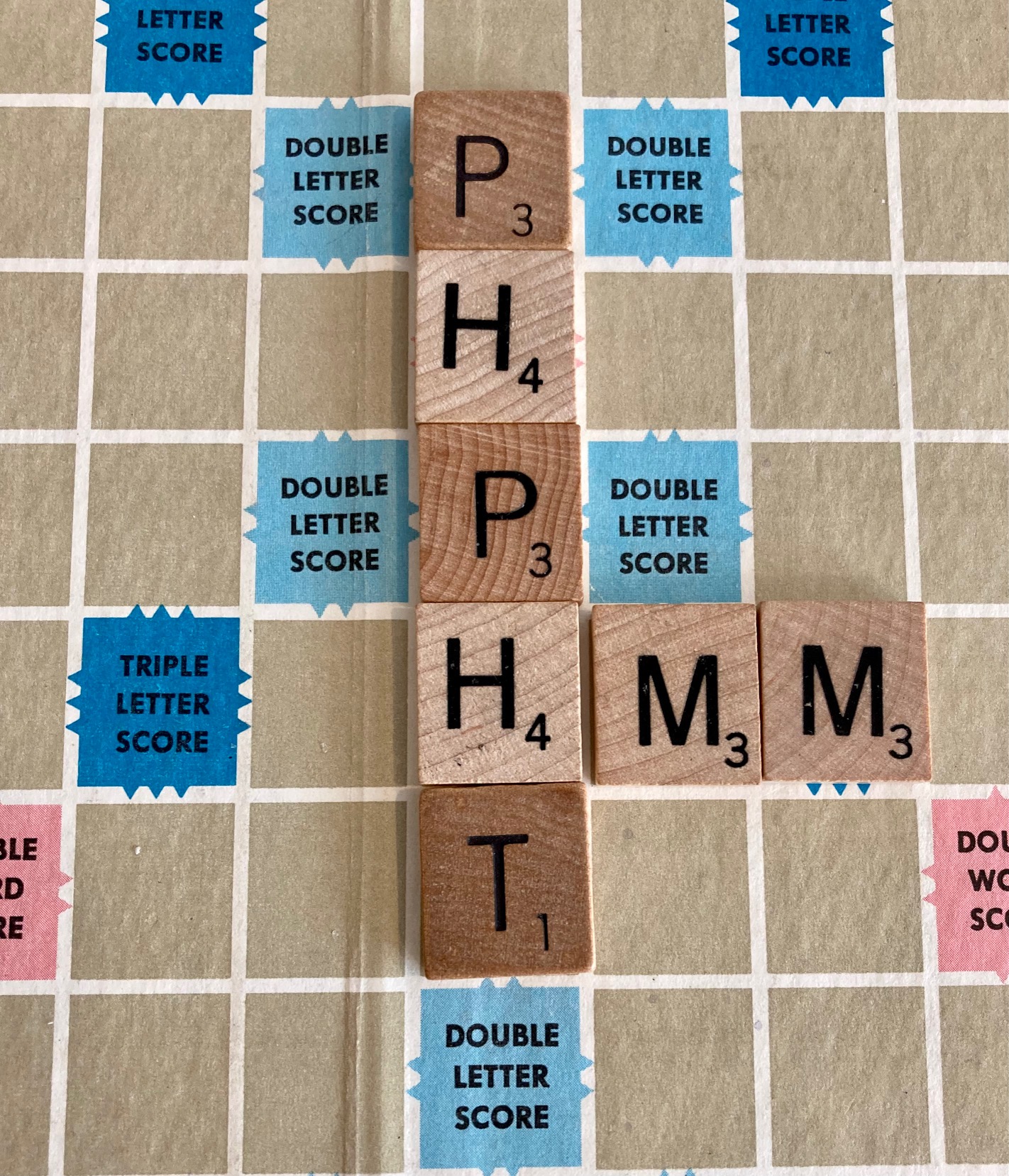
Learning nth (an unspecified number) and other all-consonant words can enable you to continue the game when you’re faced with a rack without vowels.
brr: used to indicate that one is cold
crwth: an ancient stringed instrument (pl. -s)
cwm: a cirque (a deep, steepwalled basin on a mountain, pl. -s, prounounced to rhyme with “boom”)
hm: used to express thoughtful consideration (also “hmm“)
mm: used to express assent or satisfaction
nth: describing an unspecified number in a series
phpht: used as an expression of mild anger or annoyance (also “pht“)
psst: used to attract someone’s attention
sh: used to urge silence (also “shh” and “sha“)
tsk: to utter an exclamation of annoyance (-ed, -ing, -s)
tsktsk: to “tsk” (-ed, -ing, -s)
Next Up
Wordplay Day! To prepare for class, revisit the Dictionary and World Builder pages on the Scrabble website. Also review the blog posts devoted to Scrabble tips, including this one.



 Jane Lucas