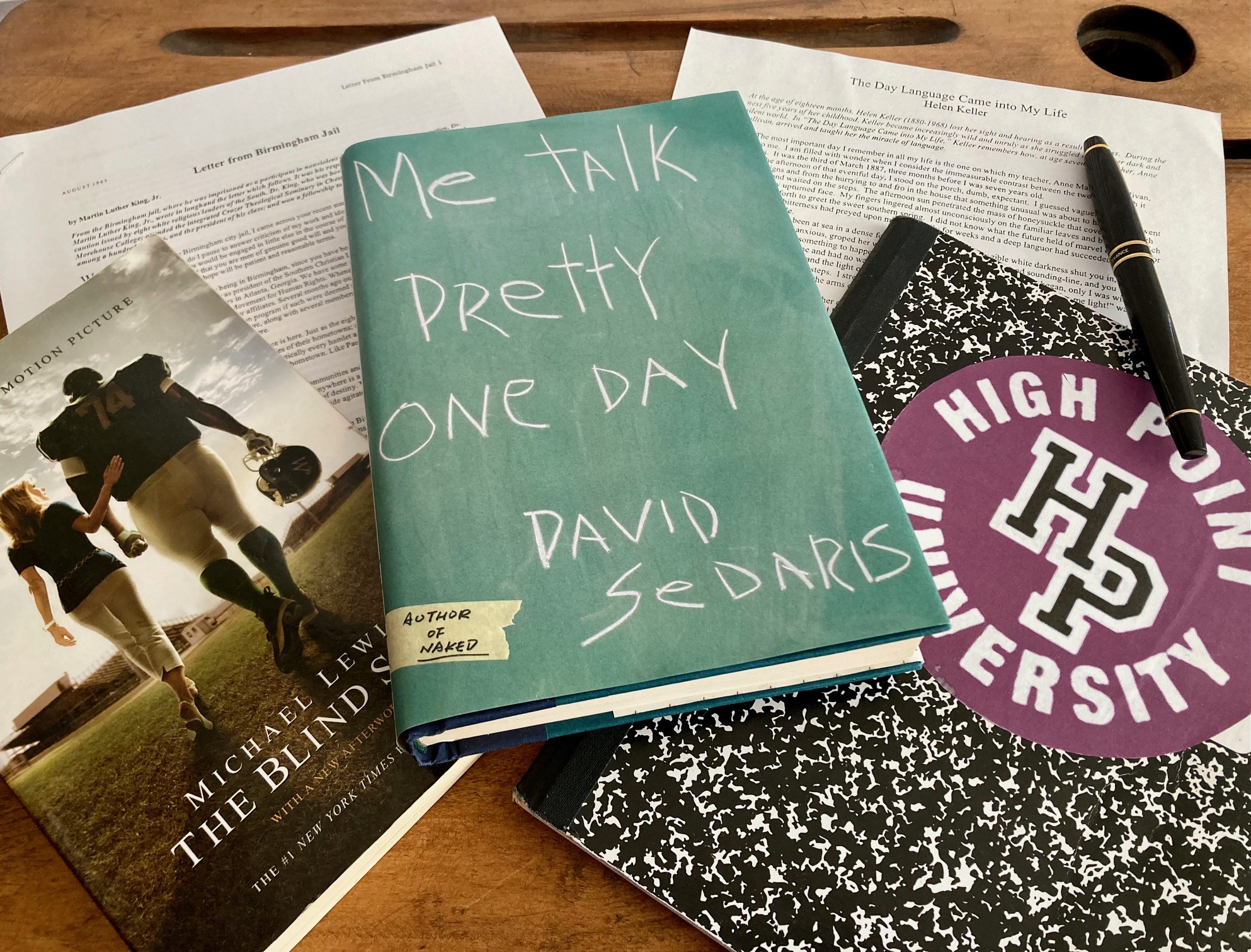
Tomorrow in class, you will begin planning and drafting an analysis, your second major writing assignment for the course. Your subject may be any one of the following texts that we have studied.
- “Me Talk Pretty One Day” by David Sedaris
- “The Day Language Came into My Life” by Helen Keller
- “Letter from Birmingham Jail” by Martin Luther King, Jr.
- “Back Story” by Michael Lewis
As I noted in yesterday’s post, you should review your assigned readings, and determine which one appeals to you most as a subject for analysis. I asked you to consider this question: Which text are you most interested in examining in closer detail to determine what makes it an effective piece of writing? Your answer to that question is likely the best subject for you. That said, in the process of planning and drafting, your answer may change. Sometimes the writing process involves discovering that a subject you weren’t interested in–or were less interested in than others–deserves a closer look.
Rather than trying to begin the writing process with a thesis (or main claim, or controlling idea), jot down the words, phrases, and sentences from the text that have lingered in your mind the most. Ask yourself these questions:
- What do some of these words, phrases, and sentences have in common?
- How are they different?
- What patterns can you identify among them?
- After repeated readings, do any of them seem to take on additional meanings?
Answering those questions will lead you to identify patterns that will give you the framework for your analysis.
Elements to address in your analysis include these:
- Scene
- Summary
- Figurative language
- Sensory details
- Structure
- Theme
To determine one of the themes of your subject, think about the ideas that the writer conveys throughout the text. Humor in the face of adversity and antagonism (“Me Talk Pretty One Day”), language as illumination and liberation (“The Day Language Came into My Life”), social injustice and the urgency of nonviolent protest (“Letter from Birmingham Jail”), fear and the unseen (“Back Story”) are among the themes to consider.
Keep in mind that themes are abstractions that writers convey through concrete details. If you address a theme in your subject, be sure to refer to concrete details that convey that theme.
As you continue to work on your analysis, read these sections of Writing Analytically:
- “Focus on Individual Words and Sentences” (49-50)
- “Find the Analytical Potential: Locate an Area of Uncertainty” (120-21)
- “Six Rules of Thumb for Responding to Assignments more Analytically” (121-23)
Next Up
At the beginning of class on Wednesday, you will submit your third Check, Please! worksheet, and you will have the rest of the class period to begin planning and drafting your analyses.

 Jane Lucas