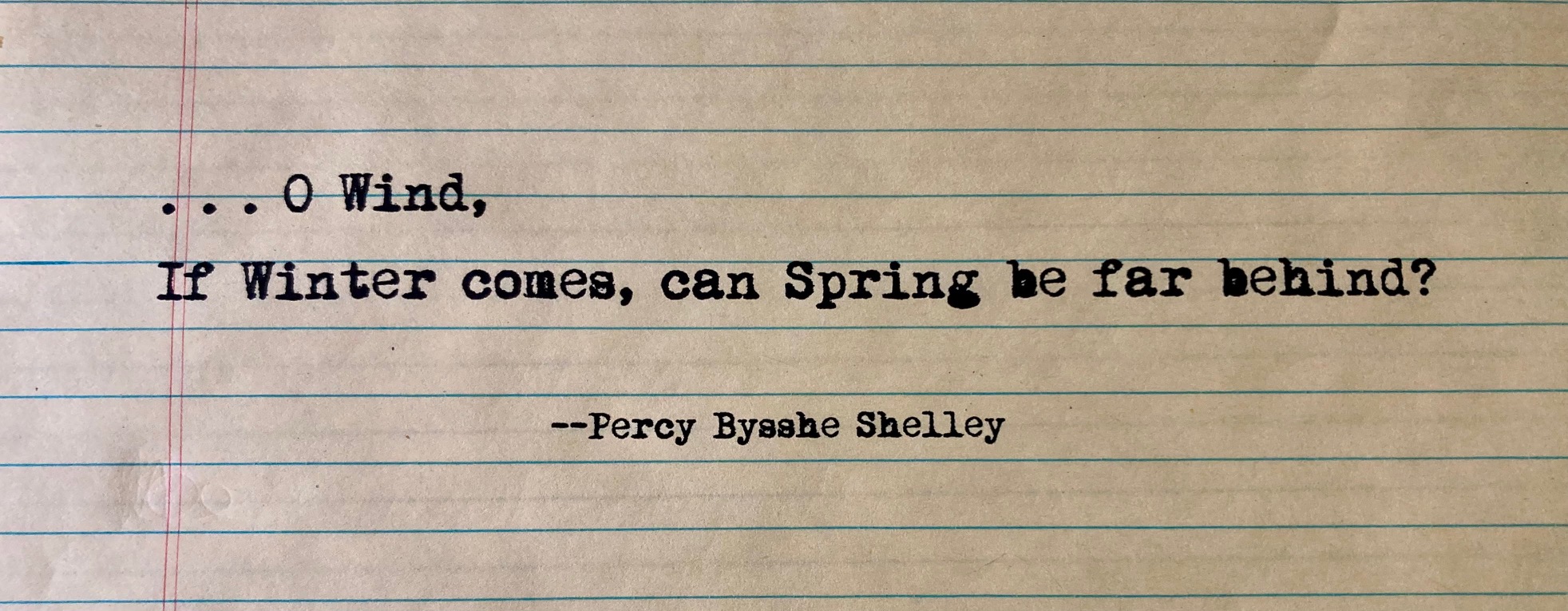
The words of the epitaph above conclude Percy Bysshe Shelley’s poem “Ode to the West Wind,” published in 1820. In that poem, the speaker meditates on the seemingly contradictory nature of the wind as both “[d]estroyer and preserver” (line 14). The poem ends on a positive note with the promise of spring, which will not arrive until March 20. That is why the word spring is enclosed in quotation marks in the title of this post. It isn’t spring yet, but it isn’t “far behind” (line 70), and its nearness brings us hope.
As you continue your un-springlike spring break, I invite you to examine this blog post and the others that I will publish in the coming days. These are by no means required reading during your brief respite from the semester, but they are here for you in case you find yourself returning to thoughts of your analysis in progress and wanting to study samples to aid your own writing process. If you don’t read these posts this week, read them before class on Monday, March 3.
Work Cited
Shelle, Percy Bysshe. “Ode to the West Wind.” Poetry Foundation, https://www.poetryfoundation.org/poems/45134/ode-to-the-west-wind. Accessed 23 Feb. 2025.
An epigraph is a short quotation at the beginning of a piece of writing that suggests its theme.
The speaker of a poem is the voice that serves as the narrator. Just as the narrative voice of a work of fiction varies from the author’s, the speaker in a poem is not the poet but rather a persona created by the poet.
A note on mechanics: Ordinarily, seasons and elements are not capitalized, but Shelley capitalizes “Wind,” “Winter,” and “Spring” (lines 69-70) because he personifies them.
Sample Keller Analysis

With pen or pencil in hand, read your copy of the student analysis of “The Day Language Came into My Life.” Write notes in the margin and on the text itself, and afterward compose a brief journal entry that addresses both the content and the form of the essay. (Remember that you are not required to complete this exercise until you return to campus after spring break.)
Tomorrow I will publish a follow-up post with notes on the analysis.
 Jane Lucas