Remember that your exam period begins at 8 a.m. on Tuesday, April 29.
Keep all of your required blog posts for the semester (your final essay and annotated bibliography, analysis, and literacy narrative) published (visible on your blog) until final grades have been posted. Also make sure that you have corrected errors of grammar, punctuation, mechanics, and style, and deleted all placeholders and sample posts. Since blog activity is a component of your course work, I will review your blogs before I finalize those grades.
If you haven’t done so already, submit course evaluations for ENG 1103 and your other classes.
Your course assignment grade has been updated to its preliminary final average; exemplary blog activity, class participation, and attendance may raise it. If you wish to check that preliminary grade, please do so before 5 p.m. today, Thursday, April 24. After that, the Blackboard course site for English 1103, section nineteen, will no longer be available to students. Final grades for the course will be posted in eServices by the end of the day on Wednesday, April 30.
Next Up
During the exam period, you will deliver your individual presentations and serve as the audience/intern selection committee for your classmates. See your assignment handout and the April 16 blog post for details.
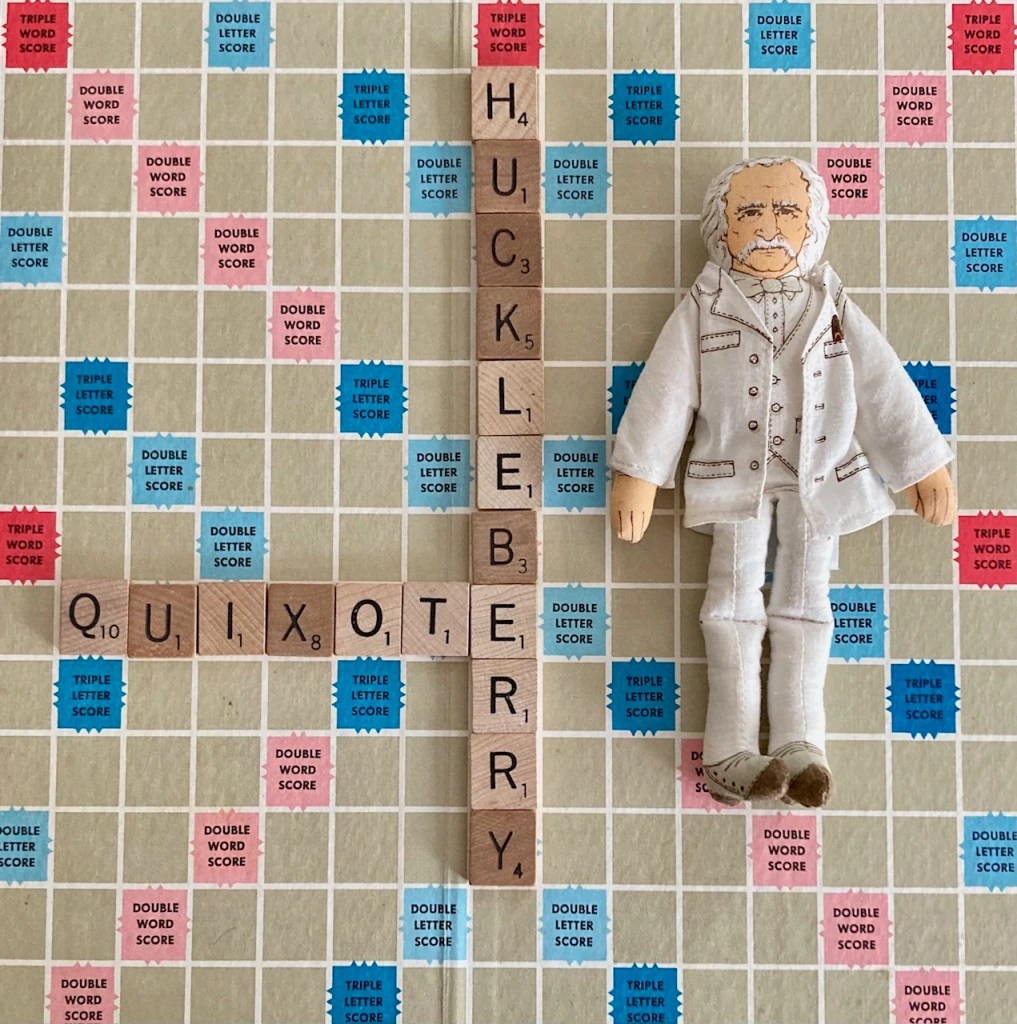
This final Scrabble post of the semester features the names of authors and characters that are playable words. Learning these will not only increase your word power and up your game, it will also broaden your knowledge of literature. If you haven’t read some of classics listed here, I encourage you to check them out.
eyre: a long journey (the last name of of the title character in Charlotte Bronte’s Jane Eyre, 1847)
dickens: a devil (Charles Dickens, 1812-1870)
fagin: a person, usually an adult, who instructs others, usually children, in crime (from a character of that type in Dickens’ Oliver Twist, 1838)
holden: the past participle of hold (Holden Caulfield, the protagonist in J.D. Salinger’s The Catcher in the Rye, 1951)
huckleberry: a berry like a blueberry (the first name of the title character in Mark Twain’s Adventures of Hucklebery Finn, 1884)
oedipal: describing libidinal feelings of a child toward the parent of the opposite sex (from the title character in Sophocles’ Oedipus Rex, c. 429 B.C.)
quixote: a quixotic, or extremely idealistic person; also quixotry, a quixotic action or thought (the title character in Michael de Cervantes’ Don Quixote, Part I: 1605, Part II: 1615)
Note that “huckleberry” and “quixote” could not be the first two words played in a Scrabble game because “huckleberry” is more than seven letters long. However, “huckleberry” and “quixote” could constitute the first three plays. The first two plays could be “berry” and “quixote,” and the third play could add “huckle” to “berry.”
Next Up
Wordplay Day! To prepare for class, revisit the Dictionary and World Builder pages on the Scrabble website, and review the blog posts devoted to Scrabble tips, including this one.
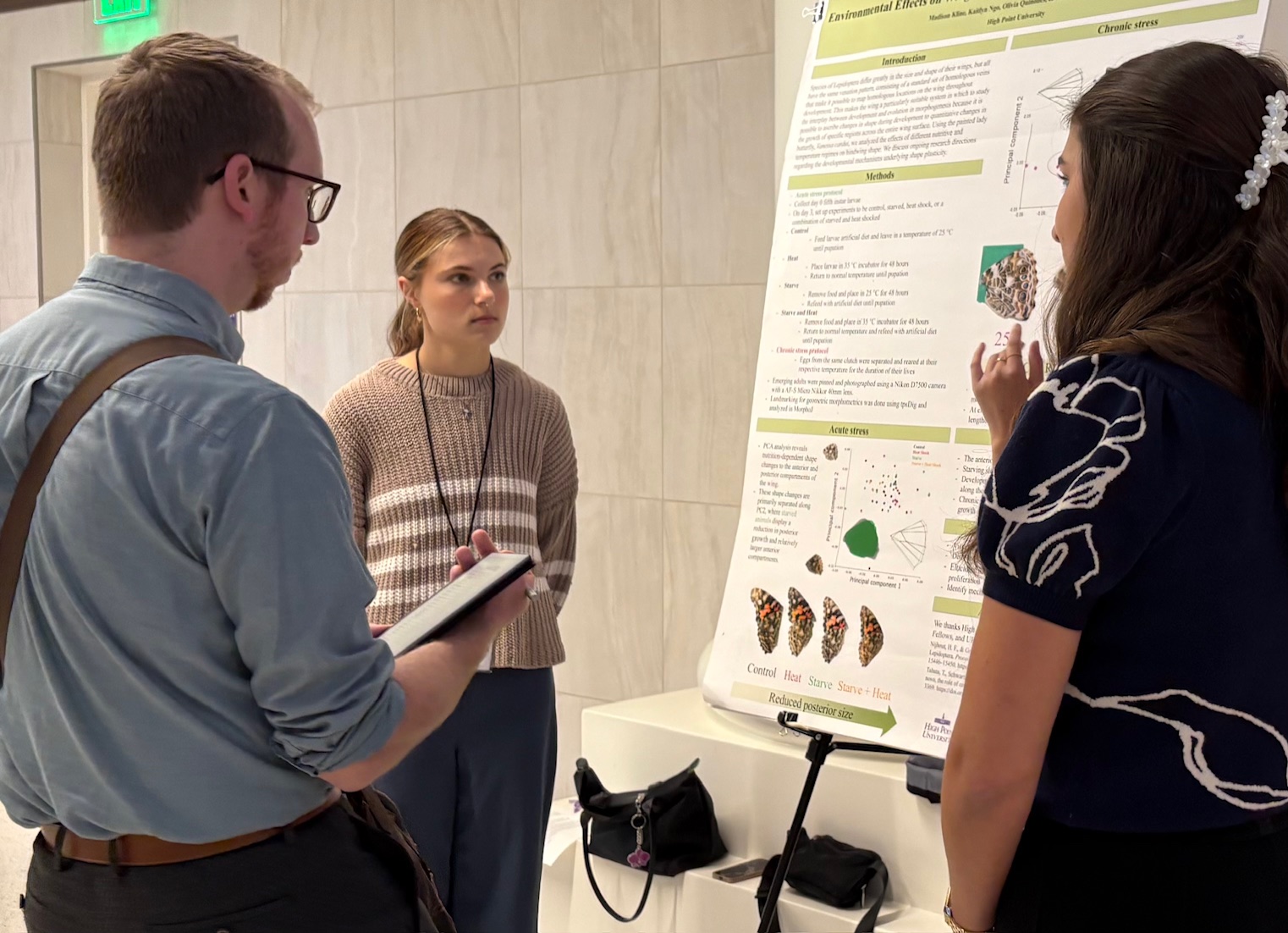
(L-R) Madison Kline, ENG 1103.19 Fall 2024, Kaitlyn Ngo, and Olivia Quinones with their poster display for their research project “Environmental Effects on Wing Shape in the Painted Lady Butterfly, Vanessa Cardui.”
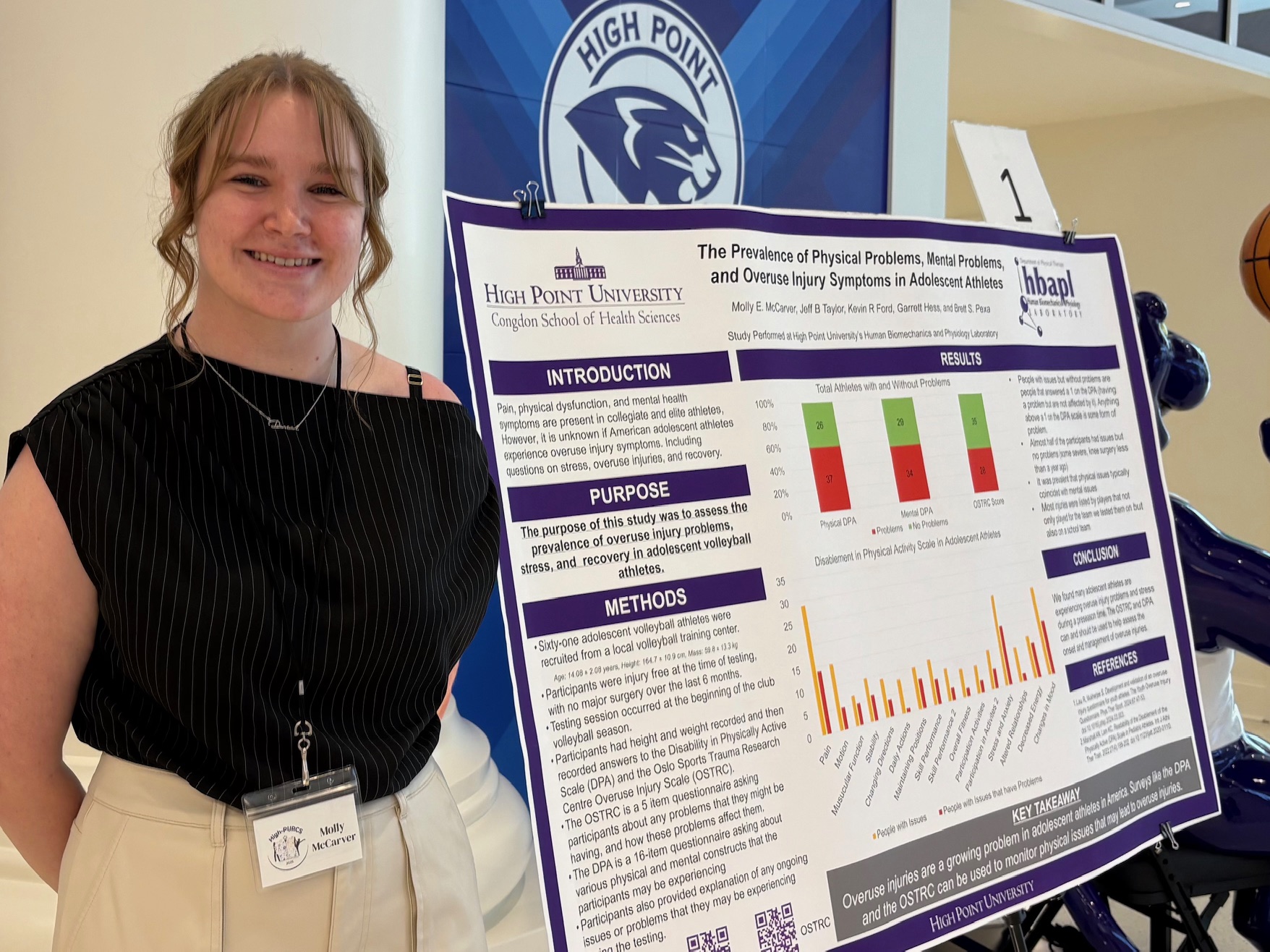
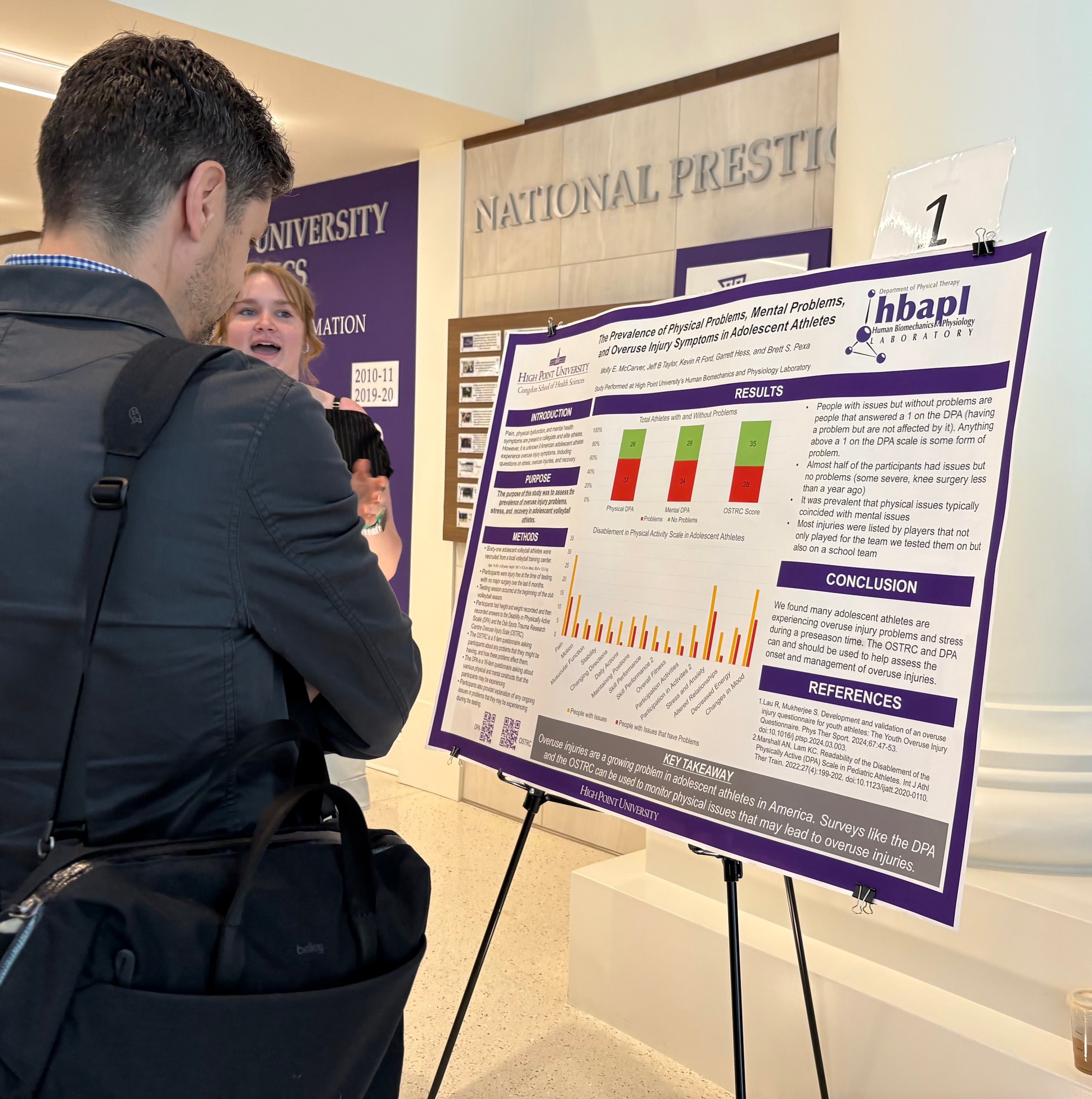
Last Tuesday’s High-PURCS featured poster displays for research projects produced by two former students of mine: Molly McCarver, who was enrolled in English 1103.19 in the fall semester of 2023, and Madison Kline, who was enrolled in English 1103.19 in the fall semester of 2024.
Molly McCarver, ENG 1103.19 Fall 2023, with her poster display for her research project “The Prevalence of Physical Problems and Overuse Injury Symptoms in Adolescent Athletes.”
The final essays and bibliographies that you wrote for English 1103 may serve as starting points for larger projects, and I encourage you to consider pursuing those projects in upper-level courses and presenting those projects at High-PURCS as well as at undergraduate research and creative works conferences at other institutions.
Madison Kline (center) and her collaborators (right) discuss their project with a poster session attendee (left).
If you missed High-PURCS 2025, be sure to check out next year’s symposium. Attending the poster and presentation sessions will not only provide you with ideas and inspiration for your own projects, it will also show your support for the HPU students whose research achievements are on display.
Molly McCarver discusses her project with a poster session attendee (left).
Also consider submitting your writing to Innovation, High Point University’s journal of scholarly and creative work. For more information on Innovation, contact Editor-in-Chief Justin Cook, jcook3@highpoint.edu.
Next Up
Tomorrow marks your final Wordplay Day of the semester! To prepare, revisit the Dictionary and World Builder pages on the Scrabble website, and review the blog posts devoted to Scrabble tips.
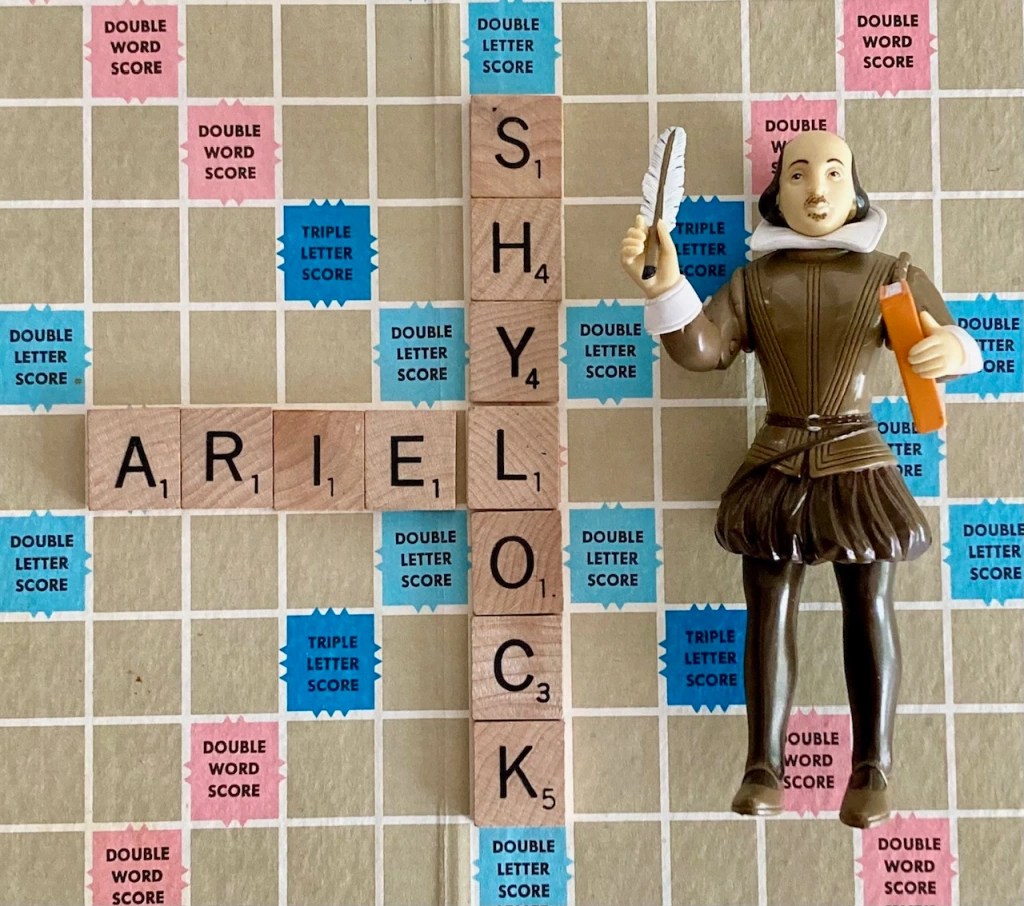
In honor of the Bard of Avon, born on April 16, 1564, this week’s Scrabble post features Shakespeare characters whose names are also playable common nouns.
ariel: a gazelle found in Africa (Ariel, The Tempest, 1611-12)
dogberry: the fruit of a dogwood tree (Dogberry, Much Ado about Nothing, 1598-1599)
hamlet: a village (the title character of Hamlet, 1600-1601)
lear: learning (the title character of King Lear, 1605-1606)
puck: a disk used in ice hockey and other games (Puck, A Midsummer Night’s Dream, 1595-1596)
romeo: a seductive lover, a male lover (one of the title characters in Romeo and Juliet, 1594-1595)
shylock: to lend money with a high interest rate (Shylock, The Merchant of Venice, 1596-1597)
Next Up
When class resumes next Wednesday, you will have your final Wordplay Day of the semester! To prepare, revisit the Dictionary and World Builder pages on the Scrabble website, and review the blog posts devoted to Scrabble tips, including this one.
This morning in class, you will have time to plan and prepare the individual presentation that you will deliver during the exam period, 8 a.m. Tuesday, April 29. I will distribute copies of the assignment in class. An additional copy is posted on Blackboard and the directions are also included below.
Overview
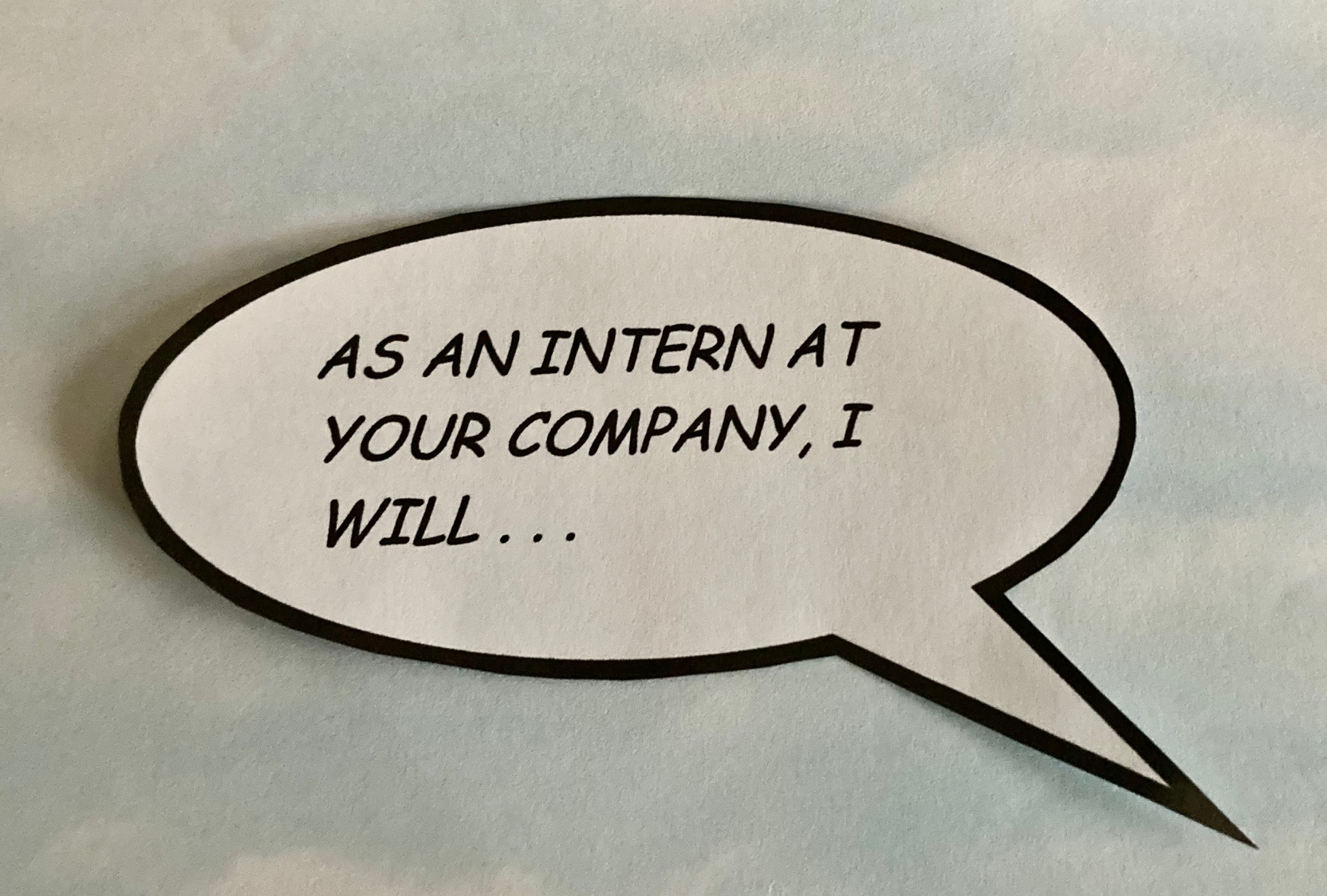
As a finalist for a much-sought-after internship in your field, you are required to deliver a concise and engaging presentation that highlights your achievements in English 1103 and demonstrates your ability to effectively assume the responsibilities that the internship requires of you. Among the aspects of the course that you should address are one or more of your major writing assignments and the development of your critical thinking and collaboration skills. You are encouraged but not required to address additional aspects of the course.
Directions for Planning
Plan a brief presentation of approximately three minutes that highlights your achievements in English 1103 and demonstrates your ability to effectively assume the responsibilities that the internship in your field requires of you.
Address one or more of your major writing assignments and the development of your critical thinking and collaboration skills. You are encouraged but not required to address additional aspects of the course.
Include the following in your presentation:
an opening in which you state your first and last names and your major,
concrete details in your blog that illustrate the development of your writing, your critical thinking, and your collaboration skills
a close examination of one pertinent passage in your blog, and
a conclusion that provides closure and invites questions from the interview committee.
Directions for Rehearsing
In preparation for rehearsing, write your notes on index cards. If your notes are in complete sentences, rewrite them to include only words and short phrases for your key points. If your notes are too detailed, you will risk relying heavily on them and making minimal eye contact with the interview committee. Make as much eye contact as possible and be sure to make eye contact with committee members throughout the room rather than fixing your eyes on one or two people.
Because you are required to project your blog on the classroom screen, you should familiarize yourself with the presentation station. Demonstrating that you are not adept at using the technology required for your presentation may jeopardize your chances for obtaining the internship. If you have not used the presentation station, I encourage you to devote part of today’s class period to familiarizing yourself with its setup.
Practice good posture. As you deliver your presentation, your ears should be directly above your shoulders. If you tend to shift your weight from one foot to the other—a distracting habit that’s sometimes called rocking the boat—stand with your feet perpendicular to each other. If you do, you will not be able to shift your weight from one foot to the other.
Avoid filler words, such as um, like, and you know. If you tend to use filler words, practice pausing at the points where you are likely to use fillers.
Rehearse with a classmate. Take turns delivering your presentations and offering feedback. Offer both suggestions for improvement and words of encouragement.
Grade Criteria
An A final presentation includes all elements outlined in the directions for planning and rehearsing and demonstrates the presenter’s poise and ability to avoid filler words.
A B final presentation includes all elements outlined in the directions for planning and rehearsing but may be marred by the presenter’s lack of poise and/or lack of ability to avoid filler words.
A C final presentation includes most but not all elements outlined in the directions for planning and rehearsing and may also be marred by the presenter’s lack of poise and/or lack of ability to avoid filler words.
A D final presentation includes only some of the elements outlined in the directions for planning and rehearsing and may also be marred by the presenter’s lack of poise and/or lack of ability to avoid filler words.
An F final presentation includes few if any elements outlined in the directions for planning and rehearsing and may also be marred by the presenter’s lack of poise and/or lack of ability to avoid filler words.
Next Up
When class resumes next Wednesday, you will have your last Wordplay Day. To prepare, revisit the Dictionary and World Builder pages on the Scrabble website, and review the blog posts devoted to Scrabble tips.
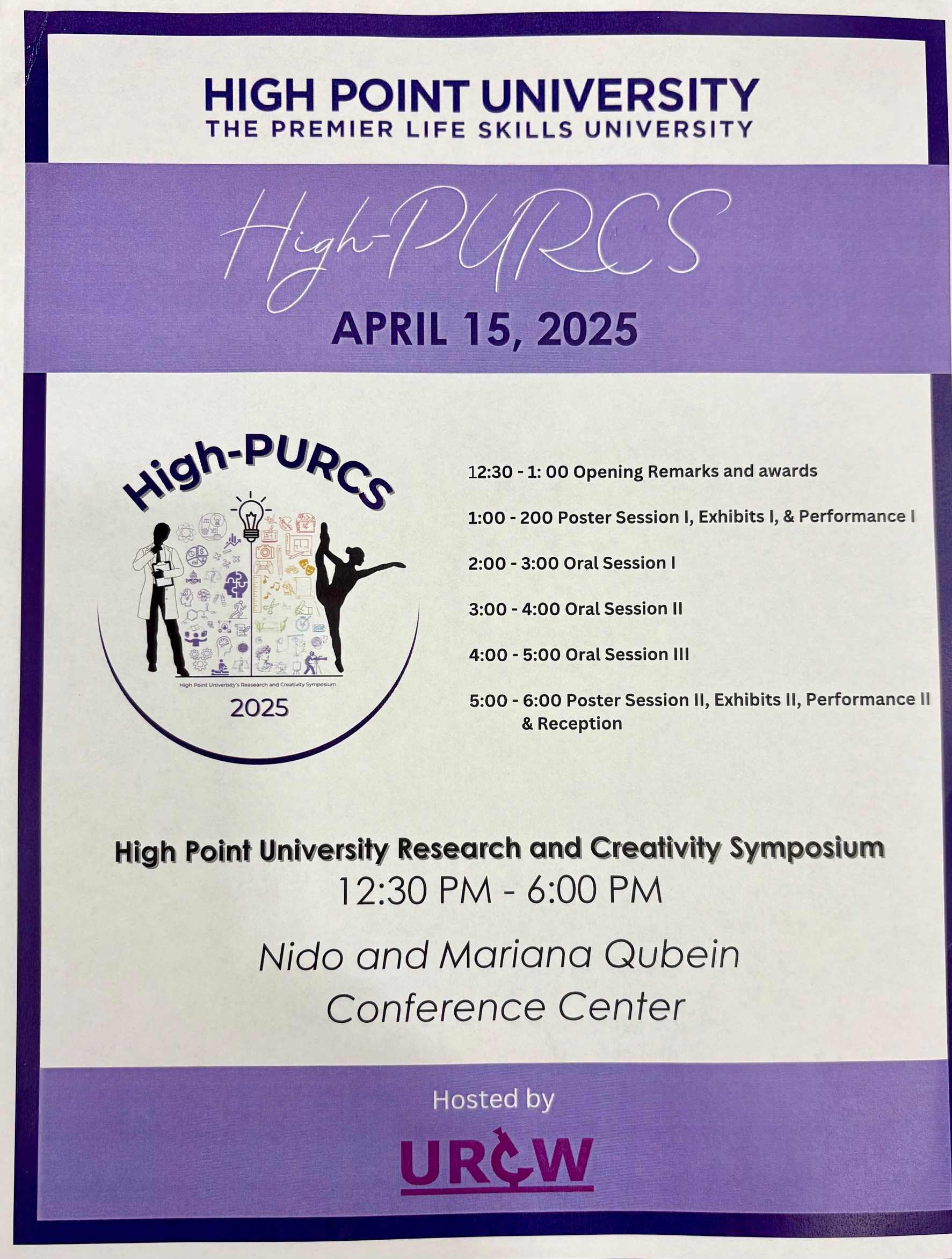
Remember that High-PURCS, (High Point University Research and Creativity Symposium) will be held today from 12:30-6 p.m. at the Nido and Mariana Qubein Conference Center.
To encourage you to attend, you have the opportunity to earn five bonus points for your final in-class assignment.
To earn bonus points, follow these steps:
Attend a portion of High-PURCS, today, Tuesday, April 15, at the Nido and Mariana Qubein Conference Center from 12:30-6:00 p.m.
View a minimum of five presentations.
For each, list the presentation identifier (poster number or oral session time and room), topic, and name of the presenter, as well as what you learned from the presenter, on the online form provided.
Attending High-PURCS will not only offer you the chance to see student projects produced for upper-level courses, it will also serve as an opportunity for you to see how your own final essay and annotated bibliography might develop into a larger project for an upper-level course.
For a complete schedule of the High PURCS sessions, see the April 10 blog post.
Next Up
In class on Wednesday, you will plan and prepare for the individual oral presentation that you will deliver during the exam period at 8 a.m. on Tuesday, April 29. You will receive a copy of the assignment in class, and it will be featured in Wednesday’s blog post.
Today in class you will compose a final reflective essay that documents your work in the second half of the semester, focusing on what you consider some of your most significant work and the feature or features of the course that have benefited your development as a writer and a student. Since you have already written a reflective essay on your final essay and annotated bibliography, your final reflection should focus on other assignments and features, including one, two, or three of the following:
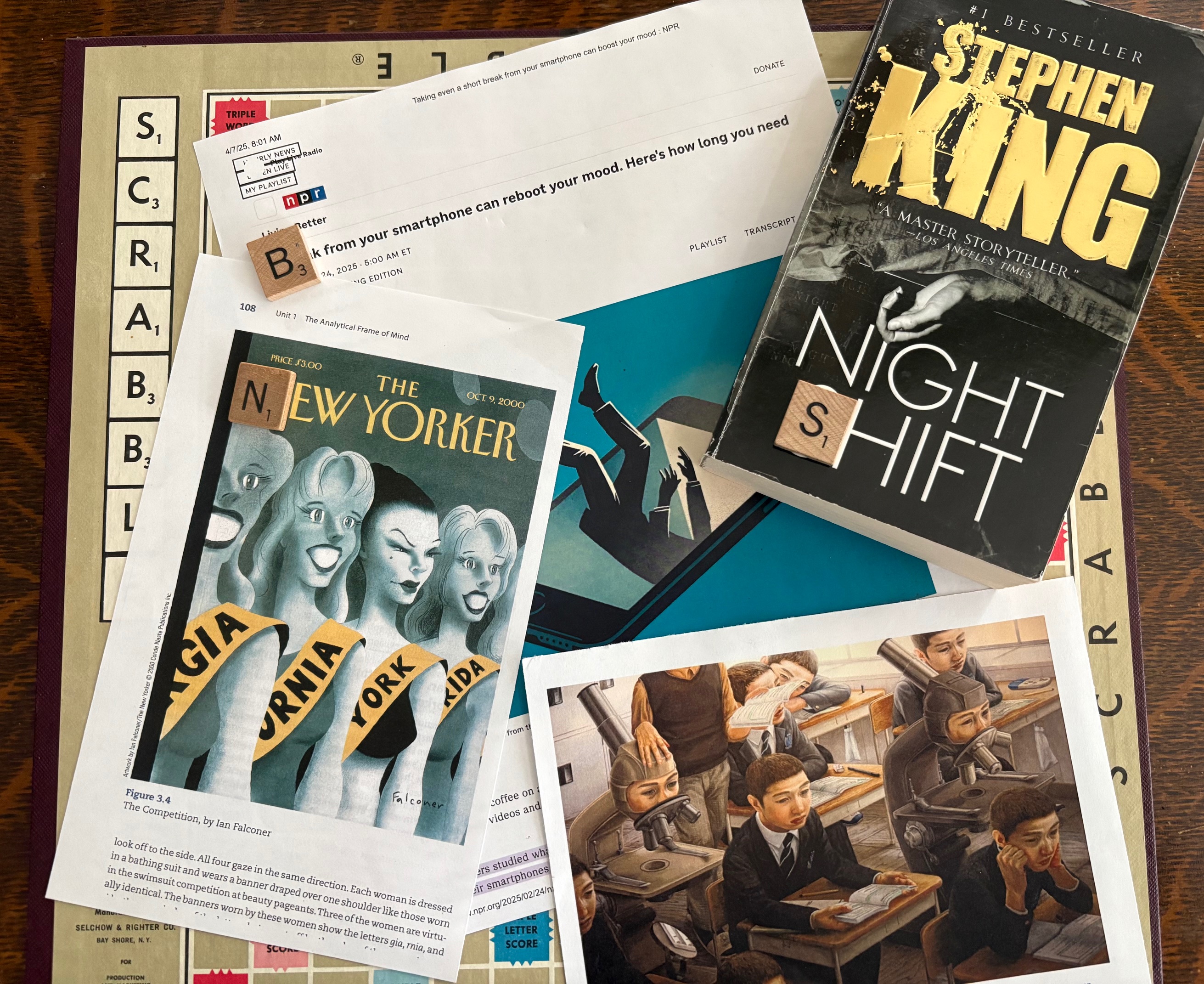
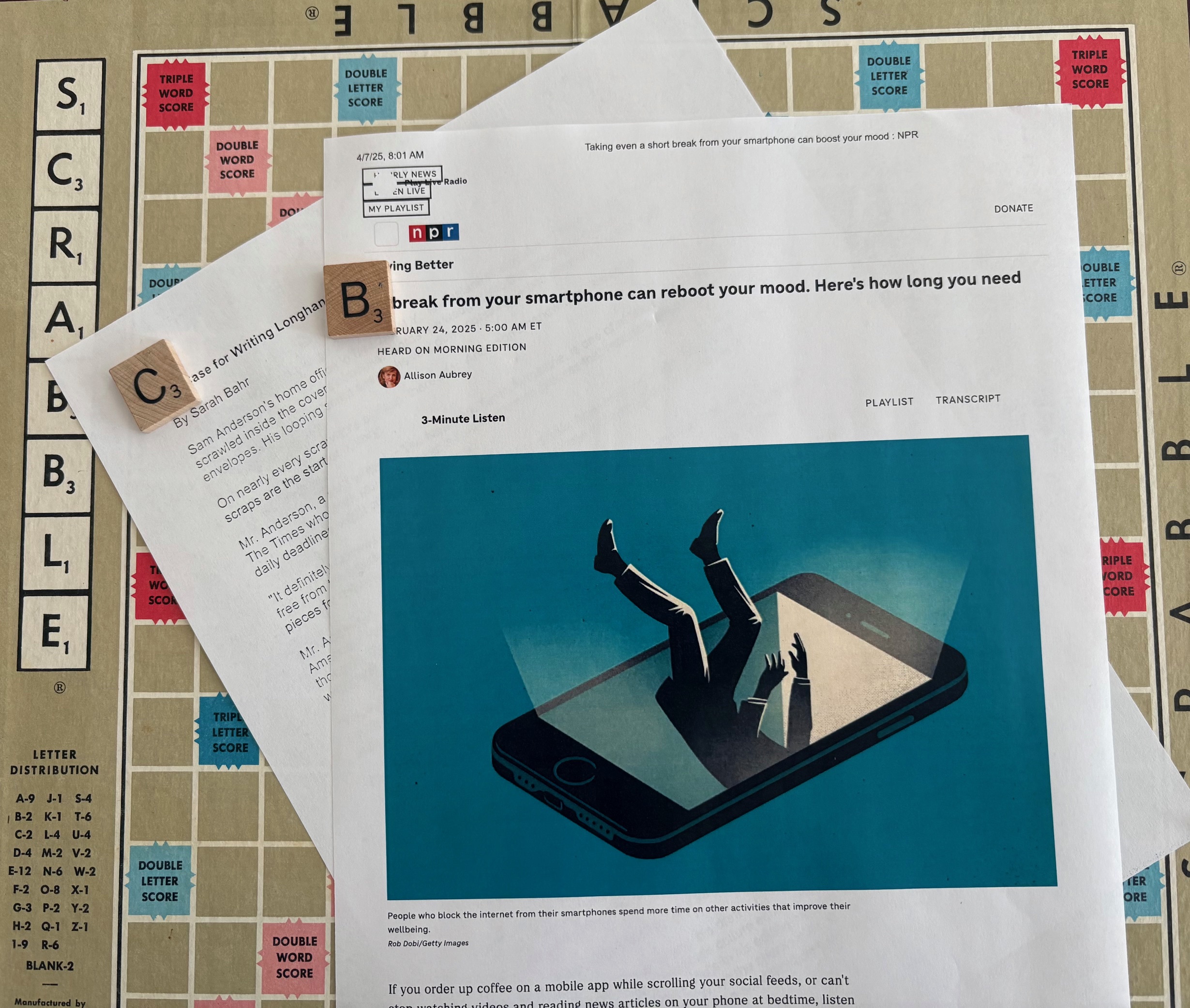
Studying one of the texts we have examined in the second half of the semester, including “The Case for Writing Longhand,” The Competition, “Scrabble is a Lousy Game,” Seedlings, “Skim Reading is the New Normal,” “Strawberry Spring,” or the sample final essay and annotated bibliography (“Scrabble as a Game Changer in the College Classroom”)
Writing for an online audience beyond the classroom/creating and maintaining a WordPress blog
Delivering your group presentation on the first four lessons of the Check, Please! course
Collaborating with your classmates on in-class writing assignments
Playing Scrabble/Collaborating with your teammates on Wordplay Day
Writing longhand
Limiting screen time
Keeping a journal
Focus on one, two, or three assignments or features of the course.
Include in your reflective essay the following elements:
A title that offers a window into your reflection
An opening paragraph that introduces your focus and presents your thesis
Body paragraphs that offer concrete details from your work to support your thesis.
A relevant quotation from Writing Analytically or a relevant quotation from one of the texts that we have studied in the second half of the semester. Introduce your quotation with a signal phrase and follow it with a parenthetical citation. Refer to your citation handout for models.
A conclusion that revisits the thesis without restating it verbatim
An MLA-style works cited entry for your source
Sample MLA Works Cited Entries
Aubrey, Allison. “A Break from Your Smartphone Can Reboot Your Mood: Here’s How Long You Need.” NPR, 24 Fb. 2025. https://www.npr.org/2025/02/24/nx-s1-5304417/smartphone-break-digital-detox-screen-addiction#:~:text=Researchers%20studied%20what%20happened%20when,felt%20better%20after%20the%20break.
Rosenwasser, David and Jill Stephen. “Arriving at an Interpretive Conclusion: Making Choices.” Writing Analytically, 9th edition. Wadsworth/Cengage, 2024. pp.111-12.
—. “Integrating Quotations into Your Paper.” Writing Analytically, 9th edition. Wadsworth/Cengage, 2024. pp. 343-46.
—. “The Idea of the Paragraph.” Writing Analytically, 9th edition. Wadsworth/Cengage, 2024. pp. 307-313.
—. “Two Methods for Conversing with Sources.” Writing Analytically, 9th edition. Wadsworth/Cengage, 2024. p. 325.
—. “Ways to use a Source as a Point of Departure.” Writing Analytically, 9th edition. Wadsworth/Cengage, 2024. p. 326.
Next Up
In class on Wednesday, you will plan and prepare for the individual oral presentation that you will deliver during the exam period, Tuesday, April 29, at 8 a.m. You will receive a copy of the assignment in class, and it will be featured in Wednesday’s blog post.
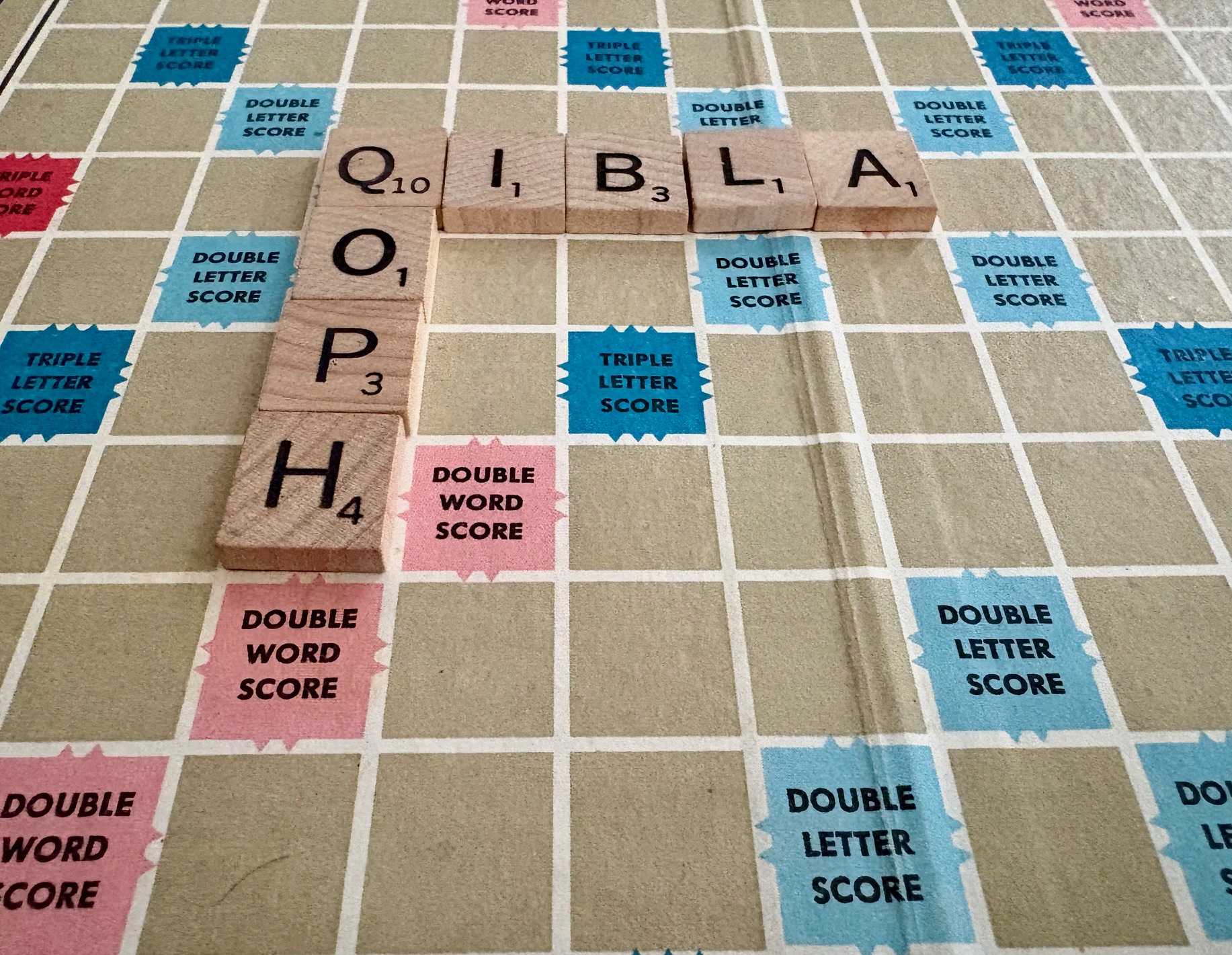
As I noted in last week’s Scrabble post, keeping a u on your rack before the q is played is one way to decrease the chances that you will be left holding the q, a deduction of ten points. From the “Two-Letter Words, Q-Z” blog post, you know that qi (the central life force in Chinese culture) is one u-less option–and one that’s fairly easy to play since there are nine i’s in the game. Learning additional q words without u’s, such as the ones listed below, will increase your word power and provide you with more options for playing the q.
qibla(s): the direction of the Kaaba shrine in Mecca toward which all Muslims turn in ritual prayer. Also qiblah, kibla, and kiblah
qigong(s): a Chinese system of physical exercises.
qindar, pl. dars or darka: a monetary unit of Albania. Also qintar(s).
qiviut: the wool of a musk ox.
qoph(s): the nineteenth letter of the Hebrew alphabet. Also koph.
Next Up
Wordplay Day! To prepare for class, revisit the Dictionary and World Builder pages on the Scrabble website, and review the blog posts devoted to Scrabble tips, including this one.
To encourage you to attend next Tuesday’s High-PURCS (High Point University Research and Creativity Symposium) you have the opportunity to earn five bonus points for your final in-class assignment.
To earn bonus points, follow these steps:
Attend a portion of High-PURCS, which will be held next Tuesday, April 15, at the Nido and Mariana Qubein Conference Center from 12:30-6:00 p.m.
View a minimum of five presentations.
For each, list the presentation identifier (poster number or oral session time and room), topic, and name of the presenter, as well as what you learned from the presenter, on the online form provided.
Attending High-PURCS will not only offer you the chance to see student projects produced for upper-level courses, it will also serve as an opportunity for you to see how your own final essay and annotated bibliography might develop into a larger project for an upper-level course.
Next Up
Wordplay Day! To prepare for class, revisit the Dictionary and World Builder pages on the Scrabble website, and review the blog posts devoted to Scrabble tips.
This morning in class, you will plan and compose a short reflective essay that documents your writing process and includes at least one relevant quotation from Writing Analytically or the article that served as a starting point for your project. You will introduce your quotation with a signal phrase and follow your essay with a works cited entry.
Questions to Consider in Your Reflection
What aspect of the writing seemed the most challenging? Locating relevant sources? Composing your annotations? Developing the final essay? Why did that aspect seem the most challenging?
Did your subject change? If so, what was your original subject, and why did you change it?
What do you consider the strongest element of your final essay and annotated bibliography?
At what point in the process did you decide on a title? Did you change the title during the writing process? If so, what was the original title?
What image that documents part of your writing process away from the screen did you include in your blog post? Why did you choose that particular image?
To which relevant website did you include an embedded link in your blog post?
Sample Quotations with Signal Phrases
The authors of Writing Analytically advise writers to “frame material with a phrase such as ‘according to Sprayberry’ or ‘as Gruen argues'” (Rosenwasser and Stephen 344).
Rosenwasser and Stephen advise writers to “frame material with a phrase such as ‘according to Sprayberry’ or ‘as Gruen argues'” (344).
The parenthetical citation in the first sample above includes the authors’ last names because they are not named in the sentence. The parethetical citation in the second sample above does not include the authors’ last names because they are named in the sentence.
Rosenwasser, David and Jill Stephen. “Integrating Quotations into Your Paper.” Writing Analytically, 9th edition. Wadsworth/Cengage, 2024. pp. 343-46.
—. “The Idea of the Paragraph.” Writing Analytically, 9th edition. Wadsworth/Cengage, 2024. pp. 307-313.
—. “Two Methods for Conversing with Sources.” Writing Analytically, 9th edition. Wadsworth/Cengage, 2024. p. 325.
—. “Ways to use a Source as a Point of Departure.” Writing Analytically, 9th edition. Wadsworth/Cengage, 2024. p. 326.
Note that your work cited entry in your reflection–and all of the work cited entries and bibliographic entries except for the ones on your blog–should have a hanging indent.
Next Up
Wordplay Day! To prepare for class, revisit the Dictionary and World Builder pages on the Scrabble website, and review the posts on my blog devoted to Scrabble tips.



 Jane Lucas