Before tomorrow’s class, be sure to complete the following tasks.
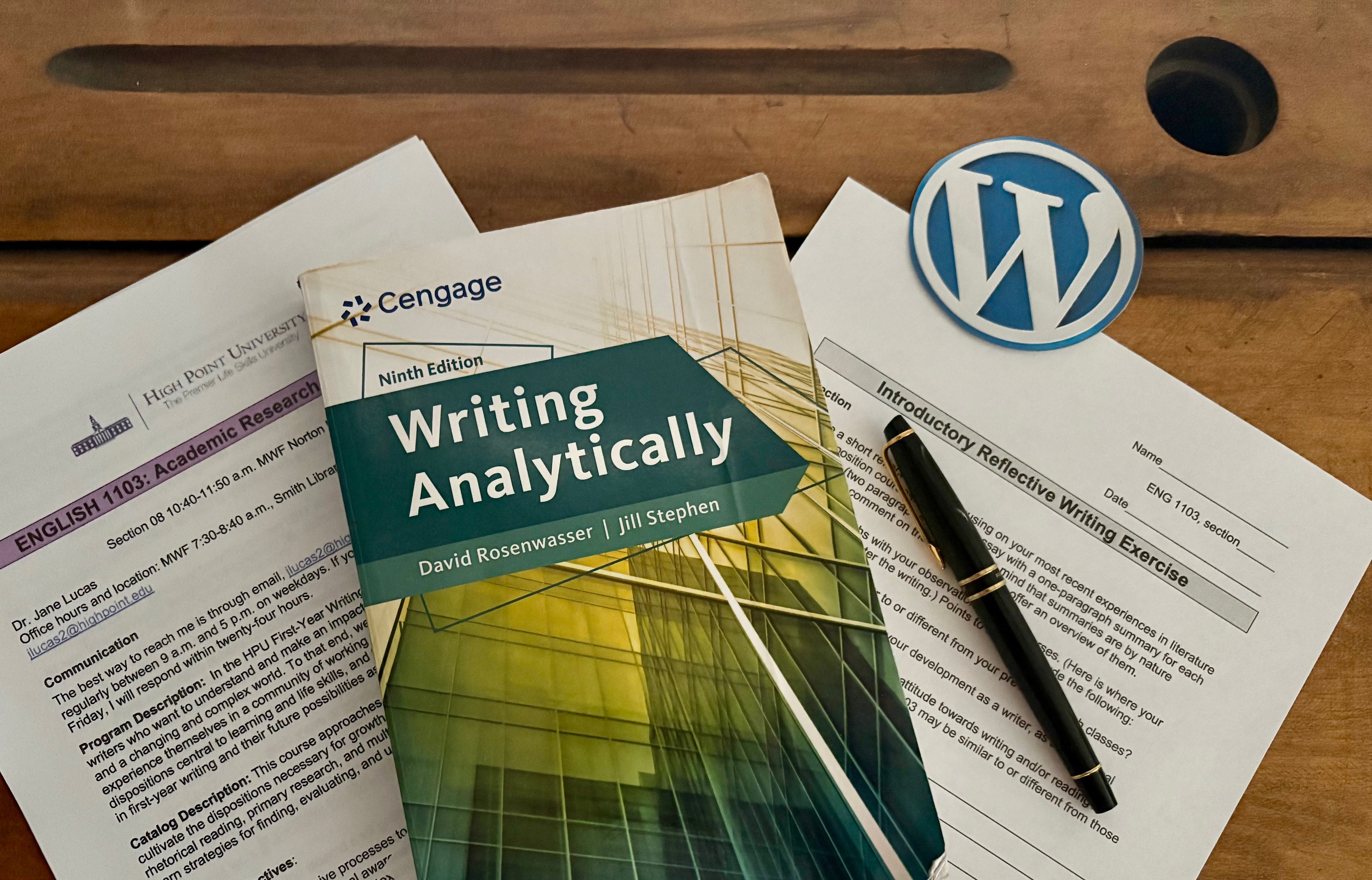
Review yesterday’s blog post as well as the syllabus. If you added the class after our first meeting on Monday, you can download the syllabus from Blackboard. In your journal, jot down any questions you have about the course.
Also, if you added the class after our first meeting on Monday, begin composing a reflective essay focusing on your most recent experiences in literature and/or composition courses. Begin your essay with a one-paragraph summary for each of the courses (two paragraphs, total). Keep in mind that summaries are by nature objective. Do not comment on the courses, simply offer an overview of them.
Follow those paragraphs with your observations on the courses. (Here is where your personal observations enter the writing.) Points to address include the following:
- Were the courses similar to or different from your previous English classes? How?
- Did the courses contribute to your development as a writer, an analytical reader, both, or neither?
- How did those courses shape your attitude towards writing and/or reading?
- How do you anticipate that English 1103 may be similar to or different from those courses?
If you haven’t purchased or rented it already, order the textbook, the paperback edition of Writing Analytically, 9th edition, by David Rosenwasser and Jill Stephen.
Also, as soon as possible, create a free WordPress blog at wordpress.com, and email the URL to me so that I can link your blog to the class page.
Because writing longhand and limiting screen time are essential components of the class, I am including below some notes that illustrate why those practices, which may seem quaint, are vital to our work.
Writing Longhand
One practical reason for writing longhand: What we mark through remains on the page. Sometimes what we cross out can be useful later on, elsewhere in our writing. More importantly, research in cognitive neuroscience indicates that writing longhand has these benefits:
- We remember more when we write notes by hand.
- Writing cursive activates areas of the brain that remain dormant when we type.
Simply put, writing longhand sharpens our minds in ways that typing doesn’t.
Limiting Screen Time
When we use our phones and laptops, it’s difficult for us to give our undivided attention to one endeavor, but often that singular focus is critical.
When we type on our phones, we often aim to convey as much as we can with as few characters as possible. Texting and emailing–both of which now feature predictive text–do not foster the vital skills of developing our writing and producing original thought.
Limiting our screen time not only helps us improve our writing skills, it can also benefit our overall well-being.
- The blue light of screens disrupts our circadian rhythms more than other light does, making it harder for us to sleep.
- Psychological studies demonstrate a correlation between screen time and both anxiety and depression.
The research cited in the links that I’ve included above isn’t definitive, but it makes a strong case for the value of limiting our screen time and putting pen to paper. I encourage you to continue these practices after the semester ends.
Next Up
On Wednesday, we will continue the course overview, I will return the reflective writing that you began on Monday, and you will have additional time to develop your reflection in class.
 Jane Lucas