
As an introduction to Donald Barthelme, whose fiction we will examine in class tomorrow, read this biographical sketch. After you read the sketch, compose a one- or two-paragraph journal entry that includes what you have learned about his writing style, and what you have learned about readers’ and critics’ mixed responses to his fiction.
Bonus Assignment Follow-Up
Thanks to those of you who took advantage of yesterday’s bonus assignment: Annaliese Abboud, Gi Amitrano, Cameron Anderson, Adrienne Brown, Kylie Bussell, Myra Chatwal, Reese Danback, Amanda Franco, Dorian Grosber, Garrett Hickey, Raven Houston, Jorja Mangeot, Mariana Pavajeau, Heloise Richer, Ellie Tejada, and Bailey Upchurch.
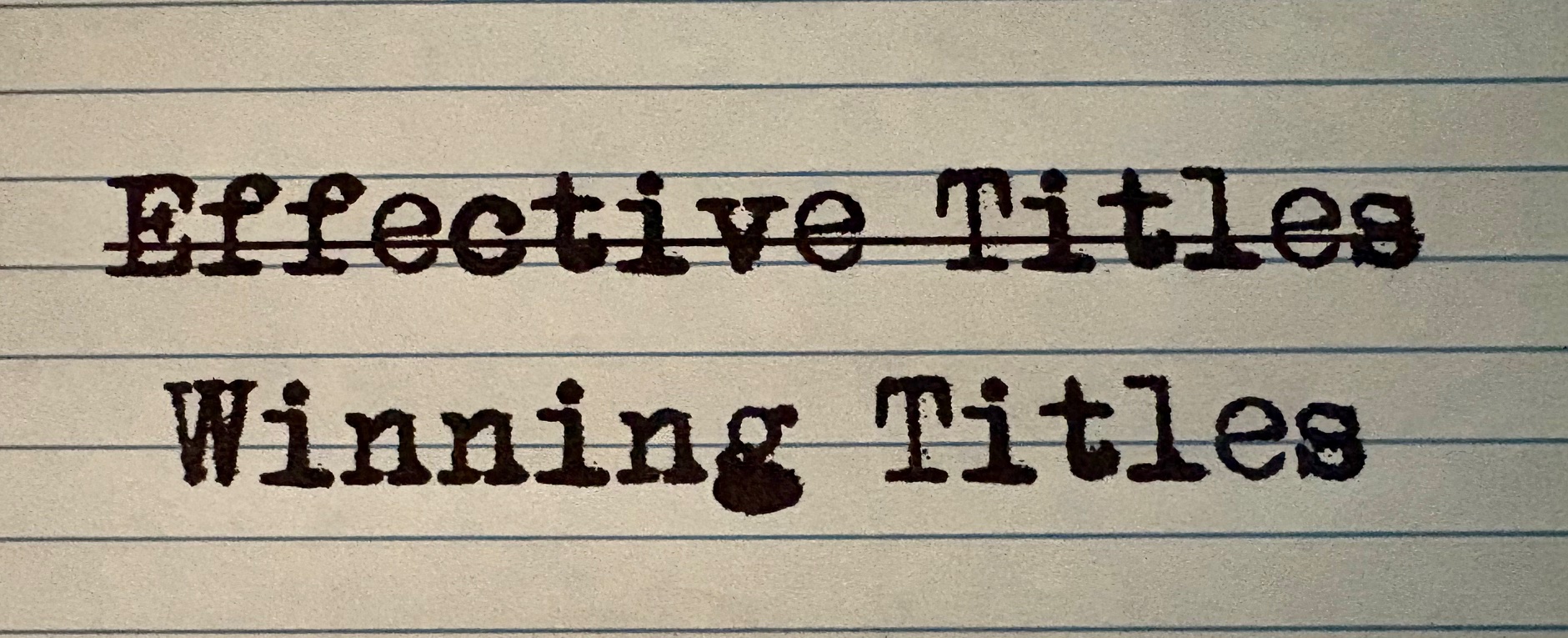
Each of the two literacy narratives listed below were named by more than one student as the narrative with the most effective title. Four students named “G is for Grandma“; two students named “Yo Soy Hockey.”
- “G is for Grandma” by Lexie Owensby
- “Yo Soy Hockey” by Cameron Anderson
The ten listed below were each named by one student as the literacy narrative with the most effective title.
- “Breaking Language Barriers: How I Gained Confidence in Myself” by Ellie Tejada
- “Calmáte: A Summer so Fast” by Garrett Hickey
- “Error to Success” by Nolan Lafayette
- “From Panic to Proficiency” by Bailey Upchurch
- “From Stumbling to Strength” by Campbell Nelson
- “The Fruitful Smells of Learning” by Avery Falor
- “If You Read, You will Succeed” by Casey Burkom
- “The Inside Look into Dyslexia” by Aly Deters
- “An Involved Teacher” by Heloise Richer
- “Removing the Mask” by Ethan Howard
A title should be intriguing and revealing (as well as relevant), but a title that reveals too much robs the writing of its intrigue. With that in mind, review the titles above and ask yourself whether any of them reveal too much?
A Lesson in Less is More
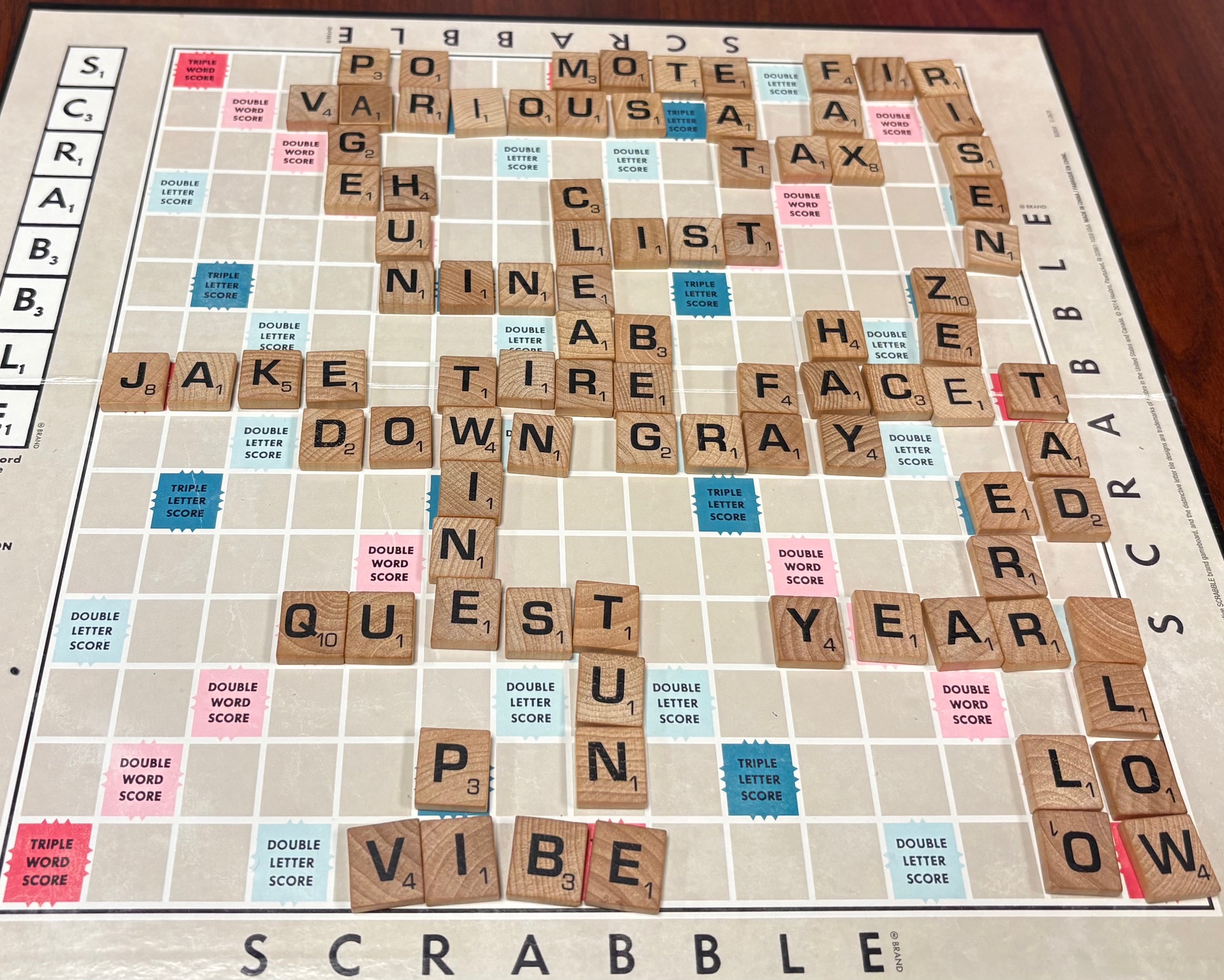
In one of last Friday’s Scrabble games, the one pictured above, the members of team one realized that with the a in age, they could play the letters v, r, i, o, u, and s to spell various. (Note that the p was later added above age.) Playing six letters to form a three-syllable, seven-letter word is an appealing move, especially if it means ridding yourself of undesirable letters, such as v, i, and u–though a u is highly desirable if the q has not been played. However, playing various as team one played in the game above comes with a risk: the placement of the word set up team two to play on the triple-word square, which they did. By playing the four letters m, o, t, and e, team two scored a double-triple through parallel play, forming three words: mote (a tiny piece of substance), mu (a Greek letter), and os (a bone). Various, with its i on a triple letter square earned team one twelve points. The double-triple mote and mu with os earned team two thirty-two points. Team one earned an average of two points per letter played; team two earned an average of eight points per letter played, evidence that less is more.
Next Up
In class on Wednesday, we will read and discuss one of Donald Barthelme’s short stories. That story and the texts we have studied thus far in English 1103–“Me Talk Pretty One Day,” “The Day Language Came into Life,” the excerpt from the first chapter of To Kill a Mockingbird,” and the excerpt from “The Falling Man”–are among the pieces of writing that may serve as the subject of your upcoming analysis. Before you begin drafting that assignment on Wednesday, September 24, we will examine another text that may serve as your subject.

 Jane Lucas