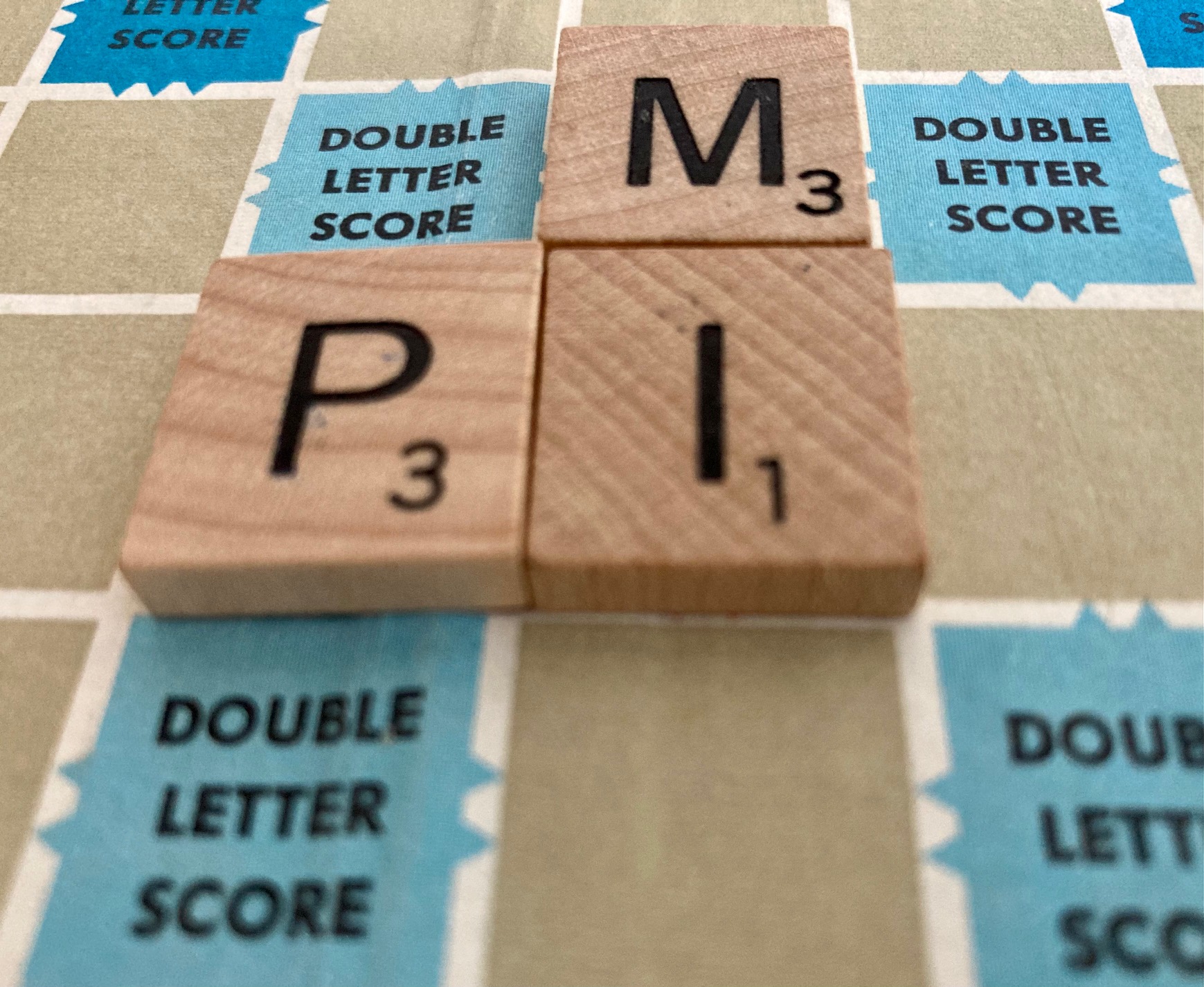
In the previous weeks, Scrabble blog posts have featured playable two-letter words that begin with a, b, d, e, f, g, h, i, j, k, and l. Today’s post features the playable two-letter words beginning with m, n, o, and p. Learning these two-letter words, as well as the other two-letter words in the alphabet, will enable you to see more options for play and increase the number of points you earn in a single turn.
M, by the way, is the most versatile consonant. In the first position, m pairs with every vowel: ma, me, mi, mo, mu, and also my. In the second position, m pairs with every vowel except i: am, em, om, um.
- ma: a mother
- me: a singular objective pronoun
- mi: a tone of the diatonic scale
- mm: an expression of assent
- mo: a moment
- mu: a Greek letter
- my: a first-person possessive adjective
- na: no, not
- ne: born with the name of (also nee)
- no: a negative answer
- nu: a Greek letter
- od: a hypothetical force
- oe: a whirlwind off the Faero Islands
- of: originating from
- oh: an exclamation of surprise
- oi: an expression of dismay (also oy)
- om: a sound used as a mantra
- on: the batsman’s side in cricket
- op: a style of abstract art dealing with optics
- or: the heraldic color gold
- os: a bone
- ow: used to express pain
- ox: a clumsy person
- oy: an expression of dismay (also oi)
- pa: a father
- pe: a Hebrew letter
- pi: a Greek letter
Scrabble Zzz’s
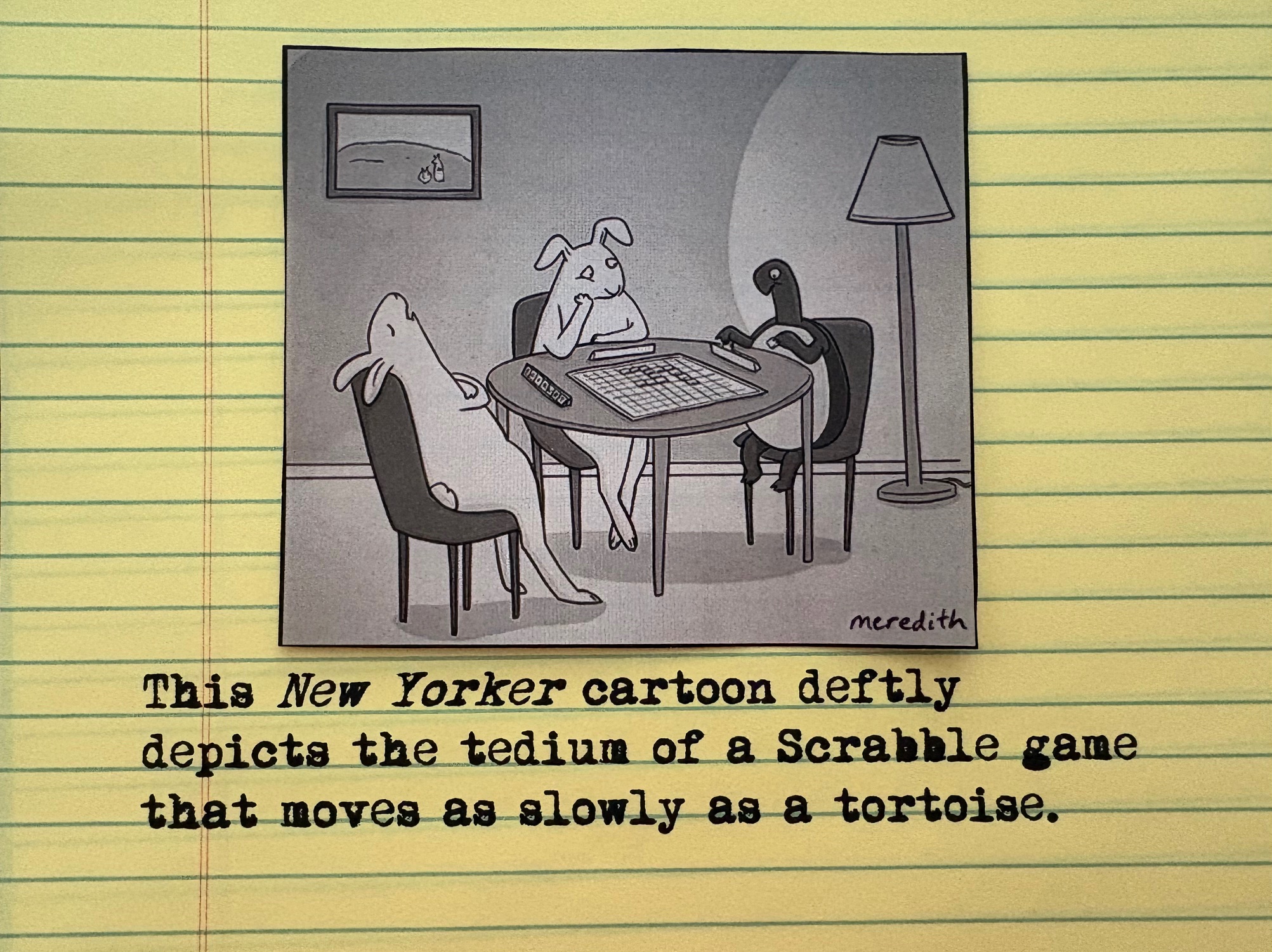
Although there is no set time limit for making a play in non-competitive Scrabble, be mindful that making fewer than fifteen-to-twenty plays in a seventy-minute class period (minus five minutes for your break) indicates that at least one of the two teams is spending an inordinate amount of time deliberating. Each play deserves careful consideration, but excessive pondering makes the game tedious and can also give your opponents an edge. The more time you spend determining what to play, the more time your opponents have to study the board–and possibly find a higher-scoring play than the one they had initially planned.
Next Up
Wordplay Day! To prepare for class, revisit the Dictionary and World Builder pages on the Scrabble website, or the Merriam-Webster Scrabble Word Finder page, and review the blog posts devoted to Scrabble.
Coming Soon
For Monday, read these short sections of Writing Analytically: “Focus on Individual Words and Sentences” (48-49) and “Words Matter” (49-50). Those word-focused readings serve as a prelude to Monday’s in-class writing assignment and the analytical writing you will produce for your second major paper assignment.
In class on Monday, you will read a designated classmate’s literacy narrative on his or her blog, and compose a response that you will submit as a comment on the writer’s post. Bring your laptop to class, and also be sure to bring Writing Analytically and your journal with your completed exercise on “Amanda Petrusich on Katy Grannan’s Photograph of Taylor Swift” or an assigned reading of your choice. Do not remove the exercise from your journal before class. I will not collect the assignment; I may simply conduct a check for it while you and your classmates are working on your blog exercise.

 Jane Lucas