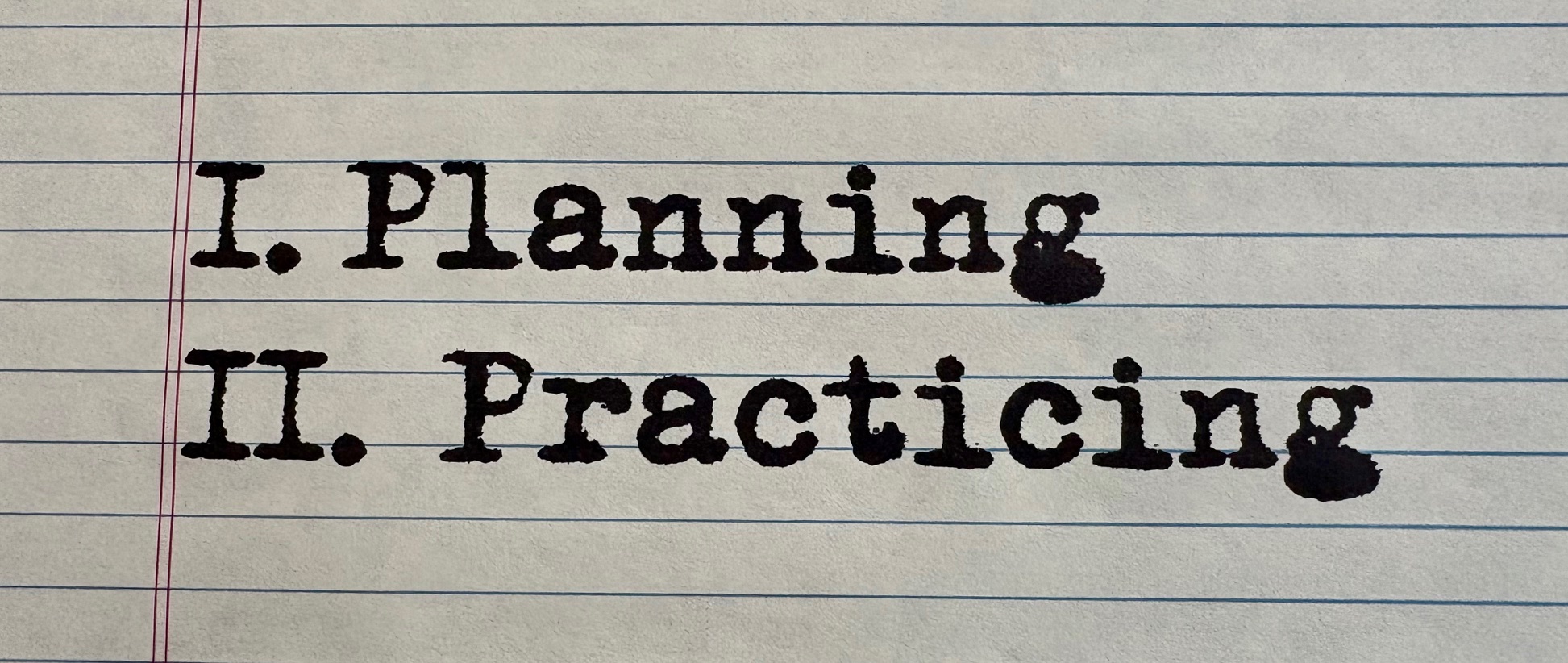
As you continue to prepare for your presentation, be mindful of the valuable roles that reading and writing play in the process. Although the final product is your group’s three-to-four-minute oral presentation, your work began with reading and writing: reading the article that serves as your subject, and writing the plan that you composed in class yesterday.
Have you thoroughly reread the article that serves as your subject? If not, turn back to the text itself at least two more times before Wednesday. Chances are, on a second or third reading, you will notice details you didn’t notice before, ones that you may want to add to your presentation.
In addition to recording key words on your notecard, write out your portion of the presentation in your journal. Though you will not be permitted to have your journal in hand during your presentation, the act of writing down your remarks and rewriting them will help you commit them to memory.
As you practice delivering your presentation, be sure to limit the time that you look down at your notecard and your copy of the reading. Your ability to limit those glances will be greater if you spend ample time rereading the text and writing and reviewing your remarks in your journal.
Robert Klara’s “Scrabble”
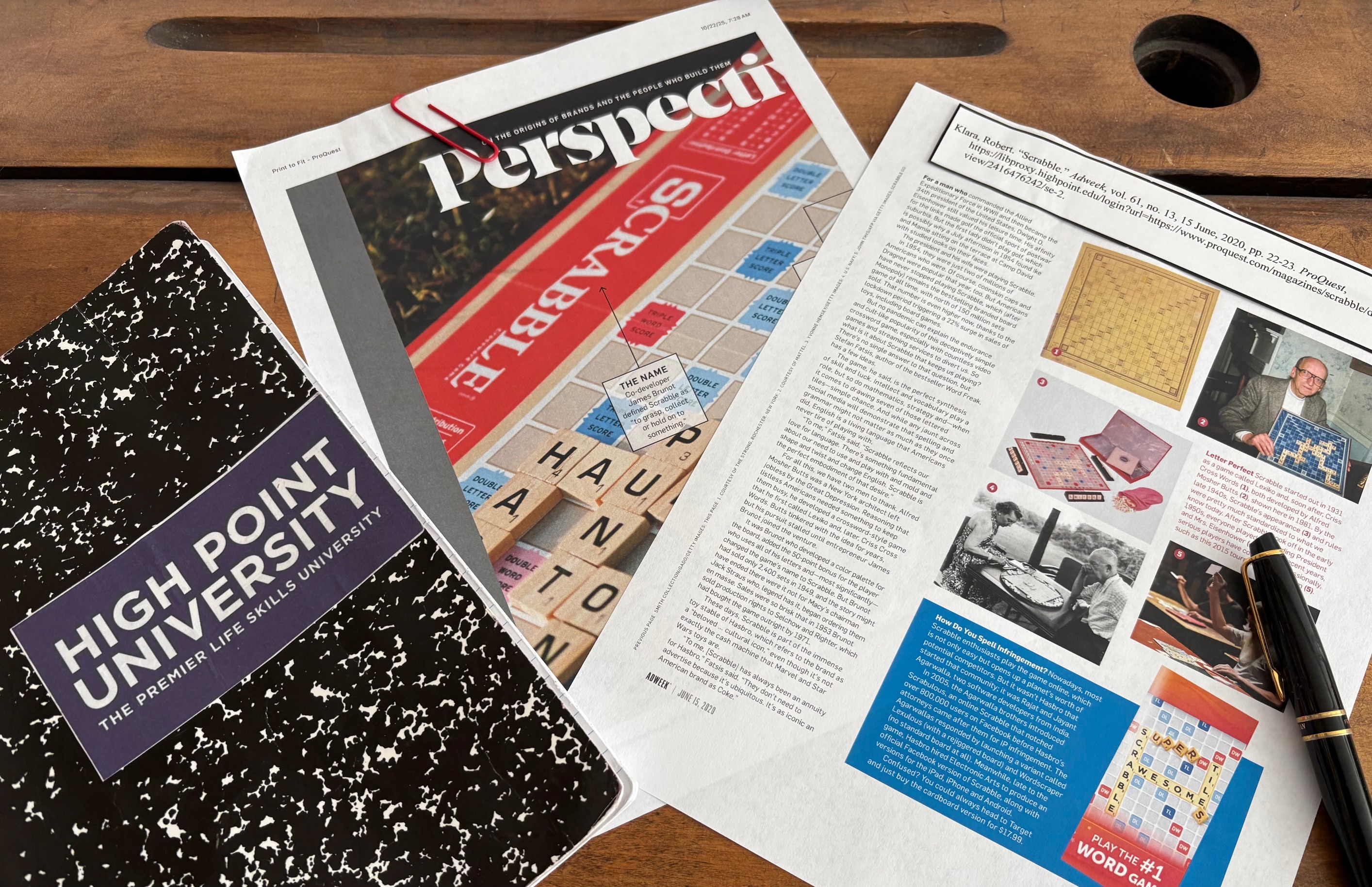
Yesterday, while you were planning your presentations, I distributed copies of Robert Klara’s article “Scrabble.” If you plan to focus on Scrabble for your final essay and annotated bibliography, Klara’s article will serve as your starting point.
Unlike the articles you read for your presentations, Klara’s does not report on research, though he does quote journalist Stefan Fatsis, author of Word Freak: Heartbreak, Triumph, Genius, and Obsession in the World of Competitive Scrabble Players. Klara’s article also provides historical context.
If you choose Scrabble as the subject for your final essay and annotated bibliography, include among your sources at least one newspaper or magazine article that reports on Scrabble research, or include the original research itself, published as a peer-reviewed article, such as “The World of Competitive Scrabble: Novice and Expert Differences in Visuospatial and Verbal Abilities,” by Diane F. Halpern and Jonathan Wai, available through the HPU Libraries.
Next Up
In class tomorrow, you will deliver your group presentations. Afterward, in the second half of class, you will compose a short essay that reflects on both your own presentation and one by another group.
 Jane Lucas