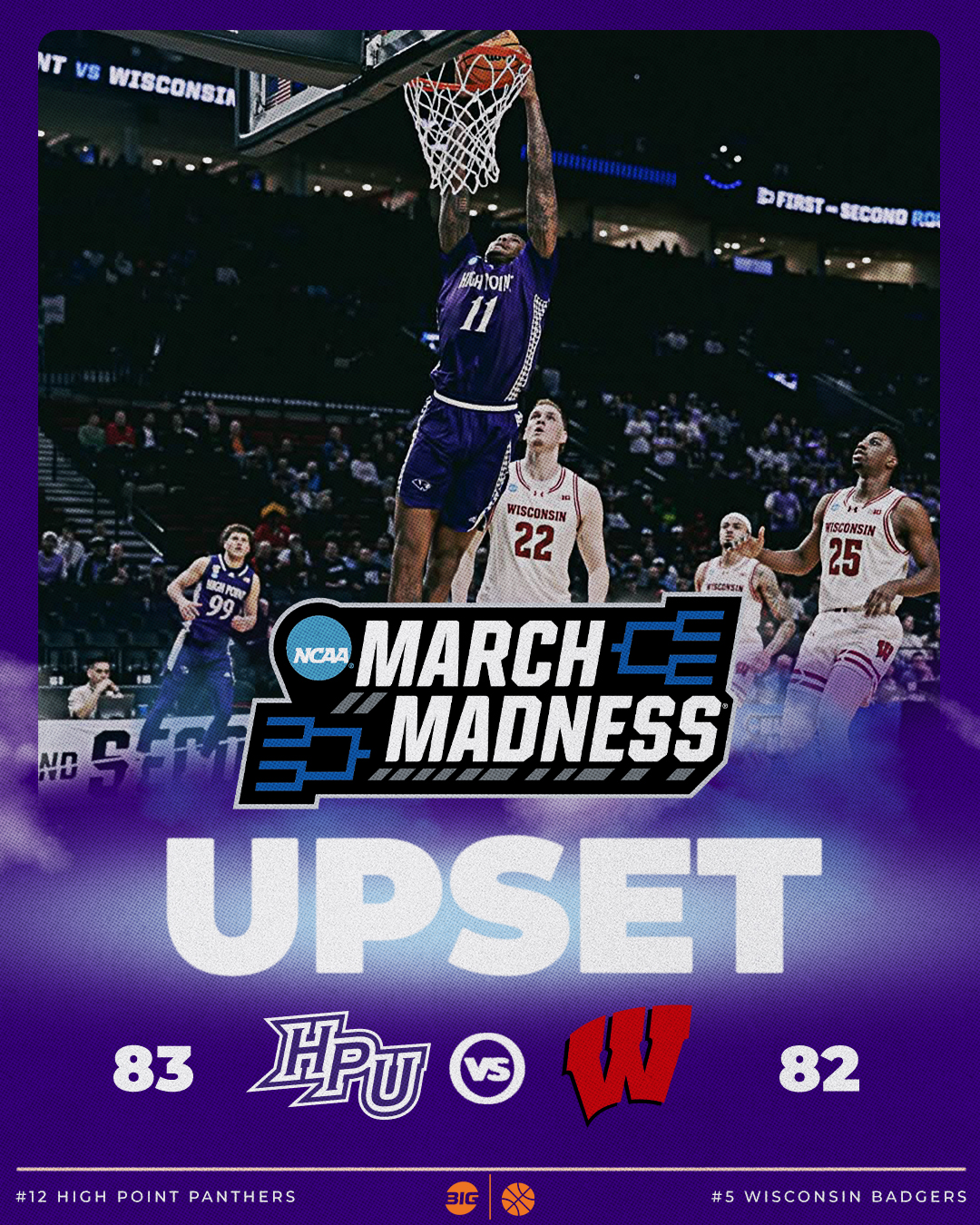
Congratulations to the High Point men’s basketball team on their NCAA Tournament first-round, bracket-busting win over Wisconsin!
Blowin’ in the Wind
The recent strong winds likely reminded you that March is our windiest time of the year. To mark our gusty month, this Scrabble post features playable wind-related words. One of them, oe, appeared in a previous Scrabble post, the one devoted to two-letter words beginning with m, n, o, and p. If your rack contains the right letters, spelling these words will be a breeze.

- bayamo: a strong wind found in Cuba
- bhut: a warm, dry wind in India (also bhoot)
- bise: a cold, dry wind, found especially blowing from the northeast in Switzerland (also bize)
- blaw: to blow
- bleb: a blister (an extremely intense or severe wind)
- bora: a cold wind in lowland regions
- brr: used to indicate feeling cold (also brrr)
- bura: a violent Eurasian windstorm (also buran)
- chinook: a warm wind that flows off the east side of the Rockies; or a type of Pacific Northwest salmon named after the Chinook people)
- etesian: a northerly Mediterranean summer wind
- fon: a warm dry wind that blows down off some mountains (also fohn and foehn)
- haboob: a violent sandstorm or duststorm
- oe: a whirlwind or gust of wind, especially in the Faeroe Islands
- sarsar: an icy wind (from the Arabic çarçar for a cold wind)
- simoom: a hot, violent desert wind (also simoon and samiel)
- williwaw: a violent, cold wind blowing down from a mountain (also willyway and williwau)
Next Up
Wordplay Day! To prepare for class, revisit the Dictionary and World Builder pages on the Scrabble website, or the Merriam-Webster Scrabble Word Finder page, and review the blog posts devoted to Scrabble tips.
Coming Soon
On Monday, as an exercise in creating a primary source for your annotated bibliography, you will conduct an interview with one of your classmates. Details TBA.
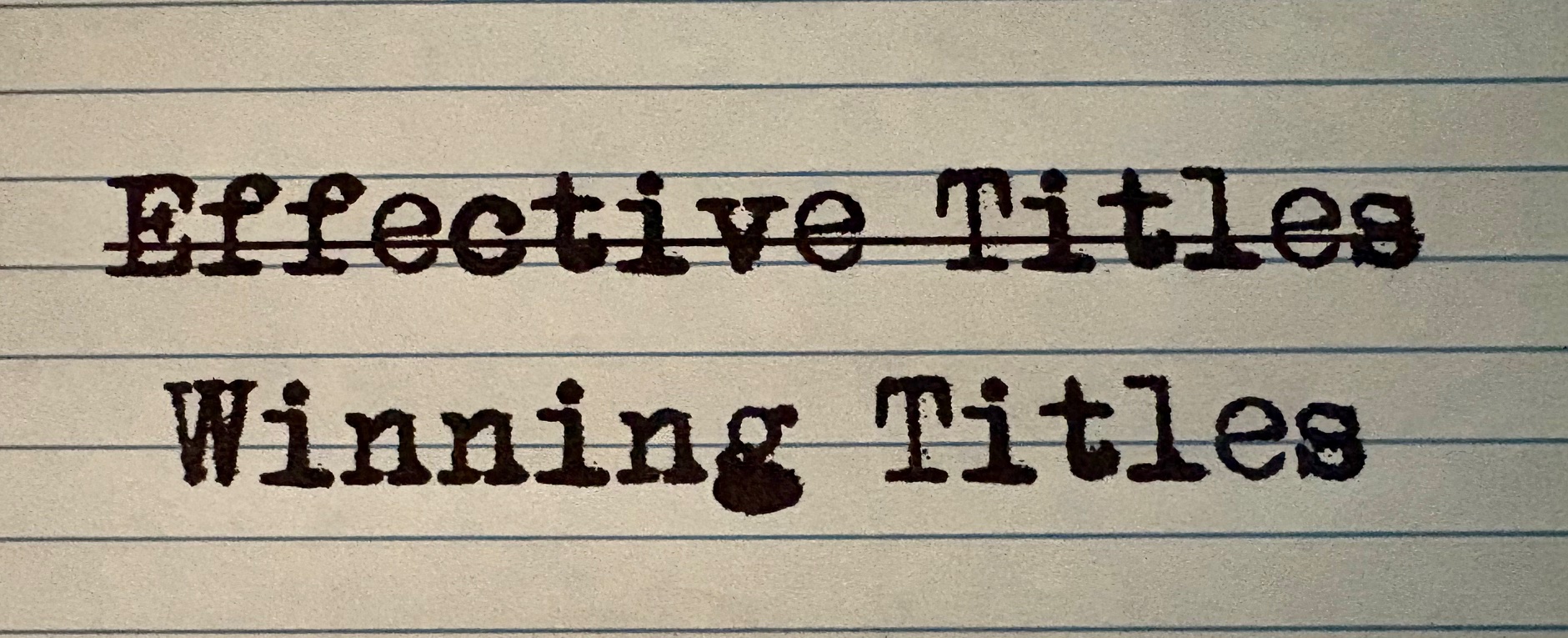
What makes a title effective? That’s an important question to consider since the title contains the first words of yours that a reader will encounter. First, it should be descriptive; it should evoke an image in the reader’s mind. It should also be relevant to your subject; it should convey something about the writing that will follow. Lastly, it should be intriguing; it should create in the reader a desire to keep reading. With those traits in mind, review the titles of your classmates’ analyses listed below. Which of them is most effective and why?
- “The Classroom of Loss”
- “Confidence in the Face of Language”
- “Death is in the Lesson Plans”
- “Details Matter”
- “Falling Not Jumping: The Power Words”
- “Found in the Dark”
- “The Impact of One Image”
- “Learning through Loss”
- “The Man Who Changed the Game Forever”
- “On ‘The Falling Man'”
- “One Player, New Strategy”
- “Working through ‘The School'”
Bonus Assignment Opportunity
Directions
- Determine which one of the titles you deem most effective.
- Compose a comment of one complete sentence or more that includes (1) the title enclosed in quotation marks, and (2) a brief explanation of its effectiveness. If the title includes a title within it, be sure to inclose that title in single quotation marks. (See the two examples in the list above.)
- A bonus for your bonus: You will receive extra points for your bonus assignment if you include the correct answers to the questions that follow. With the title of his new memoir– which I addressed in yesterday’s class notes–Tom Junod employs a device I used in the title of yesterday’s blog post. Stephen King employs that device in “Strawberry Spring” as well, not in the title but twice in the story. What device does Junod employ in his title, and to what does the title refer?
- Post your comment as a reply to this blog entry no later than 5 p.m. on, Monday, March 23. (To post your comment, click on the post’s title, and scroll down to the bottom of the page. You will then see the image of an airmail envelope with a leave comment option.)
I will approve your comments (make them visible) after Monday’s deadline.

 Jane Lucas
” The classroom of loss” Is the most effective among the list, this is because the title follows all three steps on writing an effective title.
By reading the title I could create an image of a classroom, the word ” Loss” in the title adds an unexpected emotional weight, and it created genuine curiosity about what the writing will reveal.
+Bonus: The device used in Junod’s memoir “In the Days of My Youth I was Told what it means to be a Man” and ” Strawberry spring is Allusion, alluding to Eudora Welty’s memoir ” One Writer’s beginning” which was The Title of the Blog. Junod refers to the experiences of his youth and what shaped who he became as a writer and man.
The most effective title is “Death is in the Lesson Plans” as it’s very intriguing and makes the reader want to learn more. Additionally, this title is descriptive, which creates a vivid image in the reader’s mind of the connection between death and education.
In Tom Junod’s writing, he uses allusion in his new memoir “In the Days of My Youth I was Told What it Means to be a Man” to refer to cultural expectations about masculinity, as well as twice in “Strawberry Spring” by Stephen King, which connects the events to an overarching meaning throughout the text.
Among all the title examples, “Learning through Loss” stood out to me the most. This title is compelling because it immediately arouses curiosity and encourages the reader to delve into the essay’s narrative. I found myself wondering what lessons the author was writing about and what kind of loss was at the heart of the story.
I believe that “Death is in the Lesson Plans” is the most effective title. This is because “death” isn’t exactly something you would find in anyone’s lesson plans, this creates a strong hook to make the reader interested in what it could be about.
The title that I deem to be most effective is “Death is in the Lesson Plans.” This title is effective because it is immediately an attention grabber and sets readers up for an interesting read. Not only does it grab the attention of readers because of the word “death,” but also in the sense of feeling relatable. As college students, we of course have lesson plans all the time, so seeing the word “death” associated with it really pulls you in as a reader.
The Title, “Death is in the Lesson Plans,” is the most effective title. This is because when I read this title it pulled me in and wanted me to read more! This is effective for the readers as it pulls them in and makes them want to know what the writing is about, from the title.
In the memior, “In the Days of My Youth I Was Told What It Means to Be a Man,” Junod uses allusion to convey older and traditional text to structure his title. This is seen as he starts the title with “In the days of my youth” which is stated all over in Ecclesiastes and even phrased the same way in Ecclesiastes 12:1. This shows how his title allueded to the bible and older traditional text.