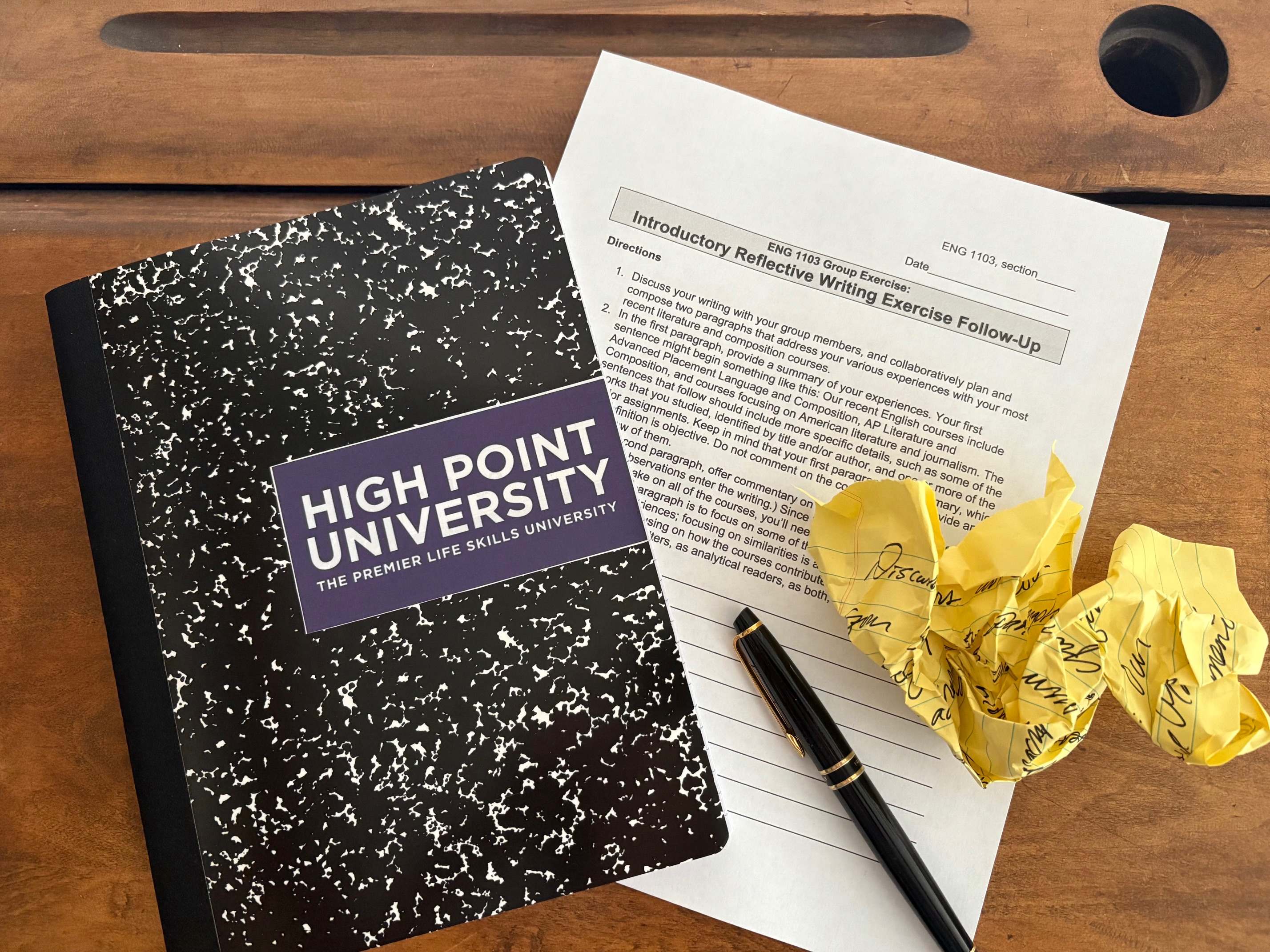
This morning in class, we will review the syllabus exercise that you completed on Monday. After that, I will return your reflections-in-progress, and you and three of your classmates will compose two paragraphs that incorporate some of the details from your individual reflections.
Directions
Discuss your writing with your group members, and collaboratively plan and compose two paragraphs that address your various experiences with your most recent literature and composition courses.
In the first paragraph, provide a summary of your experiences. Your first sentence might begin something like this: Our recent English courses include Advanced Placement Language and Composition, AP Literature and Composition, and courses focusing on American literature and journalism. The sentences that follow should include more specific details, such as some of the works that you studied, identified by title and/or author, and one or more of the major assignments. Keep in mind that your first paragraph is a summary, which by definition is objective. Do not comment on the courses; simply provide an overview of them.
In the second paragraph, offer commentary on the courses. (Here is where your personal observations enter the writing.) Since you will not be able to address everyone’s take on all of the courses, you’ll need to be selective. One way to organize the paragraph is to focus on some of the differences among your group members’ experiences; focusing on similarities is another option. Yet another option is this: focusing on how the courses contributed to your group members’ development as writers, as analytical readers, as both, or as neither.
After the note taker has recorded your paragraphs, allow time for each group member to review them and offer recommendations for revisions. Discuss any suggestions for changes and edit as needed.
Next Up
Wordplay Day! To prepare for class, visit the Dictionary and World Builder pages on the Scrabble website, and review tomorrow’s post on my blog devoted to Scrabble tips. If you have never played Scrabble before, be sure to watch this short video on how to play Scrabble.
Before tomorrow’s class, be sure to complete the following tasks.
Review yesterday’s blog post as well as the syllabus. If you added the class after our first meeting on Monday, you can download the syllabus from Blackboard. In your journal, jot down any questions you have about the course.
Also, if you added the class after our first meeting on Monday, begin composing a reflective essay focusing on your most recent experiences in literature and/or composition courses. Begin your essay with a one-paragraph summary for each of the courses (two paragraphs, total). Keep in mind that summaries are by nature objective. Do not comment on the courses, simply offer an overview of them.
Follow those paragraphs with your observations on the courses. (Here is where your personal observations enter the writing.) Points to address include the following:
Were the courses similar to or different from your previous English classes? How?
Did the courses contribute to your development as a writer, an analytical reader, both, or neither?
How did those courses shape your attitude towards writing and/or reading?
How do you anticipate that English 1103 may be similar to or different from those courses?
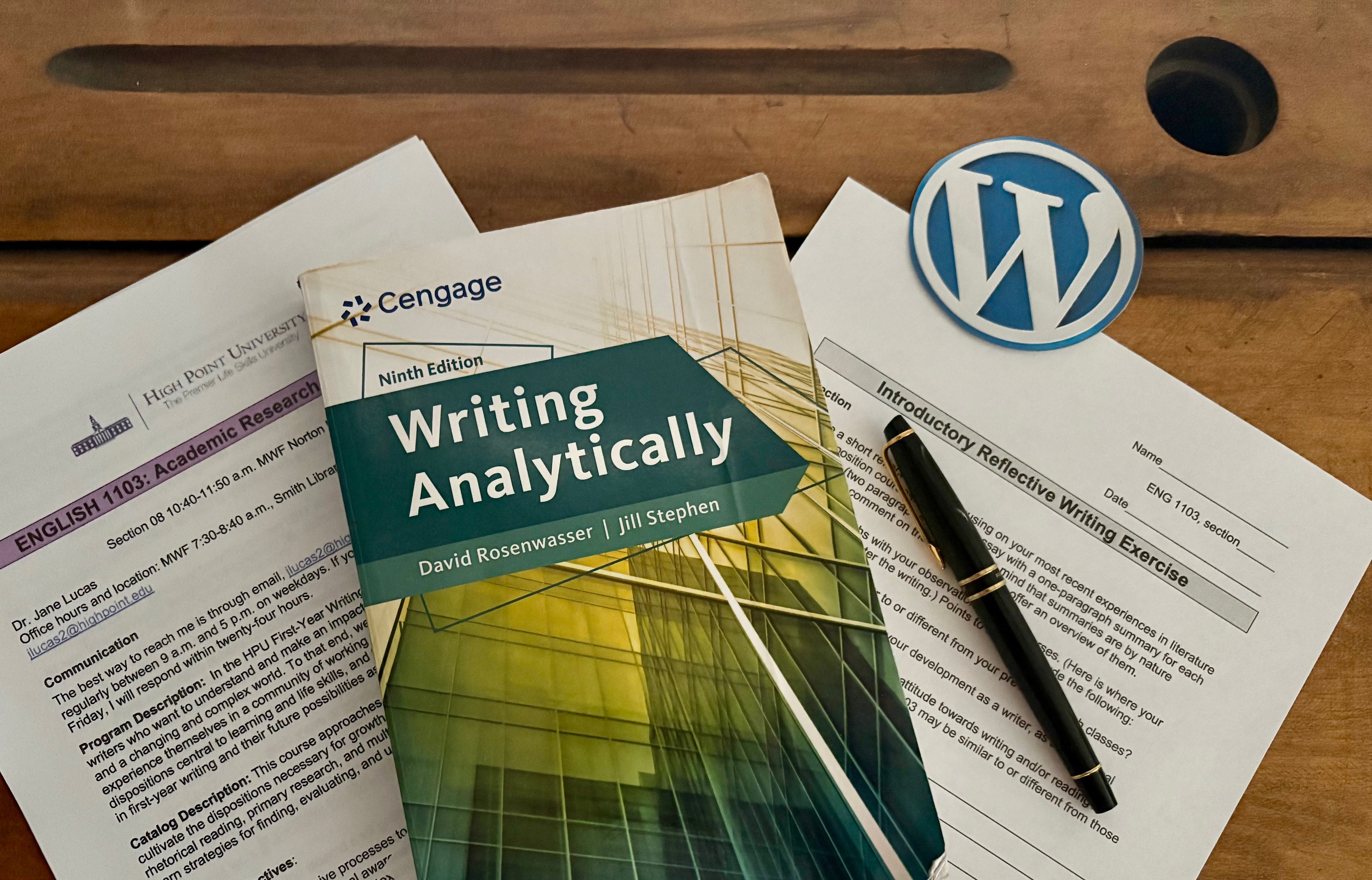
If you haven’t purchased or rented it already, order the textbook, the paperback edition of Writing Analytically, 9th edition, by David Rosenwasser and Jill Stephen.
Also, as soon as possible, create a free WordPress blog at wordpress.com, and email the URL to me so that I can link your blog to the class page.
Because writing longhand and limiting screen time are essential components of the class, I am including below some notes that illustrate why those practices, which may seem quaint, are vital to our work.
Writing Longhand
One practical reason for writing longhand: What we mark through remains on the page. Sometimes what we cross out can be useful later on, elsewhere in our writing. More importantly, research in cognitive neuroscience indicates that writing longhand has these benefits:
When we use our phones and laptops, it’s difficult for us to give our undivided attention to one endeavor, but often that singular focus is critical.
When we type on our phones, we often aim to convey as much as we can with as few characters as possible. Texting and emailing–both of which now feature predictive text–do not foster the vital skills of developing our writing and producing original thought.
Limiting our screen time not only helps us improve our writing skills, it can also benefit our overall well-being.
The research cited in the links that I’ve included above isn’t definitive, but it makes a strong case for the value of limiting our screen time and putting pen to paper. I encourage you to continue these practices after the semester ends.
Next Up
On Wednesday, we will continue the course overview, I will return the reflective writing that you began on Monday, and you will have additional time to develop your reflection in class.
Am I the person who will teach your English 1103 class? I posed that question this morning at the beginning of class as a starting point for our critical thinking, one of the key features of the class and of your other college courses.
To begin the collaboration and inquiry that will figure prominently this semester, you worked together in groups today to find the answers to some of the most frequently asked questions about the course. After class, continue to review the syllabus. (An additional copy is posted in Blackboard.) If you have any questions about the assignments, the course policies, or the calendar, please let me know.
Textbook
All of you in sections 8 and 18 of English 1103 are required to purchase or rent the paperback edition of the textbook, Writing Analytically, 9th edition, by David Rosenwasser and Jill Stephen. Bring your copy to class on the days when the title, Writing Analytically, appears in bold on the course calendar. On those days, we will examine portions of the chapters in class and you will address passages in the textbook in your own writing.
Your first (in class) reading assignment in the textbook is scheduled for September 10, which will give you ample time to order and receive your copy before you are required to have it in class.
Other Required Materials
Writer’s notebook/journal, bring to every class.
Loose leaf paper (for drafts and short in-class assignments), bring to every Monday and Wednesday class
Pen with dark ink, bring to every class
Pocket portfolio (for class handouts), bring to every class
WordPress Blog
As practice in developing your web literacy and writing for a broader online audience, you will maintain a free WordPress blog for the class. As soon as possible, create a free blog at wordpress.com. After you create your blog, email the address, or URL, to me, and I will link your blog to our class page, English at High Point. If you encounter technical difficulties creating your blog or publishing a post, email help@wordpress.com or contact the HPU Help Desk: helpdesk@highpoint.edu, 336-841-HELP (3457).
You will post the revisions of all of your major writing assignments both to your blog and to Blackboard. The posts that you publish for class will be public. You are welcome to create additional posts on your own. If you prefer for some of those posts to be private, keep them in draft form or choose the private visibility option.
You may also be asked to post comments to your classmates’ blogs and to mine.
Next Up
On Wednesday, you will continue to compose the introductory reflective essay that you began in class today.
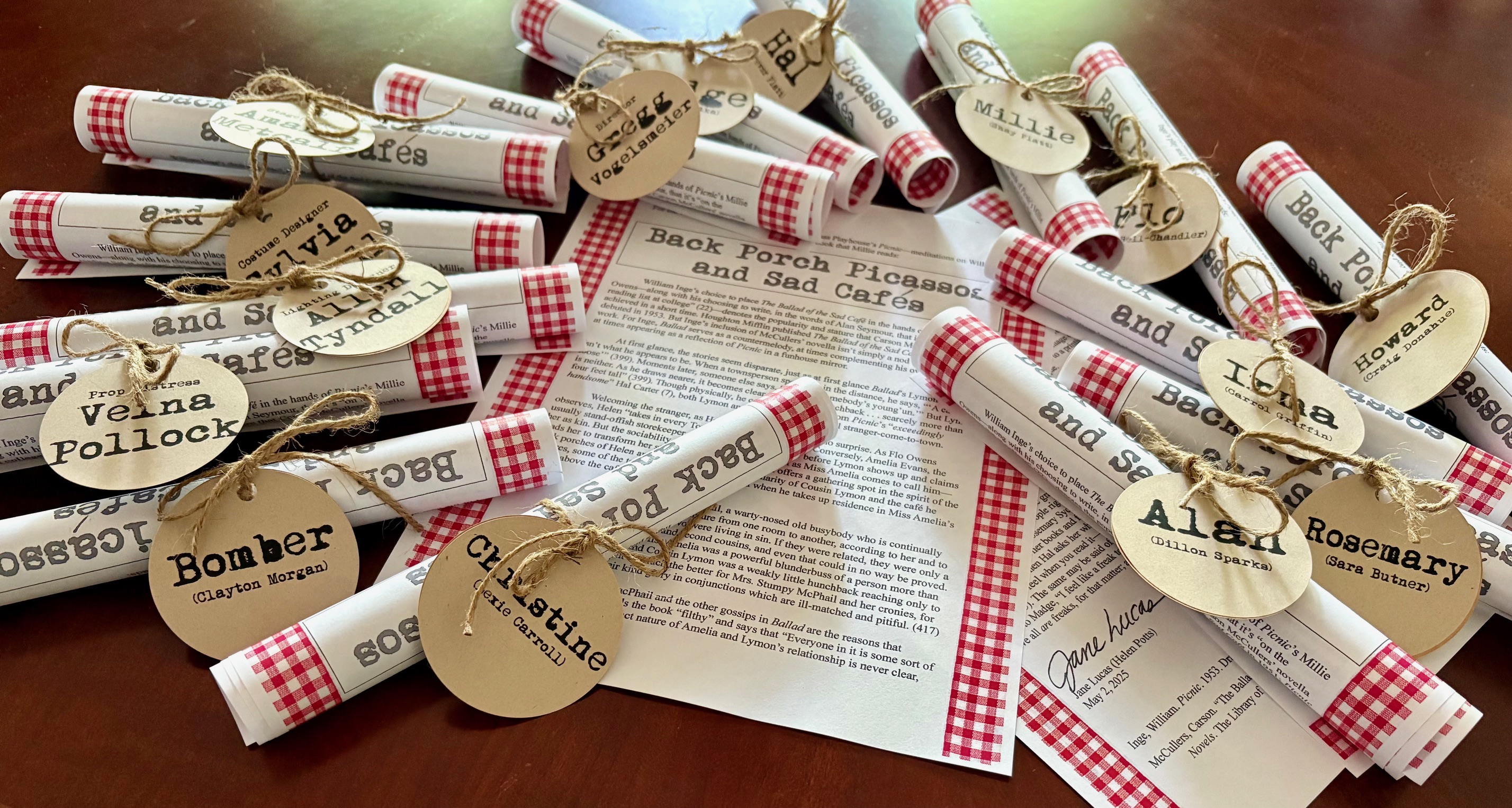
For the cast and production staff of Stained Glass Playhouse‘s Picnic–meditations on William Inge’s play and the book that Millie reads:
William Inge’s choice to place The Ballad of the SadCafé in the hands of Picnic’s Millie Owens—along with his choosing to write, in the words of Alan Seymour, that it’s “on the reading list at college” (22)—denotes the popularity and stature that Carson McCullers’ novella achieved in a short time. Houghton Mifflin published The Ballad of the Sad Café in 1951; Picnic debuted in 1953. But Inge’s inclusion of McCullers’ novella isn’t simply a nod to a then-recent work. For Inge, Ballad serves as a countermelody, at times complementing his own themes and at times appearing as a reflection of Picnic in a funhouse mirror.
At first glance, the stories seem disparate, just as at first glance Ballad’s Lymon Willis isn’t what he appears to be. When a townsperson spots him in the distance, he says, “‘A calf got loose’” (399). Moments later, someone else says, “‘No, it’s somebody’s young’un.’” But Lymon is neither. As he draws nearer, it becomes clear that he is “a hunchback . . . scarcely more than four feet tall” (399). Though physically, he couldn’t be further from Picnic’s “exceedingly handsome” Hal Carter (7), both Lymon and Hal are the archetypal stranger-come-to-town.
Welcoming the stranger, as Helen Potts does, comes as no surprise. As Flo Owens observes, Helen “takes in every Tom, Dick, and Harry” (11). Conversely, Amelia Evans, the usually stand-offish storekeeper, has never taken in anyone before Lymon shows up and claims her as kin. But the sociability of Lymon—Cousin Lymon as Miss Amelia comes to call him—leads her to transform her store into a nightly café that offers a gathering spot in the spirit of the back porches of Helen and Flo. Yet despite the popularity of Cousin Lymon and the café he inspires, some of the townspeople are scandalized when he takes up residence in Miss Amelia’s rooms above the café:
[A]ccording to Mrs. MacPhail, a warty-nosed old busybody who is continually moving her sticks of furniture from one room to another, according to her and to certain others, these two were living in sin. If they were related, they were only a cross between first and second cousins, and even that could in no way be proved. Now, of course Miss Amelia was a powerful blunderbuss of a person more than six feet tall—and Cousin Lymon was a weakly little hunchback reaching only to her waist. But so much the better for Mrs. Stumpy McPhail and her cronies, for they and their kind glory in conjunctions which are ill-matched and pitiful. (417)
The notions of Mrs. MacPhail and the other gossips in Ballad are the reasons that Picnic’s Rosemary Sydney labels the book “filthy” and says that “Everyone in it is some sort of degenerate” (22). Though the exact nature of Amelia and Lymon’s relationship is never clear, they are judged not only for their apparent transgressions but also for their unconventional appearances—a testament to the belief that good looks, themselves, are a virtue, a tenet that Picnic’s beauty, Madge Owens, calls into question when she asks, “What good is it to be pretty?” (16).
For all of Madge’s and Hal’s natural good looks, it’s clear that what we behold as beauty is also partly artifice. When Hal tells his friend Alan Seymour about his stint in Hollywood, he says, “[Y]ou gotta have a certain kind of teeth or they can’t use you . . . they’d have to pull all my teeth and give me new ones” (26). When Madge delays getting ready for the picnic, Alan prods her, saying, “Go on upstairs and get beautiful for us” (49). Still, unlike, the cross-eyed, six-foot Amelia and the hunchback Lymon, Madge, with or without powder and lipstick, finds the image in the mirror affirming. As she says to her mother, Flo, “It just seems that when I’m looking in the mirror that’s the only way that I can prove to myself that I’m alive” (42). Yet Madge is as much a misfit as McCullers’ oddballs, a truth signified in the image of her as Miss Neewollah published in The Kansas City Star’s Sunday magazine. Due to a printing error, her mouth appears in the middle of her forehead, rendering her grotesque.
That image of Madge with her mouth in the middle of her forehead is like the woman in the Picasso prints that hang over her sister Millie’s bed, a woman that Madge sums up sarcastically as one “with seven eyes. Very Pretty” (23). Millie knows that works of art “don’t have to be pretty” (23), that the woman with her seven eyes speaks a truth that photographic realism doesn’t. Similarly, The Kansas City Star’s unrealistic photograph doesn’t lie. Objectifying Madge distorts her.
Millie vows that after she graduates from college that she’s “going to New York, and . . . write novels that’ll shock people right out of their senses” (87). Some people, like Ballad’s Mrs. McPhail and Picnic’s Rosemary Sydney, may be shocked. Others, ones with Millie’s own sensibility, will read her books and feel the way Millie herself feels when she reads The Ballad of the Sad Café. When Hal asks her what it’s about, she says, “[I]t’s kind of hard to explain, it’s just the way you feel when you read it—kind of warm inside and sad and amused—all at the same time” (53). The same may be said of Picnic. Near the play’s end, before Hal jumps the train, he says to Madge, “I feel like a freak to say this, but—I love you” (85). We all feel like freaks, Hal. We all are freaks, for that matter; and we love, for better or worse—and all at the same time.
Works Cited
Inge, William. Picnic. 1953. Dramatists Play Service Inc., n.d.
McCullers, Carson. “The Ballad of the Sad Café.” 1951. Carson McCullers: The Complete Novels. The Library of America, 2001. pp. 395-458.
Remember that your exam period begins at 8 a.m. on Tuesday, April 29.
Keep all of your required blog posts for the semester (your final essay and annotated bibliography, analysis, and literacy narrative) published (visible on your blog) until final grades have been posted. Also make sure that you have corrected errors of grammar, punctuation, mechanics, and style, and deleted all placeholders and sample posts. Since blog activity is a component of your course work, I will review your blogs before I finalize those grades.
If you haven’t done so already, submit course evaluations for ENG 1103 and your other classes.
Your course assignment grade has been updated to its preliminary final average; exemplary blog activity, class participation, and attendance may raise it. If you wish to check that preliminary grade, please do so before 5 p.m. today, Thursday, April 24. After that, the Blackboard course site for English 1103, section nineteen, will no longer be available to students. Final grades for the course will be posted in eServices by the end of the day on Wednesday, April 30.
Next Up
During the exam period, you will deliver your individual presentations and serve as the audience/intern selection committee for your classmates. See your assignment handout and the April 16 blog post for details.
This final Scrabble post of the semester features the names of authors and characters that are playable words. Learning these will not only increase your word power and up your game, it will also broaden your knowledge of literature. If you haven’t read some of classics listed here, I encourage you to check them out.
eyre: a long journey (the last name of of the title character in Charlotte Bronte’s Jane Eyre, 1847)
dickens: a devil (Charles Dickens, 1812-1870)
fagin: a person, usually an adult, who instructs others, usually children, in crime (from a character of that type in Dickens’ Oliver Twist, 1838)
holden: the past participle of hold (Holden Caulfield, the protagonist in J.D. Salinger’s The Catcher in the Rye, 1951)
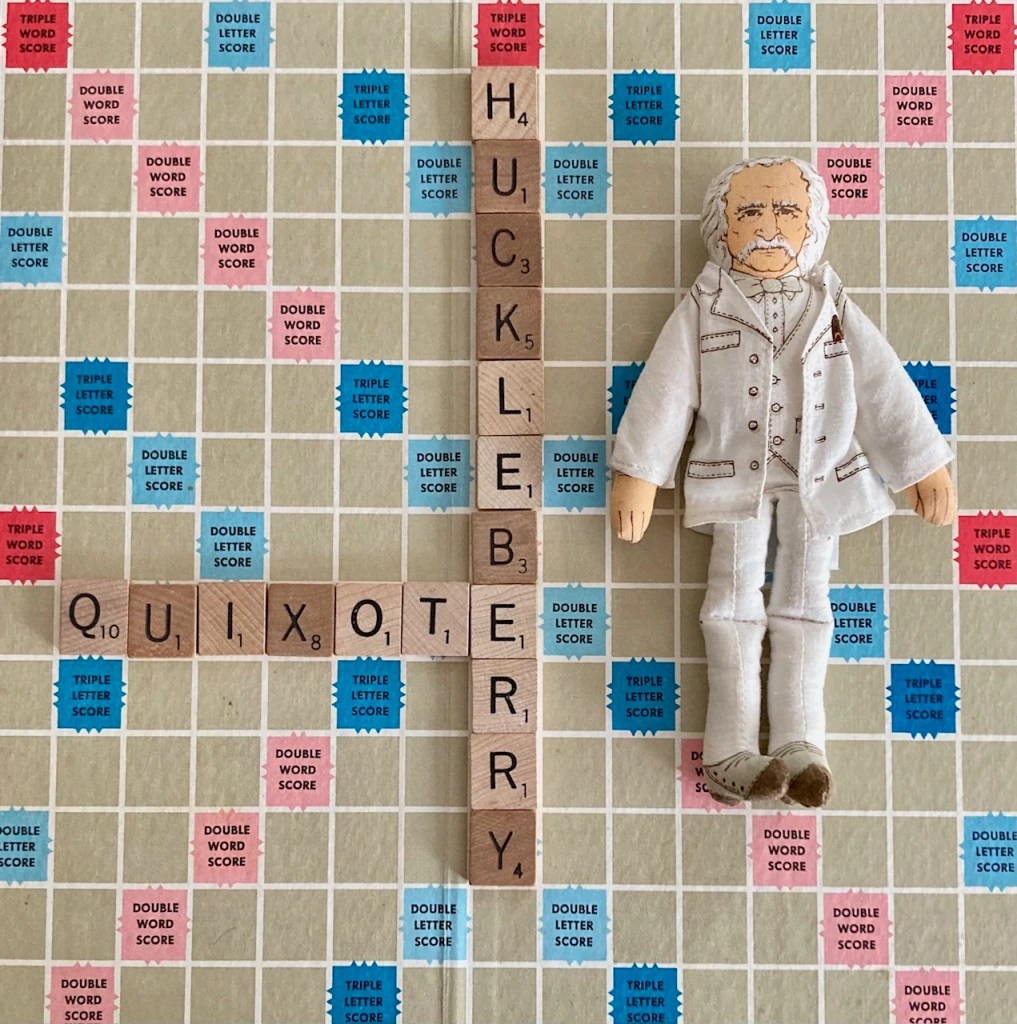
huckleberry: a berry like a blueberry (the first name of the title character in Mark Twain’s Adventures of Hucklebery Finn, 1884)
oedipal: describing libidinal feelings of a child toward the parent of the opposite sex (from the title character in Sophocles’ Oedipus Rex, c. 429 B.C.)
quixote: a quixotic, or extremely idealistic person; also quixotry, a quixotic action or thought (the title character in Michael de Cervantes’ Don Quixote, Part I: 1605, Part II: 1615)
Note that “huckleberry” and “quixote” could not be the first two words played in a Scrabble game because “huckleberry” is more than seven letters long. However, “huckleberry” and “quixote” could constitute the first three plays. The first two plays could be “berry” and “quixote,” and the third play could add “huckle” to “berry.”
Next Up
Wordplay Day! To prepare for class, revisit the Dictionary and World Builder pages on the Scrabble website, and review the blog posts devoted to Scrabble tips, including this one.
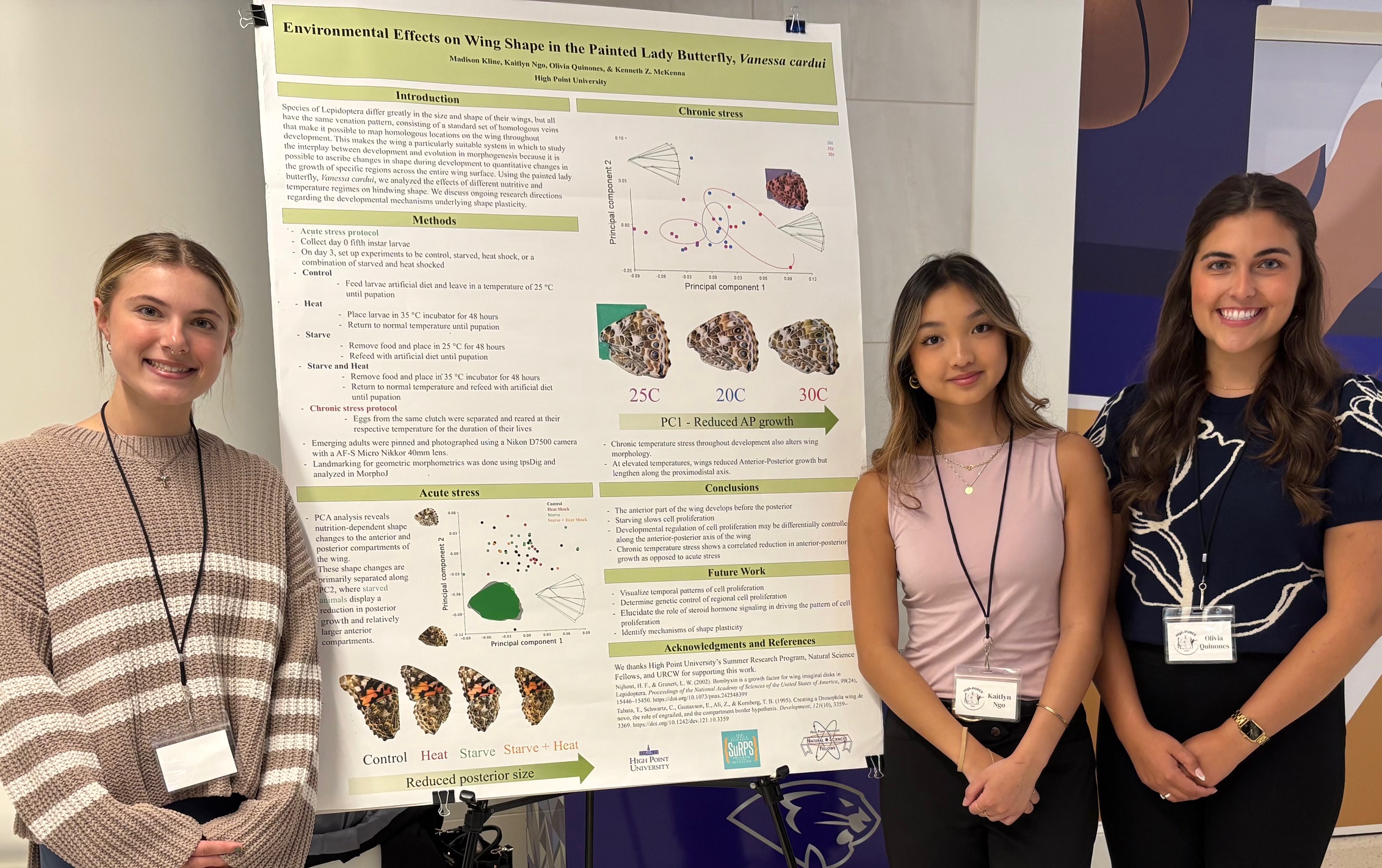
(L-R) Madison Kline, ENG 1103.19 Fall 2024, Kaitlyn Ngo, and Olivia Quinones with their poster display for their research project “Environmental Effects on Wing Shape in the Painted Lady Butterfly, Vanessa Cardui.”
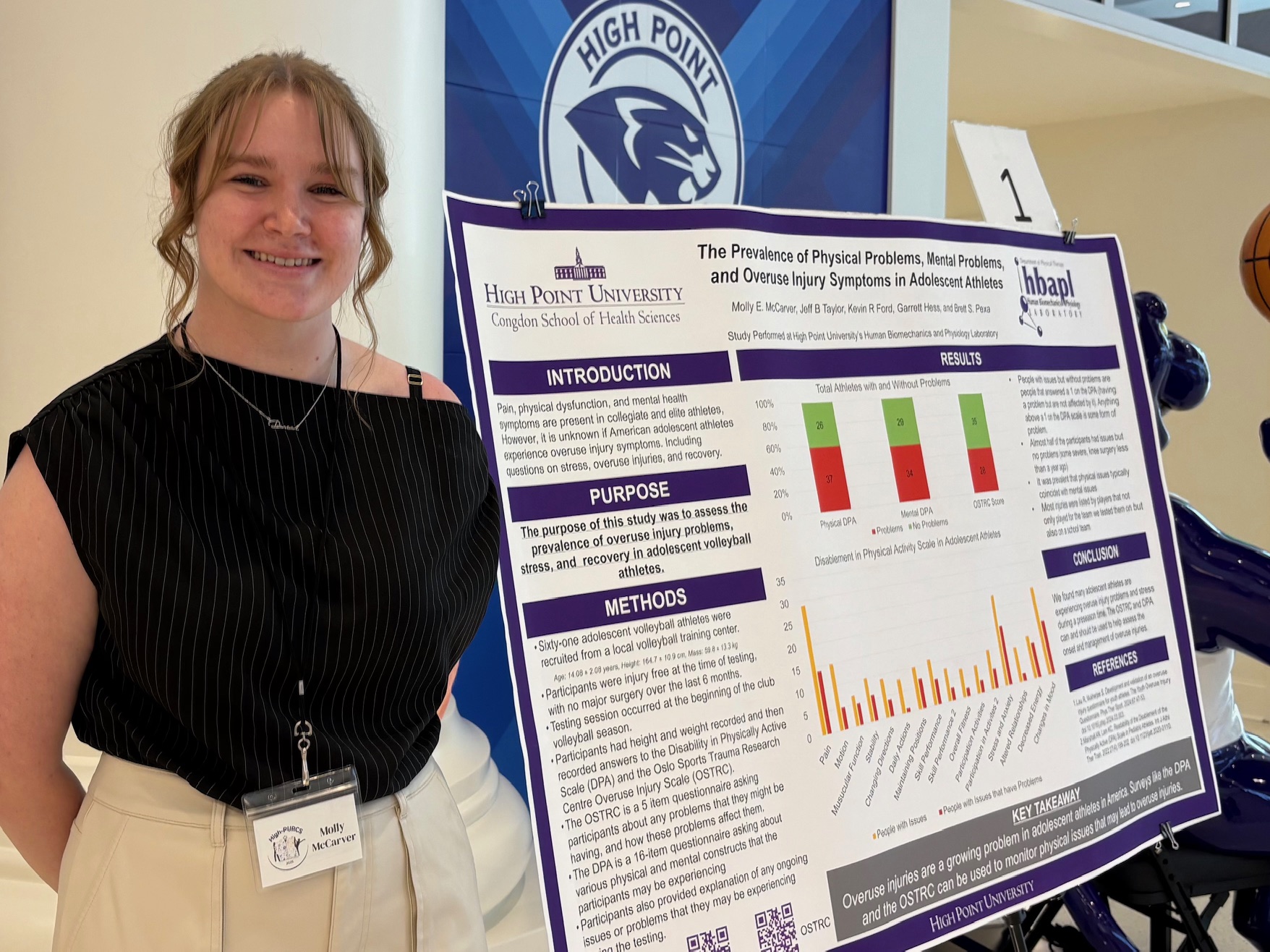
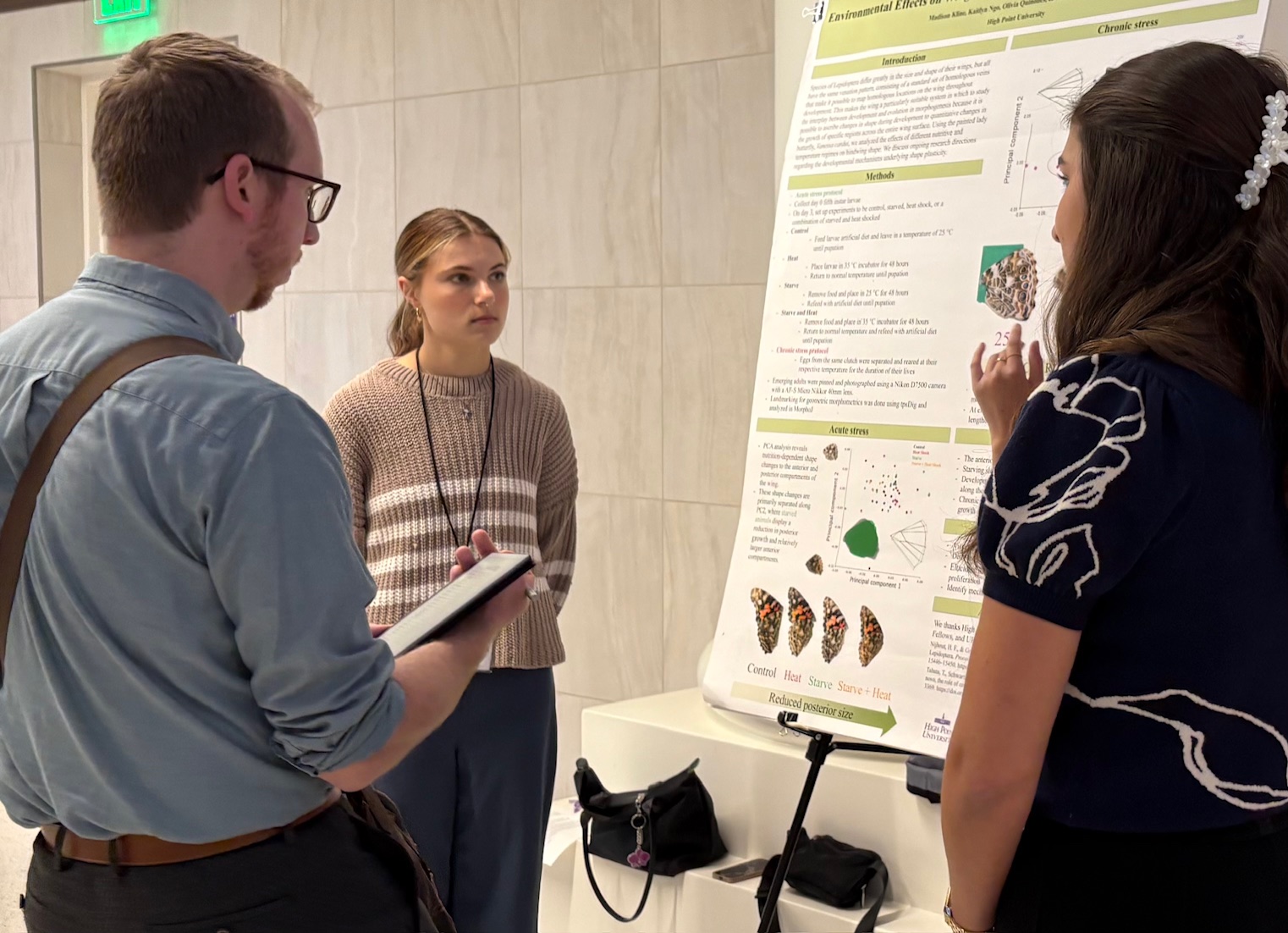
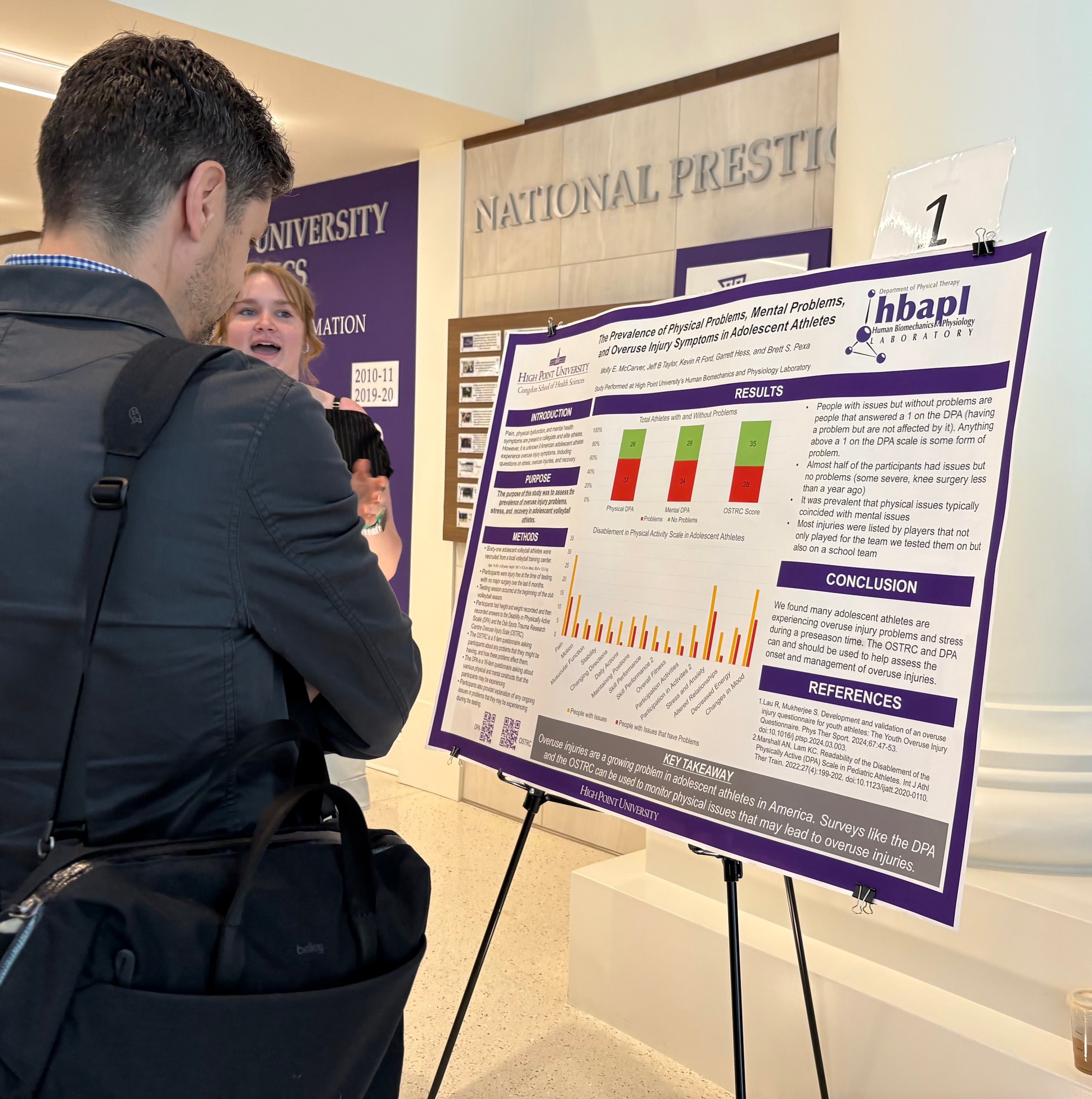
Last Tuesday’s High-PURCS featured poster displays for research projects produced by two former students of mine: Molly McCarver, who was enrolled in English 1103.19 in the fall semester of 2023, and Madison Kline, who was enrolled in English 1103.19 in the fall semester of 2024.
Molly McCarver, ENG 1103.19 Fall 2023, with her poster display for her research project “The Prevalence of Physical Problems and Overuse Injury Symptoms in Adolescent Athletes.”
The final essays and bibliographies that you wrote for English 1103 may serve as starting points for larger projects, and I encourage you to consider pursuing those projects in upper-level courses and presenting those projects at High-PURCS as well as at undergraduate research and creative works conferences at other institutions.
Madison Kline (center) and her collaborators (right) discuss their project with a poster session attendee (left).
If you missed High-PURCS 2025, be sure to check out next year’s symposium. Attending the poster and presentation sessions will not only provide you with ideas and inspiration for your own projects, it will also show your support for the HPU students whose research achievements are on display.
Molly McCarver discusses her project with a poster session attendee (left).
Also consider submitting your writing to Innovation, High Point University’s journal of scholarly and creative work. For more information on Innovation, contact Editor-in-Chief Justin Cook, jcook3@highpoint.edu.
Next Up
Tomorrow marks your final Wordplay Day of the semester! To prepare, revisit the Dictionary and World Builder pages on the Scrabble website, and review the blog posts devoted to Scrabble tips.
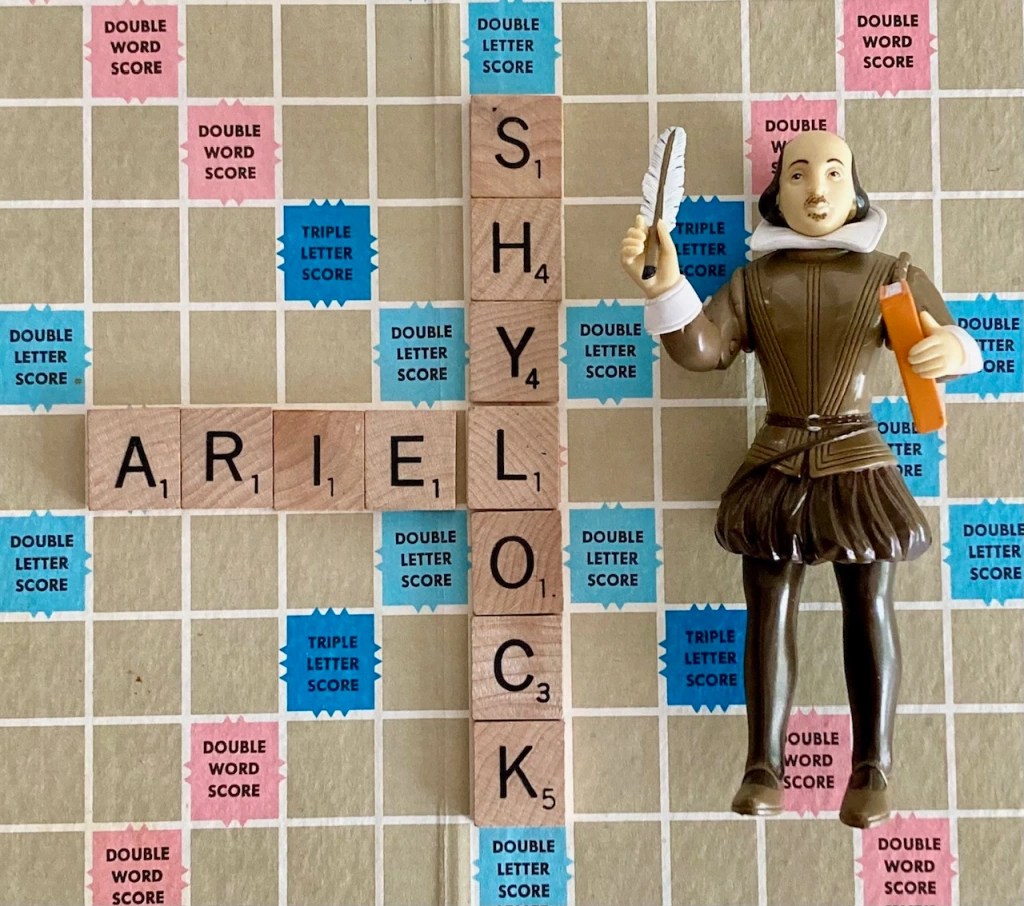
In honor of the Bard of Avon, born on April 16, 1564, this week’s Scrabble post features Shakespeare characters whose names are also playable common nouns.
ariel: a gazelle found in Africa (Ariel, The Tempest, 1611-12)
dogberry: the fruit of a dogwood tree (Dogberry, Much Ado about Nothing, 1598-1599)
hamlet: a village (the title character of Hamlet, 1600-1601)
lear: learning (the title character of King Lear, 1605-1606)
puck: a disk used in ice hockey and other games (Puck, A Midsummer Night’s Dream, 1595-1596)
romeo: a seductive lover, a male lover (one of the title characters in Romeo and Juliet, 1594-1595)
shylock: to lend money with a high interest rate (Shylock, The Merchant of Venice, 1596-1597)
Next Up
When class resumes next Wednesday, you will have your final Wordplay Day of the semester! To prepare, revisit the Dictionary and World Builder pages on the Scrabble website, and review the blog posts devoted to Scrabble tips, including this one.
This morning in class, you will have time to plan and prepare the individual presentation that you will deliver during the exam period, 8 a.m. Tuesday, April 29. I will distribute copies of the assignment in class. An additional copy is posted on Blackboard and the directions are also included below.
Overview
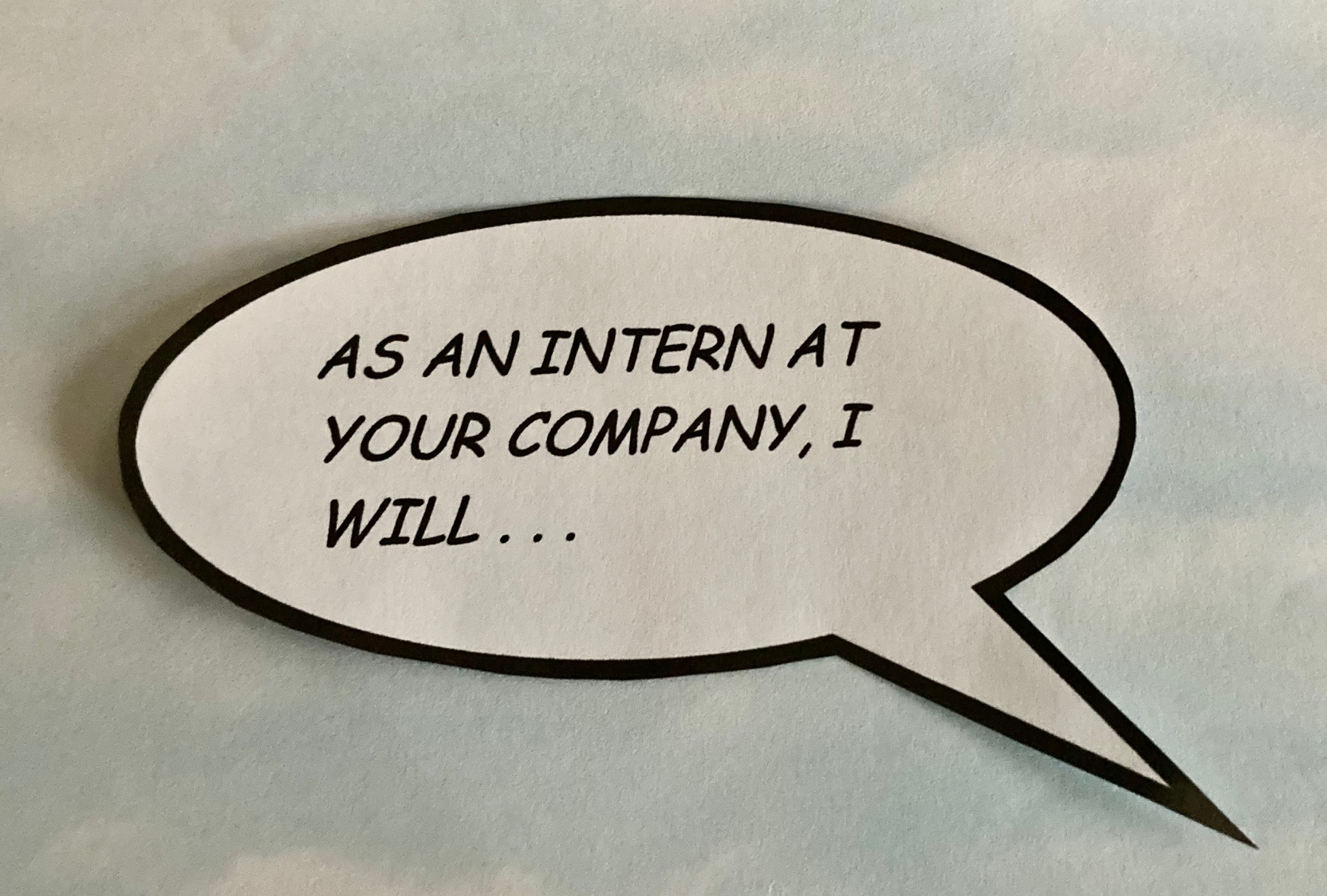
As a finalist for a much-sought-after internship in your field, you are required to deliver a concise and engaging presentation that highlights your achievements in English 1103 and demonstrates your ability to effectively assume the responsibilities that the internship requires of you. Among the aspects of the course that you should address are one or more of your major writing assignments and the development of your critical thinking and collaboration skills. You are encouraged but not required to address additional aspects of the course.
Directions for Planning
Plan a brief presentation of approximately three minutes that highlights your achievements in English 1103 and demonstrates your ability to effectively assume the responsibilities that the internship in your field requires of you.
Address one or more of your major writing assignments and the development of your critical thinking and collaboration skills. You are encouraged but not required to address additional aspects of the course.
Include the following in your presentation:
an opening in which you state your first and last names and your major,
concrete details in your blog that illustrate the development of your writing, your critical thinking, and your collaboration skills
a close examination of one pertinent passage in your blog, and
a conclusion that provides closure and invites questions from the interview committee.
Directions for Rehearsing
In preparation for rehearsing, write your notes on index cards. If your notes are in complete sentences, rewrite them to include only words and short phrases for your key points. If your notes are too detailed, you will risk relying heavily on them and making minimal eye contact with the interview committee. Make as much eye contact as possible and be sure to make eye contact with committee members throughout the room rather than fixing your eyes on one or two people.
Because you are required to project your blog on the classroom screen, you should familiarize yourself with the presentation station. Demonstrating that you are not adept at using the technology required for your presentation may jeopardize your chances for obtaining the internship. If you have not used the presentation station, I encourage you to devote part of today’s class period to familiarizing yourself with its setup.
Practice good posture. As you deliver your presentation, your ears should be directly above your shoulders. If you tend to shift your weight from one foot to the other—a distracting habit that’s sometimes called rocking the boat—stand with your feet perpendicular to each other. If you do, you will not be able to shift your weight from one foot to the other.
Avoid filler words, such as um, like, and you know. If you tend to use filler words, practice pausing at the points where you are likely to use fillers.
Rehearse with a classmate. Take turns delivering your presentations and offering feedback. Offer both suggestions for improvement and words of encouragement.
Grade Criteria
An A final presentation includes all elements outlined in the directions for planning and rehearsing and demonstrates the presenter’s poise and ability to avoid filler words.
A B final presentation includes all elements outlined in the directions for planning and rehearsing but may be marred by the presenter’s lack of poise and/or lack of ability to avoid filler words.
A C final presentation includes most but not all elements outlined in the directions for planning and rehearsing and may also be marred by the presenter’s lack of poise and/or lack of ability to avoid filler words.
A D final presentation includes only some of the elements outlined in the directions for planning and rehearsing and may also be marred by the presenter’s lack of poise and/or lack of ability to avoid filler words.
An F final presentation includes few if any elements outlined in the directions for planning and rehearsing and may also be marred by the presenter’s lack of poise and/or lack of ability to avoid filler words.
Next Up
When class resumes next Wednesday, you will have your last Wordplay Day. To prepare, revisit the Dictionary and World Builder pages on the Scrabble website, and review the blog posts devoted to Scrabble tips.
Remember that High-PURCS, (High Point University Research and Creativity Symposium) will be held today from 12:30-6 p.m. at the Nido and Mariana Qubein Conference Center.
To encourage you to attend, you have the opportunity to earn five bonus points for your final in-class assignment.
To earn bonus points, follow these steps:
Attend a portion of High-PURCS, today, Tuesday, April 15, at the Nido and Mariana Qubein Conference Center from 12:30-6:00 p.m.
View a minimum of five presentations.
For each, list the presentation identifier (poster number or oral session time and room), topic, and name of the presenter, as well as what you learned from the presenter, on the online form provided.
Attending High-PURCS will not only offer you the chance to see student projects produced for upper-level courses, it will also serve as an opportunity for you to see how your own final essay and annotated bibliography might develop into a larger project for an upper-level course.
For a complete schedule of the High PURCS sessions, see the April 10 blog post.
Next Up
In class on Wednesday, you will plan and prepare for the individual oral presentation that you will deliver during the exam period at 8 a.m. on Tuesday, April 29. You will receive a copy of the assignment in class, and it will be featured in Wednesday’s blog post.



 Jane Lucas