This morning, after I collect your Check, Please! worksheets for Lesson Two, I will return your drafts, and you will have the remainder of the class period to begin revising your literacy narratives on your laptops. You will have an additional week to continue your revision work before you submit the assignment to Blackboard and publish it as a WordPress blog entry. The due date is next Wednesday, September 13 (before class). The hard deadline is 10:30 a.m. on Friday, September 15. Directions for submitting your literacy narrative are included on your assignment sheet and on the Blackboard submission site.
As you continue to revise your literacy narrative, consider visiting The Writing Center. If you do so, you will earn five bonus points for the assignment.
To schedule an appointment, visit https://highpoint.mywconline.com, email the Writing Center’s director, Professor Justin Cook, at jcook3@highpoint.edu, or scan the QR code below. To earn bonus points for your literacy narrative, consult with a Writing Center tutor no later than Thursday, September 14.
If you haven’t yet created your blog and sent me the address, please do so ASAP. If you encounter technical issues creating your blog and cannot meet with me for help during office hours, contact WordPress, help@wordpress.com, or the HPU IT Help Desk, helpdesk@highpoint.edu.
As you work on your second Check, Please! assignment, refer to the sample lesson one assignment posted in Blackboard and on my blog. (See the entry published on August 28.) Also review the notes below.
When you first mention the course’s author, Mike Caulfield, include his credential. The fact that he is the author of the course is not a credential. His job title is. Anyone can create a course, but that doesn’t mean that the course has any worth. Including Caulfield’s job title, research scientist at the University of Washington’s Center for an Informed Public, tells readers that he is an expert in his field. Note that his title has changed since I wrote the sample assignment for lesson one. The credential that you should use is the one included above. In addition to listing Caulfield’s credential, you should mention that he is the author of the course.
On first reference refer to the author by first and last name. In subsequent references, refer to him by last name only.
If you present a list, do not follow a verb with a colon before the list. For example: The four steps in the SIFT approach are (1) “Stop,” (2) “Investigate,” (3) “Find better coverage,” and (4) “Trace claims, quotes, and media to the original context.”
If you introduce a list with a statement that ends with a noun, follow the noun with a colon. For example: Mike Caulfield, author of the course and Director of Blended and Networked Learning at Washington State University, introduces the four-step SIFT approach to determining the reliability of a source: (1) “Stop,” (2) “Investigate,” (3) “Find better coverage,” and (4) “Trace claims, quotes, and media to the original context.”
Note that in the lists above the comma precedes the closing quotationmark.
Also note that the Oxford, or serial, comma–the comma before and–should be used when you are following MLA style guidelines.
The first paragraph of your assignment is a summary, which is an objective, first-person overview written in present tense. Neither first- nor second-person singular or plural (I, me, we, us, you) should appear anywhere in a summary.
The paragraphs that follow your summary are commentary. That is where you should use first person because you presenting your comments on the lesson.
Do not use an ampersand (&) in place of the word and in formal writing.
Use the word ifin reference to a condition. For example: If a source appears unreliable, investigate it.
Use whether in reference to a choice or alternative. For example: Using the SIFT method will enable you to determine whether a source is accurate and reliable.
Use like for comparison. For example: Wikipedia is like Britannica.
Use such as for inclusion. For example: Whenever possible, use publications of record, such The New York Times and The Guardian.
Include a complete MLA-style work cited entry. The heading should be the singular work, not works, because you are citing one source. Do not underline the heading, and be sure to handwrite or type the entry with a hanging indent. Remember that MLA-style works cited entries take the opposite form of paragraphs. The first line of a paragraph is indented five spaces or one-half inch and the lines that follow are flush left. In a works cited entry, the first line is flush left, and the lines that follow are indented five spaces or one-half inch.
Next Up
On Wednesday you will continue to work on your own literacy narratives. At the beginning of class, after I collect your second Check, Please! worksheets, I will return your handwritten drafts. You will have the class period to revise on your laptops and an additional week to continue revising before you post your revision to Blackboard and to your WordPress blog. The due date is Wednesday, September 13; the hard deadline is the morning of Friday, September 15.
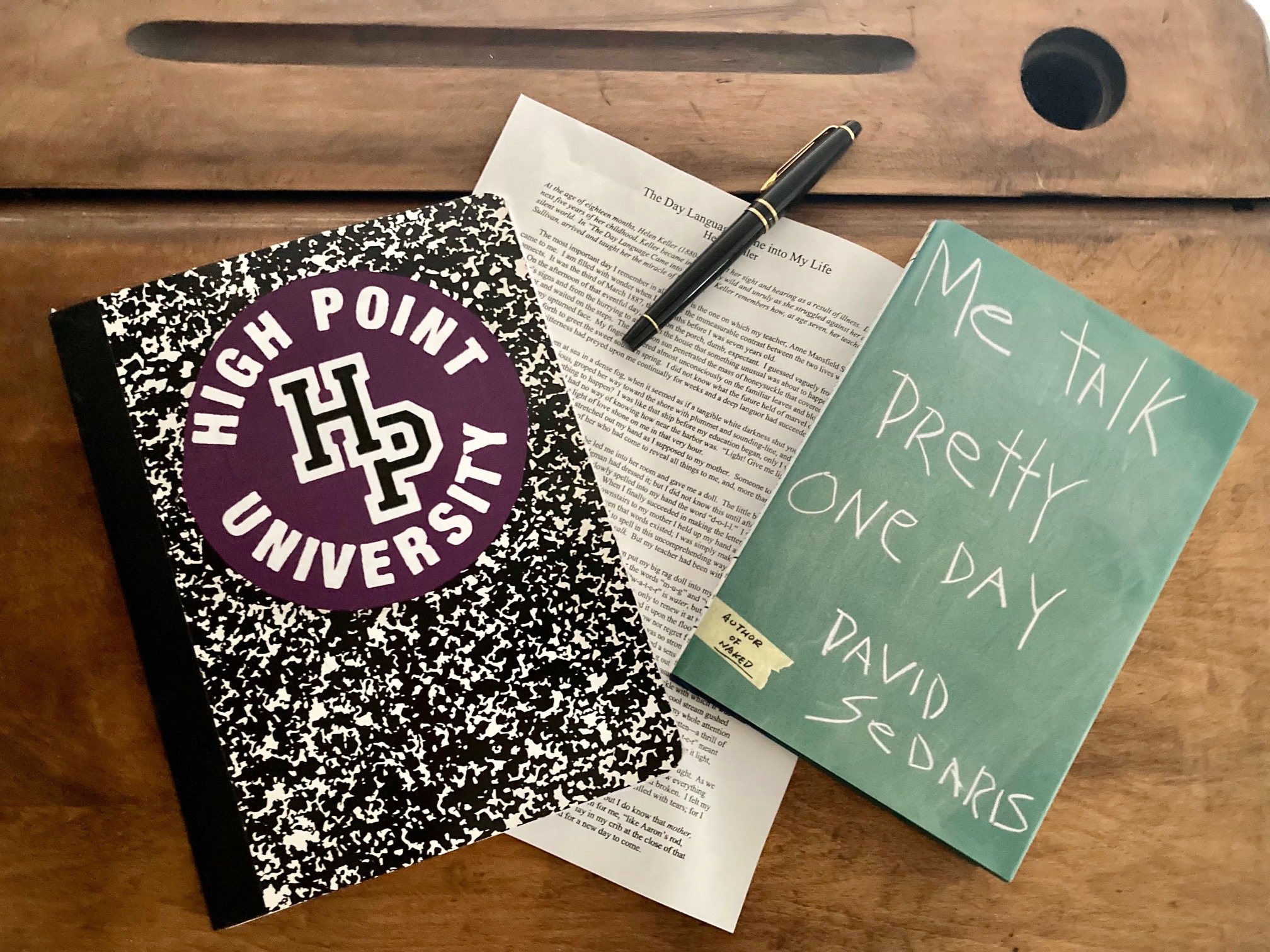
Today in class we will return to David Sedaris‘s essay “Me Talk Pretty One,” and you and three of your classmates will collaborate on an exercise that asks you to examine–and subsequently address in writing–these elements of his literacy narrative:
scene and summary–you will examine how and where Sedaris shifts from one to the other
metaphors and similes
hyperbole
conclusion–specifically how the conclusion conveys the story’s significance without stating explicitly, this experience was significant because. . . .
Each of these elements plays an important role in narrative, none more so than scene, which is vital to a story’s life. Without it, a narrative falls flat. With summary, a writer compresses time to offer an overview of events. Through scene, a writer lets time unfold in front of the readers’ eyes, which is what readers prefer. They are drawn into a narrative when they can see for themselves what is happening.
Along with continuing our study of Sedaris’s “Me Talk Pretty One Day,” we will begin to examine “The Day Language Came into My Life,” the first pages of Chapter Four of Helen Keller’s autobiography, The Story of My Life.
Together, these two essays by David Sedaris and Hellen Keller demonstrate two vastly different ways to present a literacy narrative. “Me Talk Pretty One Day” offers a quirky look at the challenges of learning French from a sarcastic, soul-crushing instructor. Keller’s story poignantly recounts learning to make meaning through the sign language of her teacher, Annie Sullivan, learning that certain finger positions mean “water” for those who cannot hear it, and for others, like her, who can neither see nor hear it.
And by the Way
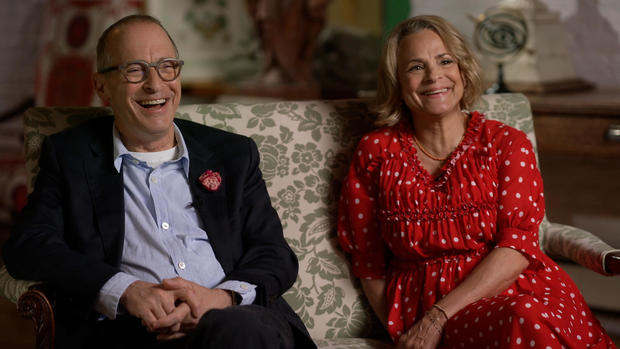
Last week in class, I mentioned that David Sedaris’s sister Amy is an actress who is perhaps best known for her role as Deb in the movie Elf (2003). Here is a picture of her and her brother:
On Wednesday you will continue to work on your own literacy narratives. At the beginning of class, after I collect your second Check, Please! worksheets, I will return your handwritten drafts. You will have the class period to revise on your laptops and an additional week to continue revising before you post your revision to Blackboard and to your WordPress blog. The due date is Wednesday, September 13; the hard deadline is the morning of Friday, September 15.
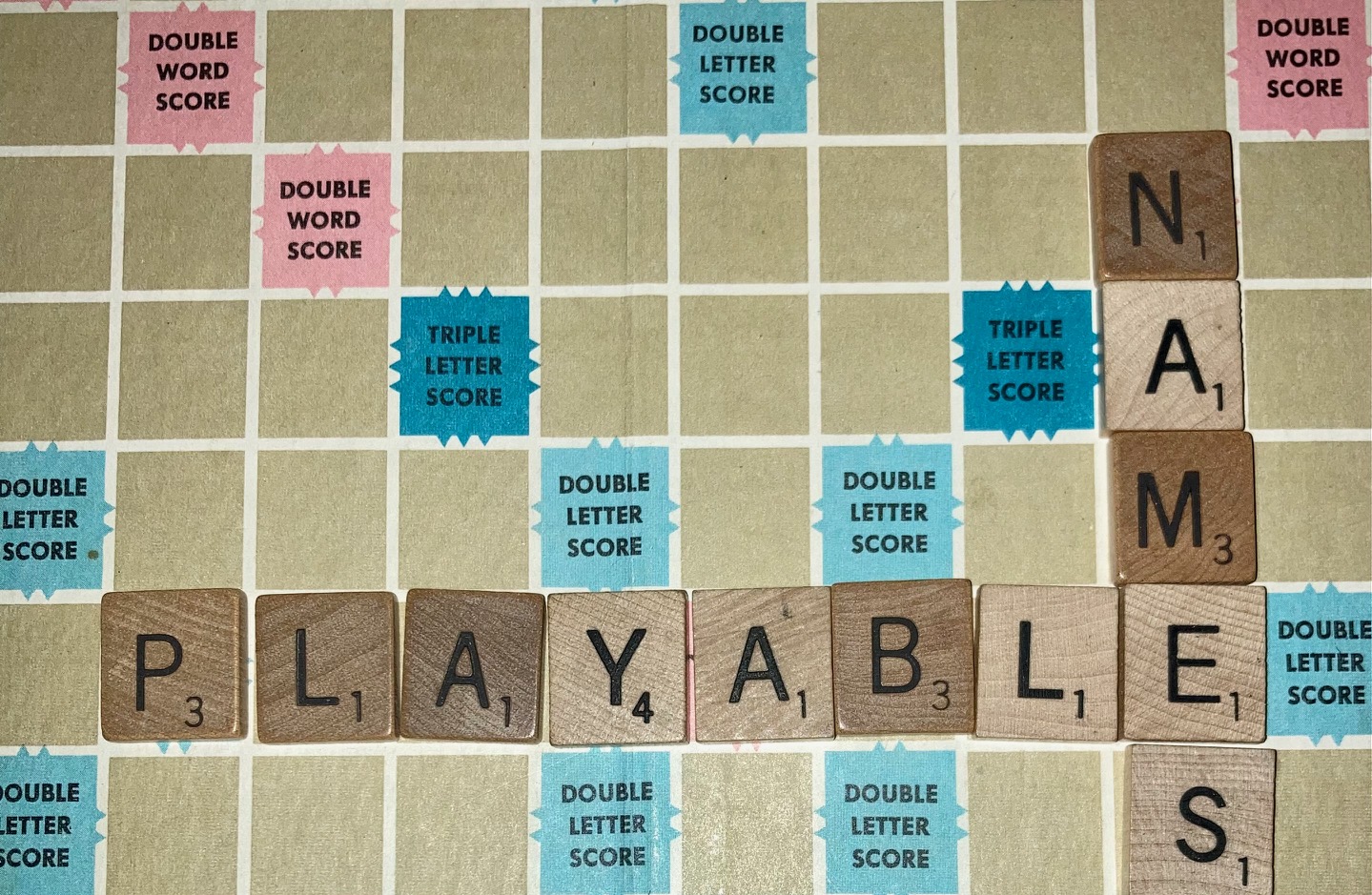
Wednesday afternoon I posted a bonus-point assignment that asked you to identify all of the playable names among your classmates and the students in my other section of English 1103. Congratulations to Amelia Courbron and Callie Walker who submitted their answers before yesterday’s 4 p.m. deadline. They will each receive five bonus points for their second Check, Please! assignment.
All of the playable names in sections 19 and 20 appear below in bold.
Section Nineteen
John (a boy or man) Connors
Molly (a type of tropical fish) Dewees
Amy Loving (feeling or showing love)
Nick (to make a shallow cut) Marotta
Riley Mason (a builder and worker in stone)
Molly (a type of tropical fish) McCarver
Jack (to hoist with a type of lever) Mertz
Sat (past tense of sit) Patel
Callie Walker (one who walks, or a device for helping one walk)
Section Twenty
Jesse (to fasten a strap around the leg of a bird in falconry) Brewer (a person or company that manufactures beer)
Ty Elder (a person of greater age)
Mckayla Flood (an overflowing of water beyond its normal confines)
Jack (to hoist with a type of lever) Garrity
Audrey West (the direction toward the point of the horizon where the sun sets at the equinoxes, on the left-hand side of a person facing north, or the part of the horizon lying in this direction)
Next Up
On Monday we will continue our study of David Sedaris‘s “Me Talk Pretty One Day.” We will also examine a second model literacy narrative, Helen Keller’s “The Day Language Came into My Life.”
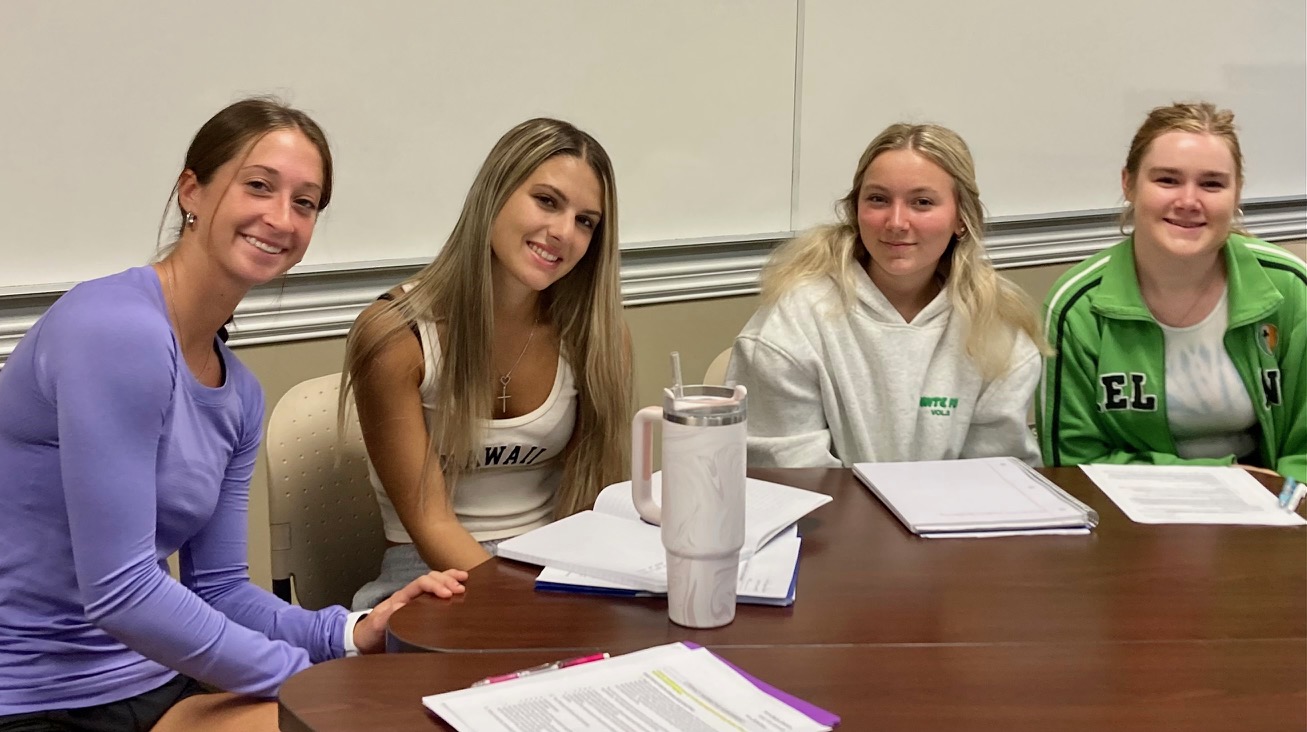
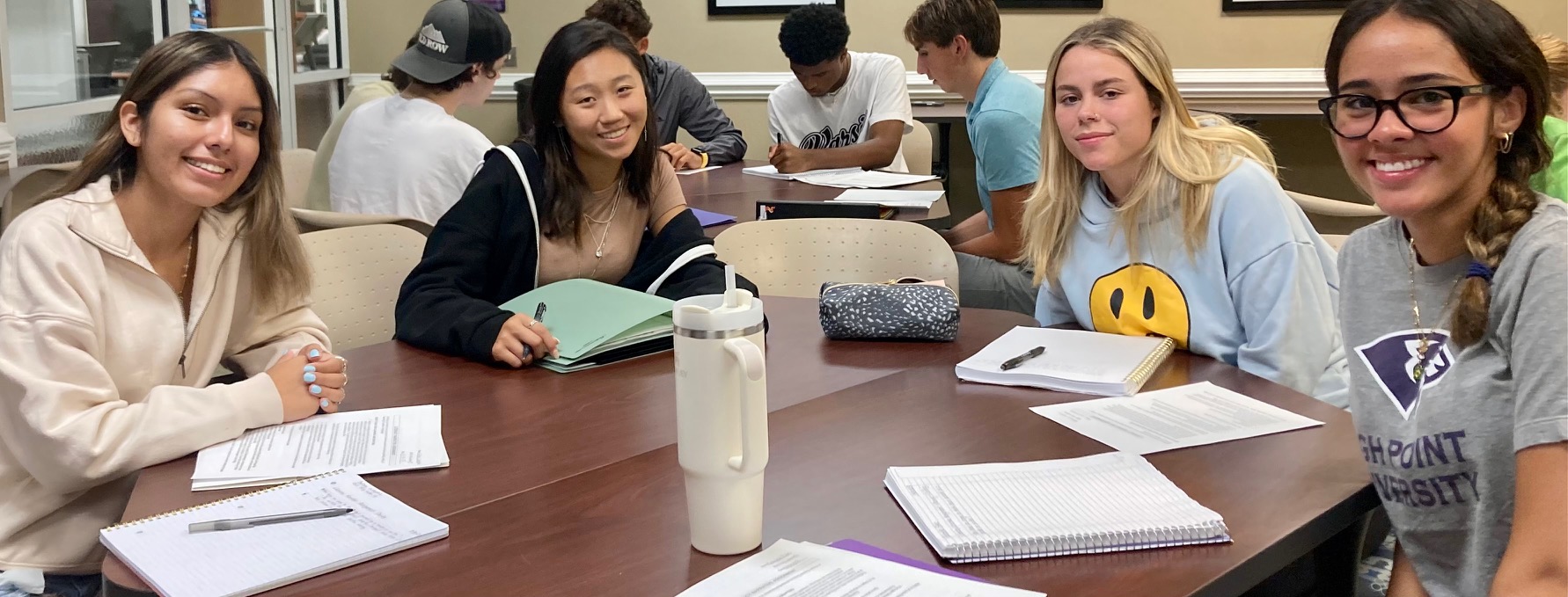
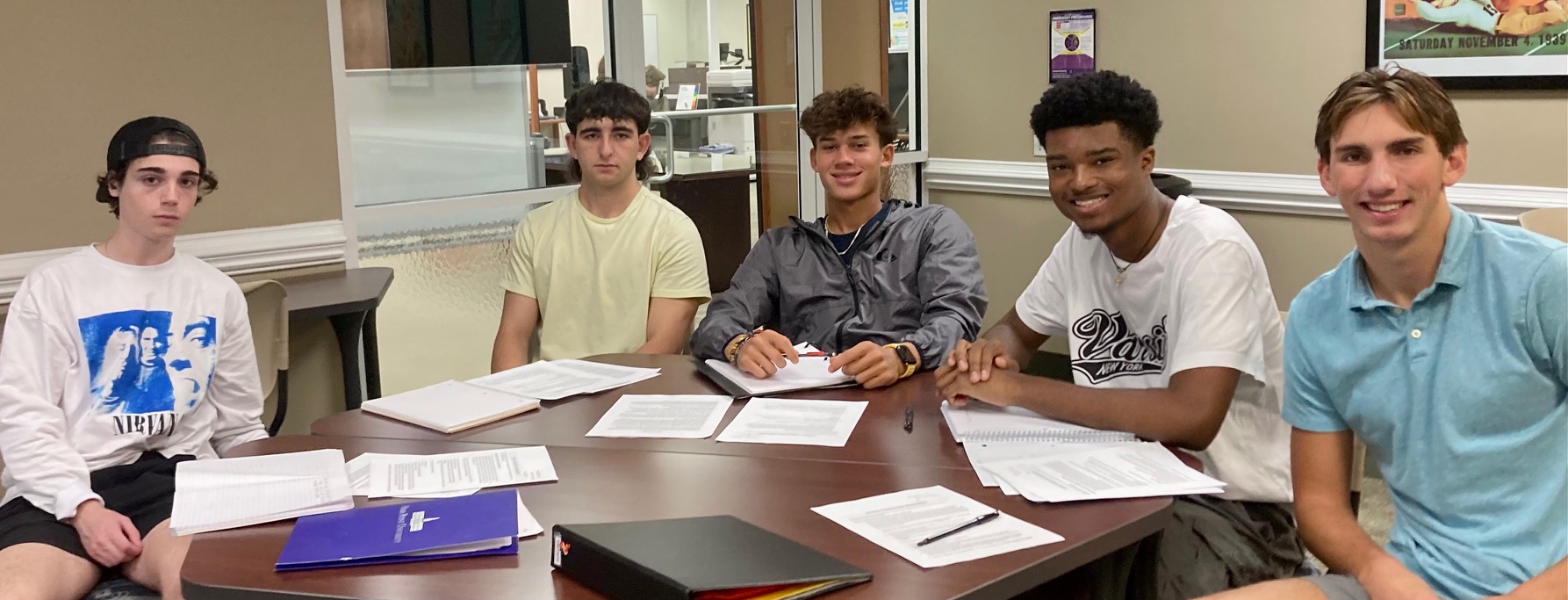
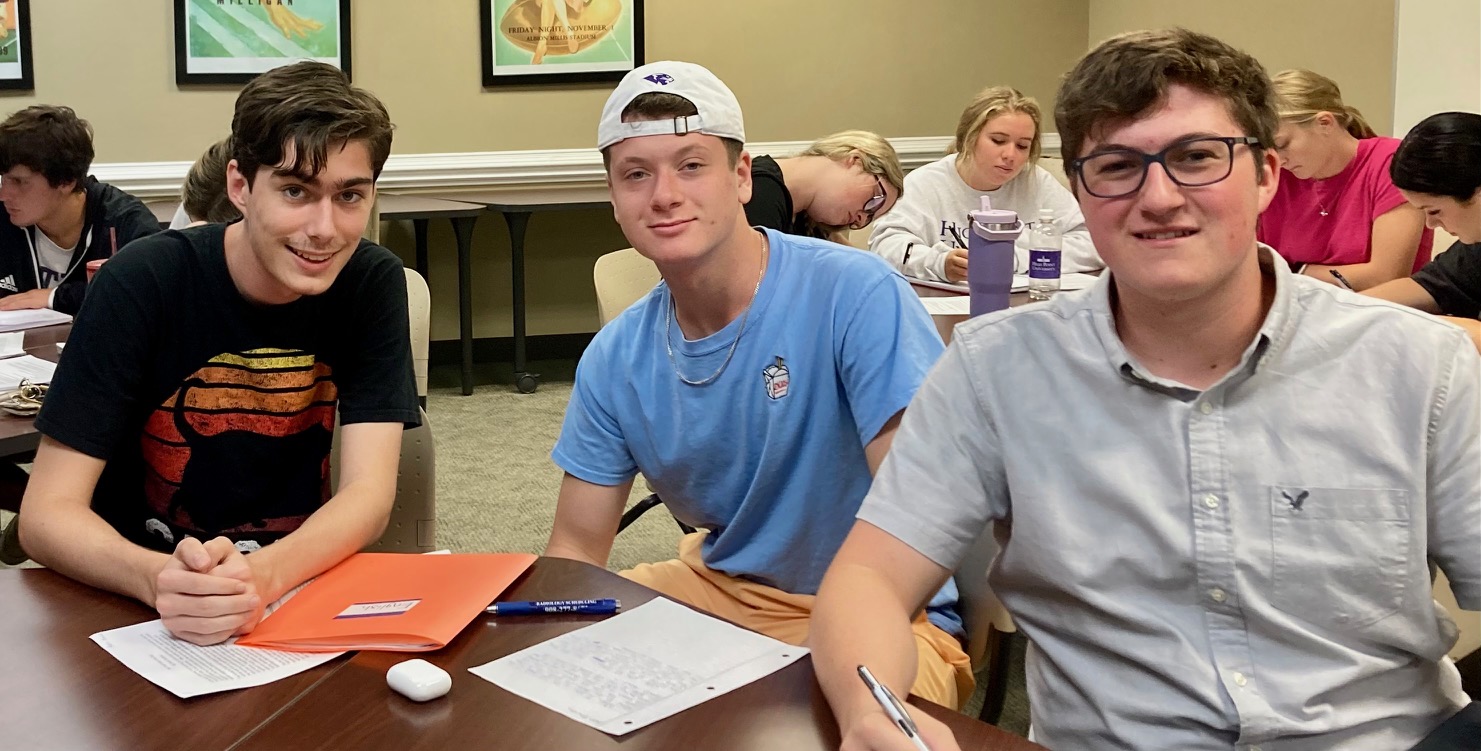
To help us put names with faces, I have included in this post pictures of all of you in sections 19 and 20 with picture captions that list your names. I encourage you to review this page frequently. In between the pictures, I have included lists of first names that are also common nouns, making them playable in Scrabble.
Students who correctly respond to the playable first names and last names question below will earn five bonus points for his/her/their second Check, Please! assignment.
How many students in English 1103.19 and 20 have a first and/or last name that is a playable Scrabble word?
Section 20, L-R: Olivia Zito, Gabriel Necaise
Directions for Finding and Submitting Your Answer
Review the list of playable first names, compare it with the students’ first and last names in the photo captions above, or on the class page, and determine which of the students’ first and last names are playable in Scrabble.
Compose a response of one or more complete sentences that includes (1) the number of students with playable names, and (2) the first and last name of each student with a playable name.
Post your comment as a reply to this blog post by 4 p.m. on Thursday, August 31.
To post your comment, click the title of the post, “What’s in a Name. . . . ,” then scroll down to the bottom of the post. There you will see the image of an airmail envelope with a white rectangular box for your comment. Type your comment in the box and hit return. Voila! You have submitted your answer. Good luck! I will make the comments visible before class on Friday, September 1.
Next Up
Friday marks the second Wordplay Day of the semester. To prepare for class, review the Dictionary and World Builder pages on the Scrabble website. Also review the posts on my blog–including this post–devoted to Scrabble tips.
Today is class you will begin planning and drafting your first essay assignment, a literacy narrative, which is an account of a learning experience involving reading, writing, or learning to speak a language.
Begin by asking yourself some of these questions: How have you come to think about yourself as a reader or writer? What were some of your most formative experiences as a reader or writer? What are some of the do’s and don’ts you have learned about writing? How has what you have learned about reading or writing enhanced your confidence and skill in that role? You don’t need to respond to all of those questions. Try picking one or two as a starting point, then move to bringing your experiences to life.
Your aim is to recreate your experience on the page and then to reflect on its significance. Your focus may be any one of the following:
a memory of a reading or writing assignment that you recall vividly
someone who helped you learn
a writing-related school event that you found humorous or embarrassing
a particular type of writing that you found (or still find) especially difficult or challenging
a memento that represents an important moment in your development as a reader or writer
Detailed instructions are included in the assignment handout that you will receive in class today. An additional copy of the handout is posted on Blackboard in the Essay Assignments folder.
Next Up
Friday marks the second Wordplay Day of the semester. To prepare for class, review the Dictionary and World Builder pages on the Scrabble website. Also review the posts on my blog devoted to Scrabble tips.
Mike Caulfield, author of Check, Please! and Director of Blended and Networked Learning at Washington State University. https://webliteracy.pressbooks.com/ front-matter/updated-resources-for-2021/.
At the beginning of class on Wednesday, August 30, I will collect your worksheets for Lesson One of the Check, Please! starter course. My sample version of the assignment appears below, as well as on your worksheet and on Blackboard.
Sample Check, Please! Assignment
Check, Please! Lesson One Assignment
In the first lesson of the Check, Please! Starter Course, Mike Caulfield, author of the course and Director of Blended and Networked Learning at Washington State University, introduces the four-step SIFT approach to determining the reliability of a source: (1) “Stop,” (2) “Investigate,” (3) “Find better coverage,” and (4) “Trace claims, quotes, and media to the original context.”
One of the most useful practices presented in lesson one is what the author terms the “Wikipedia Trick.” Deleting everything that follows a website’s URL (including the slash), adding a space, typing “Wikipedia,” and hitting “enter” will yield the site’s Wikipedia page. The Wikipedia entry that appears at the top of the screen may indicate the source’s reliability or lack thereof.
The most memorable segment of lesson one is the short, riveting video “The Miseducation of Dylann Roof,” which begins with the narrator asking the question, “How does a child become a killer?” Produced by the Southern Poverty Law Center, it documents how algorithms can lead unskilled web searchers down paths of disinformation. In the worst cases, such as Roof’s, algorithms can lead searchers to the extremist propaganda of radical conspiracy theorists.
As a model for your own literacy narrative, today in class will examine “Me Talk Pretty One Day,” originally published in Esquire magazine and later as the title essay in David Sedaris’s 2000 essay collection.
To read more of Sedaris’s essays, see the list of links under the heading Writing and Radio on his website.
Next Up
As you begin work on your own literacy narrative on Wednesday, study Sedaris’s essay as a model, and consider how he uses the following:
Shifts from summary to scene and vice versa
Figurative language
Hyperbole
Vivid detail
Look for opportunities to use those elements in your own essay.
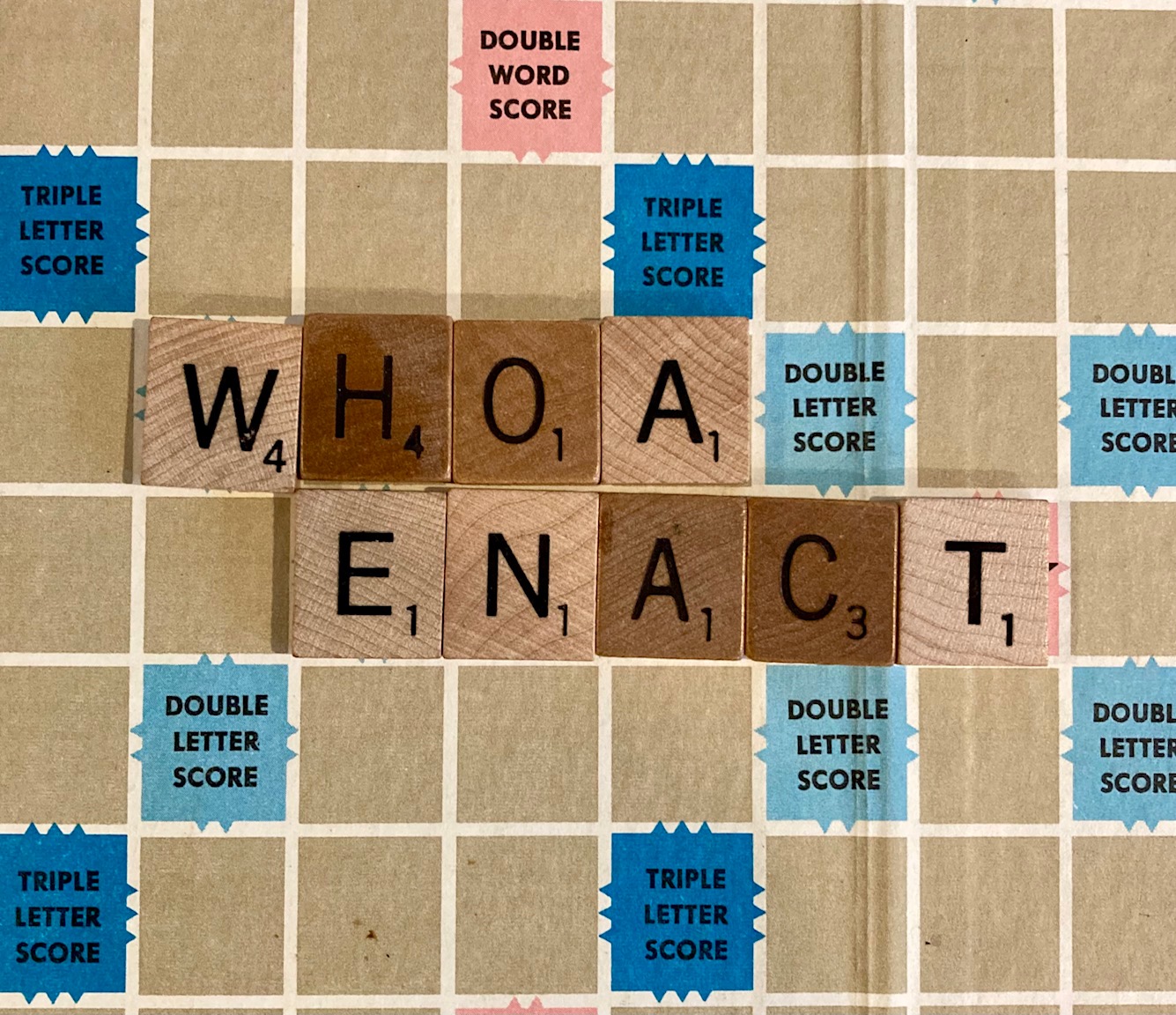
Parallel play increases your score through the points you earn by spelling more than one word in a single turn. In the first play of the hypothetical game pictured above, the first player or team would score sixteen points by spelling enact with the t on the center double word square. With the second turn, the other player or team could take advantage of the opportunity for parallel play. If the team knew that aa is a type of lava, they could earn twenty-four points with four words: whoa, he, on, and aa.
Aa is one of sixteen playable two-letter words beginning with a. Learning these two-letter words, as well as the others that follow in the alphabet, will enable you to see more options for play and increase the number of points you earn in a single turn.
aa: a type of stony, rough lava
ab: an abdominal muscle
ad: an advertisement
ae: one
ag: agriculture
ah: an exclamation
ai: a three-toed sloth
al: a type of East Indian tree
am: the first-person singular present form of to be
an: an indefinite article
ar: the letter r
as: similar to
at: in the position of
aw: an expression of sadness or protest
ay: a vote in the affirmative (also aye)
Important Note about Challenges
The game rules inside the Scrabble box top do not specify that a player or team that challenges a playable word will lose a turn, but David Bukszpan’s book Is That a Word? notes that the player or team does lose a turn. According to Bukszpan:
“[I]f a word is challenged and found not to be legal (called a phony in Scrabble parlance), the player that set it down loses a turn. Conversely, if a challenged word is found to be playable, the challenger loses his turn” (19).
Work Cited
Bukszapan, David. Is That a Word?: From AA to ZZZ, the Weird and Wonderful Language of SCRABBLE. Chronicle, 2012. p.19.
Coming Soon
At the beginning of class on Wednesday, August 30, I will collect your completed worksheet for Lesson One of the Check, Please! starter course. If you were absent yesterday, Wednesday, August 23, when I distributed worksheets or you misplaced your copy, you can download and print one from Blackboard.
College writing offers you the opportunity to develop skills, such as supporting arguments with evidence, writing effective thesis statements, and using transitions well, but it also gives you the opportunity to develop habits. Successful college students develop certain habits of mind, a way of approaching learning that leads to success.
In 2011, the Council of Writing Program Administrators (CWPA), the National Council of Teachers of English (NCTE), and the National Writing Project (NWP) identified eight habits of mind that successful college students adopt.
In class on Monday, we began an exercise in written reflection focusing on four of the eight habits of mind. Later in class today, we will begin writing about the four that you did not address in your writing on Monday. The paragraphs that follow include the descriptions of the habits that you examined (and the ones you will examine today), as well as the questions that you answered in writing (and the ones you will answer in writing today).
Curiosity
Are you the kind of person who always wants to know more? This habit of mind will serve you well in courses in which your curiosity about issues, problems, people, or policies can form the backbone of a writing project.
WRITING ACTIVITY: What are you most curious to learn about? What experiences have you had in which your curiosity has led you to an interesting discovery or to more questions?
Openness
Some people are more open than others to new ideas and experiences and new ways of thinking about the world. Being open to other perspectives and positions can help you to frame sound arguments and counterarguments and solve other college writing challenges in thoughtful ways.
WRITING ACTIVITY: In the family or the part of the world in which you grew up, did people tend to be very open, not open at all, or somewhere in the middle? Thinking about your own level of open-mindedness, reflect on how much or how little your own attitude toward a quality like openness is the result of the attitudes of the people around you.
Engagement
Successful college writers are involved in their own learning process. Students who are engaged put effort into their classes, knowing that they’ll get something out of their classes—something other than a grade. They participate in their own learning by planning, seeking feedback when they need to, and communicating with peers and professors to create their own success. Write about a few of the ways you try (or plan to try) to be involved in your own learning. What does engagement look like to you?
WRITING ACTIVITY: Write about a few of the ways you try (or plan to try) to be involved in your own learning. What does engagement look like to you?
Creativity
You may be thinking that you have to be an artist, poet, or musician to display creativity. Not so. Scientists use creativity every day in coming up with ways to investigate questions in their field. Engineers and technicians approach problem solving in creative ways. Retail managers use creativity in displaying merchandise and motivating their employees.
WRITING ACTIVITY: Think about the field you plan to enter. What forms might creativity take in that field?
Persistence
You are probably used to juggling long-term and short-term commitments—both in school and in your everyday life. Paying attention to your commitments and being persistent enough to see them through, even when the commitments are challenging, are good indicators that you will be successful in college.
WRITING ACTIVITY: Describe a time when you faced and overcame an obstacle in an academic setting. What did you learn from that experience?
Responsibility
College will require you to be responsible in way you may not have had to be before. Two responsibilities you will face as an academic writer are to represent the ideas of others fairly and to give credit to writers whose ideas and language you borrow for your own purposes.
WRITING ACTIVITY: Why do you think academic responsibility is important? What kind of experience have you already had with this kind of responsibility?
Flexibility
Would your friends say you are the kind of person who can just “go with the flow”? Do you adapt easily to changing situations? If so, you will find college easier, especially college writing. When you find, for example, that you’ve written a draft that doesn’t address the right audience or that your peer review group doesn’t understand at all, you will be able to adapt. Being flexible enough to adapt to the demands of different writing projects is an important habit of mind.
WRITING ACTIVITY: Describe a situation in which you’ve had to make changes based on a situation you couldn’t control. Did you do so easily or with difficulty?
Metacognition (Reflection)
As a learner, you have probably been asked to think back on a learning experience and comment on what went well or not well, what you learned or what you wished you had learned, or what decisions you made or didn’t make. Writers who reflect on their own processes and decisions are better able to transfer writing skills to future assignments.
WRITING ACTIVITY: Reflect on your many experiences as a writer. What was your most satisfying experience as a writer? What made it so?
Next Up
Friday marks the first Wordplay Day of the semester. To prepare for class, review the Scrabble Ground Rules posted in Blackboard, as well as the Dictionary and World Builder pages on the Scrabble website. Also, look for a Scrabble tips posts on my blog. Most weeks of the semester, I will publish a post devoted to Scrabble strategies.
Am I the person who will teach your English 1103 class? I posed that question this morning at the beginning of class as a starting point for analysis, one of the key features of the course.
To begin the collaboration and inquiry that will figure prominently this semester—along with analysis—you will work together in groups today to find the answers to some of the most frequently asked questions about the course. After class, continue to review the syllabus, which is posted in Blackboard. If you have any questions about the assignments, the course policies, or the calendar, please let me know.
Textbook
All of you in sections 19 and 20 of English 1103 are required to have the paperback edition of the textbook, Writing Analytically, 8th edition, by David Rosenwasser and Jill Stephen. Bring your copy to class on the days when the title, Writing Analytically, appears in bold on the course calendar. On those days, we will examine portions of the chapters in class and complete some of the exercises related to the reading.
Your first reading assignment in the textbook will be scheduled for mid-September, which will give you ample time to order and receive your copy before you are required to have it in class. (Unlike my copy, pictured at the top of this blog entry, your textbook will not be in a binder.) Your textbook’s cover looks like this:
Other Required Materials
Writer’s notebook/journal, bring to every class.
Loose leaf paper (for drafts and short in-class assignments), bring to every Monday and Wednesday class
Pen with dark ink, bring to every class
Pocket portfolio (for class handouts), bring to every class
WordPress Blog
As practice in developing your web literacy and writing for a broader online audience, you will maintain a free WordPress blog for the class. As soon as possible, create a free blog at wordpress.com. After you create your blog, email the address, or URL, to me, and I will link your blog to our class page, English at High Point. If you encounter technical difficulties creating your blog or publishing a post, email help@wordpress.com or contact the HPU Help Desk: helpdesk@highpoint.edu, 336-841-HELP (3457).
You will post the revisions of all of your major writing assignments both to your blog and to Blackboard. The posts that you publish for class will be public. You are welcome to create additional posts on your own. If you prefer for some of those posts to be private, keep them in draft form or choose the private visibility option.
You may also be asked to post comments to your classmates’ blogs and to mine.













 Jane Lucas