Today is class you will begin planning and drafting your first essay assignment, a literacy narrative, which is an account of a learning experience involving reading, writing, or learning to speak a language.
Begin by asking yourself some of these questions: How have you come to think about yourself as a reader or writer? What were some of your most formative experiences as a reader or writer? What are some of the do’s and don’ts you have learned about writing? How has what you have learned about reading or writing enhanced your confidence and skill in that role? You don’t need to respond to all of those questions. Try picking one or two as a starting point, then begin bringing one of those experiences to life.
Your aim is to recreate your experience on the page and then to reflect on its significance. Your focus may be any one of the following:
a memory of a reading or writing assignment that you recall vividly
someone who helped you learn to read or write
a writing-related school event that you found humorous or embarrassing
a particular type of writing that you found (or still find) especially difficult or challenging
a memento that represents an important moment in your development as a reader or writer
Detailed instructions are included in the assignment handout that you will receive in class today. An additional copy of the handout is posted on Blackboard in the essay assignments folder.
Next Up
Wordplay Day! To prepare for class, review the Dictionary and World Builder pages on the Scrabble website. Also review tomorrow’s Scrabble post.
Tomorrow, at the beginning of class, I will collect your worksheets for the first Check, Please! lesson. If you were absent on the day that I distributed copies of the worksheet or you have misplaced your copy, download the file from Blackboard and print it.
My sample assignment for lesson one appears below, as well as on the worksheet, itself.
Check, Please! Lesson One
In the first lesson of the Check, Please!, Starter Course, Mike Caulfield, author of the course and a research scientist at Washington State University’s Center for an Informed Public, introduces the four-step SIFT approach to determining the reliability of a source: (1) “Stop,” (2) “Investigate,” (3) “Find better coverage,” and (4) “Trace claims, quotes, and media to the original context.”
One of the most useful practices presented in lesson one is what the author terms the “Wikipedia Trick.” Deleting everything that follows a website’s URL (including the slash), adding a space, typing “Wikipedia,” and hitting “enter” will yield the site’s Wikipedia page. The Wikipedia entry that appears at the top of the screen may indicate the source’s reliability or lack thereof.
The most memorable segment of lesson one is the short, riveting video “The Miseducation of Dylann Roof,” which begins with the narrator asking the question, “How does a child become a killer?” Produced by the Southern Poverty Law Center, it documents how algorithms can lead unskilled web searchers down paths of disinformation. In the worst cases, such as Roof’s, algorithms can lead searchers to the extremist propaganda of radical conspiracy theorists.
Check, Please! worksheets are designed to be handwritten, and I prefer for you to complete them by putting pen to paper. If, however, you wish to type them, you are required to follow MLA style manuscript guidelines. See the sample file posted in the Check, Please! folder on Blackboard.
Next Up
Tomorrow’s class will be devoted to planning and drafting your literacy narratives. Next Wednesday, January 31, I will return your handwritten drafts with my notes, and you will have the class period to begin revising your narratives on your laptops and tablets. After that class, you will have an additional week to continue your revision work. The due date for posting your revisions to Blackboard and to your WordPress blog is Wednesday, February 7 (before class); the hard deadline is Friday, February 9 (before class).
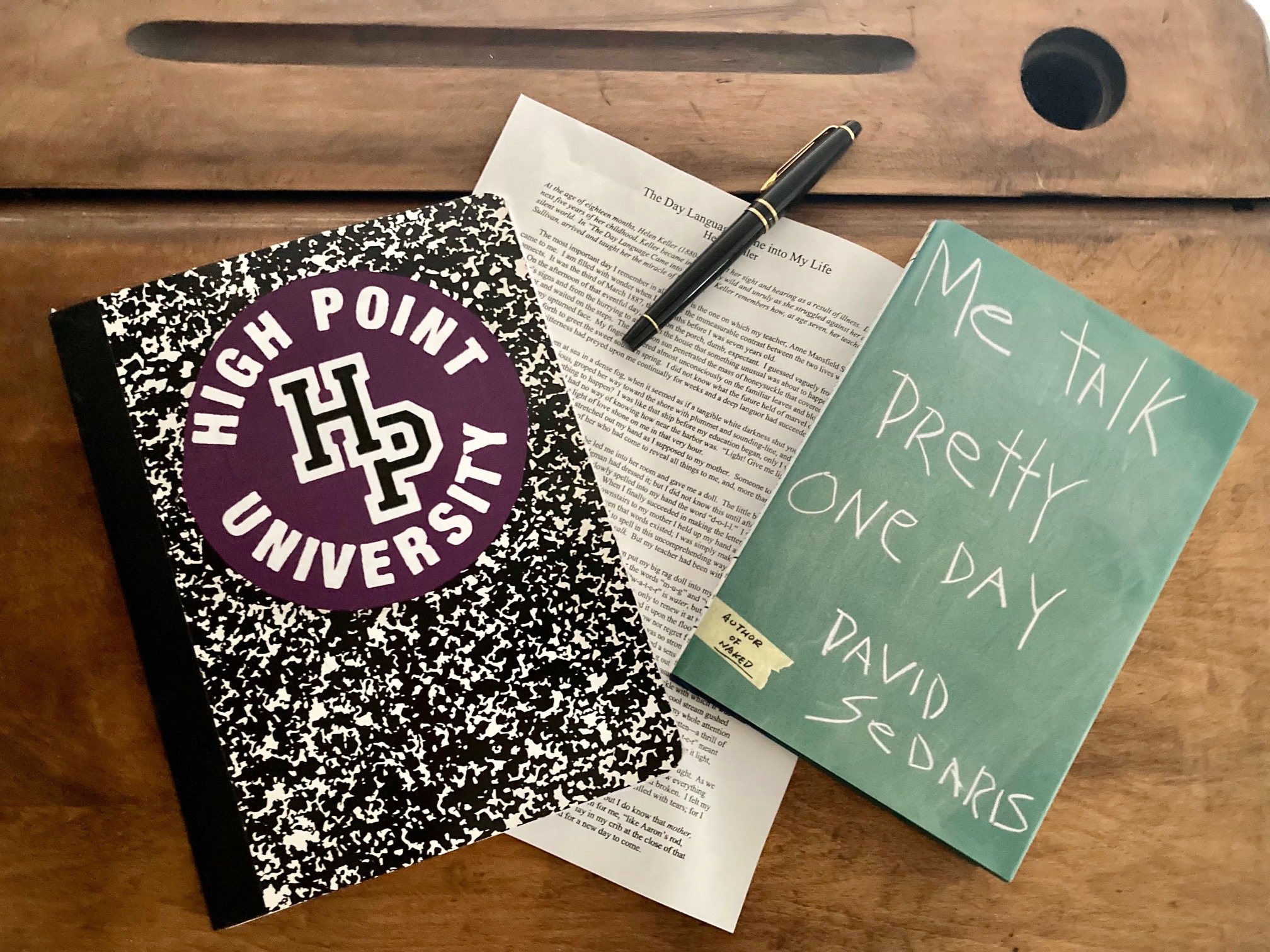
Today, along with continuing our study of Sedaris’s “Me Talk Pretty One Day,” we will begin to examine “The Day Language Came into My Life,” the first pages of Chapter Four of Helen Keller’s autobiography, The Story of My Life.
One of the aspects of Sedaris’s essay that you examined last Wednesday was his movement from summary to scene. The first of those occurs with these words of his teacher’s: “If you have not meimslsxp or lpgpdmurct by this time, then you should not be in this room” (167).
You also identified Sedaris’s hyperbole “front teeth the size of tombstones” (168), and his use of metaphors and similes, including these:
“not unlike Pa Kettle trapped backstage at a fashion show” (167).
“everybody into the language pool, sink or swim” (167).
“like a translation of one of those Playmate of the Month data sheets” (168).
Today in class you will closley examine the final paragraphs of David Sedaris’s “Me Talk Pretty One Day” and Helen Keller’s “The Day Language Came into My Life,” and collaboratively compose a paragraph that addresses what the last paragraph of each narrative conveys about the significance of the writer’s learning experience. In your examination of Keller’s essay/chapter excerpt, address the quotation “‘like Aaron’s rod with, with flowers’” (par. 9). If you do not recognize that allusion, simply show how the quotation connects to the clause that precedes it.
Together, these two essays by David Sedaris and Hellen Keller demonstrate two vastly different ways to present a literacy narrative. “Me Talk Pretty One Day” offers a quirky look at the challenges of learning French from a sarcastic, soul-crushing instructor. Keller’s story poignantly recounts learning to make meaning through the sign language of her teacher, Annie Sullivan, learning that certain finger positions mean “water” for those who cannot hear it, and for others, like her, who can neither see nor hear it.
Sedaris, David. “Me Talk Pretty One Day.” Me Talk Pretty One Day. Little Brown, 2000. pp. 166-73.
Next Up
On Wednesday you will begin work on your own literacy narratives. At the beginning of class, after I collect your second Check, Please! worksheets, I will distribute the copies of the assignment, and you will have the remainder of the class period to plan and draft longhand. Next Wednesday I will return your handwritten drafts, and you will have the class period revise on your laptops. You will have an additional week to continue revising before you post your revision to Blackboard and to your WordPress blog. The due date is Wednesday, February 7; the hard deadline is the morning of Friday, February 9.
The first Scrabble blog post of the semester featured playable two-letter words beginning with “a.” Learning those two-letter words, as well as the others that follow in the alphabet, will enable you to see more options for play and can increase the number of points you earn in a single turn.
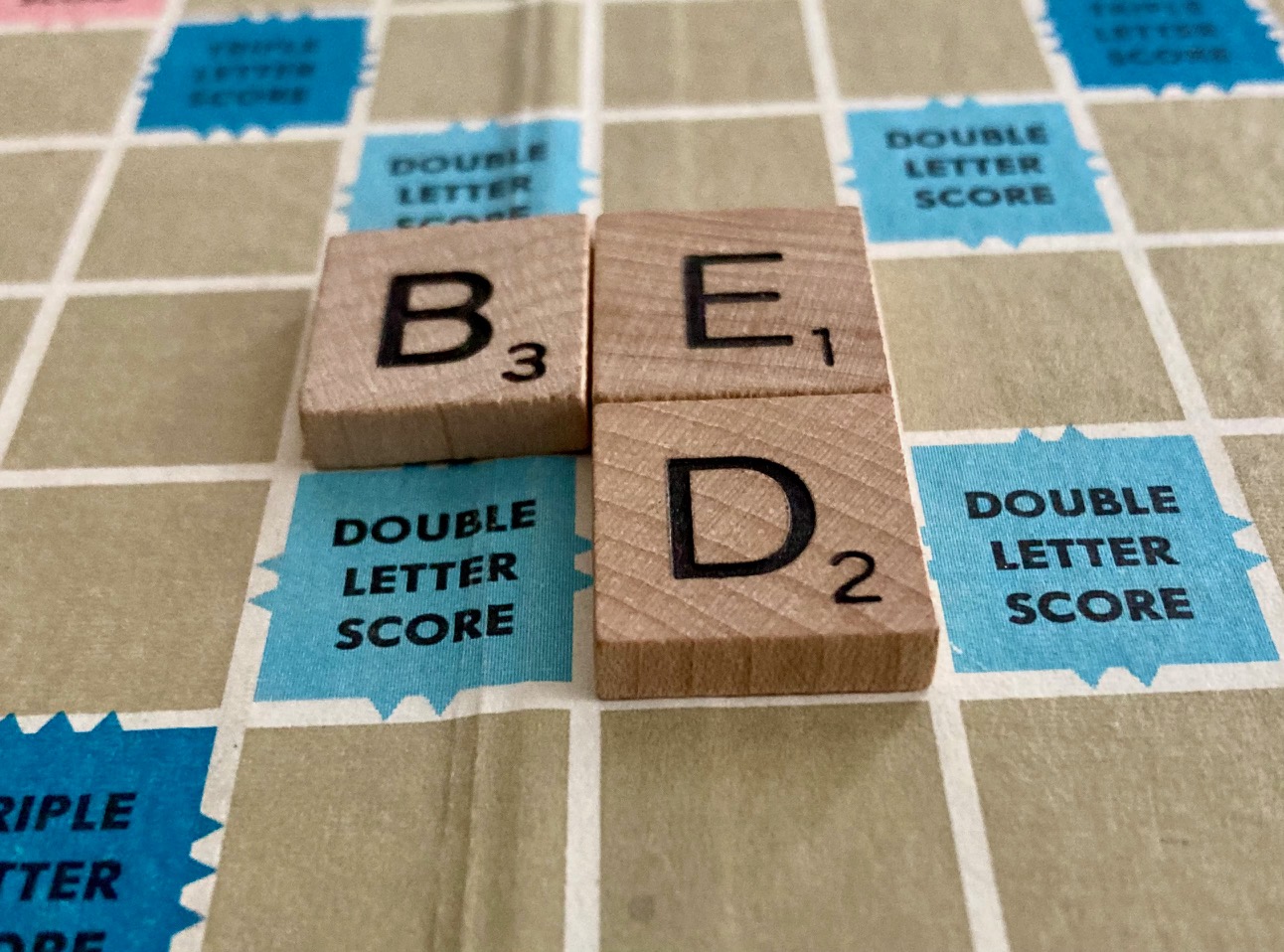
Here’s a list of the playable words beginning with “b,” “d,” and “e.”
ba: the soul in ancient Egyptian spirituality
bi: a bisexual
bo: a pal
by: a side issue
de: of; from
do: a tone on a scale
ed: education
ef: the letter f (also eff)
eh: used to express doubt
el: an elevated train
em: the letter m
en: the letter n
er: used to express hesitation
es: the letter s
et: a past tense of eat
ex: the letter x
Next Up
Wordplay Day! To prepare for class, revisit the Dictionary and World Builder pages on the Scrabble website, and review this blog post.
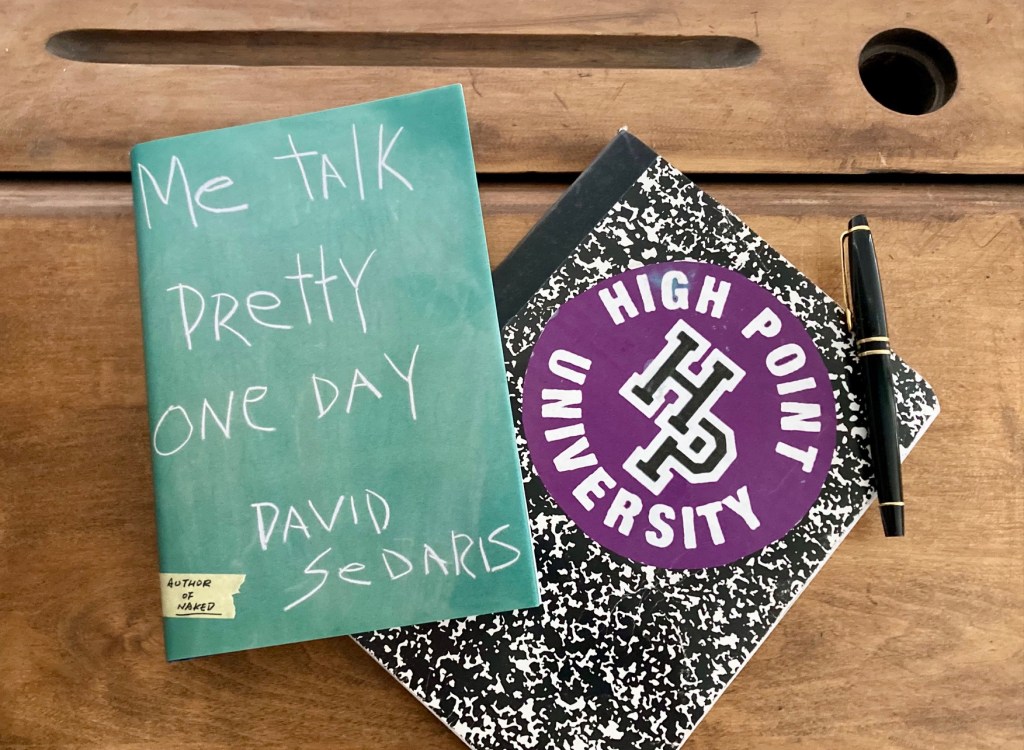
Today in class we will examine David Sedaris‘s essay “Me Talk Pretty One Day,” and you and three of your classmates will collaborate on an exercise that asks you to examine–and subsequently address in writing–these elements of his literacy narrative:
scene and summary–you will examine how and where Sedaris shifts from one to the other
hyperbole
metaphors and similes
Each of these elements can play an important role in a narrative, none more so than scene, which is vital to a story’s life. Without it, a narrative falls flat. With summary, a writer compresses time to offer an overview of events. Through scene, a writer lets time unfold in front of the readers’ eyes, which is what readers prefer. They are drawn into a narrative when they can see for themselves what is happening.
Next Up
Wordplay Day! To prepare for class, revisit the Dictionary and World Builder pages on the Scrabble website, and review tomorrow’s Scrabble post.
Last Friday’s blog post offered you the opportunity to earn bonus points if you posted a response that identified the names of students in sections nineteen and twenty with first and last names that are also common nouns, making them playable Scrabble words. The lists below include those students’ names with the playable names in bold.
Section 19
Kira Booker (one who books)
Annika Brown (brown color or pigment)
McKinnley Coles (pl. of cole, a plant of the cabbage family)
Jess English (to fasten straps around the legs of a hawk)
Jack Hutchins (to raise with a type of lever)
Jack Madigan-Green (to raise with a type of lever, green color or pigment)
Larisa Shaw (stalks and leaves of root plants)
Hannah Smith (a metal worker)
Simone Smith (a metal worker)
Olivia Wall (an upright structure that encloses an area)
Section 20
Ava Gaudioso (of all)
Santino Hall (a corridor or a large room for assembly)
Lily Murphy (a potato)
Regan Shea (an African tree)
Chaning Smith (a metal worker)
Autumn Spaulding (the season between summer and winter)
Renae West (the direction opposite of east)
Continue to review last Friday’s blog post, both to increase your word power and to put your classmates’ names with faces.
Next Up
Tomorrow in class we will examine an excerpt from Martin Luther King, Jr.’s “Letter from Birmingham Jail,” one of your pieces of collaborative writing from January 10, and David Sedaris‘s “Me Talk Pretty One Day.”
To honor Martin Luther King, Jr., today, I am asking you to you engage in a close study of his epistolary essay “Letter from Birmingham Jail.” Although I could ask you to listen to a recording of it, I ask that you to read it instead. King’s gift for oratory is well known, but for students of writing, closely examining his words on the page is a more pertinent exercise than listening to his voice.
What makes King’s letter an effective piece of writing? With that question in mind, consider these words: “Perhaps it is easy for those who have never felt the stinging darts of segregation to say, ‘Wait” (par. 14). Here King is addressing his initial audience, the eight white Birmingham-area clergymen who criticized his protest as “unwise and untimely” (par. 1). He suggests to those men that waiting to act isn’t difficult when you yourself aren’t the victim of injustice, when you haven’t, in King’s words, “felt the stinging darts of segregation” (par. 14). The sentence is notable not only for the contrast it illustrates between King’s reality and the lives of his readers but also for the words that King uses to show that contrast.
Consider King’s sentence and the paraphrase that follows:
Perhaps it is easy for those who have never felt the stinging darts of segregation to say, “Wait.”
Maybe it is simple for people who have not experienced segregation to say, “Wait.”
King’s sentence is stronger than the paraphrase that follows it because of the “stinging darts.” Writing that someone has not “experienced segregation” is abstract. Readers do not feel the general experience in the second sentence, but they feel King’s “stinging darts.” Sensory details strengthen sentences by appealing to readers’ senses, and figurative language invigorates writing by making the unfamiliar familiar. King’s white readers have not been the victims of segregation, but his choice of words makes them feel the sting.
While King’s “stinging darts” sentence—a relatively short one—is laudable, the long, winding sentence that follows is nothing short of staggering.
It starts with these words: “But when you have seen vicious mobs lynch your mothers and fathers at will and drown your sisters and brothers at whim.” King presents those atrocities in an introductory dependent clause, one whose full meaning depends on an independent clause that follows. But rather than immediately turning to an independent clause to complete the thought, King expands the sentence with this series of dependent clauses:
when you have seen hate filled policemen curse, kick and even kill your black brothers and sisters;
when you see the vast majority of your twenty million Negro brothers smothering in an airtight cage of poverty in the midst of an affluent society;
when you suddenly find your tongue twisted and your speech stammering as you seek to explain to your six year old daughter why she can’t go to the public amusement park that has just been advertised on television, and see tears welling up in her eyes when she is told that Funtown is closed to colored children, and see ominous clouds of inferiority beginning to form in her little mental sky, and see her beginning to distort her personality by developing an unconscious bitterness toward white people;
when you take a cross county drive and find it necessary to sleep night after night in the uncomfortable corners of your automobile because no motel will accept you;
when you are humiliated day in and day out by nagging signs reading “white” and “colored”;
when your first name becomes “n—,” your middle name becomes “boy” (however old you are) and your last name becomes “John,” and your wife and mother are never given the respected title “Mrs.”;
when you are harried by day and haunted by night by the fact that you are a Negro, living constantly at tiptoe stance, never quite knowing what to expect next, and are plagued with inner fears and outer resentments;
when you are forever fighting a degenerating sense of “nobodiness”–(par. 14).
The independent clause that readers have been waiting for, the statement that completes the thought is this: “then you will understand why we find it difficult to wait” (par. 14). Those words could have immediately followed the first dependent clause, but instead King offers nine more dependent clauses, ten darts that sting his readers.
Ten dependent clauses connected by semicolons followed by a dash and an independent clause, a total of 316 words: That is not a structure I recommend for the sentences you write in English 1103, but it’s a valuable model, nevertheless.
I hope that you, as citizens, will continue to study the words of his letter. As your writing teacher, I hope that you will return to the sentence that I have examined in detail here. Along with showing his readers why his nonviolent protests could not wait, that sentence of King’s demonstrates how to develop a piece of writing through the accumulation of detail—not just the when, but the when and when and when . . . .
In class on Wednesday we will return to “Letter from Birmingham Jail” and examine David Sedaris’s essay “Me Talk Pretty One Day” as a model for the literacy narrative you will begin drafting next week. Before class, read Sedaris’s essay (posted in the readings folder on Blackboard), and compose two journal entries, one for “Letter from Birmingham Jail” and a second for “Me Talk Pretty One Day.” Each entry should consist of (1) a one-paragraph summary of the essay, and (2) a second paragraph of commentary. In your commentary, address the elements that make the writing effective. Consider how you can draw on those same features in your own prose.
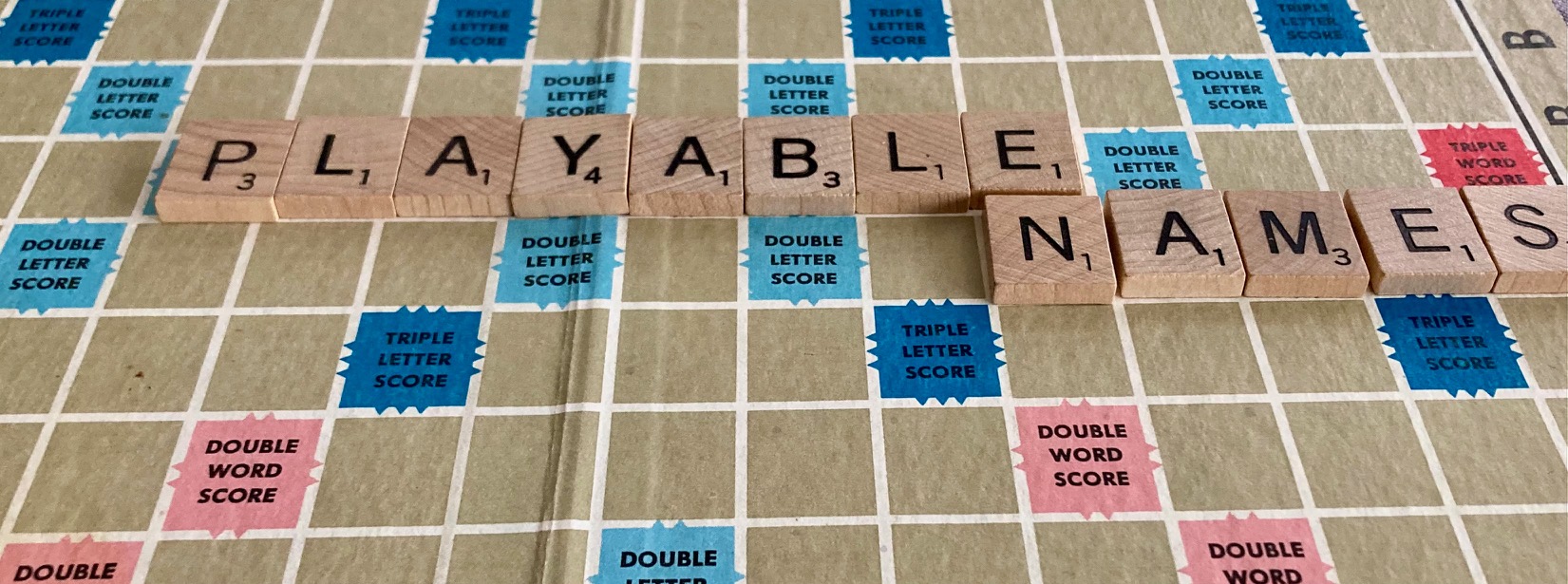
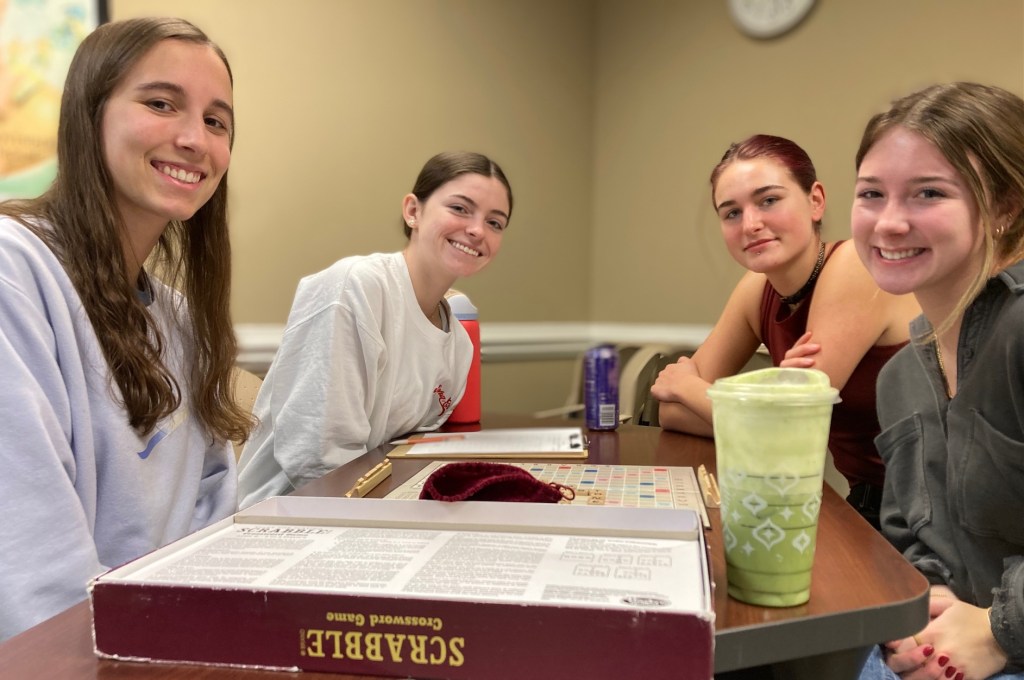
To help us put names with faces, I have included in this post pictures of all of you in sections 19 and 20 with picture captions that list your names. I encourage you to review this page frequently. In between the pictures, I have included lists of first names that are also common nouns, making them playable in Scrabble.
Not pictured in section 20: Courtney Faber, Ava Gaudioso, Gracie Lare
Bonus Point Opportunity!
Students who correctly respond to the playable first names and last names question below will earn five bonus points for his/her/their first Check, Please! assignment.
How many students in English 1103.19 and 20 have first and/or last names that are playable Scrabble words? Keep in mind that only playable first names appear in the lists above. Some students in each section have playable last names.
Section 20, L-R: Alex Campos, Ella MacGlashan, Kenzie Van Cleef
Directions for Finding and Submitting Your Answer
Review the list of playable first names, compare it with the students’ first and last names in the photo captions above, or on the class page, and determine which of the students’ first and last names are playable in Scrabble. If you aren’t sure whether a name is also a common noun, you can consult the Scrabble website’s dictionary
Compose a response of one or more complete sentences that includes (1) the number of students with playable names, and (2) the first and last name of each student with a playable name. Indicate which name, first or last, is playable.
Post your comment as a reply to this blog post by noon on Monday, January 15.
To post your comment, click the title of the post, “What’s in a Name. . . . ,” then scroll down to the bottom of the post. There you will see the image of an airmail envelope with a white rectangular box for your comment. Type your comment in the box and hit return. Voila! You have submitted your answer. Good luck! I will make the comments visible before class on Wednesday, January 17.
Next Up
Although class will not meet on Monday, to honor Martin Luther King, Jr. and his legacy, I have assigned his “Letter from Birmingham Jail” which is linked both to its title here and to its title on your course calendar at the end of your syllabus. After you read King’s essay, compose a response to it in your journal that includes a one-paragraph summary, followed by a second paragraph of commentary (your response to King’s writing). When our class resumes on Wednesday, we will examine excerpts from the King’s essay.
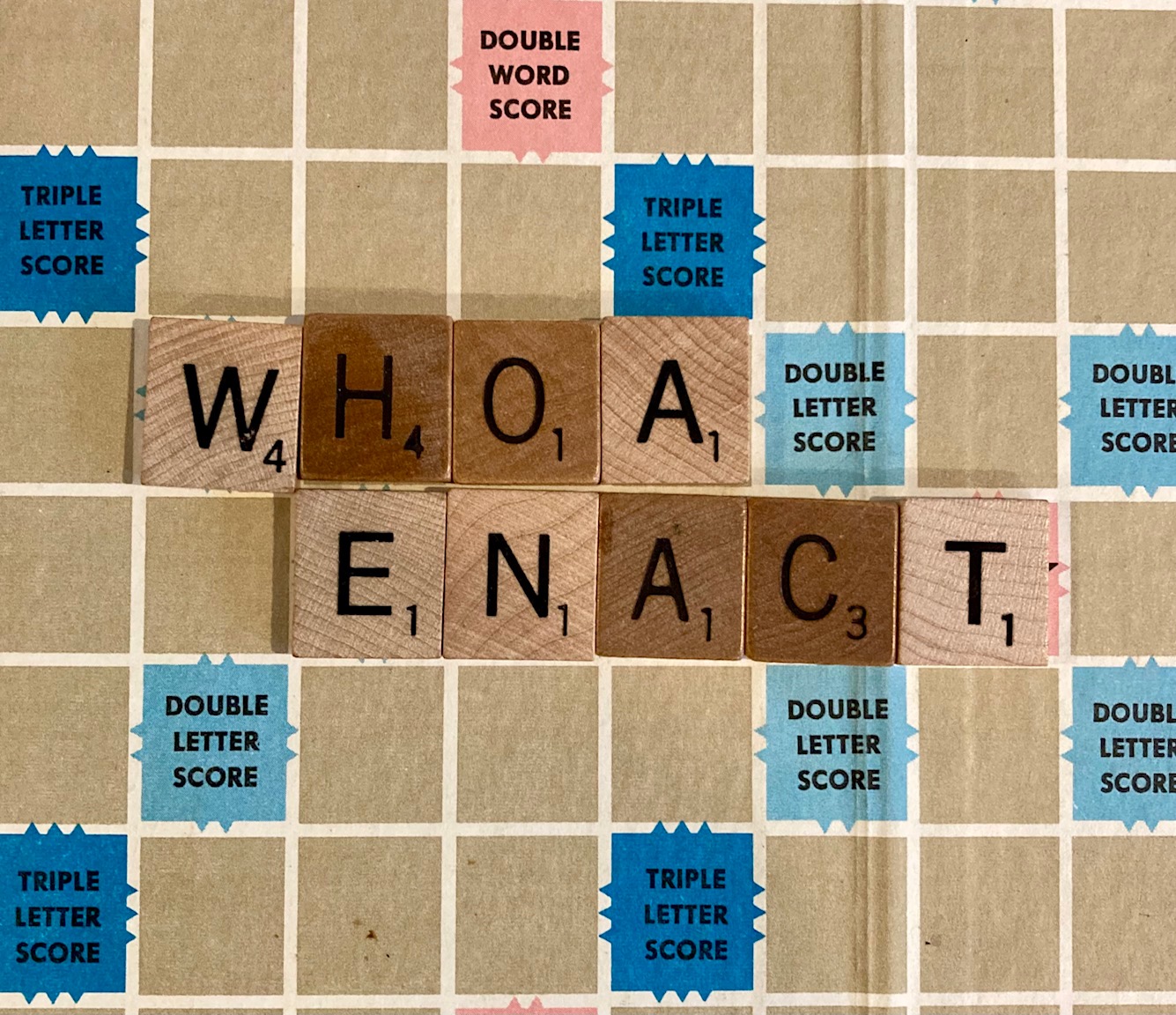
Parallel play increases your score through the points you earn by spelling more than one word in a single turn. In the first play of the hypothetical game pictured above, the first player or team would score sixteen points by spelling enact with the t on the center double-word square. With the second turn, the other player or team could take advantage of the opportunity for parallel play. If the team knew that aa is a type of lava, they could earn twenty-four points with four words: whoa, he, on, and aa.
Aa is one of sixteen playable two-letter words beginning with a. Learning these two-letter words, as well as the others that follow in the alphabet, will enable you to see more options for play and increase the number of points you earn in a single turn.
aa: a type of stony, rough lava
ab: an abdominal muscle
ad: an advertisement
ae: one
ag: agriculture
ah: an exclamation
ai: a three-toed sloth
al: a type of East Indian tree
am: the first-person singular present form of to be
an: an indefinite article
ar: the letter r
as: similar to
at: in the position of
aw: an expression of sadness or protest
ax: a type of cutting tool (also axe)
ay: a vote in the affirmative (also aye)
Important Note about Challenges
The game rules inside the Scrabble box top do not specify that a player or team that challenges a playable word will lose a turn, but David Bukszpan’s book Is That a Word? notes that the player or team does lose a turn. According to Bukszpan:
“[I]f a word is challenged and found not to be legal (called a phony in Scrabble parlance), the player that set it down loses a turn. Conversely, if a challenged word is found to be playable, the challenger loses his turn” (19).
Work Cited
Bukszapan, David. Is That a Word?: From AA to ZZZ, the Weird and Wonderful Language of SCRABBLE. Chronicle, 2012. p.19.
Next Up
Wordplay Day! To prepare for class, look to the Dictionary and World Builder pages on the Scrabble website, and review this post devoted to Scrabble tips.
College writing offers you the opportunity to develop skills, such as supporting arguments with evidence, writing effective thesis statements, and using transitions well, but it also gives you the opportunity to develop habits. Successful college students develop certain habits of mind, a way of approaching learning that leads to success.
In 2011, the Council of Writing Program Administrators (CWPA), the National Council of Teachers of English (NCTE), and the National Writing Project (NWP) identified eight habits of mind that successful college students adopt.
In class on Monday, you began an exercise focusing on four of the eight habits of mind. Today in class, you will address one of those habits in a collaborative piece of writing.
The paragraphs that follow include the descriptions of the habits that you examined (and the ones you will examine today), as well as the questions that you answered in writing (and the ones you will answer in writing today).
Curiosity
Are you the kind of person who always wants to know more? This habit of mind will serve you well in courses in which your curiosity about issues, problems, people, or policies can form the backbone of a writing project.
WRITING ACTIVITY: What are you most curious to learn about? What experiences have you had in which your curiosity has led you to an interesting discovery or to more questions?
Openness
Some people are more open than others to new ideas and experiences and new ways of thinking about the world. Being open to other perspectives and positions can help you to frame sound arguments and counterarguments and solve other college writing challenges in thoughtful ways.
WRITING ACTIVITY: In the family or the part of the world in which you grew up, did people tend to be very open, not open at all, or somewhere in the middle? Thinking about your own level of open-mindedness, reflect on how much or how little your own attitude toward a quality like openness is the result of the attitudes of the people around you.
Engagement
Successful college writers are involved in their own learning process. Students who are engaged put effort into their classes, knowing that they’ll get something out of their classes—something other than a grade. They participate in their own learning by planning, seeking feedback when they need to, and communicating with peers and professors to create their own success. Write about a few of the ways you try (or plan to try) to be involved in your own learning. What does engagement look like to you?
WRITING ACTIVITY: Write about a few of the ways you try (or plan to try) to be involved in your own learning. What does engagement look like to you?
Creativity
You may be thinking that you have to be an artist, poet, or musician to display creativity. Not so. Scientists use creativity every day in coming up with ways to investigate questions in their field. Engineers and technicians approach problem solving in creative ways. Retail managers use creativity in displaying merchandise and motivating their employees.
WRITING ACTIVITY: Think about the field you plan to enter. What forms might creativity take in that field?
Persistence
You are probably used to juggling long-term and short-term commitments—both in school and in your everyday life. Paying attention to your commitments and being persistent enough to see them through, even when the commitments are challenging, are good indicators that you will be successful in college.
WRITING ACTIVITY: Describe a time when you faced and overcame an obstacle in an academic setting. What did you learn from that experience?
Responsibility
College will require you to be responsible in way you may not have had to be before. Two responsibilities you will face as an academic writer are to represent the ideas of others fairly and to give credit to writers whose ideas and language you borrow for your own purposes.
WRITING ACTIVITY: Why do you think academic responsibility is important? What kind of experience have you already had with this kind of responsibility?
Flexibility
Would your friends say you are the kind of person who can just “go with the flow”? Do you adapt easily to changing situations? If so, you will find college easier, especially college writing. When you find, for example, that you’ve written a draft that doesn’t address the right audience or that your peer review group doesn’t understand at all, you will be able to adapt. Being flexible enough to adapt to the demands of different writing projects is an important habit of mind.
WRITING ACTIVITY: Describe a situation in which you’ve had to make changes based on a situation you couldn’t control. Did you do so easily or with difficulty?
Metacognition (Reflection)
As a learner, you have probably been asked to think back on a learning experience and comment on what went well or not well, what you learned or what you wished you had learned, or what decisions you made or didn’t make. Writers who reflect on their own processes and decisions are better able to transfer writing skills to future assignments.
WRITING ACTIVITY: Reflect on your many experiences as a writer. What was your most satisfying experience as a writer? What made it so?
Next Up
Friday marks the first Wordplay Day of the semester. To prepare for class, review the Scrabble Ground Rules posted in Blackboard, as well as the Dictionary and World Builder pages on the Scrabble website. Also review the Scrabble blog entry that I will post tomorrow. Most weeks of the semester, usually on Thursday, I will publish a post devoted to Scrabble.








 Jane Lucas