The September 1 Scrabble blog post featured the sixteen playable two-letter words beginning with “a.” Learning those two-letter words, as well as the others that follow in the alphabet, will enable you to see more options for play and increase the number of points you earn in a single turn.
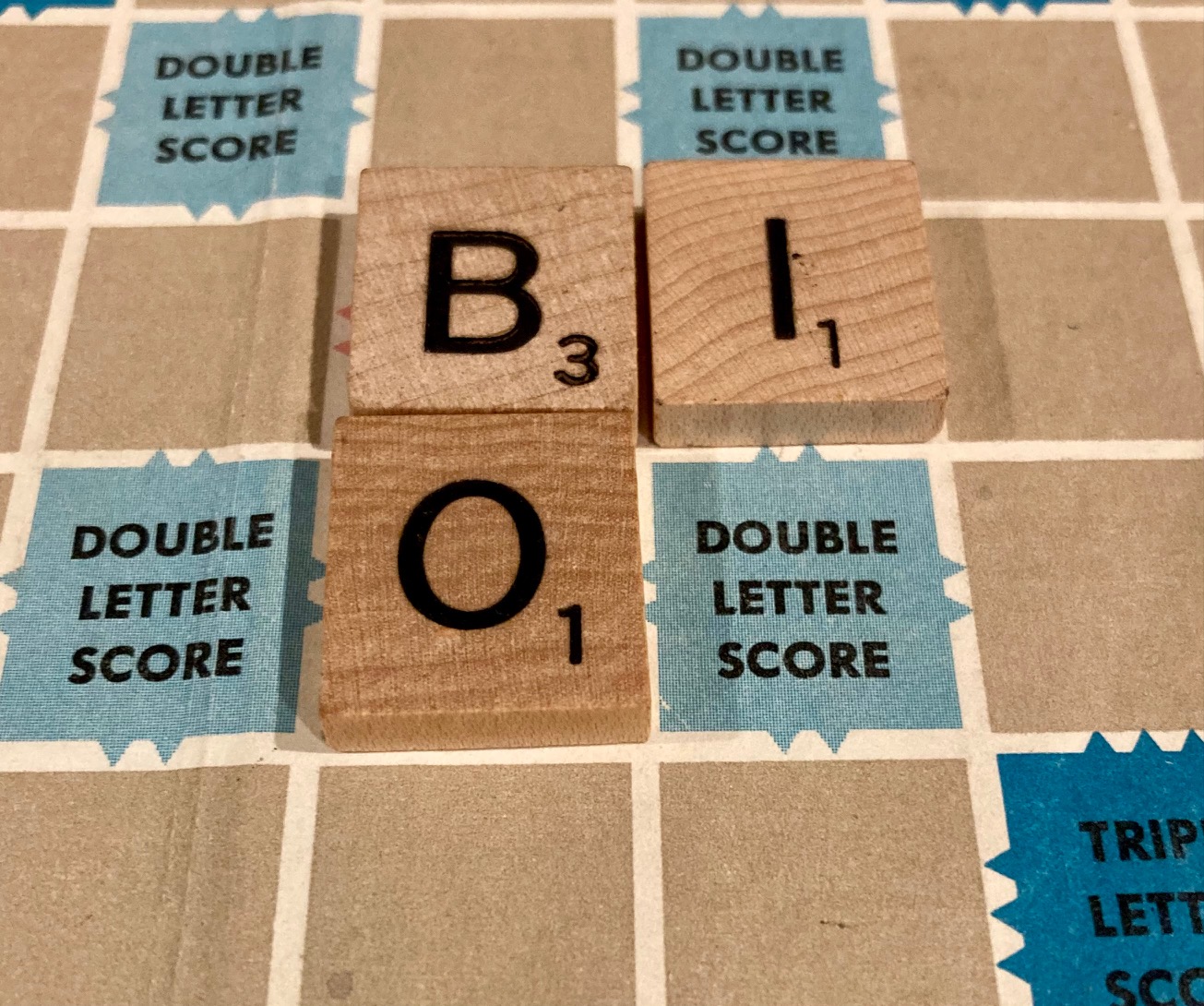
Here’s a list of the playable words beginning with “b,” “d,” and “e.”
ba: the soul in ancient Egyptian spirituality
bi: a bisexual
bo: a pal
by: a side issue
de: of; from
do: a tone on a scale
ed: education
ef: the letter f (also eff)
eh: used to express doubt
el: an elevated train
em: the letter m
en: the letter n
er: used to express hesitation
es: the letter s
et: a past tense of eat
ex: the letter x
Next Up
Wordplay Day! To prepare for class, review Tips and Tools on the Scrabble site. Also review the blog posts devoted to Scrabble.
Coming Soon
At the beginning of class on Monday, I will collect your completed worksheets for Lesson Three in the Check, Please! course. If you are absent from class on Friday, September 9, when I distribute the worksheet, you can download a copy from Blackboard.
Also, in class on Monday, we will examine two additional models for your literacy narrative, and you will collaboratively explore the writers’ use of description and development.
For your literacy narrative, as well as all of your other major writing assignments, you have the opportunity to earn five extra credit points for consulting with a Writing Center tutor.
To schedule an appointment, visit https://highpoint.mywconline.com, email the Writing Center’s director, Justin Cook, at jcook3@highpoint.edu, or scan the QR code below. To earn bonus points for your literacy narrative, consult with a writing center tutor no later than Thursday, September 15.
Check, Please! Lesson Two
At the beginning of class on Monday, September 5, I collected your worksheets for Check, Please! lesson two. My sample version of the assignment appears below.
Check, Please! Lesson Two Assignment
In the second lesson of the Check, Please! Starter Course, Mike Caulfield, author of the course and Director of Blended and Networked Learning at Washington State University, introduces the second step in four-step SIFT approach to determining the reliability of a source. Lesson two offers instruction in “move” (“Investigate the Source”) and one of the web search techniques associated with it (“[J]ust add Wikipedia”).
One of the most useful practices presented in lesson two is Caulfield’s follow-up to the Wikipedia strategy that he outlines in the previous lesson. After he reviews that strategy, Caulfield explains how to use the control-f keyboard shortcut (command-f on a Mac). Typing control-f (or command-f) will open a small textbox in the upper right of the screen. Typing a word you are searching for will highlight the first appearance of the word in the text. Hitting return will highlight each subsequent appearance of the word.
Lesson two introduced me to fauxtire, a term for websites such as World News Daily Report, based in Tel Aviv, that present themselves as satirical but in fact serve primarily to perpetuate disinformation.
Perhaps the most memorable portion of lesson two was the side-by-side comparison of the websites for the American Academy of Pediatrics and the American College of Pediatricians. Though at first glance the two appear comparable, using the Wikipedia strategy reveals their profound differences. While AAP is the premiere authority on children’s health and well-being, ACP was founded to protest the adoption of children by single-sex couples and is widely viewed as a single-issue hate organization.
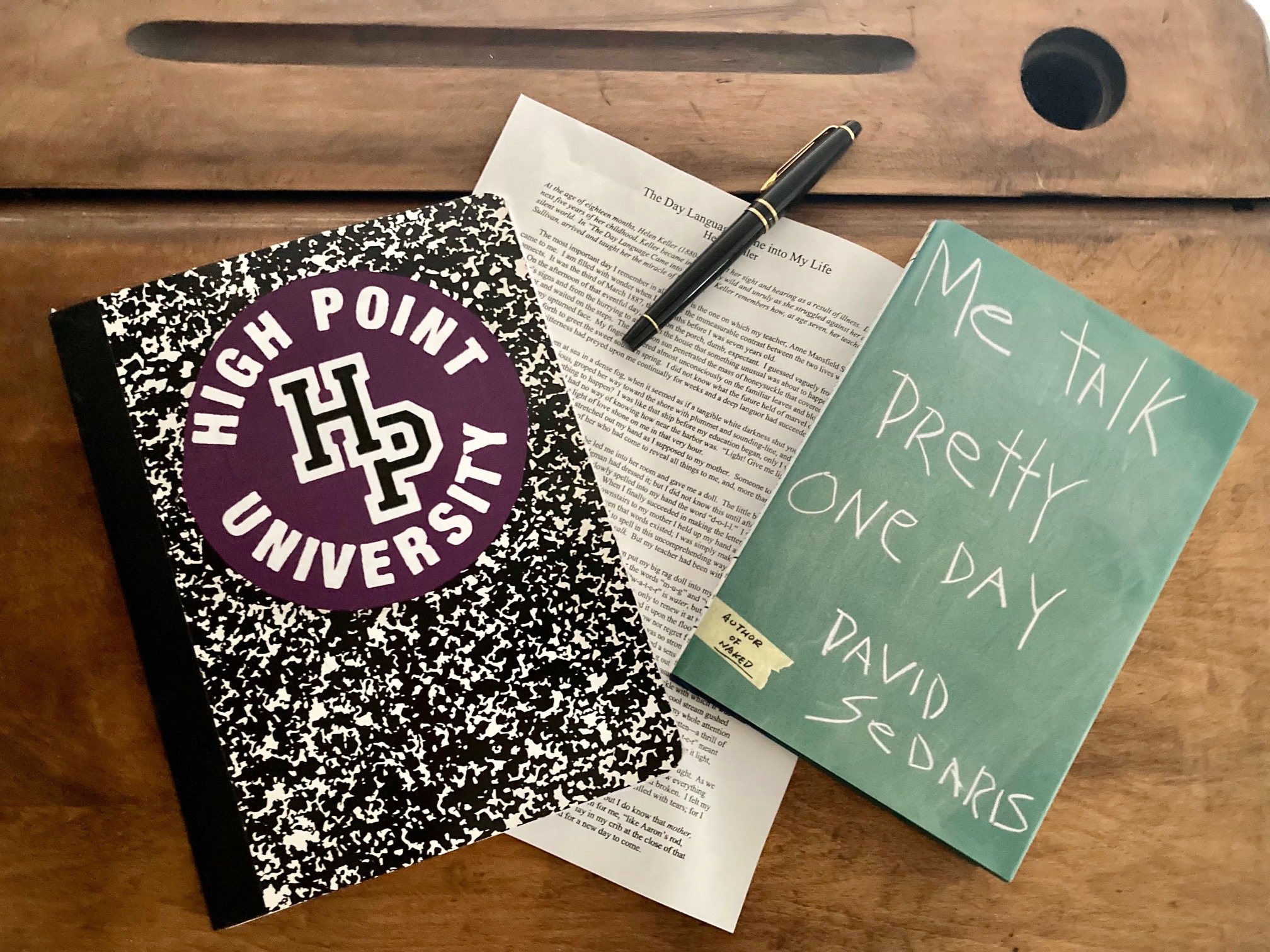
As a model for your own literacy narratives, today in class we will examine “Me Talk Pretty One Day,” originally published in Esquire magazine and later as the title essay in David Sedaris’ 2000 essay collection.
After we read Sedaris’ essay, you will collaborate in groups of four to complete an exercise that involves exploring these aspects of his writing:
Shifts from summary to scene and vice versa
Figurative language
Hyperbole
Vivid detail
I will also ask you to consider what elements are the strongest aspects of the essay and whether “Me Talk Pretty One Day” has given you any ideas for developing your own narrative. Time permitting, we will also read Helen Keller’s essay “The Day Language Came into My Life.”
To read more of Sedaris’ essays, see the list of links under the heading Writing and Radio on his website. You can read more of Helen Keller’s autobiography, the full text in fact, here: The Story of My Life. “The Day Language Came into My Life” is Chapter Four.
Next Up
For Wednesday you should read Keller’s essay (if you don’t have time to read it in class today), and compose a short summary of both her essay and Sedaris.’ Aim for a minimum of fifty words each.
Keep Keller’s and Sedaris’ essays in your pocket portfolio and continue to look to them as models as you revise your literacy narrative. You will receive your draft with my notes at the beginning of Wednesday’s class, and you will have the class period to continue to revise. You will have an additional week to devote to your essay before you post it. It is due (on Blackboard and on your WordPress blog) before class the morning of Wednesday, September 14; the hard deadline is the morning of Friday, September 16.
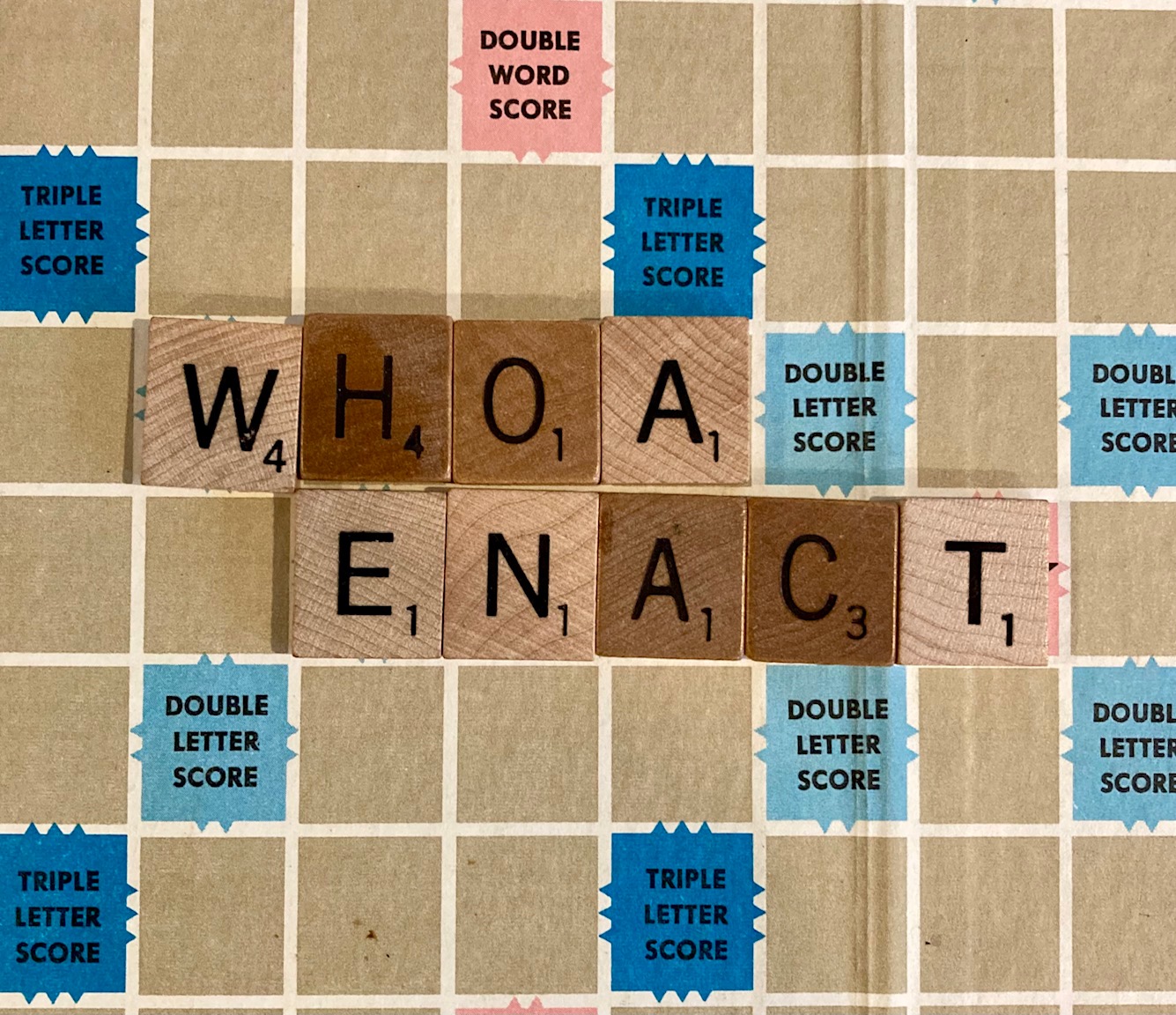
Parallel play increases your score through the points you earn by spelling more than one word in a single turn. In the first play of the hypothetical game pictured above, the team would score sixteen points by spelling enact with the t on the center double word square. With the second turn, the other team could take advantage of the opportunity for parallel play. If the team knew that aa is a type of lava, they could earn twenty-four points with four words: whoa, he, on, and aa.
Two-Letter Words Beginning with A
Aa is one of sixteen playable two-letter words beginning with a. Learning these two-letter words, as well as the others that follow in the alphabet, will enable you to see more options for play and increase the number of points you earn in a single turn.
aa: a type of stony, rough lava
ab: an abdominal muscle
ad: an advertisement
ae: one
ag: agriculture
ah: an exclamation
ai: a three-toed sloth
al: a type of East Indian tree
am: the first-person singular present form of to be
an: an indefinite article
ar: the letter r
as: similar to
at: in the position of
aw: an expression of sadness or protest
ay: a vote in the affirmative (also aye)
Important Note about Challenges
The game rules inside the Scrabble box top do not specify that a player or team that challenges a playable word will lose a turn, but David Bukszpan’s book Is That a Word? notes that the player or team does lose a turn. According to Bukszpan:
“[I]f a word is challenged and found not to be legal (called a phony in Scrabble parlance), the player that set it down loses a turn. Conversely, if a challenged word is found to be playable, the challenger loses his turn” (19).
Work Cited
Bukszapan, David. Is That a Word?: From AA to ZZZ, the Weird and Wonderful Language of SCRABBLE. Chronicle, 2012. p.19.
Coming Soon
At the beginning of class on Monday, September 5, I will collect your completed worksheet for Lesson Two of the Check, Please! starter course. If you are absent tomorrow when I distribute worksheets or you misplace your copy, you can download and print one from Blackboard or here:
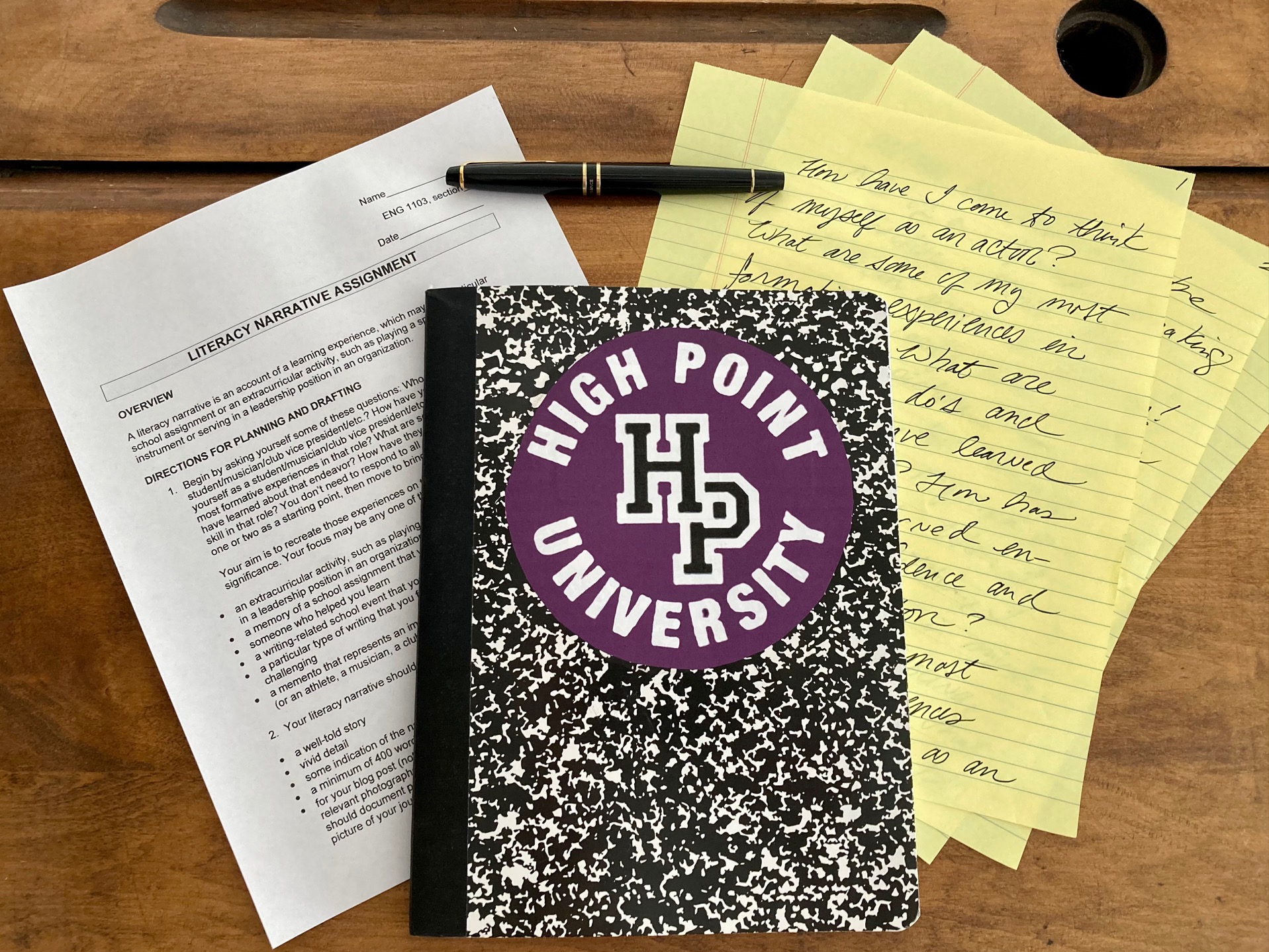
Today in class you will begin planning and drafting your literacy narrative, an an account of a learning experience, which may be a particular school assignment or an extracurricular activity, such as playing a sport or a musical instrument or serving in a leadership position in an organization.
How to Begin
Begin by asking yourself some of these questions: Who are you as a student/musician/club vice president/etc.? How have you come to think about yourself as a student/musician/club vice president/etc.? What were some of your most formative experiences in that role? What are some of the do’s and don’ts you have learned about that endeavor? How have they enhanced your confidence and skill in that role? You don’t need to respond to all of those questions. Try picking one or two as a starting point, then move to bringing your experiences to life.
Your aim is to recreate those experiences on the page and then to reflect on their significance. Your focus may be any one of the following:
an extracurricular activity, such as playing a sport or a musical instrument or serving in a leadership position in an organization.
a memory of a school assignment that you recall vividly
someone who helped you learn
a writing-related school event that you found humorous or embarrassing
a particular type of writing that you found (or still find) especially difficult or challenging
a memento that represents an important moment in your development as a student (or an athlete, a musician, a club leader, etc.)
In class this morning you will receive the assignment sheet that details the guidelines for the literacy narrative. If you are absent today, you can download a copy of the assignment sheet from Blackboard or from this blog post. Next Wednesday, September 7, I will return your draft with my notes, and you will have the class period to revise on your laptop or tablet. You will have an additional week to continue to revise before you post your revision to Blackboard and publish it on your blog on or before the morning of Wednesday, September 14.
Today in class you will also receive a paper copy of the updated course calendar. If you are absent, you can download a copy from Blackboard
“Blogs vs. Term Papers”
For today’s class you read and summarized Matt Richtel’s New York Times‘ article “Blogs vs. Term Papers.” My sample summary of the article appears below.
“Blogs vs. Term Papers” Summary
In The New York Times article “Blogs vs. Term Papers,” Matt Richtel reports on the debate in higher education on how best to teach writing in the digital age. While some professors have followed the lead of City University of New York’s Cathy N. Davidson, replacing the traditional term paper with shorter, more frequent blog assignments, their detractors—including Douglas B. Reeves, columnist for the American School Board Journal and William H. Fitzhugh, editor of The Concord Review—argue that blog writing lacks the academic rigor that fosters critical thinking. For Andrea Lunsford, professor of writing at Stanford University, pitting blogs against term papers creates a false opposition. Rather than replacing term papers with blog posts, Lunsford requires students to produce multi-modal assignments: term papers that evolve into blogs, websites, and video presentations.
We will return to “Blogs vs. Term Papers” in the coming weeks. You will have the option to choose it for the subject of your analysis essay, and you may want to want to address Richtel’s article in your midterm reflection, too.
Next Up
Wordplay Day! To prepare for class, review Tips and Tools on the Scrabble site. Also review the blog posts devoted to Scrabble.
ENG 1103. 24, (L-R): Rachael King, Amelia Cambio, Jaden Gleiber, Harrison Walls
Yesterday in class, along with submitting your first Check, Please! assignment, you examined three of the paragraphs that students collaboratively composed last Wednesday on some of the habits of mind cultivated by successful college students. The paragraphs that follow are revised versions of those paragraphs. Changes I made include ones of punctuation, diction, and grammar. The paragraphs would benefit from additional concrete details, too, but those particular additions can be made only by the students themselves. Keep the annotated handout in your pocket portfolio, and look to it as a model for editing for both individual and group assignments.
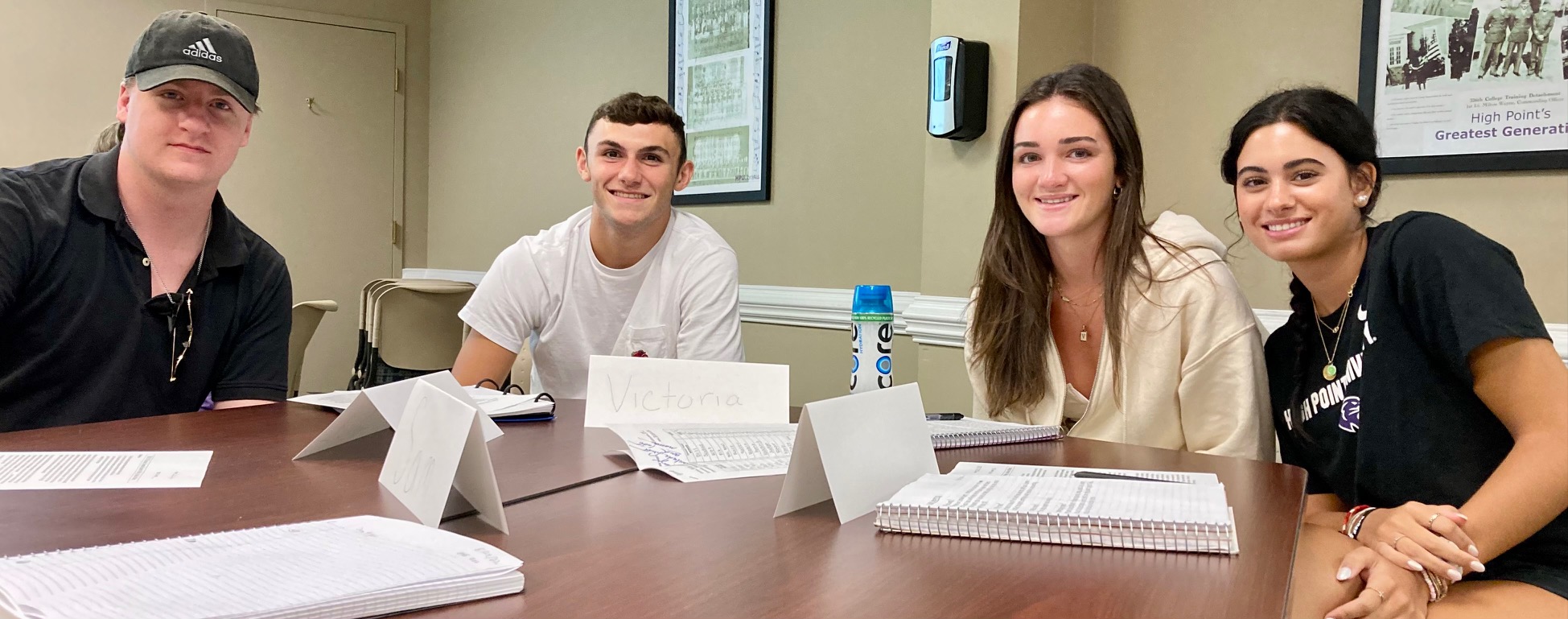
ENG 1103. 24, (L-R): Sam Kaylor, Nick Laurenco, Victoria Leary, Melanie Hale
Student Writing, Sample One
Persistency, or continuing when faced with adversity, poses challenges for students who procrastinate. One member of our group shared an example from many years ago when they [he or she if the person is not nonbinary] received a failing grade on their [see previous pronoun note] first exam. Because the student did not study for the exam, he/she/they earned a failing grade, a grade that no student wants to earn and no teacher wants to record in the gradebook. That experience prompted him/her/they to develop the habit of preparing for class. By completing the same routine over and over, the student found himself/herself/themselves ready for any situation. By practicing consistent persistence, that student—and all of the rest of us—can always be successful.
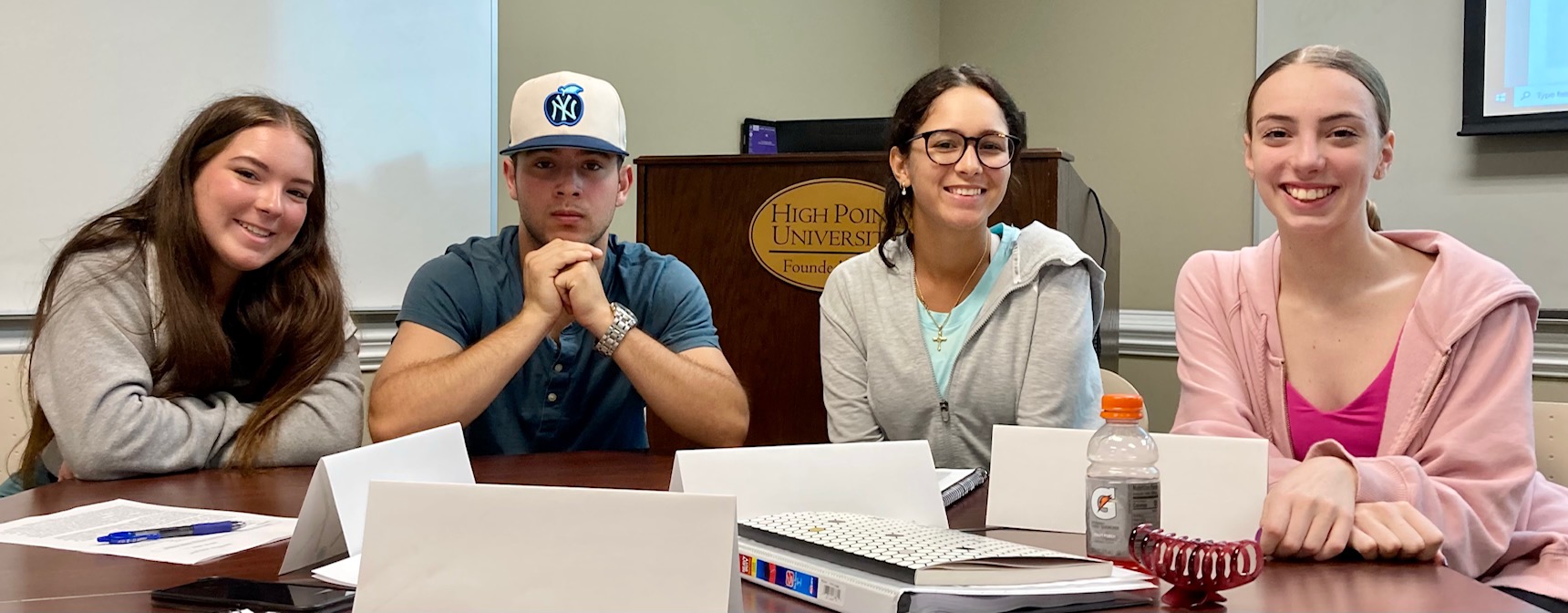
ENG 1103. 24, (L-R): Jackson Tuomey, Chris Sciortino, Josh Stevens, Janie McDowell
Student Writing, Sample Two
Flexibility, or the ability to adapt in a new environment and unfamiliar situations, resonates with each of us in our group. Our group members are very similar in terms of how we have adapted to situations that challenged us to be flexible. For example: [name ommitted for anonymity]’s work environment involved conflicts with priorities and time management. In order to accommodate to such issues, he went with the flow when he faced problems at work. Doing so enabled him to minimize his stress, and he could often relax.
ENG 1103. 24, (L-R): LaToya Darden-Dixon, Rachel Cornovas, Mer Mixon, Sean O’Donnell
Student Writing, Sample Three
Curiosity—or the desire to learn new things about issues, problems, people, or policies—is a habit of mind that all of us have cultivated. We all grew up wanting to explore the unknown, wanting to learn the realities of other people and look at the world from different perspectives. [Name omitted for anonymity], specifically, is very curious about the food in different cultures. She was very picky when she was young but her willingness to try new foods stemmed from her innate curiosity, she learned which ones she liked through and trial and error. [Name omitted for anonymity] developed the habit of curiosity in the classroom. For him/her/they, school opened up broad subjects like psychology, which developed into a curiosity about the anatomy of the brain. [Name omitted for anonymity] is curious about the uniqueness of the human experience. She is fascinated by how we all experience the same life so differently. Embracing the beauty of difference allows small connections to manifest into much more. Through travelling, meeting new people, and experiencing other cultures, her curiosity has only grown. Our curiosity mindsets have enabled us to branch out and expand our knowledge.
ENG 1103. 24, (L-R): Alexa Hooten, Nick Kernaghan, Dary Guzman, Devlin Turner
Guidelines for Writing and Editing
When you’re composing collaboratively, make sure that everyone—not just the notetaker—is involved in the writing process.
After you have completed composing the piece, allow time for every group member to review the writing. If you recommend changes, let your group know and revise as needed.
Whether you’re writing collaboratively or alone, read your writing aloud. Hearing awkward passages will indicate where you need to edit for brevity. Noting where you pause in your reading may indicate where you need to add a comma or another punctuation mark.
Avoid passive constructions. The subject of the sentence should perform the action rather simply serve as a passive recipient—or worse, an absent subject.
Passive: The work was completed. Active: The students collaboratively composed the assignment.
Next Up
For Wednesday’s class, read Matt Richtel’s New York Times article “Blogs versus Term Papers.” Annotate (make notes in the margin) as you read, and afterward complete a short, fifty to one-hundred word, summary in your journal/writer’s notebook. Those of you in the 9:15 class (section 23) received a paper copy of the article in class. Those of you in the 10:40 class (section 24) should read the copy posted on Blackboard in the Readings folder or the one attached at the end of this post. Rather than annotating the article (since those of you in section 24 don’t have a paper copy yet), make your notes in your journal before you compose your summary of the article. In class on Wednesday I will give you a paper copy.
Important Note: The pages of the paper copies of “Blogs versus Term Papers” are not printed in the correct order. The front-to-back order is 1-3-2-4, so the pages should be read in this order: (1) front of first page, (2) front of second page, (3) back of first page, (4) back of second page. I apologize for the inconvenience.
Mike Caulfield, author of the Check, Please! starter course and Director of Blended and Networked Learning at Washington State University / Caulfield, Mike. Check, Please! Starter Course, 2021, htttps://webliteracy.pressbooks.com/front-matter/updated-resources-for-2021/.
At the beginning of today’s class I will collect your worksheets for Lesson One of the Check, Please! starter course. My sample version of the assignment appears below (as well as on your worksheet and on Blackboard).
Sample Check, Please! Assignment
Check, Please! Lesson One Assignment
In the first lesson of the Check, Please!, Starter Course, Mike Caulfield, author of the course and Director of Blended and Networked Learning at Washington State University, introduces the four-step SIFT approach to determining the reliability of a source: (1) “Stop,” (2) “Investigate,” (3) “Find better coverage,” and (4) “Trace claims, quotes, and media to the original context.”
One of the most useful practices presented in lesson one is what the author terms the “Wikipedia Trick.” Deleting everything that follows a website’s URL (including the slash), adding a space, typing “Wikipedia,” and hitting “enter” will yield the site’s Wikipedia page. The Wikipedia entry that appears at the top of the screen may indicate the source’s reliability or lack thereof.
The most memorable segment of lesson one is the short, riveting video “The Miseducation of Dylann Roof,” which begins with the narrator asking the question, “How does a child become a killer?” Produced by the Southern Poverty Law Center, it documents how algorithms can lead unskilled web searchers down paths of disinformation. In the worst cases, such as Roof’s, algorithms can lead searchers to the extremist propaganda of radical conspiracy theorists.
Today in class we will also examine some anonymous student samples from last Friday’s collaborative writing on habits of mind. Among the questions I will ask you to consider are these:
Have the writers briefly defined the subject (the habit of mind)?
Have they included concrete details that demonstrate how one or more group members have developed that habit of mind?
Post Script
Scrabble invloves a combination of luck and skill, and luck was clearly on my side yesterday morning when I was able to Scrabble, or Bingo (for an additional fifty points), by playing all seven of my tiles. Using the e in ace as a bridge, I was able to play squeezes with the q on a double letter score, the first e on a double letter score, and the final letter, s, on a double word score for a total of 124 points.
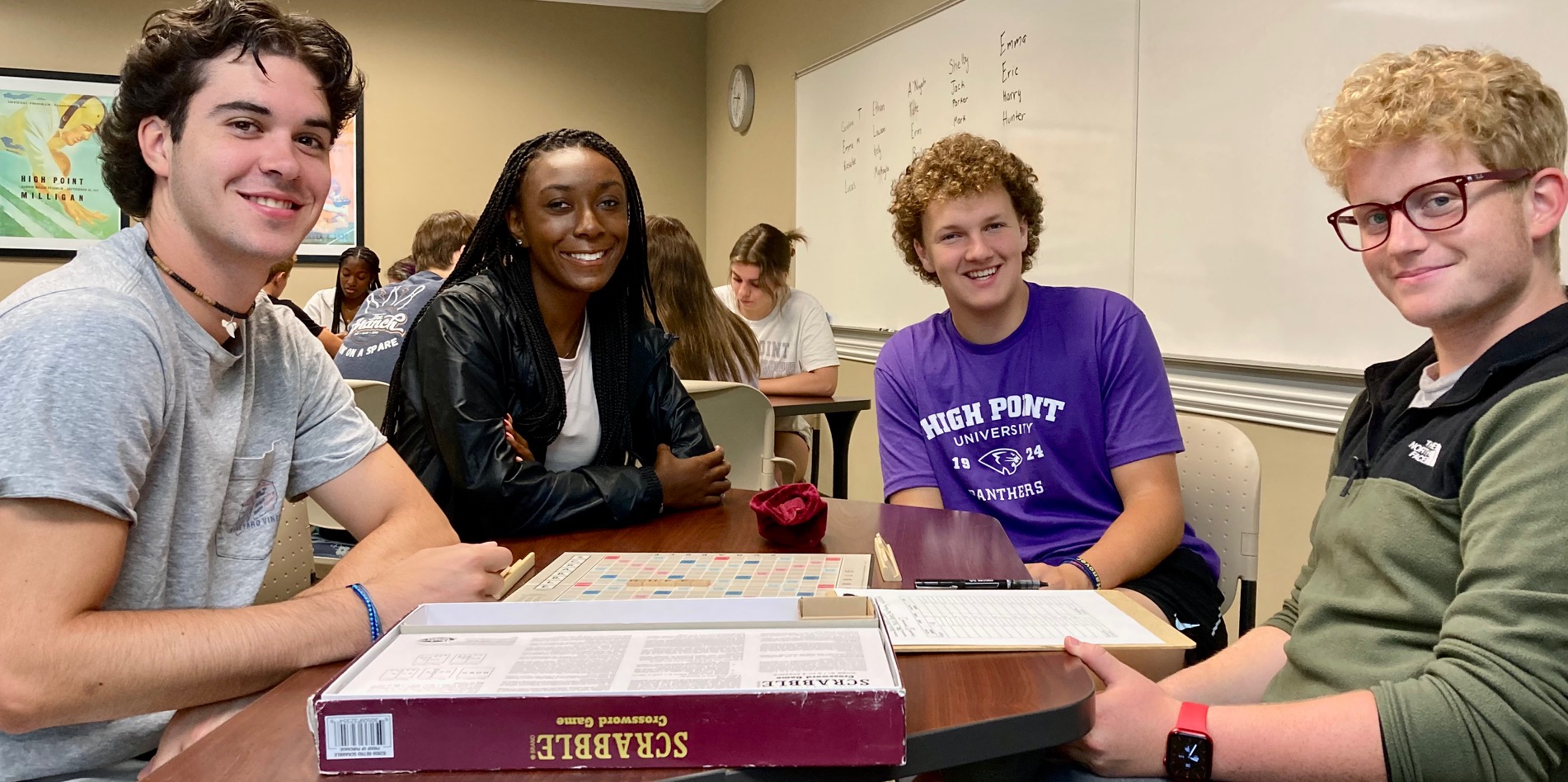
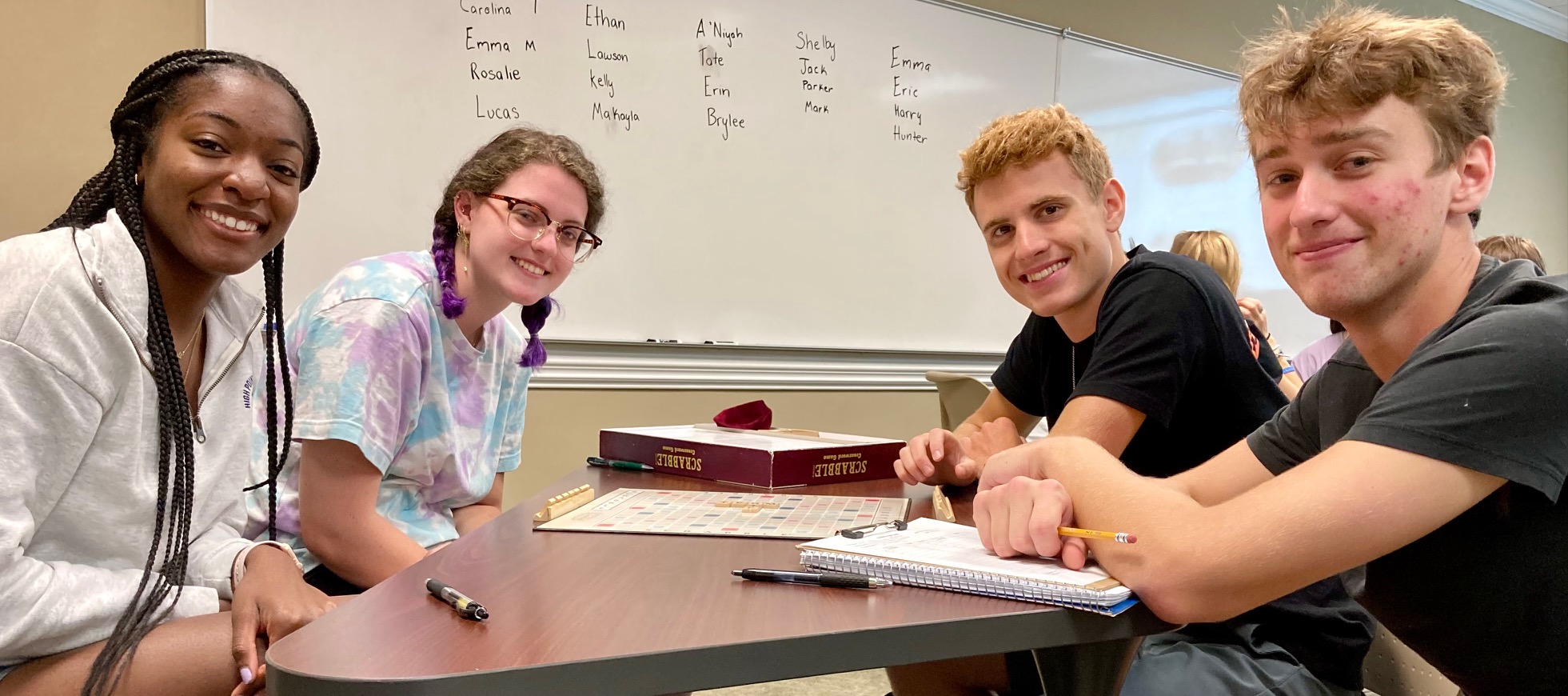
As another way of putting names with faces, today in class I took pictures of the Scrabble groups in the 9:15 class, which I have included in this blog post. On Monday during your Scrabble debriefing, I will take pictures of the groups in the 10:40 class. In between the pictures of the groups that follow, you will find portions of an alphabetical list of first names that are also common nouns and therefore playable as Scrabble words.
(L-R): Parker Pignataro, Shelby Scott, Jack Rhynning, Mark Epstein
Al: a type of East Indian tree
Alan: a breed of hunting dog (also aland, alant)
Alec: a herring
Ana: a collection of miscellany about a specific topic
Anna: a former Indian coin
Barbie: a barbecue
Belle: a pretty woman
Ben: an inner room
Benny: an amphetamine pill
Bertha: a style of wide collar
Beth: a Hebrew letter
Biff: to hit
Bill: to charge for goods
Billy: a short club
Bo: a friend
Bobby: a policeman
Bonnie: pretty (also bonny)
Brad: a small nail or tack
Carl: a peasant or manual laborer (also carle)
Carol: to sing merrily
Celeste: a percussive keyboard instrument (also celesta)
Chad: a scrap of paper
Chevy: to chase (also chivy)
Christie: a type of turn in skiing (also christy)
(L-R): Eric Laurenco, Hunter Tobias, Harry Hennessy, Emma Smull
Clarence: an enclosed carriage
Dagwood: a large, stuffed sandwich (named after the comic strip character who was fond of them)
Daphne: a flowering shrub with poisonous berries
Davy: a safety lamp
Deb: a debutante
Devon: a breed of cattle
Dexter: located to the right
Dom: a title given to some monks
Don: to put on a piece of clothing
Donna: an Italian woman of repute
Erica: a shrub of the heath family
Fay: to join together closely
Florence: a former European gold coin
Franklin: a nonnoble medieval English landowner
Fritz: a nonworking or semi-functioning state
Gilbert: a unit of magneto-motive force
Gilly: to transport on a type of train car
Graham: whole-wheat flour
Hank: to secure a sail
Hansel: to gift a gift, usually to commence a new year (also handsel)
Harry: to harass
Henry: a unit of electrical inductance
Herby: full of herbs
Hunter: a person or animal that hunts
Jack: to hoist with a type of lever
Jacky: a sailor
Jake: okay, satisfactory
Jane: a girl or woman
Jay: any of various birds, known for their crests and shrill calls
Jess: to fasten a strap around the leg of a bird in falconry (also jesse)
Jill: a unit of measure equal to to 1/4 of a pint
Jimmy: to pry open
Joannes: a Portugese coin (also johannes)
Joe: a fellow
Joey: a young kangaroo
John: a toilet
Johnny: a hospital gown
Jones: a strong desire
Josh: to tease
Kelly: a bright shade of green
Kelvin: a unit of absolute temperature
Ken: to know
Kent: past tense of ken
Kerry: a breed of cattle
Kris: a curved dagger
Lars: plural of lar: a type of ancient Roman guardian deity (also lares)
Lassie: a lass
Laura: an aggregation of hermitages used by monks
Laurel: to crown one’s head with a wreath
Lee: to shelter from the wind
Louie: a lieutenant
Louis: a former gold coin of France worth twenty francs
Mac: a raincoat
Mae: more
Mamie: a tropical fruit-bearing tree (also mamey and mammee)
Marc: the pulpy residue of fruit after it is pressed for wine
(L-R): Makayla Curtis, Kelly Samz, Ethan Webber, Lawson Kilpatrick
Marcel: to make waves in the hair using a special iron
Marge: a margin
Mark: a line, figure, or symbol
Martin: any type of the bird also known as a swallow
Marvy: marvelous
Matilda (a hobo’s bundle (chiefly Australian)
Matt: to put a dull finish on (also matte)
Maxwell: a unit of magnetic flux
Mel: honey
Merle: a blackbird
Mickey: a drugged drink
Mike: a microphone (also mic)
Milt: to fertilize with fish sperm
Minny: a minnow
Mo: a moment
Molly: a type of tropical fish
Morgan: a unit of frequency in genetics
Morris: a type of folk dance from England
Morse: describing a type of code made of long and short signals
Mort: a note sounded in hunting to announce the death of prey
(L-R): Rosalie Olsen, Carolina Taylor, Emma Miller, Lucas Baker
Nelson: a type of wrestling hold
Newton: the unit of force required to accelerate one kilogram of mass on meter per second
Nick: to make a shallow cut
Norm: a standard
Pam: the name of the jack of clubs in some card games
Parker: one who parks a motorized vehicle
Peter: to lessen gradually
Pia: a fine membrane of the brain and spinal cord
Randy: sexually excited
Regina: a queen
Rex: a king
Rick: to stack, hay, corn, or straw
Roger: the pirate flag
Sal: salt
Sally: to make a brief trip or a sudden start
Sawyer: one who saws wood
Shawn: past tense of show
Sheila: a girl or young woman
Sol: the fifth note on a diatonic scale (also so)
Sonny: a boy or young man
Sophy: a former Persian ruler
Spencer: a type of sail
Tad: a young boy
Tammie: a fabric used in linings (also tammy)
Ted: to spread for drying
Teddy: a woman’s one-piece undergarment
Terry: a soft, absorbent type of cloth
Tiffany: a thin, mesh fabric
Timothy: a Eurasian grass used for grazing
Toby: a drinking mug in the shape of a man or a man’s face
Tod: a British unit of weight for wool equal to twenty-eight pounds
Tom: the male of various animals
Tommy: a loaf or chunk of bread
Tony: very stylish
Vera: very
Victoria: a light, four-wheeled carriage
Warren: an area where rabbits live, or a crowded maze-like place
Webster: one who weaves
Will: to choose, decree, or induce to happen
Willy: to clean fibers with a certain machine
Bonus Point Opportunity!
The first student to correctly respond to the playable first names question below will earn a bonus point for his/her/their first major writing assignment.
How many students in English 1103. 23 and 24 have first names–meaning the first names that they go by–that are playable Scrabble words? Note that Jane and Shawn are playable but Janie and Sean are not.
Directions for Finding and Submitting Your Answer
Review the list of playable first names, compare it with the students’ names on the class page, and determine which of the students’ names are playable in Scrabble.
Compose a response of one or more complete sentences that includes (1) the number of students with playable names, and (2) the first and last name of each student, followed by the section number in parentheses.
Post your comment as a reply to this blog post.
To post your comment, click the title of the post, “What’s in a Name. . . . ,” then scroll down to the bottom of the post. There you will see the image of an airmail envelope with a white rectangular box for your comment. Type your comment in the box and hit return. Voila! You have submitted your answer. Good luck!
Yesterday in class, in preparation for our first Wordplay Day tomorrow, I offered an overview of Scrabble and presented an example of the potential importance of tile placement by the first team to play. The first word of the game may be played horizontally or vertically, but one letter must be on the center double-word square. I projected the sample below, noting that it was a valid first play but not the best option. Why, I asked, would the first team profit from a different choice?
The image that follows illustrates the benefits of placing the a, rather than the r, on the center square. With the r on the center square, zebra is simply a double word-scoring play for a total of thirty-two points. If, instead, the team places the a on the center square, zebra is a double word-scoring play with z on a double letter square for a total of fifty-two points, twenty more than the team would have gained by placing the r on the center square.
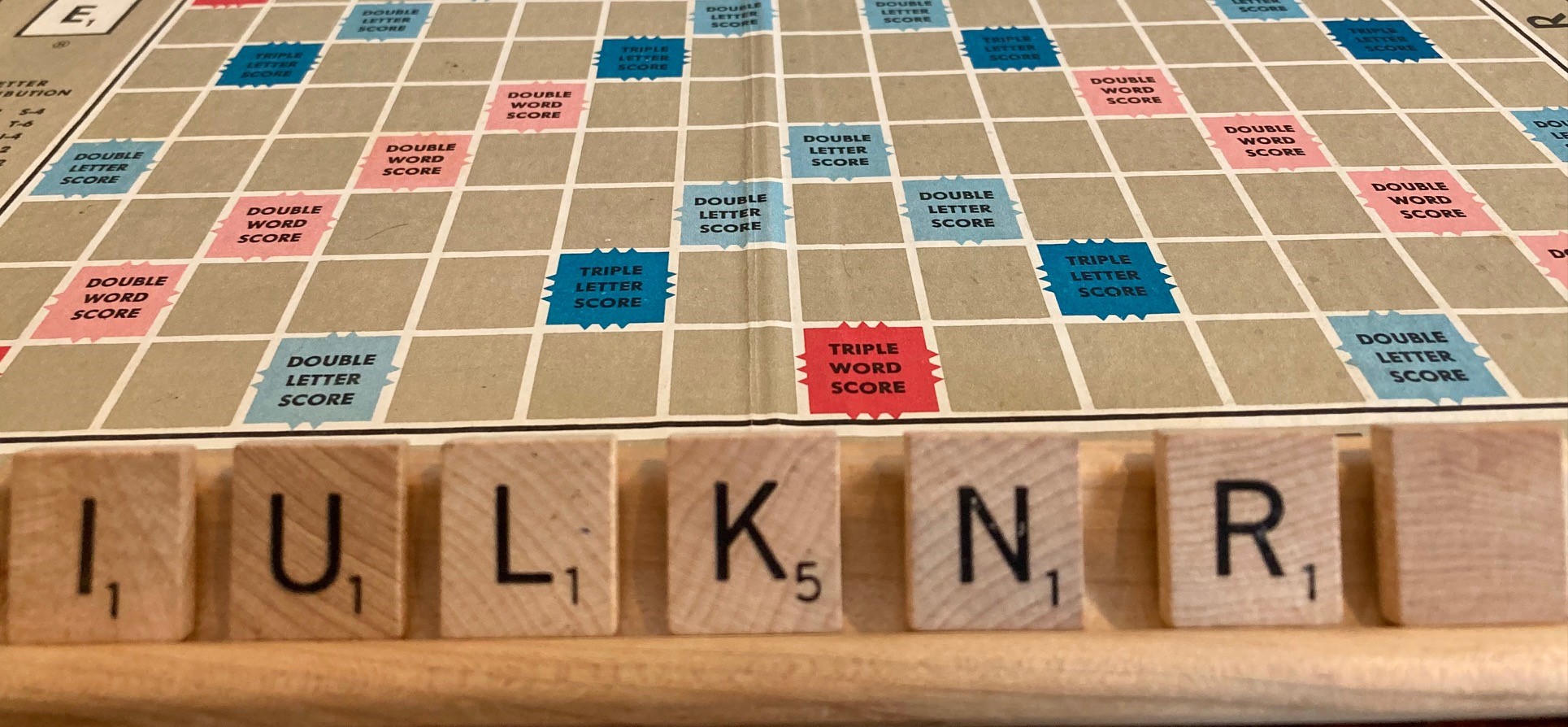
Imagine that early in your Scrabble game, the seven tiles on your rack are I-U-K-L-N-R-blank. If the q hasn’t been played yet, you would be wise to hold onto the u. There are only four in bag. If you play your u, and don’t draw another one but draw the q, it will be difficult to play the q since there are only a few words that contain a q that isn’t followed by a u.
Holding onto your blank is also a good idea. A blank has no point value, but it can be used as any letter. There are only two in the bag. Having one of the blanks late in the game may help you out of a tight spot or enable you to score high by playing the blank as a hook and forming more than one word.
Of course, there are exceptions to this. Early in your Scrabble game, if the seven tiles on your rack are I-U-K-L-N-R-blank, you may want to risk the chance of not drawing another u or blank. Playing the word lurking would be a Scrabble or a bingo, the terms for playing all seven of the tiles on your rack, which earns you fifty bonus points.
Next Up
Tomorrow, at the beginning of Wordplay Day, I will distribute the worksheet for your first Check , Please!assignment. If you are absent or misplace the copy you receive in class, you can download and print a copy from the link below, or download and print one from Blackboard. Your completed Check, Please! worksheet is due at the beginning of class on Monday, August 29.
College writing offers you the opportunity to develop skills, such as supporting arguments with evidence, writing effective thesis statements, and using transitions well, but it also gives you the opportunity to develop habits. Successful college students develop certain habits of mind, a way of approaching learning that leads to success.
In 2011, the Council of Writing Program Administrators (CWPA), the National Council of Teachers of English (NCTE), and the National Writing Project (NWP) identified eight habits of mind that successful college students adopt.
In class on Monday, we began an exercise in written reflection focusing on four of the eight habits of mind. (The 9:15 class wrote on the first four; the 10:40 class wrote on the second four.) Later in class today, we will begin writing about the four that you did not address in your writing on Monday. The paragraphs that follow include the descriptions of the habits that you examined (and the ones you will examine today), as well as the questions that you answered in writing (and the ones you will answer in writing today).
Curiosity
Are you the kind of person who always wants to know more? This habit of mind will serve you well in courses in which your curiosity about issues, problems, people, or policies can form the backbone of a writing project.
WRITING ACTIVITY: What are you most curious to learn about? What experiences have you had in which your curiosity has led you to an interesting discovery or to more questions?
Openness
Some people are more open than others to new ideas and experiences and new ways of thinking about the world. Being open to other perspectives and positions can help you to frame sound arguments and counterarguments and solve other college writing challenges in thoughtful ways.
WRITING ACTIVITY: In the family or the part of the world in which you grew up, did people tend to be very open, not open at all, or somewhere in the middle? Thinking about your own level of open-mindedness, reflect on how much or how little your own attitude toward a quality like openness is the result of the attitudes of the people around you.
Engagement
Successful college writers are involved in their own learning process. Students who are engaged put effort into their classes, knowing that they’ll get something out of their classes—something other than a grade. They participate in their own learning by planning, seeking feedback when they need to, and communicating with peers and professors to create their own success. Write about a few of the ways you try (or plan to try) to be involved in your own learning. What does engagement look like to you?
WRITING ACTIVITY: Write about a few of the ways you try (or plan to try) to be involved in your own learning. What does engagement look like to you?
Creativity
You may be thinking that you have to be an artist, poet, or musician to display creativity. Not so. Scientists use creativity every day in coming up with ways to investigate questions in their field. Engineers and technicians approach problem solving in creative ways. Retail managers use creativity in displaying merchandise and motivating their employees.
WRITING ACTIVITY: Think about the field you plan to enter. What forms might creativity take in that field?
Persistence
You are probably used to juggling long-term and short-term commitments—both in school and in your everyday life. Paying attention to your commitments and being persistent enough to see them through, even when the commitments are challenging, are good indicators that you will be successful in college.
WRITING ACTIVITY: Describe a time when you faced and overcame an obstacle in an academic setting. What did you learn from that experience?
Responsibility
College will require you to be responsible in way you may not have had to be before. Two responsibilities you will face as an academic writer are to represent the ideas of others fairly and to give credit to writers whose ideas and language you borrow for your own purposes.
WRITING ACTIVITY: Why do you think academic responsibility is important? What kind of experience have you already had with this kind of responsibility?
Flexibility
Would your friends say you are the kind of person who can just “go with the flow”? Do you adapt easily to changing situations? If so, you will find college easier, especially college writing. When you find, for example, that you’ve written a draft that doesn’t address the right audience or that your peer review group doesn’t understand at all, you will be able to adapt. Being flexible enough to adapt to the demands of different writing projects is an important habit of mind.
WRITING ACTIVITY: Describe a situation in which you’ve had to make changes based on a situation you couldn’t control. Did you do so easily or with difficulty?
Metacognition (Reflection)
As a learner, you have probably been asked to think back on a learning experience and comment on what went well or not well, what you learned or what you wished you had learned, or what decisions you made or didn’t make. Writers who reflect on their own processes and decisions are better able to transfer writing skills to future assignments.
WRITING ACTIVITY: Reflect on your many experiences as a writer. What was your most satisfying experience as a writer? What made it so?
Next Up
Friday marks the first Wordplay Day of the semester. To prepare for class, review the Scrabble Ground Rules posted in Blackboard, as well as the Tips and Tools pages on the Scrabble website. Also, look for a Scrabble tips post on my blog. Some weeks, not every week, I will publish a post devoted to Scrabble strategies.













 Jane Lucas