Posted in Reading, Teaching

“Do Androids Dream of Electric Sheep?”

Do Androids Dream of Electric Sheep? (1968)

This afternoon, I met with several of my Focused Inquiry colleagues to discuss Phillip K. Dick’s novel Do Androids Dream of Electric Sheep?, the holiday reading that will bridge UNIV 111 and 112.  Though students won’t read the novel until December or early January, I will address it–at least briefly–when they study Art Spiegelman‘s In the Shadow of No Towers on September 13 and 15, following the tenth anniversary of 9/11.

I have taught In the Shadow of No Towers in the spring semester for the past two years but  thought it would be worthwhile to consider Spiegelman‘s graphic memoir of the days that followed 9/11 on the days that follow the tenth anniversary.

On page 7, Spiegelman writes: “My ‘leaders’ are reading the book of Revelations.  . . .  I’m reading the paranoid science fiction of Phillip K. Dick.” Why does Spiegelman want us to know what he was reading–and what our leaders were reading–in the days following 9/11? What does he want to tell us? Those are a couple of the questions I may pose in class on September 13 or 15–and perhaps again in January when we study “the paranoid science fiction of Phillip K. Dick.”

Do Androids Dream of Electric Sheep? is new to me–I have just begun reading it–so I don’t know yet how I will approach it in class. My tentative plans include  incorporating a study of excerpts from the graphic novel adaptation from Boom Studios and concluding the semester with a study of Blade Runner, Ridley Scott‘s film adaptation–or perhaps, more accurately, his re-imagining–of the novel.

Posted in Reading, Teaching

“The Other Wes Moore”

This morning I attended a meeting that brought together some of the VCU faculty, staff, and administrators who will lead discussions of The Other Wes MooreVCU’s 2011 Summer Reading Program selection–during Welcome Week, August 21 – 28. Each of us will meet with a group of first-year students and their Resident Assistant  to discuss Moore’s book, which chronicles the lives of two young men from Baltimore, born within a year of each other and bearing the same name, one of whom, the author, became Johns Hopkins‘ first African-American Rhodes Scholar; the other of whom will spend the rest of his life as an inmate at the Jessup Correctional Institution in Maryland. In his introduction, Moore writes: “The chilling truth is that his story could have been mine. The tragedy is that my story could have been his ” (xi). Several of the meeting’s attendees referred to those lines, including the woman sitting next to me, who turned to me before we began and asked: “Do you think it’s true?” I didn’t have time to respond–much less formulate a response–before the meeting began in earnest.

Though I haven’t finalized my plans for the discussion that I will lead on August 24, I know that I will ask the students to consider those lines from the introduction, the “moments of decision” (xi), when they could have chosen different paths, and the impact of mentors in their lives.

In Chapter Seven, Wes Moore recounts how his mother “sensing [his] apathy toward reading” (130), bought the teenage Wes a copy of Mitch Albom’s The Fab Five: “I was riveted by that book. The characters jumped off the page, and I felt myself as engulfed in their destiny as I was in my own. I finished The Fab Five in two days. The book itself wasn’t what was important–in retrospect I can see that it was a great read but hardly a great work of literature–but my mother used it as a hook into a deeper lesson: that the written word isn’t necessarily a chore but can be a window into new worlds” (130-131).

I hope that The Other Wes Moore will serve as a hook to deeper lessons as well.

Posted in Reading, Teaching

Half-Southern Detroit, “The Help”

The Help (2009)

In today’s story reporting Philip Levine’s appointment as Poet Laureate, NPR excerpted a 2005 interview in which Levine said that the Detroit of his youth “was probably half-Southern. And every Sunday morning you could turn on these guys [preachers on the radio]—both white and black—and they would belt out language like I never heard. I loved it.”

Along with the announcement of our new Poet Laureate from half-Southern Detroit, today brought the release of the film adaption of Kathryn Stockett’s best-seller The Help. Between thoughts of a half-Southern Detroit, I tried to imagine what I will say to students in my Southern Literature class when they ask why Stockett’s novel, or an excerpt from it, isn’t on the syllabus. I agree with Janet Maslin’s assertion that “[i]t’s a story that purports to value the maids’ lives while subordinating them to Skeeter and her writing ambitions.”

But the cultural impact of the novel, and now the film as well, tells me that  The Help needs to be part of our classroom conversation, even though it won’t be on the syllabus. In David Edelstein’s  review of the film on Fresh Air  today, he observed that “[s]ome of Stockett’s critics have gone so far as to say she actually romanticizes domestic servitude by depicting black nannies’ genuine love for the white children in their care. They also say the novel is full of stock characters that reinforce classic African-American stereotypes like the ‘sassy’ maid and the shiftless, abusive husband.”

And what is Edelstein’s take on it all? He said: “My view of this controversy is easily stated:  ‘I don’t know, I don’t know, I don’t know.’”

I don’t know either, but I do know that The Help will be part of our classroom conversation—perhaps along with half-Southern Detroit.

Posted in Reading

Front Porch Reading at Topsail Island

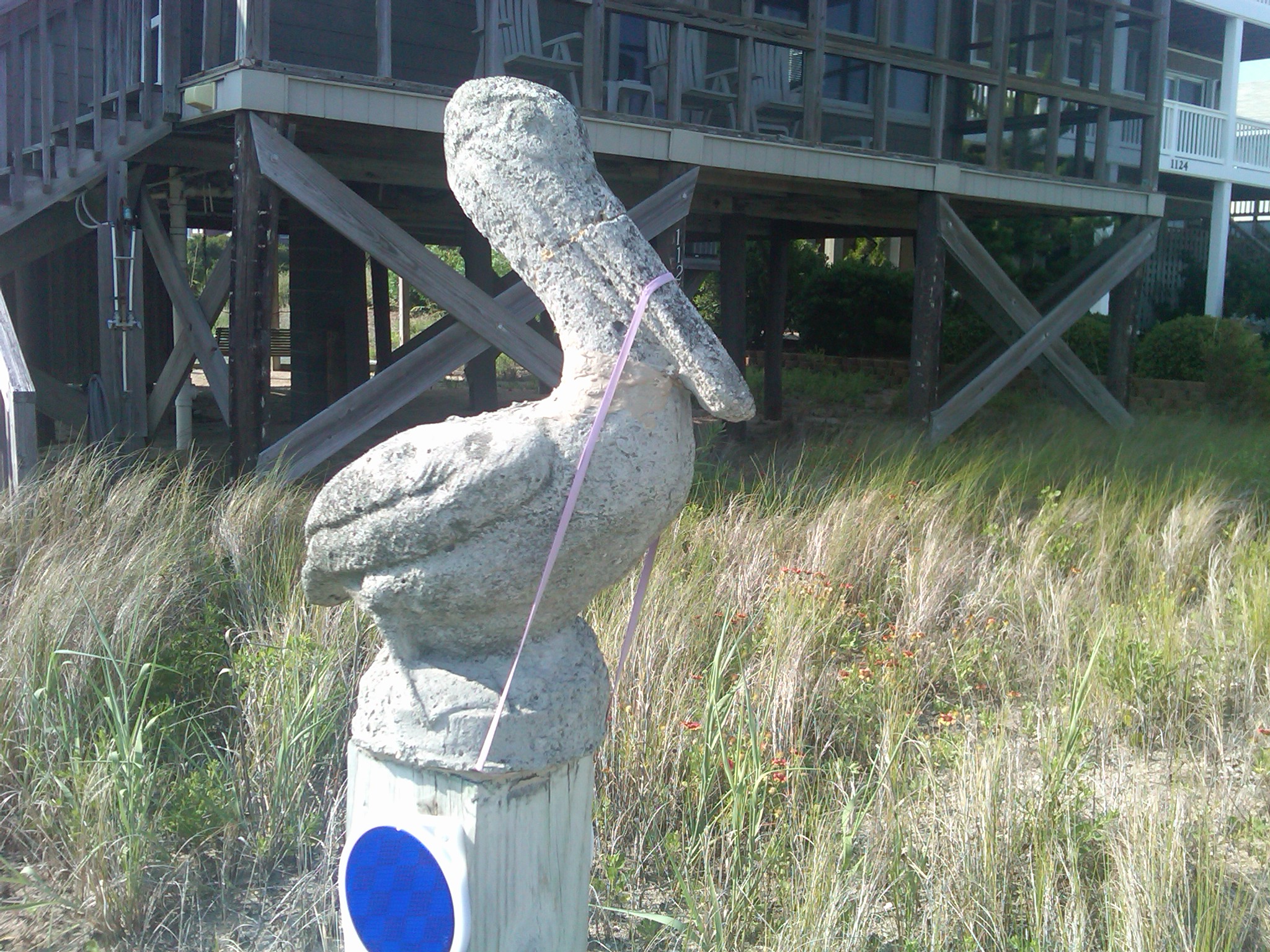
On vacation at Topsail Island, June 4 – 8, I read Ashes to Water, the July-August selection for Richmond’s city-wide book club sponsored by River City Reads and Chop Suey Books. Whenever I read a mystery–which I don’t often do–I’m impressed by the intricacies of plot. What appealed to me more than the plot of Ashes to Water, though, was the novel’s sense of place. Like Irene Ziegler‘s short story collection Rules of the Lake, the novel’s prequel, Ashes to Water presents in vivid detail central Florida’s lake  country with its “grove[s] of knotty cypress knees” (274). I look forward to hearing Ziegler read from Ashes to Water on August 18.

Posted in Reading, Teaching, Writing

Belles Gone Bad, Summer Reading

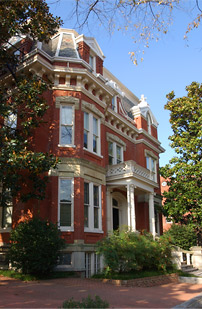
VCU’s Founders Hall, site of “Belles Gone Bad,” April 26 – May 24, 827 W. Franklin St., Richmond, VA.

April 26 – May 24 found me revisiting some of my favorite writers—including Flannery O’Connor, Katherine Anne Porter, and Eudora Welty—with the women enrolled in Belles Gone Bad, a course that I developed for the Commonwealth Society, VCU’s institute for lifelong learning.

Elisabeth “Betsy” Muhlenfeld, president emerita of Sweet Briar College  (1996 – 2009) and Mary Boykin Chesnut scholar, joined the class for our final Tuesday-morning  meeting on May 24. Her remarks on Chesnut brought to life a woman whose incisive diary, Mary Chesnut’s Civil War, offers not only one of the most important historical accounts of the Civil War years but also a document of considerable literary merit.

Muhlenfeld’s biography of Chesnut sustained me while I was icing a sprained ankle back in March and renewed my interest in the diarist, so I added Muhlenfeld’s edition of Chesnut’s novel manuscripts (UVA Press, 2002) to my summer reading list. Chesnut’s unfinished apprentice novels, The Captain and the Colonel and Two Years—or The Way We Lived Then, don’t place you in her world the way her diary so beautifully does, but they reveal how she fictionalized her life as she taught herself to write, and in her developing voice you can hear a hint of what’s to come.

Other notable summer reads include the first chapter of colleague Mary Lou Hall’s Dogs and Heroes, which received the third annual Best Unpublished Novel prize, sponsored by James River Writers and Richmond Magazine. Mary Lou read the opening of the novel at the Focused Inquiry Faculty  symposium on Friday, November 12, and I enjoyed reacquainting myself with the first chapter–in the pages of the July issue of RM–which introduces a boy named Clarence and his new friend Mona, the albino Great Dane “all white with the baby blue eyes” (66). Congratulations, Mary Lou!

Still lingering in my mind is the closing image of the writer learning to dance in the personal essay “Lady Lessons” by Lee Smith in the June/July issue of Garden and Gun. Studying with Smith in 1989 filled me with the love that Bobbie’s dancing lesson gives the young Lee. And her writing continues to delight and instruct me.