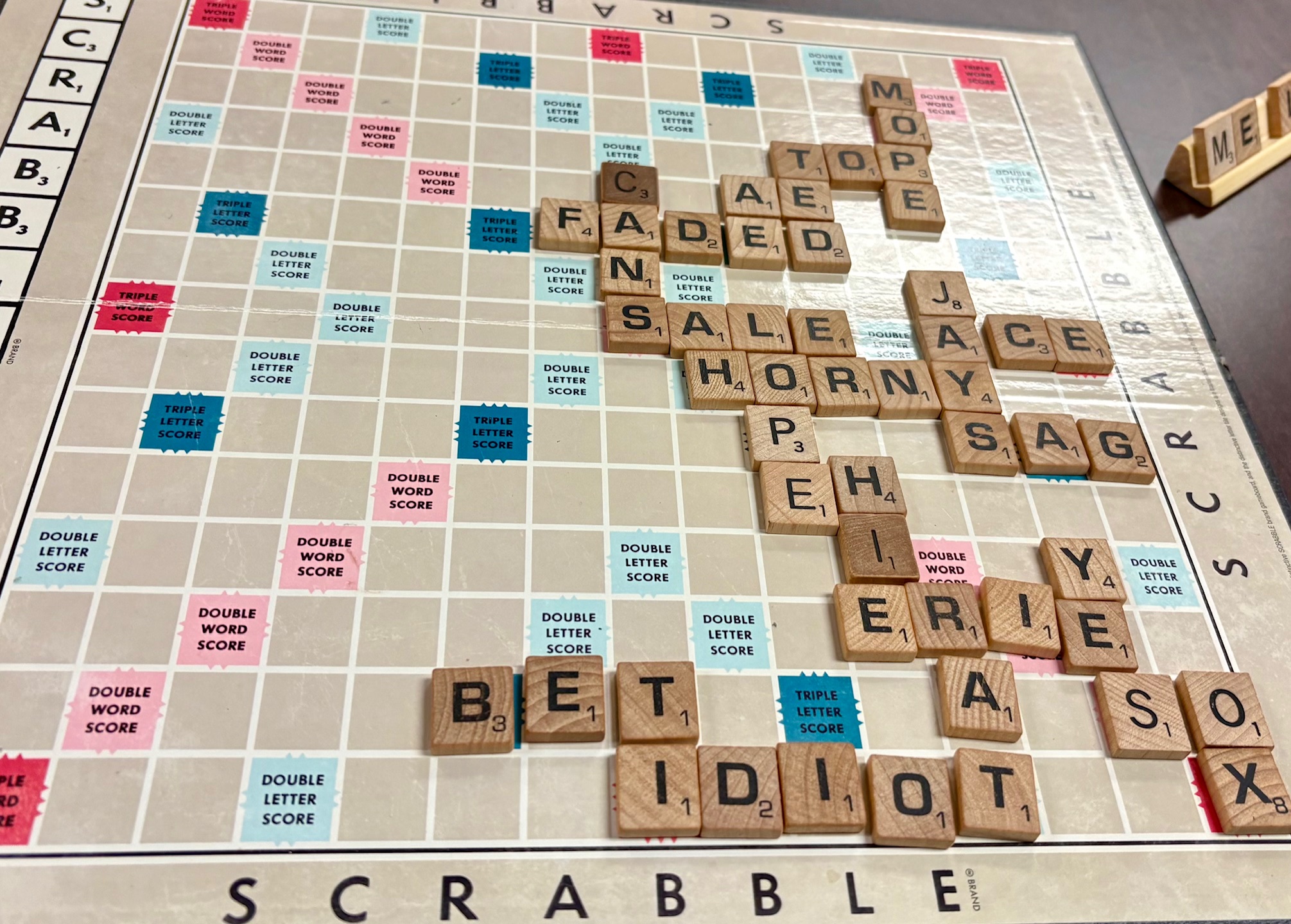
This final Scrabble post of the semester features the names of authors and characters that are playable words. Learning these will not only increase your word power and up your game, it will also broaden your knowledge of literature. If you haven’t read some of classics listed here, I encourage you to check them out.
eyre: a long journey (the last name of of the title character in Charlotte Bronte’s Jane Eyre, 1847)
dickens: a devil (Charles Dickens, 1812-1870)
fagin: a person, usually an adult, who instructs others, usually children, in crime (from a character of that type in Dickens’ Oliver Twist, 1838)
holden: the past participle of hold (Holden Caulfield, the protagonist in J.D. Salinger’s The Catcher in the Rye, 1951)
huckleberry: a berry like a blueberry (the first name of the title character in Mark Twain’s Adventures of Hucklebery Finn, 1884)
oedipal: describing libidinal feelings of a child toward the parent of the opposite sex (from the title character in Sophocles’ Oedipus Rex, c. 429 B.C.)
quixote: a quixotic, or extremely idealistic person; also quixotry, a quixotic action or thought (the title character in Michael de Cervantes’ Don Quixote, Part I: 1605, Part II: 1615)
Note that “huckleberry” and “quixote” could not be the first two words played in a Scrabble game because “huckleberry” is more than seven letters long. However, “huckleberry” and “quixote” could constitute the first three plays. The first two plays could be “berry” and “quixote,” and the third play could add “huckle” to “berry.”
Next Up
Wordplay Day! To prepare for class, revisit the Dictionary and World Builder pages on the Scrabble website, and review the blog posts devoted to Scrabble tips, including this one.
Monday in class, you will compose a final reflective essay that documents your work in the second half of the semester, focusing on what you consider some of your most significant work and the feature or features of the course that have benefited your development as a writer and a student. Since you have already written a reflective essay on your final essay and annotated bibliography, your final reflection should focus on other assignments and features. The texts you have read in the second half of he semester include these:
“Blogs vs. Term Papers”
“A Break from Your Smartphone can Boost Your Mood . . . ”
The Competition
“How a Small North Carolina College . . . ”
“Scrabble is a Lousy Game”
Seedlings
“Speed Reading is the New Normal”
“Strawberry Spring”
“To Remember a Lecture Better, Take Notes by Hand”
Sample final essays and annotated bibliographies (“The King of Storytelling,” “Scrabble as a Game Changer in the College Classroom”)
In your reflection, you will include a minimum of one relevant quotation from Writing Analytically or from one of the texts we studied in the second half of the semester. Before class, identify the passage you plan to quote, and draft a sentence with it in your journal. Also, be sure to write in your journal a complete MLA-style work cited entry for the source you plan to quote. That preparation will ensure that you have ample time to integrate the quotation into your reflection and compose your work cited entry before the end of the class period. You will not have the option to consult texts online, so a handwritten version of the information you need is essential.
The last Scrabble post featured a list of toponyms (place names and words derived from places) in the first half of the alphabet. Today’s post includes a list of toponyms in the second half. These proper nouns are playable in Scrabble because they’re also common nouns. Studying them offers you additional opportunities to broaden your vocabulary and up your game.
oxford: a type of shoe, also known as a bal or balmoral
panama: a type of wide-brimmed hat
paris: a type of plant found in Europe and Asia that produces a lone, poisonous berry
roman: a romance written in meter
scot: an assessed tax
scotch: to put an end to; or to etch or scratch (as in hopscotch)
sherpa: a soft fabric used for linings
siamese: a water pipe providing a connection for two hoses
swiss: a sheer, cotton fabric
texas: a tall structure on a steamboat containing the pilothouse
toledo: a type of sword known for its fine craftsmanship, originally from Toledo
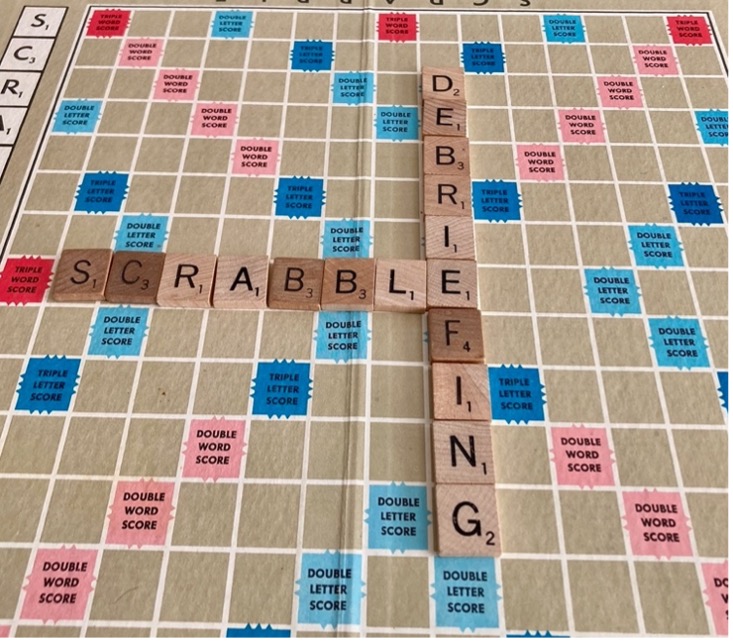
On Monday, after your Scrabble debriefing, we will examine my model essay and bibliography, “Scrabble as a Game Changer in the College Classroom,” which you should read and annotate before class. Also, be sure to bring your copy of Writing Analytically to class. You will need your textbook for both the collaborative and individual exercises that you will complete.
The first Scrabble post of the semester featured first names that are also common nouns, making them playable in Scrabble. Today’s post includes place names and words derived from places, or toponyms–more proper nouns that are playable in Scrabble because they’re also common nouns. Studying these words offers you additional opportunities to broaden your vocabulary and up your game.
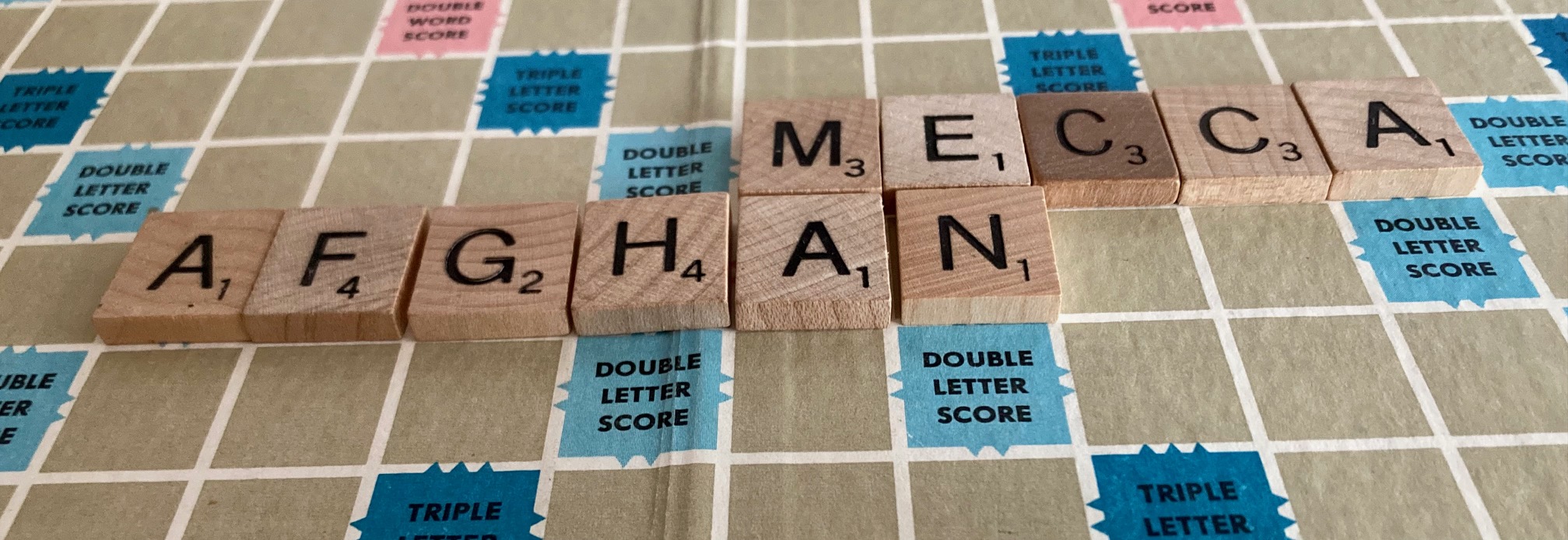
afghan: a wool blanket
alamo: a cottonwood poplar tree
alaska: a heavy fabric
berlin: a type of carriage
bermudas: a variety of knee-length, wide-legged shorts
bohemia: a community of unconventional, usually artistic, people
bolivia: a soft fabric
bordeaux: a wine from the Bordeaux region
boston: a card game similar to whist
brazil: a type of tree found in Brazil used to make instrument bows (also brasil)
brit: a non-adult herring
cayman: a type of crocodile, also known as a spectacled crocodile (also caiman)
celt: a type of axe used during the New Stone Age
chile: a spicy pepper (also chili)
colorado: used to describe cigars of medium strength and color
congo: an eellike amphibian
cyprus: a thin fabric
dutch: referring to each person paying for him or herself
egyptian: a sans serif typeface
english: to cause a ball to spin
french: to slice food thinly
gambia: a flowering plant known as cat’s claw (also gambier, which is a small town in Ohio)
geneva: gin, or a liquor like gin
genoa: a type of jib (a triangular sail), also known as a jenny, first used by a Swedish sailor in Genoa
german: also known as the german cotillon, an elaborate nineteenth-century dance
greek: something not understood
guinea: a type of British coin minted from 1663 to 1813
holland: a linen fabric
japan: to gloss with black lacquer
java: coffee
jordan: a chamber pot
kashmir: cashmere
mecca: a destination for many people
Reading for Monday
At the beginning of class today, I will distribute copies of an opinion piece on Scrabble and a student’s final essay and annotated bibliography devoted to the game. Before Monday’s class, read and annotate both–not simply by underlining and circling words but by writing questions and observations in the margins or between the lines. As you compose your annotations, consider how and where the student might have incorporated any additional details from the opinion piece, “Scrabble is a Lousy Game,” into his essay or his commentaries in his bibliography.
On Monday, during your Scrabble debriefing, I will check your annotations for the sample student essay “The Depths of Scrabble” and the opinion piece “Scrabble is a Lousy Game.” Afterward, you and two or three of your classmates will collaboratively complete an exercise on the readings, and we will conclude class with a discussion of the two.
Since today’s Wordplay Day occurs on Halloween, this morning’s Scrabble blog post is devoted to words for ghosts. Two of the words (banshee and eidolon) are seven letters long, enabling a player or team to Scrabble, or bingo, earning an additional fifty points for the play. Another two are eight letters long (barguest and fairyism) and can be formed by adding letters to a word played previously.
banshee: a female spirit in Gaelic folklore that wails to warn of a family member’s imminent death. Note that this word is featured in Stephen King’s short story “Strawberry Spring,” which we studied in class on Monday.
barguest: a goblin (also barghest)
bogy: a goblin
daimon: a spirit (also daemon and demon)
eidolon: a phantom or specter
fairyism: the quality of being like a fairy (not really a ghost but a great word)
haint: a ghost
kelpie: a water sprite in Scottish folklore known for drowning sailors
wraith: a ghost of a person, often appearing just before that person’s death
Keeping a u on your rack before the q is played is one way to decrease the chances that you will be left holding the q, a deduction of ten points. Learning q words without u’s, such as the ones listed below, which start q-a, will increase your word power and provide you with more options for playing the q.
qabala(s): an esoteric method, discipline, and school of thought in Jewish mysticism. Also qabalah, cabala, and kabbalah.
qadi(s): an Islamic judge. Also cadi.
qaid(s): a Muslim tribal chief. Also caid.
qajak(s): a kayak.
qamutik(s): a sled drawn by dogs. Also komatik.
qanat(s): a system of underground tunnels and wells in the Middle East
qapik(s): a monetary subunit of the manat (Azerbaijan).
qat(s): a shrub
qawwali(s): a style of Muslim music
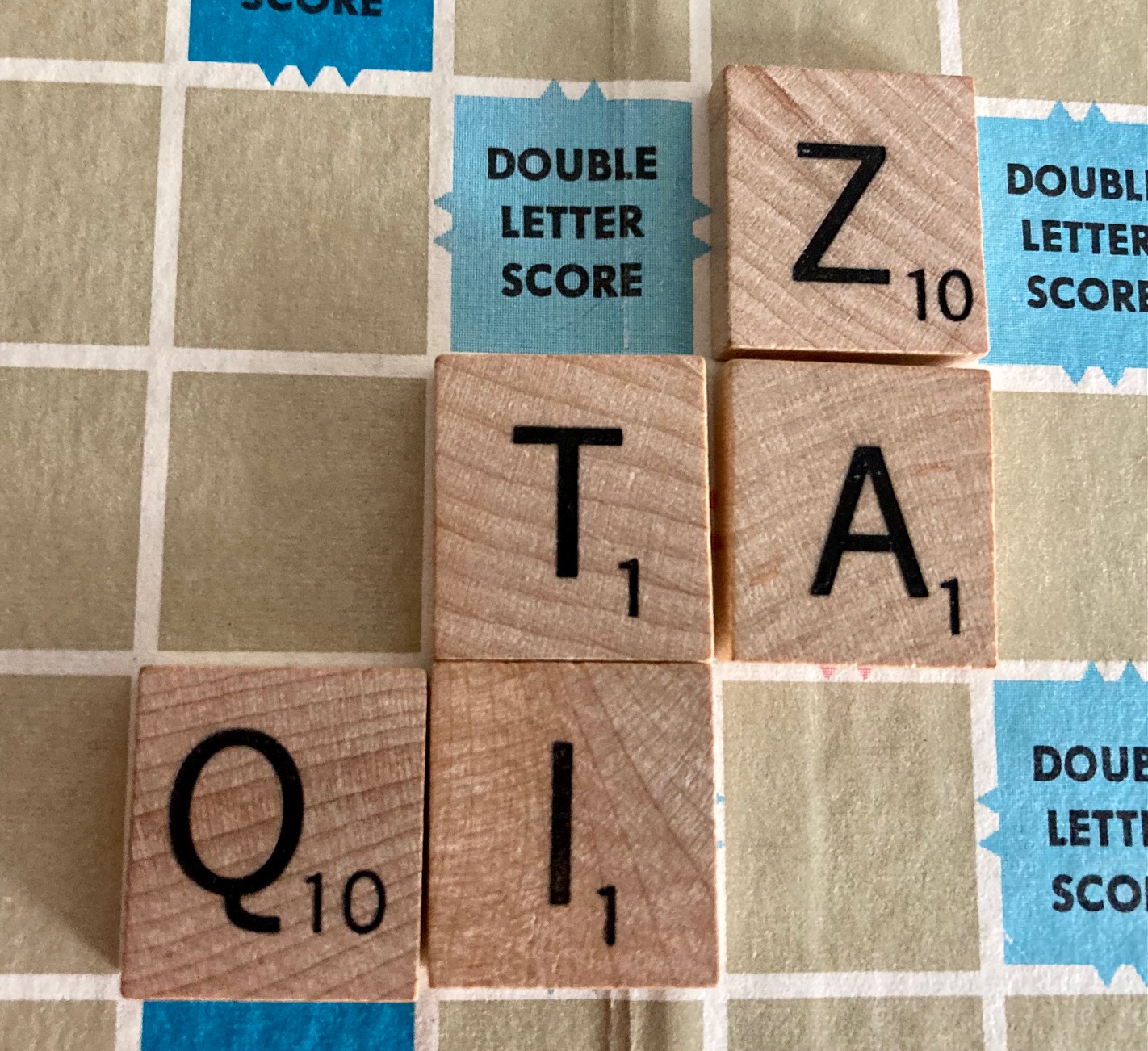
Qi, the central life force in Chinese culture (also ki), is included in the Scrabble post for September 19. The list above is limited to words that start with the letters qa.
In class on Monday we will examine a horror story for Hallowen. We will study it on Monday because Halloween is Wordplay Day, and Wednesday you will begin work on your final essay and annotated bibliography. As an introduction to the writer, read the author’s note on his website and compose a one-paragraph summary, followed by a one-paragraph response in your journal.
Last week, I published a blog post featuring playable four-letter words with three vowels. Knowing those words, and others with multiple vowels, proves useful when you’re faced with a rack of mostly, or all, vowels. Here’s a list of the remaining playable four-letter words with three vowels, beginning with the letters in the second half of the alphabet:
naoi: ancient temples (pl. of naos)
obia: form of sorcery practiced in the Caribbean (also obeah)
odea: concert halls (pl. of odeum)
ogee: an S-shaped molding
ohia: a Polynesian tree with bright flowers (also lehua)
olea: corrosive solutions (pl. of oleum)
olio: a miscellaneous collection
ouzo: a Turkish anise-flavored liquor
raia: a non-Muslim Turk (also rayah)
roue: a lecherous old man
toea: a currency in Papua, New Guinea
unai: a two-toed sloth (pl. unai; an ai is a three-toed sloth)
Rather than listing the answers to the questions on Monday’s quiz, I have followed each question below with a note regarding where to find the answer. By finding the answers yourself, you will learn more than you would from simply reading them in a list.
Write a brief but vivid description—a minimum of one complete sentence—of the page that you were assigned to read for today. See the page of Art Spiegelman’s memoir Maus posted in the Blackboard readings folder and featured in the October 13 class notes.
The blog post devoted to the sample student analysis that we studied includes several points about the content and form of the essay. Compose a sentence that specifies one of those points that was not addressed in class. See the October 2 class notes, specifically the five bullet points under the heading “Content” and the six bullet points under the heading “Form.”
What is the topic of the most recent Scrabble blog post? Note that Scrabble is the subject, not the topic. The topic is something more specific about the game. See the October 3 class notes.
Your quiz also included a bonus opportunity. Possible answers for that bonus are found in the class notes for October 3.
Scrabble Journal Exercise
In the game pictured above, the first team played “ZIT” with “Z” on a triple-letter square for thirty-two points. Using a blank for an “E,” the second team followed with “ZEROS,” with the “S” on a double-letter square for twenty-six points. The first team then played “SOLVED,” building from the “S” in “ZEROES.”
With “SOLVED,” the only letter that the first team played on a bonus square was the “E”* on a triple-letter, giving that “E” a value of three points. How many points total did the first team earn for “SOLVED”? Would they have benefited from playing elsewhere on the board? If so, why? The first team earn a total of twelve points for “SOLVED.” They would have benefited from playing elsewhere on the board because playing “SOLVED” below “ZEROS” set up the second team to score a triple-word play with “MOC” and simultaneously form two additional words, “EM” and “DO” for a total of twenty-seven points, more than double the first team’s score for the previous play.
In the game pictured above, the first team earned twelve points for the first play, “TOY,” which appears as “OY” on the board. (Remember to make sure that all letters played remain on the squares where they are played.) The second team followed with “LOAN” for six. Then, using the “L” in “Loan” and the “T” in “TOY,” the first team played “NEUTRAL” and “AT.”
With “NEUTRAL,” the only letter that the first team played on a bonus square was “U” on a double-letter square, giving it two points. How many points total did the first team earn for “NEUTRAL”? Would they have benefited from playing elsewhere on the board? If so, why? The first team earned a total of ten points for “NEUTRAL” and “AT.” They would have benefited from playing elsewhere on the board because playing “N-E-U-T-R-A” in front of the “L” in loan set up the second team to score a triple word under the “N.” It also placed the vowel “E” under a triple-letter score, where the opponent would be able to play a high-value consonant. Although the first team may have played “NOW” and/or “ZEN” themselves, they set up their opponents to play on the squares where those words were played.
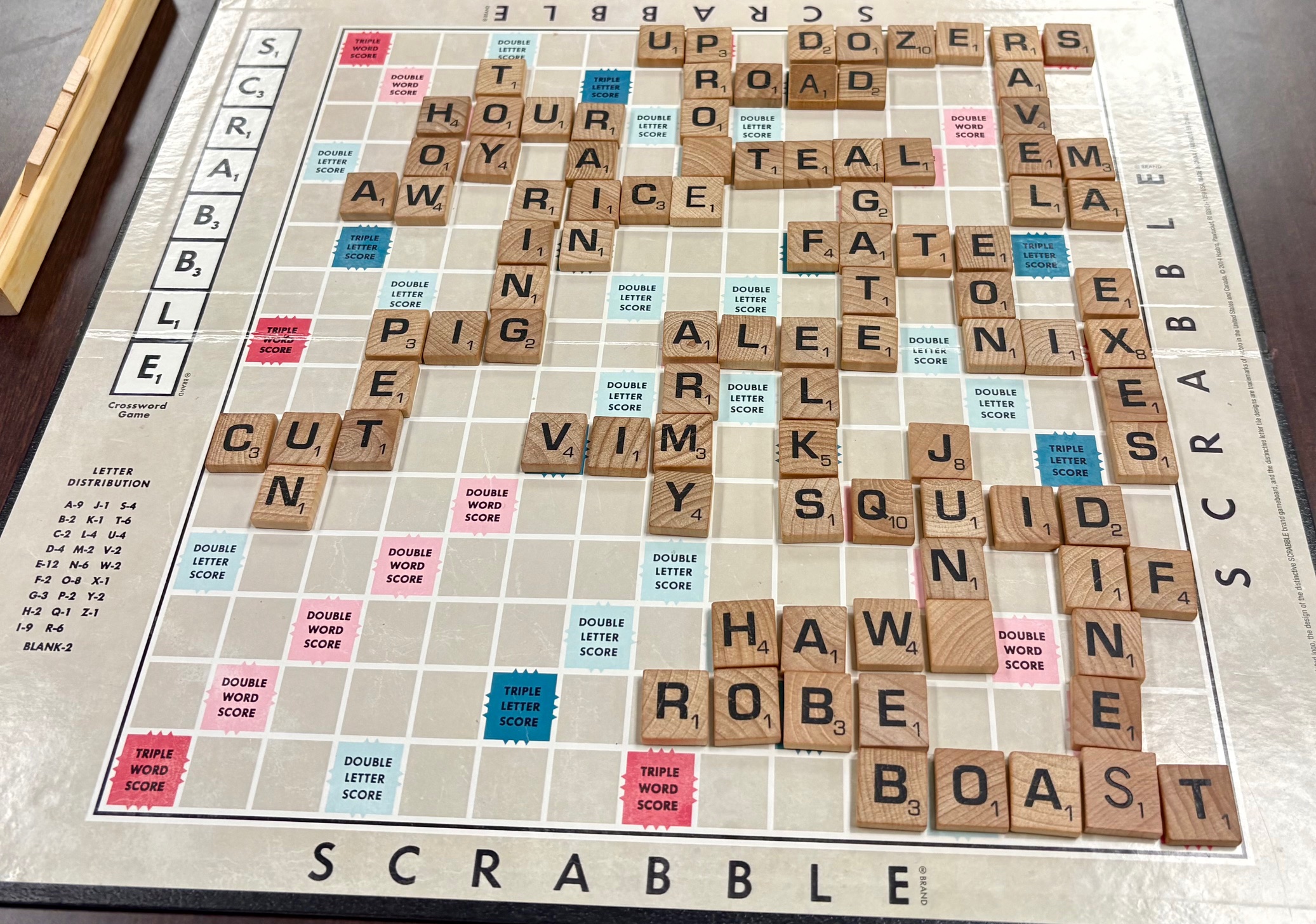
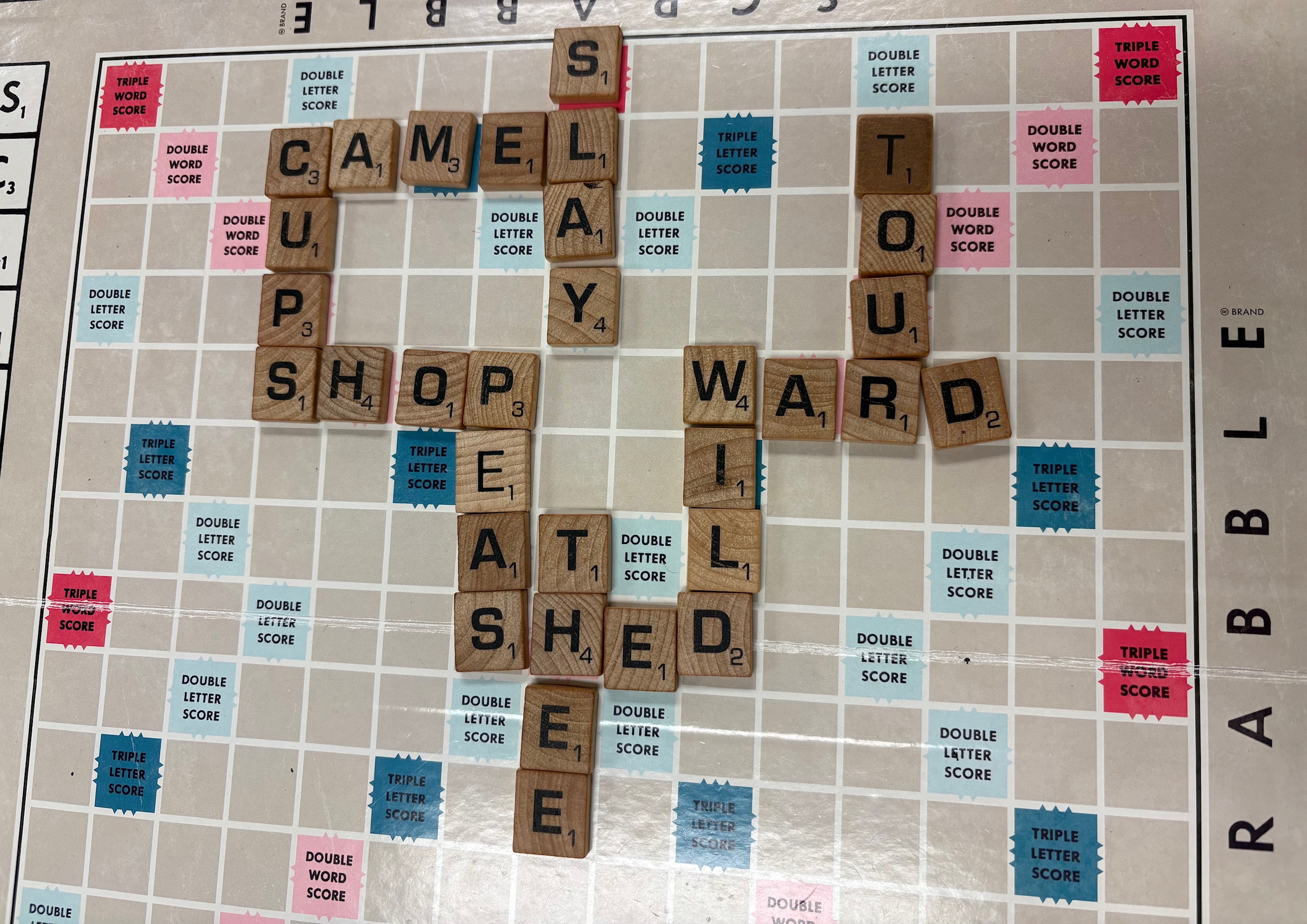
In the game above, the play is limited almost exclusively to the right quadrants. What words could the teams play horizontally below the “Q,” horizontally above or below the “Y,” and elsewhere to advance the game to the left quadrants?
Here are a few of the ways that the players might advance the game into the left quadrants:
Because no more than two letters can be played below the “Q,” the words that either team could play there are limited to “QAT,” “QUA,” and “QI.” A Team could play both below and above the “Q” by spelling “AQUA,” but that play would not be prudent because it would set up the opponents to play on the triple-word square. Playing “QAT” would be preferable because of the large number of words that end with “T.”
A team could play “T-A-T-T-O” above the “Y” and in front of the “O” to spell “TATTOO” and “OY.” A team could also play “I-D-E-A” below the “Y” and in front of the blank (“L”) to spell “IDEAL” and “YA.”
“NEW” offers more opportunities for advancing the board into the left quadrants. Spelling an a-ending word, such as “ALPHA” or “AREA” vertically with the final “A” in front of the “N” would form both the vertical word and “ANEW.”
“A-A,” “B-A,” “L-A,” M-A,” “P-A,” “R-A,” “W-A,” or “Y-A” could be played in front of the “H” to spell “AAH,” “BAH,” “LAH,” “MAH,” “PAH,” “RAH,” “WAH,” or “YAH” horizontally, along with “AB” vertically.
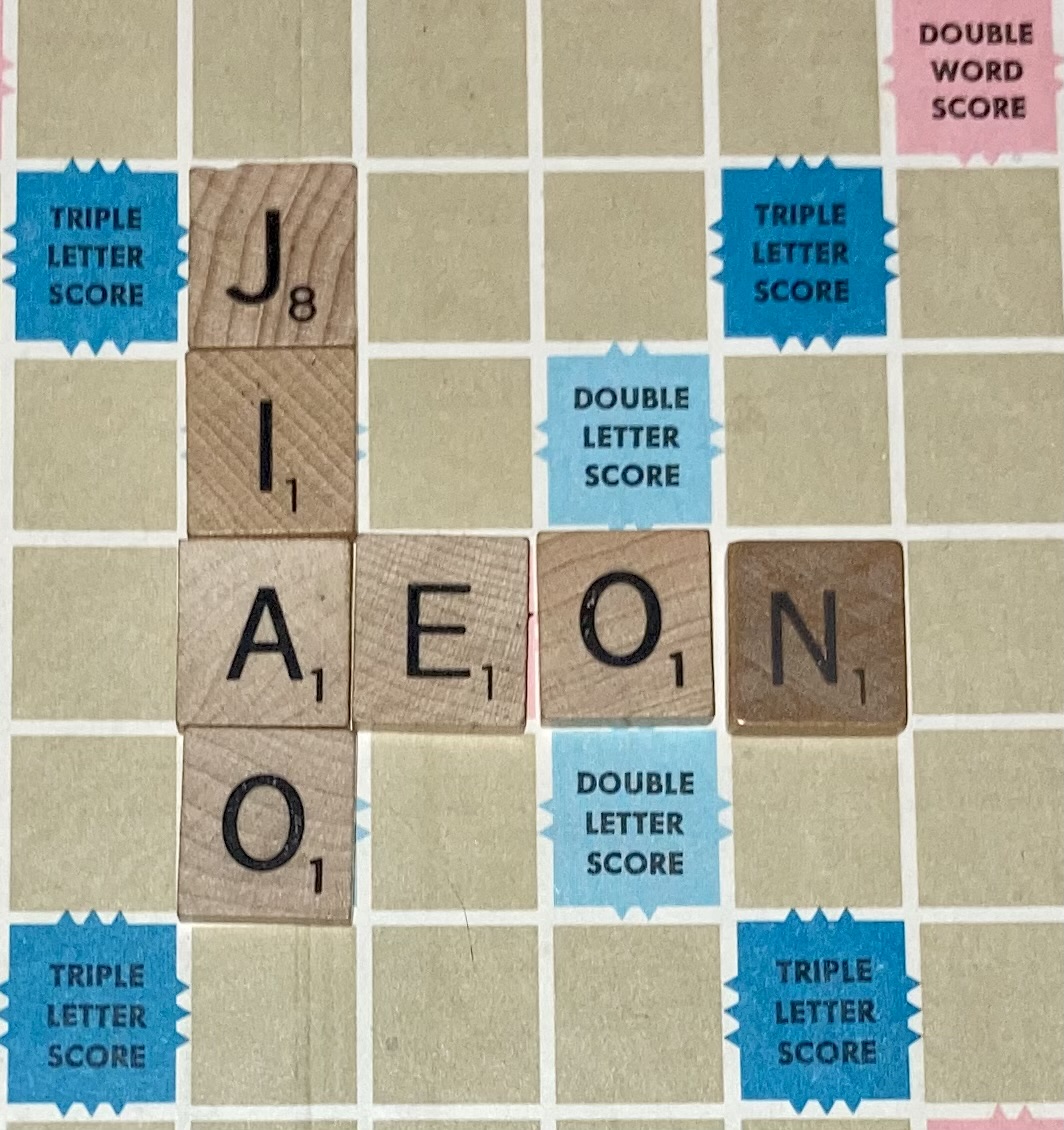
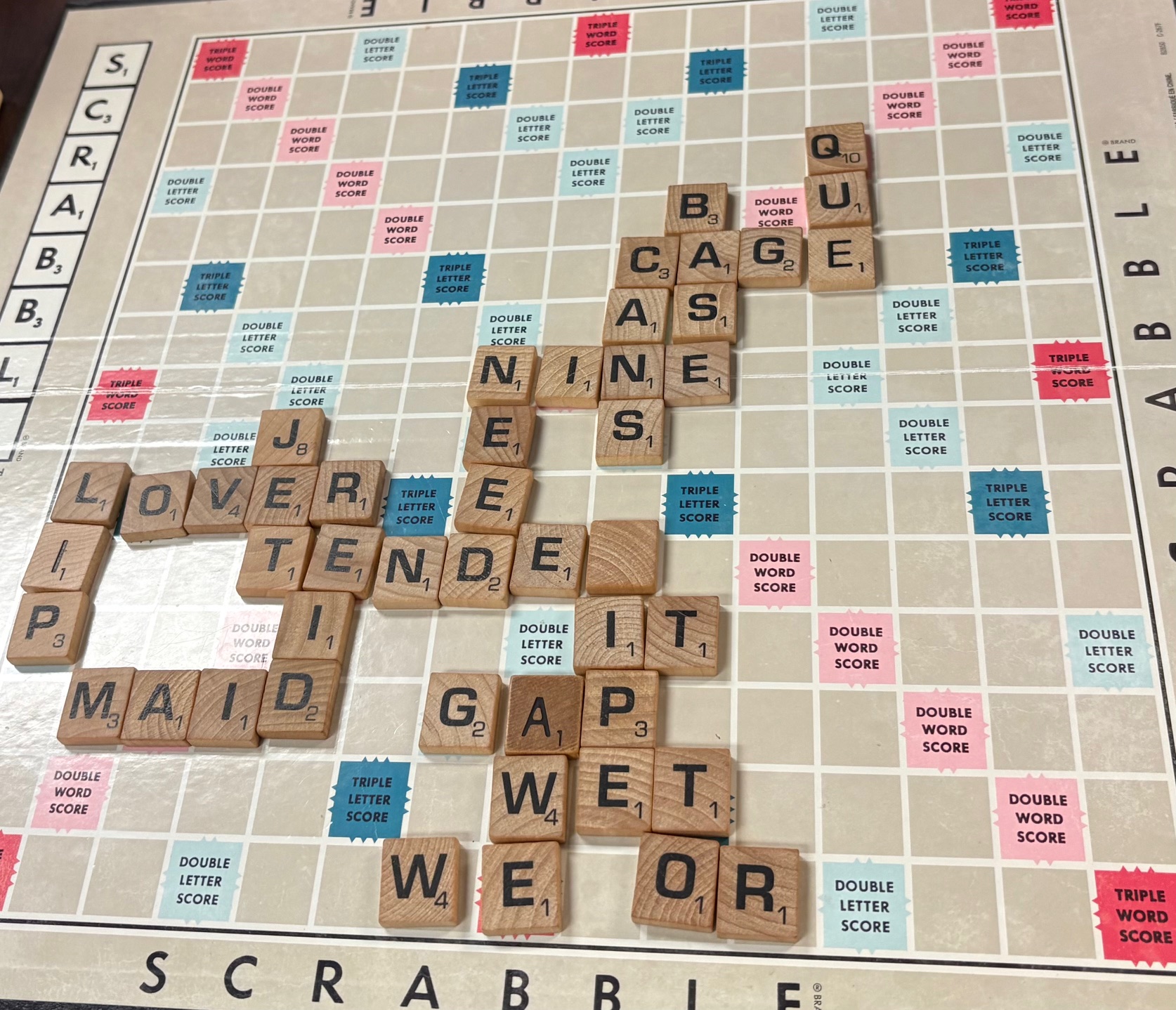
In the first game pictured above, playing down from the “J” would advance the game into the lower left quadrant, but playing only as much as the single letter “O” below it would set up the opponents to score a triple-word play.
Spelling a word that ends with “K-E-Y” would enable the first game to advance into the lower left quadrant, but “MONKEY” isn’t a possibility because both “M”s and both blanks have already been played. Ditto for “HICKEY,” “HOCKEY,” and “HOKEY” because both “H”s have been played. “JOCKEY” isn’t an option either because the “J” has been played. Three possibilities are “POKEY,” “SMOKEY,” and “TURNKEY.”
The last two rows of the board offer additional opportunities to advance into the left quadrant. Using the “U” or the “T” in “GUT” as one of the last letters in a horizontal word would advance the game into the left side of the second-to-last or last row of the board.
Knowing words with multiple vowels proves useful when you’re faced with a rack of mostly, or all, vowels. Here’s a list of the first twenty-two playable four-letter words with three vowels:
aeon: a long period of time (also eon)
agee: to one side (also ajee)
agio: a surcharge applied when exchanging currency
ague: a sickness associated with malaria
ajee: to one side (also agee)
akee: a tropical tree
alae: wings (pl. of ala)
alee: on the side shielded from wind
amia: a freshwater fish
amoa: a kind of small buffalo
awee: a little while
eaux: waters (pl. of eau)
eide: distinctive appearances of things (pl. of eidos)
emeu: an emu
etui: an ornamental case
euro: an Australian marsupial, also known as wallaroo, for being like the kangaroo and the wallaby; also a unified currency of much of Europe
ilea: the terminal portions of small intestines (pl. of ileum)
After fall break, we will examine “The Strange Fruit of Sosnowiec,” my model analysis of a page of Art Spiegelman’s graphic memoir Maus. Before class on Monday, October 13, read the page of Maus posted in the readings folder on Blackboard. As you read the page, make note in your journal of the elements of the page you would address if you were writing an analysis of it.
In class on Monday, you will compose a midterm reflection focusing on the assignments and aspects of the course that have contributed the most to your development as a writer and a student. Tomorrow’s post will serve as a guide for your preparations.