At the beginning of today’s class you will receive your handwritten drafts with my comments, and you will have the class period to devote to revising on your laptops–or you may continue to write longhand, if you wish. Your revision is due on Blackboard and your blog next Wednesday, February 22. The hard deadline is Friday, February 24.
As you continue to revise your analysis, consider visiting The Writing Center. If you do so, you will earn five bonus points.
To schedule an appointment, visit https://highpoint.mywconline.com, email the Writing Center’s director, Justin Cook, at jcook3@highpoint.edu, or scan the QR code below. To earn bonus points for your literacy narrative, consult with a Writing Center tutor no later than Thursday, February 23.
Next Up
Friday marks your sixth Wordplay Day of the semester. To up your game and increase your word power, review the tips and tools on the Scrabble website as well as my blog posts devoted to the game.
At the beginning of class today you will submit your worksheet for the fifth and final lesson in the Check, Please! course. The assignments that I wrote as models for lessons one through four appear below. Note that the model I wrote for lesson one was also included on your lesson one worksheet.
Check, Please! Sample Assignment, Lesson One
In the first lesson of the Check, Please!, Starter Course, Mike Caulfield, author of the course and Director of Blended and Networked Learning at Washington State University, introduces the four-step SIFT approach to determining the reliability of a source: (1) “Stop,” (2) “Investigate,” (3) “Find better coverage,” and (4) “Trace claims, quotes, and media to the original context.”
One of the most useful practices presented in lesson one is what the author terms the Wikipedia Trick. Deleting everything that follows a website’s URL (including the slash), adding a space, typing “Wikipedia,” and hitting “enter” will yield the site’s Wikipedia page. The Wikipedia entry that appears at the top of the screen may indicate the source’s reliability or lack thereof.
The most memorable segment of lesson one is the short, riveting video “The Miseducation of Dylann Roof,” which begins with the narrator asking the question, “How does a child become a killer?” Produced by the Southern Poverty Law Center, it documents how algorithms can lead unskilled web searchers down paths of disinformation. In the worst cases, such as Roof’s, algorithms can lead searchers to the extremist propaganda of radical conspiracy theorists.
In the second lesson of the Check, Please!, Starter Course, Mike Caulfield, author of the course and Director of Blended and Networked Learning at Washington State University, focuses on investigating a source, the second step in the SIFT approach that he introduces in lesson one.
One of the most useful practices presented in lesson two is Caulfield’s follow-up to the Wikipedia strategy that he outlines in the previous lesson. After he reviews that strategy, Caulfield explains how to use the control-f keyboard shortcut (command-f on a Mac). Typing control-f (or command-f) will open a small textbox in the upper right of the screen. Typing a word you are searching for will highlight the first appearance of the word in the text. Hitting return will highlight each subsequent appearance of the word.
Lesson two introduced me to fauxtire, a term for websites such as World News Daily Report, based in Tel Aviv, that present themselves as satirical but in fact serve primarily to perpetuate disinformation.
Perhaps the most memorable portion of lesson two was the side-by-side comparison of the websites for the American Academy of Pediatrics and the American College of Pediatricians. Though at first glance the two appear comparable, using the Wikipedia strategy reveals their profound differences. While AAP is the premiere authority on children’s health and well-being, ACP was founded to protest the adoption of children by single-sex couples and is widely viewed as a single-issue hate organization.
In the third lesson of the Check, Please!, Starter Course, Mike Caulfield, author of the course and Director of Blended and Networked Learning at Washington State University, continues his instruction on the second step in four-step SIFT approach to determining the reliability of a source. Lesson three, “Further Investigation” covers these topics: (1) Just add Wikipedia for names and organizations, (2) Google Scholar searches for verifying expertise, (3) Google News searches for information about organizations and individuals, (4) the nature of state media and how to identify it, and (5) the difference between bias and agenda.
One of the most instructive parts of lesson three focuses on two news stories about MH17, Malyasia Airlines Flight 17, a passenger flight scheduled to land in Kuala Lumpur that was shot down over eastern Ukraine on July 17, 2014. While the second story, a television news segment, appears to present detailed investigative reporting challenging the conclusion of the Dutch Safety Board and Dutch-led joint investigation team–the conclusion that Russia was to blame–a quick just-add-Wikipedia check reveals that RT (formerly Russia Today) is a Russian state-controlled international TV network, a government propaganda tool rather than a source of fair and balanced news. The first video, the one produced by Business Insider, a financial and business news site, delivers accurate coverage of MH17.
Another notable segment of “Further Investigation” addresses the important distinction between “bias” and “agenda.” There, Caulfield observes that “[p]ersonal bias has real impacts. But bias isn’t agenda, and it’s agenda that should be your primary concern for quick checks,” adding that “[b]ias is about how people see things; agenda is about what a news or research organization is set up to do.”
In the fourth lesson of the Check, Please!, Starter Course, Mike Caulfield, author of the course and Director of Blended and Networked Learning at Washington State University, focuses his instruction on the third step in the four-step SIFT approach to determining the reliability of a source. Lesson four, “Find Trusted Coverage,” addresses these topics: (1) scanning Google News for relevant stories, (2) using known fact-checking sites, and (3) conducting a reverse-image search to find a relevant source for an image.
One of the concepts Caulfield introduces in lesson four is click restraint, which was given its name by Sam Wineberg, Professor of History and Education at Stanford, and Sarah McGrew, Assistant Professor of Education at the University of Maryland. Click Restraint is an activity that fact checkers practice regularly, but average people do not. Fact checkers resist the impulse to click on the first result, opting instead to scan multiple results to find one that combines trustworthiness and relevance.
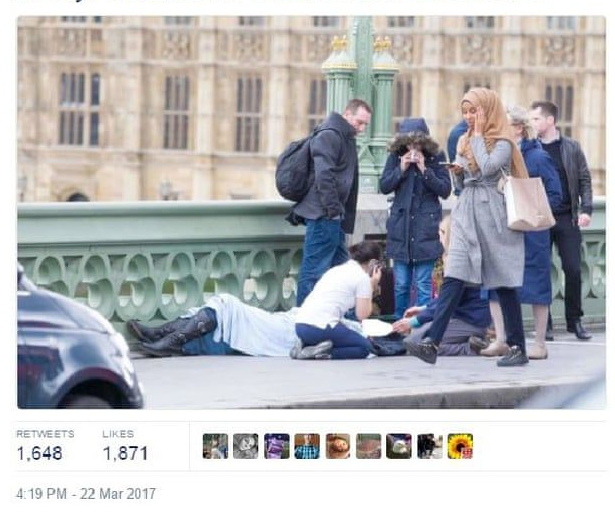
Caulfield also considers the issue of false frames and offers as an example the miscaptioned photo of a young woman that circulated widely after the 2017 London Bridge attack. In the photo, the woman, who is wearing a hijab, is looking down at her phone as she walks past one of the victims lying by the side of the road, surrounded by members of the rescue team. Because the woman’s face is blurred, viewers of the miscaptioned picture cannot see the look of shock that is visible in her face in another image taken by the same photographer. Subsequently, her apparent lack of concern for the victim seems to confirm the caption in the infamous tweet.
Choosing a general search term over a specific one is a useful and unexpected tip Caulfield includes in his discussion of image searches. He explains that the benefit of such a bland term as “letter” or “photo” will prevent the confirmation bias that can lead to the proliferation of disinformation through false frames.
In the fifth lesson of the Check, Please!, Starter Course, Mike Caulfield, author of the course and Director of Blended and Networked Learning at Washington State University, covers the final step in the five-step SIFT approach: “Trace Claims, Quotes, and Media to Their Original Context.” Caulfield outlines the process of locating the original context as an antidote to the issues of accuracy that occur when information passes through intermediaries.
One of the most instructive portions of lesson five features a passage in which Caulfield cites a study of how stories evolve as gossip through the processes of leveling (stripping details), sharpening (adding or emphasizing details), and assimilating, which combines the two. In the process of assimilation “the details that were omitted and the details that were added or emphasized are chosen because they either fit what the speaker thinks is the main theme of the story, or what the speaker thinks the listener will be most interested in.” Similarly, leveling, sharpening, and assimilating all figure in the altered photographs and memes in lesson four. The abbreviated speech of the NRA’s CEO, Wayne LaPierre, which omits commentary, inaccurately indicates a contradiction in his stance on the presence of guns in schools.
The image of photographer Kawika Singson with flames at his feet serves as an example of leveling. Although the flames are real, they were not caused by the heat of the lava flow where Singson stands with his tripod. Instead, to create the image, a friend of his poured accelerant on the lava before Singson stepped into the frame. The deception wasn’t intentional; Singson simply wanted the image for his Facebook cover photo.
Unlike Singson’s photograph, the altered photograph of the Notorious B.I.G. with Kurt Cobain was created with the intent to deceive. Cropping and merging the two photographs illustrates the assimilation process adopted by Photoshop users to appeal to music fans eager to think that such fictional meetings of icons took place. Krist Novoselic, who founded Nirvana with Cobain, replied to the is-it-real question with his own fake photo, making the claim that the hand holding the cigarettes was Shakur’s, that he had been cropped from the right.
At the beginning of class on Wednesday, February 15, I will return your handwritten drafts with my notes, and you will have the class period to revise on your laptops.
You will have an additional week to continue to revise before you post your analysis to Blackboard and to your WordPress blog. The due date is Wednesday, February 22; the hard deadline is Friday, February 24.
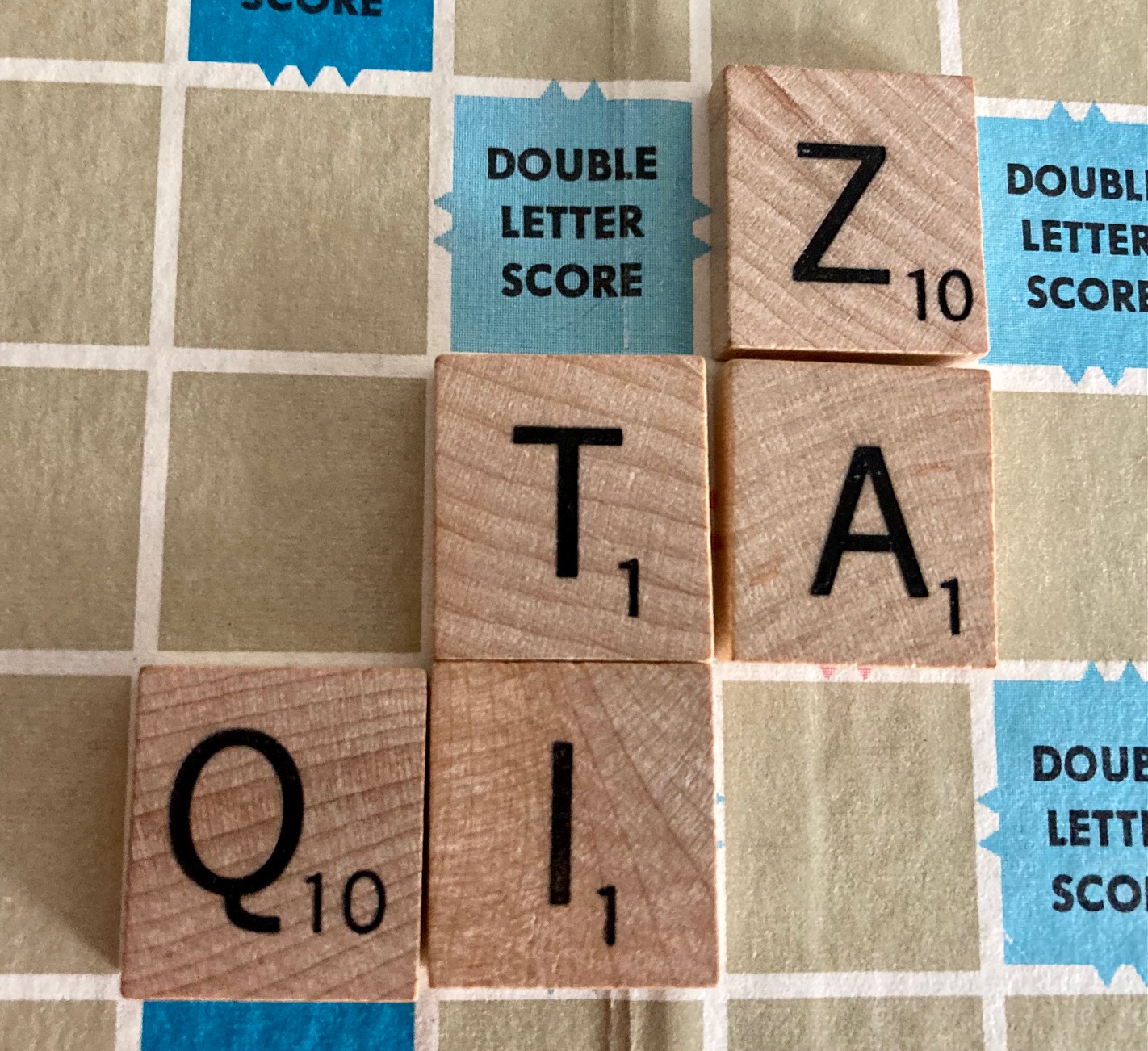
Today’s blog post is the final installment in the series of posts devoted to playable two-letter words. Learning these two-letter words, as well as the others in the alphabet, will enable you to see more options for play and increase the number of points you earn in a single turn.
qi: the central life force in Chinese culture (also ki)
re: a tone of the diatonic scale
sh: used to encourage silence
si: a tone of the diatonic scale (also ti)
so: a tone of the diatonic scale (also sol)
ta: an expression of thanks
ti: a tone of the diatonic scale
to: in the direction of
uh: used to express hesitation
um: used to express hesitation
un: one
up: to raise (-s, -ped, -ping)
us: a plural pronoun
ut: the musical tone C in the French solmization system, now replaced by do
we: a first-person plural pronoun
wo: woe
xi: a Greek letter
xu: a former monetary unit of Vietnam equal to one-hundreth of a dong (also sau pl. xu)
ya: you
ye: you
yo: an expression used to attract attention
za: pizza
Next Up
Friday marks your fifth Wordplay Day of the semester. To up your game and increase your word power, review the tips and tools on the Scrabble website as well as my blog posts devoted to the game.
Coming Soon
At the beginning of class on Monday, I will collect your fifth and final Check, Please! worksheets. If you were absent yetserday when I distributed copies or you misplaced yours, you can download a copy from Blackboard.
On Monday we will also examine my sample Check, Please! assignments and read the short story “The School” by Donald Bartheleme, which will offer you an additional option for your analysis.
This morning you will begin your analysis of one of the texts we have studied in class, which include these:
The first paragraphs of “Back Story” by Michael Lewis
“The Day Language Came into My Life” by Helen Keller
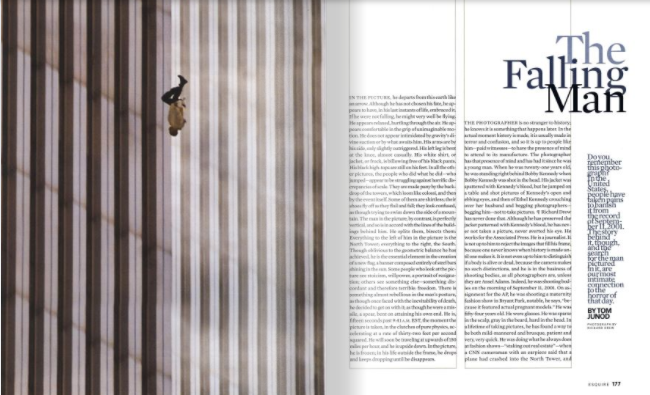
The first paragraphs of “The Falling Man” by Tom Junod
“Letter from Birmingham Jail” by Martin Luther King, Jr.
“Me Talk Pretty One Day” by David Sedaris
On Monday we will read a short story, “The School” by Donald Barthelme, which will serve as an additional option for your analysis. If you begin an analysis of one of the texts listed above and decide you would rather write about “The School,” you are welcome to change your focus.
As a starting point for your analysis planning, this morning you will read the pages in Writing Analytically devoted to analysis. Among the key points to keep in mind as you write are these:
“One common denominator in all effective analytical writing is that it pays close attention to detail” (5).
“In order to understand a subject, we need to discover what it is ‘made of,’ the particulars that contribute most strongly to the character of the whole” (5).
“[A]sk not just ‘What is it made of?’ but also ‘How do these parts help me to understand the meaning of the subject as a whole?” (5).
“Analytical writing is more concerned with arriving at an understanding of a subject than it is with either self-expression or changing readers’ views” (5).
Next Wednesday, February 15, I will return your handwritten drafts with notes, and you will have the class period to begin revising on your laptops and tablets. You will have an additional week to continue to revise. Your revisions are due on Blackboard and on your blogs on Wednesday, Febraury 22. The hard deadline is Friday, February 24
Next Up
Friday marks your fifth Wordplay Day of the semester. To up your game and increase your word power, review the tips and tools on the Scrabble website as well as my blog posts devoted to the game.
Yesterday in class we turned to a piece of writing about football–not simply to read about a sport that’s on the minds of many of us but instead as an opportunity to explore how skillfully the writer Michael Lewis dramatizes a few seconds on the football field.
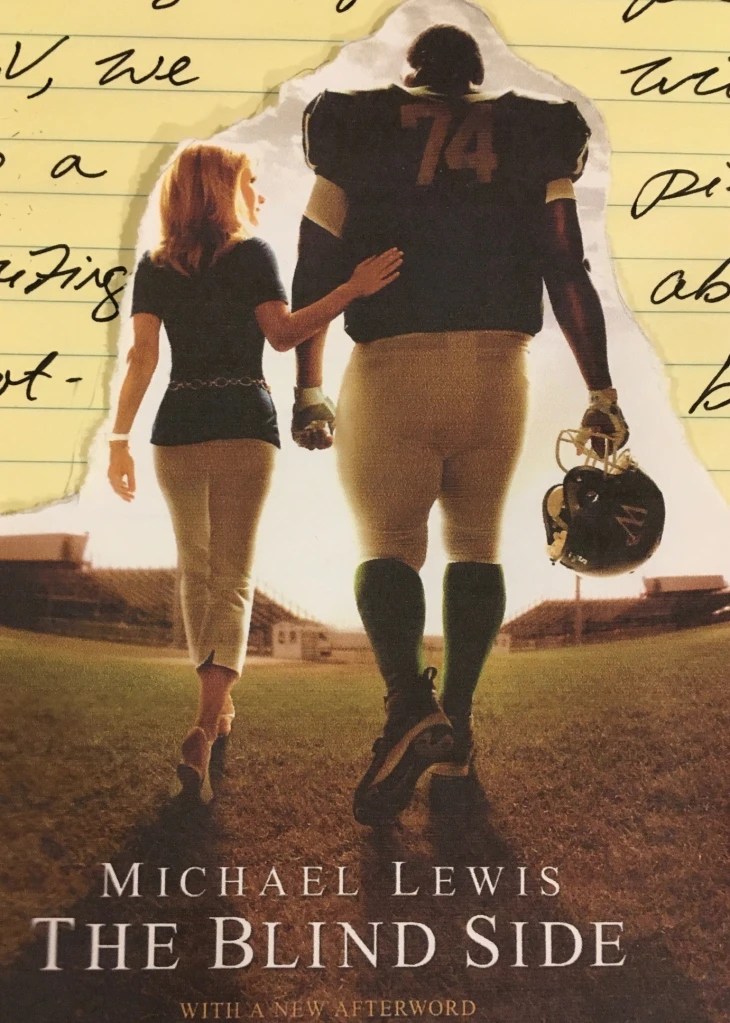
In the passage that follows, Lewis recounts the moments in the November 1985 Redskins-Giants football game leading up to the injury that ended quarterback Joe Theismann’s career. These are the words that begin Chapter 1 of The Blind Side, now widely regarded as a nonfiction masterpiece:
“From the snap of the ball to the snap of the first bone is closer to four seconds than to five. One Mississippi: The quarterback of the Washington Redskins, Joe Theismann, turns and hands the ball to running back John Riggins. He watches Riggins run two steps forward, turn, and flip the ball back to him. It’s what most people know as a “flea-flicker,” but the Redskins call it a “throw-back special.” Two Mississippi: Theismann searches for a receiver but instead sees Harry Carson coming straight at him. It’s a running down—the start of the second quarter, first and 10 at midfield, with the score tied 7–7—and the New York Giants’ linebacker has been so completely suckered by the fake that he’s deep in the Redskins’ backfield. Carson thinks he’s come to tackle Riggins but Riggins is long gone, so Carson just keeps running, toward Theismann. Three Mississippi: Carson now sees that Theismann has the ball. Theismann notices Carson coming straight at him, and so he has time to avoid him. He steps up and to the side and Carson flies right on by and out of the play. The play is now 3.5 seconds old. Until this moment it has been defined by what the quarterback can see. Now it–and he–is at the mercy of what he can’t see” (15).
What Theismann cannot see is Lawrence Taylor. A second later, as Taylor sacks Theismann, Taylor’s knee drives straight into Theismann’s lower right leg, leading to the “snap of the first bone” that Lewis mentions in the first sentence. He hooks the reader by linking the beginning of the play, “the snap of the ball” to the gruesome “snap of the first bone” that will follow. Lewis develops the paragraph using the common one-Mississippi, two-Mississippi method of marking seconds to present the events leading up to the compound fracture that ends Theisman’s career.
Lewis doesn’t dramatize the injury itself because his interest lies instead in the blind side that led to it and subsequently elevated the status and salary of the left tackle, the player who protects the quarterback’s blind side.
When you’re struggling to develop a piece of writing, reread the opening paragraph of The Blind Side. Study how Lewis dramatizes 3.5 seconds–yes, only 3.5 seconds–with 224 words.
Along with the first paragraphs of The Blind Side, yesterday in class we examined the first paragraphs of Tom Junod’s essay “The Falling Man.”
Esquire writer Tom Junod begins “The Falling Man” with an uncharacteristically long paragraph to recreate on the page the lengthy vertical passage of the 9/11 victim immortalized in Richard Drew’s photograph.
If I were to write an analysis of the opening of “The Falling Man,” I would develop my essay with textual evidence–words and phrases throughout the first paragraph–to illustrate the linear movement of the unidentified man from the beginning of the first paragraph to its conclusion.
Unless you subscribe to Esquire, the magazine’s paywall will deny you access to the full text of the feature, but you can access it through the HPU Library site by following these steps:
Under the heading “Search HPU Libraries . . . ,” click on the “Articles” tab.
Under the “Articles” tab, type Tom Junod “Falling Man” Esquire in the search box and click “search.”
On the next screen, you will see a brief summary of the article. Click “Access Online” to view the full article.
Next Up
In class on Wednesday you will begin planning and drafting your own close study, or analysis, of one of the pieces of writing we’ve examined in class: the opening paragraphs of Lewis’s “The Blind Side,” the opening paragraphs of Junod’s “The Falling Man,” David Sedaris’s “Me Talk Pretty One Day,” Helen Keller’s “The Day Language Came into My Life,” and Martin Luther King, Jr’s.’s “Letter from Birmingham Jail.”
In the past three weeks, I published blog posts featuring the playable two-letter words that begin with a, b, c, d, e, f, g, h, i, j, k, and l. Today’s post features the playable two-letter words beginning with m, n, o, and p. Learning these two-letter words, as well as the others in the alphabet, will enable you to see more options for play and increase the number of points you earn in a single turn.
M, by the way, is the most versatile consonant. In the first position, m pairs with every vowel, ma, me, mi, mo, mu, and also my. In the second position, m pairs with every vowel except i: am, em, om, um.
ma: a mother
me: a singular objective pronoun
mi: a tone of the diatonic scale
mm: an expression of assent
mo: a moment
mu: a Greek letter
my: a first-person possessive adjective
na: no, not
ne: born with the name of
no: a negative answer
nu: a Greek letter
od: a hypothetical force
oe: a whirlwind off the Faero Islands
of: originating from
oh: an exclamation of surprise
oi: an expression of dismay (also oy)
om: a sound used as a mantra
on: the batsman’s side in cricket
op: a style of abstract art dealing with optics
or: the heraldic color gold
os: a bone
ow: used to express pain
ox: a clumsy person
oy: an expression of dismay
pa: a father
pe: a Hebrew letter
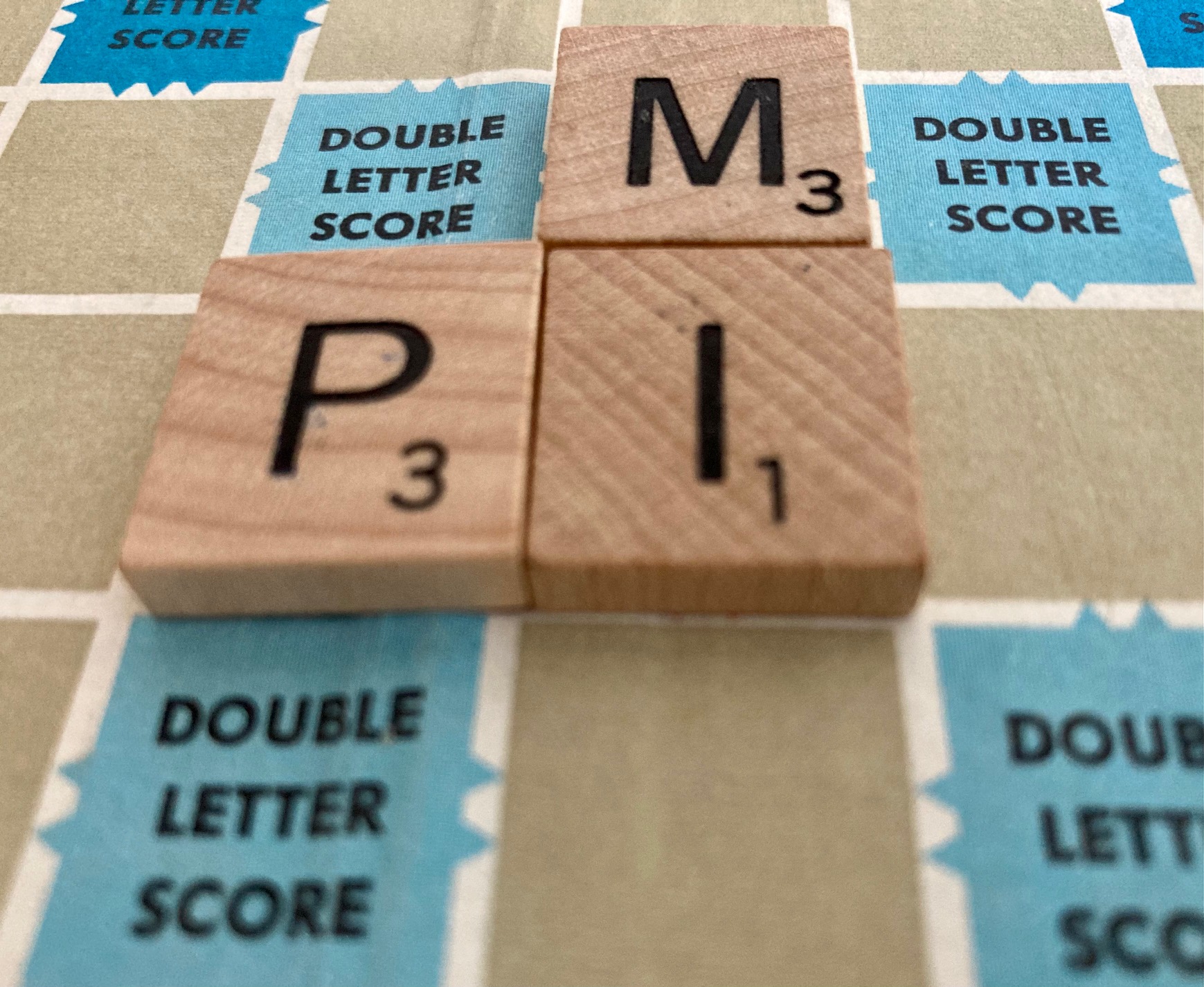
pi: a Greek letter
Next Up
Friday marks your fourth Wordplay Day of the semester. To up your game and increase your word power, review the tips and tools on the Scrabble website as well as my blog posts devoted to the game.
Coming Soon
At the beginning of class on Monday, February 6, I will collect the worksheets for your fourth Check, Please! assignment. If you were absent last Wednesday or misplaced the copy you recieved in class, you can download a copy from Blackboard.
As a model for your own literacy narratives, yesterday in class we continued to examine “Me Talk Pretty One Day,” originally published in Esquire magazine and later as the title essay in David Sedaris’s 2000 essay collection.
In groups of three and four, you and your classmates studied Sedaris’s essay with a focus on his use of scene and summary, figurative language, and hyperbole.
You observed at the beginning of the fourth paragraph how Sedaris shifts from the summary of the third paragraph to the first words that the unnamed teacher speaks to her students: “If you have not meimslsxp or lgpmurct by this time, then you should not be in this room Has everyone apzkiubjxow? Everyone? Good, we shall begin” (167).
Sedaris begins his use of figurative language early in the essay with a simile near the end of the second paragraph and a metaphor near the beginning of the third:
“[C]ausing me to feel not unlike Pa Kettle trapped backstage after a fashion show” (167).
“[E]verybody into the language pool, sink or swim” (167).
In the seventh paragraph, Sedaris uses hyperbole when he describes one of the two Polish Annas as a woman with “front teeth the size of tombstones” (168).
Continue to look for opportunities to use one or more of those elements in your own literacy narratives.
To read more of Sedaris’s essays, see the list of links under the heading Writing and Radio on his website.
In addition to studying Sedaris’s essay, examine Helen Keller’s “The Day Language Came into My Life,” and note her use of figurative lanaguage. Also observe how frequently she uses sensory detail, namely her sense of touch–not sights and sounds, because she was blind and deaf.
You can read more of Helen Keller’s autobiography, the full text in fact, here: The Story of My Life. “The Day Language Came into My Life” is Chapter Four.
Work Cited
Sedaris, David. “Me Talk Pretty One Day.” Me Talk Pretty One Day.” Little, Brown, 2000. pp. 166-73.
Next Up
In class tomorrow, we will look at your blogs on the big screen. Your literacy narrative may not be posted to your blog yet (it may still be in progress), but your blog should be launched and linked to our class page. Afterward, you will compose short reflective essays on your literacy narratives.
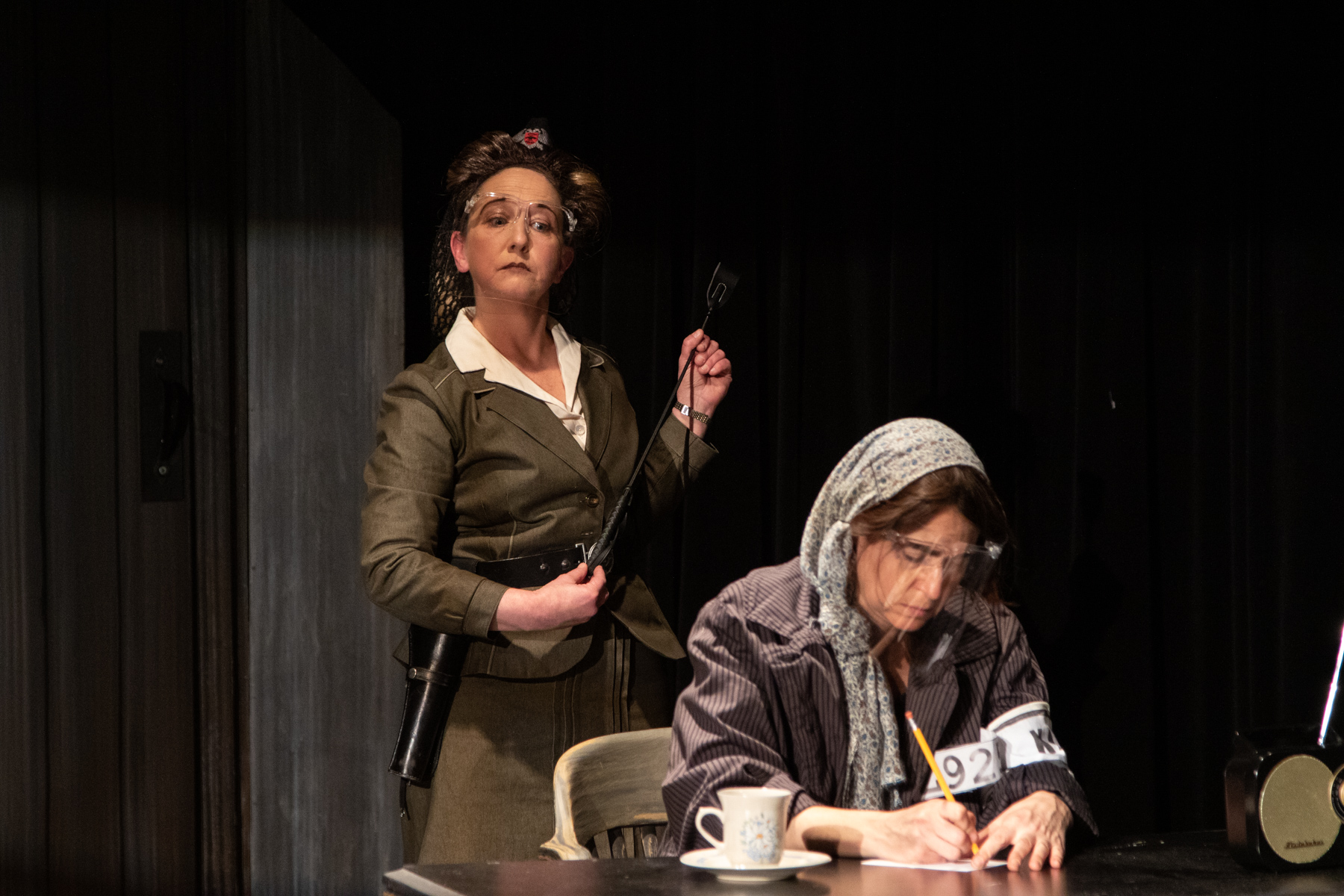
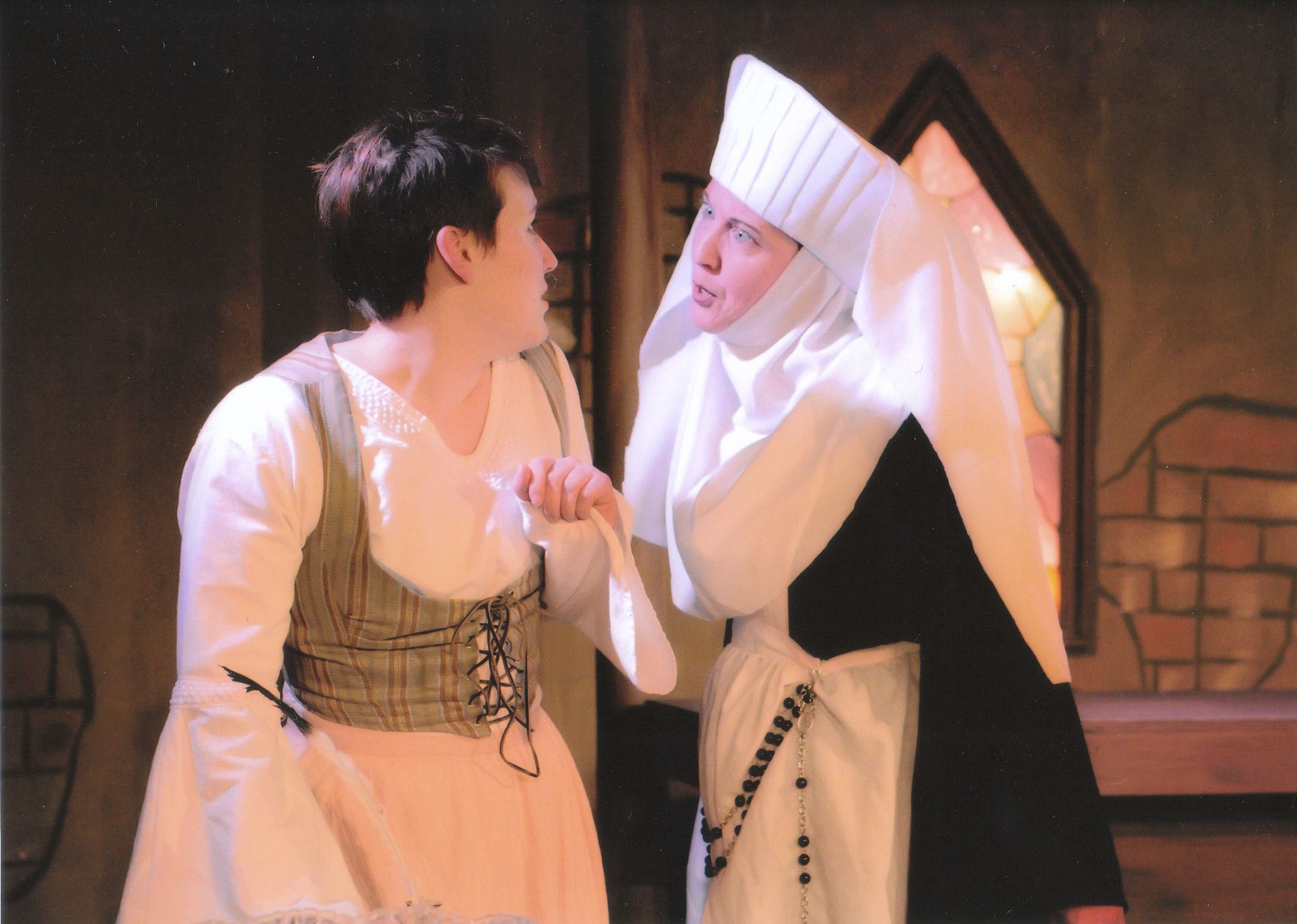
(L-R): Helga (Jane Lucas) and Jozephina (Cass Weston) in the Creative Greensboro production of The Wolves of Ravensbruk (2022)
The following essay is one that I wrote as a sample literacy narrtive for my students last semester.
Another Way with Words
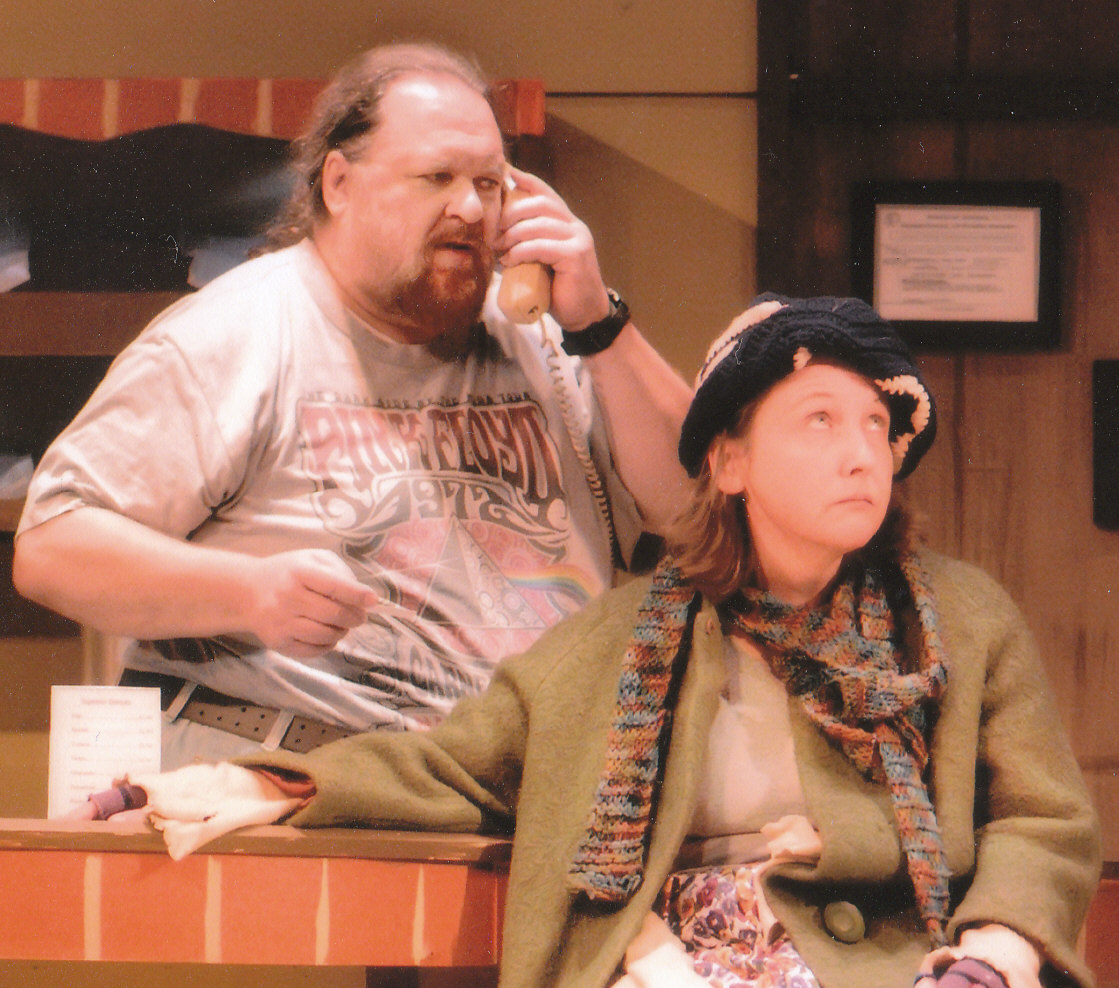
What do a Nazi prison guard, a medieval abbess, a Mexican maid, and a seventy-two-year-old bag lady have in common? They’re all character roles that I’ve played on stage. Though acting is one of my favorite pastimes, each new role is a source of anxiety. I am comfortable on stage, but backstage, as I prepare to enter, is another story. Preparing for my entrances as María, the Mexican maid, in Glorious! were some of the most nerve-wracking moments of my stage career. I remember vividly standing backstage holding a large tray with a tea pot, two teacups, a slice of cake, napkins, and silverware. As I held the tray, my hands began to sweat, and I worried not only that the tray might slip out of my hands but also that the words I was supposed to speak might slip from my mind.
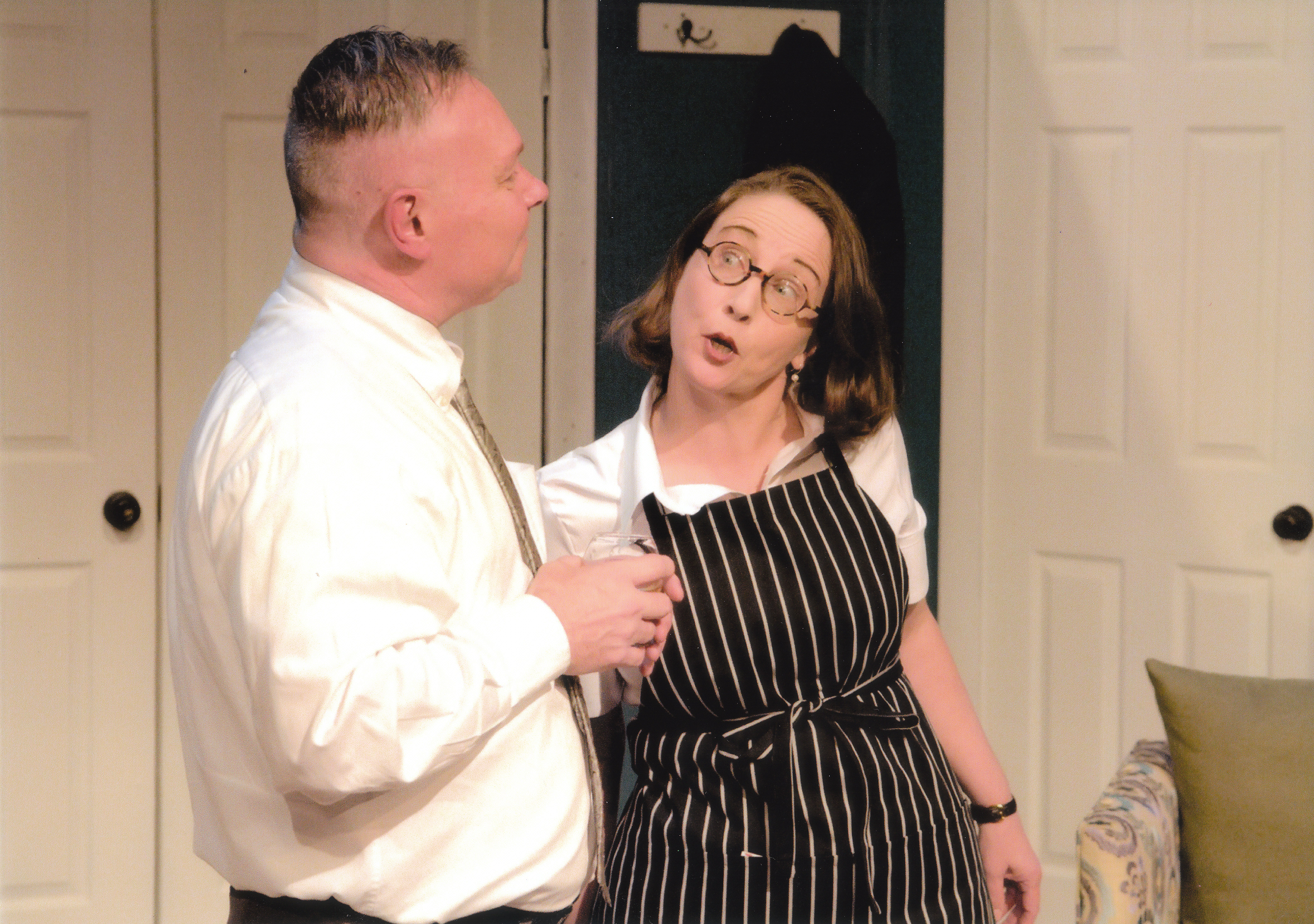
Robert (David Ingle) and Berthe (Jane Lucas) in The Green Room Community Theare production of Boeing, Boeing (2017) / Ken Burns
Though the fear of forgetting my lines is always with me backstage, that fear was heightened when I played María because her lines were all in Spanish. The challenge inherent in learning lines was compounded by the cognitive shift required of learning them as a non-native speaker. When I say kitchen, in my mind I see a kitchen, but when I say cocina, I do not. As María, for the first time, I wasn’t visualizing my lines. Instead, I was memorizing a series of unfamiliar sounds. I knew their English translation, but I couldn’t link the signs to the signifiers, not the way I could in English.
Marie (Nikkita Gibson) and Abbess Agatha (Jane Lucas) in the Hickory Community Theatre prouction of Incorruptible (2016) / Ken Burns
Preparing to play María meant increasing the hours I devote to my lines, including the practices of writing my lines on note cards, recording my lines and their cues, and writing my lines over and over in my theatre journal. As one of my first steps in the line-learning process, I type my lines and paste them onto three-by-five note cards. On the back of each note card, I write my cues in pencil. I start by memorizing the lines on the first card, usually four or five. And once I’ve learned those, I memorize the ones on the second card, and so on. Learning my cues as well my lines enables me to follow my partner’s words on stage even if he or she jumps ahead by dropping a line.
Arthur Przybyszewski (Peter Bost) and Lady Boyle (Jane Lucas) in the Hickory Community Theater production of Superior Donuts (2016) / Ken Burns
In addition to putting my lines and cues on notecards, I record them with a voice recorder app on my phone. Listening to myself as I drive to rehearsal further helps me to learn the words. Along with studying my notecards and listening to my recorded lines, I write my lines over and over in my theatre notebook, the same way that as a student I would recopy my class notes as a way of studying for a test.
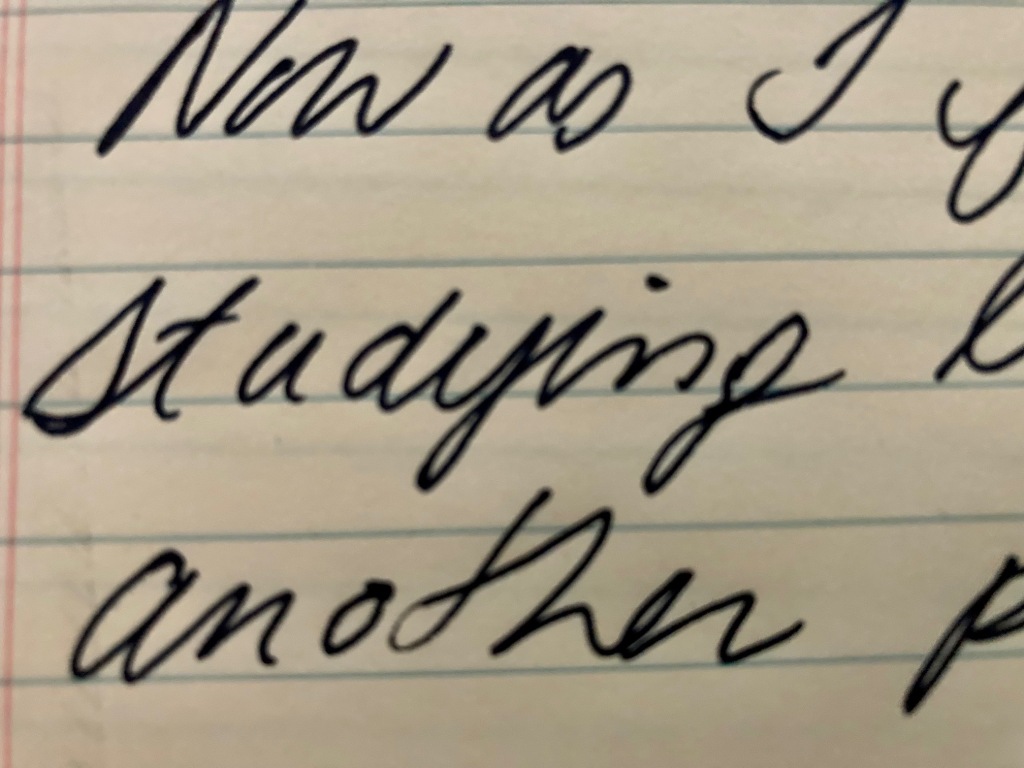
Now as I find myself studying lines for yet another play, one staged by Goodly Frame theatre company, I am reminded of the importance of trusting the process. I will not learn my lines as quickly as I would like to, and waiting backstage to say them will always be nerve-wracking, but becoming another person on stage remains pure joy. For me as a writer, acting is another way of working with words, a process of transporting them from the page to the stage and transforming the language into the utterances of a living, breathing character—someone who isn’t me but in whom I can “live truthfully,” as the acting teacher Sanford Meisner would say, “under the given imaginary circumstances.”
In the past two weeks, I published one blog post featuring the playable two-letter words that begin with a and a second blog post featuring the playable two-letter words that start with b, c, d, and e. Today’ s blog post features the playable two-letter words beginning with f, g, h, i, j, k, and l. Learning these two-letter words, as well as the others in the alphabet, will enable you to see more options for play and increase the number of points you earn in a single turn.
fa: a tone on the diatonic scale
fe: a Hebrew letter
go: a Japanese board game
ha: used to express surprise
he: a pronoun signifying a male
hi: an expression of greeting
hm: used to express consideration
ho: used to express surprise
id: the least censored part of the three-part psyche
if: a possibility
in: to harvest (a verb, takes -s, -ed, -ing)
is: the third-person singular present form of “to be”
it: a neuter pronoun
jo: a sweetheart
ka: the spiritual self in ancient Egyptian spirituality
ki: the vital life force in Chinese spirituality (also qi)
la: a tone of the diatonic scale
li: a Chinese unit of distance
lo: an expression of surprise
Coming Soon
At the beginning of class on Monday, January 30, I will collect the worksheets for your third Check, Please! assignment. If you were absent last Wednesday or misplaced the copy you recieved in class, you can download a copy from Blackboard.
At the beginning of today’s class you will receive your handwritten drafts with my comments, and you will have the class period to devote to revising on your laptops–or you may continue to write longhand, if you wish. Your revision is due on Blackboard and your blog next Wednesday, February 1. The hard deadline is Friday, February 3.
As you continue to revise your literacy narrative, consider visiting The Writing Center. If you do so, you will earn five bonus points.
To schedule an appointment, visit https://highpoint.mywconline.com, email the Writing Center’s director, Justin Cook, at jcook3@highpoint.edu, or scan the QR code below. To earn bonus points for your literacy narrative, consult with a Writing Center tutor no later than Thursday, February 2.








 Jane Lucas