Yesterday in class, you conducted a short personal interview that will serve as one of the sources for your final essay and annotated bibliography. You are not required to type a transcript of your handwritten interview, but I recommend it. With a typed version of your interviewee’s answers, you can easily copy and paste pertinent passages into your essay or your bibliographic entry.
If you have additional questions for your interviewee and want to conduct a follow-up conversation, the date of the follow-up interview will be included in your bibliographic entry. If the interview days are consecutive, use a hyphen between the two days; if they are not consecutive, use the word and between them.
Examples
Brewer, Jesse. Interview. Conducted by Jane Lucas. 20-21 Oct. 2023.
Brewer, Jesse. Interview. Conducted by Jane Lucas. 20 and 22 Oct. 2023.
Including a passage from your interview in your essay is not a requirement of your assignment. You are required to include quotations from a minimum of two of your five sources. Whether you choose to incorporate the interview into your essay, it will still serve as one of the five sources in your bibliography
If you decide that you do not want to use the interview that you conducted yesterday, you are welcome to include another one in your bibliography. Keep in mind, however, that the student interview you include must be conducted with a student currently enrolled in section eight, and the subject of the interview must be the subject of your project.
In addition to your personal interview, you may include a professional interview conducted by a journalist, such as the interview annotated in my sample entry that follows. Unless that interview appears in print in a publication, it is a nonprint source, which means that you will need to include a total of five print sources, rather than four, in your bibliography.
Notice that the format of a bibliographic entry for a professional interview conducted by a journalist differs from that of a personal interview. Because the interview is part of an episode of a podcast, the entry includes the episode title in quotation marks and the podcast title in italics, followed by the date and the complete web address.
Sample Annotated Bibliographic Entry: Professional Interview
Junod, Tom, and James B. Stewart. “James B. Stewart and Tom Junod on Writing about 9-11.” The Press Box, 2 Sept. 2021, https://podcasts.apple.com /us/podcast/ james-b-stewart-and-tom-junod-on-writing-about-9-11/id1058911614?i=1000534129966.
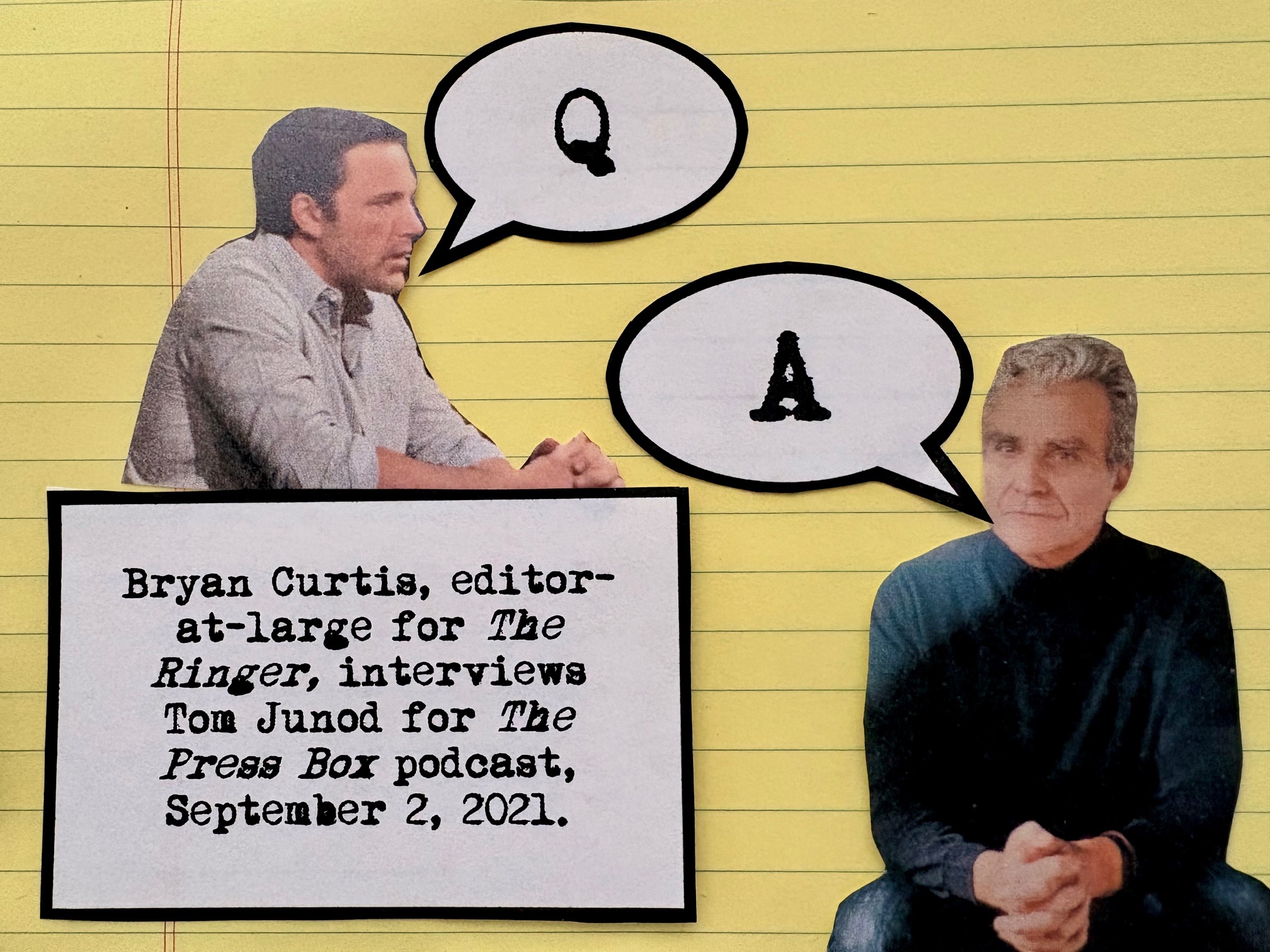
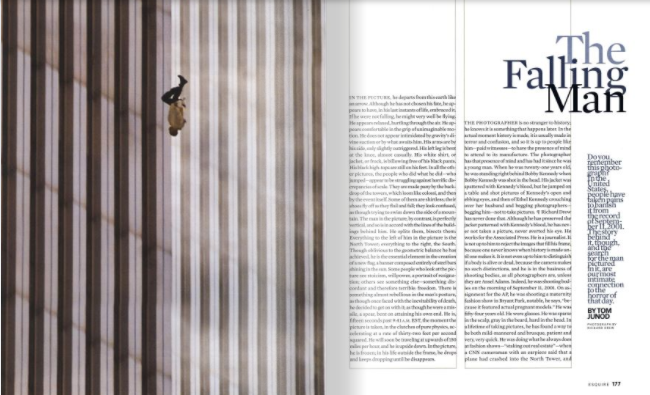
In his interview with Tom Junod, Bryan Curtis, editor-at-large of The Ringer and cohost of The Press Box podcast, talks with Junod on the occasion of 9/11’s then-upcoming twentieth anniversary. In his Q and A with Junod and the one with James B. Stewart that precedes it, Curtis asks the writers about their approaches to writing about 9/11, their writing processes, and the public’s reactions to their magazine features devoted to 9/11: Tom Junod’s on the unidentified Falling Man and James B. Stewart’s “The Real Heroes are Dead.” The latter, published in The New Yorker, focuses on Rick Rescorla, the decorated Vietnam War veteran and head of security for Morgan Stanley, who died in the South Tower’s collapse after leading an evacuation that saved hundreds from the same fate.
The September 2, 2021, episode of The Press Box podcast offers insights into the intricacies of writing about 9/11 and the writing processes of two journalists who reflected on the tragedy after the initial shock subsided: Stewart, six months later, and Junod, two years later. Their conversations with Bryan Curtis provide key first-person accounts for researchers studying the writing of Junod or Stewart in particular, or the journalism of 9/11 in general.
Tom Junod, a senior writer for ESPN, has also written for Life, Sports Illustrated, and GQ, where his articles garnered two National Magazine Awards. Among Junod’s other notable works are his Esquire profile of Fred Rogers, “Can You Say . . . ‘Hero’?”—the inspiration for the Tom Hanks film It’s a Beautiful Day in the Neighborhood—and his newly published memoir In the Days of My Youth I was Told What it Means to be a Man.
Credentials Paragraphs for an Author Who Serves as Your Subject
If your focus is on the writing of one of the authors we have read in class, your bibliography will include a credentials paragraph for only one of the sources by that author, the one that falls first alphabetically in the list. Works cited and bibliographic entries are always presented in alphabetical order by the authors’ last names. When a list includes multiple sources by one author, those sources are listed alphabetically by title.
The sample entry above includes a credentials paragraph for Junod, but that paragraph will not appear in the annotation for the podcast in my complete bibliography unless the podcast falls first alphabetically.
Also, Junod’s name will be listed only at the beginning of the first entry in the list. The entries that follow will start with —. (three hyphens and a period) to represent the author’s name. That is the MLA format for additional sources with the same author.
Reading Quiz
Rather than listing the answers to yesterday’s quiz, I have followed each question below with a note regarding where to find the answer. By finding the answers yourself, you will learn more than you would from simply reading them in a list.
- Last Thursday’s class notes focus on the research and writing that I have begun as a model for your own. What is my subject, and what prompted me to choose it? See the March 19 class notes.
- Thursday’s class notes include a sample annotated bibliographic entry. What source is the subject of that annotation? In other words, for which article did I compose an annotated bibliographic entry? See the March 19 class notes.
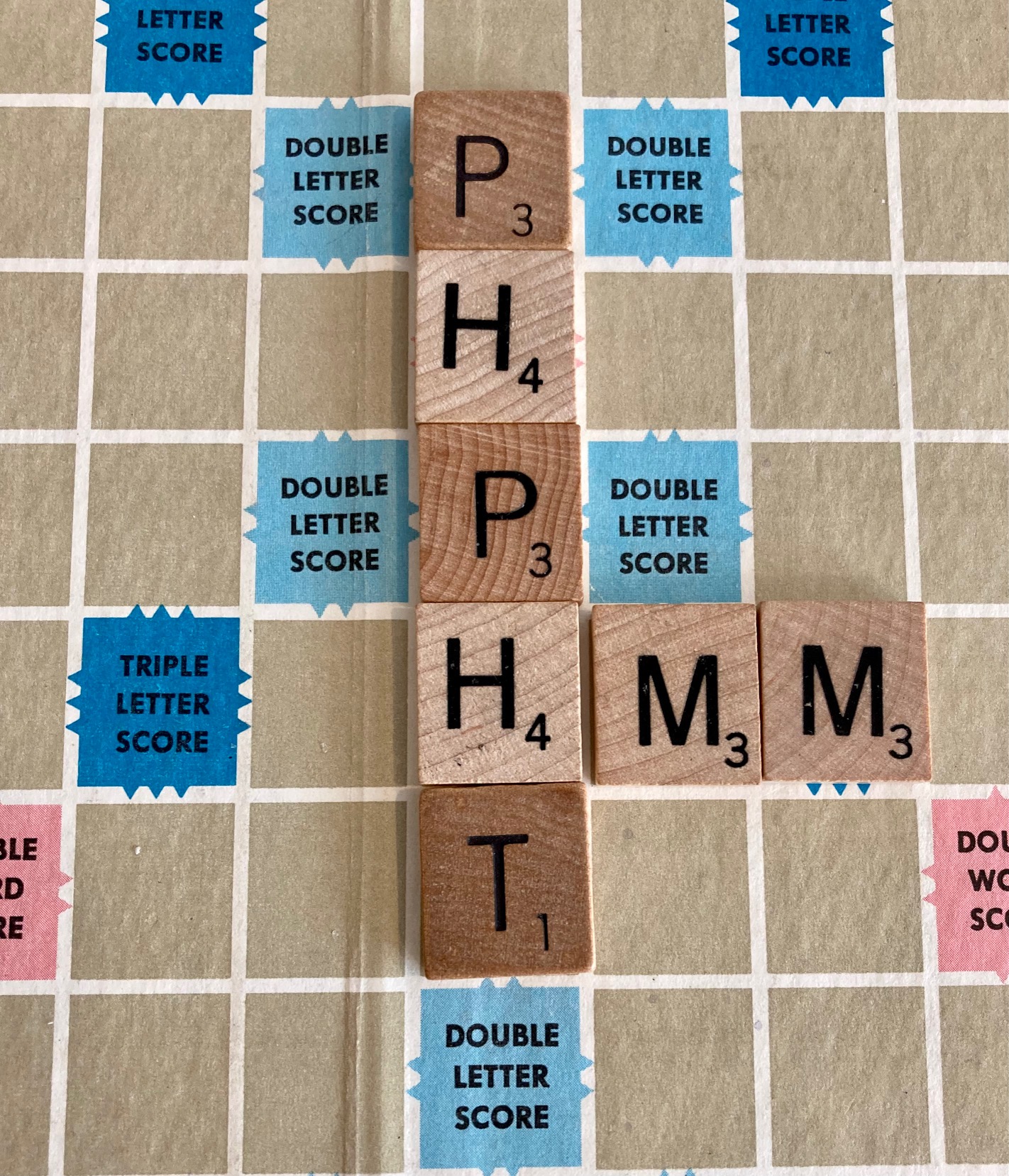
- What is the topic of the Scrabble list in last Friday’s class notes? See the March 20 class notes.
- Last Friday’s Scrabble list includes a word featured in a previous list, one devoted to playable two-letter words. What is that word? See the March 20 class notes.
Your quiz also included a bonus opportunity. For the possible answers to that question, see the class notes for March 20.
Be sure to write notes in your journal on all of your readings, including the notes posted on my blog. Before each class begins, take out your journal and review your notes. That will increase your knowledge of what you read and ensure that you will earn high grades on your pop quizzes.
Kudos to Nick Beeker, Aidan Berlin, Madison Davis, Sophia Marin, Dylan Virga, and Sierra Welch for completing Friday’s bonus assignment, and congratulations to the students whose analysis titles were chosen by their classmates. The number in parentheses denotes the number of students who chose the title as the winner.
- “Death is in the Lesson Plans” by Izzie McLawhorn (4)
- “The Classroom of Loss” by Nicole Marin (1)
- “Learning through Loss” by Avery Clark (1)
A Bonus for the Bonus Assignment: Title Allusions
An allusion is a reference that calls to mind a person, place, event, or artwork without naming it explicitly. The title of Tom Junod’s new memoir alludes to Led Zeppelin‘s song “Good Times, Bad Times,” which begins with the line that serves as Junod’s title: In the Days of My Youth I was Told What it Means to be a Man. The first part of the title, In the Days of My Youth, also recurs in the Bible, in Ecclesiastes and Job, and serves as the title of a novel by nineteenth-century author Amelia Edwards.
My title for last Thursday’s class notes alludes to “One Writer’s Beginnings,” the memoir by Pulitzer Prize-winning fiction writer Eudora Welty. (My title omits the s at the end of beginnings, since my focus is the starting point for a single project.)
Stephen King’s title “Strawberry Spring” isn’t an allusion, but the story features two literary allusions, which we examined in class and which I addressed in the March 17 class notes. The first is an allusion to J.R.R. Tolkien’s The Lord of the Rings trilogy: “You half expected to see Gollum or Frodo or Sam go hurrying past” (269). The second is an allusion to Carl Sandburg’s poem “The Fog” (272).
Next Up
Tomorrow’s class will be devoted to finding additional sources through the HPU Libraries site. Details TBA.
 Jane Lucas