Posted in English 1103, Teaching

ENG 1103: Maus Under the Microscope

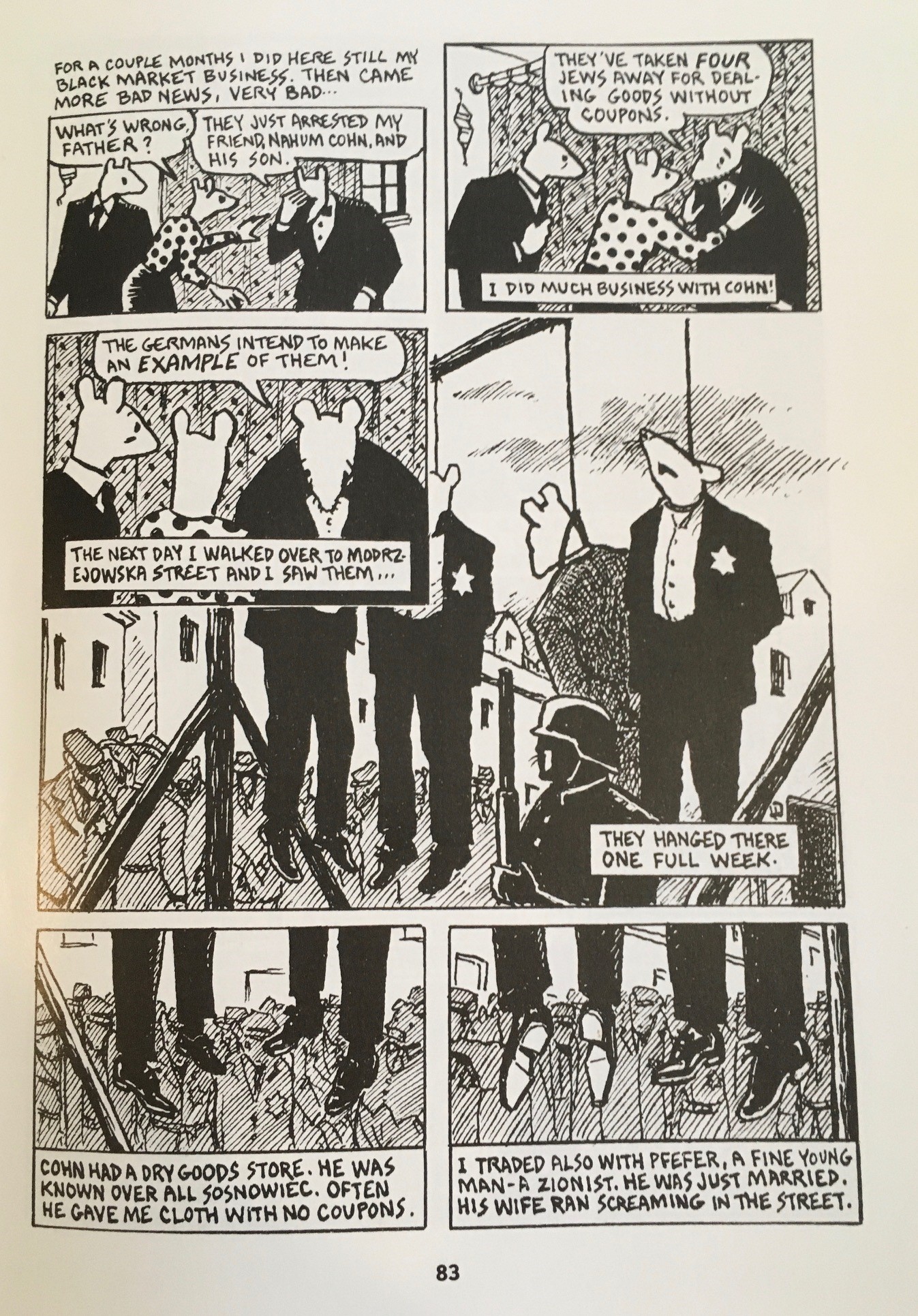
Spiegelman, Art. Maus I. Pantheon, 1986. p. 83.

Today in class we will use the “Notice and Focus” strategy as we examine a page of Art Spiegelman’s graphic memoir Maus. As the authors of your textbook observe, the strategy “help[s] you to stay open longer to what you can notice in your subject matter” (Rosenwasser and Stephen 17).

We will closely examine the page featured above, write what we notice (not what we think or like/dislike about it), and discuss our observations as a way of moving toward analysis.

Afterward, we will study an analysis of the page that I wrote as a model for my students last semester. An MLA style copy of the analysis can be downloaded from the link that follows. The assignments that you submit to Blackboard–your own analysis and your other major assignments for English 1103–should follow the same format.

Next Up

At the beginning of class on Wednesday, you will submit your completed worksheet for the first lesson in the Check, Please! series. If you did not receive a copy of the worksheet or you have misplaced yours, you can download and print a copy from the link below.

On Wednesday you will also begin drafting your analysis in class. That prelimary draft and the first drafts of all of your papers will be handwritten in class. Be sure to bring loose leaf paper, a pen with dark ink, and your copies of “Blogs vs. Term Papers” and “Skim Reading is the New Normal.”

Work Cited

Rosenwasser, David and Jill Stephen. Writing Analytically, 8th edition. Wadsworth/Cengage, 2019.
Posted in English 1103, Teaching, Theatre

ENG 1103: Teacher/Actor

When I am not teaching, you may find me at the theatre preparing for another role. Though I have played an English teacher twice, I am often someone quite different from myself: a seventy-two-year-old bag lady, a medieval abbess, or a Spanish-speaking maid

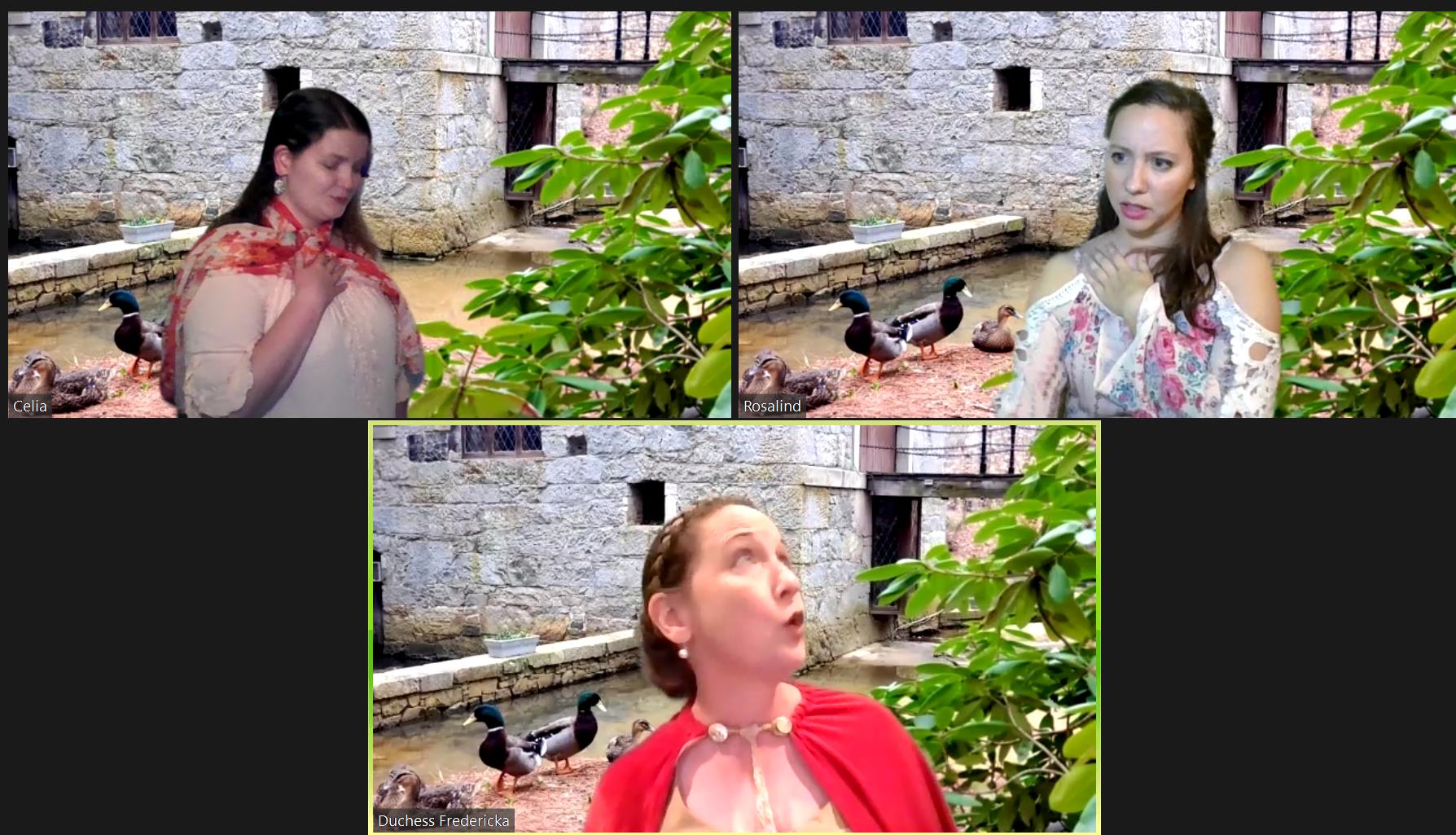
Clockwise from right: Rosalind (Stephanie Nussbaum), Duchess Fredericka (Jane Lucas), and Celia (Maggie Swaim) in dress rehearsal for the Shared Radiance Zoom production of As You Like It.

When the pandemic shut down live theatre, I found myself performing on a virtual stage, playing the role of Duchess Fredricka in the Shared Radiance Zoom production of Shakespeare’s As You Like It. Though I missed the face-to-face experience of live theatre, playing the duchess introduced me to performing on camera with a green screen and learning how to carry on conversations convincingly with actors who were invisible to me.

After the pandemic restrictions relaxed temporarily, I found myself performing live again but in a way that was new to me. Goodly Frame’s Finding Shakespeare required me to play three different characters in a fifteen-minute outdoor production of Shakespeare’s A Midsummer Night’s Dream.

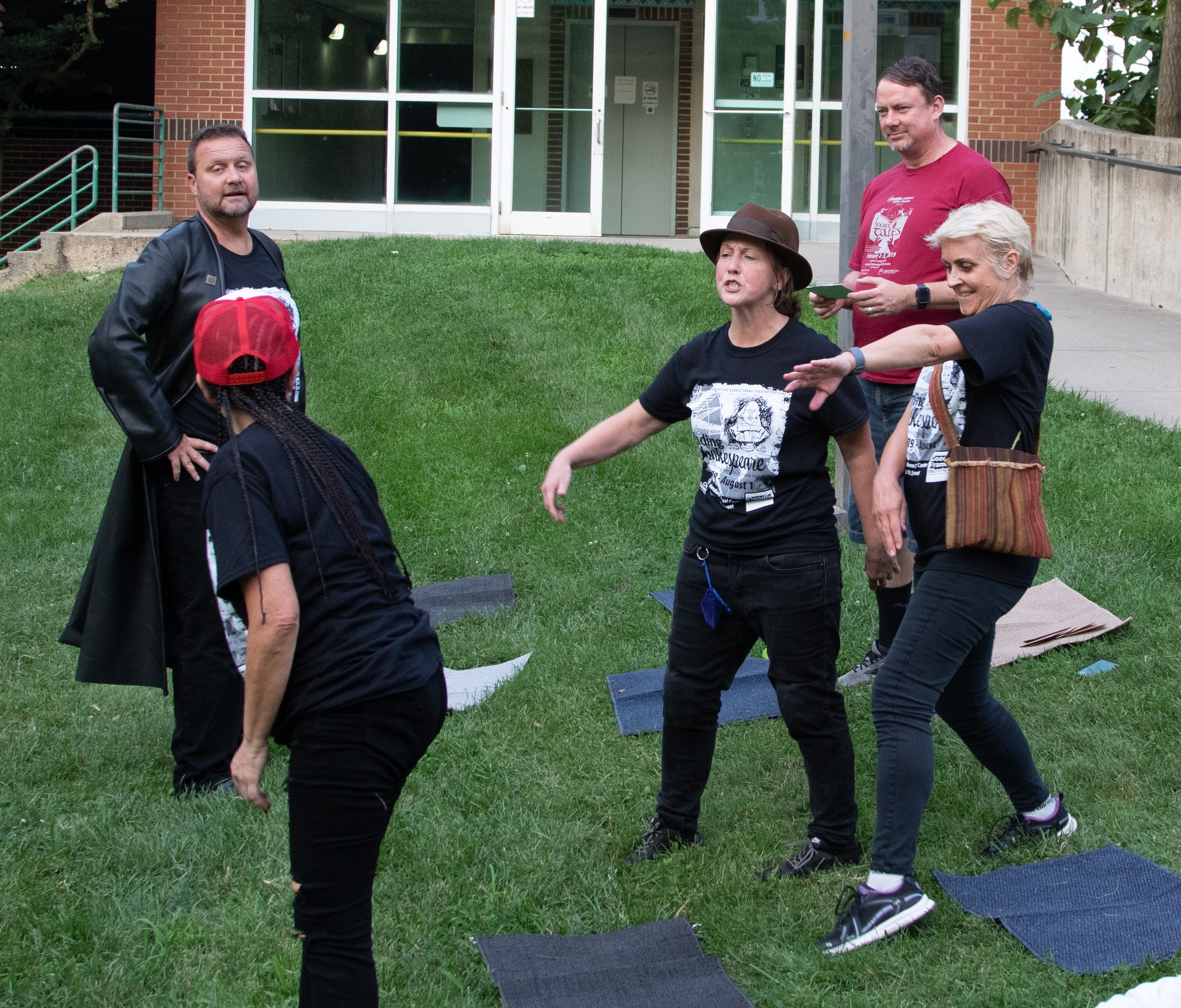
Rehearsal for Goodly Frame’s Finding Shakespeare: A Midsummer Night’s Dream, (L-R): Theseus (Axel Tolksdorf), Lysander (Tabitha Stillwell Wilkins), Egeus (Jane Lucas), Creative Greensboro’s Todd Fisher, and Hermia (Sally Kinka) / Sam McClenaghan

Now actors find themselves in rehearsals akin to–but not the same as–the ones of our pre-pandemic nights at the theatre. They don literal masks until they step on stage to wear their figurative ones. I look forward to the days when I will not have to pull off a mask before I step into the light, but for now I am simply grateful for the innovative pandemic-era theatre opportunities I’ve had.

Posted in English 1103, Teaching

ENG 1103: Sample Introductory Blog Posts, Followed by Your Own

In class today, I distributed copies of two sample introductory posts for us to examine before we turned our attention to your own blogs. As you prepared to study the sample introductions, I asked you to keep in mind the “Cures for the Judgment Reflex” that your textbook’s authors outline in Chapter 1. As a preface to the cures, the authors offer this general rule:

“[T]ry to figure out what your subject means before deciding how you feel about it. If you can break the judgment reflex and press yourself to analyze before judging a subject, you will often be surprised at how much your initial responses change” (Rosenwasser and Stephen 11).

This semester we will follow that general rule each time we examine a text as a subject of analysis.

An additional copy of the exercise (with the two sample introductory posts) can be downloaded from the link below.

Your WordPress Blog

Remember that you need to email me your blog address, or URL, so that I can link your WordPress site to the course page. Most of you in the 9:15 class have already done that. Many of you in the 10:40 class still need to do so. If you encounter difficulties creating your blog or your first post, email help@wordpress.com. My students have maintained WordPress blogs since 2013, and no student has ever experienced a problem with a blog that WordPress wasn’t able to resolve eventually. If your blog isn’t up and running, don’t panic. Take a deep breath and email WordPress.

Along with the exercise, I distributed copies of the worksheet for the first of your five lessons in the Check, Please! assignment. Some of you in the 9:15 class left before I handed out the worksheets. If you did not receive one, you may pick up one in class on Friday, or download and print one from the link below. Submit your completed worksheet in class on Wednesday, September 8. That due date and the ones for your other Check, Please! lessons are included on the course calendar.

Next Up

Friday marks our second Wordplay Day of the semester. To prepare for class, review the Scrabble site’s “Tips and Tools.” Unless you encounter technical difficulties with WordPress, your introductory post should be published before Friday’s class. We will begin examining your introductions in class next week. An additional copy of the blog overview and introductory assignment can be downloaded from the link below.

Work Cited

Rosenwasser, David and Jill Stephen. Writing Analytically, 8th edition. Wadsworth/Cengage, 2019.