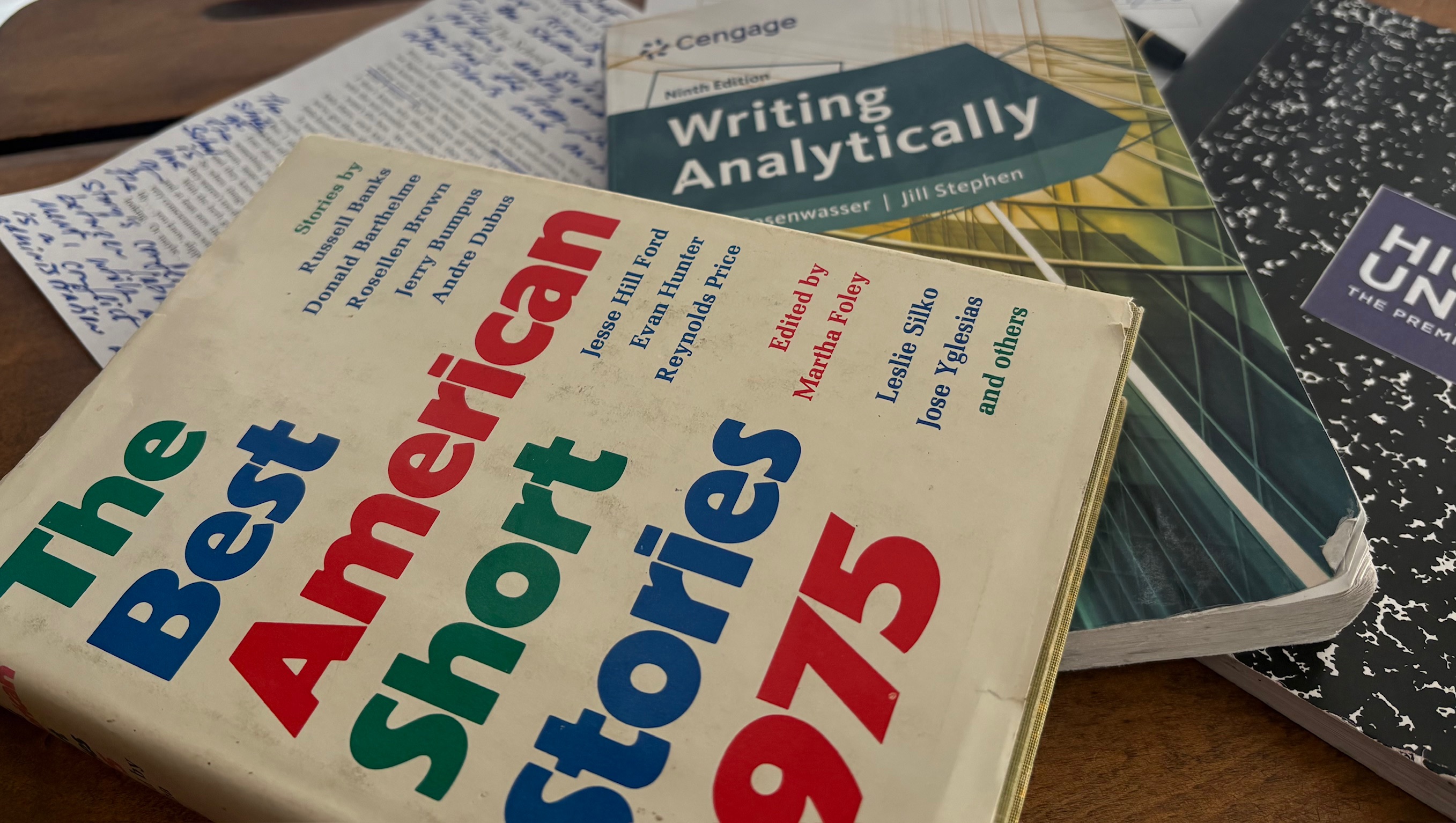
Yesterday in class, we examined Donald Barthelme’s “The School” as another potential subject for your analysis. In groups, you and your classmates considered these elements.
- The narrator and the narrative voice
- Conflict
- A short passage that strikes you as interesting, revealing, or strange
The Narrator and the Narrative Voice
The words and phrases you and your classmates used to describe the narrator, Edgar, and his voice include these:
- “casual”
- “emotionless”
- “funny and go with the flow”
- “indifferent”
- “a little questionable”
- “monotonus”
Do any of those descriptions seem at odds with the narrator’s words or actions? If so, what might account for that discrepancy?
When the narrator, Edgar, says, “Of course we expected the fish to die” (9), he emphasizes the word expected, something you cannot do in monotone because emphasis in speech requires modulation.
In his account of the death of the students’ puppy, Edgar says, “I got it [the puppy’s body] out of there before the kids got to school. I checked the supply closet each morning, routinely, because I knew what was going to happen. I gave it to the custodian” (9). Later, when Edgar notes why his class didn’t adopt another orphan after the death of Kim, he says, “[W]e didn’t have the heart” (9).
Are those the words and deeds of an “emotionless” or “indifferent” character?
Conflict
All of your groups addressed the existential conflict of life versus death. The children want the plants and animals in their classroom to live. They want the Korean orphan, Kim, to live; they want their classmates and relatives to live, but the children are repeatedly faced with death.
Consider the lines below, and ask yourself what conflicts they reveal.
- “[T]he boiler was shut off for days because of the strike” (8).
- “But the lesson plan called for a tropical-fish input at that point, there was nothing we could do” (9).
- “I don’t know what’s true and what’s not” (10).
Interesting, Revealing, or Strange
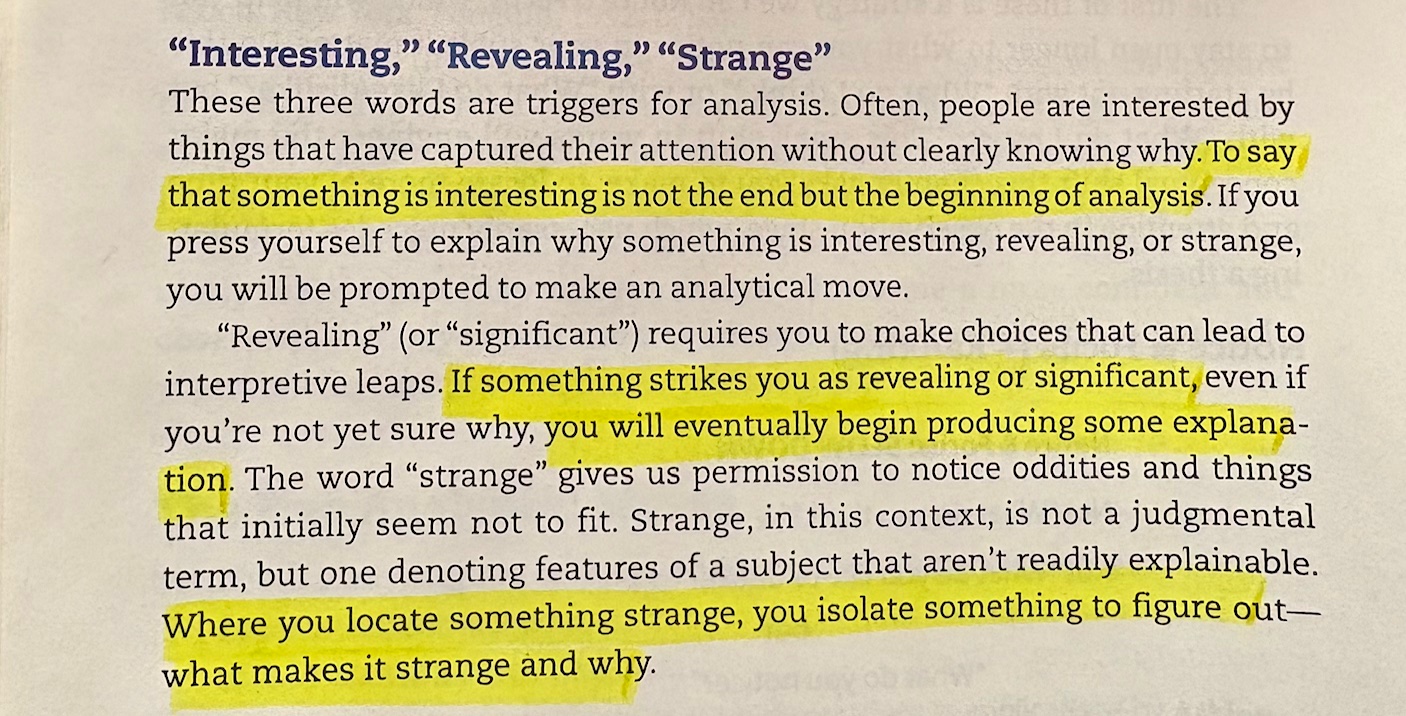
The lines that follow are the ones that you identified as interesting, revealing, or strange.
- Bartheleme’s narrator observes that the school “had an extraordinary number of parents passing away, for instance” (10).
- Edgar notes, “I forgot to mention Billy Brandt’s father, who was knifed fatally” (10).
- The children ask, “[I]s death that which gives meaning to life . . . ? (10), and their teacher replies, “[N]o, life is that which gives meaning to life” (10).
- The students ask Edgar, “[W]ill you make love now with Helen . . .?” (10). Instead, he embraces her, and “[T]hen the new gerbil walked in” (11).
In the examples above, I have included only signal phrases and quotations. However, in your analyses—as in your group responses yesterday—you will need to follow your quotations with commentary that demonstrates what makes the lines interesting, revealing, or strange.
Once you have decided on a subject for your analysis, repeat the interesting-revealing-strange exercise with the text you have chosen. As the textbook’s authors observe, those three words are “triggers for analysis” (Rosenwasser and Stephen 24).
Works Cited
Barthelme, Donald. “The School.” The Best American Short Stories 1975, edited by Martha Foley. Houghton Mifflin, 1975. pp. 8-11.
Rosenwasser, David, and Jill Stephen. “‘Interesting,’ ‘Revealing,’ ‘Strange,'” Writing Analytically, 9th edition. Wadsworth/Cengage, 2024. p. 24.
Pop Quiz
Rather than listing the answers to the questions on last Friday’s quiz, I have followed each question below with a note regarding where to find the answer. By finding the answers yourself, you will learn more than you would from simply reading them in a list.
- From your reading for today, what did you learn about Donald Barthelme’s writing style or readers’ and critics’ responses to his fiction? See the February 3 class notes.
- The class notes for last week included detailed commentary on the two student literacy narrative samples you read for class. What is one of the details you learned from those notes? See the January 27 class notes.
- Last week’s class notes included step-by-step directions for posting your literacy narrative to Blackboard and WordPress. What is one of the steps you learned from those notes? See the January 27 class notes.
- Your most recent Scrabble post covers two topics? What is one of them? See the January 29 class notes.
- What is the subject of the two short sections of Writing Analytically assigned for reading before class on Monday, February 2? See Writing Analytically (48-50).
- What is the bonus assignment in yesterday’s notes? Briefly note what was asked of you. See the February 3 class notes.
Your quiz also included two bonus opportunities. Answers for those bonuses appear in the January 29 class notes. If you aren’t familiar with Aesop’s fable of The Hare and the Tortoise,” you can read it on the Library of Congress site or on Project Gutenberg.
Be sure to write notes in your journal on all of your readings, including the notes posted on my blog. Before each class begins, take out your journal and review your notes. Those practices will increase your knowledge of what you read and ensure that you will earn high grades on your pop quizzes.
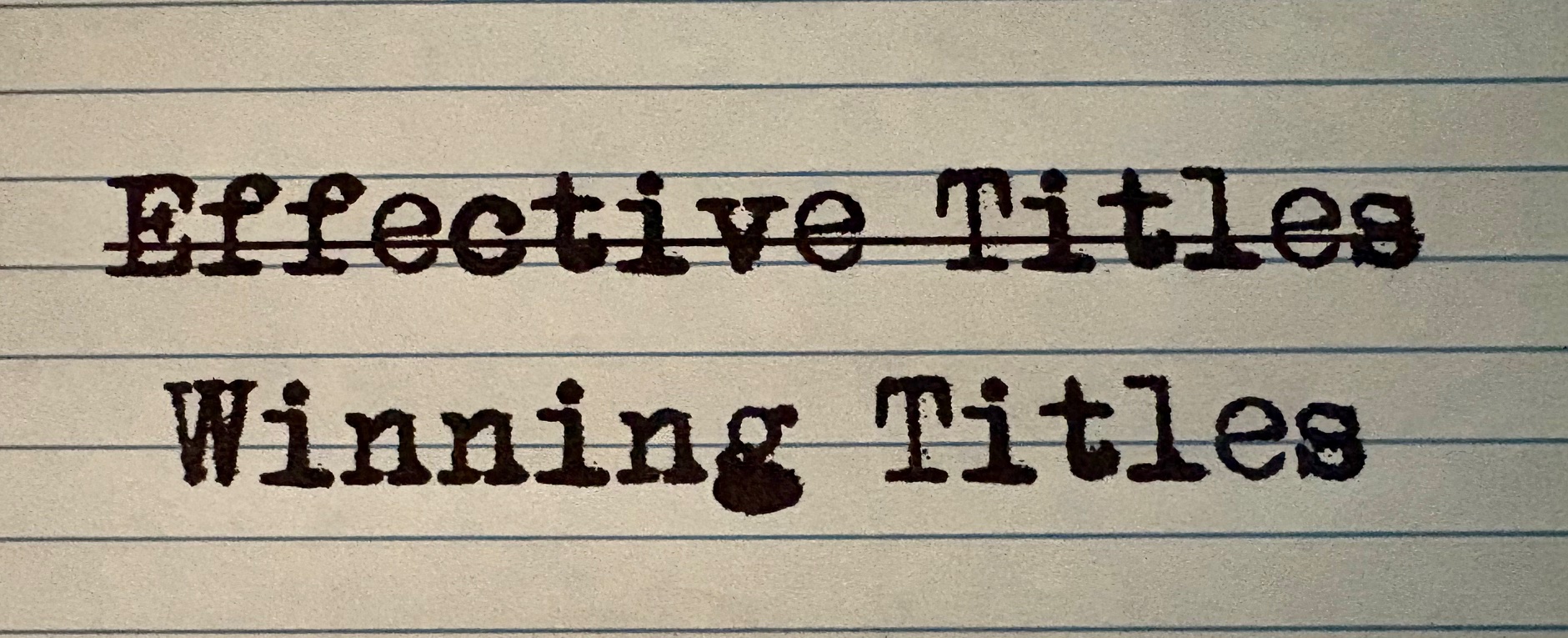
Kudos to Dylan Virga for completing yesterday’s bonus assignment, and congratulations to Sierra Welch, whose literacy narrative title, “Why I Hate the Letter R,” was selected by Dylan.
Next Up
Wordplay Day! To prepare for class, revisit the Dictionary and World Builder pages on the Scrabble website, or the Merriam-Webster Scrabble Word Finder page, and review the blog posts devoted to Scrabble.

 Jane Lucas