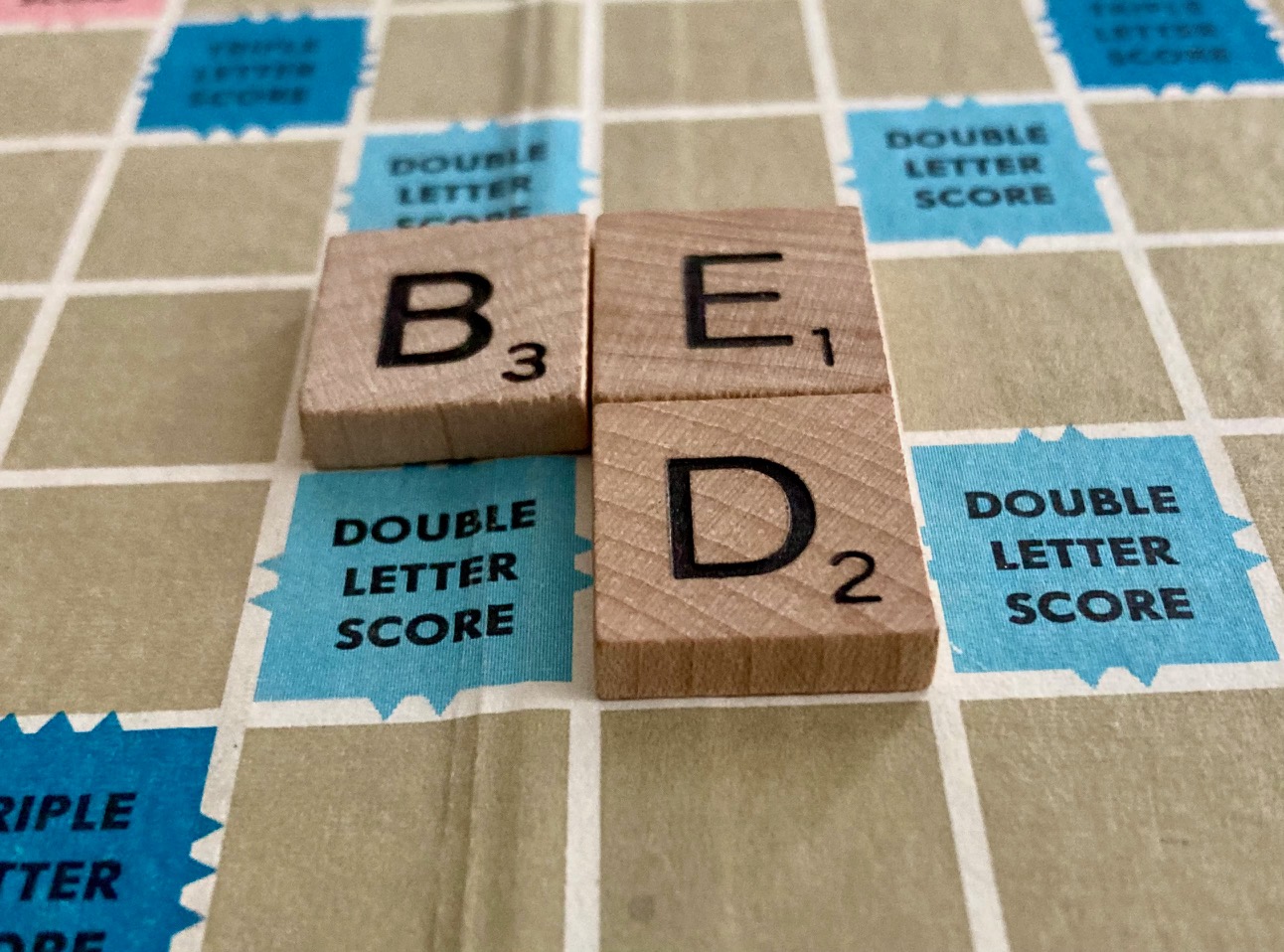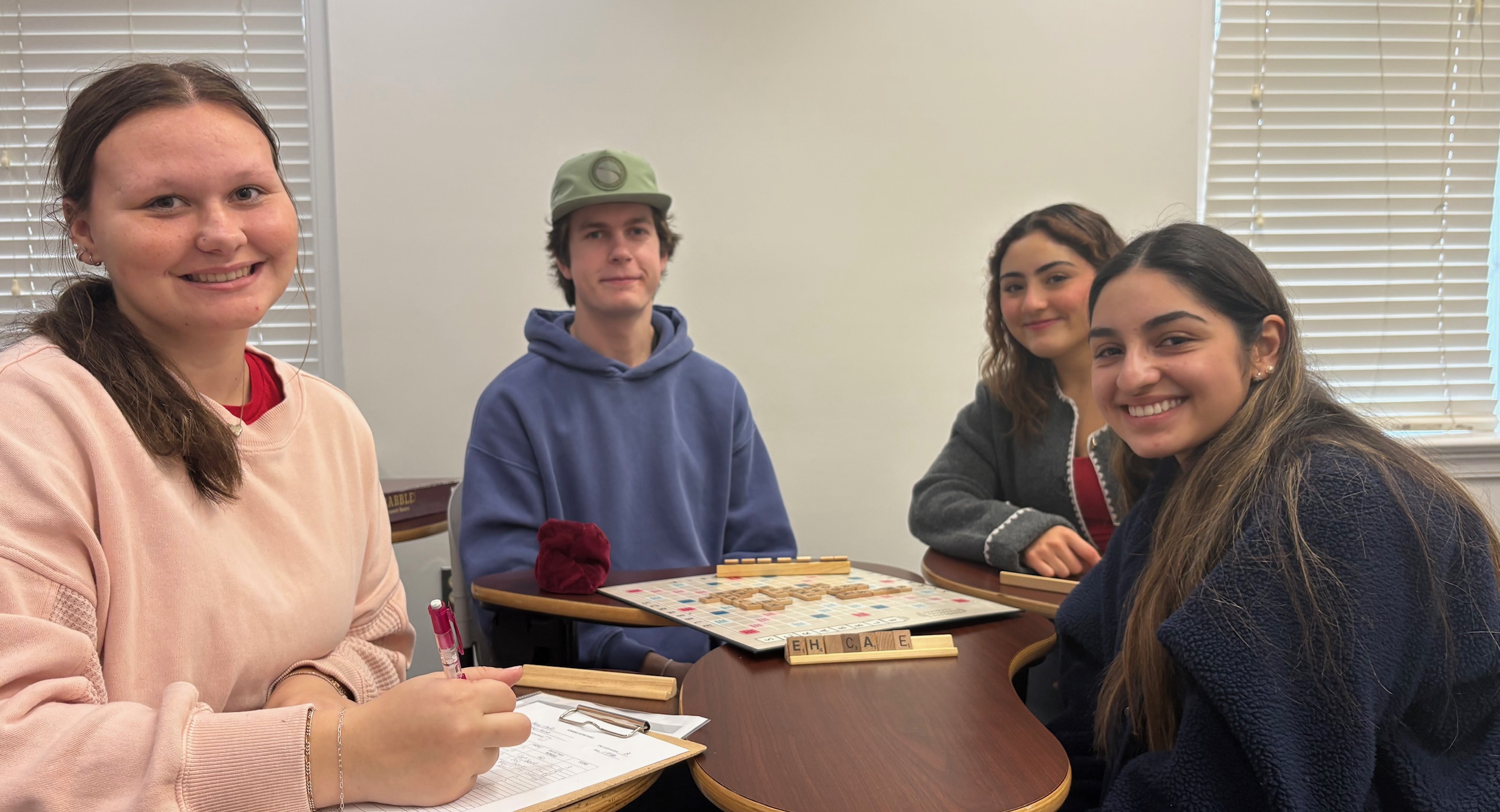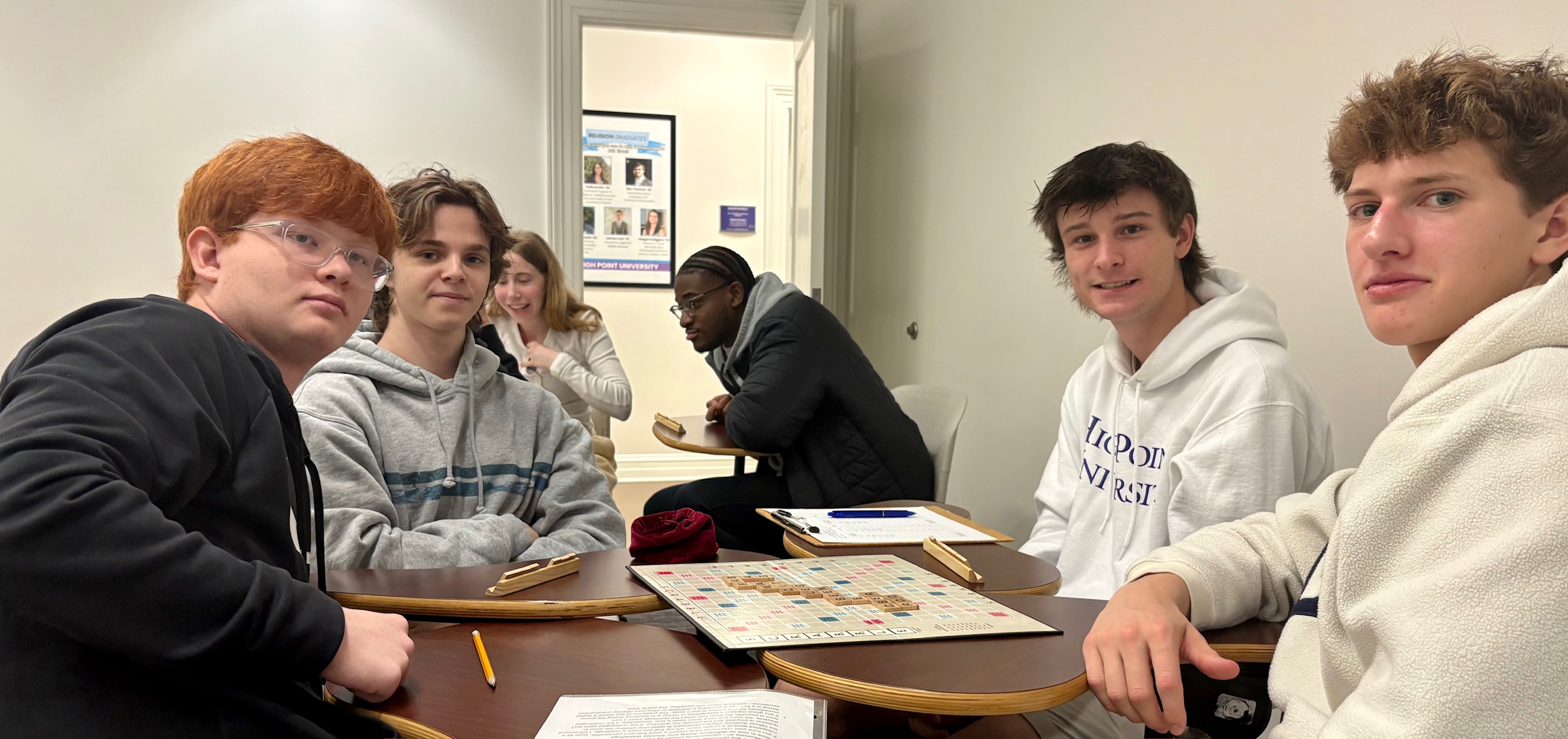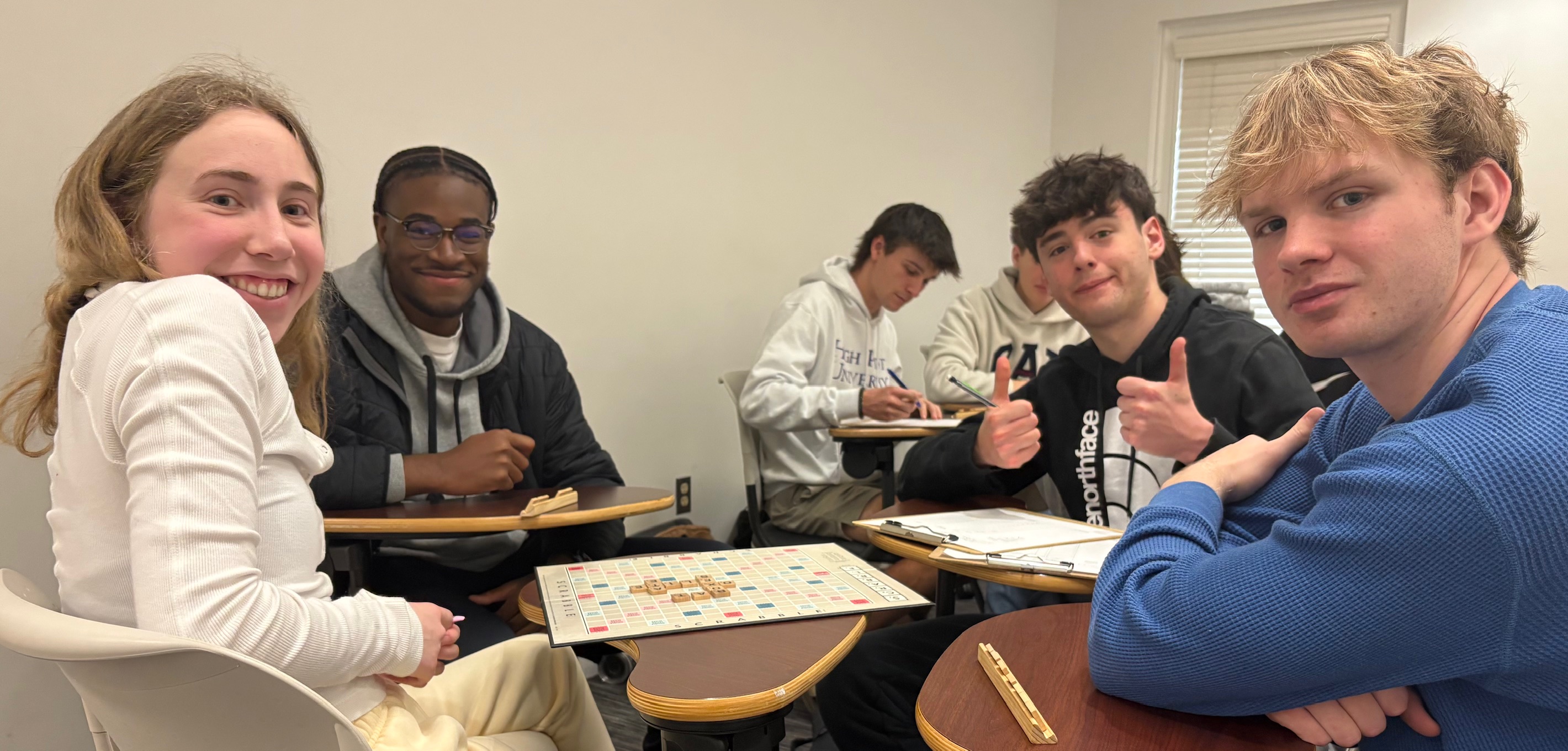
Keeping a u on your rack before the q is played is one way to decrease the chances that you will be left holding the q, a deduction of ten points. Learning q words without u’s, such as the ones listed below, which start q-a, will increase your word power and provide you with more options for playing the q.
qabala(s): an esoteric method, discipline, and school of thought in Jewish mysticism. Also qabalah, cabala, and kabbalah.
qadi(s): an Islamic judge. Also cadi.
qaid(s): a Muslim tribal chief. Also caid.
qajak(s): a kayak.
qamutik(s): a sled drawn by dogs. Also komatik.
qanat(s): a system of underground tunnels and wells in the Middle East
qapik(s): a monetary subunit of the manat (Azerbaijan).
qat(s): a shrub
qawwali(s): a style of Muslim music
Qi, the central life force in Chinese culture (also ki), is included in the Scrabble post for September 19. The list above is limited to words that start with the letters qa.
In class on Monday we will examine a horror story for Hallowen. We will study it on Monday because Halloween is Wordplay Day, and Wednesday you will begin work on your final essay and annotated bibliography. As an introduction to the writer, read the author’s note on his website and compose a one-paragraph summary, followed by a one-paragraph response in your journal.
At the beginning of class tomorrow, I will collect your blog response assignments. If you were absent when I distributed copies or you have misplaced yours, refer to the directions below.
Directions
Go to the class blog page, and click on the link for the blog of the classmate whose name precedes yours on the roster. If you are first on the list, go to the blog of the student whose name is last on the list.
If the student’s blog is not accessible, choose another student’s analysis for your response.
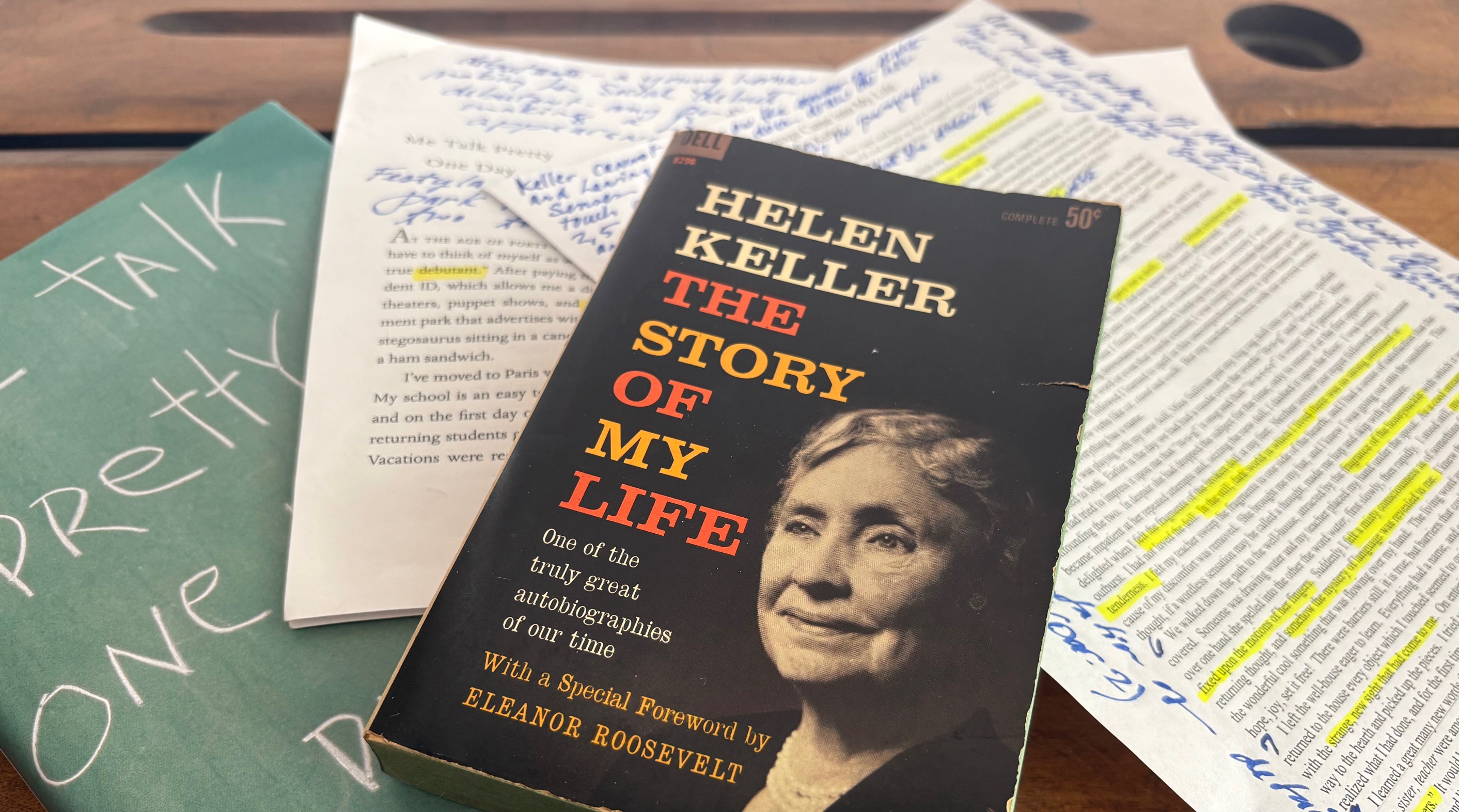
Read the classmate’s analysis and compose a response (75 words, minimum) that addresses one or more of these elements: the title, the thesis, the support for the writer’s claims, the conclusion, the image documenting part of the writing process away from the screen, the embedded link to a relevant website.
Does the blog post include an image that documents part of the blogger’s writing process away from the screen? (yes or no)
Does the post include a relevant embedded link? (yes or no)
Bonus Assignment
Consider how the images and embedded links included on your blog enhance your posts; the pictures offer readers a glimpse of the writing process that isn’t evident from the typed words on the screen, and the embedded links provide readers with valuable additional information about your subject. View your classmates’ posts of their analyses, and carefully examine the images and the pages they have linked to their posts.
Directions
Determine which of the images and which of the embedded links are most effective. Consider what draws your attention to the picture. Does it include anything in addition to the required element (a portion of the blogger’s handwritten prose)? If so, what is that additonal element? To determine your choice for the most effective embedded link, ask yourself what further information it offers about the subject of the analysis–the essay, article excerpt, chapter, or chapter excerpt–or the author of the text. You are welcome to choose among the posts of analyses by students in both sections eight and eighteen.
Compose a comment of two complete sentences or more that includes (1) the titles of the analyses enclosed in quotation marks, (2) the first and last names of the students, and (3) a brief explanation of the image’s and embedded link’s effectiveness.
Post your comment as a reply to this blog entry no later than 9 a.m. Monday, October 27. (To post your comment, click on the title, and scroll down to the bottom of the page. You will then see the image of an airmail envelope with a leave comment option.)
I will approve your responses (make your comments visible) after the 9 a.m. deadline on Monday. Commenters will earn a bonus assignment credit in the course work/short assignments category.
This morning in the first half of class, you will deliver your group presentations, and in the second half, you will compose reflections. Directions for your reflections are included below.
Directions
Compose a short piece of writing (two paragraphs, minimum) that reflects on your individual preparation and delivery of your portion of the presentation and your group’s presentation overall. Elements to address include the following:
The roles of your reading and writing: How did the processes of rereading the text and writing and rewriting your remarks contribute to the effectiveness of your delivery?
The introduction of your group members and opening remarks
The examination of points in the article or textbook
The conclusion
Poise, eye contact, and avoidance of filler words
After you complete your reflection on your group’s presentation, compose an additional paragraph that addresses a presentation by one of the other groups. Choose the one that stands out the most to you. What element or elements of that presentation made it particularly effective (or not) and why?
As you continue to prepare for your presentation, be mindful of the valuable roles that reading and writing play in the process. Although the final product is your group’s three-to-four-minute oral presentation, your work began with reading and writing: reading the article or textbook sections that serve as your subject, and writing the plan that you composed in class yesterday.
Have you read more than once the article or textbook sections that serve as your subject? If not, turn back to the text itself at least two more times before Wednesday. Chances are, on a second or third reading, you will notice details you didn’t notice before, ones that you may want to add to your presentation.
In addition to recording key words on your notecard, write out your portion of the presentation in your journal. Though you will not be permitted to have your journal in hand during your presentation, the act of writing down your remarks and rewriting them will help you commit them to memory.
As you practice delivering your presentation, be sure to limit the time that you look down at your notecard and your copy of the reading. Your ability to limit those glances will be greater if you spend ample time rereading the text and writing and reviewing your remarks in your journal.
Next Up
In class tomorrow, you will deliver your group presentations. Afterward, in the second half of class, you will compose a short essay that reflects on both your own presentation and one by another group.
This morning in class, after your Scrabble debriefing, I will distribute your group presentation assignment, and you will have the remainder of the class period to devote to planning the short presentation that you will deliver in class on Wednesday. An additional copy of the assignment is included below.
As an exercise in collaboration and oral communication, you and two or three of your classmates will plan, rehearse, and deliver a concise presentation focusing on a reading that addresses one of the practices implemented in the course. If you were absent when copies of the articles were distributed (see the titles in the group assignments below), download and print copies from the Blackboard readings folder.
Presentation Assignment Directions
Plan a presentation of three or four minutes that addresses the most significant points covered in your group’s designated reading. (The lists of group assignments and designated readings are included below.)
Include in your presentation the elements listed below (in items three through five).
An introduction that mentions (1) each group member’s first and last name (each group member may introduce himself or herself, or the group may assign one member the responsibility of introducing everyone), (2) the title and author, or authors, of the reading, and (3) a brief overview of the text.
A close examination of two or more points in the reading.
A conclusion that provides closure without restating the introduction and that invites questions. One strategy to consider for your conclusion is to address the relevance of the practice (the subject of your reading) to your work in English 1103, your work in other courses, and/or your life outside of the classroom.
Do not create a digital component, such as a PowerPoint or Google Slides show. You will not be permitted to use any digital devices during your presentation. Instead, you will rely on your index card with your notes and on your paper copy of the reading.
Every group member is not required to speak for the same length of time, but every member is required to deliver a portion of the presentation.
Directions for Rehearsing
In preparation for rehearsing, write your notes on an index card. If your initial notes are written in complete sentences, rewrite them to include only words and short phrases for your key points. If your notes are too detailed, you will risk relying too heavily on them and making minimal eye contact with the audience. Plan to make as much eye contact as possible and be sure to make eye contact with people throughout the room rather than fixing your eyes on one or two people.
Practice good posture. As you deliver your presentation, your ears should be directly above your shoulders. If you tend to shift your weight from one foot to the other, stand with your feet perpendicular to each other. If you do so, you will not be able to shift your weight from one foot to the other.
Avoid filler words, such as uh, um, like, and you know. If you tend to use filler words, practice pausing at the points where you are likely to use fillers.
Take turns delivering your portions of the presentation, and offer feedback to your group members. Offer both suggestions for improvement and words of encouragement.
Group Assignments for Section 8
Writing Analytically: Gi Amitrano, Amanda Franco, Madux Iovinelli, Campbell Nelson
“Skim Reading is the New Normal”: Casey Burkom, Aly Deters, Raven Houston, Luke Simpson
“Blogs vs. Term Papers”: Angelina Anzideo, Avery Falor, Ethan Howard, Nikki Parbhoo
“To Remember a Lecture Better,Take Notes by Hand”: Kylie Bussell, Dorian Grosber, Nolan Lafayette, Chloe Freeman
“A Break from Your SmartphoneCan Reboot Your Mood . . .”: Reese Danback, Preston Erwin, Lexie Owensby
Group Assignments for Section 18
Writing Analytically: Niko Bencharit, Mariana Pavajeau, Haven Tucker
“Skim Reading is the New Normal”: Annaliese Abboud, Grayson Crouch, Bella Richardson, Heloise Richer
“Blogs vs. Term Papers”: Kamauri Brown, Garrett Hickey, Maddie Tyranowski, Bailey Upchurch
“To Remember a Lecture Better,Take Notes by Hand”: Adrienne Brown, Myra Chatwal, Connor McFadden
“A Break from Your SmartphoneCan Reboot Your Mood . . .”: Cameron Anderson, Ellie Tejada, Jorja Mangeot, Shane Richardson
Grade Criteria
An A presentation includes all elements outlined in the directions for planning and rehearsing and demonstrates the group members’ poise and ability to avoid filler words.
A B presentation includes all elements outlined in the directions for planning and rehearsing but may be marred by group members’ lack of poise and/or inability to avoid filler words.
A C presentation includes most but not all elements outlined in the directions for planning and rehearsing and may also be marred by group members’ lack of poise and/or inability to avoid filler words.
A D presentation includes only some elements outlined in the directions for planning and rehearsing and may also be marred by group members’ lack of poise and/or inability to avoid filler words.
An F presentation includes few if any elements outlined in the directions for planning and rehearsing and may also be marred by group members’ lack of poise and/or inability to avoid filler words.
Next Up
In class on Wednesday, you will deliver your group presentations. Afterward, in the second half of class, you will compose a short essay that reflects on both your own presentation and one by another group, one that was notable for its strengths.
Last week, I published a blog post featuring playable four-letter words with three vowels. Knowing those words, and others with multiple vowels, proves useful when you’re faced with a rack of mostly, or all, vowels. Here’s a list of the remaining playable four-letter words with three vowels, beginning with the letters in the second half of the alphabet:
naoi: ancient temples (pl. of naos)
obia: form of sorcery practiced in the Caribbean (also obeah)
odea: concert halls (pl. of odeum)
ogee: an S-shaped molding
ohia: a Polynesian tree with bright flowers (also lehua)
olea: corrosive solutions (pl. of oleum)
olio: a miscellaneous collection
ouzo: a Turkish anise-flavored liquor
raia: a non-Muslim Turk (also rayah)
roue: a lecherous old man
toea: a currency in Papua, New Guinea
unai: a two-toed sloth (pl. unai; an ai is a three-toed sloth)
Rather than listing the answers to the questions on Monday’s quiz, I have followed each question below with a note regarding where to find the answer. By finding the answers yourself, you will learn more than you would from simply reading them in a list.
Write a brief but vivid description—a minimum of one complete sentence—of the page that you were assigned to read for today. See the page of Art Spiegelman’s memoir Maus posted in the Blackboard readings folder and featured in the October 13 class notes.
The blog post devoted to the sample student analysis that we studied includes several points about the content and form of the essay. Compose a sentence that specifies one of those points that was not addressed in class. See the October 2 class notes, specifically the five bullet points under the heading “Content” and the six bullet points under the heading “Form.”
What is the topic of the most recent Scrabble blog post? Note that Scrabble is the subject, not the topic. The topic is something more specific about the game. See the October 3 class notes.
Your quiz also included a bonus opportunity. Possible answers for that bonus are found in the class notes for October 3.
Scrabble Journal Exercise
In the game pictured above, the first team played “ZIT” with “Z” on a triple-letter square for thirty-two points. Using a blank for an “E,” the second team followed with “ZEROS,” with the “S” on a double-letter square for twenty-six points. The first team then played “SOLVED,” building from the “S” in “ZEROES.”
With “SOLVED,” the only letter that the first team played on a bonus square was the “E”* on a triple-letter, giving that “E” a value of three points. How many points total did the first team earn for “SOLVED”? Would they have benefited from playing elsewhere on the board? If so, why? The first team earn a total of twelve points for “SOLVED.” They would have benefited from playing elsewhere on the board because playing “SOLVED” below “ZEROS” set up the second team to score a triple-word play with “MOC” and simultaneously form two additional words, “EM” and “DO” for a total of twenty-seven points, more than double the first team’s score for the previous play.
In the game pictured above, the first team earned twelve points for the first play, “TOY,” which appears as “OY” on the board. (Remember to make sure that all letters played remain on the squares where they are played.) The second team followed with “LOAN” for six. Then, using the “L” in “Loan” and the “T” in “TOY,” the first team played “NEUTRAL” and “AT.”
With “NEUTRAL,” the only letter that the first team played on a bonus square was “U” on a double-letter square, giving it two points. How many points total did the first team earn for “NEUTRAL”? Would they have benefited from playing elsewhere on the board? If so, why? The first team earned a total of ten points for “NEUTRAL” and “AT.” They would have benefited from playing elsewhere on the board because playing “N-E-U-T-R-A” in front of the “L” in loan set up the second team to score a triple word under the “N.” It also placed the vowel “E” under a triple-letter score, where the opponent would be able to play a high-value consonant. Although the first team may have played “NOW” and/or “ZEN” themselves, they set up their opponents to play on the squares where those words were played.
In the game above, the play is limited almost exclusively to the right quadrants. What words could the teams play horizontally below the “Q,” horizontally above or below the “Y,” and elsewhere to advance the game to the left quadrants?
Here are a few of the ways that the players might advance the game into the left quadrants:
Because no more than two letters can be played below the “Q,” the words that either team could play there are limited to “QAT,” “QUA,” and “QI.” A Team could play both below and above the “Q” by spelling “AQUA,” but that play would not be prudent because it would set up the opponents to play on the triple-word square. Playing “QAT” would be preferable because of the large number of words that end with “T.”
A team could play “T-A-T-T-O” above the “Y” and in front of the “O” to spell “TATTOO” and “OY.” A team could also play “I-D-E-A” below the “Y” and in front of the blank (“L”) to spell “IDEAL” and “YA.”
“NEW” offers more opportunities for advancing the board into the left quadrants. Spelling an a-ending word, such as “ALPHA” or “AREA” vertically with the final “A” in front of the “N” would form both the vertical word and “ANEW.”
“A-A,” “B-A,” “L-A,” M-A,” “P-A,” “R-A,” “W-A,” or “Y-A” could be played in front of the “H” to spell “AAH,” “BAH,” “LAH,” “MAH,” “PAH,” “RAH,” “WAH,” or “YAH” horizontally, along with “AB” vertically.
In the first game pictured above, playing down from the “J” would advance the game into the lower left quadrant, but playing only as much as the single letter “O” below it would set up the opponents to score a triple-word play.
Spelling a word that ends with “K-E-Y” would enable the first game to advance into the lower left quadrant, but “MONKEY” isn’t a possibility because both “M”s and both blanks have already been played. Ditto for “HICKEY,” “HOCKEY,” and “HOKEY” because both “H”s have been played. “JOCKEY” isn’t an option either because the “J” has been played. Three possibilities are “POKEY,” “SMOKEY,” and “TURNKEY.”
The last two rows of the board offer additional opportunities to advance into the left quadrant. Using the “U” or the “T” in “GUT” as one of the last letters in a horizontal word would advance the game into the left side of the second-to-last or last row of the board.
This morning in class you will compose a short reflective essay that documents the processes of planning, drafting, and revising your analysis. In your reflection, you will include at least one relevant quotation from Writing Analytically or from the chapter, essay, or article excerpt that serves as the subject of your analysis.
Questions to Consider in Your Reflection
When you began transferring the words from your handwritten draft onto the screen of your laptop or tablet, what did you observe about the process?
What aspect of the writing seemed the most challenging? Choosing your topic? Deciding which text would serve as your subject? Determining your thesis? Identifying details to support your claims? Organizing the body of the essay? Composing the conclusion? Why did that aspect of the writing seem the most challenging?
Did the subject of your analysis change? If so, what was your original subject, and what did you change it to?
What do you consider the strongest element of your analysis?
At what point in the process did you decide on a title? Did you change the title during the writing process? If so, what was the original title?
What image that documents part of your writing process away from the screen did you include in your blog post? Why did you choose that particular image?
What relevant website did you include an embedded link to in your blog post? Why did you choose that site?
In your reflective essay, introduce your quotation with a signal phrase and follow it with a parenthetical citation. Also include a work cited entry for the text that you quote, Writing Analytically or the essay, chapter, or essay excerpt that serves as the subject of your analysis.
Sample Works Cited Entries
Junod, Tom. “The Falling Man.” Esquire, vol. 140, no. 3, Sept. 2003, pp. 176+. Gale Academic OneFileSelect, https://link.gale.com/apps/doc/ A106423422/EAIM?u=hpu_main&sid=bookmark-EAIM&xid=ce48797f.
Keller, Helen. “The Day Language Came into My Life.” https://janelucasdotcom. files.wordpress.com/2025/08/a0461-3.thedaylanguagecameintomylife_keller.pdf.
Lewis, Michael. Chapter One: “Back Story.” The Blind Side. 2006. Norton, 2009, pp. 15-23.
Rosenwasser, David and Jill Stephen. “Focus on Individual Words and Phrases.” Writing Analytically, 9th edition. Wadsworth/Cengage, 2024. p. 48.
Rosenwasser, David and Jill Stephen. “The Person Question: When and When Not to Use I.” Writing Analytically, 9th edition. Wadsworth/Cengage, 2024. pp. 415-17.
Rosenwasser, David and Jill Stephen. “Seems to Be About X, But Could Also Be (Or is ‘Really’) About Y.’” Writing Analytically, 9th edition. Wadsworth/Cengage, 2024. pp. 104-7.
Rosenwasser, David and Jill Stephen. “What a Good Analytical Thesis Is and Does.” Writing Analytically, 9th edition. Wadsworth/Cengage, 2024. pp. 241-42.
Sedaris, David. “Me Talk Pretty One Day.” Me Talk Pretty One Day. Little Brown, 2000. pp. 166-73.
Rosenwasser, David and Jill Stephen. “Focus on Individual Words and Sentences.” Writing Analytically, 9th edition. Wadsworth/Cengage, 2024. p. 48.
As you continue to revise your analysis, review these sections of Writing Analytically: “Focus on Individual Words and Phrases” (48), “What a Good Analytical Thesis Is and Does” (241-42), and “The Person Question: When and When Not to Use ‘I'” (415-17).
Individual Words and Sentences
Even though the subject of my model analysis, “The Strange Fruit of Sosnowiec,” is the page of a graphic novel, focusing on the individual sentence, “I did much business with Cohn!” and within it, the word “with” (83), provided me with one of the points about connection that supports my thesis that the page “simultaneously conveys connection and separation” (par. 1).
Spiegelman, Art. Maus I. Pantheon, 1986. p. 83.
Writing of those words, I assert that “Spiegelman underscores the link with Vladek’s line of narration at the bottom of the smaller panel: ‘I did much business with Cohn!’ (83). The word ‘with’ appears directly above the rope, punctuating the connection between both Nahum Cohn and his friend Mr. Zyberberg and Mr. Zylberberg’s son-in-law, Vladek (par. 3).
A Good Analytical Thesis
The authors of Writing Analytically observe that an effective thesis results from closely examining a subject and “arriv[ing] at some point about its meaning and significance that would not have been immediately obvious to your readers” (Rosenwasser and Stephen 241). With that in mind, note that the thesis of my model analysis does not present an idea that’s stated explicitly on the page. On its surface, the page depicts Mr. Zylberberg’s account of Nazi soldiers hanging Jewish merchants. After repeatedly studying the words and panels on the page, I discovered patterns of both connection and separation: “both the grieveing survivors’ ties to the dead and the hanged men’s objectification at the hands of the Nazis” (par. 1).
First Person and Academic Writing
Although first person is appropriate in some academic prose, as the authors of Writing Analytically note, when you eliminate it, “what you lose in personal conviction, you gain in concision and directness” (Rosenwasser and Stephen 415). Read the two versions of my thesis below, and note the “concision and directness” of the latter.
First-Person Thesis
In my opinion, that haunting panel and the smaller ones that frame it illustrate the complexity of Spiegelman’s seemingly simple composition. I believe his rendering of the panels of the living in conjunction with the fragmented panels of the hanged merchants simultaneously conveys connection and separation. I think it shows the grieving survivors’ ties to the dead and the hanged men’s objectification at the hands of the Nazis.
Third-Person Thesis
That haunting panel and the smaller ones that frame it illustrate the complexity of Spiegelman’s seemingly simple composition. His rendering of the panels of the living in conjunction with the fragmented panels of the hanged merchants simultaneously conveys connection and separation: both the grieving survivors’ ties to the dead and the hanged men’s objectification at the hands of the Nazis.
The first-person thesis is less concise and direct because it states that the ideas are the writer’s rather than simply stating the ideas. The result is a thesis that is needlessly longer, by eight words, and that divides the reader’s attention between the writer and the subject.
Notably, 82% of the students who earned midterm grades in the A range earned bonus points for meeting with a Writing Center tutor to review their literacy narrative, and 80% of the students who earned As completed at least one of the three bonus assignments.
If you didn’t take advantage of those bonus point and bonus assignment opportunities in the first half of the semester, be sure to take advantage of them in the second half.
Next Up
In class on Wednesday, you will compose a reflective essay that focuses on the processes of planning, drafting, and revising your analyses. The due date for your revised analysis is Wednesday, October 15, before class, but you have until the hard deadline, Friday, October 17, before class, to post your revision to Blackboard and publish it on your WordPress blog.
If you are still revising your analysis on Wednesday, in your reflection, you will refer to your writing as ongoing.
Also, in your reflection, you will include a minimum of one relevant quotation from Writing Analytically or from the essay, chapter, or article excerpt that serves as the subject of your analysis. Before Wednesday’s class, identify the passage you plan to quote, and draft a sentence with it in your journal. That preparation will ensure that you have ample time to integrate the quotation into your reflection before the end of Wednesday’s class period.
Analysis draft with collage clipping from page 83 of Art Spiegelman’s Maus 1.
This morning in class, after your Scrabble debriefing, we will examine my model analysis, “The Strange Fruit of Sosnowiec,” included below. As you read it, note how I turn from summary to thesis in the first paragraph. Also note how the paragraphs that follow offer support for the thesis with concrete details from the comic’s panels.
Since concluding paragraphs can be particularly difficult to write without repeating the introduction, today’s group work will include a close look at strategies for conclusions.
The Strange Fruit of Sosnowiec
In his graphic memoir Maus, Art Spiegelman devotes a page to his father Vladek’s account of the hangings of four Jewish merchants in Sosnowiec, Poland. Vladek and his wife, Anja, learn from Anja’s father, Mr. Zylberberg, that the Nazis have arrested his friend Nahum Cohn and his son. With his head bowed in sorrow, Mr. Zylberberg says to Anja and Vladek, “The Germans intend to make an example of them!” (83). That image of Mr. Zylberberg speaking with Vladek and Anja overlies the larger panel that dominates the page, one that depicts the horror that Mr. Zylberberg anticipates: the murder of his friend Nahum Cohn, Cohn’s son, and two other Jewish merchants. That haunting panel and the smaller ones that frame it illustrate the complexity of Spiegelman’s seemingly simple composition. His rendering of the panels of the living in conjunction with the fragmented panels of the hanged merchants simultaneously conveys connection and separation: both the grieving survivors’ ties to the dead and the hanged men’s objectification at the hands of the Nazis.
The placement of the overlying panel not only hides part of the horror behind it, but it also connects Vladek’s father-in-law to one of the victims. Mr. Zylberberg’s head and torso appear directly above the suspended legs and feet of one of the hanged men, creating an image that merges the two.
Spiegelman further emphasizes the mourners’ identification with the hanged men by extending two of the nooses’ ropes upward to the smaller panel above them, linking the living to the dead. Additionally, Spiegelman underscores the link with Vladek’s line of narration at the bottom of the smaller panel: “I did much business with Cohn!” (83). The word “with” appears directly above the rope, punctuating the connection between both Nahum Cohn and his friend Mr. Zylberberg and Zylberberg’s son-in-law, Vladek.
While the panels of the hangings yoke the living to the dead, Spiegelman’s presentation of the hanged men in fragments also objectifies them. The final panels on the page depict only their shoes and part of their pant legs suspended above the onlookers, images that may evoke in some readers thoughts of the last remnants of the Jews who stepped barefoot into the gas chambers of Auschwitz.
Whether the hanged men’s shoes call to mind those mountains of leather left behind by the Jews, the separation of their lower legs and feet from the rest of their bodies turns them into something less than human—not people, but mere parts. Thus, Spiegelman creates a picture of the hangings that illustrates both the mourners’ identification with the victims and the Nazis’ perception of the Jews as less than human.
Spiegelman, Art. Maus 1. Pantheon, 1986, p. 83.
Spiegelman’s transformation of the Nazi propaganda portrayals of Jews as rats remains an astounding achievement thirty-five years after the publication of the first volume of Maus. But seeing the hanged merchants in Modrzejowska Street in the midst of the George Floyd murder trial in Minneapolis and less than three months after the January 6 Capitol riot reminds readers that the panels of Spiegelman’s memoir have grown more prescient. The nooses evoke images of Officer Derek Chauvin’s knee on George Floyd’s neck, the January 6 chants to hang the Vice President, and a T-shirt glimpsed in the Capitol crowd, one with a Nazi eagle below the acronym “6MWE” (Six Million Wasn’t Enough), a reference to the numbers of Jews slaughtered in the Holocaust. Our heads are bowed in sorrow with Mr. Zylberberg’s. The strange fruit of our past, both distant and recent, should seem far stranger.
Work Cited
Spiegelman, Art. Maus I. Pantheon, 1986.
Next Up
In class on Wednesday, you will compose a reflective essay that focuses on the processes of planning, drafting, and revising your analyses. The due date for your revised analysis is Wednesday, October 15, before class, but you have until the hard deadline, Friday, October 17, before class, to post your revision to Blackboard and publish it on your WordPress blog.
If you are still revising your analysis on Wednesday, in your reflection, you will refer to your writing as ongoing.
Also, in your reflection, you will include a minimum of one relevant quotation from Writing Analytically or from the essay, chapter, or article excerpt that serves as the subject of your analysis. Before Wednesday’s class, identify the passage you plan to quote, and draft a sentence with it in your journal. That preparation will ensure that you have ample time to integrate the quotation into your reflection before the end of Wednesday’s class period.