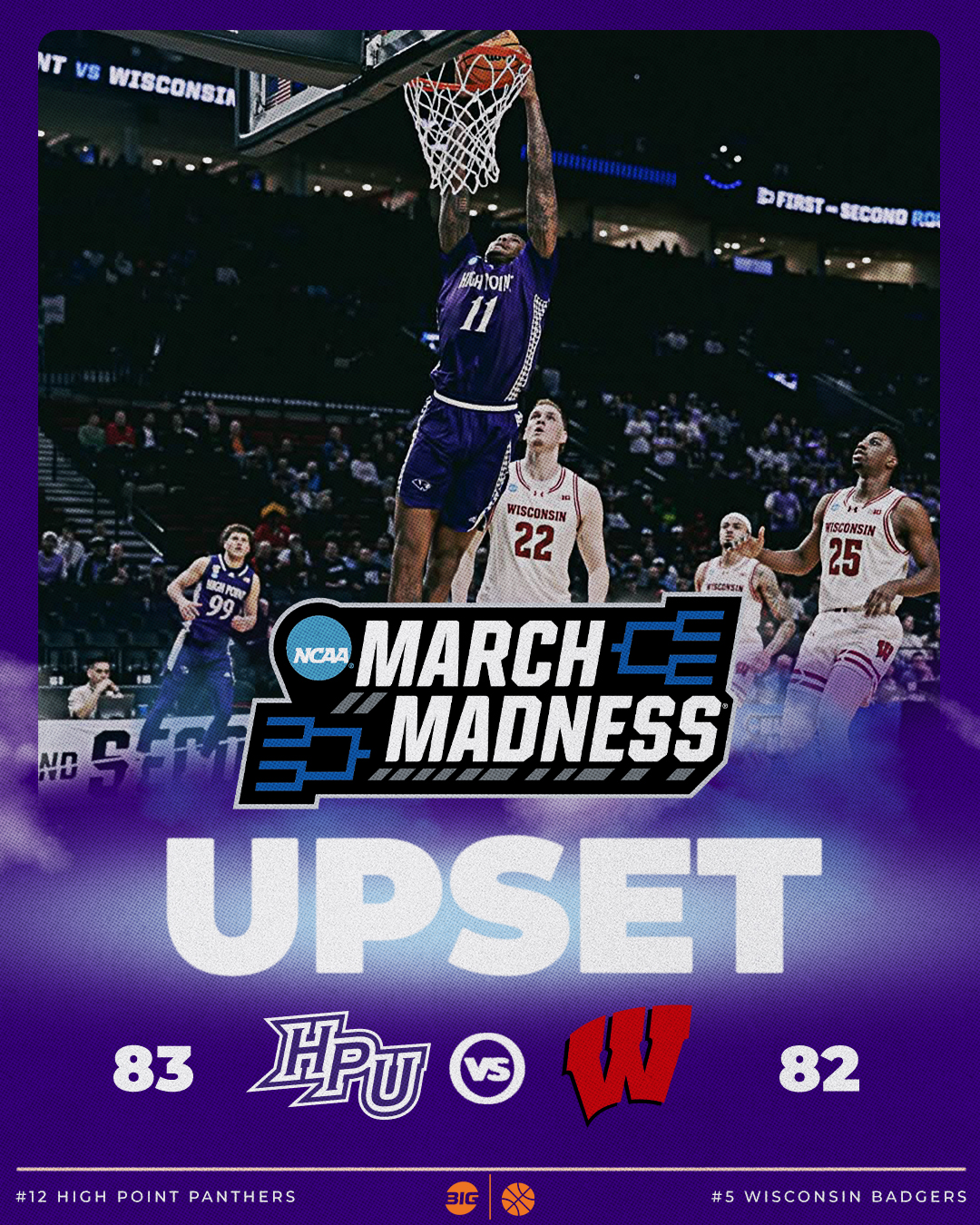
Congratulations to the High Point men’s basketball team on their NCAA Tournament first-round, bracket-busting win over Wisconsin!
Blowin’ in the Wind
The recent strong winds likely reminded you that March is our windiest time of the year. To mark our gusty month, this Scrabble post features playable wind-related words. One of them, oe, appeared in a previous Scrabble post, the one devoted to two-letter words beginning with m, n, o, and p. If your rack contains the right letters, spelling these words will be a breeze.
bayamo: a strong wind found in Cuba
bhut: a warm, dry wind in India (also bhoot)
bise: a cold, dry wind, found especially blowing from the northeast in Switzerland (also bize)
blaw: to blow
bleb: a blister (an extremely intense or severe wind)
bora: a cold wind in lowland regions
brr: used to indicate feeling cold (also brrr)
bura: a violent Eurasian windstorm (also buran)
chinook: a warm wind that flows off the east side of the Rockies; or a type of Pacific Northwest salmon named after the Chinook people)
etesian: a northerly Mediterranean summer wind
fon: a warm dry wind that blows down off some mountains (also fohn and foehn)
haboob: a violent sandstorm or duststorm
oe: a whirlwind or gust of wind, especially in the Faeroe Islands
sarsar: an icy wind (from the Arabic çarçar for a cold wind)
simoom: a hot, violent desert wind (also simoon and samiel)
williwaw: a violent, cold wind blowing down from a mountain (also willyway and williwau)
On Monday, as an exercise in creating a primary source for your annotated bibliography, you will conduct an interview with one of your classmates. Details TBA.
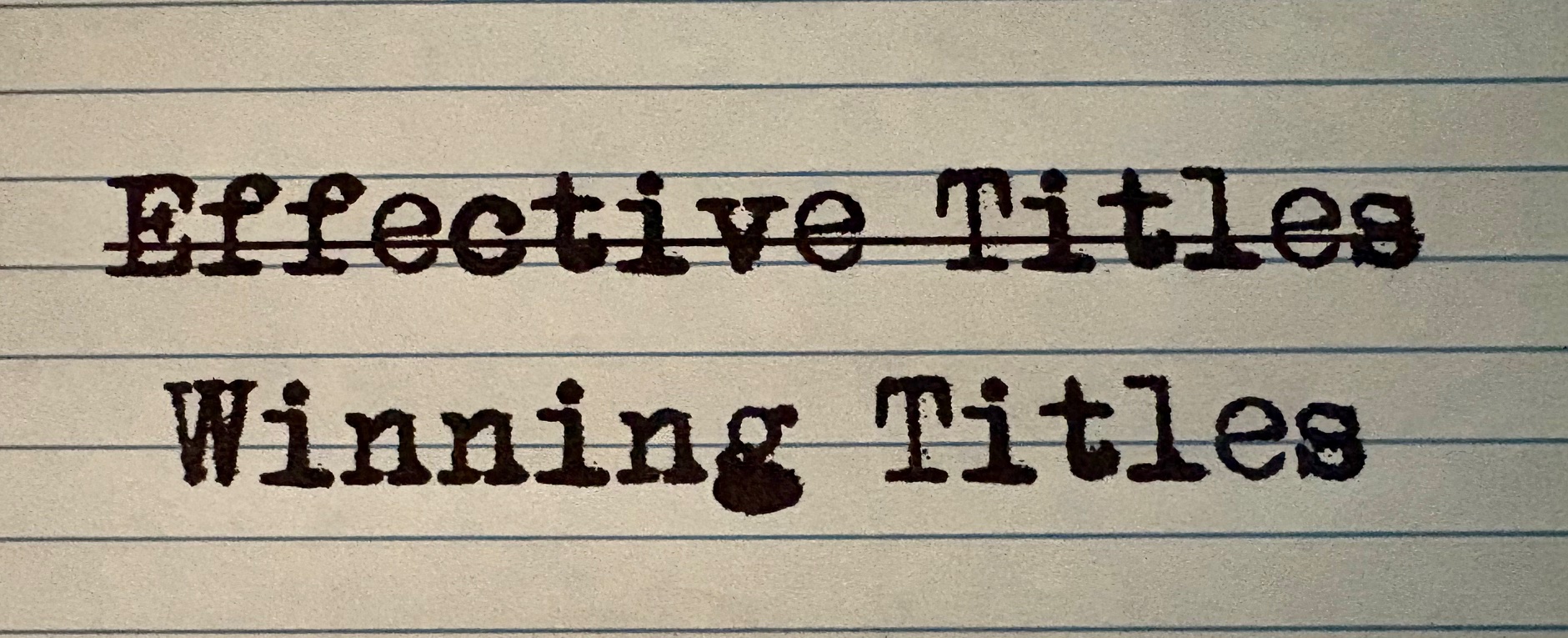
What makes a title effective? That’s an important question to consider since the title contains the first words of yours that a reader will encounter. First, it should be descriptive; it should evoke an image in the reader’s mind. It should also be relevant to your subject; it should convey something about the writing that will follow. Lastly, it should be intriguing; it should create in the reader a desire to keep reading. With those traits in mind, review the titles of your classmates’ analyses listed below. Which of them is most effective and why?
“The Classroom of Loss”
“Confidence in the Face of Language”
“Death is in the Lesson Plans”
“Details Matter”
“Falling Not Jumping: The Power Words”
“Found in the Dark”
“The Impact of One Image”
“Learning through Loss”
“The Man Who Changed the Game Forever”
“On ‘The Falling Man'”
“One Player, New Strategy”
“Working through ‘The School'”
Bonus Assignment Opportunity
Directions
Determine which one of the titles you deem most effective.
Compose a comment of one complete sentence or more that includes (1) the title enclosed in quotation marks, and (2) a brief explanation of its effectiveness. If the title includes a title within it, be sure to inclose that title in single quotation marks. (See the two examples in the list above.)
A bonus for your bonus: You will receive extra points for your bonus assignment if you include the correct answers to the questions that follow. With the title of his new memoir– which I addressed in yesterday’s class notes–Tom Junod employs a device I used in the title of yesterday’s blog post. Stephen King employs that device in “Strawberry Spring” as well, not in the title but twice in the story. What device does Junod employ in his title, and to what does the title refer?
Post your comment as a reply to this blog entry no later than 5 p.m. on, Monday, March 23. (To post your comment, click on the post’s title, and scroll down to the bottom of the page. You will then see the image of an airmail envelope with a leave comment option.)
I will approve your comments (make them visible) after Monday’s deadline.
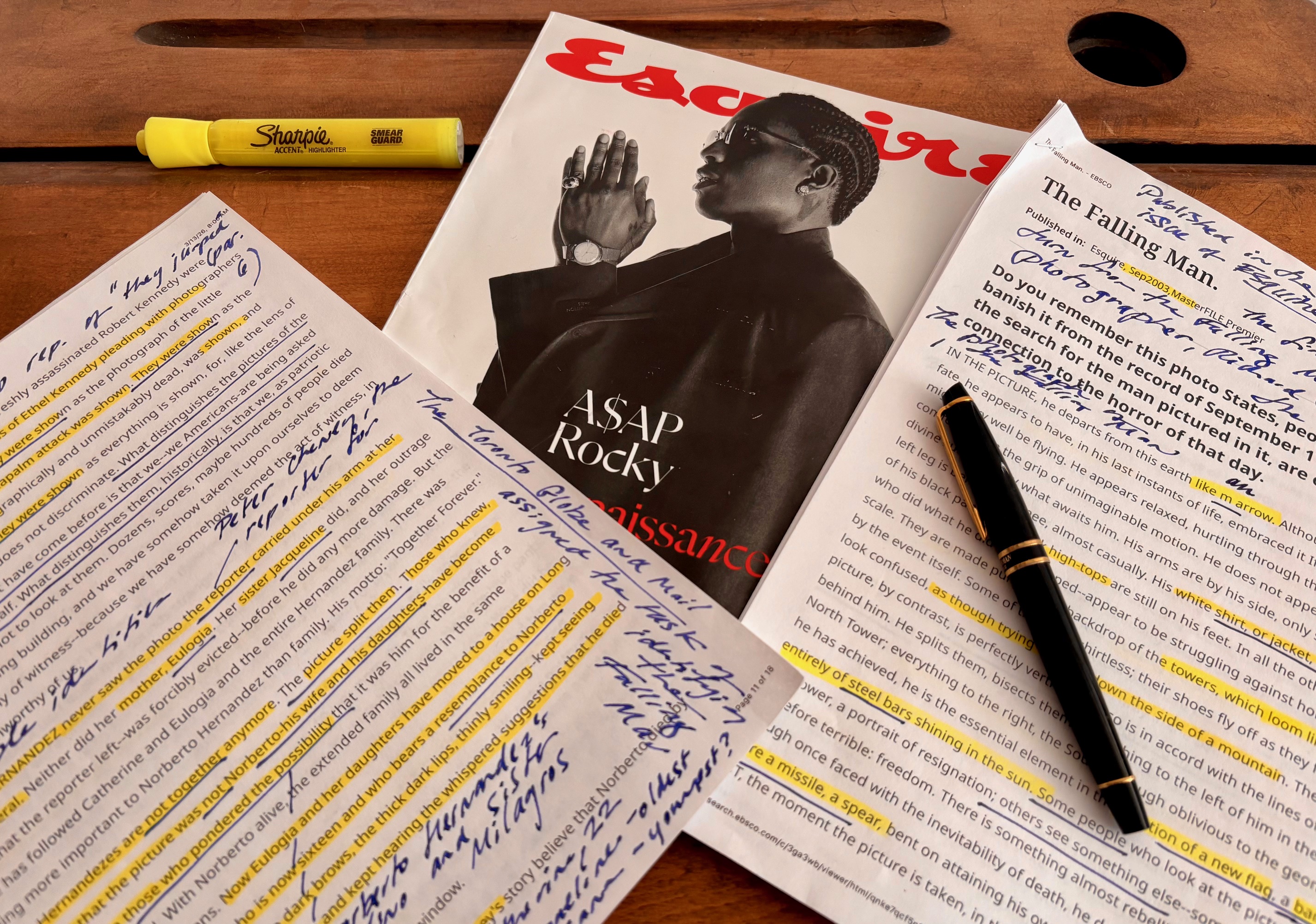
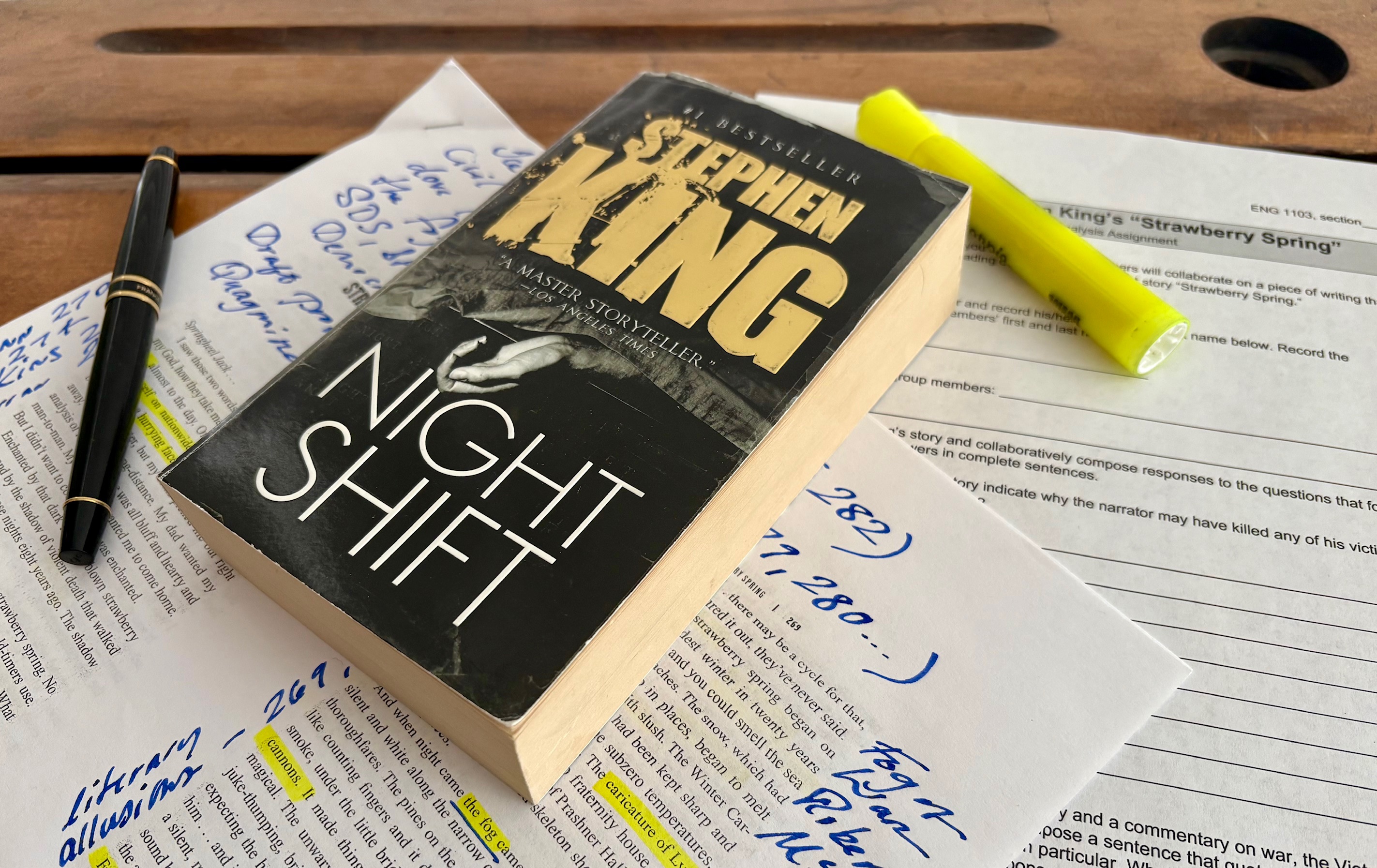
My annotated copy of Tom Junod’s “The Falling Man,” along with March issue of Esquire, which features Tom Hendrickson’s article on Tom Junod
When I opened the current issue of Esquire, I didn’t expect to spot the name Tom Junod. What I saw out of the corner of my eye wasn’t a byline; Junod had left Esquire to write for ESPN The Magazine in 2016. The name I’d grown accustomed to seeing as a byline was instead the first words of a feature titled “Family Secrets,” by John Hendrickson.
Hendrickson’s feature focuses on the recent publication of Tom Junod’s first book, a memoir. I realized that “Family Secrets” could serve as a source in an annotated bibliography devoted to Junod’s writing–and, time permitting, I could read his new memoir, In the Days of My Youth I was Told What it Means to be a Man. And that book could serve as a source as well.
Although I could have begun my writing process by drafting a bibliographic entry for “Family Secrets,” instead I began with an bibliographic entry for “The Falling Man,” as a model for those of you who choose Junod’s writing as your subject.
I prepared to draft by rereading “The Falling Man” in its entirety twice, highlighting words and phrases on my first rereading, and writing extensive annotations in the margins on the second. As a result of that close examination of Junod’s article, I was not only able to draft a bibliographic entry but also discover patterns in his prose–including apparent contradictions and repetition of words or phrases for emphasis–that I will be able to address elsewhere in my essay and bibliography.
Twice rereading Tom Junod’s seventeen-page, 7,000-plus-word article was time-consuming, but the effort paid off by generating substantial material for my project. If your own essay and bibliography focuses on Tom Junod’s writing, you should follow the same steps. Examining only the first two paragraphs of a writer’s article is sufficient for a short analysis but not for a research project devoted to his work.
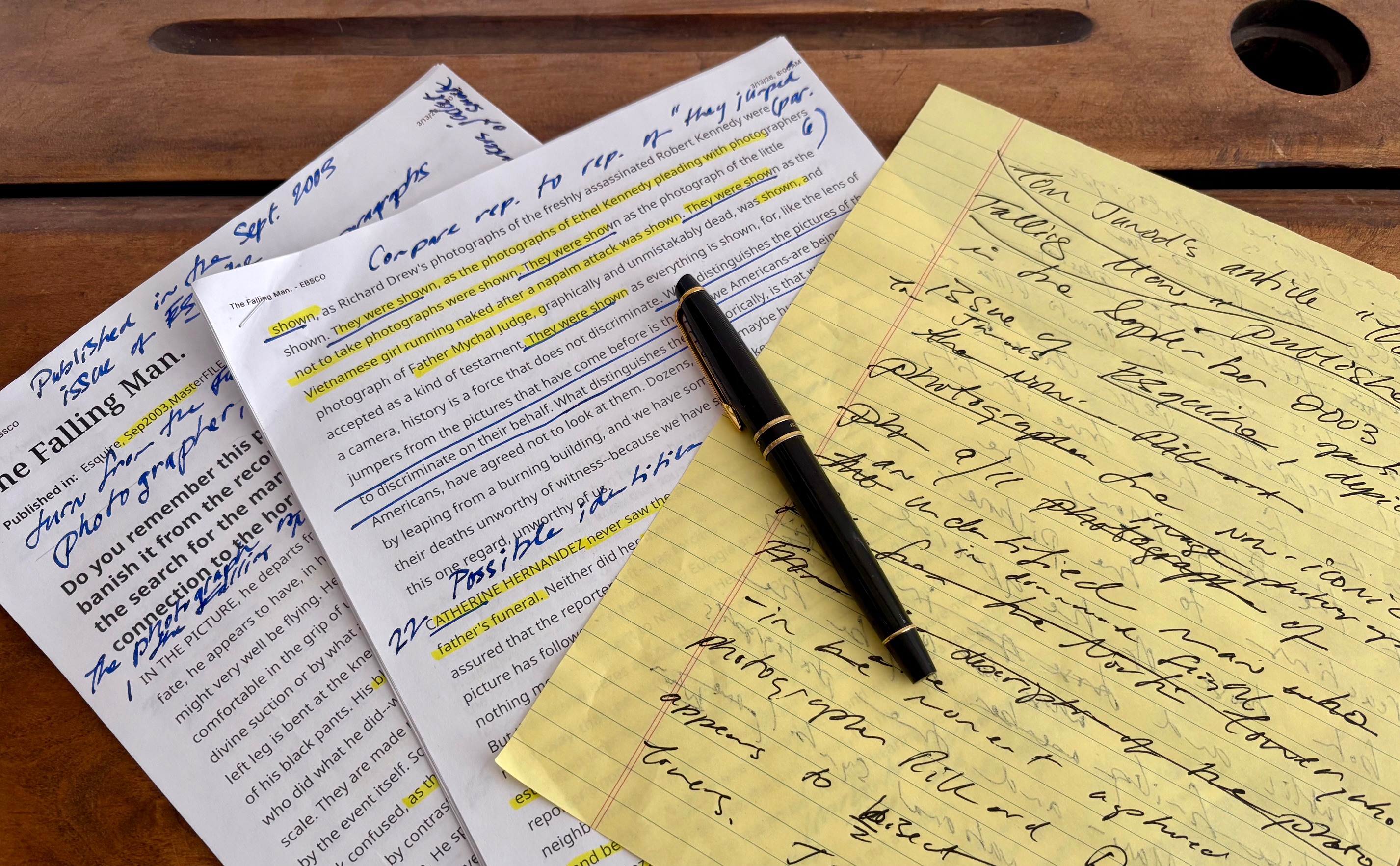
My annotated copy of Tom Junod’s “The Falling Man” and the first page of the draft of my bibliographic entry
Annotated Bibliographic Entry for “The Falling Man”
Published in the September 2003 issue of Esquire, Tom Junod’s “The Falling Man” focuses on the now-iconic 9/11 image of an unidentified man in downward flight, who appears to bisect the Twin Towers. Junod chronicles the moments leading up to AP photographer Richard Drew capturing the photo, Toronto Globe and Mail reporter Peter Chaney’s search for the true identity of the Falling Man, the reactions to the picture—both those of the public and of grieving families (whose loved one could be its subject), and the photograph’s status as a national symbol.
Junod’s thorough and riveting account of Richard Drew’s photograph and its life beyond the frame illuminates the role of the Falling Man in American culture and showcases the writer’s award-winning prose. “The Falling Man” remains an essential reference for studies of the iconography of 9/11, as well as studies of Junod’s writing.
Tom Junod, a senior writer for ESPN, has also written for Life, Sports Illustrated, and GQ, where his articles garnered two National Magazine Awards. Among Junod’s other notable works are hisEsquire profile of Fred Rogers, “Can You Say . . . ‘Hero’?”—the inspiration for the Tom Hanks’ film It’s a Beautiful Day in the Neighborhood—and his newly-published memoir In the Days of My Youth I was Told What it Means to be a Man.
On Monday, as an exercise in creating a primary source for your annotated bibliography, you will conduct an interview with one of your classmates. Details TBA.
Today, you will draft an annotated bibliographic entry for the source that serves as the starting point for your research. For a list of sources, see the complete assignment directions under the heading Final Essay and Annotated Bibliography.
Key Features
Your bibliographic entry will consist of these elements:
A complete MLA-style work cited entry for the source that serves as the starting point for your research.
A paragraph that summarizes the source.
A second paragraph, one of commentary, that elucidates the usefulness of the source to you and others researching your subject. Would it serve as a point of comparison or contrast to another primary or secondary source? Would it support or challenge an idea presented in another source? Is it a secondary source that sheds light on the meaning of a primary source? The last question pertains primarily to bibliographies that focus on one of the writers studied in the course. Do not write in your commentary, this source is useful because . . . Instead, demonstrate the source’s function
A third paragraph that consists of one or more sentences that provide the writer’s credentials: the qualifications and achievements that demonstrate his or her competence and credibility.
For models, look to the annotated bibliographic entries in “Scrabble as a Game Changer,” the sample assignment you will receive today.
Directions for Bibliographic Entry
Draft a bibliographic entry that includes all the elements outlined above.
For directions on drafting the third paragraph, see the Credentials section that follows.
Compose your bibliographic entry on the lines provided on the exercise handout and/or additional paper, and submit it before you leave class.
Credentials
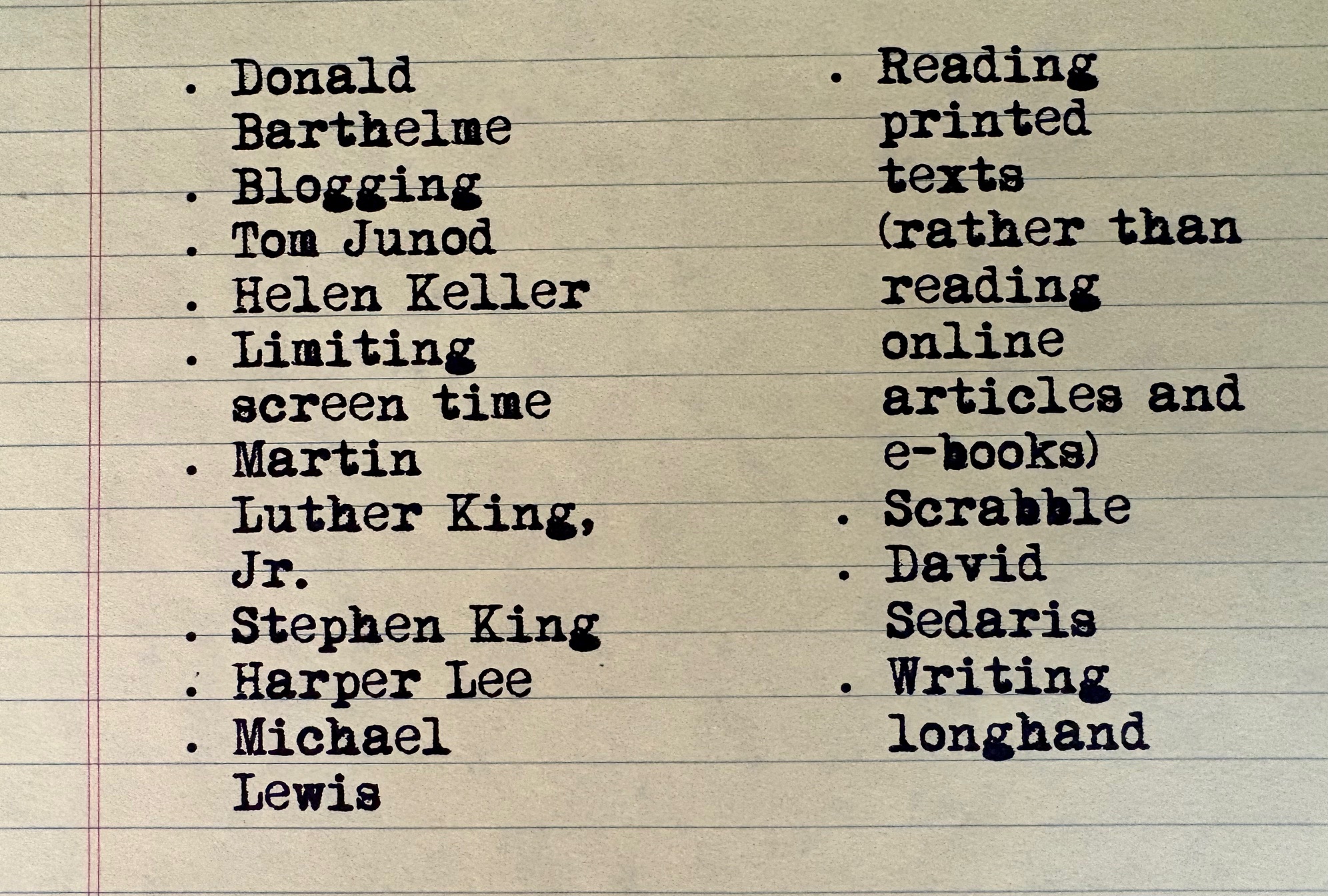
The third paragraph of each of your bibliographic annotations will consist of one or more sentences that provide the writer’s credentials: the qualifications and achievements that demonstrate his or her competence and credibility.
Directions for Credentials (Paragraph Three)
Locate the author of your source in the list that follows
Compose a short paragraph of one or more sentences that includes the writer’s first and last names and the credentials listed in the bulleted points. Do not comment on the writer’s qualifications. Like a summary, a paragraph of credentials is an objective presentation of information.
Aubrey, Allison
Correspondent for NPR (National Public Radio) and a contributor to CBS Sunday Morning, the PBS NewsHour,
Recipient of awards from the New York Press Club, the National Press Club, the Alliance for Women in Media Foundation, and the James Beard Foundation
Barthelme, Donald
Author of the novel Snow White and the collection Sixty Stories, among others
His short story collection City Life was named by Time magazine as one of the best books of 1971
Recipient of the National Book Award, the Pen/Faulkner Award for Fiction, The Los Angeles Times Book Prize, and a Guggenheim Fellowship
Chu, Charlotte
Journalist who has covered science, health, and technology for Vox, Scientific American, Popular Science, Discover Magazine, Business Insider, and GenomeWeb, among others
Junod, Tom
Senior writer for ESPN.com
Previously wrote for Esquire, GQ, Life, and Sports Illustrated
Recipient of two National Magazine Awards from the American Society of Magazine Editors
Keller, Helen
Author of The Story of My Life and The World I Love In, among others
Named one of Time magazine’s 100 Most Important People of the 20th Century
King, Martin Luther, Jr.
Civil Rights leader
Author of Strength to Love and Stride Toward Freedom: The Montgomery Story
Recipient of the 1964 Nobel Peace Prize
King, Stephen
Author of Carrie, The Shining, Pet Cemetery, and more than sixty other novels
Recipient of the 2003 National Book Award’s Medal for Distinguished Contribution to American Letters and the 2014 National Medal of Arts.
Klara, Robert
Senior Editor of brands at AdWeek
Author of three nonfiction books: FDR’s Funeral Train: A Betrayed Widow, a Soviet Spy and a Presidency in the Balance, The Hidden White House: Harry Truman and the Reconstruction of America’s Most Famous Residence, and The Devil’s Mercedes: The Bizarre and Disturbing Adventures of Hitler’s Limousine in America
Lee, Harper
Author of To Kill a Mockingbird, awarded the Pulitzer Prize for Fiction in 1961
Wrote two posthumously published works: Go Set a Watchman and The Land of Sweet Forever
Recipient of the Presidential Medal of Freedom in 2007, for her contributions to literature
Lewis, Michael
Author of The Blind Side and Moneyball, among others
Named a member of the American Academy of Arts and Sciences in 2023
Two-time recipient of the Gerald Loeb Award for Feature Writing
Richtel, Matt
New York Times journalist
Author of A Deadly Warning (2014)
Recipient of the 2010 Pulitzer Prize for National Reporting
Sedaris, David
Author of Happy-Go-Lucky and The Land and Its People, among others
Recipient of the Thurber Prize for American Humor
Elected to the American Academy of Arts and Letters in 2019
Wolf, Maryanne
Director of the Center for Dyslexia, Diverse Learners and Social Justice at UCLA
Author of Proust and the Squid: The Story and Science of the Reading Brain
Recipient of a Fulbright Fellowship, the American Psychological Association Teaching Award, and a fellowship at the Center for Advanced Study of Behavioral Sciences at Stanford
Final Essay and Annotated Bibliography, Complete Assignment
An annotated bibliography is a list of sources on a subject that includes a summary of each source. Some bibliographies include additional information, such as commentary on the source and the authors’ credentials, which is the type of bibliography that you will compose along with your final essay for the course.
Key Features
Your final essay, an introductory essay of three or more paragraphs, presents the subject of your bibliography and addresses your purpose for compiling it. In other words: What drives your research? What interests you in the subject, and what question, or questions, do you seek to answer about it? Also, it considers what larger project might develop from your final essay and annotated bibliography, and lastly, what would serve as its theoretical framework? In other words, through what academic lens would you examine your subject?
A complete MLA-style bibliographic entry for each source.
Assignment Directions
Begin by drafting an annotated bibliographic entry for the source that serves as the starting point for your research. See the accompanying handout for directions.
Use the HPU Libraries site, https://www.highpoint.edu/library/, and Google Scholar to locate a minimum of three additional reliable and relevant print sources (articles, essays, and/or books) devoted to the same subject. Compose your summary, commentary, and credentials paragraphs in complete sentences, introduce quotations with signal phrases, and include parenthetical citations where needed. Your bibliography must include five sources, four of which must be print. (The interview you conduct is a nonprint source. Details TBA.) If you wish to include an additional non-print source, such as a video, you may include that as a sixth source. Also, if you choose to use both articles on limiting screen time that were distributed in class (Allison Aubrey’s and Maryanne Wolf’s), you will need to include an additional print source.
After you have composed your annotated bibliographic entries, write an introductory essay that (1) presents the subject of your bibliography, and (2) addresses your purpose for compiling it. In other words: What drives your research? What question do you seek to answer about your subject? Also, (3) What larger project might develop from your bibliography? Would it be a project for a course in psychology, science, education, or another discipline? What would serve as its theoretical framework? In other words, through what academic lens would you examine your subject? Address all five of your sources in your essay and quote at least two of them.
Though your introductory essay will precede your annotated bibliography, you will compose it last because you will need to reread and summarize your sources before you will know how to address them in your essay.
Directions for Researching, Drafting, Revising, and Submitting
Devote today’s class to drafting the annotated bibliographic entry for the source that serves as the starting point for your research.
In class: Conduct a personal interview and compose an annotated bibliographic entry for the interview. Details TBA. Note: Additional class periods over the course of the next two weeks will be devoted to writing and research.
Before class on the due date: Post a copy of your revision to Blackboard and to your blog. In your blog post, omit the first-page information included in your file submitted to Blackboard (your name, professor’s name, course and section, and date). Add to your blog post an image that documents some part of your writing process away from the screen, such as the summary of your source in your journal, today’s worksheet, or a page of your draft. Also, add an embedded link to a relevant website. Even though your work for this assignment will take place primarily in front of the screen, your writing process still involves putting pen to paper, and photographic documentation of that on your blog is a requirement of the assignment.
Keller, Helen. “The Day Language Came into My Life.” https://janelucasdotcom. files.wordpress.com/2025/08/a0461-3.thedaylanguagecameintomylife_keller.pdf.
*Note that the samples above lack the hanging indents that should be included in the Word document or PDF that you post to Blackboard. See the sample entries on the assignment handout for MLA-style format.
On Monday, as an exercise in creating a primary source for your annotated bibliography, you will conduct an interview with one of your classmates. Details TBA.
King, Stephen. “Strawberry Spring.” Night Shift. 1978. Anchor, 2011. pp. 268-82.
Tomorrow morning, before you begin work on your final essay and annotated bibliography, we will revisit Stephen King‘s “Strawberry Spring” and discuss the answers to your collaborative exercise on the story.
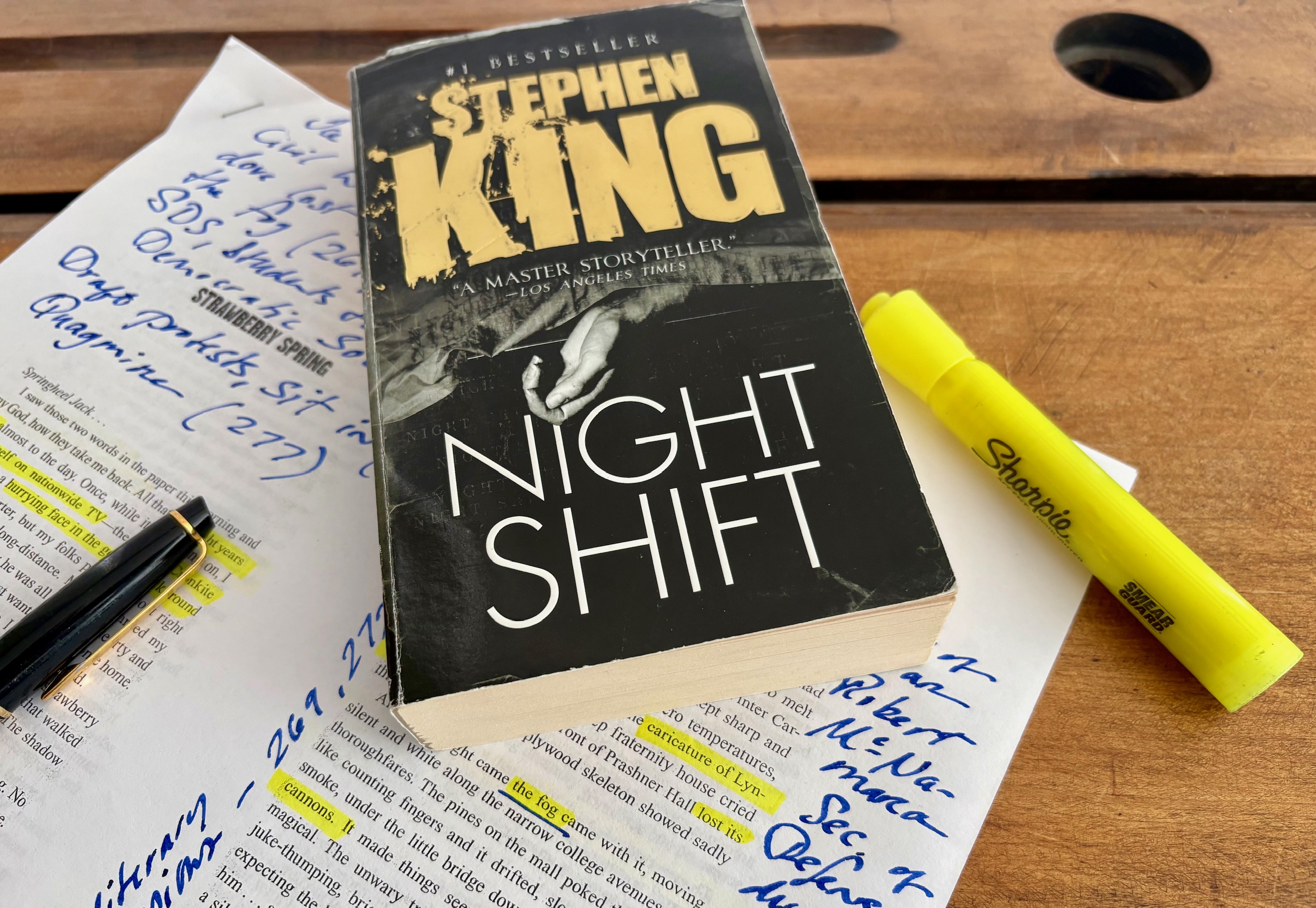
For that exercise, I asked you to determine whether you could identify any details that indicate why the narrator may have murdered any of his victims. Although there is no indication that the narrator knew Gale Cermann, Adelle Parkins, or Marsha Curran, he did know Ann Bray, which he reveals after he tells the readers that she was editor of the school newspaper: “In the hot, fierce bubblings of my freshman youth I had submitted a column idea to the paper and asked for a date–turned down on both counts” (275). Though the narrator’s rejection by Ann Bray could have motivated him to murder her, the fact that the other victims were virtual strangers to him indicates that the phenomenon of Strawberry Spring itself awakens his killer instinct
I also asked you to identify words and phrases that illustrate how the story is not only a horror story but also a commentary on war, the Vietnam War in particular, and the Vietnam era. I offered these examples as models:
King’s description of the snow sculpture “caricature of Lyndon Johnson” (269) signifies the derisive responses to the President’s Vietnam War policy.
The description of the snow sculpture “caricature of Lyndon Johnson” (King 269) signifies the derisive responses to the President’s Vietnam War policy.
Some of the words and phrases you may have identified include these:
I also asked you to try to identify the two literary allusions in King’s story. The first is an allusion to J.R.R. Tolkein’s The Lord of the Rings trilogy: “You half expected to see Gollum or Frodo or Sam go hurrying past” (269). The second is an allusion to a poem by Carl Sandburg, titled–perhaps unsurprisingly–“The Fog” (272).
Pop Quiz
Rather than listing the answers to yesterday’s quiz, I have followed each question below with a note regarding where to find the answer. By finding the answers yourself, you will learn more than you would from simply reading them in a list.
What did you learn about Stephen King from the author’s page that you read for today’s class? See the author’s page on King’s website.
Your quiz also included two bonus opportunities. For the answers to those questions, see the class notes for March 13.
Be sure to write notes in your journal on all of your readings, including the notes posted on my blog. Before each class begins, take out your journal and review your notes. That will increase your knowledge of what you read and ensure that you will earn high grades on your pop quizzes.
Next Up
At the beginning of tomorrow’s class, we will continue our discussion of “Strawberry Spring.” Afterward, you will have the remainder of the period to devote to your preliminary work for your final essay and annotated bibliography. Details TBA.
King, Stephen. “Strawberry Spring.” Night Shift. 1978. Anchor, 2011. pp. 228-82.
Today in class we will read Stephen King‘s short story “Strawberry Spring,” which was published in Ubris magazine in 1968 and included in King’s first short story collection, Night Shift (1978).
For the collaborative exercise that you will complete after we read the story, I will ask you to determine whether you can identify any details that indicate why the killer may have murdered any of his victims. Although there is no indication that he knew Gale Cerman, Adelle Parkins, or Marsha Curran, he did know Ann Bray.
I will also ask you to identify words and phrases that illustrate how the story is not only a horror story but also a commentary on war, the Vietnam War in particular, and the Vietnam era.
Lastly, I will ask you to try to identify the two literary allusions in King’s story. We will discuss your findings near the end of class today or at the beginning of class on Wednesday, and I will include the answers in tomorrow’s class notes.
Next Up
We will review “Strawberry Spring” at the beginning of Wednesday’s class, and you will have the remainder of the period to begin work on your final essay and annotated bibliography.
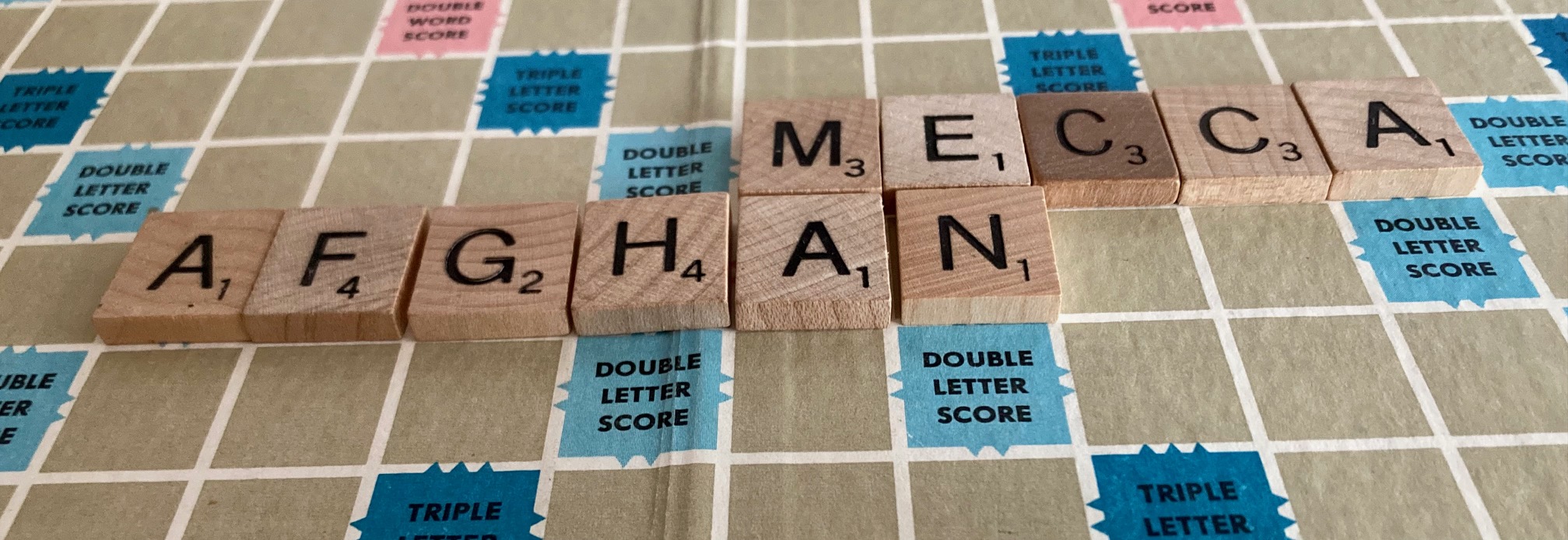
The first Scrabble post of the semester featured first names that are also common nouns, making them playable in Scrabble. Today’s post includes place names and words derived from places, or toponyms–more proper nouns that are playable in Scrabble because they’re also common nouns. Studying these words offers you additional opportunities to broaden your vocabulary and up your game.
afghan: a wool blanket
alamo: a cottonwood poplar tree
alaska: a heavy fabric
berlin: a type of carriage
bermudas: a variety of knee-length, wide-legged shorts
bohemia: a community of unconventional, usually artistic, people
bolivia: a soft fabric
bordeaux: a wine from the Bordeaux region
boston: a card game similar to whist
brazil: a type of tree found in Brazil used to make instrument bows (also brasil)
brit: a non-adult herring
cayman: a type of crocodile, also known as a spectacled crocodile (also caiman)
celt: a type of axe used during the New Stone Age
chile: a spicy pepper (also chili)
colorado: used to describe cigars of medium strength and color
congo: an eellike amphibian
cyprus: a thin fabric
dutch: referring to each person paying for him or herself
egyptian: a sans serif typeface
english: to cause a ball to spin
french: to slice food thinly
gambia: a flowering plant known as cat’s claw (also gambier, which is a small town in Ohio)
geneva: gin, or a liquor like gin
genoa: a type of jib (a triangular sail), also known as a jenny, first used by a Swedish sailor in Genoa
german: also known as the german cotillon, an elaborate nineteenth-century dance
greek: something not understood
guinea: a type of British coin minted from 1663 to 1813
holland: a linen fabric
japan: to gloss with black lacquer
java: coffee
jordan: a chamber pot
kashmir: cashmere
mecca: a destination for many people
What a Bonus a Z Makes
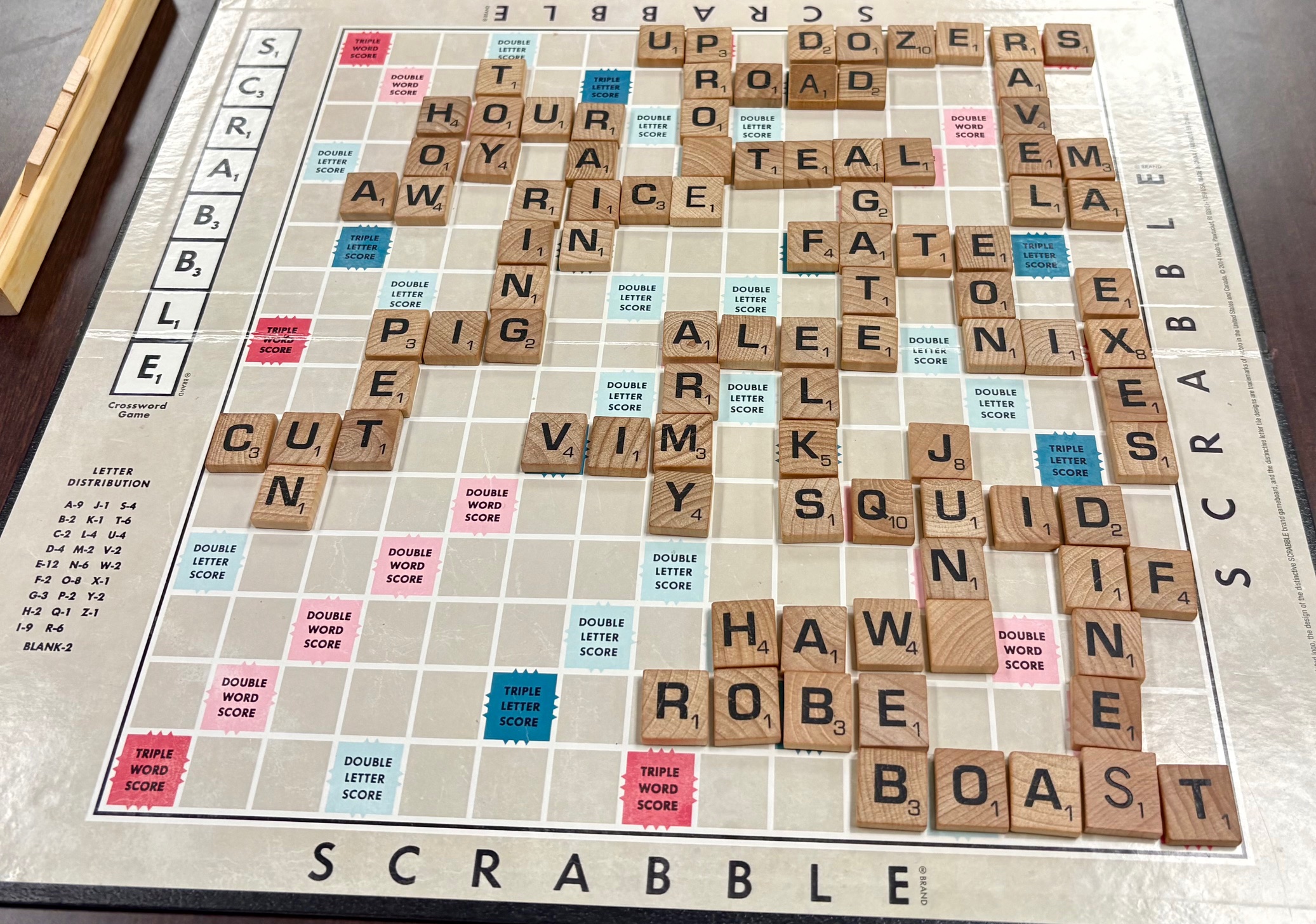
Because they knew that da (a father) and od (a hypothetical force) were playable words, the members of one of last Friday’s teams played dozers (ones who doze) in the upper right corner for a triple-word score. Because the z was played on the double-letter square, the team earned a total of eighty-four points for dozers (seventy-eight), da (three), and od (three).
Kudos
Six students took advantage of last Friday’s bonus assignment and posted comments on their classmates’ analyses.
Nick Beeker
Aidan Berlin
Jermaine Cain
Sofia Marin
Izzie McLawhorn
Dylan Virga
Kudos to Nick, Aidan, Jermaine, Sofia, Izzie, and Dylan. You can view their comments on the March 6 blog post.
In class on Monday, we will read and analyze “Strawberry Spring,” a short story by Stephen King. In preparation for our study, read the author’s page on his website.
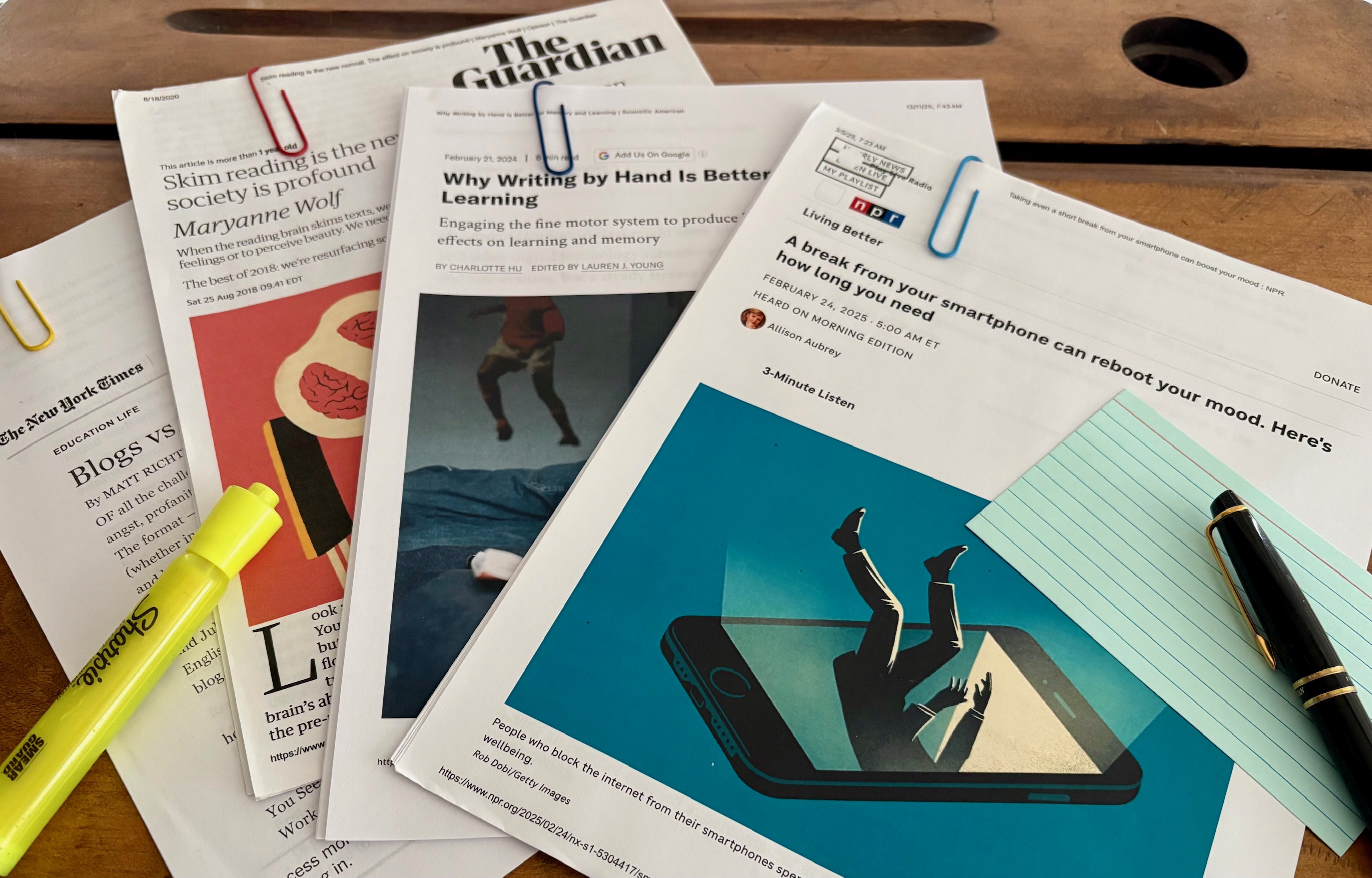
The four articles that served as the subjects for your group presentations are all secondary sources: texts that address information originally presented in primary sources. Primary sources include research studies and other original works, such as historical documents, essays, and fiction. Each of the essays, the short story, the letter, and the chapter that you read previously for class can serve as primary sources for your research. For example, David Sedaris‘s “Me Talk Pretty One Day” is a primary source for a study of Sedaris’s writing.
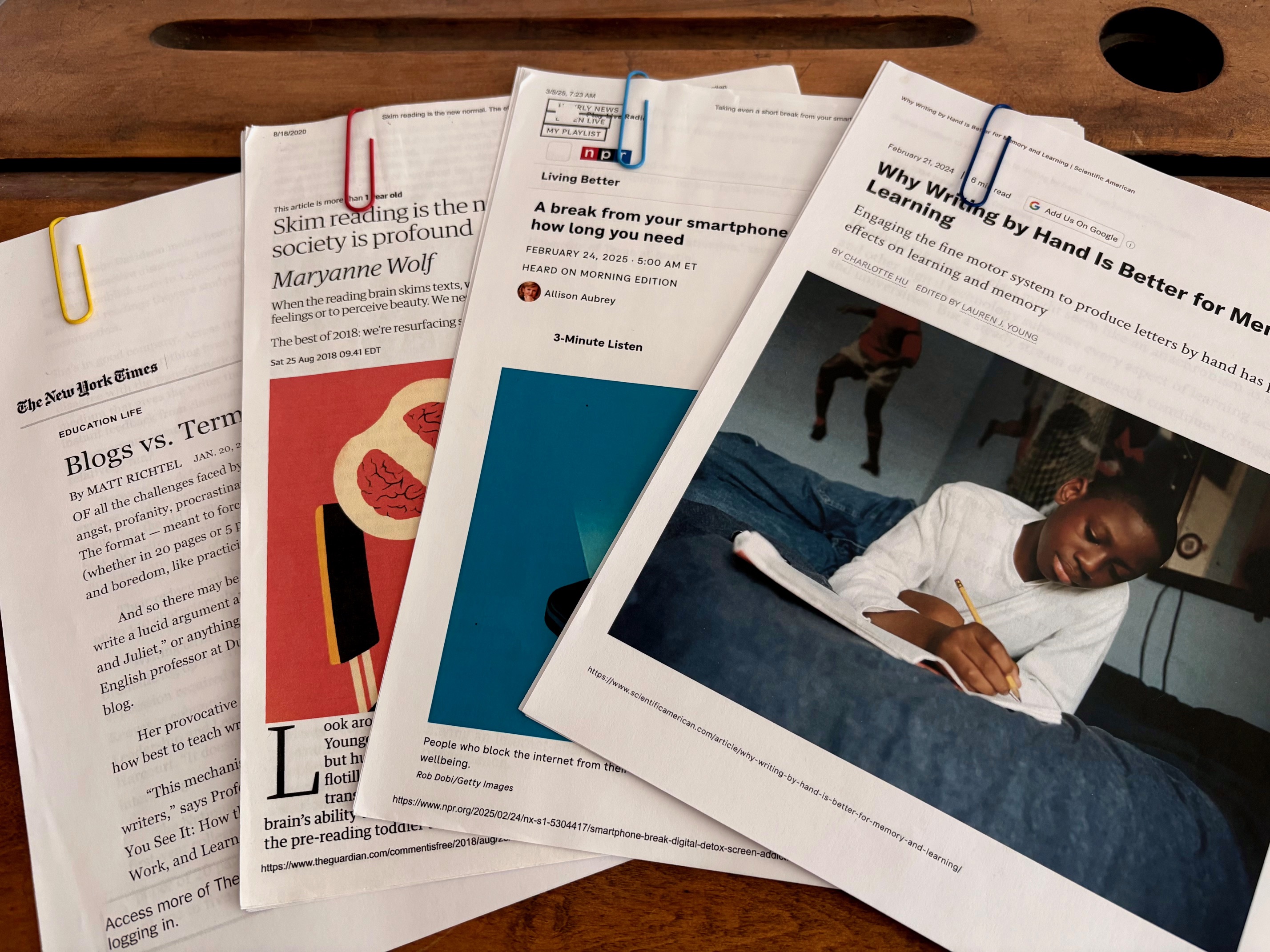
In “Blogs vs. Term Papers,” Matt Richtel reports on the findings of the National Survey of Student Engagement and a study of high school writing requirements conducted by William H. Fitzhugh, editor of The Concord Review, as well as the writing curricula of then-Duke University Professor Cathy Davidson and Stanford Professor Emerita Andrea Lunsford.
In “A Break from Your Smartphone,” Allison Aubrey reports on research conducted by Noah Castelo, Kostadin Kushlev, Adrian F. Ward, Michael Esterman, and Peter B. Reiner, which was published in PNAS NEXUS, the journal of the National Academy of Science.
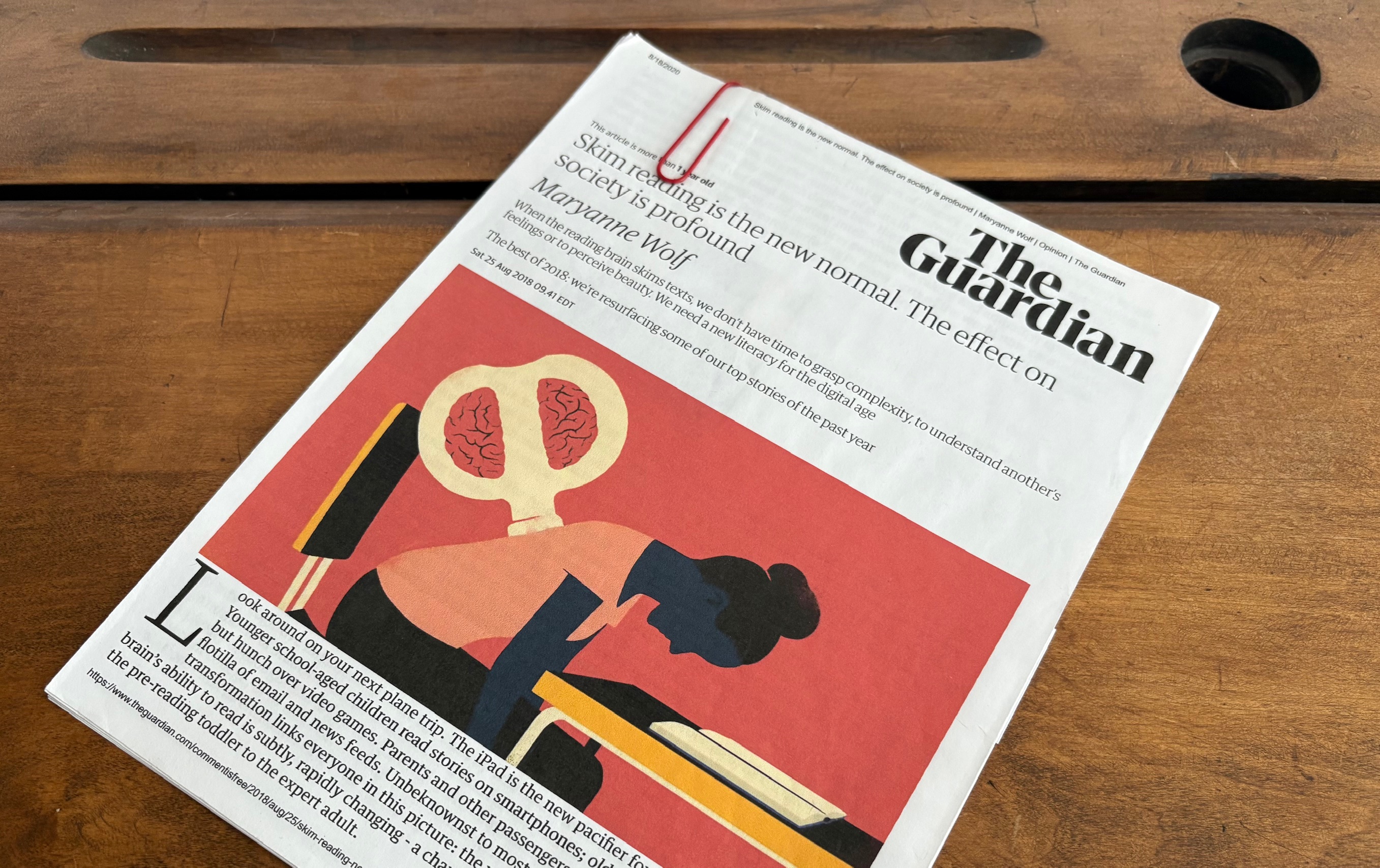
Although Maryanne Wolf’s “Skim Reading is the New Normal” cites research originally published in primary sources, she is not reporting on that research objectively. Instead, she argues that in light of researchers’ findings, “[w]e need to cultivate a new kind of brain: a ‘bi-literate’ reading brain capable of thought in either digital or traditional mediums” (par. 12). If you look at the heading on your copy of Wolf’s article, you will see the word opinion, which indicates that her article appeared in the opinion section of The Guardian‘s website and on the Op-Ed page of the physical paper.
Informed opinion pieces–such as Wolf’s, which draws on scholarly research–are suitable sources for your research, but it’s important to recognize the difference between reporting and commentary.
Great Britain’s The Guardian, which published Wolf’s article, and The New York Times, which published Richtel’s “Blogs vs. Term Papers,” are two of the most well-regarded newspapers of record, known for their accuracy and high-quality reporting. NPR (National Public Radio), which aired Aubrey’s “A Break from Your Smartphone,” is another premier news outlet. The magazine Scientific American, which published Hu’s “Writing by Hand is Better for Memory and Learning,” is yet another first-rate publication, one known for its authoritative and accessible coverage of science and technology news, written for a general audience.
AP Style vs. MLA Style
As you read the four articles that served as your presentation subjects, you probably noticed some differences among their styles and MLA (Modern Language Association) style, which you use for paper assignments in English 1103 and other courses in the humanities. Most news publications use AP (Associated Press) or their own in-house style book that shares many of AP’s rules. One of reason style rules are difficult to remember is the differences among the requirements. Here are some of the important distinctions between AP style and MLA:
In AP style, a sentence may begin with a quotation. In MLA style, a quotation must be introduced with a signal phrase. Otherwise, it is considered a dropped quotation.
AP style does not include parenthetical citations. In MLA style, quotations and paraphrases are followed by parenthetical citations–unless the sources are interviews or other nonprint sources.
In AP style, titles of publications are not enclosed in quotation marks or italicized. In MLA style, titles of short works are enclosed in quotation marks; titles of longer works are italicized (underlined in longhand).
Almost all numbers are expressed as figures in AP style. In MLA style, any number that can be expressed in one or two words is written as a word.
AP style omits the Oxford or serial comma, the comma before and in a series of three or more. Most publications other than newspapers use the Oxford or serial comma, and MLA advocates its use.
In AP style, an em dash is preceded and followed by a space. MLA style requires no space before or after an em dash.
This morning, in the first half of class, you and your classmates will deliver your group presentations. Keep in mind that when you are not presenting, you will still play a vital role in class as an audience member. Pay close attention to the other three presentations. Jot occasional notes in your journal, but don’t keep your head down for a substantial length of time. Making eye contact with the speakers and nodding your head are gestures that will convey your appreciation for your classmates’ efforts.
In the second half of class, we will look back at the four articles that served as your subjects, and you will compose reflections. Directions for your reflections are included below.
Directions
Compose a short piece of writing (two paragraphs, minimum) that reflects on your individual preparation and delivery of your portion of the presentation and your group’s presentation overall. Elements to address include the following:
The roles of your reading and writing: How did the processes of rereading the text and writing and rewriting your remarks contribute to the effectiveness of your delivery?
The introduction of your group members and opening remarks
The examination of points in the article
The conclusion
Poise, eye contact, and avoidance of filler words
The group’s cohesiveness
After you have reflected on your group’s presentation, compose an additional paragraph that addresses a presentation by one of the other groups. Choose the one that stands out the most to you. What element or elements of that presentation made it particularly effective and why?
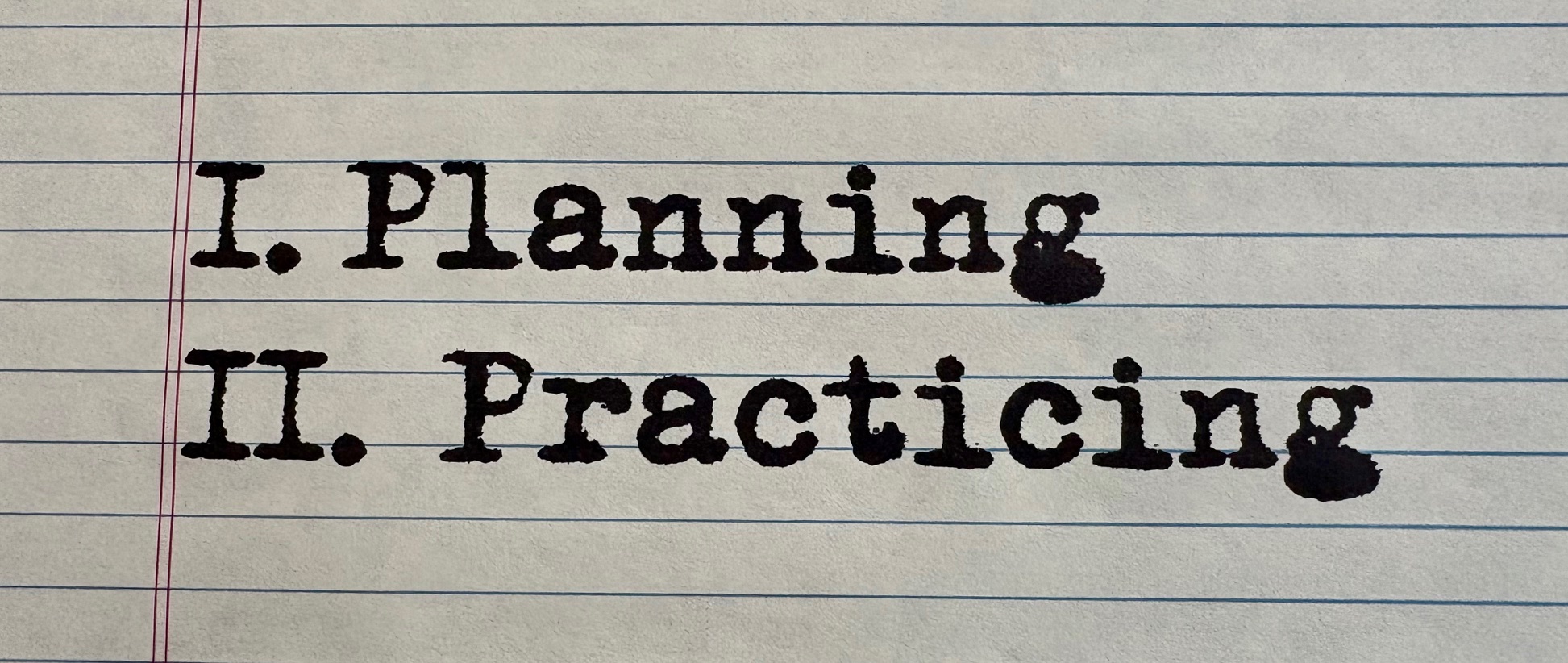
As you continue to prepare for your presentation, be mindful of the valuable roles that reading and writing play in the process. Although the final product is your group’s three-to-four-minute oral presentation, your work began with reading and writing: reading the article that serves as your subject, and writing the plan that you composed in class yesterday.
Have you thoroughly reread the article that serves as your subject? If not, turn back to the text itself at least two more times before Wednesday. Chances are, on a second or third reading, you will notice details you didn’t notice before, ones that you may want to add to your presentation.
In addition to recording key words on your notecard, write out your portion of the presentation in your journal. Though you will not be permitted to have your journal in hand during your presentation, the act of writing down your remarks and rewriting them will help you commit them to memory.
As you practice delivering your presentation, be sure to limit the time that you look down at your notecard and your copy of the reading. Your ability to limit those glances will be greater if you spend ample time rereading the text and writing and reviewing your remarks in your journal.
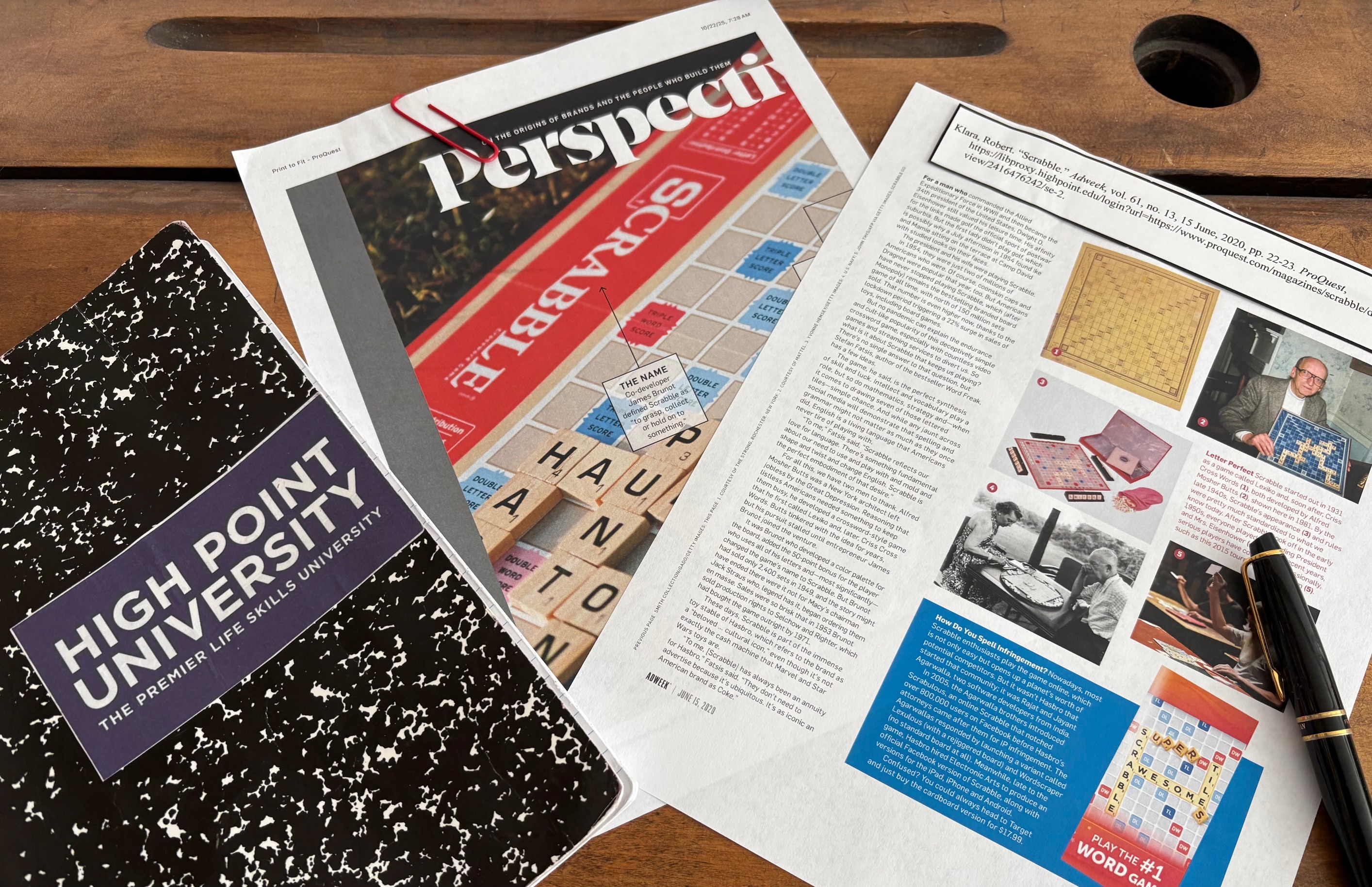
Robert Klara’s “Scrabble”
Yesterday, while you were planning your presentations, I distributed copies of Robert Klara’s article “Scrabble.” If you plan to focus on Scrabble for your final essay and annotated bibliography, Klara’s article will serve as your starting point.
Unlike the articles you read for your presentations, Klara’s does not report on research, though he does quote journalist Stefan Fatsis, author of Word Freak: Heartbreak, Triumph, Genius, and Obsession in the World of Competitive Scrabble Players. Klara’s article also provides historical context.
If you choose Scrabble as the subject for your final essay and annotated bibliography, include among your sources at least one newspaper or magazine article that reports on Scrabble research, or include the original research itself, published as a peer-reviewed article, such as “The World of Competitive Scrabble: Novice and Expert Differences in Visuospatial and Verbal Abilities,” by Diane F. Halpern and Jonathan Wai, available through the HPU Libraries.
Next Up
In class tomorrow, you will deliver your group presentations. Afterward, in the second half of class, you will compose a short essay that reflects on both your own presentation and one by another group.
This morning in class, after your Scrabble debriefing, I will distribute your group presentation assignment, and you will have the remainder of the class period to devote to planning the short presentation that you will deliver in class on Wednesday. An additional copy of the assignment is included below.
As an exercise in collaboration and oral communication, you and three or four of your classmates will plan, rehearse, and deliver a concise presentation focusing on a reading that addresses one of the practices implemented in the course. If you were absent when copies of the articles were distributed (see the titles in the group assignments below), download and print copies from the Blackboard readings folder.
Presentation Assignment Directions
Plan a presentation of three or four minutes, total, that addresses the most significant points covered in your group’s designated reading. (The lists of group assignments and designated readings are included below.)
Include in your presentation the following elements: (1) an introduction that mentions each group member’s first and last name (each group member may introduce himself or herself, or the group may assign one member the responsibility of introducing everyone), the title and author, or authors, of the reading, and a brief overview of the text, (2) A close examination of two or more points in the reading, and (3)) A conclusion that provides closure without restating the introduction and that invites questions. One strategy to consider for your conclusion is to address the relevance of the practice (the subject of your reading) to your work in English 1103, your work in other courses, and/or your life outside of the classroom.
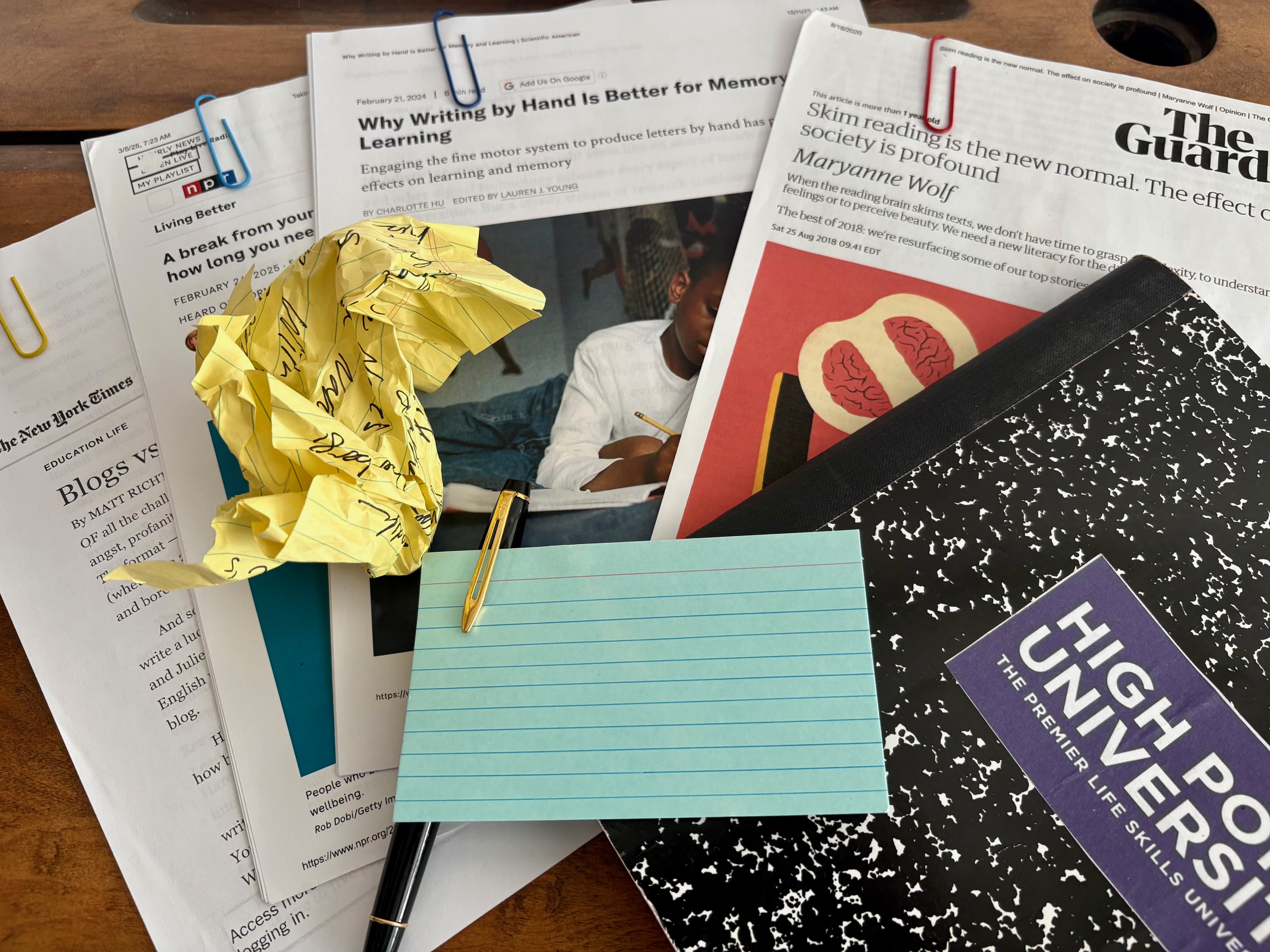
Do not create a digital component, such as a PowerPoint or Google Slides show. You will not be permitted to use any digital devices during your presentation. Instead, you will rely only on a single three-by-five-inch index card with your notes and your paper copy of the reading.
Aim for cohesion. Turning briefly to the previous speaker and addressing him or her by first name, repeating a word or idea of his or hers, and connecting it to your own remarks are ways to unify your presentation. If your presentation seems to be a series of individual talks rather than a single group presentation, it lacks cohesion.
Every group member is not required to speak for the same length of time, but every member is required to deliver a portion of the presentation.
Directions for Rehearsing
In preparation for rehearsing, write your notes on a single three-by-five-inch index card (one card per group member). If your initial notes are written in complete sentences, rewrite them to include only words and short phrases for your key points. If your notes are too detailed, you will risk relying too heavily on them and making minimal eye contact with the audience. Plan to make as much eye contact as possible, and be sure to make eye contact with people throughout the room rather than fixing your eyes on one or two people.
Practice good posture. As you deliver your presentation, your ears should be directly above your shoulders. If you tend to shift your weight from one foot to the other, stand with your feet perpendicular to each other. If you do so, you will not be able to shift your weight from one foot to the other.
Avoid filler words, such as uh, um, like, and you know. If you tend to use filler words, practice pausing at the points where you are likely to use them.
Take turns delivering your portions of the presentation, and offer feedback to your group members. Offer both suggestions for improvement and words of encouragement.
Group Assignments
“Blogs vs. Term Papers”: Avery Clark, Madison Davis, Sofia Marin, Travis Pecararo
“Skim Reading is the New Normal”: Zach Dick, Nicole Marin, Tommy McHugh, Elise Claire Palmisano, Davis Smith
“Why Writing By Hand is Better for Memory and Learning”: Nick Beeker, Jermaine Cain, Izzie McLawhorn, Sierra Welch
“A Break from Your SmartphoneCan Reboot Your Mood . . .”: Aidan Berlin, Marcus Gerhardt, Ewan Paterson, Dylan Virga
Grade Criteria
An A presentation includes all elements outlined in the directions for planning and rehearsing and demonstrates the group members’ poise and ability to avoid filler words.
A B presentation includes all elements outlined in the directions for planning and rehearsing but may be marred by group members’ lack of poise and/or inability to avoid filler words.
A C presentation includes most but not all elements outlined in the directions for planning and rehearsing and may also be marred by group members’ lack of poise and/or inability to avoid filler words.
A D presentation includes only some elements outlined in the directions for planning and rehearsing and may also be marred by group members’ lack of poise and/or inability to avoid filler words.
An F presentation includes few if any elements outlined in the directions for planning and rehearsing and may also be marred by group members’ lack of poise and/or inability to avoid filler words.
Next Up
In class on Wednesday, you will deliver your group presentations. Afterward, in the second half of class, you will compose a short essay that reflects on both your own presentation and one by another group, one that was notable for its strengths.