With pen or pencil in hand, read your copy of the student analysis of “Letter from Birmingham Jail.” Write notes in the margin and on the text itself, and afterward compose a brief journal entry that addresses both the content and the form of the essay. Remember that you are not required to complete this exercise until you return to campus after spring break, but completing it earlier offers you the opportunity to reflect again on Martin Luther King, Jr.’s letter in the last days of Black History Month.
Tomorrow I will publish a follow-up post with notes on the analysis.
In the picture above–and in the one in yesterday’s post–you can see some of my notes on the sample Keller analysis. Today’s blog post presents more detailed notes on the essay’s content and form.
Content
The title isn’t actually a title; it’s a label that identifies the assignment as an analysis. The title should offer a window into the analysis with a reference to an aspect of Helen Keller’s chapter or an idea or image in it.
Rather than beginning with a summary, the writer states that the chapter’s organization caught her eye. However, organization isn’t eye catching. What’s eye catching is perceived at a glance. What did catch the writer’s eye, and is that the real focus of the analysis?
The first paragraph does not present the writer’s thesis or main claim.
In the second and third paragraphs, the writer focuses on the idea of the chapter’s descriptiveness but doesn’t provide examples of its descriptiveness.
The fourth paragraph quotes words that Miss Sullivan spells for Heller, but those particular details don’t support the writer’s claim about “mood and tone.” The writer does mention that Keller intentionally breaks her doll, but that detail is an obvious example of Keller’s anger and frustration. Mentioning that is not an act of analysis but rather an act of description.
With the fifth paragraph, the writer turns to a key moment in the narrative, but the single word that the writer quotes does not directly support her point about the young Keller’s realization.
In the sixth paragraph, the writer returns to the idea of organization and quotes two lines, but the writer does not address how those lines demonstrate the strength of the conclusion’s organization. Examining the choice and placement of the word “awakened” (Keller, par. 7) is one way that the writer might have forged a connection between the organization of Keller’s essay and her word choices.
The final two paragraphs offer a general assessment of the chapter but the writer’s observations are primarily statements of the obvious. Applying Rosenwasser and Stephen’s “Seems to Be About X” strategy (104) is one strategy that may have moved the essay beyond description and into analysis.
Form
Neither the running header nor the first-page information (in the upper left) is Times New Roman.
The lines of the paragraphs are a space and half apart, rather than double spaced. Double spacing occurs only between the paragraphs.
The writer incorrectly cites the quotation in the first paragraph. She identifies it as a line from the second paragraph but it’s actually a line from the third. Later in the essay she twice confuses the sixth and seventh paragraphs.
The second paragraph includes an instance of passive voice. The line “hope is introduced when Heller meets her new teacher” should be rewritten in active voice as “Keller introduces hope when she meets her new teacher.”
Three times in the essay, the writer refers to Keller’s teacher as “Ms. Sullivan” rather than “Miss Sullivan.” That inaccuracy and the misidentification of paragraphs indicate that writer has not carefully examined her subject, which is the primary aim of analysis.
The writer repeatedly uses the word “this” in place of “that” or “the.” In formal prose, writers should use “this” only to refer to something at hand.
The writer begins the final paragraph with the phrase “in conclusion,” which can be a useful signal in an oral presentation. However, readers can see when they have reached the final paragraph of a text. Rather than writing the empty phrase “in conclusion,” or some variation on it, the writer offer an insight about the chapter or an additional quotation from it. Other strategies for developing your conclusion include revisiting the thesis without stating it verbatim and pointing to the broader implications of the analysis. Those are more subtle ways to provide closure.
Work Cited
Rosenwasser, David and Jill Stephen. “Seems to Be About X, But Could Also Be (Or is ‘Really’) About Y.” Writing Analytically, 9th edition. Wadsworth/Cengage, 2024. pp. 104-7.
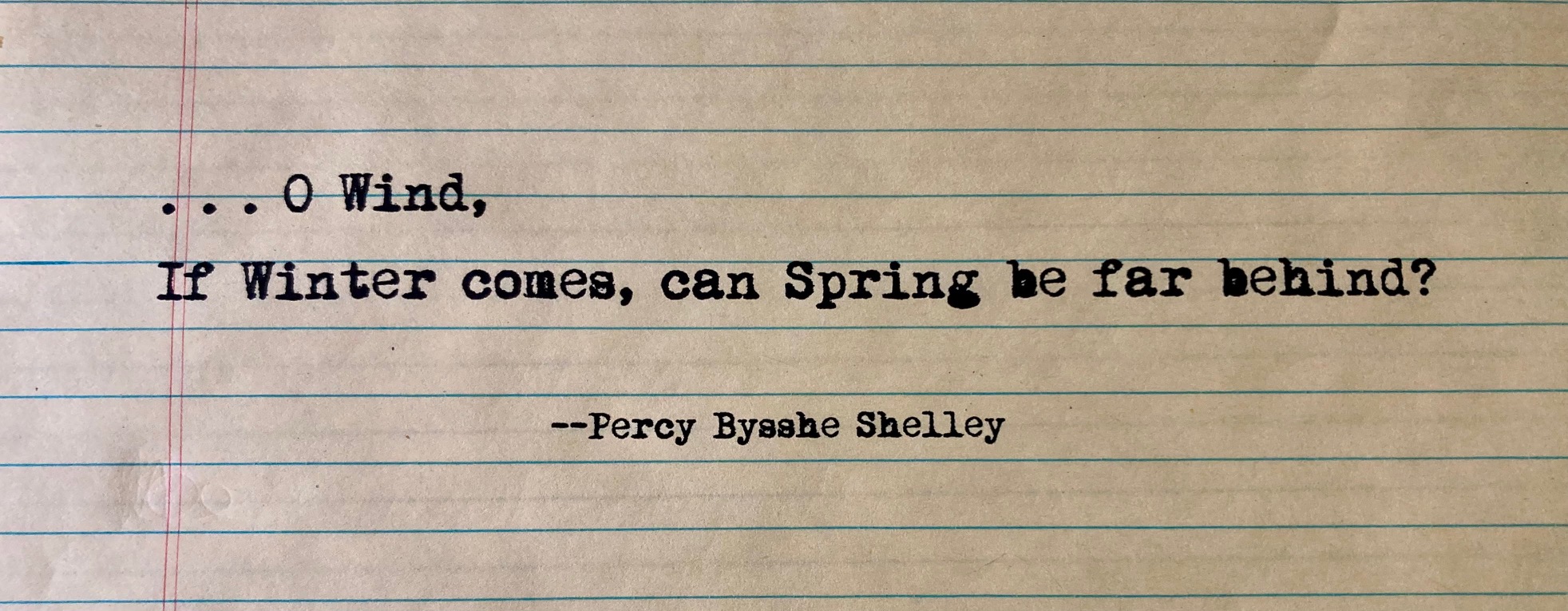
The words of the epitaph above conclude Percy Bysshe Shelley’s poem “Ode to the West Wind,” published in 1820. In that poem, the speaker meditates on the seemingly contradictory nature of the wind as both “[d]estroyer and preserver” (line 14). The poem ends on a positive note with the promise of spring, which will not arrive until March 20. That is why the word spring is enclosed in quotation marks in the title of this post. It isn’t spring yet, but it isn’t “far behind” (line 70), and its nearness brings us hope.
As you continue your un-springlike spring break, I invite you to examine this blog post and the others that I will publish in the coming days. These are by no means required reading during your brief respite from the semester, but they are here for you in case you find yourself returning to thoughts of your analysis in progress and wanting to study samples to aid your own writing process. If you don’t read these posts this week, read them before class on Monday, March 3.
An epigraph is a short quotation at the beginning of a piece of writing that suggests its theme.
The speaker of a poem is the voice that serves as the narrator. Just as the narrative voice of a work of fiction varies from the author’s, the speaker in a poem is not the poet but rather a persona created by the poet.
A note on mechanics: Ordinarily, seasons and elements are not capitalized, but Shelley capitalizes “Wind,” “Winter,” and “Spring” (lines 69-70) because he personifies them.
Sample Keller Analysis
With pen or pencil in hand, read your copy of the student analysis of “The Day Language Came into My Life.” Write notes in the margin and on the text itself, and afterward compose a brief journal entry that addresses both the content and the form of the essay. (Remember that you are not required to complete this exercise until you return to campus after spring break.)
Tomorrow I will publish a follow-up post with notes on the analysis.
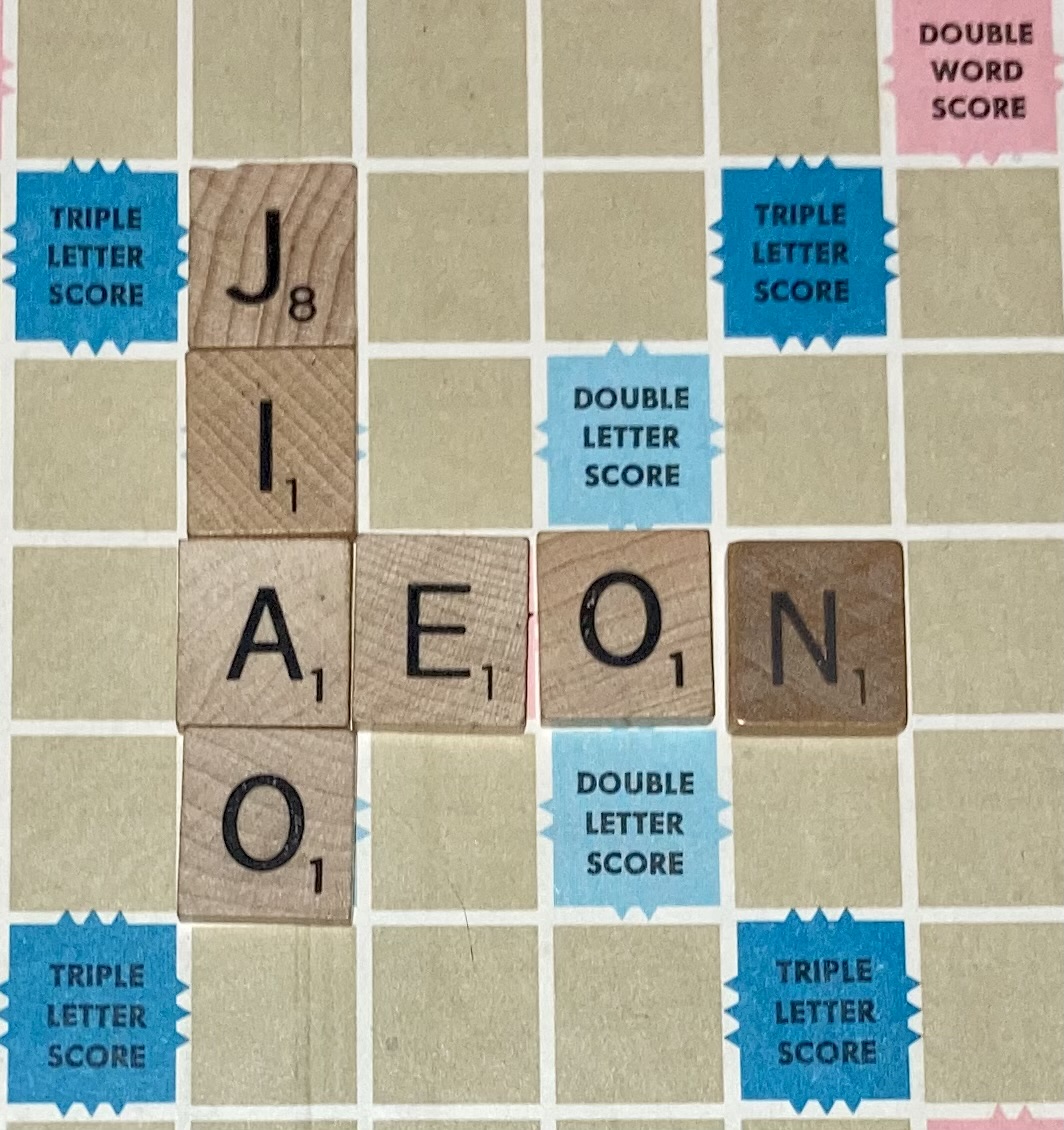
Knowing words with multiple vowels proves useful when you’re faced with a rack of mostly, or all, vowels. Here’s a list of the first twenty-two playable four-letter words with three vowels:
aeon: a long period of time (also eon)
agee: to one side (also ajee)
agio: a surcharge applied when exchanging currency
ague: a sickness associated with malaria
ajee: to one side (also agee)
akee: a tropical tree
alae: wings (pl. of ala)
alee: on the side shielded from wind
amia: a freshwater fish
amoa: a kind of small buffalo
awee: a little while
eaux: waters (pl. of eau)
eide: distinctive appearances of things (pl. of eidos)
emeu: an emu
etui: an ornamental case
euro: an Australian marsupial, also known as wallaroo, for being like the kangaroo and the wallaby; also a unified currency of much of Europe
ilea: the terminal portions of small intestines (pl. of ileum)
ilia: pelvic bones (pl. of ilium)
jiao: a Chinese currency (also chiao)
luau: a large Hawaiian feast
meou: to meow
moue: a pouting expression
Next Up
Wordplay Day! To prepare for class, revisit the Dictionary and World Builder pages on the Scrabble website. Also review the Scrabble blog posts, including this one.
This blog post features my version of the fourth Check, Please! assignment, which you submitted at the beginning of class on Wednesday. In preparation for submitting your worksheet for lesson five, review this post as well as the assignment notes that I posted on January 23.
Check, Please! Lesson Four
In the fourth lesson of the Check, Please!, Starter Course, Mike Caulfield, author of the course and a research scientist at the University of Washington’s Center for an Informed Public, focuses his instruction on the third step in the four-step SIFT approach to determining the reliability of a source. Lesson four, “Find Trusted Coverage,” addresses these topics: (1) scanning Google News for relevant stories, (2) using known fact-checking sites, and (3) conducting a reverse-image search to find a relevant source for an image.
One of the concepts Caulfield introduces in lesson four is click restraint, which was given its name by Sam Wineberg, Professor of History and Education at Stanford, and Sarah McGrew, Assistant Professor of Education at the University of Maryland. Click Restraint is an activity that fact checkers practice regularly, but average people do not. Fact checkers resist the impulse to click on the first result, opting instead to scan multiple results to find one that combines trustworthiness and relevance.
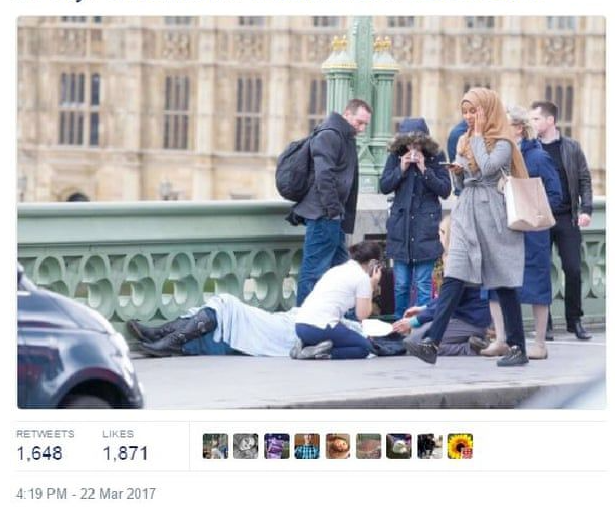
Caulfield also considers the issue of false frames and offers as an example the miscaptioned photo of a young woman that circulated widely after the 2017 London Bridge attack. In the photo, the woman, who is wearing a hijab, is looking down at her phone as she walks past one of the victims lying by the side of the road, surrounded by members of the rescue team. Because the woman’s face is blurred, viewers of the miscaptioned picture cannot see the look of shock that is visible in her face in another image taken by the same photographer. Subsequently, her apparent lack of concern for the victim seems to confirm the caption in the infamous tweet.
Choosing a general search term over a specific one is a useful and unexpected tip Caulfield includes in his discussion of image searches. He explains that the benefit of such a bland term as “letter” or “photo” will prevent the confirmation bias that can lead to the proliferation of disinformation through false frames.
Wordplay Day! To prepare for class, revisit the Dictionary and World Builder pages on the Scrabble website, and review the blog posts devoted to Scrabble tips.
This morning, after I return your Check, Please! worksheets for lesson four, I will return your drafts with my notes, and you will have the remainder of the class period to begin revising your analyses on your laptops. Because next week is spring break, you will have two additional weeks to continue your revision work before you submit the assignment to Blackboard and publish it as a WordPress blog entry. The due date is Wednesday, March 5 (before class). The hard deadline is Friday, March 7 (before class). Directions for submitting your analysis are included on your assignment sheet and on the Blackboard submission site.
As you continue to revise your analysis, consider visiting The Writing Center. If you do so, you will earn five bonus points for the assignment.
To schedule an appointment, visit https://highpoint.mywconline.com, email the Writing Center’s director, Professor Justin Cook, at jcook3@highpoint.edu, or scan the QR code below. To earn bonus points for your analysis, consult with a Writing Center tutor no later than Thursday, March 6.
Next Up
Wordplay Day! To prepare for class, revisit the Dictionary and World Builder pages on the Scrabble website and review the blog posts devoted to Scrabble.
As you continue to draft your analysis, you may be unsure of how to develop it into a full-length essay of at least six hundred words. Here are some recommendations:
If you know you want to include a particular point but do not know where to place it in the essay, go ahead and write it down in your journal or type it into your document file. Sometimes the act of putting words on the page will lead you to additional ideas and give you a sense of where you might include that point without a home. In other words, try following this advice from Writing Analytically: “Don’t wait to write until you have an idea around which you can organize a paper. Instead, use writing to get you to the idea” (Rosenwasser and Stephen 123).
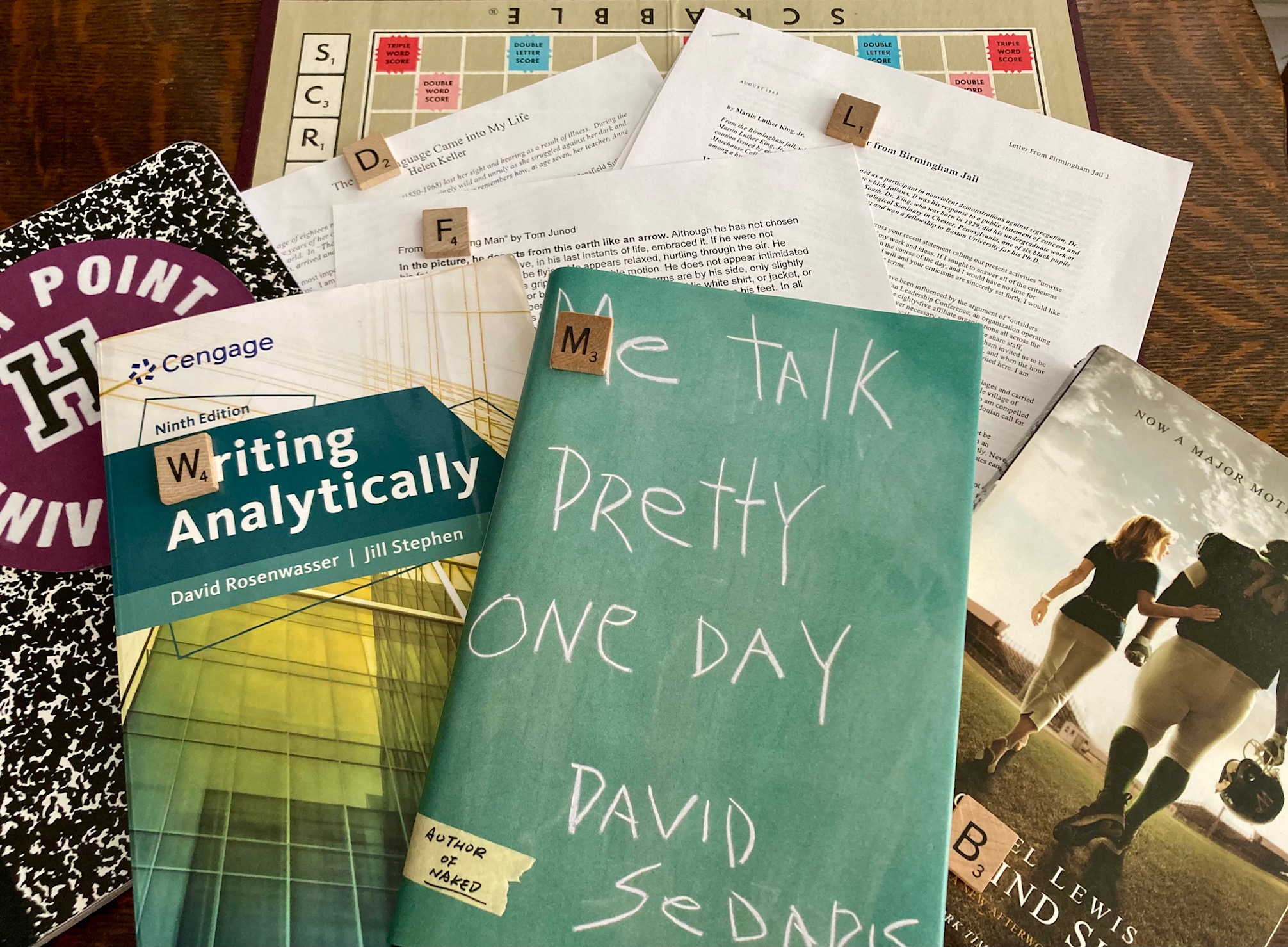
The authors of Writing Analytically also note that writers of analyses “usually find that subtler, less obvious meanings are cloaked by more obvious ones, and so they are distracted from seeing them” (Rosenwasser and Stephen 104). Moving beyond the obvious to the subtle creates a path for development. Applying Rosenwasser and Stephen’s “Seems to Be About X” strategy (104) may provide you with additional claims and textual evidence. Consider these possibilities: “Me Talk Pretty One Day” seems to be about learning French, but could also be (or is really) about the healing power of humor; “The Day Language Came into My Life” seems to be about learning sign language, but could also be (or is really) about overcoming despair; “Letter from Birmingham Jail” seems to be about the need for nonviolent protest, but could also be (or is really) about the deaf ears of those who have not been the victims of segregration; “Back Story” seems to be about Joe Theismann’s career-ending injury and players’ fear of Lawrence Taylor but could also be (or is really) about the excessive violence of football; “The Falling Man” seems to be about the title figure but could also be (or is really) about symbolization: the process of becoming a symbol.
Imagine that the task at hand is not an analysis but a letter to a friend about the essay or chapter that serves as your subject. Draft that letter in your journal. Begin with a summary and follow with the reasons that your friend will find the essay or chapter as appealing as you do. Offer textual evidence to support your claims. Then step back and ask yourself whether that letter could become a more formal analysis–chances are, it could.
Works Cited
Rosenwasser, David and Jill Stephen. “Rule 6: Use Freewriting to Find and Interpret Topics.” Writing Analytically, 9th edition. Wadsworth/Cengage, 2024. pp. 123.
—. “Seems to Be About X, But Could Also Be (Or is ‘Really’) About Y.” Writing Analytically, 9th edition. Wadsworth/Cengage, 2024. pp. 104-7.
Next Up
At the beginning of Wednesday’s class, I will collect your worksheets for the fourth lesson of Check, Please! Afterward, I will return your handwritten drafts with my notes, and you will have the remainder of the period to begin revising your analyses on your laptops and tablets.
Today in class you will plan and compose a short midterm reflective essay that documents your work in the first half of the semester, focusing on two or three assignments or aspects of the course that have contributed to your development as a writer and a student. Since you have already written a reflection devoted solely to your literacy narrative, your midterm reflection should focus primarily on other assignments or aspects of the course, including the following:
Keeping a journal
Studying one of the readings examined class, including “Me Talk Pretty One Day,” “The Day that Language Came into My Life,” “Letter from Birmingham Jail,” “Back Story,” or “The Falling Man”
Reading and editing samples of student writing
Writing for an online audience beyond the classroom/creating and maintaining a WordPress blog
Collaborating with your classmates on in-class writing assignments
Playing Scrabble/Collaborating with your teammates on Wordplay Day
Completing Check, Please! assignments
Writing longhand
Limiting screen time
Beginning your analysis
Include in your refelective essay the following elements:
A title that offers a window into your reflection
An opening paragraph that introduces your focus and presents your thesis
Body paragraphs that offer concrete details from your work to support your thesis
One relevant quotation from one of the essays or chapters that you have read or from Writing Analytically—see the accompanying handout for examples
A signal phrase and a parenthetical citation for the quotation
A conclusion that revisits the thesis without restating it verbatim
Rosenwasser, David and Jill Stephen. “Becoming Conversant with a Reading.” Writing Analytically, 9th edition. Wadsworth/Cengage, 2024. p. 46.
Rosenwasser, David and Jill Stephen. “Process and Product.” Writing Analytically, 9th edition. Wadsworth/Cengage, 2024. pp. 141-42.
Rosenwasser, David and Jill Stephen. “The Writer as Both Observer and Observed.” Writing Analytically, 9th edition. Wadsworth/Cengage, 2024. pp. 163.
Sedaris, David. “Me Talk Pretty One Day.” Me Talk Pretty One Day. Little, Brown, 2000. 166-73.
Note that unlike the works cited entries above, the one on your midterm reflection will have a hanging indent, as will all of the works cited entries in the Microsft Word files and PDFs that you post to Blackboard.
The complete midterm reflection assignment, along grade criteria, is included on the assignment handout that you will receive in class.
Next Up
At the beginning of class on Wednesday, I will collect your worksheets for the fourth Check, Please! lesson. Afterward, I will return your handwritten analyses drafts with my notes, and you will have the remainder of the class period to begin revising on your laptops and tablets.
Monday in class you will plan and compose a short midterm reflective essay that documents your work in the first half of the semester, focusing on two or three assignments or aspects of the course that have contributed to your development as a writer and a student. Since you have already written a reflection devoted solely to your literacy narrative, your midterm reflection should focus primarily on other assignments or aspects of the course. One of the requirements of the assignment is incorporating a relevant quotation from one of the essays or chapters you have read or from Writing Analytically. Before Monday’s class, determine what phrase, clause, or sentence you will quote, and draft a sentence in your journal that introduces the quotation with a signal phrase and follows it with a parenthetical citation.
One option for integrating a quotation into your essay is to include a line from one of your readings and explain what that passage has taught you about writing.
Examples
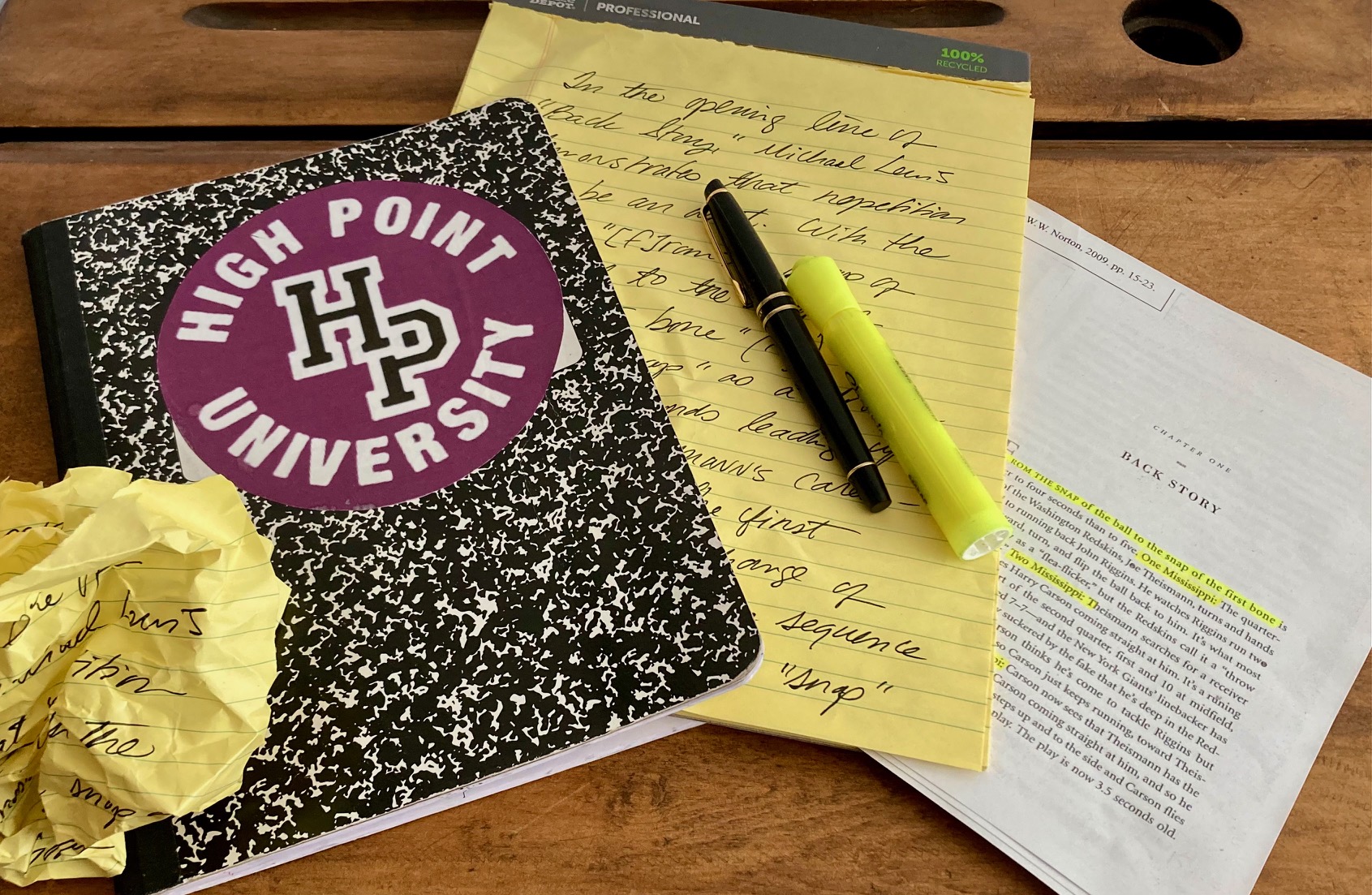
In the opening line of “Back Story,” Michael Lewis demonstrates that repetition can be an asset. With the words “[f]rom the snap of the ball to the snap of the first bone” (15), he repeats “snap” as a frame for the seconds leading up to Jo Theismannn’s career-ending injury. The first “snap,” the hike of the football, begins the sequence. The second “snap,” the fracture of Theismann’s tibia and fibula, ends it.
The opening line of “Back Story,” demonstrates that repetition can be an asset. The two prepositional phrases “[f]rom the snap of the ball to the snap of the first bone” (Lewis 15), repeat “snap” as a frame for the seconds leading up to Jo Theismannn’s career-ending injury. The first “snap,” the exchange of the football, begins the sequence. The second “snap,” the fracture of Theismann’s tibia and fibula, ends it.
The two examples above are very similar. The first one names the author, so only the page number appears in the parenthetical citation. The second does not name the author, so his last name precedes the page number in the parenthetical citation. Note that omitting the author’s name from the passage shifts the emphasis from the writer’s actions (“he repeats ‘snap’”) to the words themselves (“prepositional phrases . . . repeat ‘snap’”).
Another option for integrating a quotation into your essay is to include a line from Writing Analytically that presents a concept that figures in your own reading or writing process.
Examples
When I write a journal entry about an essay or chapter I have read for class, I sense that I have begun what Rosenwasser and Stephen term “a mental dialogue with it” (46).
When I write a journal entry about an essay or chapter I have read for class, I sense that I have begun “a mental dialogue with it” (Rosenwasser and Stephen 46).
A variation on the previous option is integrating a quotation that serves as an epigraph in Writing Analytically. If you quote an epigraph, which is a quote at the beginning of a book or book section, intended to suggest its theme, you are presenting an indirect quotation.
Examples
I realized that I needed to change the subject of my analysis when I began to feel like one of those writers who, in Vivian Gornick’s words, “are pulled around by motives they can neither identify accurately nor struggle to resolve” (qtd. in Rosenwasser and Stephen 163).
I realized that I needed to change the subject of my analysis when I began to feel like one of those writers who “are pulled around by motives they can neither identify accurately nor struggle to resolve” (Gornick qtd. in Rosenwasser and Stephen 163).
The first example names the writer, Vivian Gornick, so the parenthetical citation does not include her name as the author who is quoted. The second example omits her name, so her last name precedes “qtd. in” (quoted in) and the textbook’s authors’ last names.
Works Cited
Lewis, Michael. Chapter One: “Back Story.” The Blind Side. 2006. Norton, 2009. pp. 15-23.
Rosenwasser, David and Jill Stephen. “Becoming Conversant with a Reading.” Writing Analytically, 9th edition. Wadsworth/Cengage, 2024. p. 46.
—. “The Writer as Both Observer and Observed.” Writing Analytically, 9th edition. Wadsworth/Cengage, 2024. pp. 163.
Constant Consonants
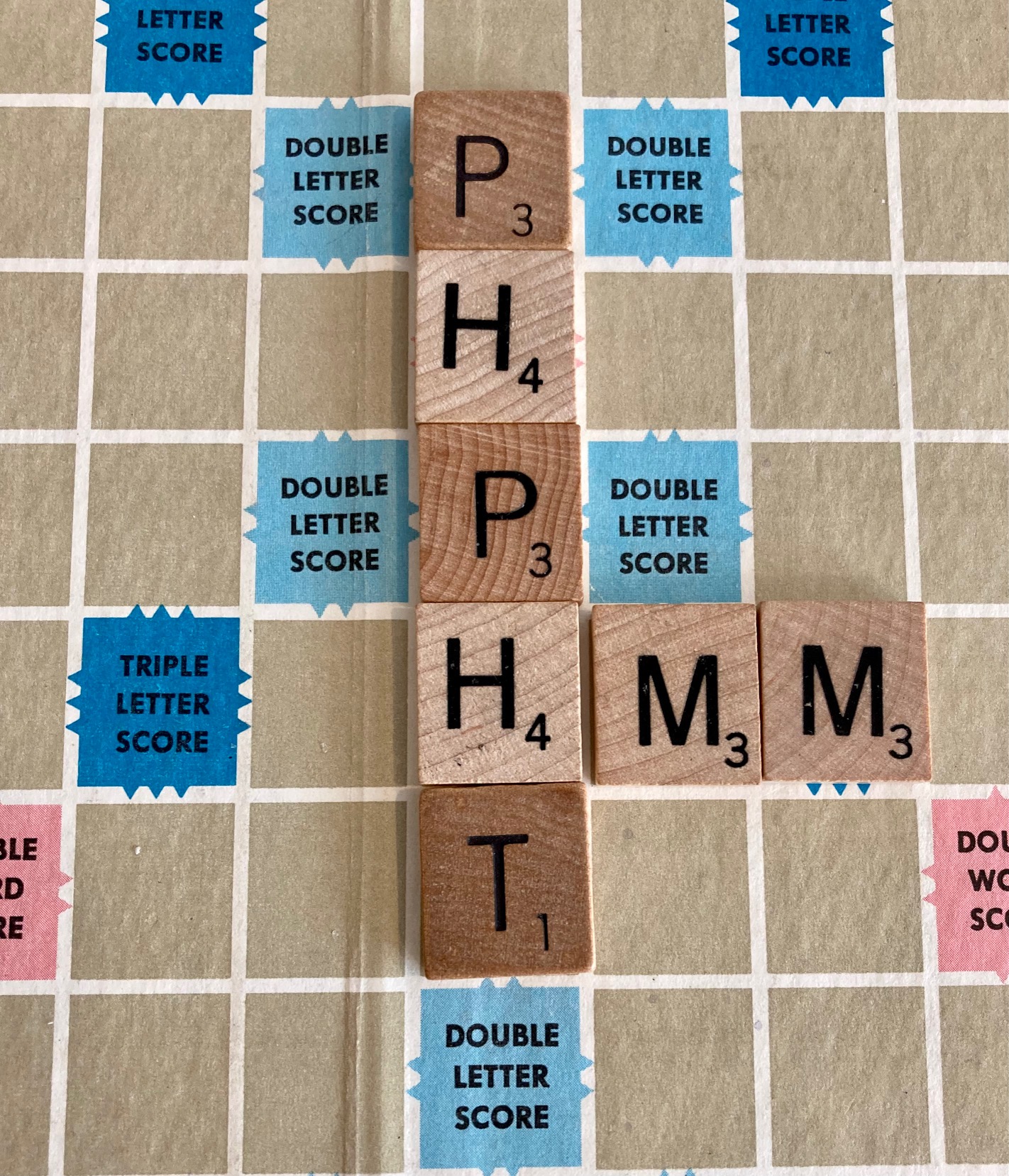
Learning nth (an unspecified number) and other all-consonant words enables you to continue a Scrabble game when you’re faced with a rack without vowels.
brr: used to indicate that one is cold
crwth: an ancient stringed instrument (pl. -s)
cwm: a cirque (a deep, steepwalled basin on a mountain, pl. -s, prounounced to rhyme with “boom”)
hm: used to express thoughtful consideration (also “hmm“)
mm: used to express assent or satisfaction
nth: describing an unspecified number in a series
phpht: used as an expression of mild anger or annoyance (also “pht“)
psst: used to attract someone’s attention
sh: used to urge silence (also “shh” and “sha“)
tsk: to utter an exclamation of annoyance (-ed, -ing, -s)
tsktsk: to “tsk” (-ed, -ing, -s)
Next Up
Wordplay Day! To prepare for class, revisit the Dictionary and World Builder pages on the Scrabble website. Also review the blog posts devoted to Scrabble tips, including this one.
Coming Soon
In class on Monday, you will write your midterm reflection.
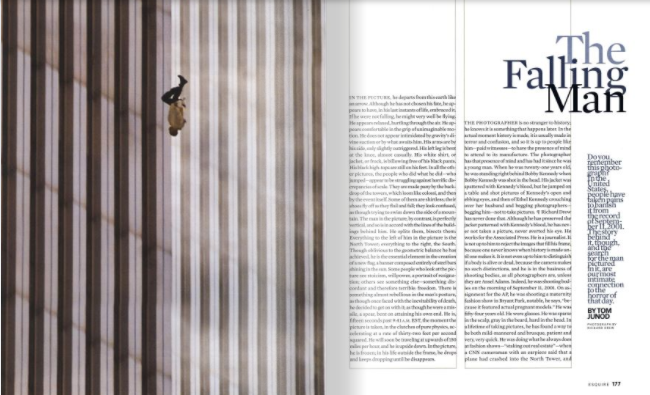
Yesterday in class, before you began planning and drafting your analyses, we examined the beginning of Tom Junod‘s essay “The Falling Man,” published in Esquire magazine two years after 9-11. If you choose that excerpt for the subject of your analysis, one element you might address is the unusually long first paragraph. Consider where Junod might have divided the paragraph and why he may have chosen not to divide it.
Junod might have started a second paragraph with the words “[i]n all the other pictures,” because there he shifts the focus from the Falling Man to the photographs of other people who jumped from the Twin Towers. An opportunity for a third paragraph comes with the words “[t]he man in the picture, by contrast,” where Junod turns his attention back to the Falling Man. And he might have begun a fourth paragraph with “[s]ome people who look at the picture,” because there he shifts to viewers’ perceptions of the Falling Man.
The first paragraph is over four-hundred words long, a length I advise you to avoid in your own paragraphs. Generally, one-hundred to one-hundred-and-fifty words is a suitable length. As a rule, you should begin a new paragraph whenyou present a new idea or point. If you have an extended idea that spans multiple paragraphs, each new point within that idea should have its own paragraph. But the first paragraph of “The Falling Man” is an exception. For Junod, choosing not to divide the first paragraph creates an unbroken movement that parallels the unbroken downward flight of his subject, the Falling Man. Outside of the photograph, “he drops and keeps dropping until he disappears.” With “disappears,” the last word of the paragraph,” the Falling Man disappears from the page, and Tom Junod turns to the photographer, whom we learn later in the essay is Richard Drew.
Unless you subscribe to Esquire, the magazine’s paywall will deny you access to the full text of “The Falling Man”; but if you’re interested in reading it in full, you can access it through the HPU Library site by following these steps:
The second half of this blog post features my version of the third Check, Please! assignment, which you submitted at the beginning of class on Wednesday. In preparation for submitting your worksheet for lesson four, review this post as well as the assignment notes that I posted on January 23.
Sample Assignment
In the third lesson of the Check, Please!, Starter Course, Mike Caulfield, author of the course and a research scientist at the University of Washington’s Center for an Informed Public, continues his instruction on the second step in four-step SIFT approach to determining the reliability of a source. Lesson three, “Further Investigation” covers these topics: (1) Just add Wikipedia for names and organizations, (2) Google Scholar searches for verifying expertise, (3) Google News searches for information about organizations and individuals, (4) the nature of state media and how to identify it, and (5) the difference between bias and agenda.
One of the most instructive parts of lesson three focuses on two news stories about MH17, Malyasia Airlines Flight 17, a passenger flight scheduled to land in Kuala Lumpur that was shot down over eastern Ukraine on July 17, 2014. While the second story, a television news segment, appears to present detailed investigative reporting challenging the conclusion of the Dutch Safety Board and Dutch-led joint investigation team–the conclusion that Russia was to blame–a quick just-add-Wikipedia check reveals that RT (formerly Russia Today) is a Russian state-controlled international TV network, a government propaganda tool rather than a source of fair and balanced news. The first video, the one produced by Business Insider, a financial and business news site, delivers accurate coverage of MH17.
Another notable segment of “Further Investigation” addresses the important distinction between “bias” and “agenda.” There, Caulfield observes that “[p]ersonal bias has real impacts. But bias isn’t agenda, and it’s agenda that should be your primary concern for quick checks,” adding that “[b]ias is about how people see things; agenda is about what a news or research organization is set up to do.”
Wordplay Day! To prepare for class, revisit the Dictionary and World Builder pages on the Scrabble website, and review the blog posts devoted to Scrabble tips.





 Jane Lucas