Posted in English 1103, Reading, Teaching, Writing

ENG 1103: A Second Look at “Seedlings”


Posted in English 1103, Teaching, Writing

ENG 1103: Continuing Your Revision

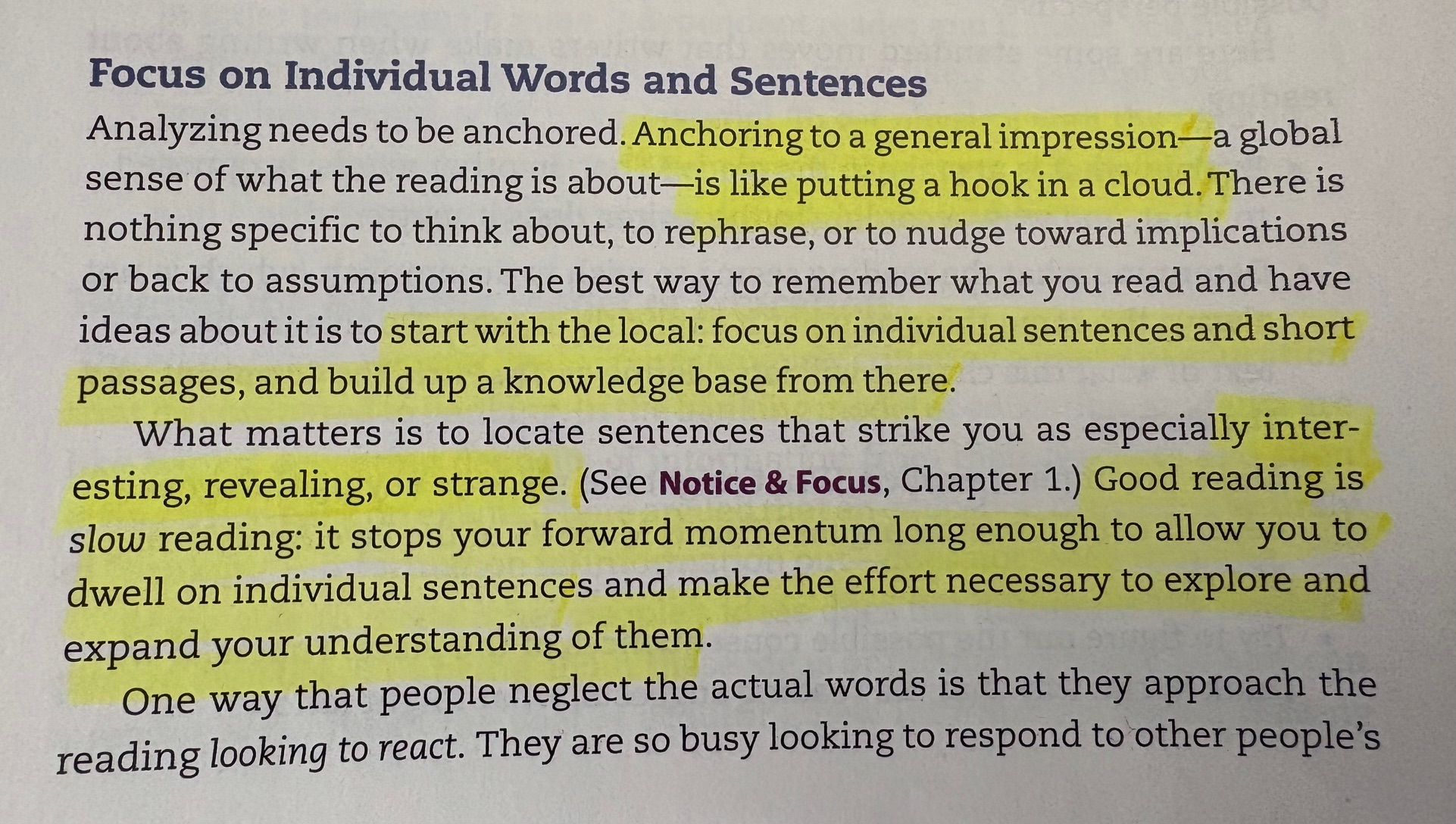
Rosenwasser, David and Jill Stephen. “Focus on Individual Words and Sentences.” Writing Analytically, 9th edition. Wadsworth/Cengage, 2024. p. 48. 
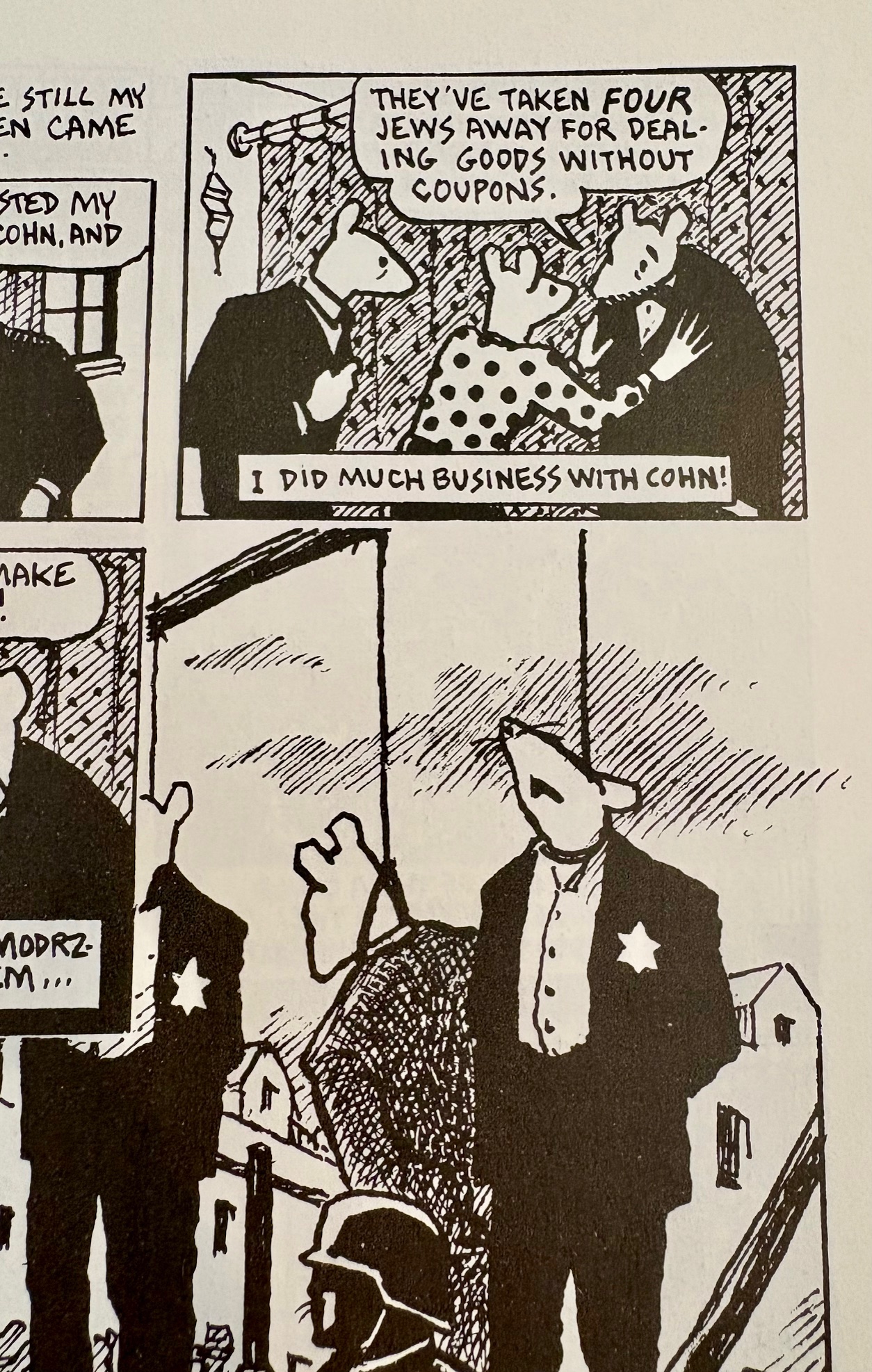
Spiegelman, Art. Maus I. Pantheon, 1986. p. 83.

Posted in English 1103, Reading, Teaching, Writing

ENG 1103: Tetsuya Ishida’s “Seedlings” . . .

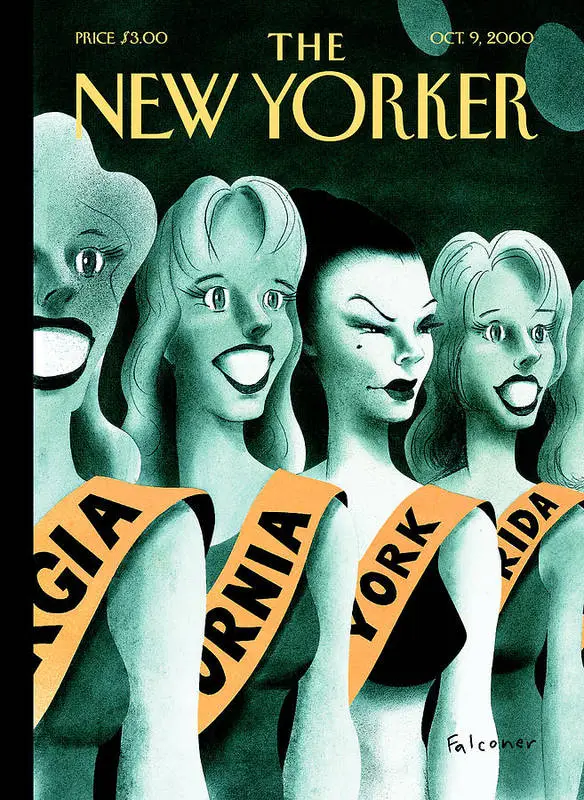
Falconer, Ian. “The Competition.” Writing Analytically by David Rosenwasser and Jill Stephen, 9th edition, Wadsorth/Cengage, 2024. p. 108.

Summary

Ian Falconer’s mostly black-and-white New Yorker cover The Competition depicts four beauty pageant contestants, three of whom stand in stark contrast to Miss New York. Her dark hair, angular body, narrowed eyes, tightly pursed lips, and two-piece bathing suit set her apart from the nearly-identical blondes–Miss Georgia, Miss California, and Miss Florida–with wide-open eyes and mouths and one-piece bathing suits.

Commentary

The self-satisfied expression of Miss New York suggests what the authors of Writing Analytically present as the second of two possible interpretations for The Competition: “[T]he magazine is . . . admitting , yes America, we do think that we’re cooler and more individual than the rest of you, but we also know that we shouldn’t be so smug about it” (Rosenwasser and Stephen 112).

Work Cited

Rosenwasser, David and Jill Stephen. Chapter 3: “Interpretation: Asking So What?” Writing Analytically, 9th edition. Wadsworth/Cengage, 2024. pp. 81-118.


Posted in English 1103, Teaching, Writing

ENG 1103: Maus Under the Microscope

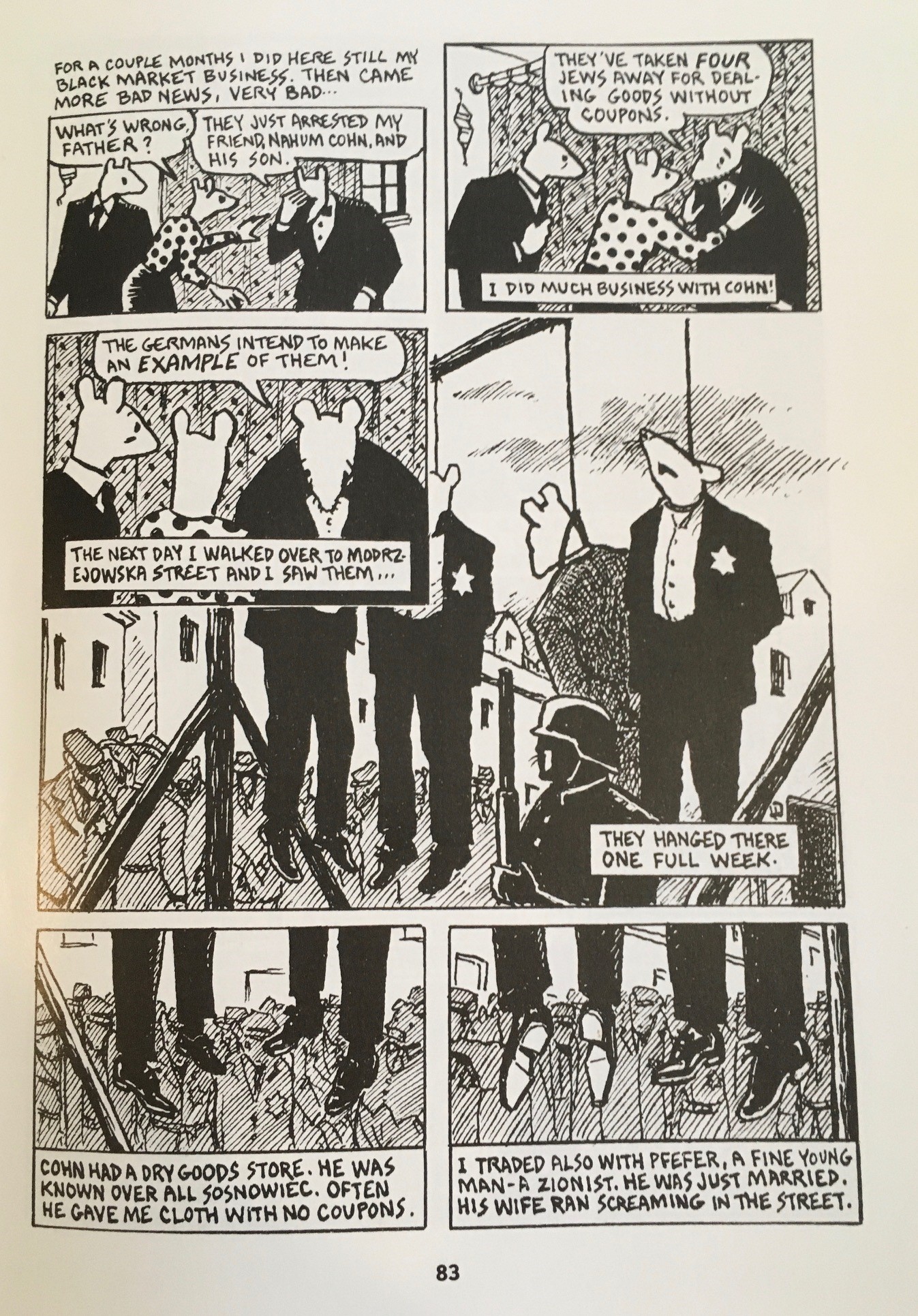
Spiegelman, Art. Maus I. Pantheon, 1986. p. 83.

Today in class, after the Scrabble debriefing and the discussion of last Friday’s quiz, we will closley examine the page of Art Spiegelman’s Maus featured above.

Afterward, we will study an analysis of the page that I wrote as a model for my students in a previous semester, and you and two or three of your classmates will collaborate on an assignment that asks you to consider these questions:


Friday’s Quiz


Next Up

Posted in English 1103, Reading, Teaching, Writing

ENG 1103: Donald Bartheleme’s “The School”


Posted in English 1103, Reading, Writing

ENG 1103: Tetsuya Ishida’s “Seedlings”


Posted in Reading, Teaching, Writing

ENG 111: Maus under the Microscope

Spiegelman, Art. Maus I. Pantheon, 1986. p. 74.

In the first weeks of the course, we studied Maus as a model for our literacy narratives. Now, as we turn to more formal academic writing, we will examine Art Spiegelman’s memoir as the subject for our second essay assignment, our analysis.

Analysis

Unlike a narrative, an analysis has an explicit thesis, which often—but not always—appears at the end of the first paragraph. A thesis is not a statement of fact; instead, it’s a judgment based on a close examination of the subject—in our case, Maus.

Statement of fact: The epigraph for Maus shows the young Art Spiegelman and his father talking but not truly communicating with each other.

Thesis: The cutting remark that Spiegelman’s father makes as he saws wood illustrates the communication breakdown between him and Artie; Spiegelman’s deft depiction of that gulf foreshadows the trials he will encounter: struggling to understand his father and himself as he aims to make meaning of their lives through his comics.

Notice how the thesis above addresses what Vladek Spiegelman says and also lets the reader see him sawing wood. As you plan your analysis, keep in mind that Maus is a multimodal text. You will address both the pictures and the words on the page.

For more on writing about multimodal texts, see A Writer’s Reference (70-78).

Where to Begin

Look back through the pages of your journal and note what aspect of Spiegelman’s memoir interests you most? Here are a few that might serve as your focus:

  • Vladek and Art Spiegelman’s father-son relationship
  • Maus as a dual memoir
  • Maus as a meta-memoir
  • The Nazi persecution of the Jews (leading up to the Holocaust, depicted in Maus II)
  • Anja Spiegelman’s depression
  • Anja’s diary

Turn back to the pages of Maus devoted to the parts of the story that interest you most. Ask yourself how Spiegelman makes meaning with both his images and his words. Your answer to a how question about those words and pictures could serve as your thesis.

Questions to Ask of the Words

  • Are the words in the panel dialogue, narration, or both? (Dialogue is presented in speech balloons; narration or summary is presented in rectangles.)
  • If the panel includes dialogue, what does the exchange between the characters reveal about their relationship? Do the words of the second speaker propel the narrative forward or disrupt it?
  • Are any words enlarged or in boldface for emphasis?

Questions to Ask of the Pictures–the Panels, Tiers, and Pages

  • Is the image in the panel a close-up or a long shot?
  • Are the panels and the tiers on the page roughly the same size? If not, why might Spiegelman have chosen one in particular to dominate the page?
  • Are any of the panels borderless?
  • Do any of the panels break the frame and spill into the gutter (the white space between the frames)?
  • Are any of the panels oblique or slanted?
  • How do these visual effects contribute to your perception of the story? For example: What mood or atmosphere does Spiegelman create through his combination of black and white, lines, and silhouettes? How does the size of a panel or as series of panels convey the passage of time?

Look back at the panel from Maus at the top of this post. Here Art Spiegelman presents a large panel featuring his father, Vladek Spiegelman, at home with his extended family after he sneaks across the border from the Protectorate to the Reich. A small close-up frame of the older retrospective Vladek riding his exercise bike appears in the upper left, an inset in the larger image of the Spiegelmans and the Zylberbergs sitting at the dining room table.

Note how with minor changes, the preceding paragraph could serve as an opening-paragraph summary that leads to a thesis.

Chapter 4 of Art Spiegelman’s Maus I includes a large half-page panel featuring the artist’s father, Vladek, at home with his extended family after he sneaks across the border from the Protectorate to the Reich. A small close-up frame of the older retrospective Vladek riding his exercise bike appears in the upper left, an inset in the larger picture of the Spiegelmans and the Zylberbergs sitting at their dining room table. Though only one of the hundreds of panels that constitute Spiegelman’s memoir, that panel alone demonstrates the intricacy of his narrative; his deceptively simple words and drawings create a layered meta-memoir that continually moves backward and forward, from mundane moments of ordinary life to the horrors of the Nazi regime.

From that opening paragraph, I could develop an analysis essay with evidence from the panel to support my thesis. In simplest terms, the essay might look like this:

Introductory paragraph: Summary followed by thesis.

Body paragraph 1: Topic sentence followed by an examination of words and/or images (textual evidence) that support the main idea of the paragraph, the topic sentence, which in turn supports the thesis.

Body paragraph 2: Topic sentence followed by textual evidence (words and/or images) that supports the main idea of the paragraph.

Body paragraph 3: Topic sentence followed by textual evidence (words and/or images) that supports the main idea of the paragraph.

Conclusion: A restatement of the thesis that doesn’t repeat it verbatim.

In addition to returning to the essay’s thesis, many effective conclusions do one of the following:

  • Include a quotation from or reference to a primary or secondary source, one that emphasizes the essay’s main point or puts it in a different perspective. We will examine some secondary sources in class. You will address one of them in your conclusion or in one of your body paragraphs.
  • Place the analysis in a different, perhaps larger, context. For example, you might end your analysis by linking it to the pandemic or the current social or political climate.
  • Consider the implications of the analysis. What does it imply, or involve, or suggest about parent-child relationships, about storytelling, about memory, or about totalitarian regimes?