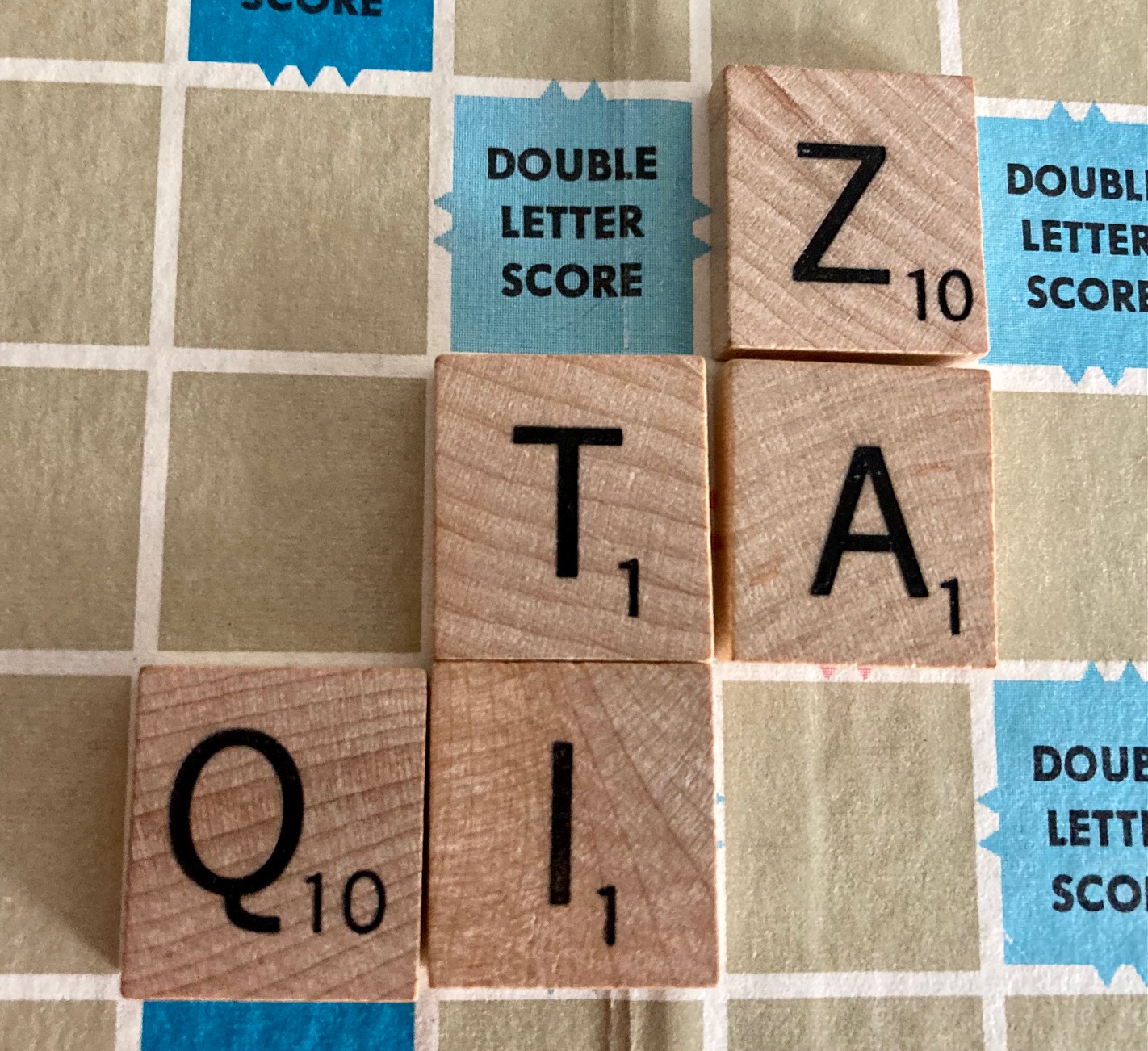
Today’s blog post is the final installment in the series of posts devoted to playable two-letter words. Learning these two-letter words, as well as the other two-letter words in the alphabet, will enable you to see more options for play and increase the number of points you earn in a single turn.
qi: the central life force in Chinese culture (also ki)
re: a tone of the diatonic scale
sh: used to encourage silence
si: a tone of the diatonic scale (also ti)
so: a tone of the diatonic scale (also sol)
ta: an expression of thanks
ti: a tone of the diatonic scale
to: in the direction of
uh: used to express hesitation
um: used to express hesitation
un: one
up: to raise (-s, -ped, -ping)
us: a plural pronoun
ut: the musical tone C in the French solmization system, now replaced by do
we: a first-person plural pronoun
wo: woe
xi: a Greek letter
xu: a former monetary unit of Vietnam equal to one-hundreth of a dong (also sau, pl. xu)
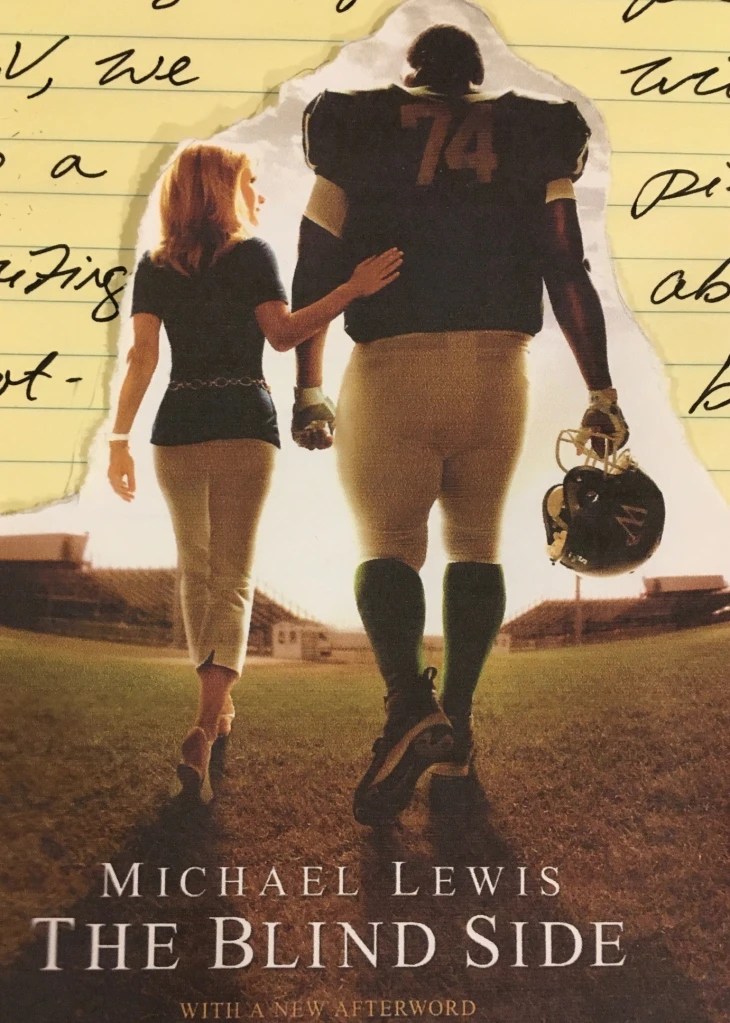
As an introduction to Michael Lewis, whose writing we will examine in class on Monday, read this overview of his publications. After you read it, compose a one- or two-paragraph journal entry that addresses these questions: (1) Lewis’s two books on one subject have both been adapted for film. What is the subject, and what are the titles of the two books (and films)? (2) A third book of his, one devoted to a different subject, has also been adapted for film. What is the subject, and what is the title of the book (and film)?
Coming Soon
In class on Wednesday, you will begin planning and drafting your second major writing assignment, your analysis. The chapter of Michael Lewis’ writing that we examine in class on Monday and the other texts we have studied thus far in English 1103–“MeTalk Pretty One Day,” “The Day Language Came into Life,” “Letter from Birmingham Jail,” the excerpt from the first chapter of To Kill a Mockingbird,” and “The School“–are among the pieces of writing that may serve as the subject of your upcoming analysis.
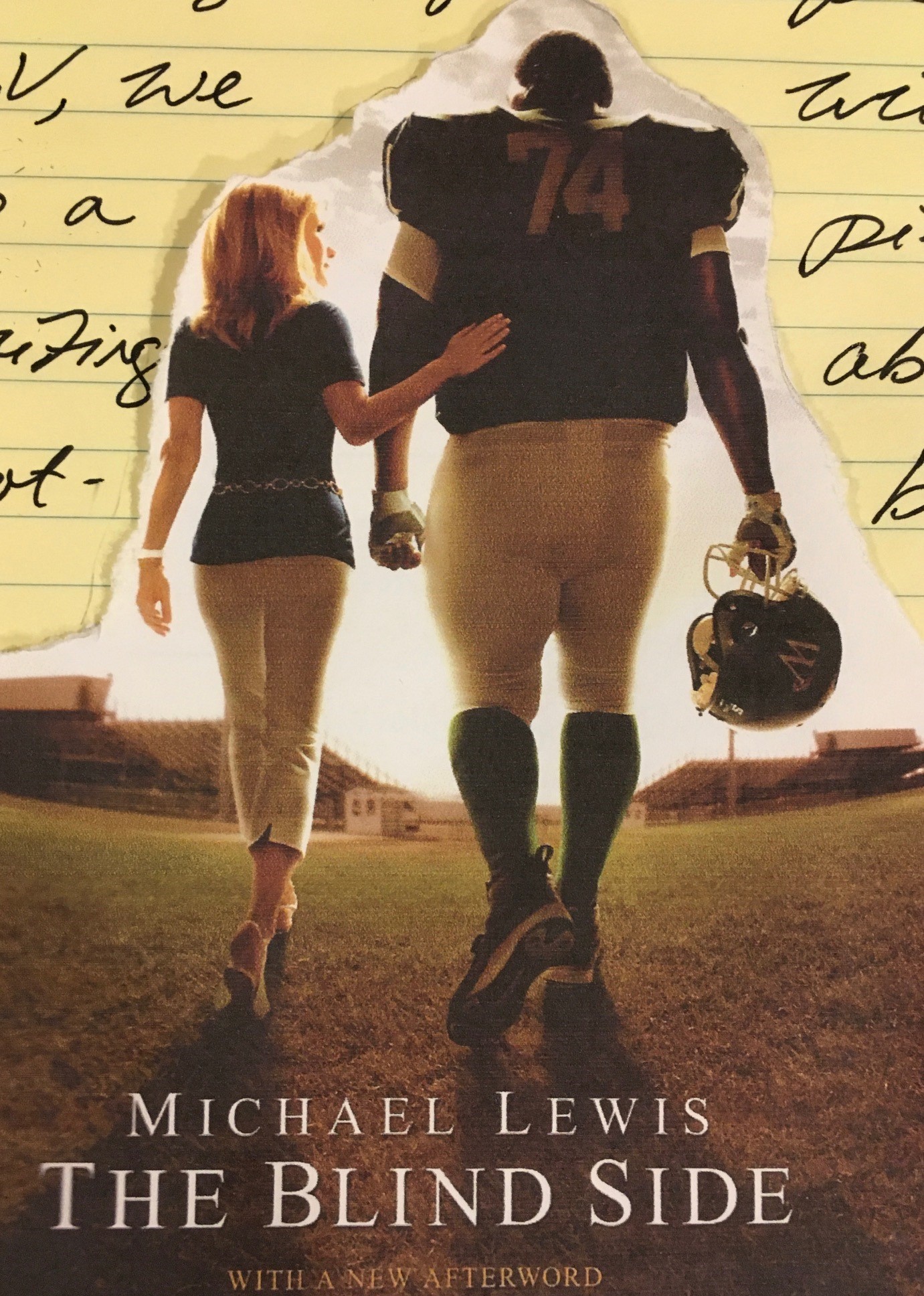
Yesterday in class, we examined “Back Story,” the first chapter of Michael Lewis’ The Blind Side, which begins with Lewis’ depiction of the moments in the November 1985 Redskins-Giants football game leading up to the injury that ended quarterback Joe Theismann’s career:
“From the snap of the ball to the snap of the first bone is closer to four seconds than to five. One Mississippi: The quarterback of the Washington Redskins, Joe Theismann, turns and hands the ball to running back John Riggins. He watches Riggins run two steps forward, turn, and flip the ball back to him. It’s what most people know as a “flea-flicker,” but the Redskins call it a “throw-back special.” Two Mississippi: Theismann searches for a receiver but instead sees Harry Carson coming straight at him. It’s a running down—the start of the second quarter, first and 10 at midfield, with the score tied 7–7—and the New York Giants’ linebacker has been so completely suckered by the fake that he’s deep in the Redskins’ backfield. Carson thinks he’s come to tackle Riggins but Riggins is long gone, so Carson just keeps running, toward Theismann. Three Mississippi: Carson now sees that Theismann has the ball. Theismann notices Carson coming straight at him, and so he has time to avoid him. He steps up and to the side and Carson flies right on by and out of the play. The play is now 3.5 seconds old. Until this moment it has been defined by what the quarterback can see. Now it–and he–is at the mercy of what he can’t see” (15).
What Theismann cannot see is Lawrence Taylor. A second later, as Taylor sacks Theismann, Taylor’s knee drives straight into Theismann’s lower right leg, leading to the “snap of the first bone” that Lewis mentions in the first sentence. He hooks the reader by linking the beginning of the play, “the snap of the ball” to the gruesome “snap of the first bone” that will follow. Lewis develops the paragraph using the common one-Mississippi, two-Mississippi method of marking seconds to present the events leading up to the compound fracture that ends Theisman’s career.
Lewis doesn’t dramatize the injury itself because his interest lies instead in the blind side that led to it and subsequently elevated the status and salary of the left tackle, the player who protects the quarterback’s blind side. Rather than immediately continuing the action of the play he presents in the opening of the chapter, Lewis turns away from the 3.5-second moment to show how, in his words, “Lawrence Taylor altered the environment and forced opposing players and coaches to adapt” (17).
When you’re struggling to develop a piece of writing, reread the opening paragraph of The Blind Side. Study how Lewis dramatizes 3.5 seconds–yes, only 3.5 seconds–with 224 words.
Work Cited
Lewis, Michael. “Back Story.” The Blind Side. 2006. W.W. Norton, 2009. pp. 15-23.
“Seems to Be About X, But Could Also Be (or is ‘Really’) About Y”
Before tomorrow’s class, complete the X-Y journal exercise that I distributed on Monday. I will not collect your journals, but I may conduct a check of the exercises while you are drafting your analyses. The instructions for the assignment are included below.
Directions
Review your reading handouts—”MeTalk Pretty One Day,” “The Day Language Came into Life,” the excerpt from the first chapter of To Kill a Mockingbird, the excerpt from “The Falling Man,” and “The School”—and repeat the “Seems to Be about X, But Could also Be (Or is ‘Really’) about Y” exercise that you completed with “Back Story.”
Even if you think you have decided which text will be the subject of your analysis, compose an X/Y statement about at least two additional texts. One of those statements may pique your interest in a different piece of writing.
After you have written at least three X/Y statements in your journal, compose a freewrite of one paragraph or more that expands on one of the X/Y contrasts.
Next Up
Tomorrow in class, you will begin planning and drafting your analysis, which will focus on one of the texts that we have studied, including David Sedaris’ “Me Talk Pretty One Day,” Helen Keller’s “The Day Language Came into My Life,” the excerpt from To Kill a Mockingbird, Tom Junod’s “The Falling Man,” and Michael Lewis’ “Back Story.”
If you have misplaced your copy of any of the readings or were absent the day that I distributed copies, download a copy from Blackboard and print it.
If you would like to analyze a larger section of the first chapter of To Kill a Mockingbird, download a copy of Chapter One from Blackboard and print it.

If you would like to analyze a larger section of “The Falling Man,” download a copy from the HPU Libraries site and print it. Directions for accessing the full text of “The Falling Man” are included in the September 11 class notes.
As an introduction to Michael Lewis, whose writing we will examine in class today, you read this overview of his publications. After you read it, you compose a one- or two-paragraph journal entry that addressed these questions: (1) Two of Lewis’ books on one subject have both been adapted for film. What is the subject, and what are the titles of the two books (and films)? (2) A third book of his, one devoted to a different subject, has also been adapted for film. What is the subject, and what is the title of the book (and film)?
As we read the first chapter of one of his books, consider what elements of his writing would attract filmmakers to his work. We will closely examine the opening of the chapter, paying special attention to its repetition of words and phrases. Later in class, we will read the remainder of the chapter and you will address in writing why Lewis may have chosen to delay the continuation of the action that he depicts in the opening paragraph.
Next Up
In class on Wednesday, you will begin planning and drafting your second major writing assignment, your analysis. The chapter of Michael Lewis’ writing that we examine in class today and the other texts we have studied thus far in English 1103–“MeTalk Pretty One Day,” “The Day Language Came into Life,” the excerpt from the first chapter of To Kill a Mockingbird,” the excerpt from “The Falling Man,” and “The School“–are among the pieces of writing that may serve as the subject of your upcoming analysis.
Today’s class will be devoted primarily to reading and responding to the blog post of one of your classmates’ literacy narratives. Elements you will consider in your response included these:
the title
vivid details
scene and summary (and dialogue, if present)
the conclusion
the image documenting part of the writing process away from the screen
the link to a relevant website
Before you begin that assignment, we will examine the opening pages of “Back Story,” the first chapter of Michael Lewis‘s The Blind Side, which dramatizes the moments in the November 1985 Redskins-Giants football game leading up to the injury that ended quarterback Joe Theismann’s career:
“From the snap of the ball to the snap of the first bone is closer to four seconds than to five. One Mississippi: The quarterback of the Washington Redskins, Joe Theismann, turns and hands the ball to running back John Riggins. He watches Riggins run two steps forward, turn, and flip the ball back to him. It’s what most people know as a ‘flea-flicker,’ but the Redskins call it a ‘throw-back special.’ Two Mississippi: Theismann searches for a receiver but instead sees Harry Carson coming straight at him. It’s a running down—the start of the second quarter, first and 10 at midfield, with the score tied 7–7—and the New York Giants’ linebacker has been so completely suckered by the fake that he’s deep in the Redskins’ backfield. Carson thinks he’s come to tackle Riggins but Riggins is long gone, so Carson just keeps running, toward Theismann. Three Mississippi: Carson now sees that Theismann has the ball. Theismann notices Carson coming straight at him, and so he has time to avoid him. He steps up and to the side and Carson flies right on by and out of the play. The play is now 3.5 seconds old. Until this moment it has been defined by what the quarterback can see. Now it–and he–is at the mercy of what he can’t see” (15).
What Theismann cannot see is Lawrence Taylor. A second later, as Taylor sacks Theismann, Taylor’s knee drives straight into Theismann’s lower right leg, leading to the “snap of the first bone” that Lewis mentions in the first line of the chapter. He hooks the reader by linking the beginning of the play, “the snap of the ball,” to the gruesome “snap of the first bone” that will follow (15). Lewis develops the opening paragraph using the common one-Mississippi, two-Mississippi method of marking seconds to present the events leading up to the compound fracture that ends Theisman’s career.
Lewis doesn’t dramatize the injury itself because his interest lies instead in the blind side that led to it and subsequently elevated the status and salary of the left tackle, the player who protects the quarterback’s blind side.
When you’re struggling to develop a piece of writing, reread the opening paragraph of The Blind Side. Observe how Lewis dramatizes 3.5 seconds–yes, only 3.5 seconds–with about two-hundred words.
Next Up
In class on Wednesday, after you submit your worksheets for the third lesson of Check, Please!, you will begin planning and drafting your analysis, your second major writing assignment for the course. To prepare for Wednesday’s class, review your assigned readings, and determine which one appeals to you most as a subject for analysis. Which text are you most interested in examining in closer detail to determine what makes it an effective piece of writing? Your answer to that question is likely the best subject for you.
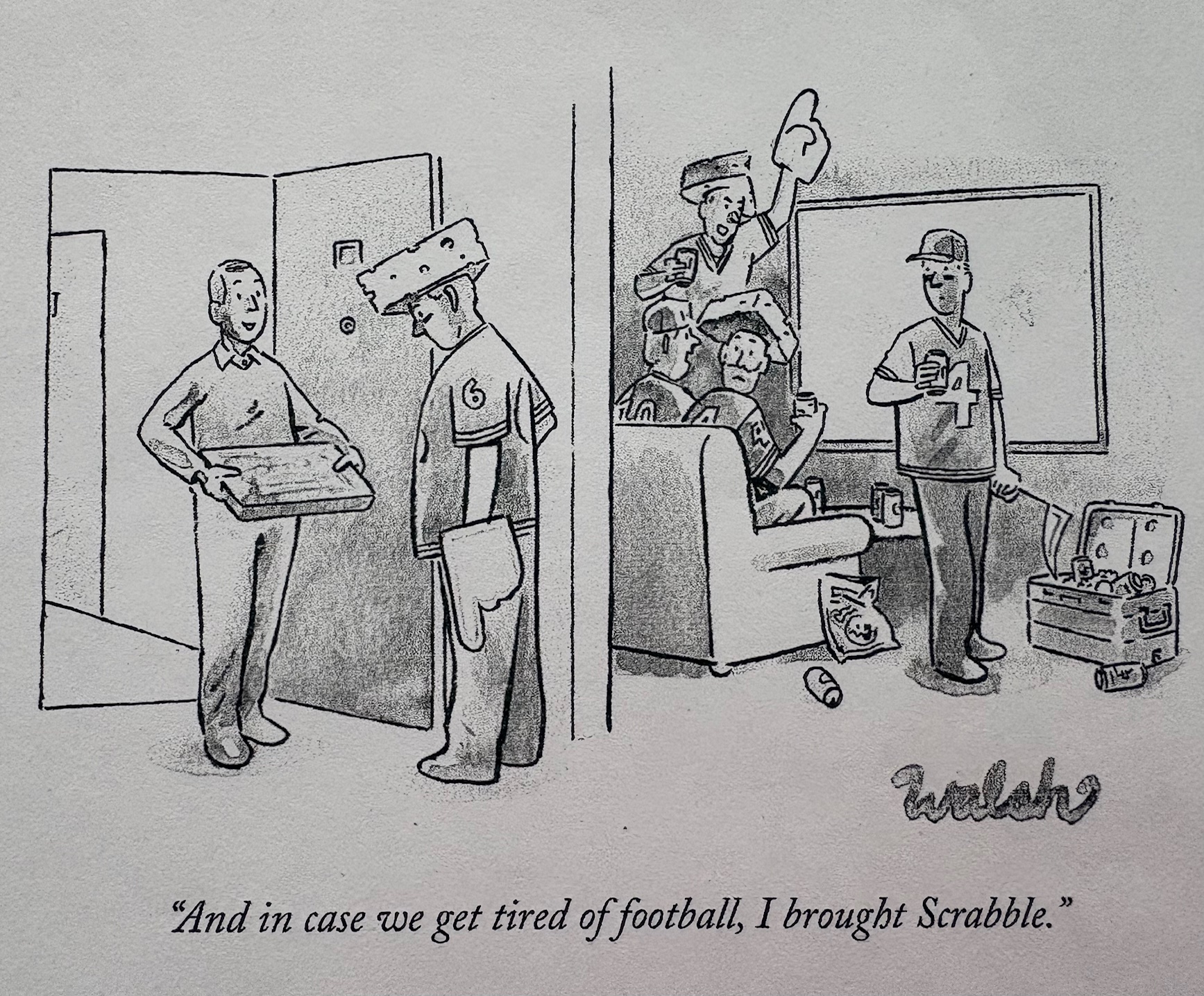
To begin our last class meeting before Super Bowl LV, we will turn to a piece of writing about football–not simply to read about a sport that’s on the minds of many of us this week but instead as an opportunity to explore how skillfully the writer Michael Lewis dramatizes a few seconds on the football field.
In the passage that follows, Lewis recounts the moments in the November 1985 Redskins-Giants football game leading up to the injury that ended quarterback Joe Theismann’s career. These are the words that begin Chapter 1 of The Blind Side, now widely regarded as a nonfiction masterpiece.
From the snap of the ball to the snap of the first bone is closer to four seconds than to five. One Mississippi: The quarterback of the Washington Redskins, Joe Theismann, turns and hands the ball to running back John Riggins. He watches Riggins run two steps forward, turn, and flip the ball back to him. It’s what most people know as a “flea-flicker,” but the Redskins call it a “throw-back special.” Two Mississippi: Theismann searches for a receiver but instead sees Harry Carson coming straight at him. It’s a running down—the start of the second quarter, first and 10 at midfield, with the score tied 7–7—and the New York Giants’ linebacker has been so completely suckered by the fake that he’s deep in the Redskins’ backfield. Carson thinks he’s come to tackle Riggins but Riggins is long gone, so Carson just keeps running, toward Theismann. Three Mississippi: Carson now sees that Theismann has the ball. Theismann notices Carson coming straight at him, and so he has time to avoid him. He steps up and to the side and Carson flies right on by and out of the play. The play is now 3.5 seconds old. Until this moment it has been defined by what the quarterback can see. Now it–and he–is at the mercy of what he can’t see.
What Theismann cannot see is Lawrence Taylor. A second later, as Taylor sacks Theismann, Taylor’s knee drives straight into Theismann’s lower right leg, leading to the “snap of the first bone” that Lewis mentions in the first sentence. He hooks the reader by linking the beginning of the play, “the snap of the ball” to the gruesome “snap of the first bone” that will follow. Lewis develops the paragraph using the common one-Mississippi, two-Mississippi method of marking seconds to present the events leading up to the compound fracture that ends Theisman’s career.
Lewis doesn’t dramatize the injury itself because his interest lies instead in the blind side that led to it and subsequently elevated the status and salary of the left tackle, the player who protects the quarterback’s blind side.
When you’re struggling to develop a piece of writing, reread the opening paragraph of The Blind Side. Study how Lewis dramatizes 3.5 seconds–yes, only 3.5 seconds–with 224 words.
And now we turn to a game of another sort: Scrabble, the subject of my version of the You’ve Got to . . . assignment, the sample that I wrote for you.
A Game for Hardscrabble Times
The Guardian article “Spell Bound” notes that the exact beginning of Scrabble is “debatable,” adding that “Scrabble experts are the kind of people who like to debate it at length.” In a piece of writing such as this–one that begins at the beginning of the game–the starting point could be Lexico, which is the game that Alfred Mosher Butts developed before he invented Scrabble–which, by the way, wasn’t named Scrabble until Butts sold the game to Jacob Brunot. That’s when the game that Butts had christened Criss-Cross Words became the game that would multiply to more than 150 million sets worldwide, a game that can now be found in a third of homes in America (Bukszpan 16).
If that description of Scrabble’s beginnings doesn’t capture your interest, perhaps because you don’t think of yourself as a word person, consider this: Scrabble’s inventor wasn’t a word person either. Butts was fascinated by games of all sorts and saw word games as the category that offered the most opportunities for innovation. For him, that innovation meant creating a game in which the frequency of letters corresponded with their frequency in the English language. As part of his research, he documented how often each letter appeared on the front page of the newspaper. E is most common, so there are twelve E’s in Scrabble but only one tile for each of the rarest of letters: J, K, Q, X, and Z. For many players, including me, part of Scrabble’s appeal is the combination of skill and luck. Word power alone won’t win the game. You don’t know which letters you will draw or which seven letter tiles are on your opponent’s rack. And for many players, another source of the game’s appeal is its synthesis of crosswords and anagrams.
Since creating words from anagrams is a process of letter scrambling, James Brunot may have chosen the name Scrabble in part for its similarity to scramble, but the word scrabble itself is apt for a game that often requires players to struggle (or scrabble) to make a word from a seemingly impossible combination of tiles. It’s notable, too, that Scrabble’s beginnings date to the 1930s, when its inventor was an out-of-work architect. He wanted to create a diversion from the dark days of the Depression. Now it’s a game that many of us have returned to, pantomiming the ghosts of those first-generation players. Once again, it’s a game for hardscrabble times.
Works Cited
Bukszpan, David. Is That a Word?: From AA to ZZZ, the Weird and Wonderful Language of Scrabble. Chronicle, 2012.
In addition to including my model of the assignment in the body of this blog post, I am including it below as a PDF along with an additional copy of the assignment file. (See the links below and the rectangles labeled download.)
Unlike my sample, yours does not have to include sources. If, however, you do quote or paraphrase a text, follow MLA style guidelines and look to my sample assignment as a model.
You are welcome to write more than two paragraphs, as I did, but be sure that the first two paragraphs comply with the directions outlined in the assignment.
Approach your writing as a process. My model did not begin with what is now the first sentence. Instead, it began this way: “Designed for two-to-four players, the board game Scrabble begins with each player randomly drawing a letter tile from an opaque bag. The player whose letter is closest to the beginning of the alphabet is designated the first player.” My first draft fulfilled the basic requirement of the first paragraph, but I was doubtful that it would hold the reader’s interest. I asked myself where else I might begin, and it occurred to me that I could begin with the debate about the origins of the game.
Preparing to Submit Your You’ve-Got-to . . . Assignment
Review the assignment file, and look to the guidelines as a checklist.
Remember that you will submit your assignment to Moodle as a Word document, not a PDF, and you will not post it to your blog. A Word file template is posted in Moodle for you.
If you would like for someone to review your assignment before you submit it, the Center for Academic Engagement offers a variety of resources, which are outlined on pages four and five of the course syllabus.
Lewis, Michael. The Blind Side: Evolution of a Game. 2006. W. W. Norton, 2009.