My discussions with students about generative AI have been limited to plagiarism and academic integrity. But an end-of-semester faculty summit and a follow-up seventeen-day AI bootcamp led me to realize that I need to devote more attention to GenAI and model its responsible use.
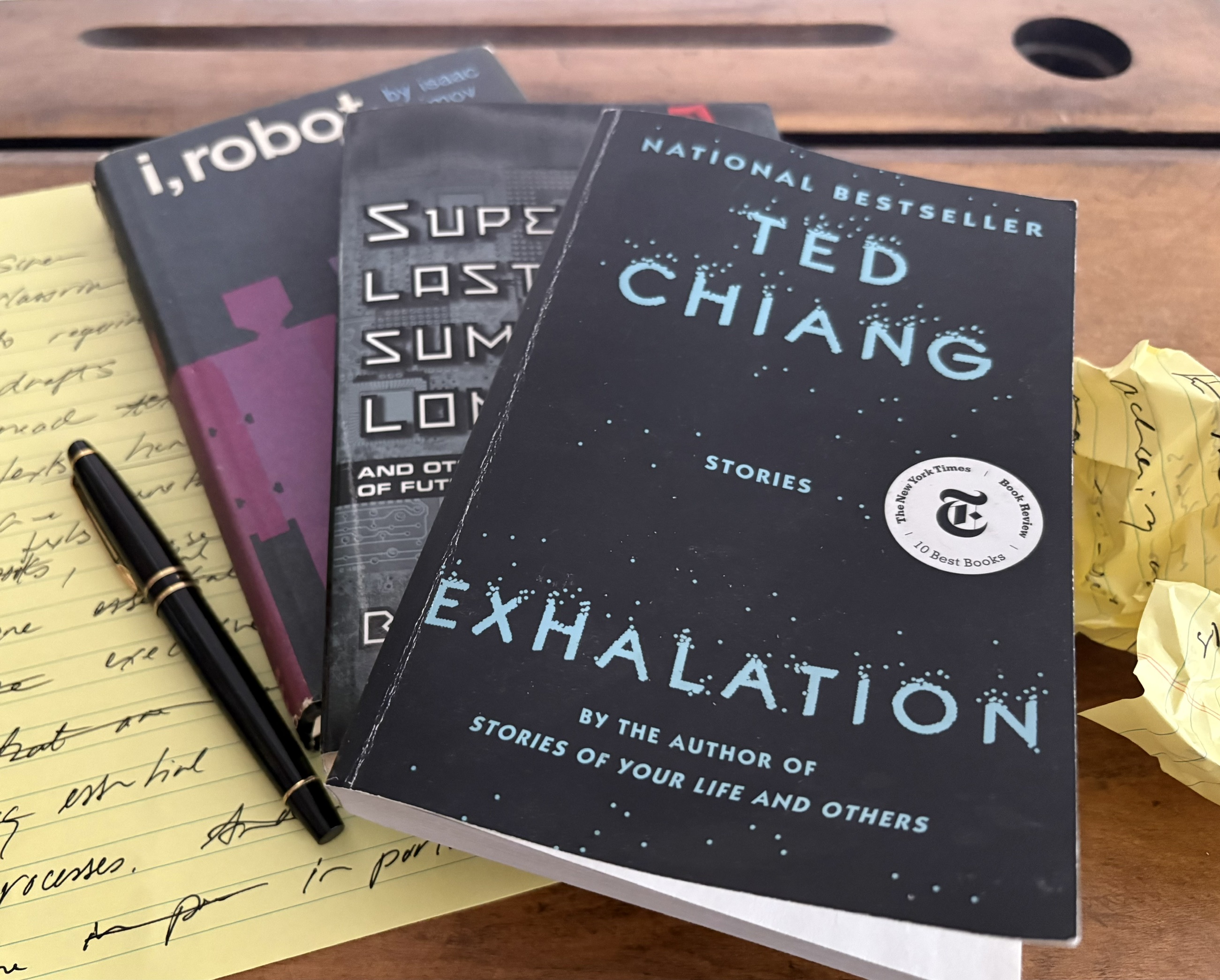
How could I achieve those goals without increasing students’ screen time in the classroom? In the digital age, requiring students to compose drafts longhand and to read and annotate texts on paper seems anachronistic, but cognitive neuroscientists have identified those analog practices as vital. To provide students with a classroom experience that fosters the learning that screens can impede, my students will continue to draft their essays longhand and read on paper, but they will turn to GenAI for exercises in planning and brainstorming.
That series of exercises—which the students will complete outside of class—begins with asking an AI assistant for guidance on selecting a topic for their literacy narrative. Rather than starting with the simple question, what should I write about?, the students will instead present three topics and ask the AI assistant to ask them a series of questions to determine which one has the most narrative possibilities.
Although the students may not agree with the AI’s suggestions—just as they might not agree with a classmate’s or mine—the process itself will likely generate ideas that will lead to starting points. If they don’t, false starts will be steps in the journey, as they often are.
To prepare students for that initial exercise, I will conduct it myself, with three topics of my own, and take screenshots of the questions and answers. That documentation of my own process will enable me to lead students through the process step by step without opening an AI application in the classroom.
Though the students will not turn to AI in the classroom—and will turn only occasionally to their screens—AI will remain at the forefront of their classwork through our study of a sequence of science fiction that explores the nature of artificial intelligence: Isaac Asimov’s “Runaround,” which introduces his Three Laws of Robotics, followed by Brian Aldiss’s “Supertoys” stories and Ted Chiang’s “The Lifecycle of Software Objects.”
I chose those sci-fi stories not because I am naturally drawn to the genre but because of the ways the writers of those narratives use their imaginations as testing grounds for questions about humanity and the future. At the beginning of Ted Chiang’s “The Lifecycle of Software Objects,” a young woman, Ana, sits in front of her computer, waiting for a videoconference job interview that she learns moments later has been canceled. The company has decided to hire someone else.
Ana’s interview-that-wasn’t would have been her first in months to reach the videoconference stage. Trying to recover from her disappointment, Ana sends queries to other companies and receives automated rejections.
For current college students, that doesn’t seem like science fiction. Contemplating such circumstances now in the classroom, their own testing ground—and trying to make sense of them through their own writing—may help them face a future with AI that we cannot know.
 Jane Lucas