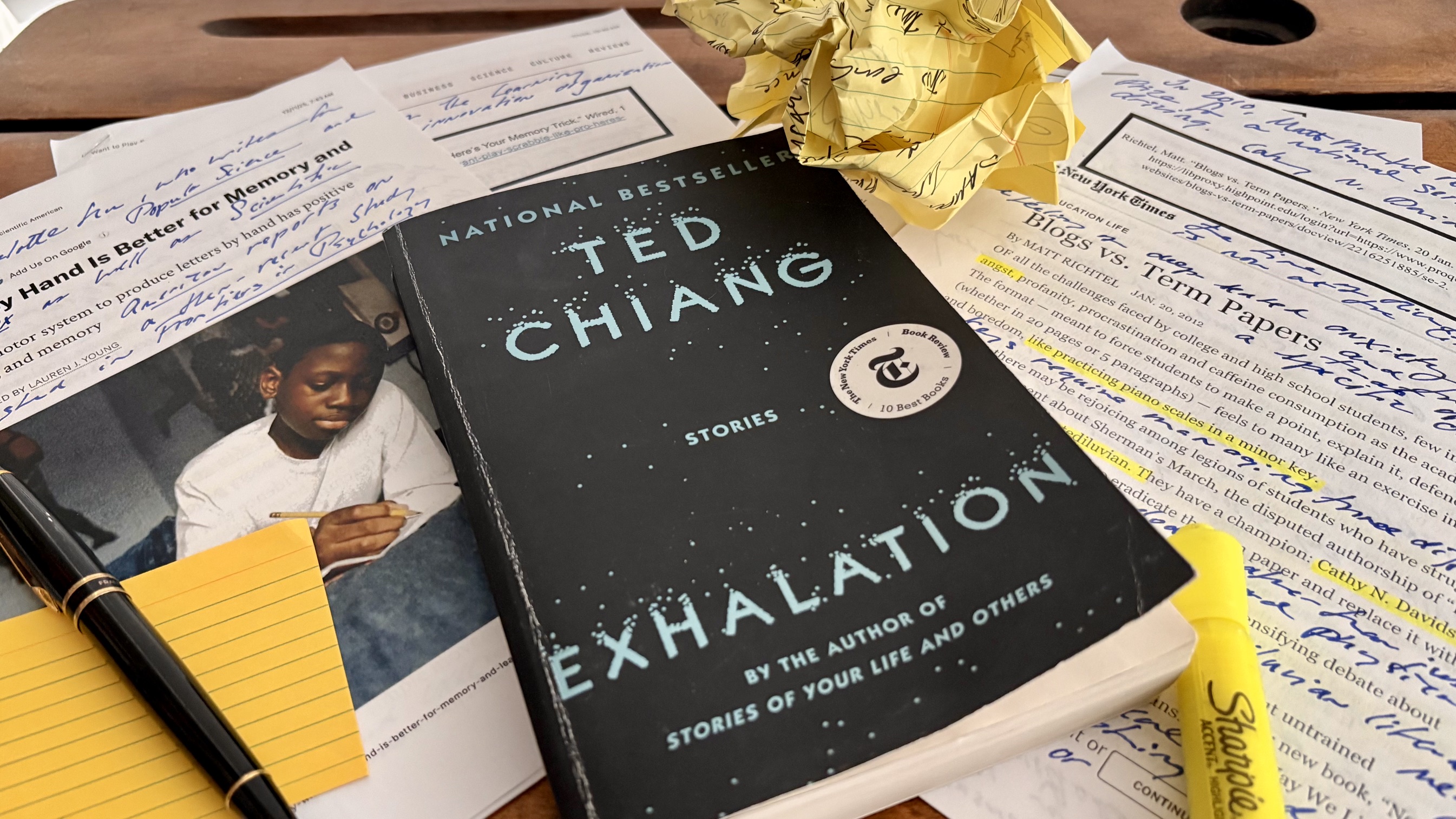
As you continue to prepare for your presentation, be mindful of the valuable roles that reading and writing play in the process. Although the final product is your group’s three-to-four-minute oral presentation, your work began with reading and writing: reading the article or chapter that serves as your subject, and writing the plan that you composed in class yesterday.
Have you reread the article or chapter that serves as your subject? If not, turn back to the text itself at least two more times before Wednesday. Chances are, on a second or third reading, you will notice details you didn’t notice before, ones that you may want to add to your presentation.
In addition to recording key words on your notecard, write out your portion of the presentation in your journal. Though you will not be permitted to have your journal in hand during your presentation, the act of writing down your remarks and rewriting them will help you commit them to memory.
Remember that your notes are limited to a three-by-five notecard, not a four-by-six one, or a standard sheet of paper. If you do not have three-by-five index cards of your own, ask for one at the Circulation-Reserves counter near the main entrance of Smith Library.
As you practice delivering your presentation, minimize the time you look down at your notecard. Your ability to limit those glances will be greater if you spend ample time rereading the text and writing and reviewing your remarks in your journal.
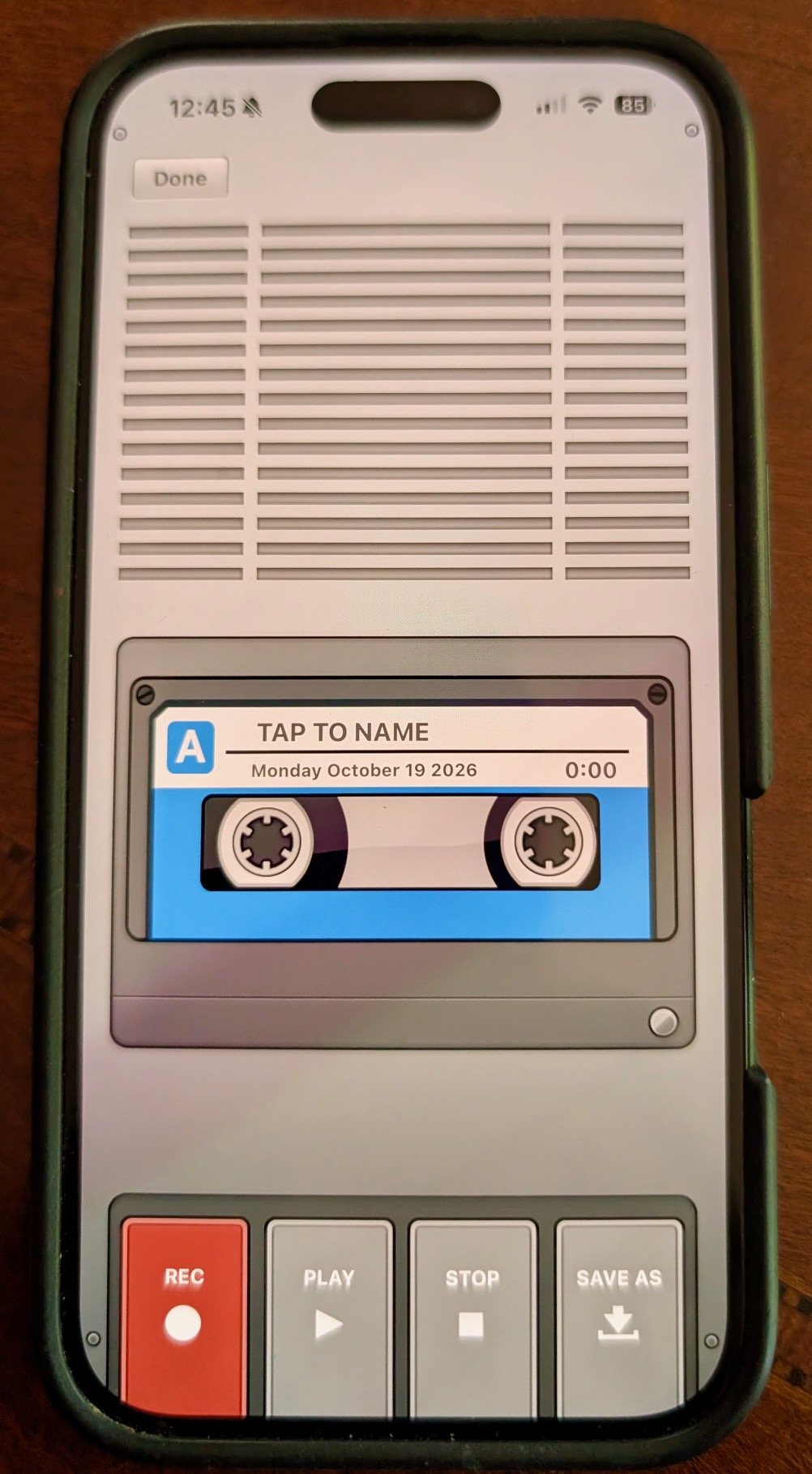
Also, consider recording your presentation remarks and listening to them today and tomorrow morning. The picture above features my iPhone with the Voice Recorder app that I use to memorize lines for roles in plays, something I’ve done four times already in 2026–twice in plays in Greensboro and twice in Winston-Salem. Whenever I’m in rehearsal, I spend as much time as I can listening to my voice speaking my lines. I listen to them on my daily walks in my neighborhood, when I’m driving, and when I’m pedaling on a stationary bike at the gym. Hearing myself speak the words over and over enables me to learn the lines more quickly than I could by simply reveiwing them on the page.
Another strategy to try is psychology professor Bennett Schwartz’s retrieval practice, the subject of Ulrich Boser’s article “Want to Play Scrabble Like a Pro? . . . . .” Try turning away from the written page–and away from the sound of your voice if you record it–and simply ask yourself what words and phrases you recall. The more often you ask yourself, the more you will remember. As Boser notes, “Indeed, it appears that at a very basic neurological level, grappling with material in a dedicated way promotes a type of shifting in our neural circuits–and a richer form of expertise” (par. 21). In the words of Schwartz, himself, “If we process things too easily, they do not form in our memories (qtd. in Boser, par. 21). Memorizing lines is a tedious process, but embracing the process will help you develop into a stronger public speaker.
Next Up
In class tomorrow, you will deliver your group presentation and you will serve as the audience for the other four groups’ presentations. It’s vital that you pay close attention to your classmate’s presentations and take notes on them because you will have a blog comment assignment that will require you to address your own presentation as well as one of the others.
After the presentations, in the second half of class, we will revisit the texts that served as your subjects: “Blogs vs. Term Papers” by Matt Richtel, “Why Writing by Hand is Better for Memory and Learning” by Charlotte Hu, “A Break from Your Smartphone . . .” by Allison Aubrey, “Want to Play Scrabble Like a Pro? . . .” by Ulrich Boser, and the first chapter of Ted Chiang‘s “The Life Cycle of Software Objects” in Exhalation (62-74).


