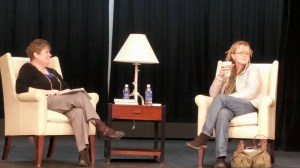
Thursday night at Lenoir-Rhyne, Sarah Vowell spoke of herself as a writer who takes her readers on a trip with her. Seeing Vowell interviewed on stage was a similar journey, one that led the audience from her childhood in Montana to her most recent book, Lafayette in the Somewhat Unites States (2015), with digressions along the way on Charlies Angels, the Trail of Tears, Louis Armstrong, The Incredibles, and Paul Gauguin.
When interviewer Mike Collins asked Vowell about her work on This American Life, she spoke of her writing process, noting that although the stories she wrote sounded casual, there wasn’t one from her twelve-year stint on the show (1996-2008) that underwent fewer than sixty-four revisions. Vowell recalled that Ira Glass, producer and host of the show, chided her for her repeated tangents–what she calls shenanigans–reminding her again and again of the need for brevity in radio. Paring her writing for the airwaves taught Vowell that she was better suited to writing books because they gave her room for shenanigans, citing her detour through the Oneida Community in Assassination Vacation.
In response to an audience member’s question about her writing process, Vowell said that it begins while she is travelling. Vowell explained that she takes “voluminous notes” on index cards. Later, when she returns home, she puts the cards on her living room floor and the process of organizing her research begins. The image of Vowell sitting cross-legged in her living room, placing cards on the floor in front of her as if she’s playing Solitaire, reminds me of her earlier remarks about radio, how each of those casual-sounding pieces she wrote was the product of sixty-four or more drafts. The meandering narratives of her books have a casual quality as well, but they’re the product of a highly organized process.
Vowell is one of the featured authors in the Visiting Writers Series as well as the author of this year’s Campus Read, Assassination Vacation. Her interview with WFAE’s Mike Collins was recorded for later broadcast on Charlotte Talks.
Work Cited
Vowell, Sarah. Visiting Writers Series Interview by Mike Collins. 27 Oct. 2016, P.E. Monroe Auditorium, Lenoir-Rhyne U., Hickory, NC.
Sarah Vowell’s Assassination Vacation chronicles her pilgrimage to the sites commemorating the lives and deaths of our first three assassinated presidents–places including the Lincoln Memorial, where she notes that reading his Second Inaugural speech “is to see how Lincoln’s mind worked” (27). Similarly, reading Vowell’s own words shows readers how her mind works. Crafting a narrative that combines memoir, travelogue, revisionist history, and cultural critique, Vowell’s 2005 book recounts her journey in her characteristic roundabout fashion, one that risks frustrating readers who crave a more straightforward narrative. Among the devices that give unity to Vowell’s meandering story are the musicals and songs that she turns to repeatedly, to frame her narrative, to comment on the presidents and their assassins, and to make sense of her morbid obsession.
Vowell’s preface opens in the Berkshires, where she has traveled to visit the home of Chester French, the artist who designed the sculptural centerpiece for the Lincoln Memorial. But the preface doesn’t start with French or with Chesterwood, the site of his house and studio. Instead, Vowell recounts watching a production of Stephen Sondheim’s musical Assassins, beginning her book with these words: “One night last summer, all the killers in my head assembled on a stage in Massachusetts to sing show tunes. There they were—John Wilkes Booth, Charles Guiteau, Leon Czolgosz—in tune and in flesh” (1).
Original production logo / wikipedia.org
Chapter One opens in a similar fashion, with Vowell in another theater watching another musical. This time it’s 1776 at Ford’s Theatre, where Vowell observes with her trademark wit that going to watch a play “is like going to Hooters for the food” (21). Her primary reason for being there is to see the site where John Wilkes Booth shot Lincoln. Though she had planned to leave at intermission, Vowell stays for the second act, which dramatizes Adams and Jefferson “yielding to the southerners’ edit” of the Declaration of Independence (23). Vowell’s account of watching 1776 at Ford’s Theatre becomes a link between the founding fathers’ concession and Lincoln’s assassination. In Vowell’s words, “I can look from the stage to Lincoln’s box and back again, and I can see exactly where this compromise in 1776 is pointing: into the back of Lincoln’s head in 1865” (23).
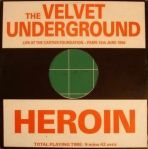
“Heroin” 45 / genius.com
With Chapter Two, Vowell faces the challenge of depicting a subject far less important and interesting than Lincoln. Writing of our second assassinated president, James Garfield, Vowell admits that “it’s hard to have strong feelings about him” (135). To breathe life into her description of Garfield, Vowell turns to music, likening his diary entry about rearranging his library to “the druggy glow you can hear in Lou Reed’s voice on ‘Heroin’” (135). And she turns again to song when she recounts doctors probing Garfield’s wound with their unsterile fingers, prompting the infection that led to his death. Observing that Garfield might have survived otherwise, Vowell writes: “[A]s Laurie Anderson once put it, “It’s not the bullet that kills you, it’s the hole” (160).
Though Garfield’s assassin, Charles Guiteau, enlivens Chapter Two, the same can’t be said of William McKinley’s assassin, Leon Czolgosz in Chapter Three. Writing of the problem of depicting the sad sack Czolgosz, Vowell turns again to Stephen Sondheim’s Assassins, the musical that opens the book:
Even Stephen Sondheim cannot tart up Leon Czolgosz. Czolgosz is such a sad pathetic character, and by pathetic I mean drowning in pathos, that he is the one psycho killer in the musical Assassins who never gets a laugh. He is as drab and morose as Charles Guiteau is snappy. (214)
In the final chapter, Vowell joins in on the singing briefly, when she takes part in an a capella rendition of “How Great Thou Art.” Singing that hymn at an Easter Sunday service at the Lincoln Memorial reminds Vowell of Elvis’s recording of it, one of her mother’s favorites, which leads Vowell to realize where her preoccupation with presidential killings began: “I can probably trace this whole morbid assassination death trip back to my parents’ record collection. Specifically, Buddy Starcher’s spoken-word LP History Repeats Itself” (252).
“History Repeats Itself” 45 / 45cat.com
The title track of Starcher’s album, which recounts the similarities between the Lincoln and Kennedy assassinations, still sparks something inside her, Vowell observes, because “these creepy historical flukes offer momentary relief from the oppression of chaos and that is not nothing. They give order to the universe. They give meaning” (254). Likewise, Starcher’s song and the others Vowell weaves into her narrative give Assassination Vacation a sense of order and meaning.
If Vowell were writing her book on assassinations now, she might offer a digression on the recent debates, perhaps observing that the first question Elaine Quijano posed of vice presidential candidates Mike Pence and Tim Kaine referenced Lloyd Bentsen’s opening statement in his 1988 debate with Republican vice presidential candidate Dan Quayle: “[T]hat has happened too often in the past. And if that tragedy should occur, we have to step in there without any margin for error, without time for preparation, to take over the responsibility for the biggest job in the world.”
The unnamed tragedy is assassination, of course, reminding viewers of the same uncomfortable truth about history repeating itself, the truth that haunts Vowell’s ears as she ends the book, years before we would find ourselves in our current political landscape—one as unimaginable as rap songs about the first secretary of the treasury.
Surely if Vowell were writing Assassination Vacation now, references to Hamilton would abound. When Hamilton’s writer and star, Lin-Manuel Miranda, hosted Saturday Night Live earlier this month, he said of his Tony and Pulitzer Prize-winning musical that “it’s such a nice escape from all the craziness in our world right now. It’s about two famous New York politicians locked in a dirty, ugly, political, mud-slinging campaign. It’s escapism.” Those words could have been written by Vowell, herself. Escapism, indeed–not the narrative, but the sarcasm that offers some comic relief.
Only a few hours after the announcement of this year’s Nobel Prize for literature, novelist Marlon James, recipient of the 2015 Man Booker prize, took the stage at Lenoir-Rhyne’s Belk Centrum and said that he was “very excited” about Bob Dylan’s win. James questioned whether the people who opposed the choice of Dylan had heard much of his music. Many ancient epics were written to be sung, James observed, and he challenged the audience to “listen to ‘It’s Alright, Ma (I’m Only Bleeding)’” and “tell me it’s not literature.”
Turning from Bob Dylan’s Nobel Prize to his own writing, James—one of the featured authors in Lenoir-Rhyne’s Visiting Writers Series—said that the first sentence that he wrote of his third novel, A Brief History of Seven Killings (2014), was now on page 458 and joked that the 680-plus page novel was actually an 800-page book, but he reduced the font and narrowed the margins.
James said that he had begun by writing a novel about a really sloppy hit man who was also in love, but around page fifty he ran into a dead end. After creating additional characters and running into more dead ends, James concluded that he was writing a string of failed novellas. Then he had a Eureka moment: He reread William Faulkner’s As I Lay Dying (1930), narrated by fifteen characters, and realized that he was writing about the failed dream of the Jamaican 1960s, and that one voice alone could not tell the story. James also credited James McEllroy’s novel American Tabloid (1995) as a major influence on the writing of A Brief History of Seven Killings.
Among the excerpts James read from the novel include ones featuring the ghost of the dead Jamaican politician Arthur Jennings and immigrant Dorcas Palmer—whose name isn’t really Dorcas Palmer—who works a series of no-questions-asked jobs as a care giver in New York. They are the branches of the novel, James said, noting the book began with them rather than the trunk—though it may seem like the opposite, that the book began with Marley at the center.
James noted that one of the difficulties of writing about Marley was that by the time of the 1976 assassination attempt, Marley was already a literary device of sorts. For me growing up, James noted, he was a series of news reports: Marley is on tour, Marley has been shot, Marley has cancer . . . .
To guide him as he wrote around the dying man at the center of his novel, Marlon James turned to the classic Esquire magazine story “Frank Sinatra Has a Cold” (1966), a profile that Gay Talese had been assigned to write as an interview with Frank Sinatra, but the singer refused to talk to him. Talese’s solution to the problem was to talk to everyone around Sinatra. Similarly, instead of moving in close, James’s narrators circle Marley in his last days.
In response to an audience member’s questions about knowing when you’ve finished revising, James said that he knows early on in the process when he’s done, but that it takes him four or five months to admit it. James said that A Brief History of Seven Killings doesn’t end with a flourish or with a profound statement about the human condition; it doesn’t end as much as it stops. He kept working on the book until a voice in his head told him, you finished four months ago.
One of the problems with writing stories, James said, is that we start too early and end too late. James recounted that once while submitting copies of the manuscript of his first novel, John Crow’s Devil, that he was short on paper and money, so he sent out a copy without the first and the last twenty pages. The agent who read it, James said, didn’t say that it started too late or ended too early.
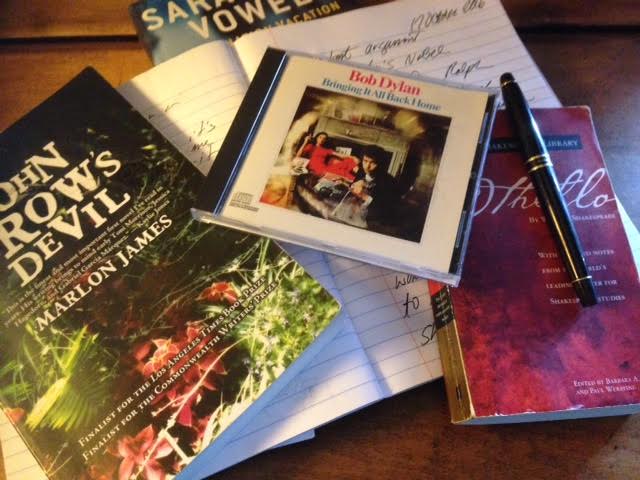
Reflecting on James’s observations about writing—beginning with his opening remarks about Bob Dylan—brings to mind the role of music in his own writing, starting with the lines from Captain Beefheart’s “Dachau Blues,” lyrics that serve as the epigraph for his debut novel, John Crows’ Devil. Those song lyrics are some of the first words we see in the book, but it’s likely that neither those words nor the words of the chapter that they introduce are the first ones he put on the page, evidenced by the fact that the first sentence he wrote for A Brief History of Seven Killings appears on page 458.
Beginnings and endings are difficult, Marlon James reminds us, though in the case of these words about his Thursday-night presentation, I knew from the start that I would begin with his opening remarks on Bob Dylan. (How I would begin was another matter altogether, and so was where and how I would end.) Of A Brief History of Seven Killings, James said that the novel doesn’t end as much as it stops. Taking a cue from him, I will stop here, reflecting on the insight that his remarks shed on his first novel—one that my students and I studied earlier this semester—one that begins with the chapter “The End” and ends with the chapter “The Beginning.”
The best argument for Dylan’s Nobel Prize comes from Ralph Waldo Emerson, even though he died a century before Shot of Love. His 1850 essay ‘Shakespeare; or the Poet,’ from the book Representative Men, works as a cheat sheet to Dylan. For Emerson, Shakespeare’s greatness was to exploit the freedoms of a disreputable format, the theater: ‘Shakespeare, in common with his comrades, esteemed the mass of old plays, waste stock, in which any experiment could be freely tried. Had the prestige which hedges about a modern tragedy existed, nothing could have been done. The rude warm blood of the living England circulated in the play, as in street-ballads.’
This is a key point–Shakespeare was a writer/actor/manager hustling in the commercial theater racket for live crowds. He didn’t publish his plays–didn’t even keep written copies. Once it was onstage, he was on to the next one. (After his death, his friends had to cobble the First Folio together, mostly from working scripts, hence the deplorable state of his texts.) Low prestige meant constant forward motion. The theater was becoming a national passion, ‘but not a whit less considerable, because it was cheap.’ He aimed his poetry at the groundlings: ‘It must even go into the world’s history, that the best poet led an obscure and profane life, using his genius for the public amusement.’
Dylan didn’t write many books either–his songs came out of that same ‘rude warm blood.’
“The Preacher and the Apostle,” one of the early chapters in Marlon James’s novel John Crow’s Devil, offers the first glimpse of the Jamaican village of Gibbeah and the man who comes to own it. Aloyisius Garvey, who renames the village Garveyville, dictates that every house be red, like his. Though people forget “with time and grime” (26) and call it black, the plantation-style house remains red and its dark curtains remain closed, “reveal[ing] no secrets” (26). Although the description of Gibbeah lacks the graphic detail of the novel’s often nightmarish scenes, it stands as one of the most haunting moments in the book for its foreshadowing of the horrors hidden in plain sight.
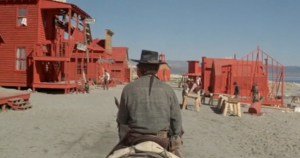
“High Plains Drifter” / horrorcultfilms.co.ok
For readers versed in revisionist westerns, Gibbeah may evoke images of the red town of Lago in High Plains Drifter, where the buildings, like those of Gibbeah, are painted by decree. And like the town of Lago, the village of Gibbeah comes under the rule of a figure seeking vengeance. In the film it’s the avenging angel who paints the town red. In James’s novel he returns–whether fallen angel or Antichrist–to a village stained red a generation earlier.
Late in the novel, after readers learn the true identity of the “stranger” who comes to town, it’s evident how the malignant neglect and abuse of Garvey’s rule gives rise to the totalitarian regime of his “nephew,” Apostle Lucas York: The villagers and their spiritual leader, Pastor Hector Bligh, fail to see, both through ignorance and turning a blind eye. As York says to Bligh after he takes the Pastor prisoner: “The only reason that man [Garvey] hired you is because you were as blind then as you are now” (212).
Even the Widow Greenfield, “the only one who eye no blind” (193), as Lucinda says, turns a blind eye to Garvey in defense:
He [Garvey] owned every red building including the church. Surely he could drive the Apostle out of the village and put Gibbeah back where it used to be. She thought for a minute about what that meant. Hypocrisy was as much a shield for her as anybody else. Pretense was protection. (183)
But the widow doesn’t know the extent of Garvey’s savage cruelty until she sees it documented in the sepia photographs that she discovers among the casualties: “In all her years of suspecting Mr. Garvey of sodomy and seeing his several nephews, she had never married the two. Her mind traveled to places she had not thought thinkable” (208).
Finally seeing the unthinkable as the widow sees it heightens the haunting quality of the first description of the village. Revealing the secrets once hidden in plain sight, Marlon James’s unflinching look at Gibbeah sends readers’ minds to places we’d rather not go, but it’s a crucial journey, one that leads not only to the boys and girls of Gibbeah—caught as they try to scramble over the fence—but also to the children of Aleppo, victims of an all-too-real conflict, one we must hope will end, as Gibbeah’s does, with survivors poised to tell the tale.
Three pictures, one-hundred words, minimum: That’s what I asked of my students, and of myself, for the introductory blog assignment for the semester. “Rather than trying to tell your whole life story,” I wrote in the assignment, “focus on one aspect of your life or one interest of yours.” It sounds simple enough, doesn’t it? But when I sat down to complete the assignment, words initially failed me. As I tried to compose a draft in my mind, what came to me instead were these lines from Patricia Hampl’s essay “Red Sky in the Morning”:
How much reality can subject-verb-object bear on the frail shoulders of the sentence? The sigh within the sentence is more like this: I could tell you stories–if only stories could tell what I have in me to tell. (178)
Choosing to include those lines of Hampl’s reflects my passion for writing, while the words themselves illustrate the struggle of writing–even for those of us who identify ourselves as writers.
1989 manuscript with notes from my teacher. The story, which she titled “Heat,” was published in 1991.
At the beginning of last semester, when I projected my own blog on the screen for the first time, one of the students remarked on the tagline: “Writer, Teacher.”
Have you written any books? she asked.
Written, not published, I started to say (“I could tell you stories . . .”), but instead I said, “I am not an author of any books, but I identify myself as a writer because I am someone for whom writing has always been a way of making sense of the world.
Review of “Go Set a Watchman” (2015)
Work Cited
Hampl, Patricia. “Red Sky in the Morning.” Imaginative Writing: The Elements of Craft. Ed. Janet Burroway. 3rd ed. Longman, 2011.
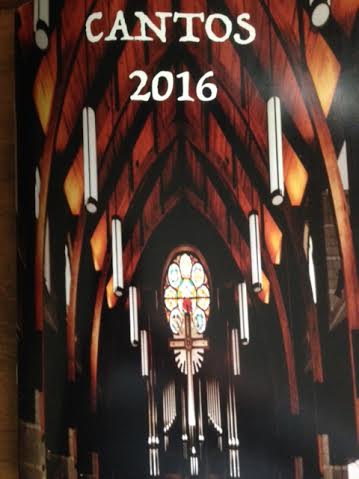
Lenoir-Rhyne’s literary magazine, featuring a cover photo by Erin Illich
Once again at the semester’s close, I am pleased to turn the pages of Cantos and see the poetry, prose, artwork, and photography of my students, some who just completed English 131, others of whom I taught in English 131, 231, or 281 in previous semesters:
“Archetype, Embodied” and “A Smile as Bright as Myth,” poems by Kati Waldrop (ENG 231, Fall 2014; ENG 281, Spring 2015), Editor in Chief of Cantos
“Blackberries, a poem by Ghia Smith (ENG 131, Fall 2013)
“Used,” a poem by Haylee Carpenter (ENG 131, Spring 2016)
“Voting for Dummies—a Satire” by Claire Grulick (ENG 131, Spring 2016)
Photographs by Katelyn Barker, Jordan Puckett, Autumn Stewart, and Taylor Welch (ENG 131, Spring 2016)
I am also very pleased to see the short story “Cookie Jar” by my friend Carla Robinson.
I am proud of all of you—not just those of you whose work was selected but all of you who submitted your work for consideration.
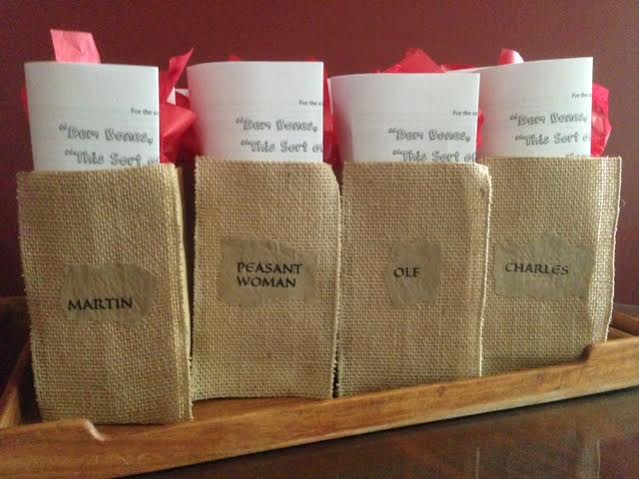
Bags of bone candy and bibliographies for the cast and crew
Back in February, when I first curled up with the script of Incorruptible—the farce I’d just been cast in and recently performed in—I was struck by the author’s note: “This sort of thing really happened” (6). The “sort of thing” that playwright Michael Hollinger was referring to was the theft and sale of relics in the Middle Ages, not just the actual bones of saints, martyrs, and biblical figures but also random bones passed off as sacred.
It didn’t surprise me that such theft and fraud took place, but I’d never given much thought to medieval relics—or to the churches of the Middles Ages, for that matter. The thought of medieval monks stealing relics intrigued me though, and the more I turned the idea over in my mind, the more it made sense. If sacred bones were valuable centuries before the science of DNA extraction, then who could say that any given relics—from the Latin reliquiae, literally things left behind—weren’t the veritable bones of Saint Paul or Mary Magdalene?
My interest in the facts behind the farce along with my commitment to the practice of completing assignments with my students led me here. For their final paper of the semester, I asked my students to annotate sources, a minimum of three, on a subject of interest to them, and to introduce their bibliography with a short essay that addresses their interest in the subject. In other words: What drives your research? In my case, it’s “dem bones,” the relics of the Middle Ages (and the plastic versions that I’ve been circling on stage).
As I researched medieval relics, I was reminded over and over of lines from the play. I had always associated the medieval churches of Europe with cathedrals and palaces, but I learned from my research that in fact the “centers of religion and cultural life [in the Middle Ages] were not cathedrals or palaces but rather rural monasteries” (Geary 45). As I read those words, I recalled Brother Martin’s dismissal of the “second rate” convent in Bernay “run by a bunch of backwoods nuns” (16) and the words of my character, Agatha, Abbess of Bernay, echoing Martin with her dismissal of her brother’s monastery: “What’s in Priseaux, I said, but a second-rate monastery run by a bunch of backwoods monks?” (67).
Whether second-rate or backwoods, the monks of the rural monasteries at the heart of medieval life depended on the revenue generated by relics. And they “viewed theft as an appropriate means of relic acquisition” (Geary 108), rationalizing and justifying theft and fraud as Charles, the abbot, and Martin do when Felix reminds them that they didn’t renounce the world to become as corrupt as the merchant class, that they “are men of the noblest ideals” (36):
MARTIN. And if we fail in that mission, will it matter how noble we were? (To Charles). There’s a shoemaker’s family that won’t get supper tonight because of our high ideals. I turned away fourteen others today; is this the ideal of Christian charity?
CHARLES. Martin’s right. We’re on the precipice, Felix. The abyss opens at our feet. If, somehow, by . . . soiling our hands just a bit, we can make it to the other side, mightn’t that justify our compromise? (36-37)
The bone candy before I bagged it
The bibliography that follows includes three sources: Incorruptible, the play that prompted my research, Furta Sacra, a book-length study of relic theft in the central Middle Ages, and Holy Bones, Holy Dust, the first comprehensive history of relics in medieval Europe, which includes a chapter devoted to incorruptibles, the relics that give Hollinger’s play its name. An incorruptible, as Charles says, is “[a] saint so holy its body refuses to decay” (52).
If I were a historian, or an anthropologist, or a theologian, this work of mine might lead to an in-depth study of medieval relics. Since I’m none of those things, it’s unlikely that I’ll return to “dem bones” as a subject of writing or research. Still, it’s been a valuable journey, one that informed every trip back to Priseaux, as I stood onstage as Abbess Agatha, believing that I’d bought the bones of Saint Foy “out from under” my sibling rival (68).
Annotated Bibliography
Freeman, Charles. Holy Bones, Holy Dust: How Relics Shaped the History of Medieval Europe. New Haven: Yale UP, 2011. ProQuest ebrary. Web. 6 April 2016.
A history of relic veneration in medieval Europe, Holy Bones, Holy Dust chronicles the roles of saints’ cults and miraculous interventions from the fall of the Roman Empire to Reformation. Freeman traces the growth in the popularity of relics as they proliferated in various forms. The most sought after were intact bodies and body parts (severed head and limbs), and detritus (fingernails, blood, and hair). Some were placed in ornate reliquaries and processed through towns, drawing pilgrims seeking miracles and remission of sins.
Geary, Patrick J. Furta Sacra: Thefts of Relics in the Central Middle Ages. Princeton: Princeton UP. Rev. ed. 2008. ProQuest ebrary. Web. 4 April 2016.
To acquire the relics of saints, medieval monks ransacked tombs, greedy merchants raided churches, and relic-mongers dredged the Roman catacombs. Patrick Geary’s study of the medieval tradition of sacra furta (or holy theft) narratives, explores how hagiographers’ accounts of the thefts served to rationalize and justify them in a time, when as Geary observes, “the prosperity of a religious community was a fragile luxury” and “the acquisition of relics was a real necessity” (57).
Hollinger, Michael. Incorruptible. New York: Dramatists Play Service, 2002. Print.
Set in thirteenth-century France, Hollinger’s farce centers on the financially-struggling monastery of Priseaux, whose patron saint hasn’t performed a miracle in a dozen years. After one of the young monks, Felix, returns from his travels to report that their own St. Foy has been sold to a rival convent in Bernay, the monks confront the one-eyed travelling minstrel who fits the description of the relic-monger. The minstrel, Jack, tells the monks that he did indeed sell bones to the convent, but they were not St. Foy—as he had told the abbess they were—but rather they were simply the bones of a pig farmer. Jack’s confession and subsequent observations about the potential value of fraudulent relics lead the monks of Priseaux to hatch their own money-making scheme.
Friday morning when Paul Muldoon spoke to students in Belk Centrum—as one of the featured authors in Lenoir-Rhyne’s Visiting Writers Series—he addressed the appeal of poetry, the importance of reading masters of the craft, the teaching of poetry, and his own writing process.
Paul Muldoon / visitingwriters.lr.edu
Local poet and Adjunct Professor Scott Owens, who interviewed Muldoon, began by asking the question, “Why write poetry?” In response, Muldoon noted one of his favorite observations about poetry, from W. B. Yeats: A man dabbles in verses, and they become his life. Muldoon recalled how he first wrote a poem as a teenager. Rather than composing the weekly essay, he decided to write a poem because it was shorter, and it seemed easier. The following Monday the teacher asked him to read it to the class. The act of reading his words aloud to his peers felt wonderful to him, and he was hooked. I have a very primitive view of how the brain works, he said. We are happy when we see connections being made in the world. Poetry is about that, about finding the likeness in unlike things.
In response, Owens commented on Muldoon’s penchant for analogies, mentioning his recent poem “Catamaran,” in which he likens sperm whales to the two-hulled boat of the title. That comparison reminded me of the gliding movement of the snail that Muldoon likens to a hovercraft in his early poem “Hedgehog,” which my students and I read as a prelude to his visit.
When Owens asked if he preferred James Joyce or W. B. Yeats, Muldoon replied that he admired both of them. I fear that this will sound presumptuous, he added, but sometimes when I read Yeats, I say to myself, I could do this. But Joyce, never. That would never cross my mind. Joyce is a mystery.
Owens observed that he could see the influence of both Joyce and Yeats in Muldoon’s work, to which Muldoon replied: As an Irish writer, there’s no point in pretending that they aren’t there. He added that it’s essential to study the masters, to see what (John) Donne has done or what (Emily) Dickinson has done. And if you’re going to write big stanzaic poems, you need to study Yeats.
Muldoon, who has taught at both Oxford and Princeton, noted that as a professor he has to believe—as all teachers of writing have to believe—that we can learn to do what other writers have done. The Pulitzer Prize-winning poet said that when goes to the bookstore and sees a book on how to write a poem, he buys it. If he is working on a poem and it seems to be taking on the form of a sestina, he looks up the rhyme scheme of a sestina—because he isn’t crazy, Muldoon said. No sane person keeps that rhyme scheme in his head, he added.
In response to a question about how his power of observation plays a role in his poetry, Muldoon said that writing poetry means looking hard at the world; “description will take you a long way down the road.” He added, sometimes I tell my students not to get hung up on writing a poem. Think of your writing as a documentary.
When an audience member asked, “Who’s in charge, the poet or the poem?” Muldoon said the poem, adding that many things that happen in his poems come from a passive, ignorant, or innocent mode. I want to come out of the poem that has asked to be written, he said. There’s no decent analogy for that. Muldoon’s follow-up statement, “I never know what I’m doing,” echoed the sentiments of Lamott, who sat on the same stage in the same chair a week earlier. In the chapter “Shitty First Drafts” in Lamott’s Bird by Bird, she observes that “[v]ery few writers really know what they’re doing until they’ve done it.”
Muldoon spoke of the importance of fumbling around in your writing, saying that when you’re writing—whether it’s a poem or an essay or something else—it only becomes interesting when you come up with an idea that you didn’t expect to have.
Near the end of Muldoon’s talk, a student asked him whether a poem can be about the subject on the page or whether it always signifies something else. Muldoon replied that a poem could be about what’s on the page, adding that the question brought to mind one of the problems with the way that poetry is often taught. The problem is that sometimes we’ll look at the duck on the pond and say that the duck on the pond is really the British Empire. Well, sometimes it’s the duck on the pond. Sometimes the poet is just writing about the duck.
Now having listened to Muldoon, I imagine that my method of teaching his poem “Hedgehog” is similar to the way he asks his own students to study poems. Rather than presenting an interpretation, I asked students to look closely at the poem—the way that poets, in Muldoon’s words, look hard at the world, because “description will take you a long way”—and consider why he may have chosen to render the hedgehog as we see it, in the last stanza, as a “god” (17) with a “crown of thorns” (18).
As a lead-in to Anne Lamott’s appearance on campus—as one of the featured authors in Lenoir-Rhyne’s Visiting Writers Series—my students and I read and discussed the chapter “Shitty First Drafts” from Lamott’s Bird by Bird: Instructions on Writing and Life (1994). It’s a chapter that I’ve read with my students several times throughout my years of teaching, one I should probably assign every semester because it offers some of the most valuable advice about writing and life that I’ve read.
Lamott advises her readers to give themselves permission to write awful—or as she puts it, “shitty”—first drafts because they’re an essential part of the process. Later in the chapter, she refers to the first draft as the child’s draft, “where you let it all pour out and then let it romp all over the place.” That’s the same way that I, and many other writers and teachers, envision freewriting. When my students and I freewrite in our journals, I tell them to keep writing even when they think that they have nothing to say, because eventually they will have something to say. And until then, it’s okay to write over and over I have nothing to say, or blah, blah, blah. In Lamott’s words:
[T]here may be something great in those six crazy pages that you would have never gotten to by more rational, grown-up means. There may be something in the very last line of the very last paragraph on page six that you just love, that is so beautiful or wild that you now know what you’re supposed to be writing about, more or less, or in what direction you might go—but there way to get to this without first getting through the first five and a half pages.
I wasn’t able to see Lamott when she spoke Thursday night at P. E. Monroe auditorium. (While she was there, I was standing on another stage a mile or so away, wearing a nun’s habit and screaming at monks—but that’s another story.) I was, however, able to attend her Friday-morning talk in Belk Centrum, where she told the students not to get bogged down in trying to please people—that they shouldn’t aim to write what they think other people will like but instead write to express their own truth.
Professor Kathy Ivey interviewing Anne Lamott / visitingwriters.lr.edu
In response to an audience member’s question about outlining, Lamott replied no, she doesn’t write outlines but plans her work on oversized sheets of graph paper on which draws large circles like lily pads for her ideas. She said she loves paper and pencils and pens, adding that she steals pens and actually stole one the night before from the Hickory Public Library.
Lamott told the audience: You don’t need to know more than you know, but you start somewhere—an idea that echoes the first line of the second paragraph of “Shitty First Drafts”: “Very few writers really know what they’re doing until they’ve done it.” She recommended reading The Paris Review interviews, especially the ones with novelists, because they show us how the writers got their work done.
In response to a question about the unfathomable questions—such as why do awful things happen to good people?—Lamott said that the most offensive thing that you can do is offer an answer that you could put on a bumper sticker. The way not to be, Lamott said, is to have little answers to unfathomable questions. Instead she said she responds by saying, read more poetry, and I will, too. And I’ll stay if you want me to, and maybe tomorrow we’ll go buy some make-up or go on a field trip . . . .
After a student said that she identified with Lamott because she, too, was a liberal and a Christian, Lamott simply said: “It’s very hard to be the things you are.”
Lamott added that if you’re pretending to be someone you aren’t because you’re addicted to people-pleasing, then you’re never going to be able to be yourself. She concluded with these words: I hope my writing gives you the confidence to be who you are—to be yourself, not someone focused primarily on loyalty to family or country but someone with a passionate commitment to yourself.
Both her words on the page and on the stage Friday morning have led me toward that self-assurance, and I hope that they have led my students there as well.
Works Cited
Lamott, Anne. Visiting Writers Series Interview by Kathy Ivey. Lenoir-Rhyne U. 8 Apr. 2016.
—. “Shitty First Drafts.” College of Arts & Sciences Writing, Rhetoric & Digital Studies. U of Kentucky, n.d. PDF. 6 Apr. 2016.









 Jane Lucas