
The final essay and annotated bibliogaphy are ones that I wrote as models for you. The bibliography includes Jonathan Kay’s essay “Scrabble is a Lousy Game,” the starting point for my research, four refereed research articles, and a newspaper story featuring a Scrabble prodigy who began playing the game during the COVID-19 pandemic lockdown.
Scrabble as a Game Changer in the College Classroom
Earlier this month, when I reread Jonathan Kay’s Wall Street Journal review “Scrabble is a Lousy Game,” I once again meditated on his criticism of Scrabble as a word game that deemphasizes semantics. In Kay’s words, “Scrabble treats language the way computers do—as arbitrarily ordered codes stored in a memory chip” (C5). I asked myself, if I want my students to play a board game that cultivates word power, collaboration, critical thinking skills, is Scrabble the game to choose? Thus, Kay’s review became the starting point for my research on the benefits of Scrabble play. As I scrolled through search results, I found only a handful of articles that specifically addressed Scrabble in the college classroom, but many that focused on the value of the game, itself, for sharpening the mind.
The dearth of articles on Scrabble in the college classroom may be explained by the emphasis on classwork with assessable outcomes rather than activities that foster the habits of mind essential to lifelong learning. The bibliography that follows includes Kay’s review, the starting point for my research, four refereed research articles, and a newspaper story featuring a Scrabble prodigy who began playing the game during the COVID-19 pandemic lockdown. Three of the four refereed articles offer windows into the classrooms of professors whose students play Scrabble: one an English professor at a two-year college in California, a second, a director of the honors program at a university in Kansas; and third, a professor of engineering at a polytechnic university in Russia. The fourth article addresses cognitive evaluations of competitive Scrabble players and what they reveal about how experience shapes word recognition.
Though Kay’s criticism of Scrabble warrants reconsidering the inclusion of Scrabble in my first-year writing classes, his disapproval of the game stems from the practices of tournament-level players, not people for whom the game is a pastime—or from students, like mine, who play Scrabble as a classroom exercise. It’s also notable that collaboration, which is an essential component of team Scrabble, does not factor in Kay’s review.
In “Tabletop Games and 21st Century Skills Practice in the Undergraduate Classroom,” Mark Hayse observes that “[T]wo of the four Cs, communication and collaboration, figured prominently” (298). And he and his two colleagues who participated in the study all reported “that tabletop gameplay helped students move from classroom passivity to classroom ‘engagement’” (298).
How much does Scrabble play cultivate our word power? The answer to that question remains unclear, but the research of psychologists and educators points to the merits of team Scrabble for improving not only our language skills, but also our facility with critical thinking, team-building, and spatial skills.
As I review my research on Scrabble, I look forward to searching for additional studies and commentary on the game. Whether it will lead to a larger project of my own, I do not know. But the knowledge I have gained will inform my teaching as I continue to revise the curriculum and consider additional opportunities for wordplay in the classroom.
Annotated Bibliography
Fletcher, Jennifer. “Critical Habits of Mind: Exposing the Process of Development.” Liberal Education, Winter 2013, pp. 50-55. Association of American Colleges and Universities, https://www.aacu.org/publications-research/periodicals/critical-habits-mind-exposing-process-development.
“Critical Habits of Mind” addresses the teaching practices of a group of college math and writing faculty who collaborated to develop lessons to foster intellectual capacities, such as motivation and self-efficacy. Developmental educational instructors from three California colleges, Cabrillo, California State University-Monterey Bay, and Hartnell College, partnered to pilot classroom activities, including clicker technology, peer writing review, improvisation, metacognitive writing activities (e.g. “Math Anxiety Essays”), and Scrabble Fridays. Reflecting on their collaboration, Fletcher observes that foregrounding procedural knowledge, as their pilot activities did, enabled them to couple their teaching of discipline-specific content with the set of behaviors essential to teaching and learning. Fletcher notes that Hetty Yelland observes “the extra effort students have to make to overcome the boredom—and their passive word knowledge—that eventually leads to more active and internalized language practices” (54).
Jennifer Fletcher is a Professor of English at California State University, Monterey Bay. Her books include Teaching Arguments, Teaching Literature Rhetorically, and Writing Rhetorically. Fletcher’s account of Hartnell writing instructor Hetty Yelland’s Scrabble Fridays is of particular value to educators who are considering Scrabble play as a classroom activity.
Hargreaves, Ian S., et al. “How a Hobby Can Shape Cognition: Visual Word Recognition in Competitive Scrabble Players.” Memory & Cognition, vol. 40, no. 1, 2012, pp. 1-7. ProQuest, http://nclive.org/cgi-bin/nclsm?url=http://search.proquest.com/docview/952889499?accountid=9935.
“How a Hobby Can Shape Cognition” presents the findings of Canadian researchers in the Departments of Psychology and Medicine at Calgary University who investigated how the word recognition skills of competitive Scrabble players differed from those of age-matched nonexperts. The researchers’ cognitive evaluations revealed differences only in Scrabble-specific skills, such as anagramming. Also, the researchers observed that Scrabble expertise was associated with two specific effects: vertical fluency and semantic deemphasis. The study’s results indicate that experience shapes visual word recognition.
Ian Hargreaves is Professor Emeritus of Journalism, Media, and Culture at Cardiff University and one of the contributors to A Manifesto for the Creative Economy, a the-point plan for bolstering creative industries. The research of Hargreaves and his former colleagues at Cardiff is pertinent to educators who seek to understand the cognitive benefits of frequent Scrabble play. Notably, the semantic deemphasis that the study identifies—and that Jonathan Kay addresses in his review—contrasts the gains in language skills that Hetty Yelland observes in her English students.
Hayse, Mark. “Tabletop Games and 21st Century Skill Practice in the Undergraduate Classroom.” Teaching Theology & Religion, vol. 21, no. 4, 2018, pp. 288–302., https://onlinelibrary-wiley-com.libproxy.highpoint.edu/doi/epdf/10.1111/teth.12456.
Mark Hayse’s and his colleagues’ primary research question was, “Does tabletop gameplay require the practice of 21st century skills?” (290). Their secondary question was, “What initial links might be drawn between tabletop gameplay, 21st century skill practice, and undergraduate learning?” All three professors reported “that tabletop gameplay helped students move from classroom passivity to classroom ‘engagement’” (298) and that “[e]ven though tabletop gameplay technically was coursework . . . the nontraditional nature of it seemed to render it as play more than work” (298).
Mark Hayes is Director of the Honors Program and Mobee Library Professor at MidAmerica Nazarene University. His other publications include an essay on the World of Warcraft, a study of the video game featured in the collection Don’t Stop Believin’: Pop Culture and Religion from Ben Hur to Zombies, edited by Robert K. Johnston, Craig Detweiler, and Barry Taylor.
Kay, Jonathan. Review. “Scrabble is a Lousy Game.” The Wall Street Journal, 4 Oct. 2018. ProQuest,https://libproxy.highpoint.edu/login?url=https://www.proquest.com/newspapers/scrabble-is-lousy-game-why-would-anyone-play/docview/2116081665/se- 2?accountid=11411.
In “Scrabble is a Lousy Game,” writer and editor Jonathan Kay criticizes Scrabble for its lack of emphasis on semantics. In Kay’s words, the game “is like a math contest in which you are rewarded for reciting pi to the 1,000th decimal place but not knowing that it expresses the ratio of a circle’s circumference to its diameter” (C5). Kay asserts that the best board games for casual players involve a mix of luck and skill and recommends two other board games, Codenames and Paperback, as better options for wordplay.
Jonathan Kay is senior editor of the journal Quillette and the author of Your Move: What Board Games Teach Us About Life. While Kay’s review focuses on the competitive player’s approach to Scrabble, the concerns he raises about the game’s deemphasis of word meaning and the frustration that novice players can experience warrant the attention of educators who are researching the potential drawbacks of introducing Scrabble play into their classrooms.
Kobzeva, Nadezda. “Scrabble as a Tool for Engineering Students’ Critical Thinking Skills and Development.” Procedia: Social and Behavioral Sciences, no. 182, 2015, pp. 369-74. ScienceDirect, https://www.sciencedirect.com/science/article/pii/S1877042815030669.
“Scrabble as a Tool for Engineering Students’ Critical Thinking Skills and Development” presents research involving second-year engineering students and teachers of EFL (English as a Foreign Language) at Tomsk Polytechnic University in Tomsk, Russia. The students—all non-native speakers of English—played Scrabble as an in-class and out-of-class-activity for one academic year. At the end of the year, the best six student players competed in teams in a tournament against two teams of the six EFL teachers. Throughout the tournament—which was conducted outside of the classroom to relieve students of the pressure to obtain a high score—the researcher, Nadezda Kobzeva, observed the contrast in the students’ and teachers’ practices as players. While the EFL instructors possessed an advanced knowledge of English language, they were newcomers to Scrabble. On the other hand, the engineering students with limited knowledge of English relied on the skills they developed throughout their year-long Scrabble program. In the feedback the students provided after the tournament, which they won, the majority of students rated the skills they developed as Scrabble players as excellent in all five fields assessed, including team building, thinking, spatial skills, vocabulary, and spelling.
Kobzeva, Professor of Engineering at Tomsk Polytechnic University, focuses her research on engineering students, but her findings are valuable to researchers and teachers in other fields who seek answers to the questions of how Scrabble can be used effectively as a learning tool, and what specific skills students may develop through frequent play.
Liu, Rebecca. “‘Dig Deep and Think as Hard as Possible: The Secrets of Success in Scrabble, Sudoku, Jenga and More.” The Guardian, 24 Dec. 2022. Gale Business: Insights, link.gale.com/apps/doc/A731074943/GBIB?u=hpu_main&sid=bookmark-GBIB&xid=174c68bc.
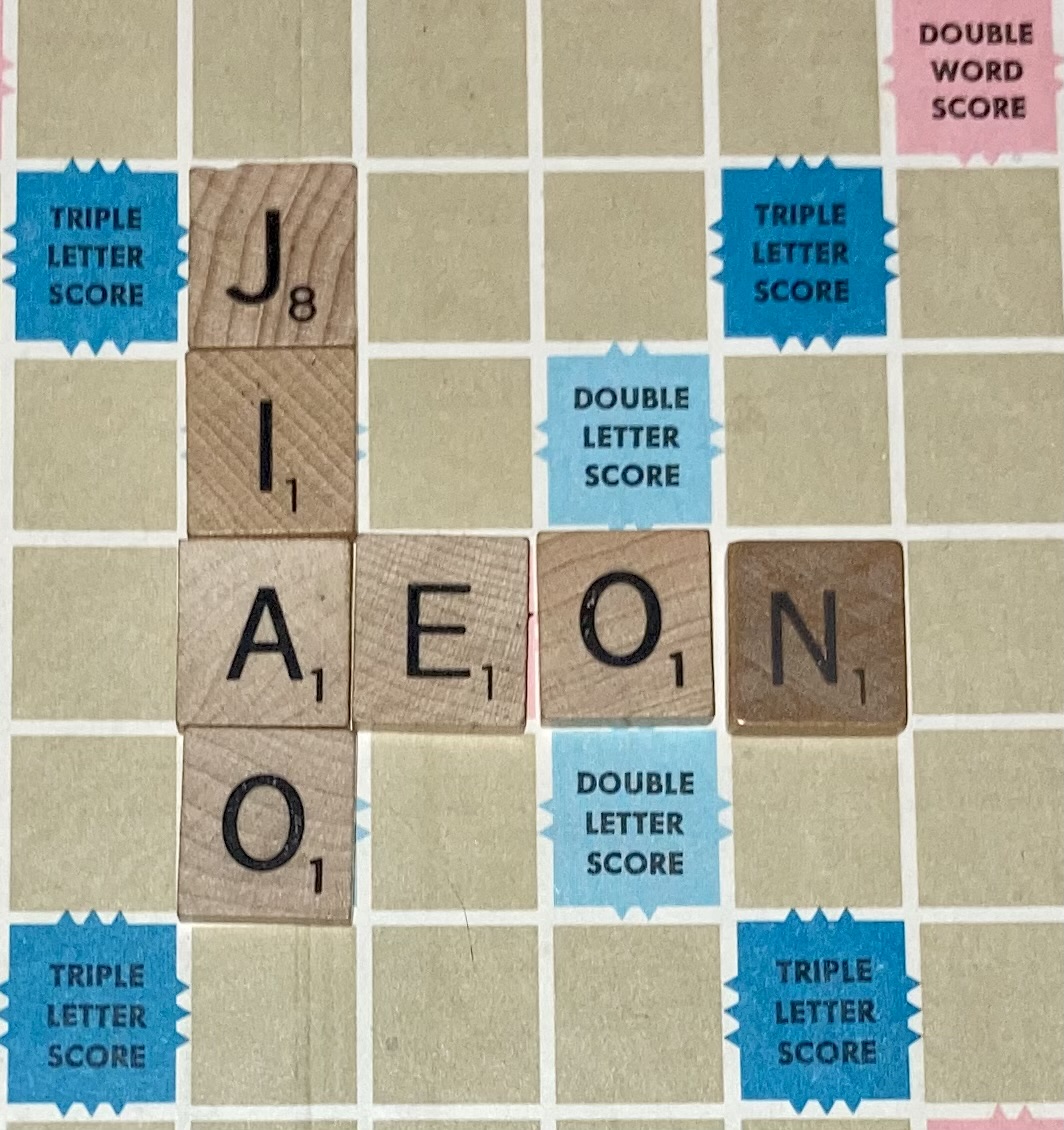
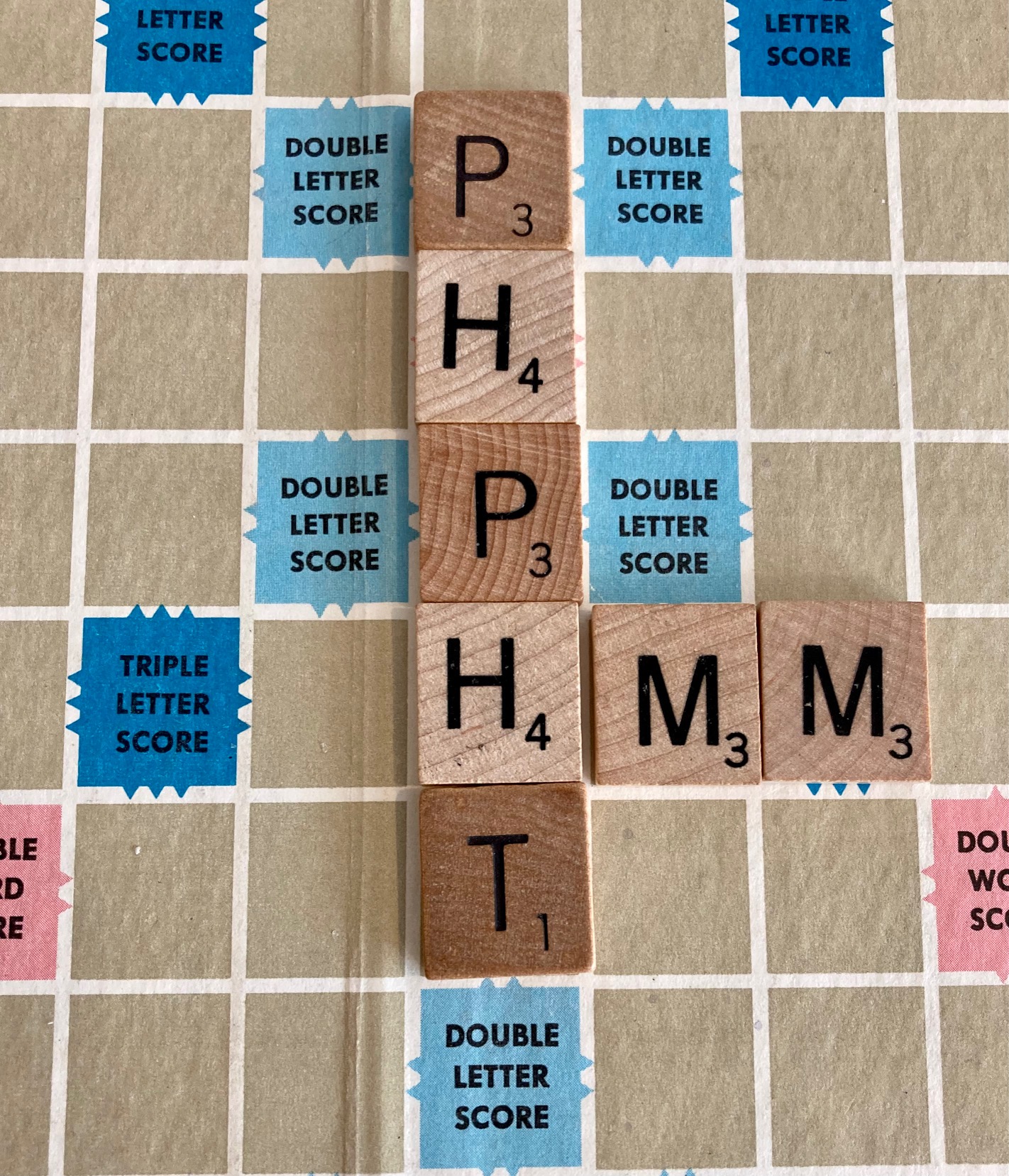
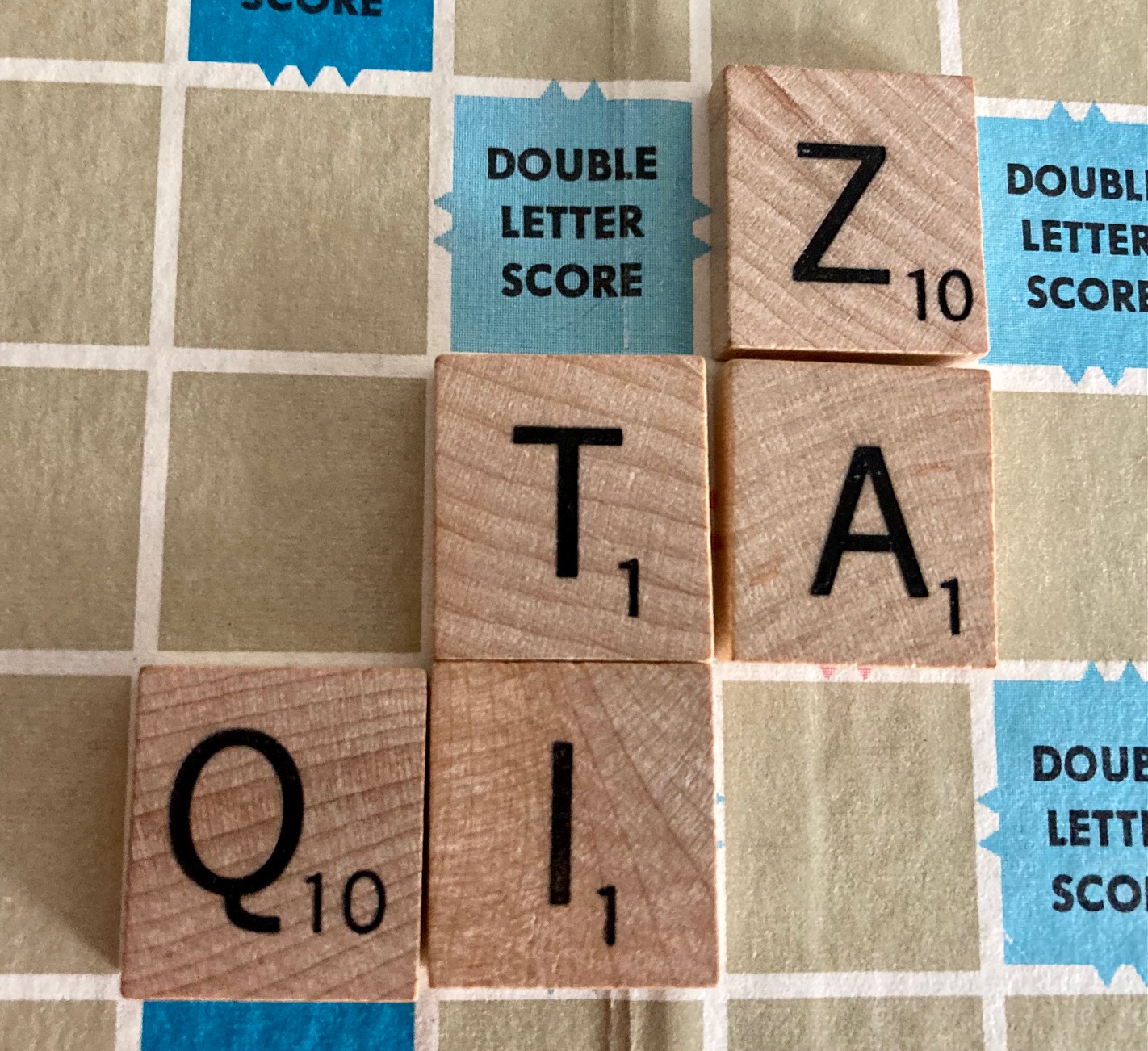
“‘Dig Deep and Think as Hard as Possible: The Secrets of Success in Scrabble, Sudoku, Jenga and More,” introduces Guardian readers to Samarth Manchali, a Scrabble prodigy who began playing the game at seven during the pandemic, after watching his mother and his older brother play while stuck at home during COVID-19. For those aspiring to improve their Scrabble play, Manchali offers these tips: (1) learn all permissible two- and three-letter words, (2) put the high-scoring letters—such as J, K, Q, Z—on the triple-letter squares, (3) have “board vision,” which means taking your lead from the board, rather than your letters , and (4) focus on what spots can give maximum points, and places where you can block your opponent from high-scoring words. Manchali’s mother describes a more advanced method called tracking, which involves keeping tabs on which tiles haven’t been played. In her words, “If I know that my opponent is left with a Q, I will look for the place where it can be put, and I’ll try to place a letter there.”
Rebecca Liu is a commissioning editor at The Guardian and staff writer for the feminist film journal Another Gaze. Her work has been published in The Guardian, The Times Literary Supplement, gal-dem, The Financial Times, The White Review, and Internazionale, and has been translated into Italian and Portuguese. Liu’s Guardian article would be useful to educators who are researching the particular strategies that Scrabble players employ to improve their game. It would also be a valuable source for those researching the rise in the popularity of board games during the COVID-19 pandemic.
Next Up
At the beginning of class on Wednesday, you will receive your drafts with my written feedback, and you will have the class period to devote to additional research and writing. The revision of your final essay and annotated bibliography is due on Blackboard and your blog the following Wednesday, April 12. The hard deadline is Friday, April 14.



 Jane Lucas