Posted in Reading, Teaching, Theatre, Writing

Wendy Wasserstein’s “Third”

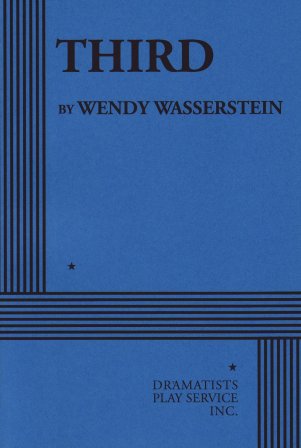
Wendy Wasserstein's "Third," the acting edition (2008)
Wendy Wasserstein’s “Third,” the acting edition (2008)

For their first paper of the semester, an annotated bibliography, my students have the option of choosing as their subject something they’re studying formally (for a class) or informally (on their own). As a model for them, I’ve composed a bibliography on Wendy Wasserstein’s Third, a play I’m studying—both formally and informally, in a sense—as I rehearse for the upcoming production at the Foothills Performing Arts Theatre.

The bibliography that follows includes the play itself, as well as two secondary sources: a review of the original Off Broadway production at the Lincoln Center Theater, and an academic essay by a professor of theater and literature, a harsh critic of Wasserstein’s who reexamined and reevaluated the playwright’s work after her death.

For me, as I rehearse for Third, Wasserstein’s words are far more important than what any drama critic or theatre scholar has written about the play, but I value what I’ve learned from Ben Brantley’s review and Jill Dolan’s essay, regarding both the critical reception of Wasserstein’s final play and the differences among the productions at the Lincoln Center, the Geffen Playhouse, and the Philadelphia Theatre Company.

Annotated Bibliography

Brantley, Ben. “As Feminism Ages, Uncertainty Still Wins.” Nytimes.com. New York Times, 25 Oct. 2005. Web. 25 Jan. 2014.

Ben Brantley’s “As Feminism Ages, Uncertainty Still Wins” reviews the original production of Wendy Wasserstein’s Third, which opened Off Broadway at the Lincoln Center Theater on October 24, 2005. Observing the similarities between the play’s main character, Laurie Jameson (Dianne Weist), and title character of Wasserstein’s Heidi Chronicles, Brantley asserts that Third shares the shortcomings of her other plays: “an overly schematic structure, a sometimes artificial-feeling topicality and a reliance on famous names and titles as a shorthand for establishing character.” Brantley also notes that the supporting characters are more convincing than Laurie Jameson, both as written and performed. Nevertheless, Brantley commends the play as an affecting portrait of a woman confronting the “certainty of the uncertainty in life.”

Brantley, chief theatre critic for The New York Times, is the editor of The New York Times Book of Broadway: On the Aisle for the Unforgettable Plays of the Last Century (2001).

Dolan, Jill. “Feminist Performance Criticism and the Popular: Reviewing Wendy Wasserstein.” Theatre Journal 60.3 (2008): 433-457. Academic Search Complete. Web. 24 Jan. 2014.

In “Feminist Performance Criticism and the Popular: Reviewing Wendy Wasserstein,” Jill Dolan cites the death of Wendy Wasserstein as the impetus for rethinking her harsh criticism of the playwright’s work and the mainstream feminist playwriting that it represents. Dolan asserts that a close examination of Wasserstein’s last play, Third, demonstrates the impact of her work as well as its importance in raising public awareness of the debates within and about American feminism. Along with her analysis of the play’s text, Dolan presents a study of two divergent productions: one at the Geffen Playhouse in Los Angeles (2007), and a second at the Philadelphia Theatre Company (2008).

Jill Dolan is the Annan Professor in English, Professor of Theater in the Lewis Center for the Arts, and Director of the Program in Gender and Sexuality Studies at Princeton University. She is the author of The Feminist Spectator in Action: Feminist Criticism on Stage and Screen (2013).

Wasserstein, Wendy. Third. New York: Dramatists Play Service, 2008. Print.

Wendy Wasserstein’s Third spans one academic year at a prestigious liberal arts college in New England. The play focuses on Professor Laurie Jameson, an acclaimed feminist literary scholar, coping in midlife with her father’s advancing Alzheimer’s, her daughter’s departure for college, her husband’s detachment, and her best friend’s recurring cancer—all amid the onset of her own menopause, replete with hot flashes. On the first day of class, when Laurie encourages her students to contradict her, she has no idea what challenges she’ll face when one of them—the title character, Woodson Bull, III—takes her up on the offer. Angered by what she perceives as the Bush administration’s rush to war, she sees Third as a “walking red state” (27). When she accuses him of plagiarizing a paper she believes he’s incapable of writing, Third claims he’s a victim of “socio-economic profiling” (22).

Wendy Wasserstein’s other plays include An American Daughter (1997), The Sisters Rosensweig (1992), and Uncommon Women and Others (1977). Her most critically-acclaimed play, The Heidi Chronicles, won both the Tony and the Pulitzer Prize for drama in 1989. Third opened Off Broadway in late September 2005, four months before Wasserstein’s death from lymphoma.
Posted in Reading, Social Media, Teaching, Writing

Old-School (and New-School) Writing in the Digital Age

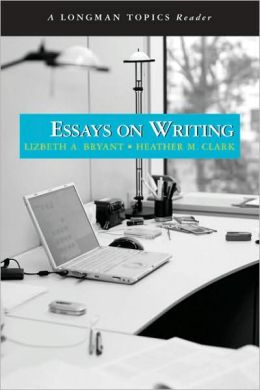
Essays on Writing (2009)

When my students and I read Wendy Leibowitz’s article “Technology Transforms Writing and the Teaching of Writing,” I found myself drawn less to the details about blogs, word processing, and email that dominate the article and more to a single observation about composing longhand: “I encourage students not to write their first drafts on a computer, so they might actually think before putting words on the page” (Bernard qtd. in Leibowitz). That sentence led me to reflect on the continuing role of old-school writing in my own classes. Although my students use new technology (posting blog entries and submitting papers to the university’s Learning Management System, or LMS), they frequently put pen to paper as well. I have persisted in requiring them to write longhand as a way of cultivating focus and depth in their prose. But is writing by hand still relevant in the digital age? That question—one that’s frequently raised now in response to the new Common Core Standards—prompted me to explore the science of handwriting and to consider what new technologies teachers are using with, or in place of, the old.

The bibliography that follows consists of Leibowitz’s article, which spearheaded my research, and two additional articles: one that examines the role of handwriting in cognitive development and a second that investigates how blogs have become a fixture in many college courses, in some cases replacing the traditional term paper. Together, the three articles create a strong case for preserving the tactile custom of putting pen to paper while embracing the new technologies that will inspire the best writing.

Whether these annotations (all drafted by hand) will serve as preliminary writing for an essay of my own, I cannot say. Either way, the insights I have gained through this research will inform the choices I make as my teaching—itself, a work in progress—continues to evolve.

Annotated Bibliography

Leibowitz, Wendy. “Technology Transforms Writing and the Teaching of Writing.” Essays on Writing. Ed. Lizbeth A. Bryant and Heather M. Clark. Boston: Longman, 2009. 137-142. Print.

In “Technology Transforms Writing and the Teaching of Writing,” Wendy Leibowitz reports that writing in the digital age presents both “perils and possibilities” for students (138). Her conversations with professors reveal that their attitudes and approaches vary considerably. While some require students to use digital technology throughout the writing process, others advocate limiting screen time, correlating online reading and writing with diminished critical thinking and writing skills. Whether they adhere to April Bernard’s view of Web writing as “adjunct to traditional forms” (140), or to  Robert Coover’s belief that it’s a “fundamental element of literacy” (141), professors find themselves rethinking the tactile experience of putting pen to paper and seeking effective strategies for using the newest technologies to improve writing instruction.

Leibowitz’s interviews with eleven professors do not constitute comprehensive research, but her article presents an informative overview of the variety of ways professors teach writing in the digital age. Though she writes for academics—specifically readers of The Chronicle of Higher Education—her straightforward prose speaks to a general audience as well. Readers who encounter her article now, more than a decade after its initial publication, may wonder how the professors she interviewed have since adapted their teaching to address the prevalence of social media and texting in students’ lives.

In addition to publishing articles in The Chronicle of Higher Education, Leibowitz, an attorney turned journalist, has written on technology and the law for The National Law Review and The American Lawyer.

Keim, Brandon. “The Science of Handwriting.” Scientific American Mind 24.4 (2013): 54-59. Academic Search Complete. Web. 11 Nov. 2013.

In “The Science of Handwriting,” Keim Brandon explores how his belief in the benefits of writing longhand finds scientific support in recent studies. Keim recounts a five-year research project conducted by Virginia Beringer, an educational psychologist at the University of Washington, that demonstrated second, third, and fourth graders’ ability to write more rapidly and express more ideas when they composed by hand. Along with Beringer’s study, Keim outlines brain-imaging research conducted by Karin James, a cognitive neuroscientist of the University of Indiana, Bloomington, revealing that learning cursive activates multiple areas of the brain that remain dormant when we type.

Writing for readers of Scientific American Mind, Keim addresses a general audience of readers interested in psychology and neuroscience. His reporting of Beringer’s and James’ studies points to the critical role of handwriting in cognitive development, a subject of particular concern to many parents and educators as the Common Core Standards Initiative—which deemphasizes handwriting in favor of keyboarding—has prompted a national conversation about the future of cursive in the classroom.

Brandon Keim, a freelance science journalist, has written articles for Wired and Psychology Today, as well as Scientific American Mind, and has been featured on broadcasts of National Public Radio’s Science Friday and Talk of the Nation.

Richtel, Matt. “Blogs vs. Term Papers.” Newyorktimes.com. The New York Times Co., 20 Jan. 2012. Web. 13 Nov. 2013.

In “Blogs vs. Term Papers,” Mat Richtel reports on the debate in higher education on how best to teach writing in the digital age. While some professors have followed the lead of Duke University’s Cathy Davidson, replacing the traditional term paper with shorter, more frequent blog assignments, their detractors—including Douglas B. Reeves, columnist for The American School Board Journal and William H. Fitzhugh, editor of The Concord Review—argue that blog writing lacks the academic rigor that fosters critical thinking. For Andrea Lunsford, professor of writing at Stanford University, pitting blogs against term papers creates a false opposition. Rather than replacing term papers with blog posts, Lunsford requires students to produce multi-modal assignments: term papers that evolve into blogs, websites, and video presentations.

Richtel’s article offers New York Times readers a glimpse of the contrasting teaching approaches adopted by writing professors who find themselves at a critical juncture, illustrating for a general audience how, as Andrea Lunsford says, professors are “trying to figure out how to preserve sustained, logical, carefully articulated arguments while engaging with the most exciting and promising new literacies.”

A Pulitzer Prize-winning journalist, Matt Richtel writes for The New York Times about technology and its impact of society and culture. His series of articles “Our Brain on Computers” (2010) explores how our constant use of digital devices affects not only our behavior but also our thought processes. His 2009 series about the dangers of distracted driving won the Pulitzer for national reporting.


Posted in Reading, Teaching, Writing

Flying Without a Map

Movies and the Meaning of Life (2005), which includes the essay “Flying Without a Map: Chasing Amy and the Quest for Satisfying Relationships”

I don’t want my students to feel as if they’re flying without a map.

So, as a model for them—many of whom are currently writing annotated bibliographies–I spent the better part of the morning composing the sample annotation that follows. The process awakened in me an interest in writing about Chasing Amy and Jerry L. Walls’ study of the film. Perhaps that’s a project for the summer.

Walls, Jerry L. “Flying Without a Map: Chasing Amy and the Quest for Satisfying Relationships.” Movies and the Meaning of Life. Ed. Kimberly A. Blessing and Paul J. Tudico. Chicago: Open Court, 2005. 137-149.

“Flying without a Map: Chasing Amy and the Quest for Satisfying Relationships” considers Kevin Smith’s film Chasing Amy (1997) as a reflection of our moral ambiguity. In the words of the essay’s author, Jerry L. Walls, Chasing Amy offers “a vivid picture of what happens to us emotionally, morally, and relationally when we try to revise morality in some fairly radical ways, while still holding onto selected parts of our traditional morality” (140).

In his analysis of the film’s principle characters, Walls cites Edward O. Wilson’s article “The Biological Basis of Morality,” highlighting the two options Wilson identifies as the ones that determine and divide our worldviews: (1) that moral and ethical principles “exist outside of the human mind,” or (2) “they are inventions of human minds” (141). Subsequently, Walls’ examination of Holden McNeil (Ben Affleck), who holds the former view, and Alyssa Jones (Joey Lauren Adams), who holds the latter view, illustrates how Alyssa challenges Holden to rethink his beliefs. While Holden tells Alyssa that he likes girls “Because that is the standard,” he cannot explain to her why he believes what he believes or why he should believe it.

Walls chronicles Holden’s and Alyssa’s moral evolution, noting the irony of Holden’s 180-degree shift, marked by the solution he proposes to Alyssa and Banky (Jason Lee), and concludes his essay by suggesting that Chasing Amy depicts “an even larger quest,” one for God (149).

Though I agree with Walls’ central thesis (that the film offers “a vivid picture of what happens to us emotionally, morally, and relationally when we try to revise morality. .  .”), I disagree with his conclusion, which rests on the questionable assumption that religion offers a map that other foundations for ethics and morals cannot. It comes as no surprise that Walls as a professor of the philosophy of religion turns to faith in the final pages of his essay. But by choosing that path, he overlooks how the film’s characters—all comic-book artists—turn to art as a way of making sense of their lives.