 Directions:
- Compose a short commentary (fifty words or more) on your reflection, and submit it as a response to this blog post. For recommended starting points for your commentary, see the list of questions below.
- After you post your response, read the reflective essay written by the classmate whose name precedes (not follows) yours on the class page, and post an assessment of twenty-five words or more on the student’s blog. If that classmate’s blog post is not accessible, comment on the post by the student whose name precedes that classmate’s. If your name is first on the list, comment on the reflection of the student whose name is last.
Questions to consider include the following:
- Which assignments of yours and which features of the course served as the focus of your reflective essay? In the process of drafting your essay, did the focus change? If so, how?
- How did you organize your reflection? Did you begin by defining or describing your subject, or did you start with an anecdote or observation? Is your essay a series of reflections that together create an overall impression?
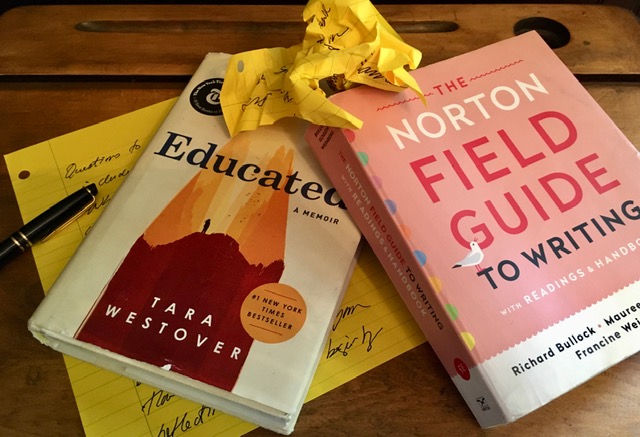
- Did Westover’s memoir, Educated, or one or more of the essays that you read in The Norton Field Guide to Writing serve as a model or source of inspiration? If so, which one? See the list below.
- At what point in the process did you decide upon a title? Did you change the title during the writing process? If so, what was the original title?
- What image that documents part of your writing process away from the screen did you include in your blog post? (Is it a photo of a page of your journal or part of your draft? Is it a photo of you reading, drafting, or revising?) Why did you choose that particular image?
- What do you consider the strongest element of your essay?
- If you had more time to devote to your final reflective essay would you have addressed additional assignments or features of the course? If so, which ones?
Reflections and Memoirs in The Norton Field Guide to Writing
- Barrientos, Tanya Maria. “Se Hable Español.” The Norton Field Guide to Writing with Readings and Handbook. 5th ed., by Richard Bullock, Maureen Daly Goggin, and Francine Weinberg, 2019, pp. 693-96.
- de la Peña, Matt. “Some Times the ‘Tough Teen’ is Quietly Writing Stories.” The Norton Field Guide to Writing with Readings and Handbook. 5th ed., by Richard Bullock, Maureen Daly Goggin, and Francine Weinberg, 2019, pp. 688-91.
- Dubus III, Andre. “My Father was a Writer.” The Norton Field Guide to Writing with Readings and Handbook. 5th ed., by Richard Bullock, Maureen Daly Goggin, and Francine Weinberg, 2019, pp. 891-99.
- Feslenfeld, Daniel. “Rebel Music.” The Norton Field Guide to Writing with Readings and Handbook. 5th ed., by Richard Bullock, Maureen Daly Goggin, and Francine Weinberg, 2019, pp. 81-84.
- Kassfy, Ana-Jamileh. “Automotive Literacy.” The Norton Field Guide to Writing with Readings and Handbook. 5th ed., by Richard Bullock, Maureen Daly Goggin, and Francine Weinberg, 2019, pp. 84-86.
- Lepucki, Edan. “Our Mothers as We Never Saw Them.” The Norton Field Guide to Writing with Readings and Handbook. 5th ed., by Richard Bullock, Maureen Daly Goggin, and Francine Weinberg, 2019, pp. 256-59.
- Sedaris, David. “Us and Them.” The Norton Field Guide to Writing with Readings and Handbook. 5th ed., by Richard Bullock, Maureen Daly Goggin, and Francine Weinberg, 2019, pp. 883-89.
- Tan, Amy. “Mother Tongue.” The Norton Field Guide to Writing with Readings and Handbook. 5th ed., by Richard Bullock, Maureen Daly Goggin, and Francine Weinberg, 2019, pp. 697-703.
- Vallowe, Emily. “Write or Wrong Identity.” The Norton Field Guide to Writing with Readings and Handbook. 5th ed., by Richard Bullock, Maureen Daly Goggin, and Francine Weinberg, 2019, pp. 75-81.
- Yousafazai, Malala. “Who is Malala?” The Norton Field Guide to Writing with Readings and Handbook. 5th ed., by Richard Bullock, Maureen Daly Goggin, and Francine Weinberg, 2019, pp. 900-04.


 As you revise your reflection for Wednesday, review the pages of The Norton Field Guide to Writing that cover key features (259-61) and methods of organizing a reflective essay (262-63).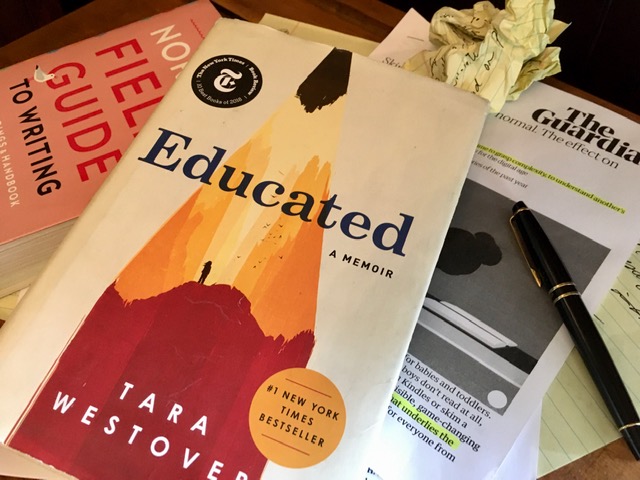
 Our Wordplay days in class gave us opportunities to build our word power, collaborate, and engage in creative problem solving. Now they offer us a way to forget our sense of isolation. I hope that games, whether table-top or digital, continue to lift your spirits.
 rack.
rack.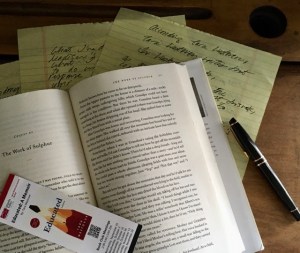 Reading your textual analyses demonstrated that an exercise in integrating quotations would be a valuable follow-up assignment. In academic writing, sentences never begin with quotations. Instead, they’re introduced with signal phrases, such as these:
 Chapter 22, “What We Whispered and What We Screamed,” marks a change in
 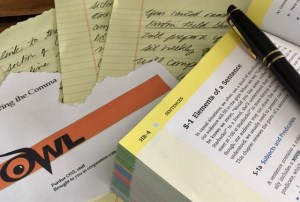 Your revised readings in The Norton Field Guide to Writing will prepare you for the six quizzes that you will complete during the remaining weeks of the semester. I selected the six subjects for the quizzes (words often confused, punctuation, precise words, active and passive voice, main points and support, and MLA documentation) based on patterns that I have identified in your essays. Most of the readings that will prepare you for the quizzes are in the yellow-edged Handbook section of Norton.
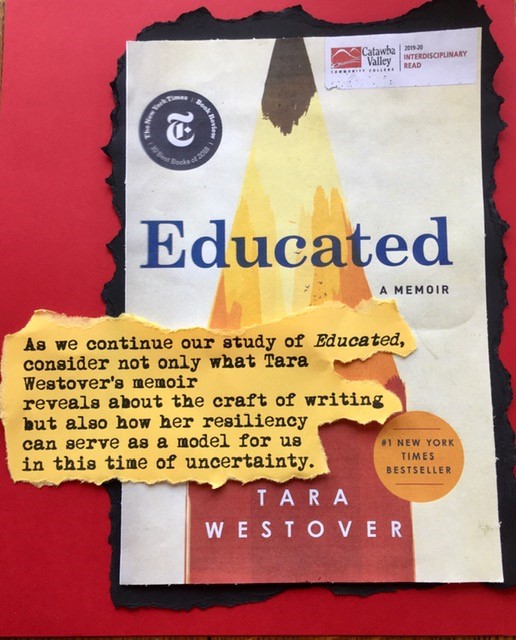 Wherever you are in your reading of Educated, I encourage you to look back at the pages where Tara Westover recounts her first days on campus at Brigham Young University (155-58). Stepping into the unfamiliar–as she was then and we are now–is always difficult.
 Jane Lucas