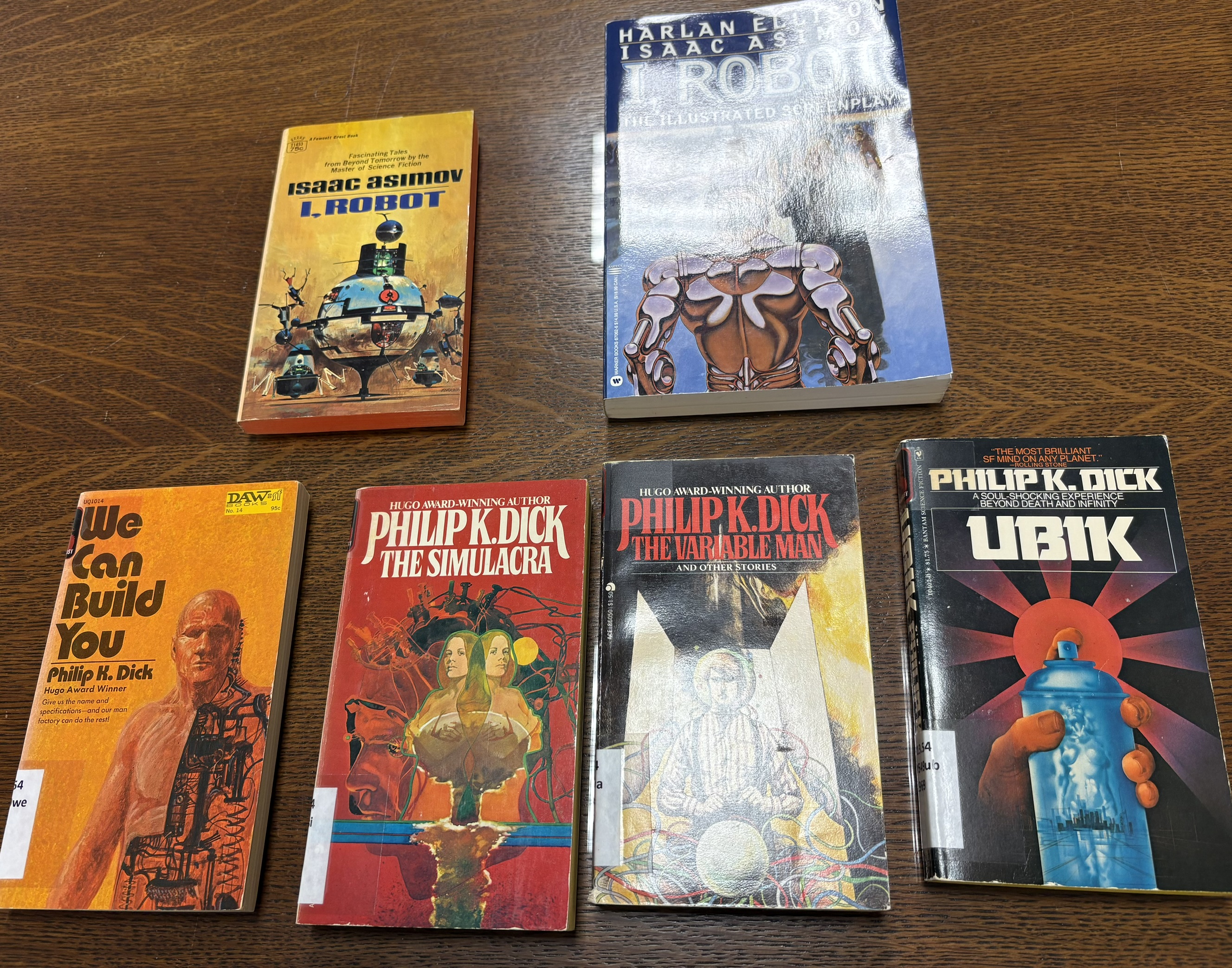
Today’s class will meet on the lower level of Smith Library, where we will examine some of the science fiction novels and short story collections in the Asimov Collection, donated to the library by Dr. John L. Hubisz, a retired physics professor who taught at North Carolina State University. In your perusal of the novels’ covers, you will explore how artists have depicted science fiction in their cover illustrations and what those images reveal not only about the stories themselves but also about readers’ perceptions and marketing.
The books will be organized into four groups at four separate stations for your viewing and note-taking. For any students who are absent from class today, and for you to look back at later, I am including images of the books, along with the questions that you will address in your responses to the cover art.
Directions
- Closely examine the paperbacks at one of the four stations.
- Ask yourself which features are the most prominent. Do any details in the covers bring to mind characters or scenes in Isaac Asimov’s “Runaround” or Brian Aldiss’s “Supertoys Last All Summer Long”? What patterns do you notice? What do the covers convey about humans’ relationship to technology?
- Compose a short response, a minimum of one complete sentence, that addresses some of the questions in item two.
- Repeat steps one, two, and three with the paperbacks at the other stations
I, Robot; I, Robot: The Illustrated Screenplay; We Can Build You; The Simulacra; The Variable Man and Other Stories; Ubik: Along with the questions in item two, consider how the covers make artificial life appear. (How do color, composition, bodies, machines, and typography shape the readers’ expectations about AI or artificial life?)
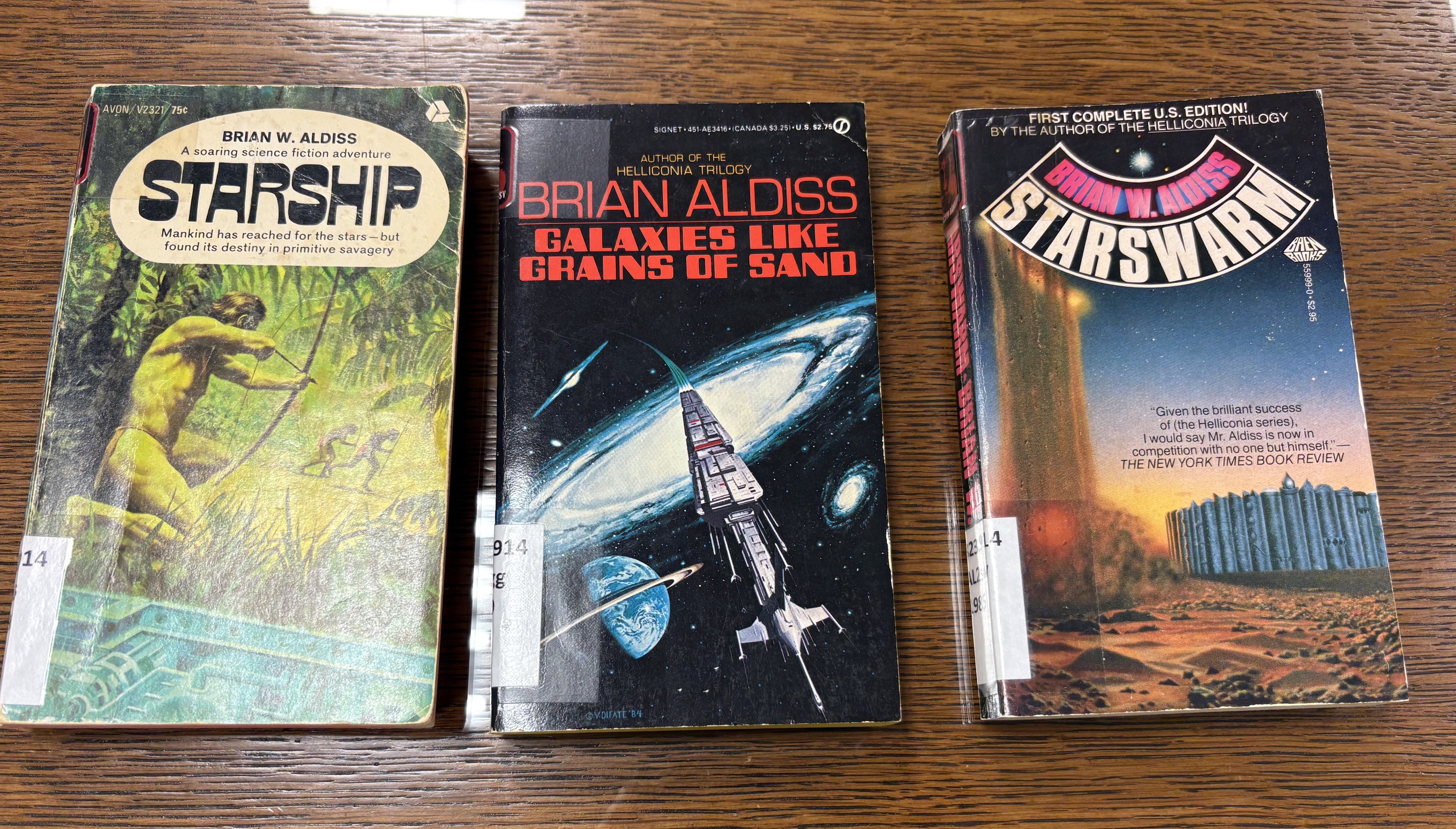
Starship; Galaxies Like Grains of Sand; Starswarm: Along with the questions in item two, consider how the covers indicate that the author’s science fiction interests span a variety of subgenres. What kind of sci-fi story does the cover seem to promise? (Is it one of adventure, exploration, danger, social speculation, or cosmic wonder?)
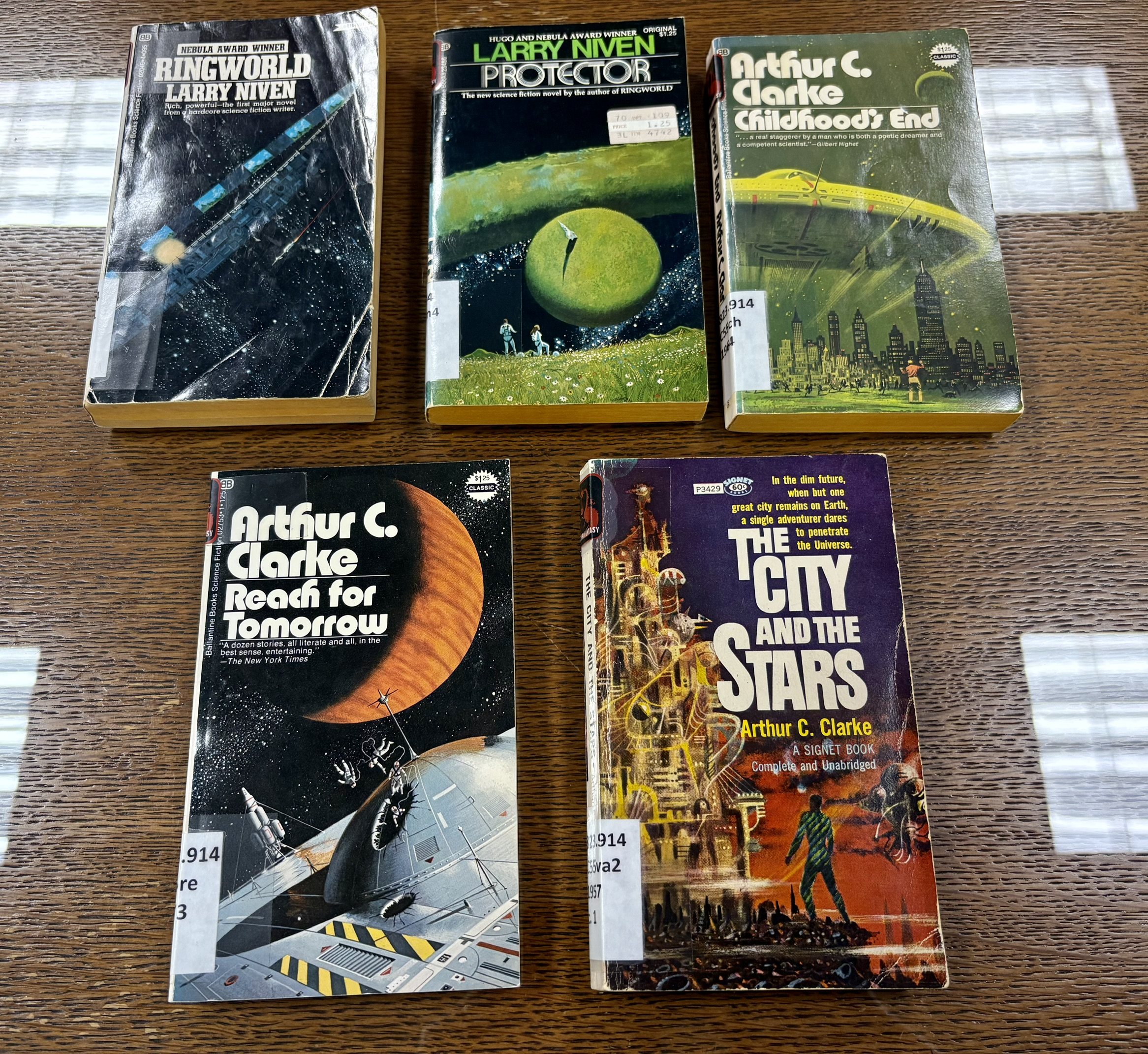
Ringworld; Protector; Childhood’s End; Reach for Tomorrow; The City and the Stars: Along with the questions in item two, what impression of the future does each cover convey? (Does the future feel large, strange, and/or technologically advanced?)
Next Up
Wordplay Day! To prepare for class, revisit the Merriam-Webster Scrabble Word Finder page, and review your journal notes and the blog posts with Scrabble tips.
Coming Soon
For Monday’s class, you will read and annotate Brian Aldiss’s short stories “Supertoys When Winter Comes” and “Supertoys in Other Seasons,” which I will distribute in class today. If you were absent or misplaced your copies, print ones from Blackboard.

