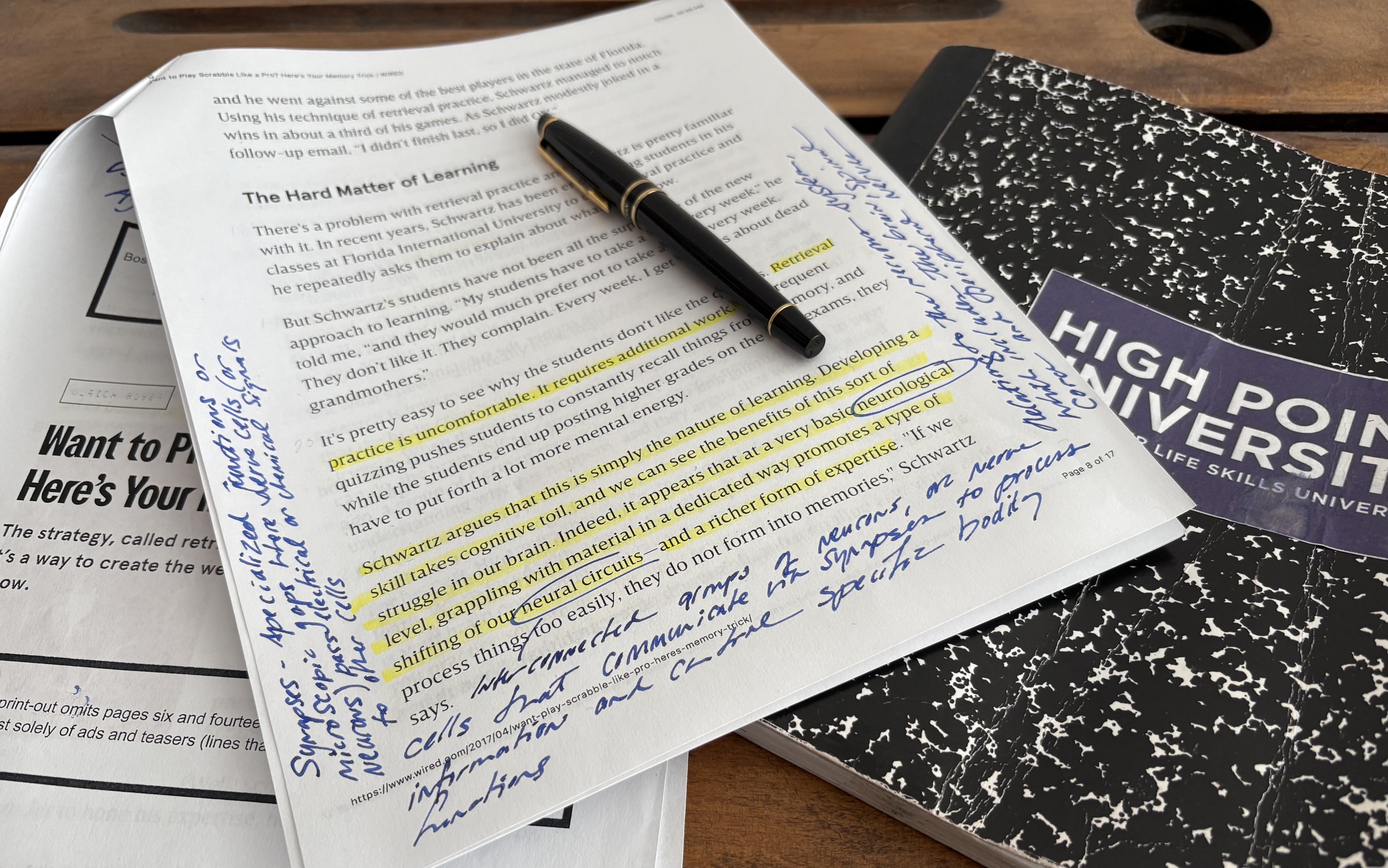
During last Wednesday’s library session in the 10:40 class, Lauren Ksa, Head of Research and Library Instruction, mentioned that she didn’t know what my policy was regarding students’ use of A.I. for online searches. I am grateful to Lauren for mentioning that because it prompted me to provide you with images of my own A.I.-assisted search for an article, followed by my commentary, as a model for using A.I. ethically in research. Turning to A.I. was a step I took only after I had explored other options thoroughly, and that’s when you should turn to A.I., if you use it at all.
For several years, my students have delivered group presentations on articles devoted to aspects of English 1103, but none of those presentations included an article on Scrabble. That’s because I was unable to find one that was comparable to articles on other aspects of the class. Although I knew of scholarly articles on the subject–and have cited some in my own writing–for the purposes of both the group presentations and a starting point for research, I needed an article written for a general audience.
Last summer, as I was planning for the fall semester, it occurred to me that I might see whether a conversation with ChatGPT would yield what I’d been looking for.
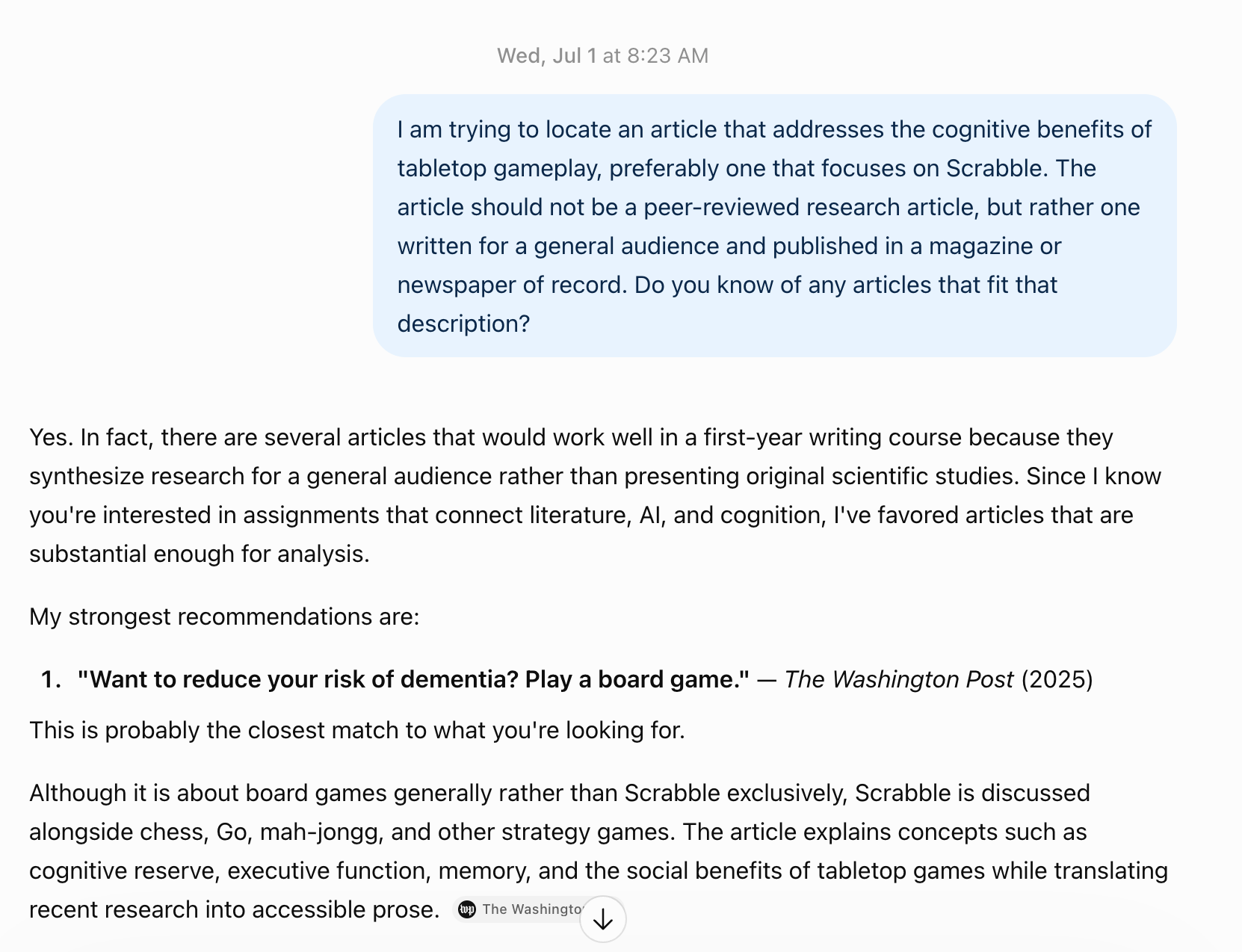
In the screenshot above, you can see ChatGPT’s first recommendation, a Washington Post article that could serve as one of the sources in a bibliography devoted to the cognitive benefits of Scrabble play, but it isn’t what I sought for a presentation article that could also be a starting point for research. I omitted the other two recommendations from the screenshot because they were off base. One was a health system site and the other was a general recommendation for the Washington Post ‘s Brain Matter column, written by Richard Sima, rather a particular column on the subject.
Although I had requested magazine articles, ChatGpt’s initial response included none, but a later reply from the A.I. assistant led me to what I’d sought.
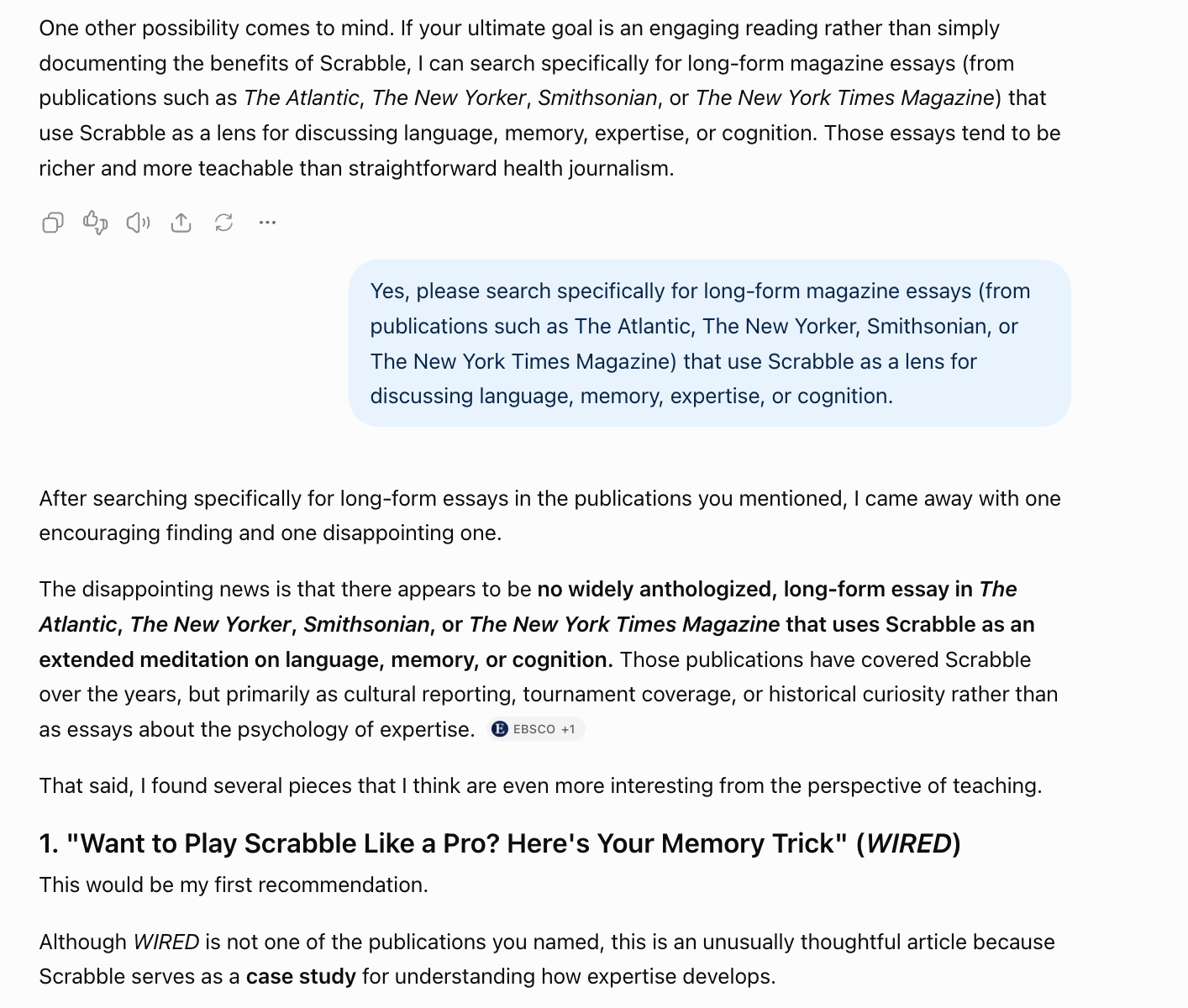
ChatGPT’s number-one find (in the screenshot above) seemed to be precisely what I was looking for. I omitted the three suggestions that followed because the second one, Stefan Fatsis‘s Word Freak, while a valuable source and an engaging read, is a book rather than an article. The third recommendation was a Time magazine article on the history of the game, and the fourth was my own study of Scrabble, which ChatGPT located on my blog–and yes, identified as my own writing.
A.I. Recommended It, Now What?
If I had not been familiar with the magazine Wired, my next step would have been determining whether it’s a reliable and reputable source. Searching for Wired on the HPU Libraries site confirms its credibility. The magazine is cited in sources available through the library and the magazine itself is available through the ProQuest Central database and as an open source on the web.
Takeaways
- Turn to A.I. for searches only after you have explored other options thoroughly.
- If the conversation leads you to a promising source, determine whether its reliable and reputable and double-check the accuracy of A.I.’s details about the source.
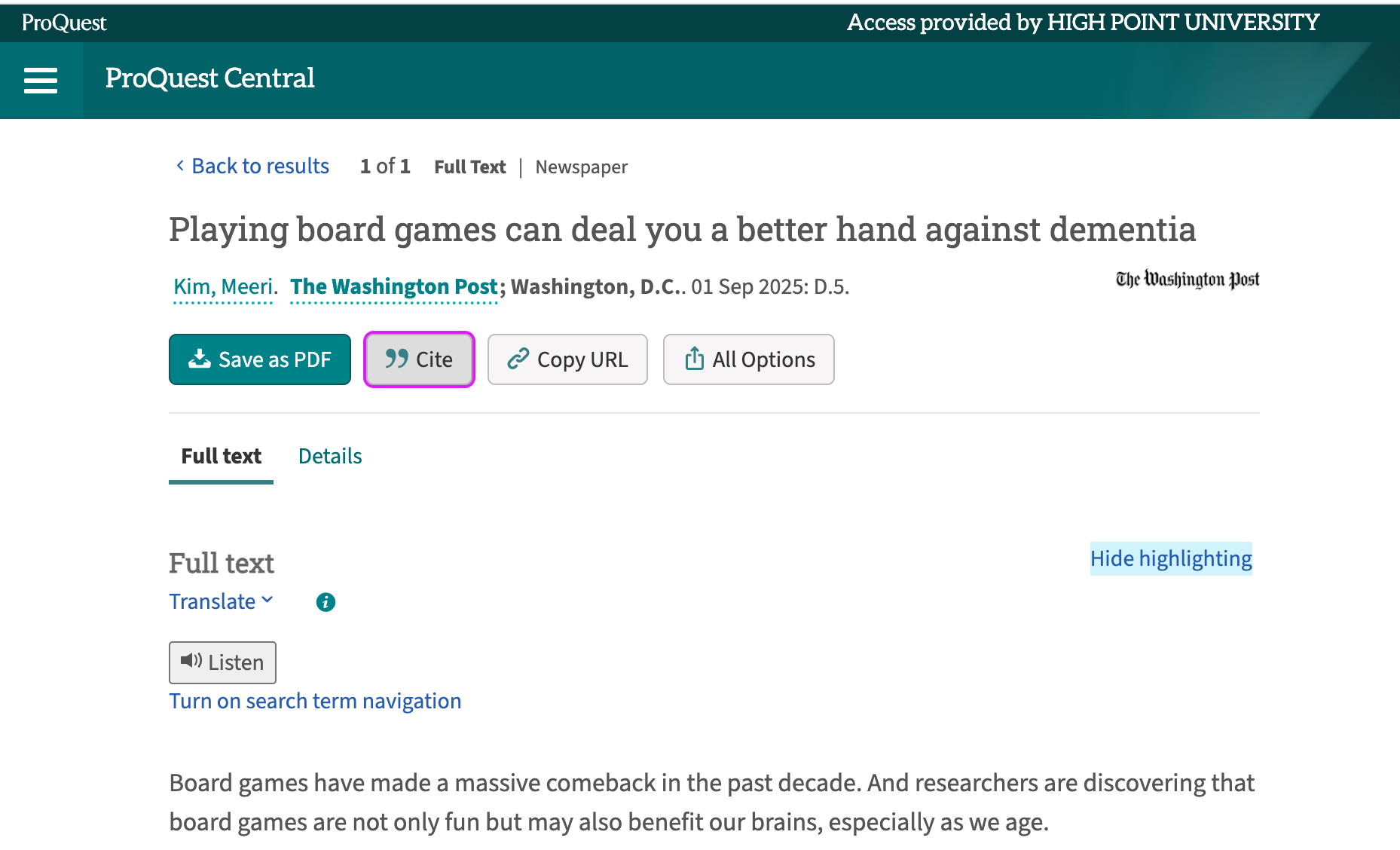
With the second takeaway in mind, look back at the first screenshot in this post. There, the A.I. agent recommends a Washington Post article titled “Want to Reduce Your Risk of Dementia? Play a Board Game.” As you can see in the screenshot that follows, the actual title is “Playing Board Games Can Deal You a Better Hand Against Dementia.”
As you continue your own research and writing, remember that using generative AI to write your bibliography, and/or your preface, and presenting an AI agent’s words as your own violates High Point University’s Honor Code and is grounds for an F. However, using AI ethically, as I do in the model above, can be a useful step.
Sample Bibliography and Preface: “All Hail the King”
This morning in class, after your Scrabble debriefing, you and two or three of your classmates will compose a short assessment of the student bibliography and preface “All Hail the King,” and use the assignment’s guidelines and rubric to determine a letter grade.
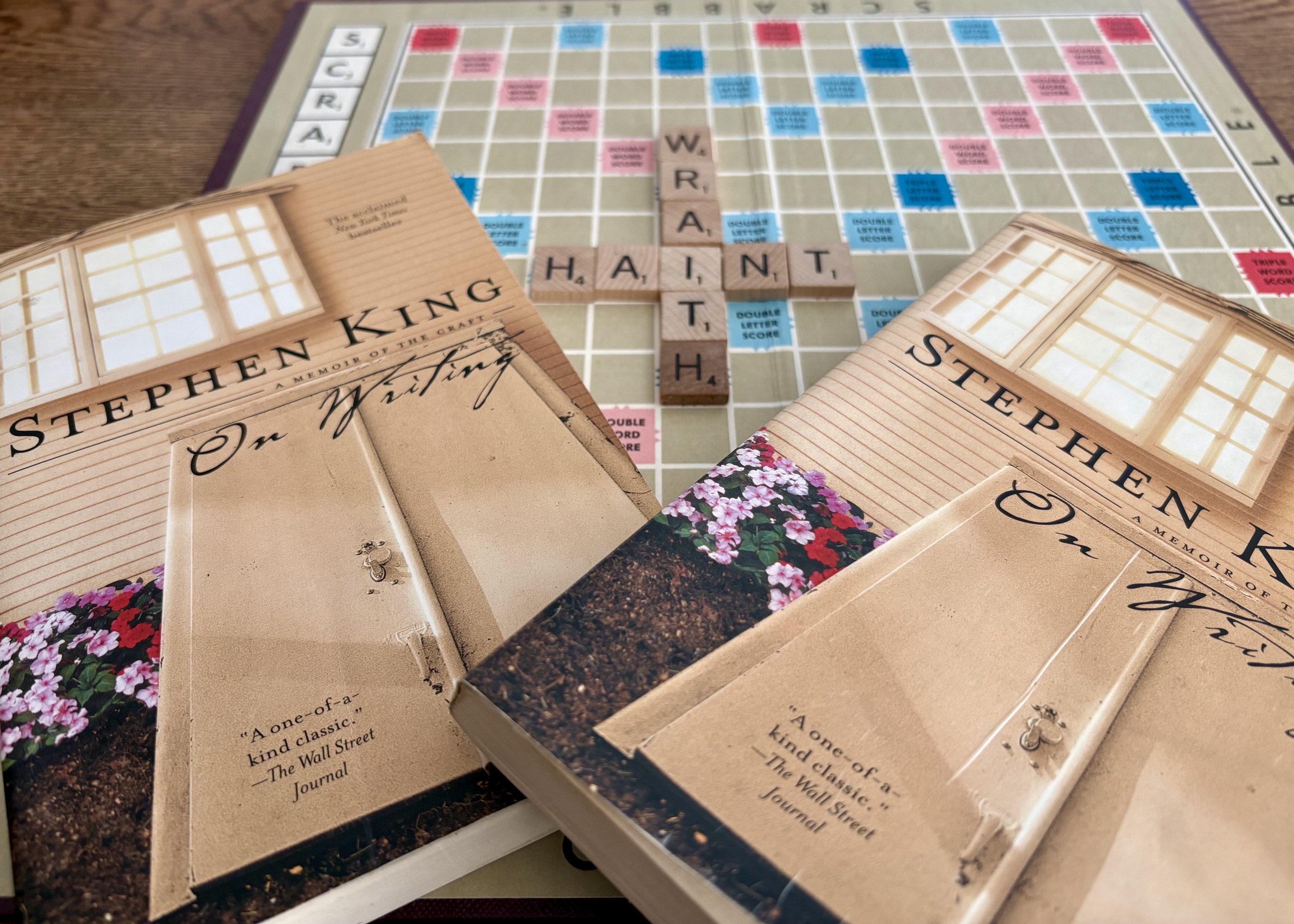
Congratulations to Gavin Godfrey-Ryan and Layla Rothberg, for winning copies of Stephen King’s On Writing (pictured above) in Friday’s drawings.
Next Up
In the first half of Wednesday’s class, you will interview a classmate, compose an MLA-style bibliographic entry for that interview, and craft a sentence incorporating a quote from that interview, a sentence you may include in your preface or your annotation for the interview. In the second half of class, you will have time for additional research and writing.

