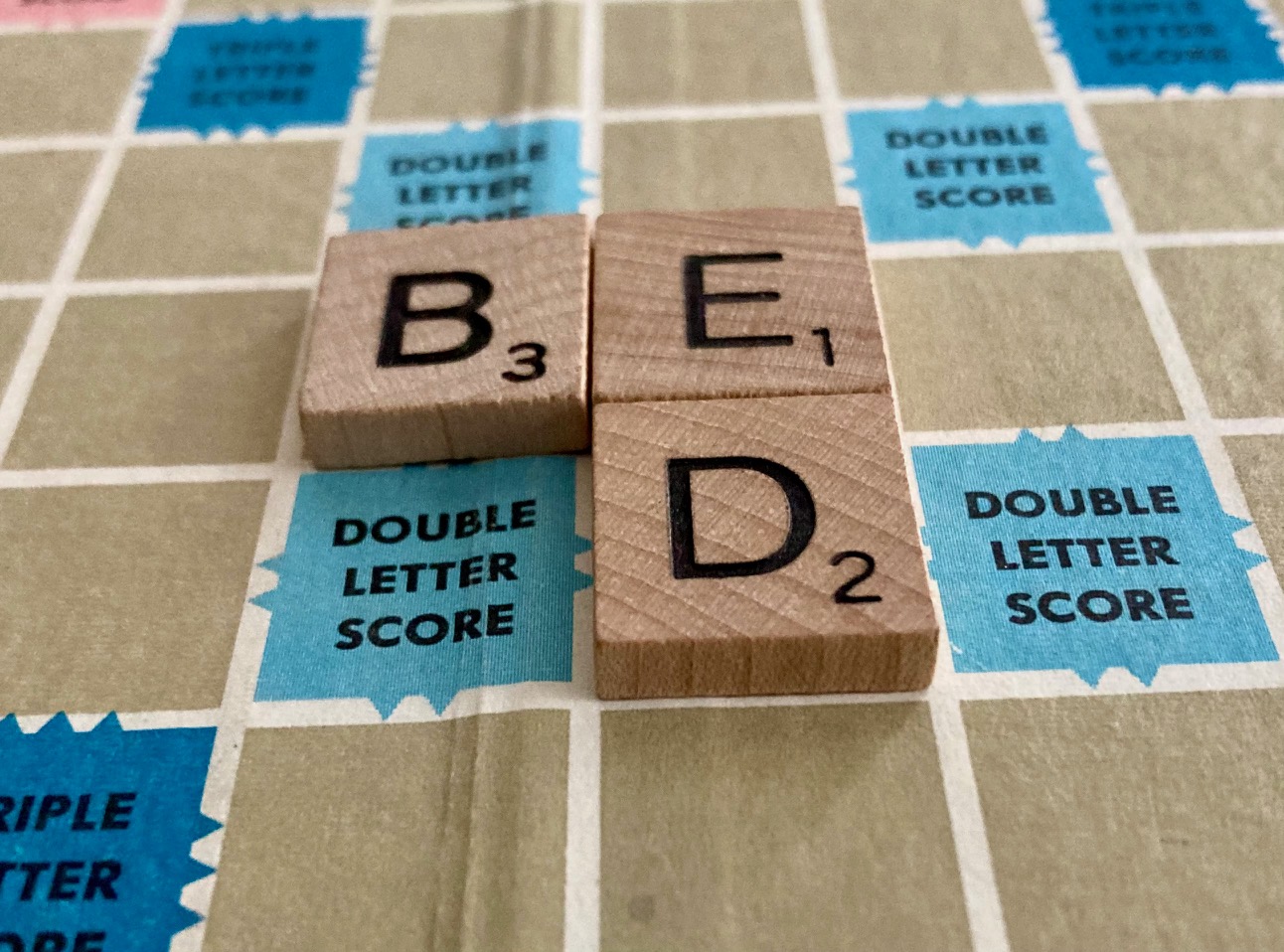
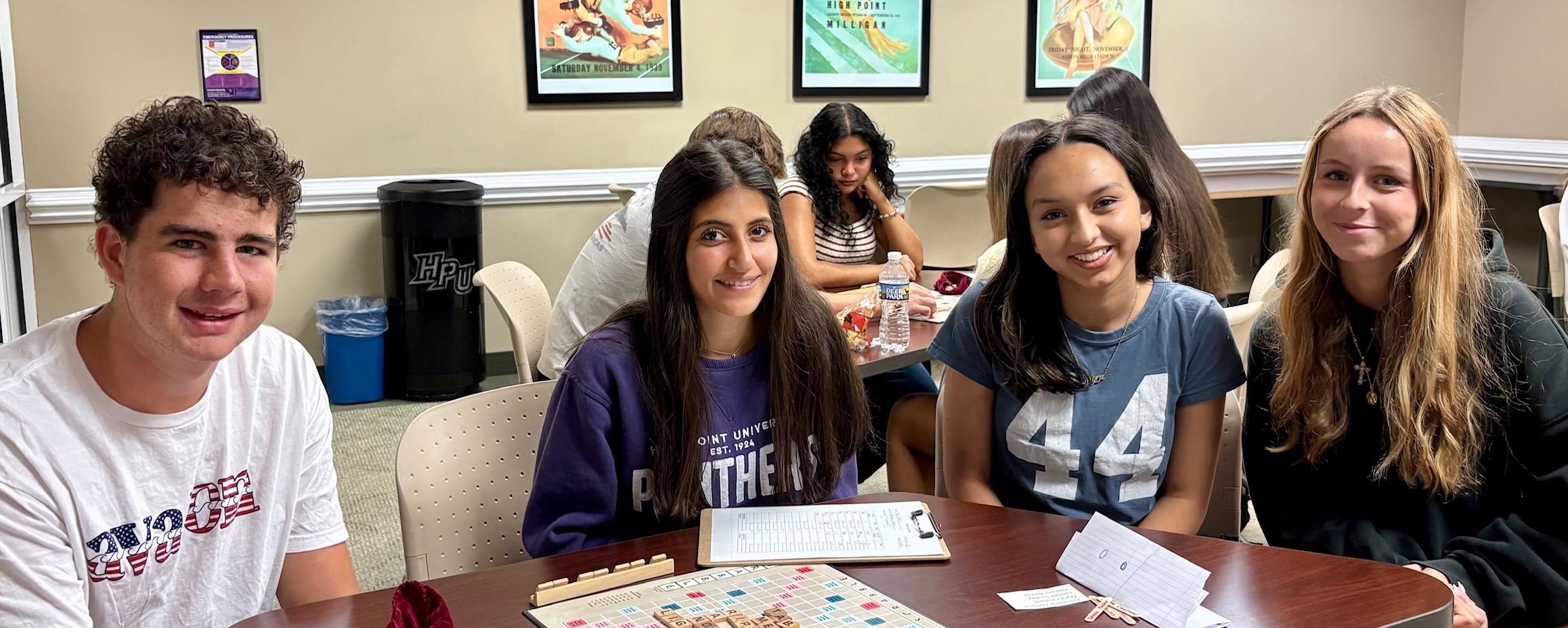
The first Scrabble blog post of the semester featured playable two-letter words beginning with “a.” Learning those two-letter words, as well as the others that follow in the alphabet, will enable you to see more options for play and can increase the number of points you earn in a single turn.
Here’s a list of the playable words beginning with “b,” “d,” and “e”:
Today in class, you will begin planning and drafting your first essay assignment, a literacy narrative, which is an account of a learning experience involving reading, writing, or learning to speak a language.
Begin by asking yourself some of these questions: How have you come to think about yourself as a reader or writer? What were some of your most formative experiences as a reader or writer? What are some of the dos and don’ts you have learned about writing? How has what you have learned about reading or writing enhanced your confidence and skill in that role? You don’t need to respond to all of those questions. Try picking one or two as a starting point, then begin bringing one of those experiences to life.
Your aim is to recreate your experience on the page and then to reflect on its significance. Your focus may be any one of the following:
a memory of a reading or writing assignment that you recall vividly
someone who helped you learn to read or write
a writing-related school event that you found humorous or embarrassing
a particular type of writing that you found (or still find) especially difficult or challenging
a memento that represents an important moment in your development as a reader or writer
learning to speak a second langauage
Detailed instructions are included in the assignment handout that you will receive in class today. An additional copy of the handout is posted on Blackboard in the essay assignments folder.
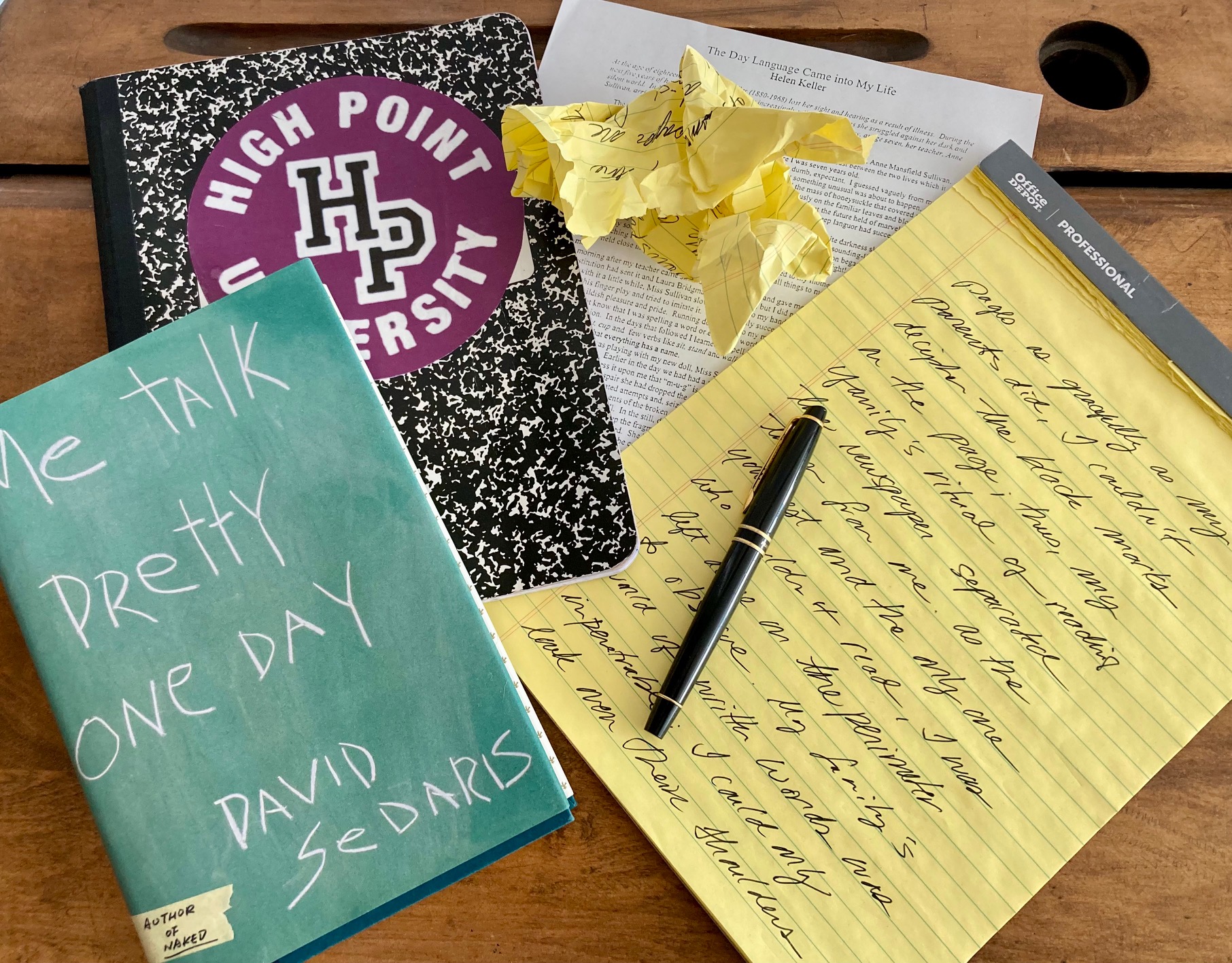
One of the aspects of David Sedaris‘ essay that you examined yesterday was his movement from summary to scene and vice versa. The first of those occurs with these words of his teacher’s: “If you have not meimslsxp or lpgpdmurct by this time, then you should not be in this room” (par. 4). Sedaris alternates summary and scene throughout his essay. As you begin planning and drafting your own literacy narrative tomorrow in class–and as you continue to write–look back at “Me Talk Pretty One Day” and note how Sedaris uses summary and scene as building blocks.
You also identified Sedaris’ use of similes, metaphors, and hyperboles, including these:
David Sedaris employs a simile when he describes himself as “not unlike Pa Kettle trapped backstage at a fashion show” (par. 3).
Sedaris fashions a metaphor with the words “everybody into the language pool, sink or swim” (par. 4).
The essay “Me Talk Pretty One Day” features the hyperbole “front teeth the size of tombstones” (par. 7).
David Sedaris uses a simile when he writes that one classmate’s introduction sounds “like a translation of one of those Playmate of the Month data sheets” (par. 10).
The author of “Me Talk Pretty One Day” turns to hyperbole when writes, “The teacher killed some time accusing the Yugoslavian girl of masterminding a program of genocide” (par. 14).
Sedaris’ teacher insults him with a simile when she remarks, “”Everyday spent with you is like having a cesarean section'” (par. 27).
The bulleted sentences above follow the format that you should follow in your group exercises that require quotations. These are the specific guidelines to remember:
The answer should be a minimum of one sentence. It need not be a long sentence, but it should include concrete detail.
The sentence should not begin with a quotation. Though journalists, fiction writers, and memoirists sometimes begin sentences with quotations, in academic writing, quotations are introduced with signal phrases.
Do not foreground the paragraph or page number in a sentence. The most important feature of the sentence is the writer’s particular use of words. The page or paragraph number follows in the parenthetical citation.
Work Cited
Sedaris, David. “Me Talk Pretty One Day.” Me Talk Pretty One Day. Little Brown, 2000. pp. 166-73.
“What’s in a Name” Follow-Up
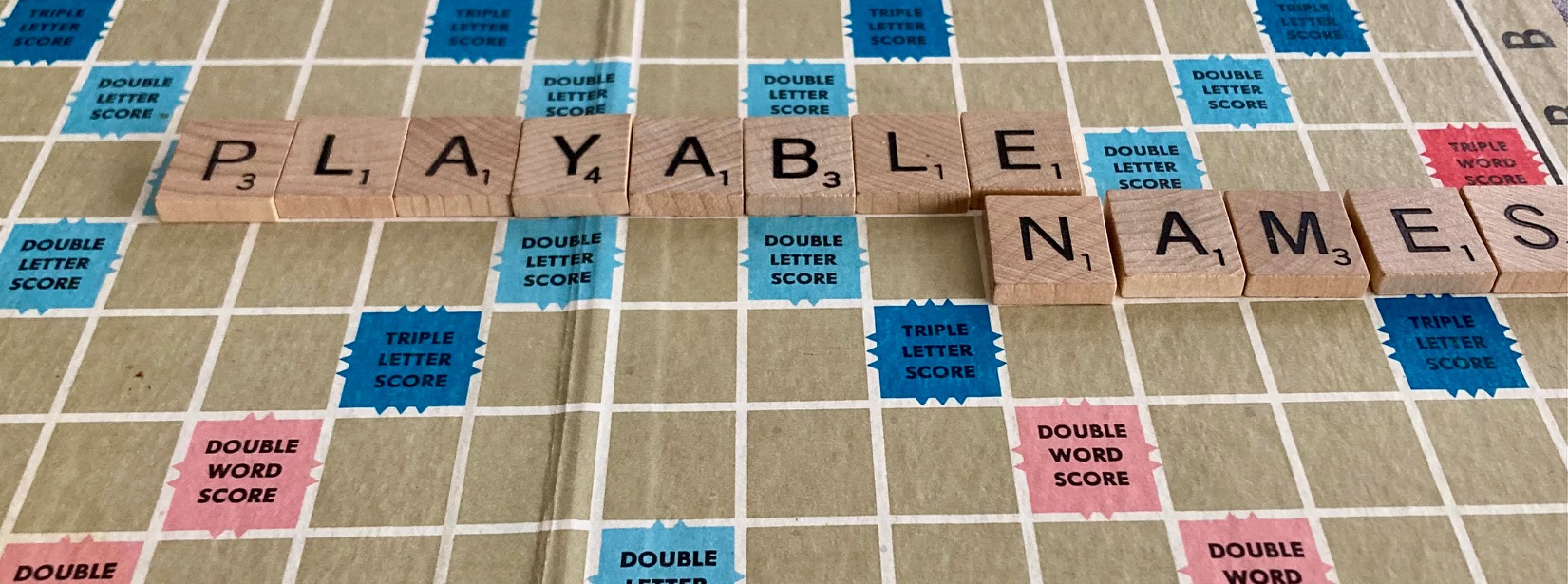
Friday’s blog entry offered a bonus assignment credit to any student who posted a response that identified the classmates whose names are also common nouns, which makes them playable Scrabble words.
Kudos to Annaliese Abboud, Cameron Anderson, Haven Tucker, and Bailey Upchurch for correctly identifying playables names.
Below are the complete lists of the students in sections 8 and 18 with playable names. Their playable names appear in boldface type.
Section 8
Gi (a white garment worn in martial arts) Amitrano
Aly Deters (to discourage)
Calla (a tropical plant) Dickey* (a blouse front)
Amanda Franco (a monetary unit of Equatorial Guinea)
Chloe Freeman (a free person)
Raven (a large black bird) Houston
Campbell Nelson (a wrestling hold)
*Calla Dickey is no longer enrolled in section 8; she remains in the list because her first and last names offer opportunities for learning additional playable words.
Section 18
Adrienne and Kamauri Brown (a color created by mixing all three primary colors: red, yellow, and blue)
Grayson Crouch (to stoop)
Garrett Hickey (a scar, especially one caused by a love bite)
Heloise Richer (the comparative form of rich)
Haven (a shelter) Tucker (to tire)
Bailey (an outer castle wall) Upchurch
For their efforts, Annaliese, Cameron, Haven, and Bailey will receive a bonus assignment credit in the short assignments (course work) category
I may offer additional bonus assignments, so be on the lookout for those. Reading all of the notes that I post for you here, on my blog, will ensure that you don’t miss those opportunities.
Next Up
In class tomorrow, you will begin drafting your first major writing assignment longhand. The assignment, a literacy narrative, is an account of a learning experience involving reading, writing, or learning to speak a language. As part of your prewriting process, look back at “Me Talk Pretty One Day” and consider how you might incorporate into your own essay some of the same elements that David Sedaris includes in his.
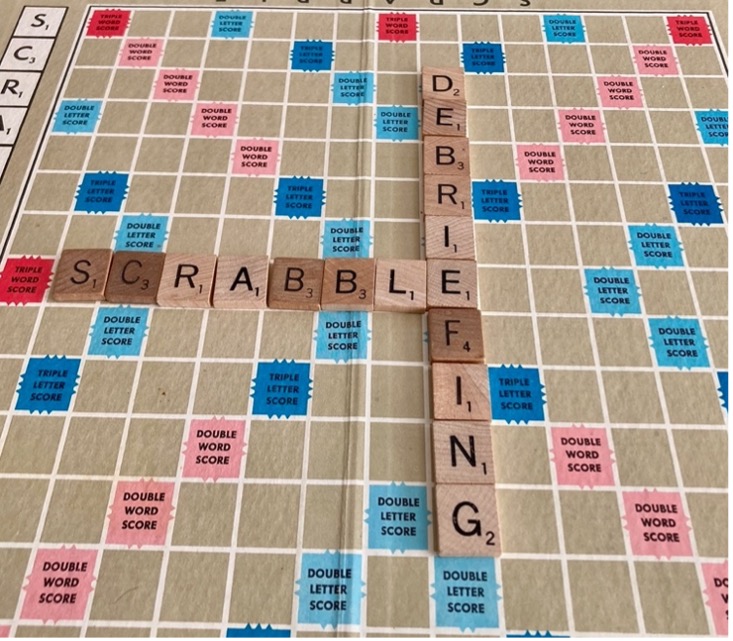
This morning in class, after your Scrabble debriefing, we will examine David Sedaris‘ essay “Me Talk Pretty One Day,” and you and three of your classmates will collaborate on an exercise that asks you to examine–and subsequently address in writing–these elements of his literacy narrative:
Scene and summary–you will examine how and where Sedaris shifts from one to the other
Figurative language–you will identify examples of metaphors, similes, and hyperbole
Each of these elements can play an important role in a narrative, none more so than scene, which is vital to a story’s life. Without it, a narrative falls flat. With summary, a writer compresses time to offer an overview of events. Through scene, a writer lets time unfold in front of the readers’ eyes, which is what readers prefer. They are drawn into a narrative when they can see for themselves what is happening.
Figurative language is an expression not meant to be taken literally but instead stands for something related. Figures of speech make writing more vivid and can deepen a reader’s understanding of and connection to a piece of writing. In Imaginative Writing, novelist Janet Burroway observes, “Both metaphor and simile compare things that are both alike and different, and it is the tension between this likeness and difference that their literary power lies” (25).
Tomorrow’s blog post will list some of the examples of scene, summary, and figurative language that you identify in “Me Talk Pretty One Day.”
Work Cited
Burroway, Janet. Imaginative Writing: The Elements of Craft. Pearson, 2014.
Scrabble Debriefings
At the beginning of class every Monday, I will return your Scrabble score sheets from Friday, and you and your group members will participate in a Scrabble debriefing in which you will (1) review and discuss your game, and (2) individually compose journal entries on the game. Questions to address include but are not limited to the ones on the handout that I will distribute this morning in class. Those questions for consideration are also listed below.
Did you learn any new words from your teammate or from your opponents? If so, what were they?
What plays involved analyzing multiple options? Did your team opt not to make the highest-scoring play possible in order to either (1) block your opponent, or (2) keep letters that might enable you to score more points later?
Where did creative problem-solving figure in the game? If your team had a rack of all consonants or vowels–or mostly consonants or vowels–how were you able to advance the game by playing only one or two letters?
What was the largest number of words formed in a single play and what were they?
Scrabble, like writing, is a process of composing, only the board game involves composing smaller units, words rather than sentences and paragraphs. What parallels, if any, can you draw between your Scrabble play and your writing process?
You will have the opportunity to draw on the journal entries that you write during debriefings when you compose your midterm and final reflections for the course. If you choose Scrabble as the focus of your final essay and annotated bibliography, you may incorporate portions of your Scrabble debriefings into that assignment as well.
Scrabble Skibidi?
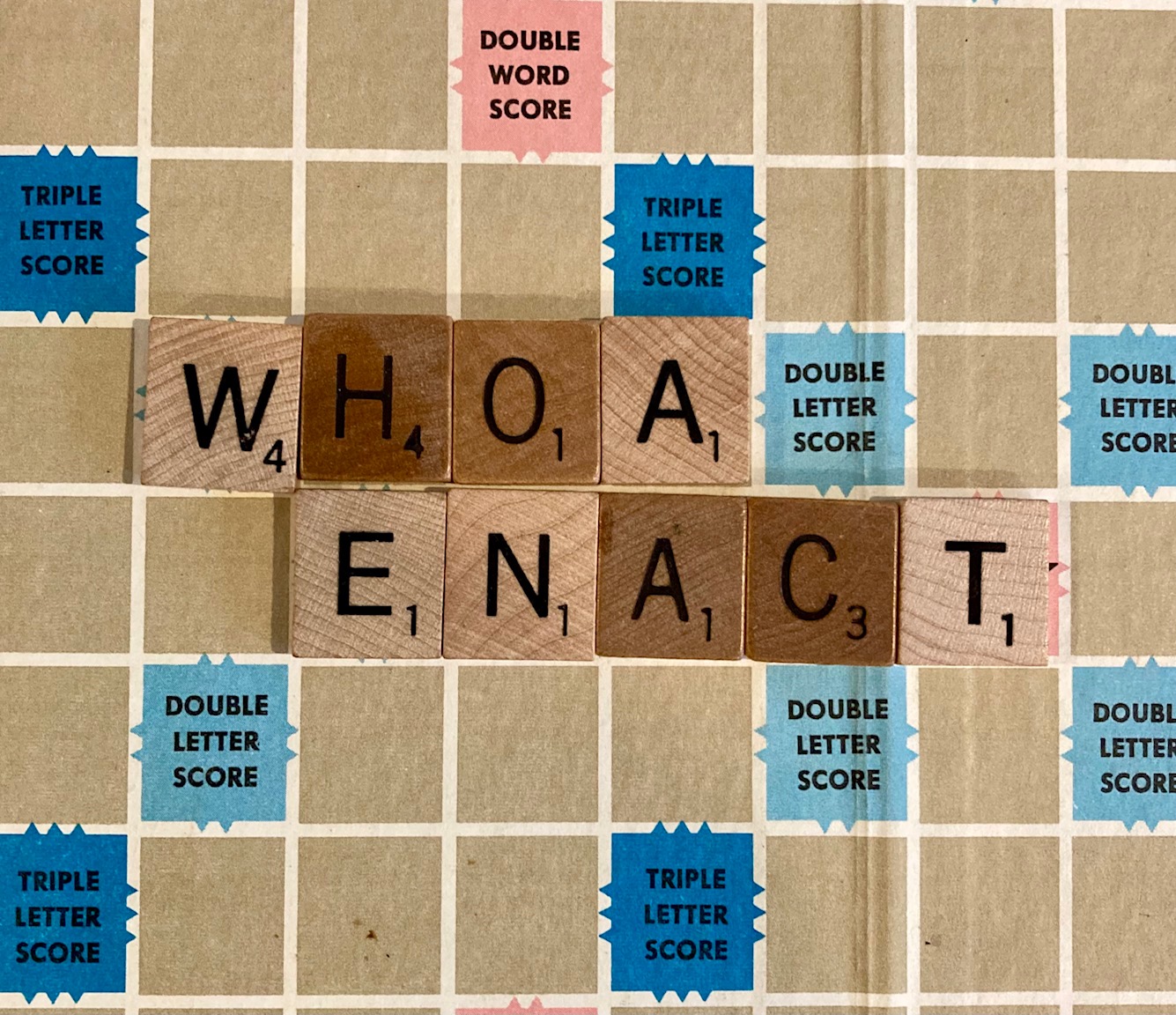
The picture below, which also appears in the August 21 post, demonstrates how a player, or team, can form multiple words through parallel play.
The second player’s, or team’s, four-word play in a single turn is viable because all of the letters that touch form playable words:
whoa: used to command an animal to stop
he: a male person
on: a function word to indicate position (on top of)
aa: a type of lava
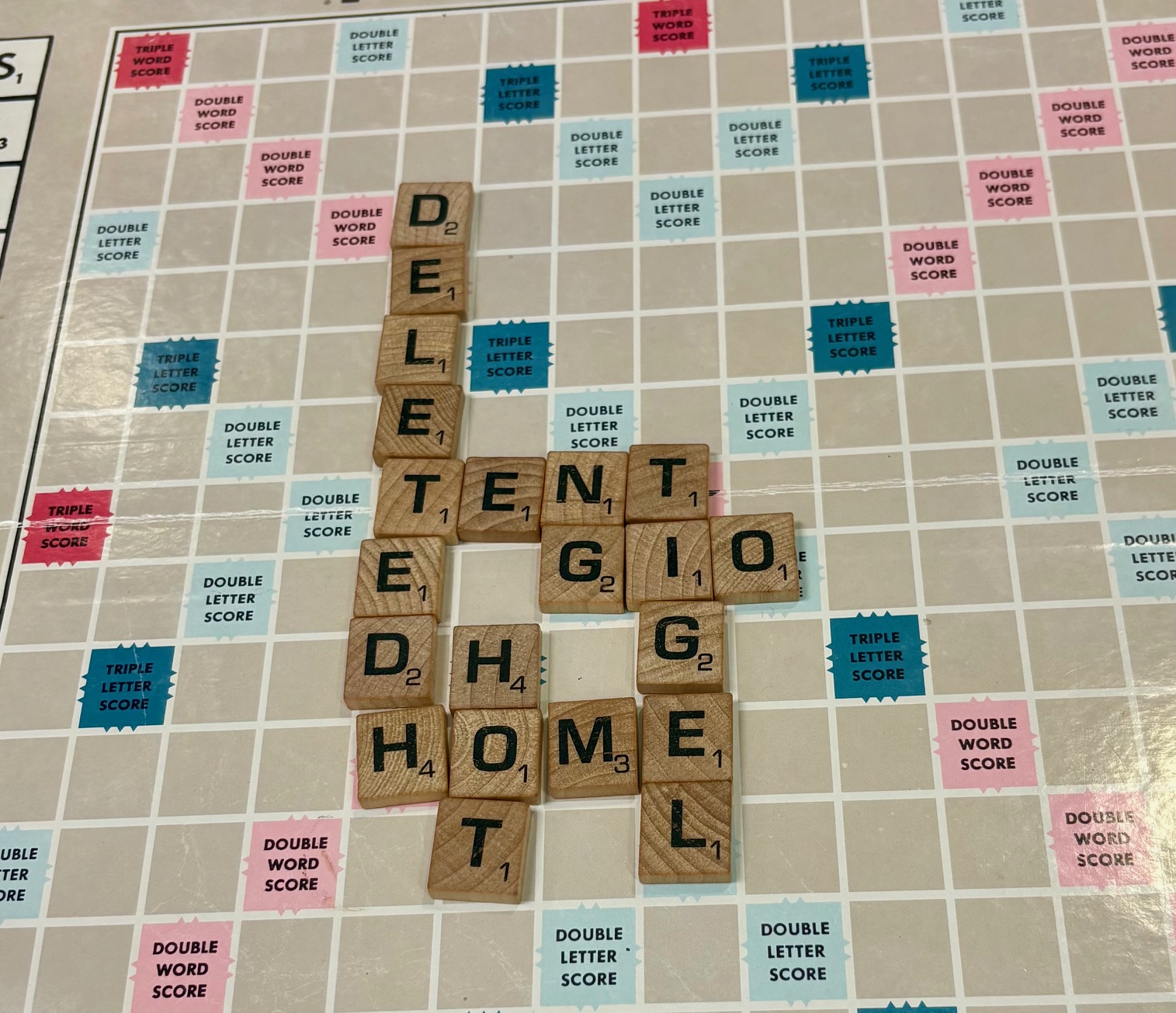
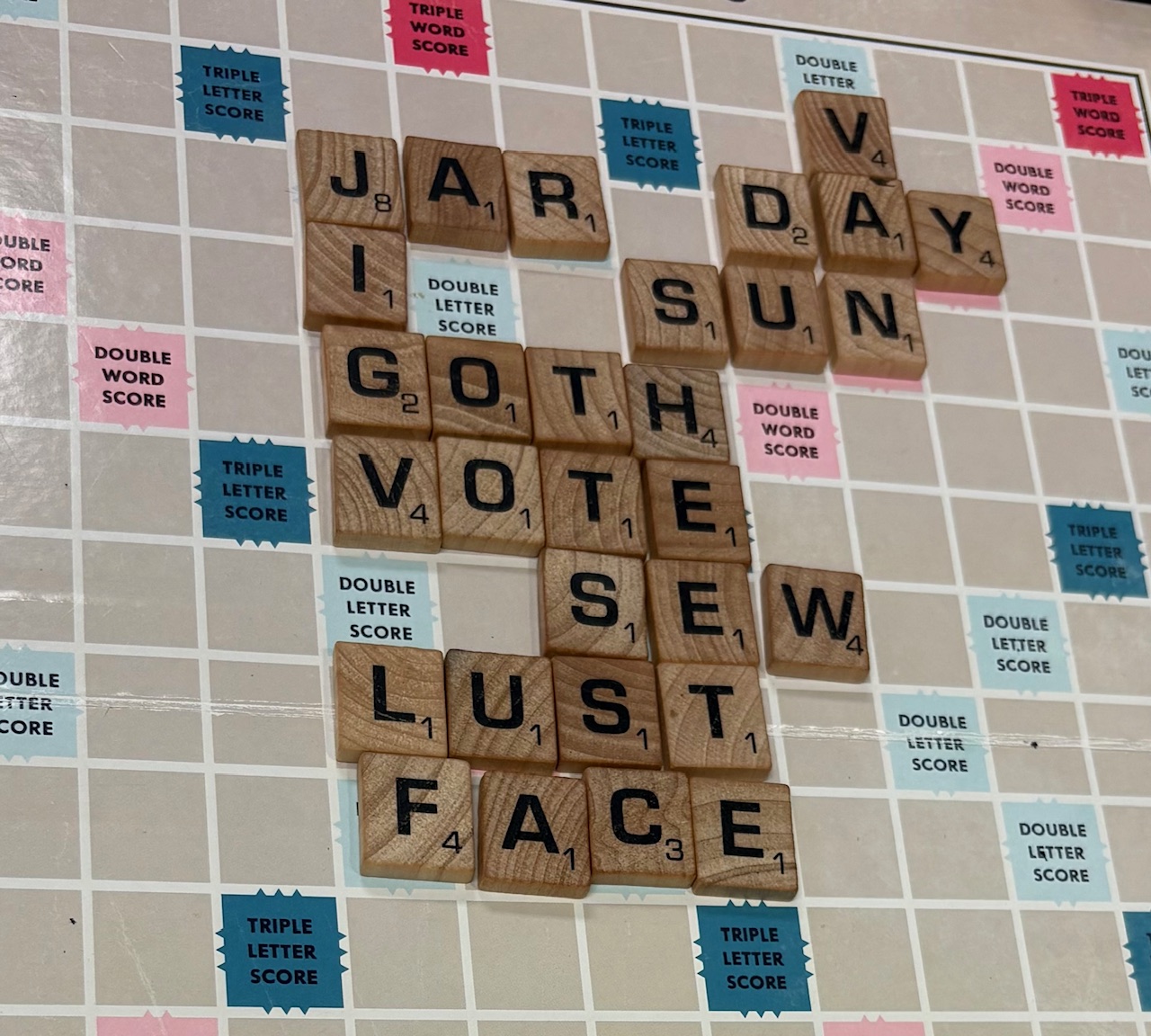
The pictures below, from last Friday’s Wordplay Day, show several instances of incorrect play where letters that touch are nonwords.
Deletedh, dh, and ng are all nonwords; Tigel and Gio are not playable in Scrabble because they are proper nouns–specifically product brands–that are not also common nouns.
Jigv, du, oo, lf, ua, ttssc, and sheete are all nonwords.
Keep your eyes on the board when you and your opponents are playing words. If you are uncertain whether letters that touch form a playable word, don’t play it. And if you question the validity of a word that your opponents play, challenge the word immediately. A challenge must directly follow a questionable play.
In class on Wednesday, you will begin drafting your first major writing assignment longhand. The assignment, a literacy narrative, is an account of a learning experience involving reading, writing, or learning to speak a language. As part of your prewriting process, look back at “Me Talk Pretty One Day” and consider how you might incorporate into your own essay some of the same elements that David Sedaris includes in his.
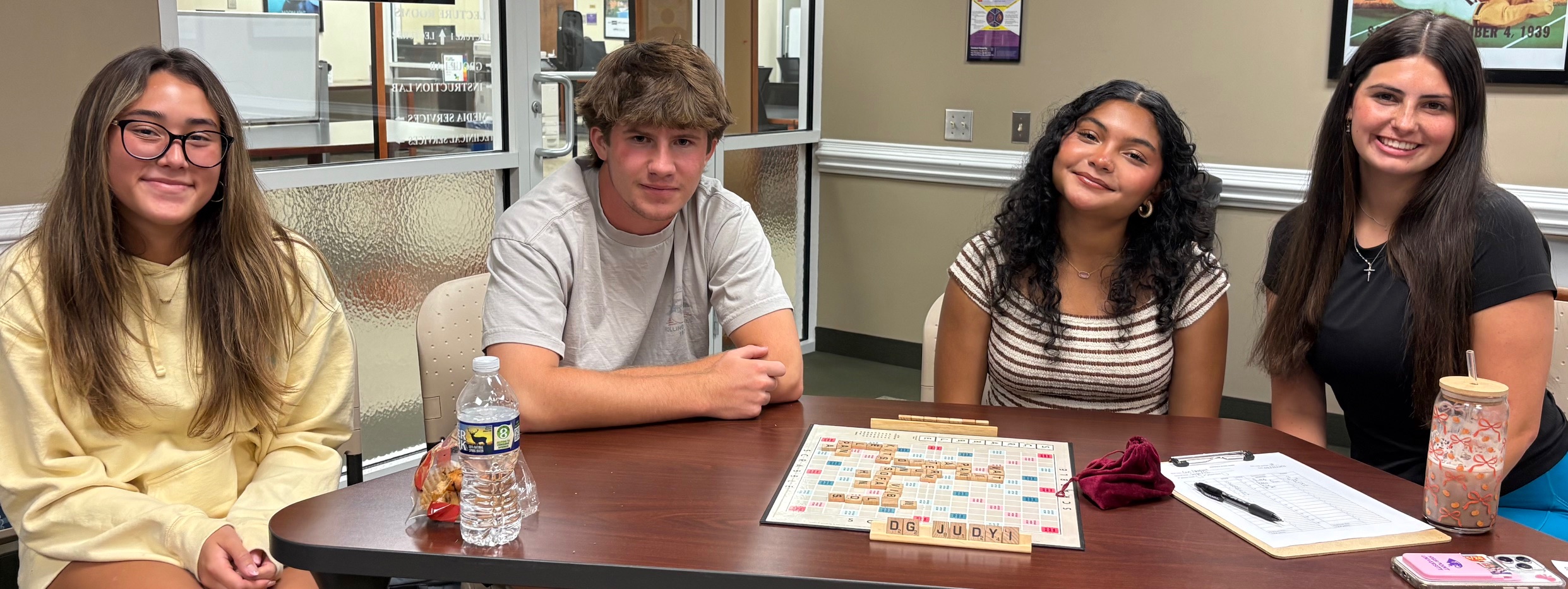
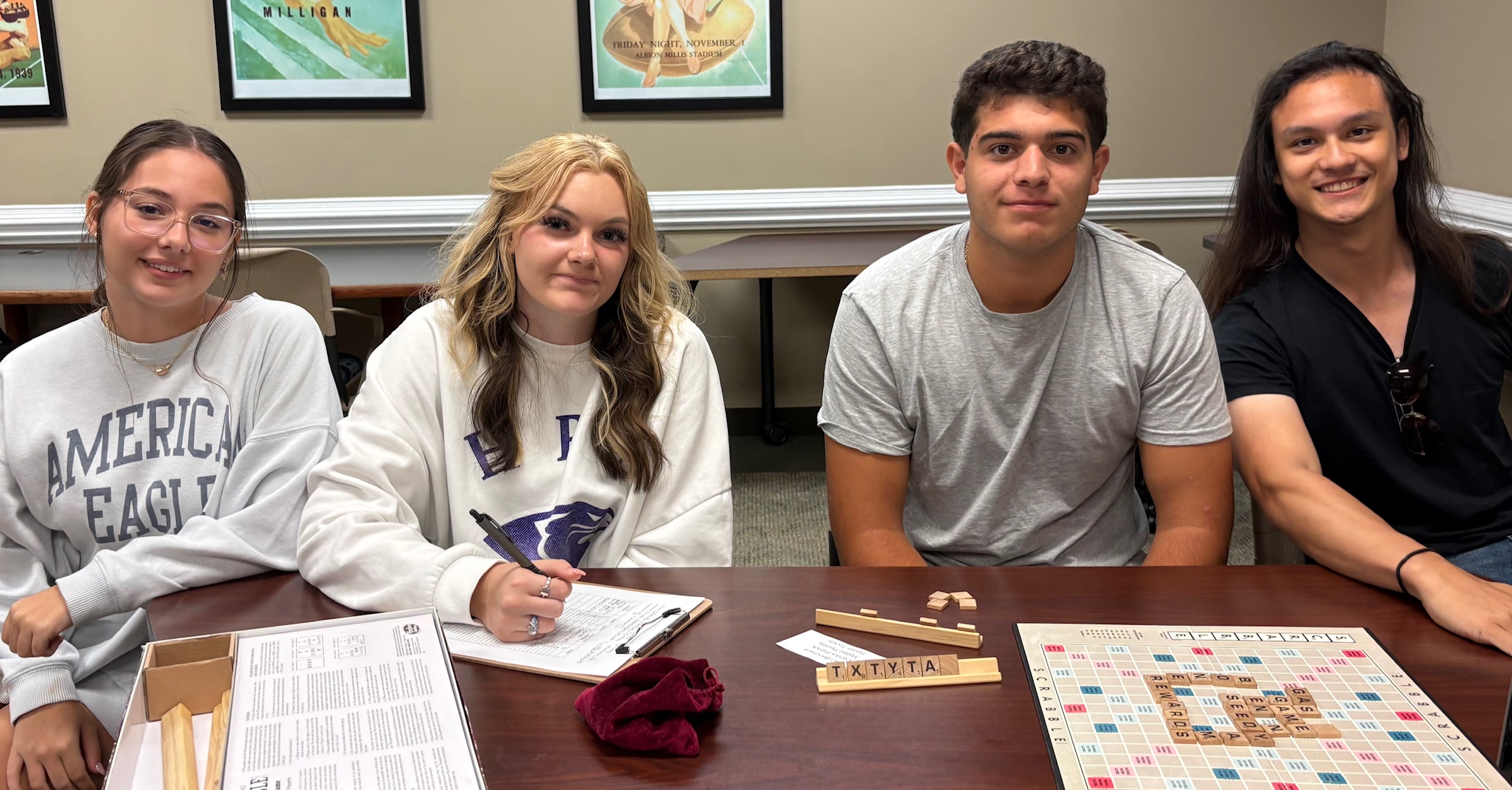
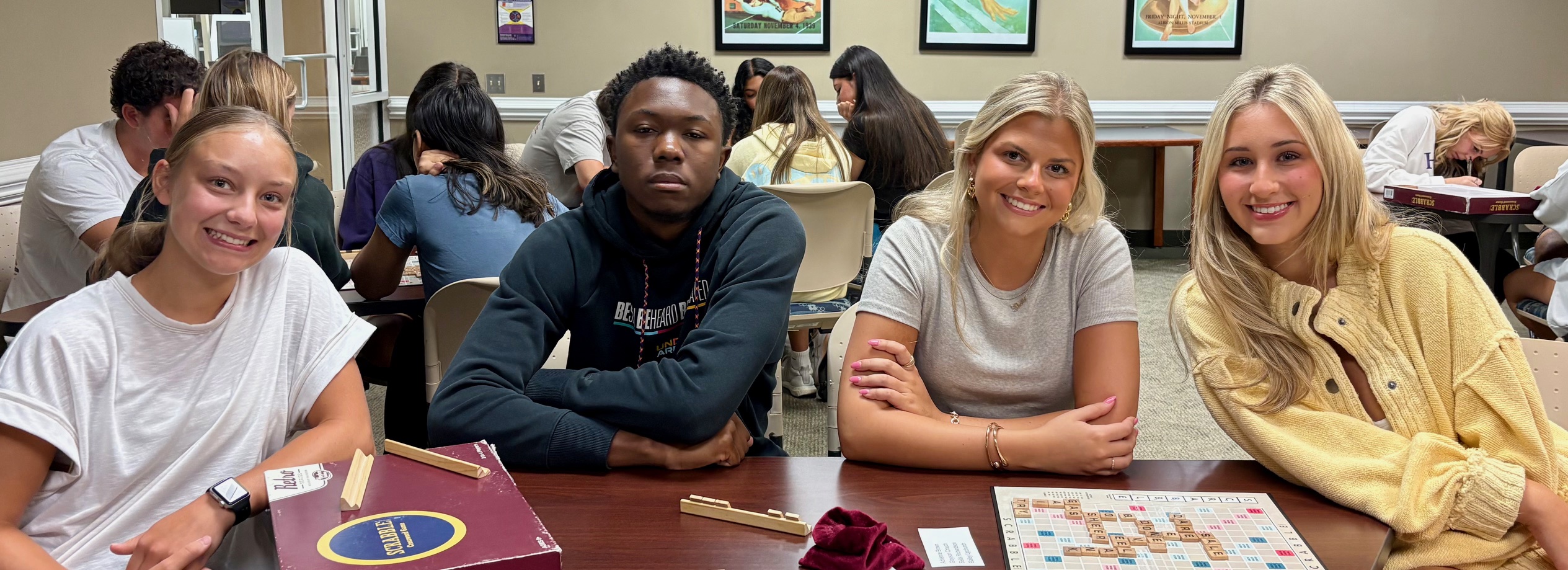
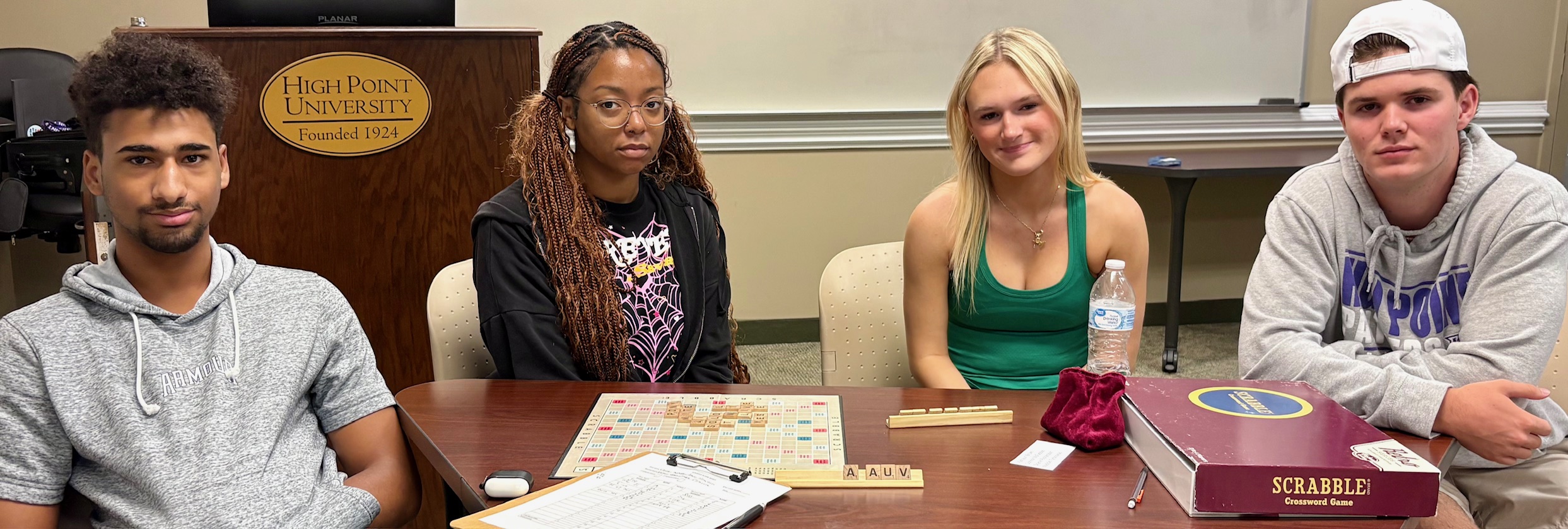
To help us put names with faces, I have included in this post pictures of all of you in sections 08 and 18 with picture captions that list your names. I encourage you to review this page frequently. In between the pictures, I have included lists of first names that are also common nouns, making them playable in Scrabble.
Al: a type of East Indian tree
Alan: a breed of hunting dog (also aland, alant)
Alec: a herring
Ally: an advocate
Ana: a collection of miscellany about a specific topic
Ananda: extreme happiness
Anna: a former Indian coin
Ava: at all, of all
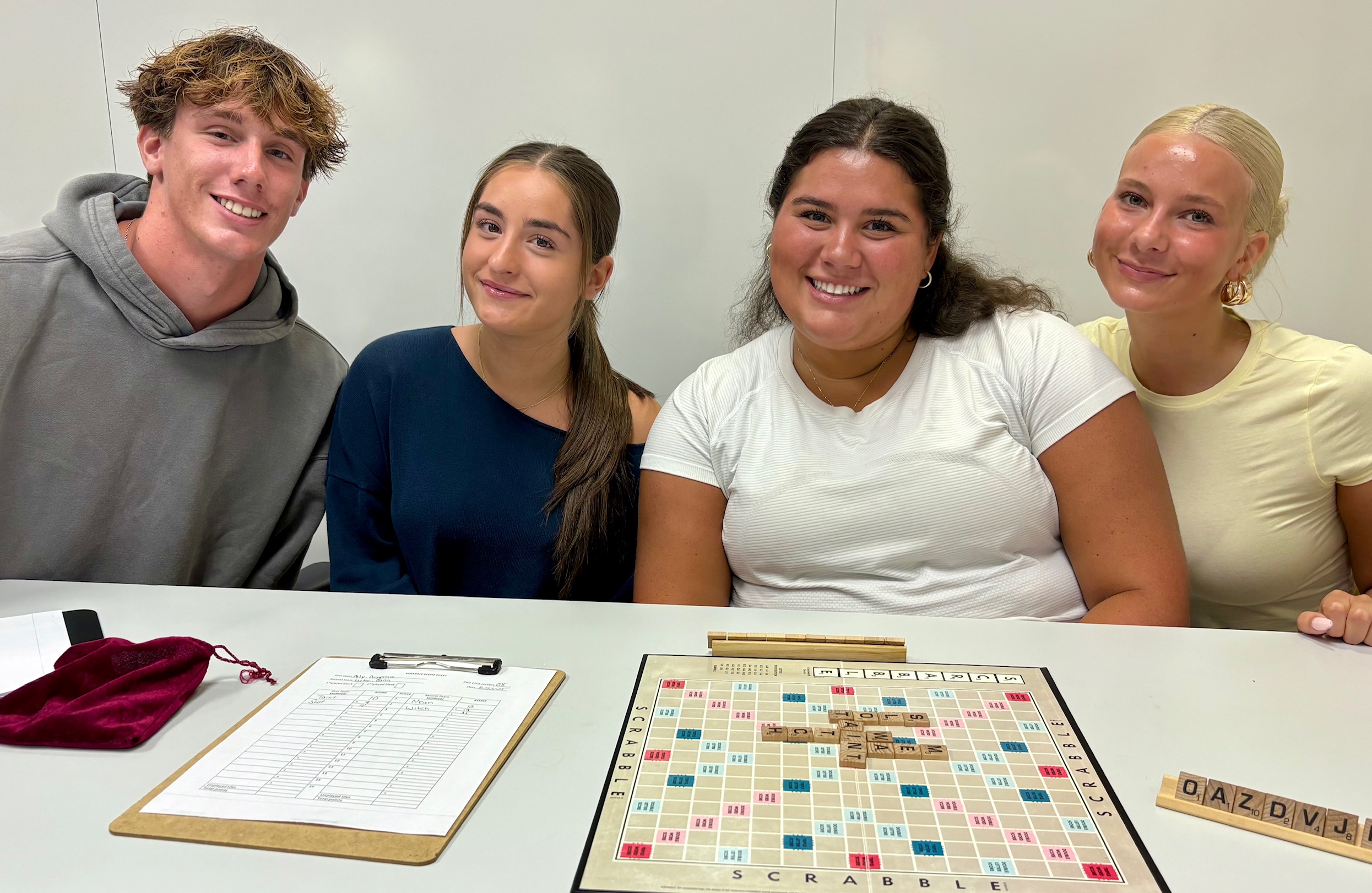
Section 8 (L-R): Luke Wilson, Aly Deters, Angelina Anzideo, Calla Dickey
Students who correctly respond to the playable first names and last names question below will earn a bonus assignment credit, which means they will have an extra assignment in the short assignments (course work) category. Completing a bonus assignment such as this one will offset a low class exercise or pop quiz grade.
How many students in English 1103.08 and 18 have first and/or last names that are playable Scrabble words? Keep in mind that only playable first names appear in the lists above. Some students in each section may have playable last names as well.
Directions for Finding and Submitting Your Answer
Review the list of playable first names, compare it with the students’ first and last names in the photo captions above, or on the class page, and determine which of the students’ first and last names are playable in Scrabble. If you aren’t sure whether a name is also a common noun, you can consult the Scrabble website’s dictionary and Merriam Webster’s Scrabble Dictionary site.
Compose a response of one or more complete sentences that includes the first and last name of each student with a playable name. Indicate which name, first or last, is playable.
Post your comment as a reply to this blog post by 9:00 a.m. on Monday, August 25.
To post your comment, click the title of the post, “What’s in a Name. . . . ,” then scroll down to the bottom of the post. There you will see the image of an airmail envelope with a white rectangular box for your comment. Type your comment in the box and hit return. Voila! You have submitted your answer. Good luck! I will make the comments visible before class on Monday, August 25.
Next Up
For class on Monday, you will read David Sedaris‘ essay “Me Talk Pretty One Day,” which is posted in the readings folder on Blackboard. You do not need to print a copy. I will distribute copies in class. We will examine Sedaris’ essay as a model for your own literacy narrative, which you will begin drafting in class on Wednesday.
Every Friday is WordPlay Day, which means that the class period will be devoted to Scrabble games in which you and one of your classmates will play as a team against two other classmates. Before the beginning of class each Friday, volunteers will draw four names at a time at random to form five groups of four and write the group members’ first and last names on the white board. If you arrive early to class, please volunteer to help with the name-drawing or name-writing (on the whiteboard) process.
If you haven’t played Scrabble before, this short video tutorial will provide you with a helpful overview of the game. Also, I will be offering a brief introduction to the game myself at the beginning of class and will be available to answer your questions, except these: (1) Is this a word? and (2) Is this a playable word? For the answers to those questions, you must rely on your own word power and the word power of your teammate.
Each week I will publish a blog entry devoted to tips for improving your game. This week’s post focuses on parallel play and two-letter words beginning with a.
Parallel Play and Two-Letter Words Beginning with “A”
Parallel play increases your score through the points you earn by spelling more than one word in a single turn. In the first play of the hypothetical game pictured at the top of this post, the first player or team would score sixteen points by spelling enact with the t on the center double-word square. With the second turn, the other player or team could take advantage of the opportunity for parallel play. If the team knew that aa is a type of lava, they could earn twenty-four points with four words: whoa, he, on, and aa.
Aa is one of sixteen playable two-letter words beginning with a. Learning these two-letter words, as well as the others that follow in the alphabet, will enable you to see more options for play and increase the number of points you earn in a single turn.
aa: a type of stony, rough lava
ab: an abdominal muscle
ad: an advertisement
ae: one
ag: agriculture
ah: an exclamation
ai: a three-toed sloth
al: a type of East Indian tree
am: the first-person singular present form of to be
an: an indefinite article
ar: the letter r
as: similar to
at: in the position of
aw: an expression of sadness or protest
ax: a type of cutting tool (also axe)
ay: a vote in the affirmative (also aye)
Important Note about Challenges
If you think that the opposing team has played a word that isn’t permissable, such as a misspelled word or a proper noun, tell me that you have a challenge. I will consult the Official Scrabble Players Dictionary to determine whether the word in question is playable. If the challenged word isn’t playable, the team that set it down loses a turn. Conversely, if the challenged word is playable, the team that called the challenge loses a turn.
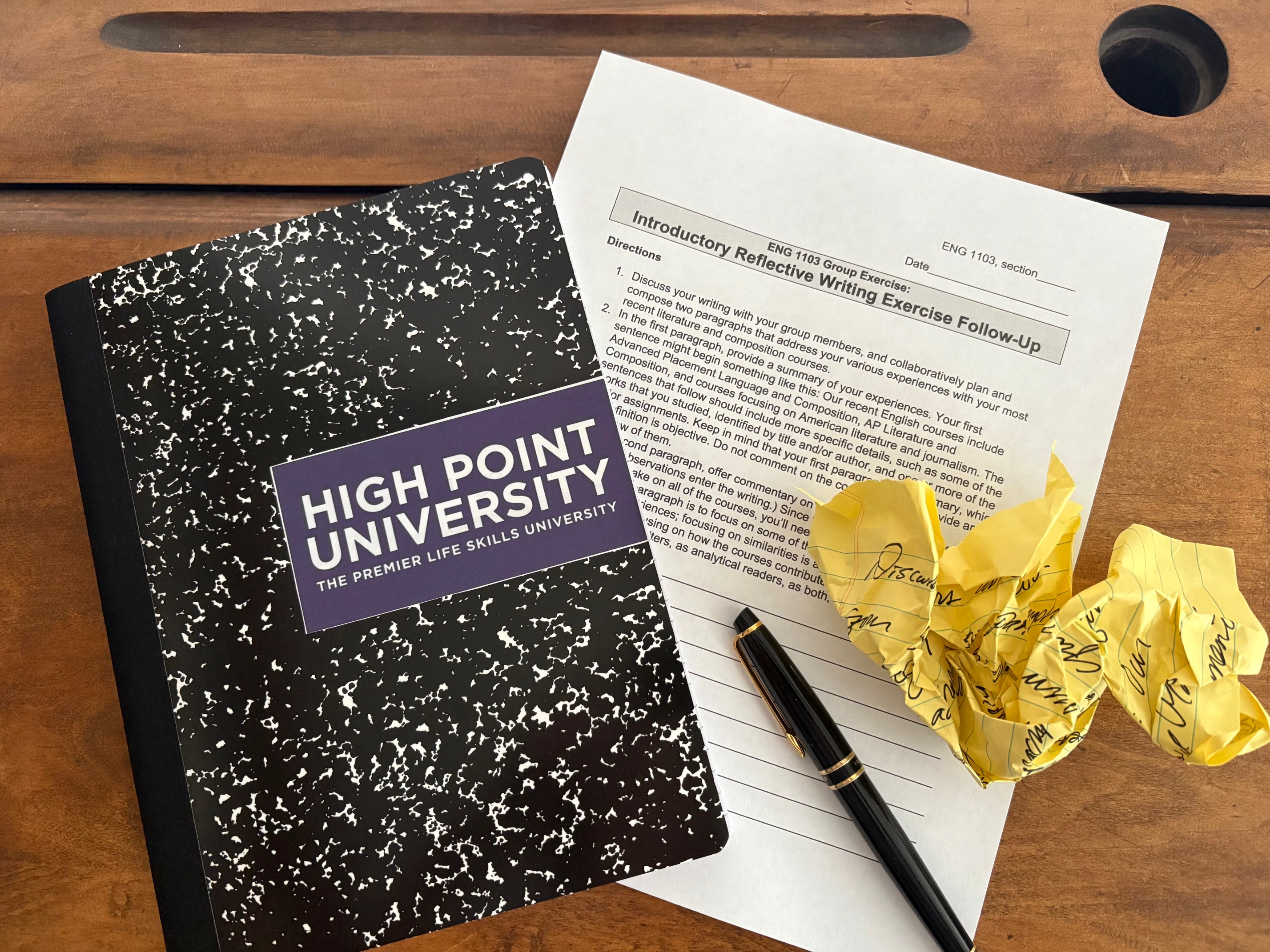
This morning in class, we will review the syllabus exercise that you completed on Monday. After that, I will return your reflections-in-progress, and you and three of your classmates will compose two paragraphs that incorporate some of the details from your individual reflections.
Directions
Discuss your writing with your group members, and collaboratively plan and compose two paragraphs that address your various experiences with your most recent literature and composition courses.
In the first paragraph, provide a summary of your experiences. Your first sentence might begin something like this: Our recent English courses include Advanced Placement Language and Composition, AP Literature and Composition, and courses focusing on American literature and journalism. The sentences that follow should include more specific details, such as some of the works that you studied, identified by title and/or author, and one or more of the major assignments. Keep in mind that your first paragraph is a summary, which by definition is objective. Do not comment on the courses; simply provide an overview of them.
In the second paragraph, offer commentary on the courses. (Here is where your personal observations enter the writing.) Since you will not be able to address everyone’s take on all of the courses, you’ll need to be selective. One way to organize the paragraph is to focus on some of the differences among your group members’ experiences; focusing on similarities is another option. Yet another option is this: focusing on how the courses contributed to your group members’ development as writers, as analytical readers, as both, or as neither.
After the note taker has recorded your paragraphs, allow time for each group member to review them and offer recommendations for revisions. Discuss any suggestions for changes and edit as needed.
Next Up
Wordplay Day! To prepare for class, visit the Dictionary and World Builder pages on the Scrabble website, and review tomorrow’s post on my blog devoted to Scrabble tips. If you have never played Scrabble before, be sure to watch this short video on how to play Scrabble.
Before tomorrow’s class, be sure to complete the following tasks.
Review yesterday’s blog post as well as the syllabus. If you added the class after our first meeting on Monday, you can download the syllabus from Blackboard. In your journal, jot down any questions you have about the course.
Also, if you added the class after our first meeting on Monday, begin composing a reflective essay focusing on your most recent experiences in literature and/or composition courses. Begin your essay with a one-paragraph summary for each of the courses (two paragraphs, total). Keep in mind that summaries are by nature objective. Do not comment on the courses, simply offer an overview of them.
Follow those paragraphs with your observations on the courses. (Here is where your personal observations enter the writing.) Points to address include the following:
Were the courses similar to or different from your previous English classes? How?
Did the courses contribute to your development as a writer, an analytical reader, both, or neither?
How did those courses shape your attitude towards writing and/or reading?
How do you anticipate that English 1103 may be similar to or different from those courses?
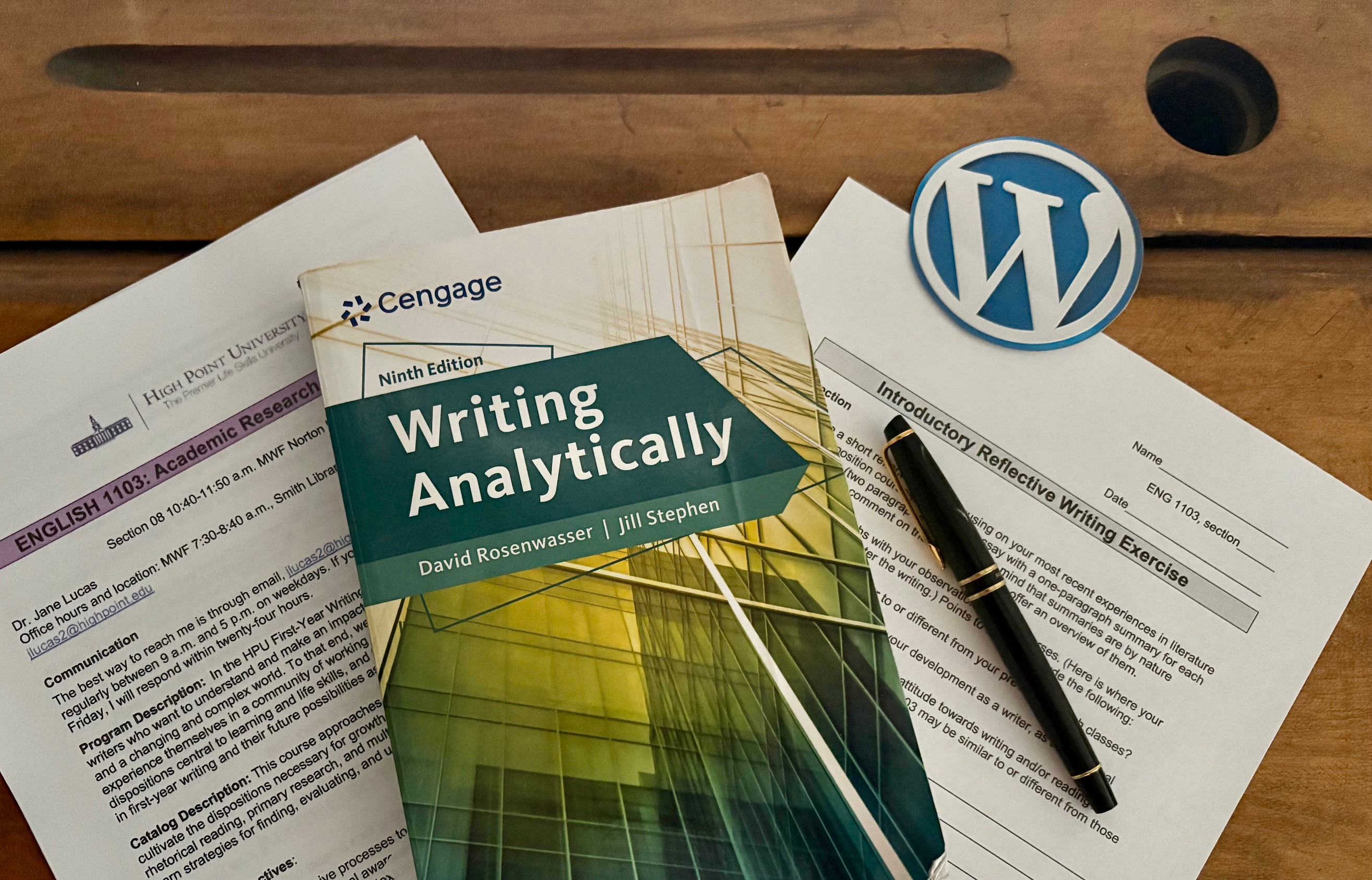
If you haven’t purchased or rented it already, order the textbook, the paperback edition of Writing Analytically, 9th edition, by David Rosenwasser and Jill Stephen.
Also, as soon as possible, create a free WordPress blog at wordpress.com, and email the URL to me so that I can link your blog to the class page.
Because writing longhand and limiting screen time are essential components of the class, I am including below some notes that illustrate why those practices, which may seem quaint, are vital to our work.
Writing Longhand
One practical reason for writing longhand: What we mark through remains on the page. Sometimes what we cross out can be useful later on, elsewhere in our writing. More importantly, research in cognitive neuroscience indicates that writing longhand has these benefits:
When we use our phones and laptops, it’s difficult for us to give our undivided attention to one endeavor, but often that singular focus is critical.
When we type on our phones, we often aim to convey as much as we can with as few characters as possible. Texting and emailing–both of which now feature predictive text–do not foster the vital skills of developing our writing and producing original thought.
Limiting our screen time not only helps us improve our writing skills, it can also benefit our overall well-being.
The research cited in the links that I’ve included above isn’t definitive, but it makes a strong case for the value of limiting our screen time and putting pen to paper. I encourage you to continue these practices after the semester ends.
Next Up
On Wednesday, we will continue the course overview, I will return the reflective writing that you began on Monday, and you will have additional time to develop your reflection in class.
Am I the person who will teach your English 1103 class? I posed that question this morning at the beginning of class as a starting point for our critical thinking, one of the key features of the class and of your other college courses.
To begin the collaboration and inquiry that will figure prominently this semester, you worked together in groups today to find the answers to some of the most frequently asked questions about the course. After class, continue to review the syllabus. (An additional copy is posted in Blackboard.) If you have any questions about the assignments, the course policies, or the calendar, please let me know.
Textbook
All of you in sections 8 and 18 of English 1103 are required to purchase or rent the paperback edition of the textbook, Writing Analytically, 9th edition, by David Rosenwasser and Jill Stephen. Bring your copy to class on the days when the title, Writing Analytically, appears in bold on the course calendar. On those days, we will examine portions of the chapters in class and you will address passages in the textbook in your own writing.
Your first (in class) reading assignment in the textbook is scheduled for September 10, which will give you ample time to order and receive your copy before you are required to have it in class.
Other Required Materials
Writer’s notebook/journal, bring to every class.
Loose leaf paper (for drafts and short in-class assignments), bring to every Monday and Wednesday class
Pen with dark ink, bring to every class
Pocket portfolio (for class handouts), bring to every class
WordPress Blog
As practice in developing your web literacy and writing for a broader online audience, you will maintain a free WordPress blog for the class. As soon as possible, create a free blog at wordpress.com. After you create your blog, email the address, or URL, to me, and I will link your blog to our class page, English at High Point. If you encounter technical difficulties creating your blog or publishing a post, email help@wordpress.com or contact the HPU Help Desk: helpdesk@highpoint.edu, 336-841-HELP (3457).
You will post the revisions of all of your major writing assignments both to your blog and to Blackboard. The posts that you publish for class will be public. You are welcome to create additional posts on your own. If you prefer for some of those posts to be private, keep them in draft form or choose the private visibility option.
You may also be asked to post comments to your classmates’ blogs and to mine.
Next Up
On Wednesday, you will continue to compose the introductory reflective essay that you began in class today.
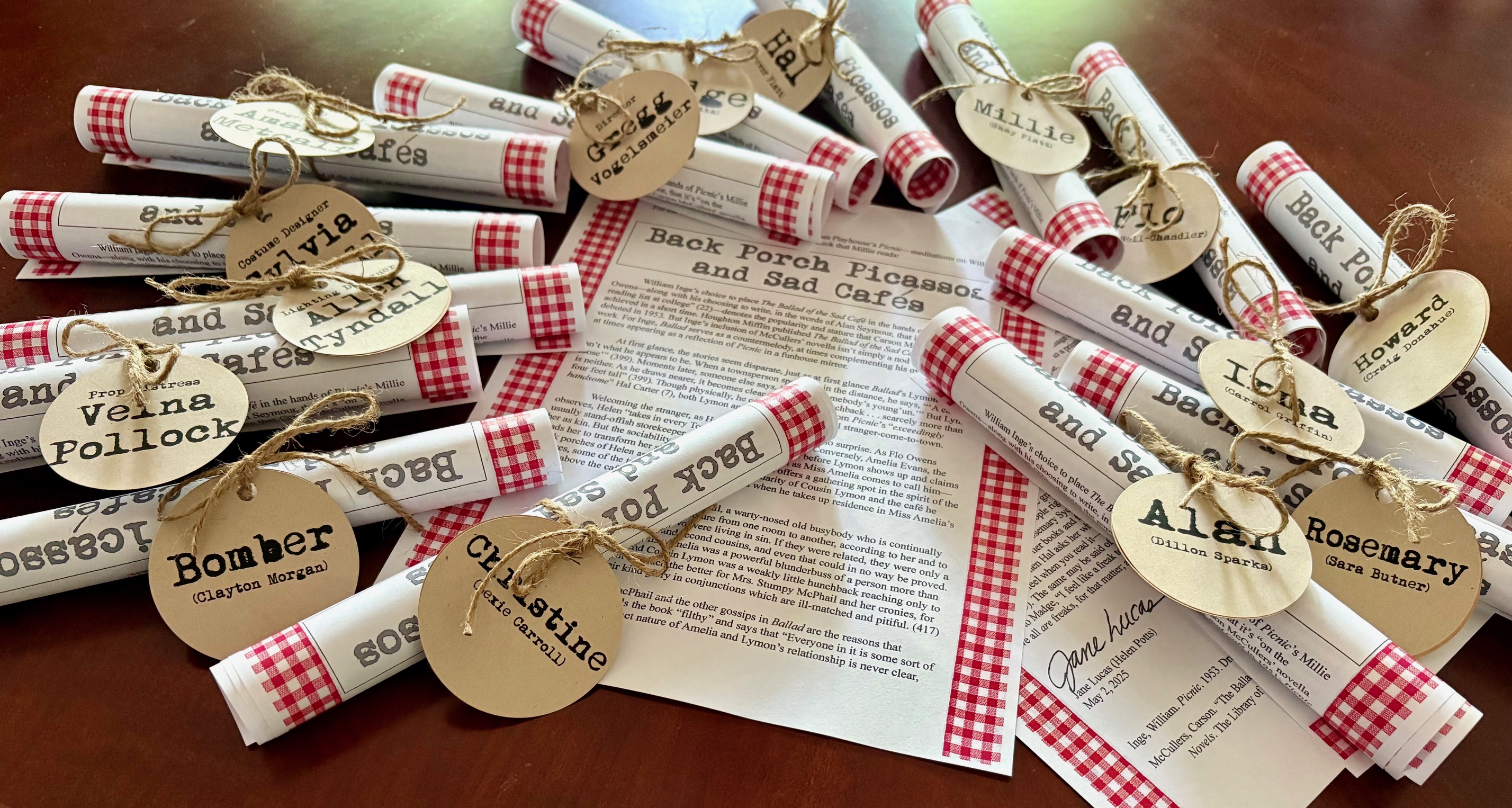
For the cast and production staff of Stained Glass Playhouse‘s Picnic–meditations on William Inge’s play and the book that Millie reads:
William Inge’s choice to place The Ballad of the SadCafé in the hands of Picnic’s Millie Owens—along with his choosing to write, in the words of Alan Seymour, that it’s “on the reading list at college” (22)—denotes the popularity and stature that Carson McCullers’ novella achieved in a short time. Houghton Mifflin published The Ballad of the Sad Café in 1951; Picnic debuted in 1953. But Inge’s inclusion of McCullers’ novella isn’t simply a nod to a then-recent work. For Inge, Ballad serves as a countermelody, at times complementing his own themes and at times appearing as a reflection of Picnic in a funhouse mirror.
At first glance, the stories seem disparate, just as at first glance Ballad’s Lymon Willis isn’t what he appears to be. When a townsperson spots him in the distance, he says, “‘A calf got loose’” (399). Moments later, someone else says, “‘No, it’s somebody’s young’un.’” But Lymon is neither. As he draws nearer, it becomes clear that he is “a hunchback . . . scarcely more than four feet tall” (399). Though physically, he couldn’t be further from Picnic’s “exceedingly handsome” Hal Carter (7), both Lymon and Hal are the archetypal stranger-come-to-town.
Welcoming the stranger, as Helen Potts does, comes as no surprise. As Flo Owens observes, Helen “takes in every Tom, Dick, and Harry” (11). Conversely, Amelia Evans, the usually stand-offish storekeeper, has never taken in anyone before Lymon shows up and claims her as kin. But the sociability of Lymon—Cousin Lymon as Miss Amelia comes to call him—leads her to transform her store into a nightly café that offers a gathering spot in the spirit of the back porches of Helen and Flo. Yet despite the popularity of Cousin Lymon and the café he inspires, some of the townspeople are scandalized when he takes up residence in Miss Amelia’s rooms above the café:
[A]ccording to Mrs. MacPhail, a warty-nosed old busybody who is continually moving her sticks of furniture from one room to another, according to her and to certain others, these two were living in sin. If they were related, they were only a cross between first and second cousins, and even that could in no way be proved. Now, of course Miss Amelia was a powerful blunderbuss of a person more than six feet tall—and Cousin Lymon was a weakly little hunchback reaching only to her waist. But so much the better for Mrs. Stumpy McPhail and her cronies, for they and their kind glory in conjunctions which are ill-matched and pitiful. (417)
The notions of Mrs. MacPhail and the other gossips in Ballad are the reasons that Picnic’s Rosemary Sydney labels the book “filthy” and says that “Everyone in it is some sort of degenerate” (22). Though the exact nature of Amelia and Lymon’s relationship is never clear, they are judged not only for their apparent transgressions but also for their unconventional appearances—a testament to the belief that good looks, themselves, are a virtue, a tenet that Picnic’s beauty, Madge Owens, calls into question when she asks, “What good is it to be pretty?” (16).
For all of Madge’s and Hal’s natural good looks, it’s clear that what we behold as beauty is also partly artifice. When Hal tells his friend Alan Seymour about his stint in Hollywood, he says, “[Y]ou gotta have a certain kind of teeth or they can’t use you . . . they’d have to pull all my teeth and give me new ones” (26). When Madge delays getting ready for the picnic, Alan prods her, saying, “Go on upstairs and get beautiful for us” (49). Still, unlike, the cross-eyed, six-foot Amelia and the hunchback Lymon, Madge, with or without powder and lipstick, finds the image in the mirror affirming. As she says to her mother, Flo, “It just seems that when I’m looking in the mirror that’s the only way that I can prove to myself that I’m alive” (42). Yet Madge is as much a misfit as McCullers’ oddballs, a truth signified in the image of her as Miss Neewollah published in The Kansas City Star’s Sunday magazine. Due to a printing error, her mouth appears in the middle of her forehead, rendering her grotesque.
That image of Madge with her mouth in the middle of her forehead is like the woman in the Picasso prints that hang over her sister Millie’s bed, a woman that Madge sums up sarcastically as one “with seven eyes. Very Pretty” (23). Millie knows that works of art “don’t have to be pretty” (23), that the woman with her seven eyes speaks a truth that photographic realism doesn’t. Similarly, The Kansas City Star’s unrealistic photograph doesn’t lie. Objectifying Madge distorts her.
Millie vows that after she graduates from college that she’s “going to New York, and . . . write novels that’ll shock people right out of their senses” (87). Some people, like Ballad’s Mrs. McPhail and Picnic’s Rosemary Sydney, may be shocked. Others, ones with Millie’s own sensibility, will read her books and feel the way Millie herself feels when she reads The Ballad of the Sad Café. When Hal asks her what it’s about, she says, “[I]t’s kind of hard to explain, it’s just the way you feel when you read it—kind of warm inside and sad and amused—all at the same time” (53). The same may be said of Picnic. Near the play’s end, before Hal jumps the train, he says to Madge, “I feel like a freak to say this, but—I love you” (85). We all feel like freaks, Hal. We all are freaks, for that matter; and we love, for better or worse—and all at the same time.
Works Cited
Inge, William. Picnic. 1953. Dramatists Play Service Inc., n.d.
McCullers, Carson. “The Ballad of the Sad Café.” 1951. Carson McCullers: The Complete Novels. The Library of America, 2001. pp. 395-458.