Today in class, you will compose your final reflective essay. Instructions for the assignment follow.
Directions
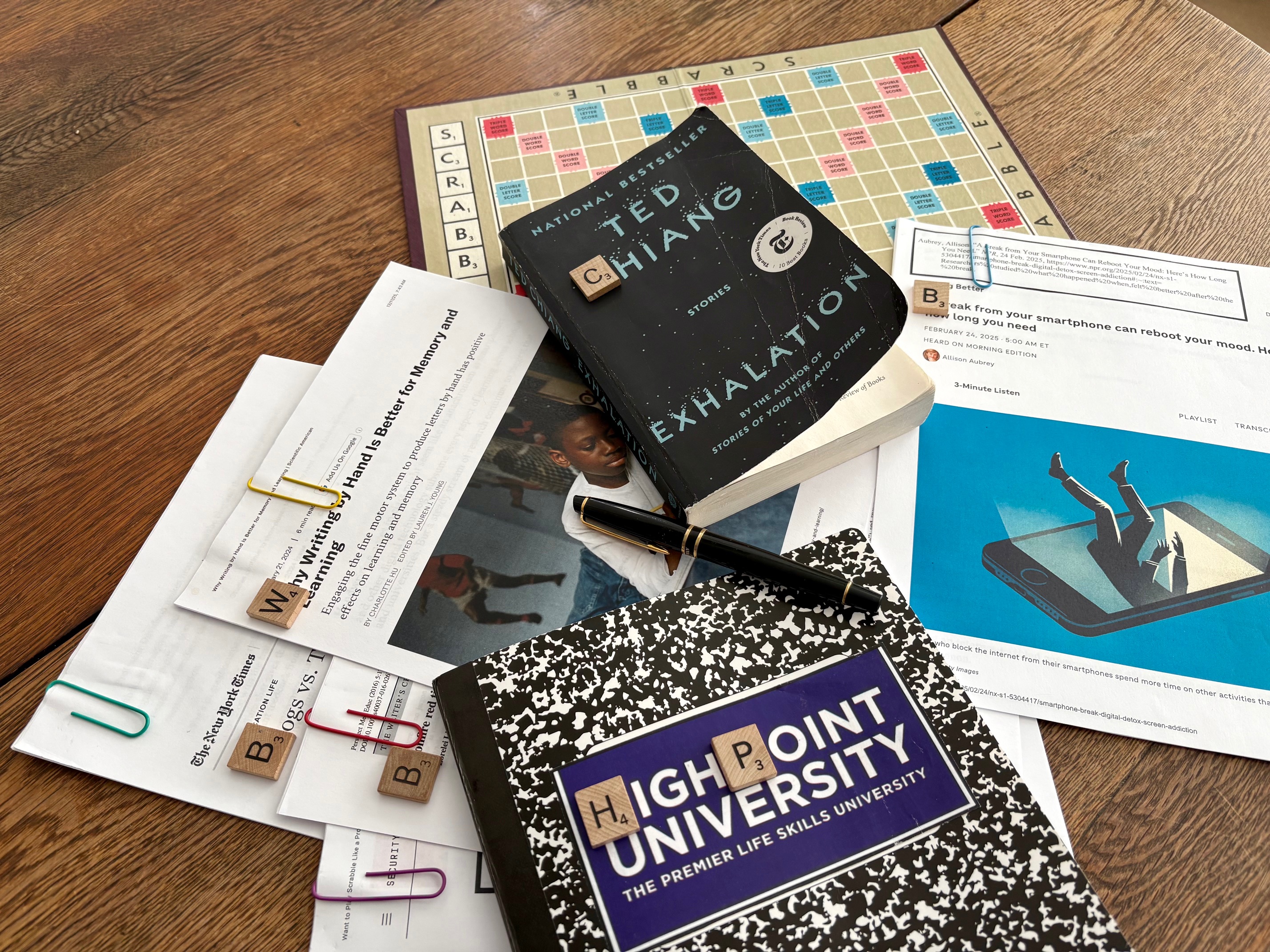
Compose a final reflective essay that documents your work in the second half of the semester, focusing on what you consider some of your most significant work and the feature or features of the course that have benefited your development as a writer and a student. Since you have already written a reflective essay on your annotated bibliography and preface, your final reflection should focus on Ted Chiang’s The Lifecycle of Software Objects and one, two, or three—but no more than three—additional assignments or features of the course, including the following:
Writing for an online audience beyond the classroom/maintaining a WordPress blog
Delivering your group presentation.
Collaborating with your classmates on in-class writing assignments
Playing Scrabble/collaborating with your teammates on Wordplay Day
Writing longhand
Limiting screen time
Keeping a journal
Include in your reflection the following elements:
A title that offers a window into your reflection
An opening paragraph that introduces your focus and presents your thesis
Body paragraphs that offer concrete details from your work to support your thesis.
A quotation from Ted Chiang’s The Lifecycle of Software Objects that complies with the planning guidelines outlined in November 20 class notes.
A conclusion that revisits the thesis without restating it verbatim
If you include a second quotation, one in addition to the required quotation from The Lifecycle of Software Objects, include an MLA-style works cited entry for that text in addition to an entry for Chiang’s novella.
Responding to a Classmate’s Bibliography and Preface
In the second half class, I will distribute a peer response assignment that asks you to read and comment on a classmate’s annotated bibliography and preface. If you reach a stopping point in your reflection before the end of the class period, you will have the opportunity to begin work on your peer response. Tomorrow’s class notes will serve as the posting site for the duplicate copy of your comment. (The other site is the student’s own blog post.) The deadline for submitting your comment is 7:30 a.m. on Monday, November 30.
After Thanksgiving Break
Class on Monday, November 30, will be devoted to planning your exam-period presentation and updating your blog. At the beginning of class, I will distribute copies of your presentation assignment, along with a checklist for your WordPress site.
The research and writing for your annotated bibliography and preface culminates this week with the submission of your revison to Blackboard and WordPress and the reflection you will write today in class. Directions for your reflection follow.
Directions
Compose a reflective essay that documents your research and writing process and includes at least one relevant quotation that complies with the directions in yesterday’s class notes.
Questions to consider in your reflection include the following:
When you began transferring the words from your handwritten annotations and preface to your laptop or tablet, what did you observe about the process?
When you searched for sources, did you follow the model in the November 2 blog post for using AI ethically? If so, did the conversation lead you to an article or book chapter for your bibliography? If so, which source did the AI assistant locate?
What aspect of the writing seemed the most challenging? Locating relevant sources through the HPU Libraries’ databases or through Google Scholar? Composing your annotations? Developing the preface? Why did that aspect seem the most challenging?
Did your subject change? If so, what was your original subject, and why did you change it?
Did either of the sample bibliography and prefaces (“All Hail the King” or “Soul-Searching Science Fiction”) prove helpful to you? If so, which one? How was it helpful?
What do you consider the strongest element of your annotated bibliography and preface?
Did any examples in the theoretical frameworks handout give you an idea for a lens that would guide your research if you chose to develop your bibliography and preface into a larger project for an upper-level course? If so, which ones?
What is the title, and at what point in the process did you decide on it? Did you change the title during the writing process? If so, what was the original title?
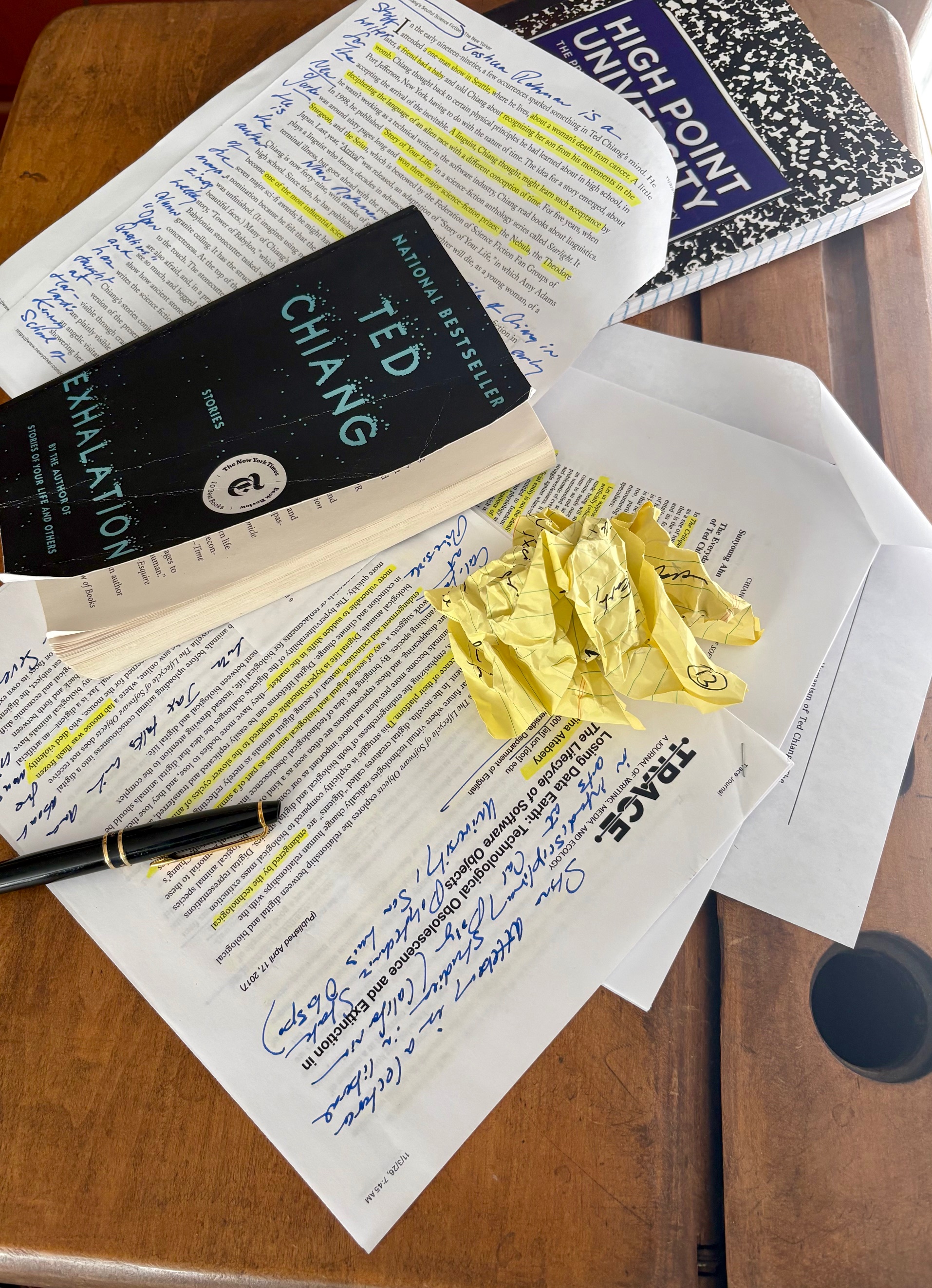
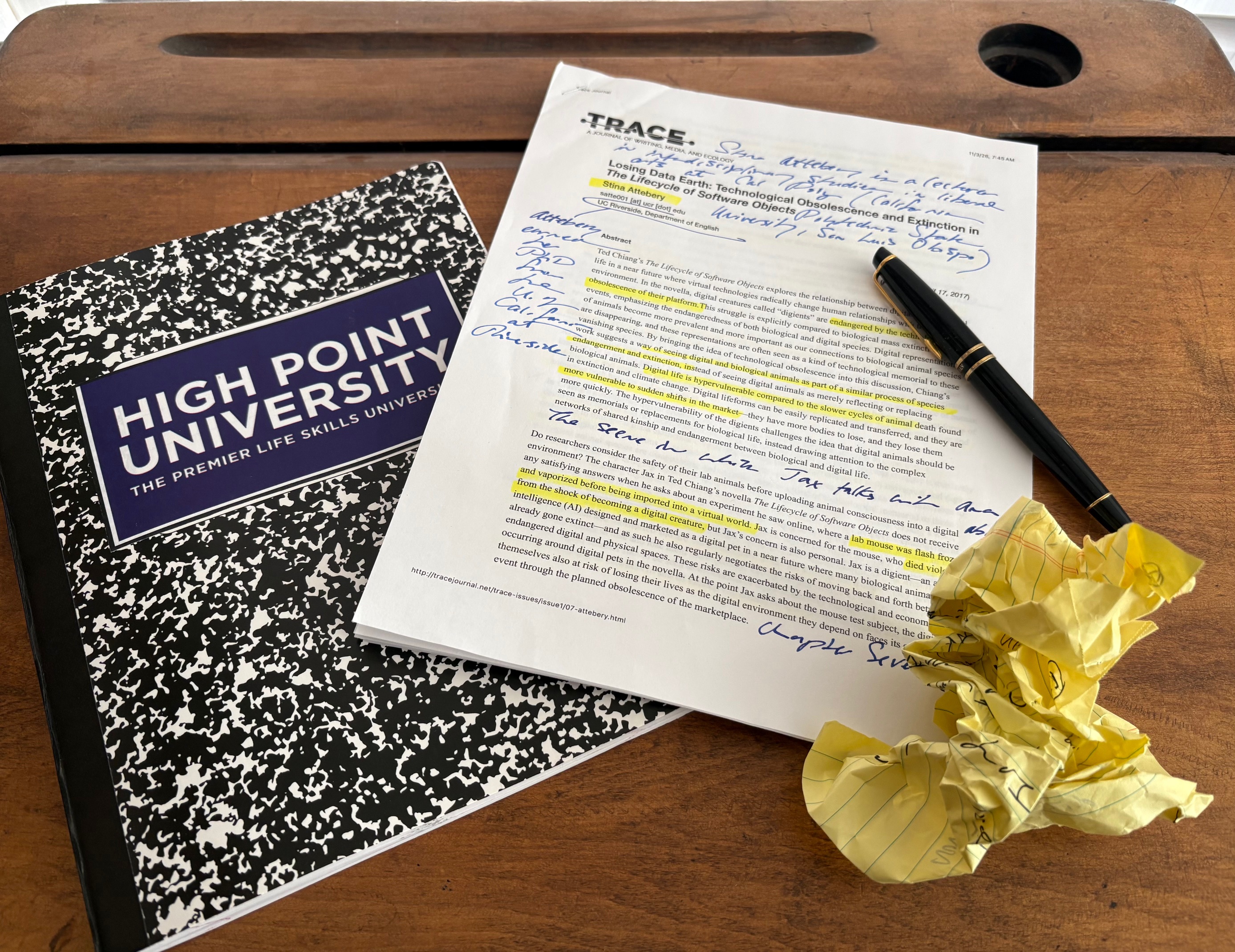
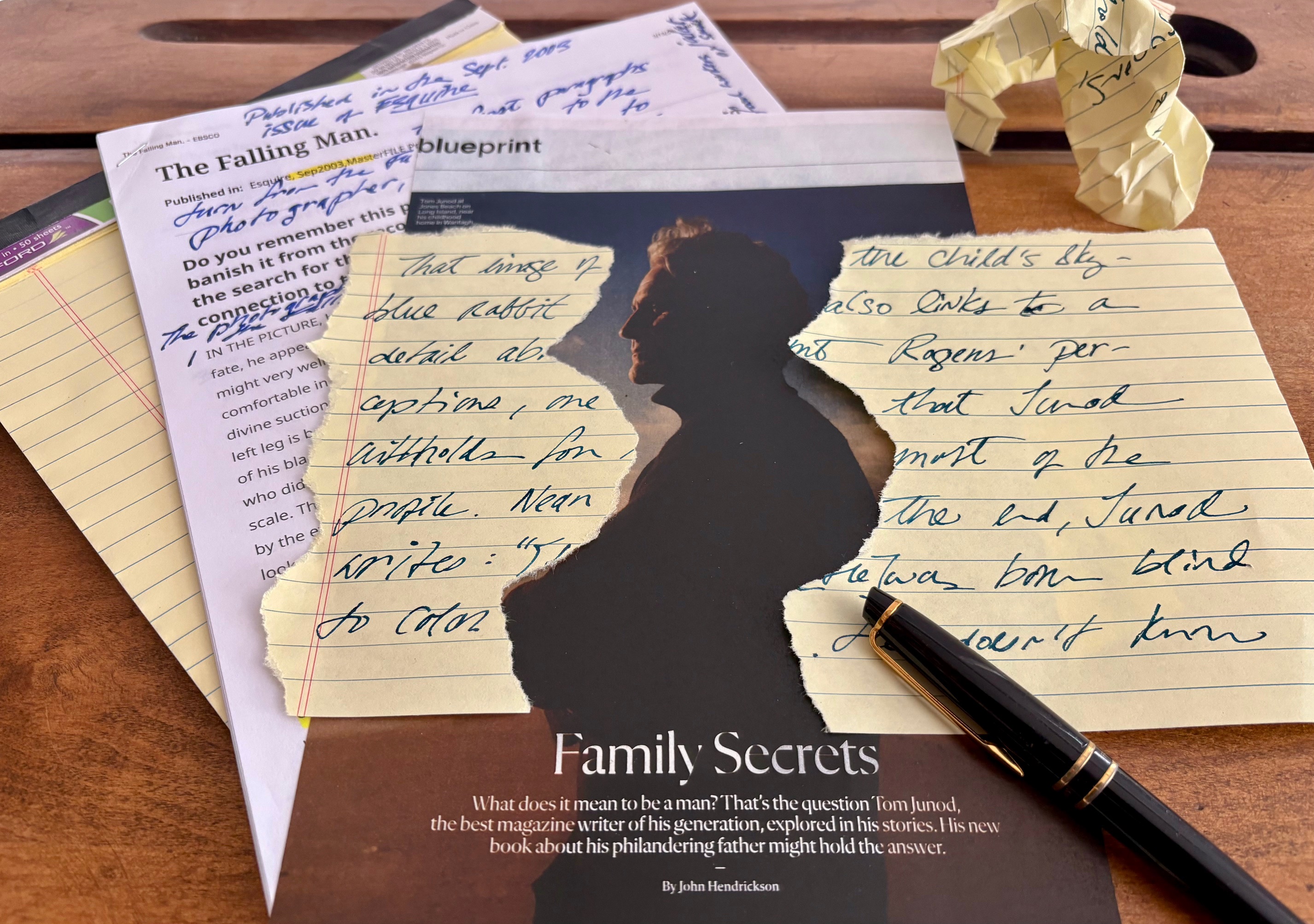
What image that documents part of your writing process away from the screen did you include in your blog post? Why did you choose that particular image?
To which relevant website did you include an embedded link in your blog post?
Sample Annotated Bibliography and Preface
Yesterday in class, I distributed copies of “Soul-Searching Science Fiction,” the annotated bibligraphy and preface that I wrote as a model for you. An additional copy of that model follows.
Soul-Searching Science Fiction: An Annotated Bibliography on Ted Chiang’s The Lifecycle of Software Objects
Preface
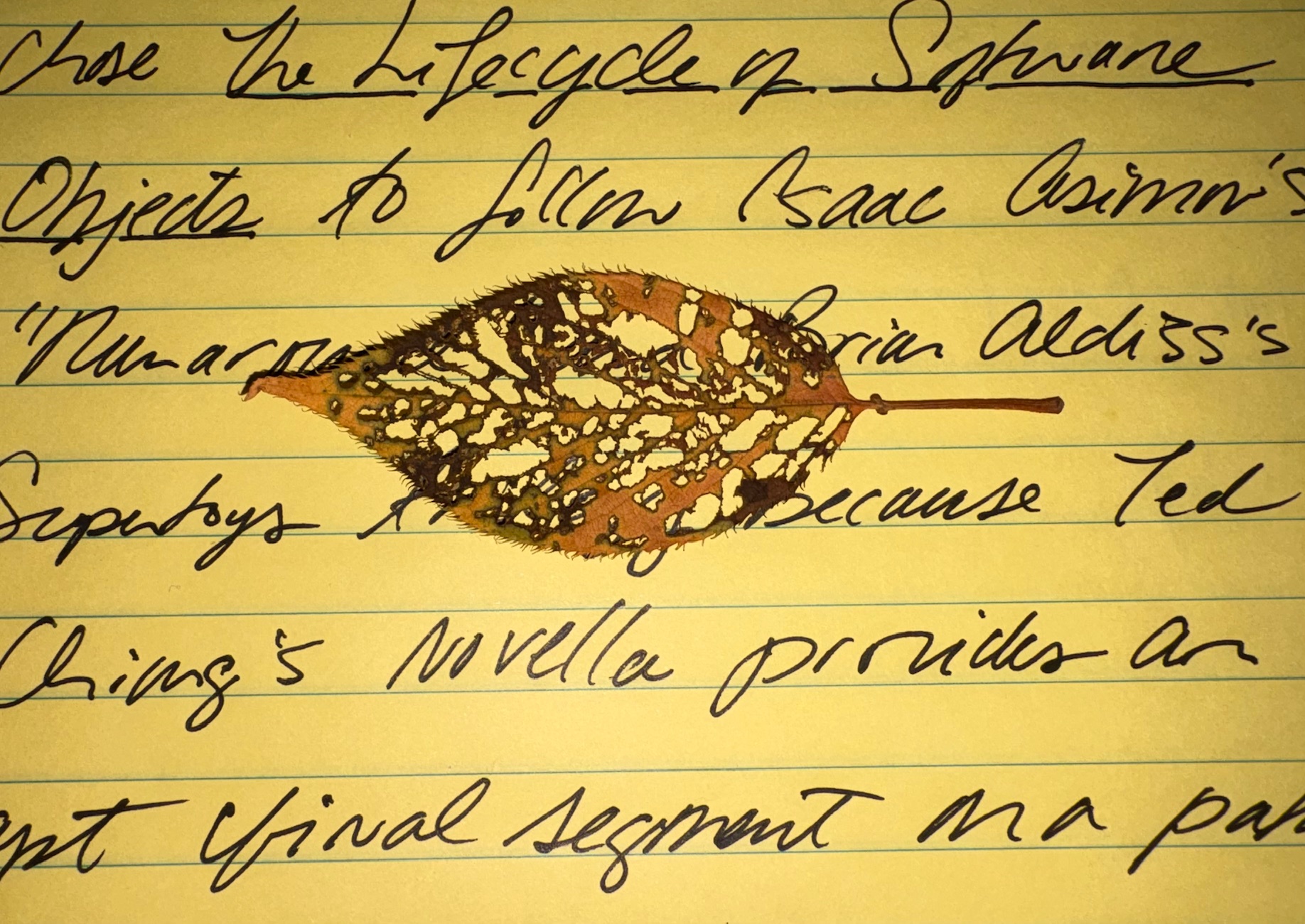
For the sequence of science fiction readings for my first-year writing classes, I chose The Lifecycle of Software Objects to follow Isaac Asimov’s “Runaround” and Brian Aldiss’ Supertoys trilogy because Ted Chiang’s novella provides an apt final segment on a path of advances in artificial intelligence that parallels its real-world trajectory. The A.I. that increasingly shapes our daily lives is not mirrored in the pages Asimov’s, Aldiss’s, and Chiang’s stories, but their fictional landscapes offer an analog virtual reality where we can wrestle with the same issues their characters face.
I discovered Chiang’s novella as a possible reading for my classes when I was browsing lists of freshman and all-campus book selections. Exhalation: Stories (which includes The Lifecycle of Software Objects) caught my eye as one of the books listed that featured artificial intelligence. As I read Chiang’s novella for the first time, I was struck by the true-to-life quality of the protagonists, Ana Alvarado and Derek Brooks. For all their virtues, the characters in “Runaround” and the Supertoys stories tend toward types: the greedy corporate chief and his neurotic housewife, the polar-opposite astronauts (one man of thought, another of action). Ana and Derek, however, embody contradictions as people marked by their ambivalence about the artificial intelligence that occupies their days as professionals and later their personal lives as they assume the role of caregivers. For Ana and Derek, becoming parental figures for Neuroblast digients results from their work in jobs they had never imagined for themselves. Readers first meet Ana “preparing for a job interview, the first one in months to reach the video conference stage” (62), but that interview never happens. Instead, the company hires someone else. Though Ana inhabits the realm of science fiction, the scarcity of employment opportunities she faces will be a reality for my students, young men and women who will enter a workforce altered by A.I. in ways we cannot fully predict.
While I was impressed by the verisimilitude and grace of Chiang’s prose, I was surprised he had achieved a degree of critical and commercial success rarely attained by a writer with a relatively small output. He has published only two collections, Stories of Your Life and Others (2002) and Exhalation: Stories (2019), but has won four Nebula awards, four Hugo awards, six Locus awards, and the John W. Campbell Award for Best New Writer. And in 2020, he was inducted into the Science Fiction and Fantasy Hall of Fame. What sets Ted Chiang apart from his contemporaries and elevates him to the status of a master of his craft? That question prompted me to research The Lifecycle of Software Objects.
Chiang’s choice to depict Ana as an animal communications specialist enables Chiang to juxtapose human interactions with biological animals and digital entities. Through Ana’s meditations, readers see the two forms as more alike than different. That link became clearer to me as I continued to read, and I was gaining a sense of the holistic approach that distinguished his fiction. Yet reading Stina Attebery’s study introduced me to another connection, one I had not considered. Although in my own reading I had grown aware of the parallels between the vanishing worlds of animals and software, Attebery’s article demonstrates how the humans in Chiang’s novella could follow a similar path to obsolescence. In Attebery’s words, “[T]he novella portrays digital technologies as hypervulnerable to many of the same forces of exploitation that impact the lives of animals, children, and corporate employees” (par. 25).
Ana and Derek try to shield their digients from that exploitation, and Chiang’s rendering of their willingness to sacrifice for their loved ones stems from the author’s notion of how artificial life should be nurtured in its early stages: “‘[W]hat makes any human being a good, reliable worker? . . . . A hundred thousand hours of good parenting, of unpaid emotional labor. That’s the kind of investment on which the business world places no value; it’s an investment made by people who do it out of love’” (qtd. in Rothman, par. 10).
Those observations of Chiang’s led him to write The Lifecycle of Software Objects, a novella that in turn led me to the research in the bibliography that follows. Along with Chiang’s novella, it contains four additional sources: Attebery’s “Losing Data Earth,” a second peer-reviewed article, a New Yorker profile, and a student interview. My research could lead to a larger interdisciplinary examination of biological and digital life in Chiang’s fiction and its real-world parallels. However, as an English professor and a writer, my primary interest lies in the craftsmanship of his prose. Whether my research leads to a more formal analysis of his fiction—a close study of his figurative language, perhaps—the research presented in my bibliography will inform my teaching when I return to the pages of Ted Chiang’s novella next semester.
Annotated Bibliography
Ahn, Sunyoung. “The Everyday Life of Artificial Intelligence: The Humanism of Ted Chiang’s The Lifecycle of Software Objects.” Science Fiction Studies, vol. 47, no. 1, Mar. 2020, pp. 73–92. EBSCOhost, https://doi.org/10.5621/sciefictstud.47.1.0073.
In Sunyoung Ahn’s “The Everyday Life of Artificial Intelligence: The Humanism of Ted Chiang’s The Lifecycle of Software Objects,” Ahn cites French philosopher Henri Lefebvre’s The Critique of Everyday Life (1977), in which Lefebvre speculates “that in the not-too-distant future human cells will be created artificially (which is perfectly conceivable) and given consciousness” (qtd. in Ahn 73). From that premise, Lefebvre supposes that such artificial intelligence will experience the same struggles in everyday life that humans face. For Ahn, that philosophy of Lefebvre’s aligns with Ted Chiang’s depiction of his digients’ development and their relationships to the trainer Ana Alvarado and animator Derek Brooks, the humans who work with the digients at Blue Gamma and later become their caregivers. Ahn notes that such scenarios in science fiction are rare: Rather than turning to the trope of the cautionary dystopian tale, Chiang presents characters who “take responsibility for their own creation[s]” (88) and who, along with the digients, “stay useful and relevant by constantly modifying themselves” (87).
Ahn’s study delineates Chiang’s focus on the formative stage of artificial intelligence as a point of contrast to AI as it is widely imagined as “developed, perfected, and therefore culminant” (78). Ahn demonstrates the singular vision of The Lifecycle of Software Objects as a narrative in which “humans anthropomorphize the digients” (87) and the digients lead the humans to “think digitally” (87).
Sunyoung Ahn, an associate professor of English at Korea University in Seoul, is the author of “New Sincerity, New Worldliness: Post 9/11 Fiction of Don Delillo and David Foster Wallace.”
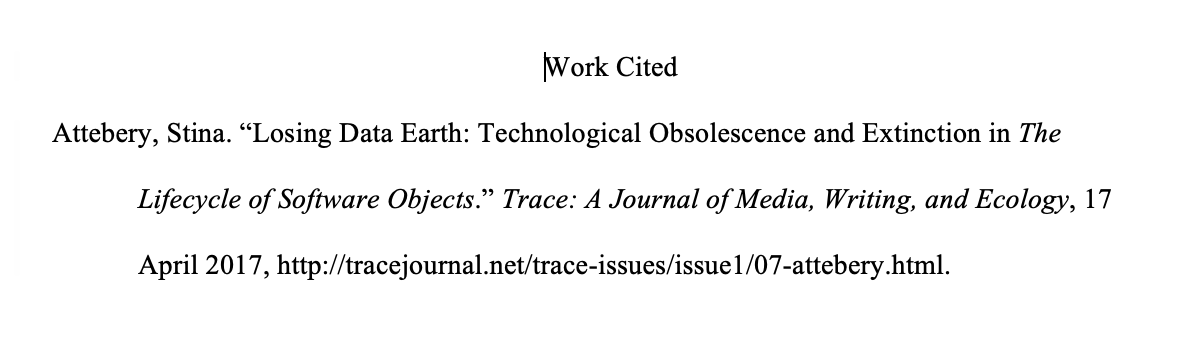
Attebery, Stina. “Losing Data Earth: Technological Obsolescence and Extinction in The Lifecycle of Software Objects.” Trace: A Journal of Media, Writing, and Ecology, 17 April 2017, http://tracejournal.net/trace-issues/issue1/07-attebery.html.
In “Losing Data Earth,” Stina Attebery examines Ted Chiang’s The Lifecycle of Software Objects as a narrative in which digital entities do not substitute for their dwindling counterparts in the wild but instead experience obsolescence that parallels the endangerment and extinction of biological animals. Attebery suggests that the Neuroblast digient Jax’s anxiety regarding his vanishing platform, Data Earth, indicates that digital life may be “hypervulnerable compared to the slow cycles of animal death found in extinction and climate change” (par. 4).
Attebery’s study elucidates how life forms whose genomes are written in code—both the digients in Chiang’s novella and real-world digital entities—are surprisingly similar to biological animals in terms of their risk for endangerment. In Attebery’s words, “[d]igital life forms can be easily replicated and transformed and are more vulnerable to shifts in the market” (par. 4). As Attebery explains, since Chiang’s Neuroblast digients’ Data Earth virtual environment is a casualty of corporate takeover, and they cannot run on the newer platform Real Space, they are deemed irrelevant, but those technological changes alone do not lead to their change in fortunes. Because they are not task-oriented like the newer Sophonce digients, they are perceived as lacking commercial value.
Stina Attebery is a lecturer in interdisciplinary studies in liberal arts at Cal Poly (California Polytechnic State University, San Luis Obispo). She is the author of “Coshaping Digital and Biological Animals: Companion Species Encounters and Biopower in the Videogames Pikmin and Pokémon.” She also serves as managing editor for the Eaton Journal of Archival Research in Science Fiction.
Bowry, Skylar. Interview. Conducted by Jane Lucas. 6 Nov. 2026.
Skylar Bowry reflects on first encountering Ted Chiang’s novella The Lifecycle of Software Objects as required reading in English 1103: Academic Research and Writing, a class in which the reading assignments differ significantly from those of her high school English courses. Although she had never read Chiang’s fiction before and wasn’t a fan of sci-fi, she notes, it “kept my attention and pulled me in, so I actually enjoyed it. It made me like that type of fiction.”
Bowry’s observations provide a first-person account of an undergraduate’s initial experience with Chiang’s fiction. Her recollections of high school English reveal that her classes focused on short works of nonfiction, mostly news articles. That emphasis reflects a shift in the secondary education English curriculum prompted by the release of the Common Core Standards in 2010, which stipulate that 70% of high school seniors’ reading should be nonfiction and only 30% should be literature.
Skylar Bowry is a freshman criminal justice major at High Point University, where she is enrolled in English 1103, section eight.
Chiang, Ted. “The Lifecycle of Software Objects.” Exhalation and Other Stories. 2019. Vintage,2020. pp. 62-172.
Ted Chiang’s novella The Lifecycle of Software Objects chronicles twenty years in thelives of its protagonists, Ana Alvarado and Derek Brooks, two software firm employees who—because of shifting economic and environmental landscapes—devote their days to jobs that differ markedly from the careers they imagined for themselves. Ana, a zoologist by training, finds herself training digients, short for digital entities, at the start-up company Blue Gamma. Her coworker, animation artist Derek Brooks, designs avatars for the digients that comply withthe company’s specifications rather than his own aesthetic preferences. Though initially Ana and Derek’s interactions with the digients are limited to the workplace, as the novella progresses and Blue Gamma folds, the digients enter their personal lives, with Ana and Derek taking on the roles of caregivers.
As a primary source for studies of Chiang’s writing, The Lifecycle of Software Objects presents a possible microcosm of his wider fictional world. In the opening pages of the novella, readers do not meet the one-dimensional characters typical of genre fiction but rather two true-to-life twentysomethings forced to pivot from their life plans. Juxtaposing The Lifecycle of Software Objects with other novellas and stories of Chiang’s enables readers to identify patterns in his fiction and determine whether the verisimilitude of Ana and Derek’s narrative is the exception or the rule.
Ted Chiang is the author of two short story collections: Stories of Your Life and Others and Exhalation: Stories. He has won four Hugo Awards, four Nebula Awards, and the Pen/Malamud Award for Short Story Writing. His story “The Story of Your Life” is the basis for the Academy Award-winning film Arrival. In 2023, Time magazine named him to its list of One Hundred Most Influential People in A.I.
Joshua Rothman’s New Yorker profile of Ted Chiang combines his reflections on the author’s first collection, Stories of Your Life and Others (2002), and his novella, The Lifecycle of Software Objects (2010), which was published alone by Subterranean Press before it was included in the collection Exhalation: Stories (2019). To his observations on those works of fiction, Rothman adds excerpts from a series of interviews conducted with Chiang in late 2016 to coincide with the film release of Arrival, the adaptation of his story “The Story of Your Life.” Regarding The Lifecycle of Software Objects, Rothman notes Chiang’s assertion that the novella “grew . . . out of his intellectual skepticism about how artificial life is imagined in science fiction” (par. 10).
“Ted Chiang’s Soulful Science Fiction” offers Rothman’s insights into the quality of Chiang’s writing that sets him apart from his contemporaries. Rothman observes, “Chiang has been described as a writer of ‘humanist’ sci-fi; many readers feel that his stories are unusually moving and wonder, given their matter-of-fact tone, where their emotional power comes from” (par. 6). Rothman does not pinpoint the source of their emotional power, but the response he elicits from Chiang provides a sense of it: “‘[W]hat makes any human being a good, reliable worker? . . . . A hundred thousand hours of good parenting, of unpaid emotional labor. That’s the kind of investment on which the business world places no value; it’s an investment made by people who do it out of love’” (qtd. in par. 10). The vital role of parenting at the heart of Chiang’s statement is also a key factor in both Sunyoung Ahn’s and Stina Attebery’s studies of his novella, and the humanism Rothberg notes is central to Ahn’s analysis.
Joshua Rothman is a staff writer for The New Yorker. He is the author of the magazine’s weekly column “Open Questions” and has taught at Harvard’s Kennedy School of Government.
Next Up
Wordplay Day! To prepare for class, revisit the Merriam-Webster Scrabble Word Finder page, and review your journal notes and the blog posts devoted to Scrabble tips.
Tomorrow in class, you will compose a reflective essay that documents the process of researching, drafting, and revising your bibliogrpahy and preface. In your reflection, you will include one quotation (see the directions below for details), which you will introduce with a signal phrase and follow with a parenthetical citation. Following your reflection, you will include a work cited entry.
To comply with the requirements for your reflection, you will need to complete the planning exercise that follows. In class, you will not be permitted to refer to this blog post or any other online resources. You will need to have all the necessary information written longhand in your journal.
Directions
Review the print sources included in your bibliography, and identify a detail that you learned about your subject. The source should not be your starting-point article or story, or your peer interview. Instead it should be one of the three sources that you located as part of your independent research.
Once you have identified that detail, draft in your journal a passage for your reflection that quotes the detail you learned, introduces the quote with a signal phrase, and follows it with a parenthetical citation.
If you do not have a physical copy of the complete MLA-style work cited entry for the source, compose one in your journal. In class, you will not be permitted to refer to any other online resources. You will need to have all the necessary information written longhand in your journal.
Sample Reflection Passage with Quotation
The similarity between the predicaments of the Neuroblast digients and the wildlife in Ted Chiang’s novella became clearer to me as I continued to read, and I was gaining a sense of the holistic approach that distinguished his fiction. Yet reading Stina Attebery’s study introduced me to another connection, one I had not considered. Although in my own reading I had grown aware of the parallels between the vanishing worlds of animals and software, Attebery’s article demonstrates how the humans in Chiang’s novella could follow a similar path to obsolescence. In Attebery’s words, “[T]he novella portrays digital technologies as hypervulnerable to many of the same forces of exploitation that impact the lives of animals, children, and corporate employees” (par. 25).
The bulleted list below outlines the progression of the writing in the passage above.
What I learned on my own (“became clearer to me as I continued to read”)
My discovery of the detail in the source (“Attebery’s study introduced me to another connection”)
The quotation that includes the detail I learned (“In Attebery’s words, ‘[T]he novella . . .'”)
The quotation you include may be drawn from your preface (as mine above is), or from one of your annotations, or it may be one that doesn’t appear in your project.
Sample Work Cited Entry
Note that the entry above for Stina Attebery’s article includes the web address, or URL, but the name of a database does not precede it. That’s because the journal Trace is available as an open source on the web, which is the exception rather than the rule for scholarly sources. If the source you quote is one available through the HPU Libraries site, include the name of the database in italics.
Next Up
In tomorrow’s class, you will compose a reflective essay that documents the process of researching, drafting, and revising your bibliography and preface. Complete the planning exercise above to ensure that your reflection fulfills the assignment’s requirements. If you are still in the process of completing your essay on Wednesday, your reflection will address your work in progress. The due date for posting to Blackboard and WordPress is tomorrow, November 18 (before class); the hard deadline is Friday, November 20 (before class). Although you can submit your assignment without a late penalty until the hard deadline, you should aim post by the due date barring extenuating circumstances.
Also, time permitting, tomorrow in class, you will read and annotate a short article focusing on titles and what makes them effective. That article will be the subject of a journal exercise and a bonus assignment. Directions for the bonus will be included in upcoming class notes.
This morning, you will compose a reflective essay focusing on the process of planning, drafting, and revising your literacy narrative. If you are still in the process of completing your essay (since you have until Friday morning’s hard deadline to post it without penalty), your reflection will address your work in progress. Instructions for your reflective essay are included below.
Directions
Compose a short reflective essay that documents the processes of planning, drafting, and revising your literacy narrative. Questions to consider include the ones listed below. You do not need to address all the questions. Focus on the ones whose answers reveal the most about your work.
In the brainstorming stage, did you follow the model in the August 25 blog post for using AI ethically? If so, did the conversation help you choose a topic? What other useful information did the AI assistant provide?
When you began transferring the words from your handwritten draft onto the screen of your laptop or tablet, what did you observe about the process?
What aspect of the writing seemed the most challenging? Determining the focus of your narrative? Developing the story? Beginning a scene? Introducing dialogue? Crafting the conclusion? Why did that aspect of the writing seem the most challenging?
Did you change the subject of your narrative? If so, what was the original subject? What did you change it to? Why?
Did you change the organization of the narrative? For example, did you initially present the story chronologically, then begin in the present and move to flashback?
What do you consider the strongest element of your literacy narrative?
What is the title, and at what point in the process did you decide on it? Did you change the title during the writing process? If so, what was the original title?
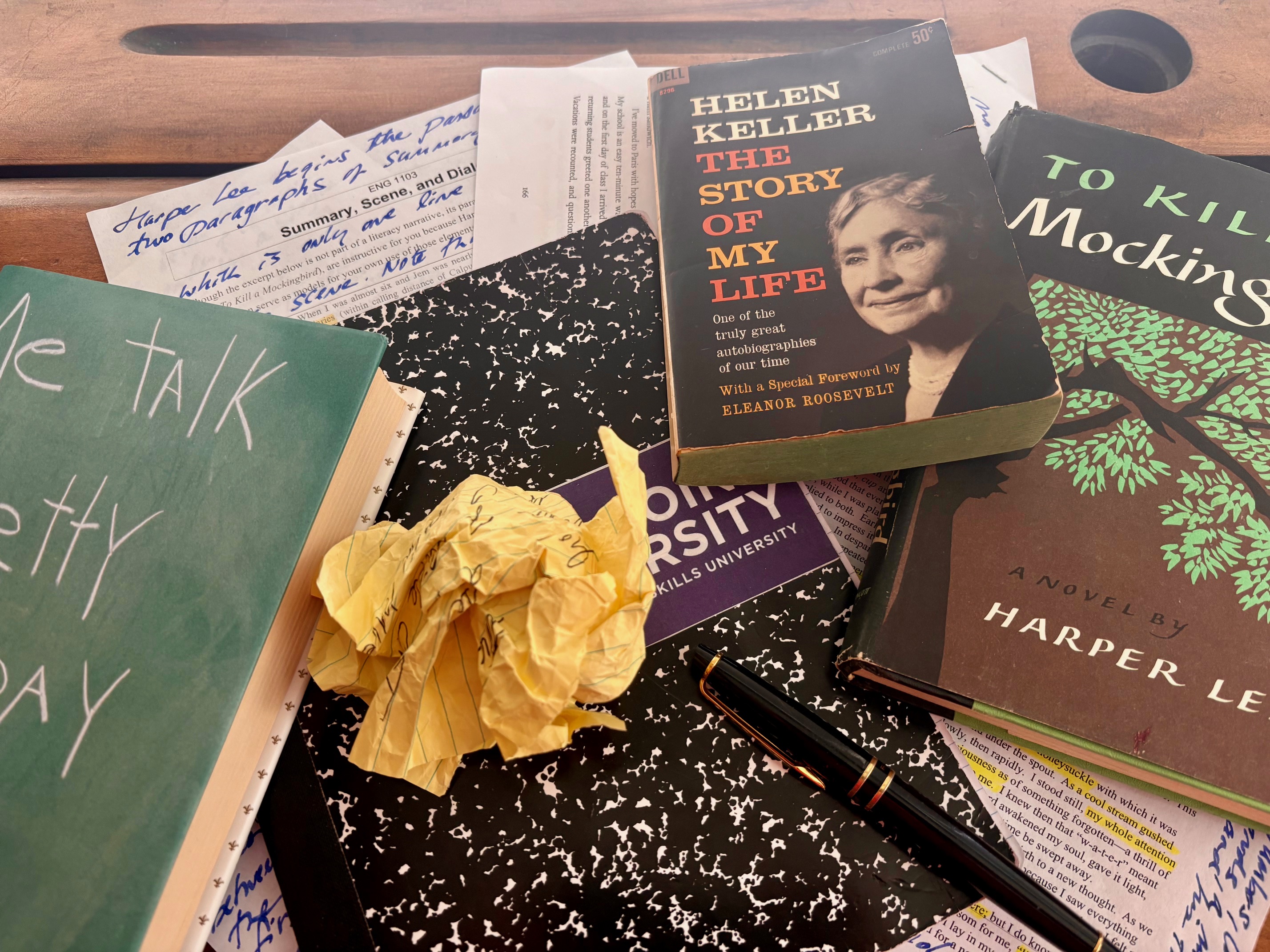
What image did you include in your blog that documents part of your writing process away from the screen? Why did you choose that particular image?
What relevant website did you link to your blog post? Why is that particular site relevant to your narrative?
Include in your reflection a minimum of one relevant quotation from one of the assigned readings (“Me Talk Pretty One Day,” “The Day Language Came into My Life,” the excerpt from To Kill a Mockingbird, “A Bridge to Words,” “Creativity is Key,” “The Journey of the Greatest Story”). Introduce your quotation with a signal phrase and follow it with a parenthetical citation.
At the end of your essay, include the heading Work Cited followed by your works cited entry. (If you followed the preparation guidelines in yesterday’s class notes, the information you need to complete steps three and four is recorded in your journal.)
Remember that the writing following the quotation should demonstrate its relevance. Although you are required to include a quotation, its presence in your writing shouldn’t seem obligatory. In other words, the quotation shouldn’t appear to be there simply because you were required to include it.
Wordplay Day! To prepare for class, review your journal entries on Scrabble and the blog posts devoted to the game. Also, revisit the Merriam-Webster Scrabble Word Finder page.
As you revise your essay and your bibliographic entries, read “Strategy 1: Make Your Sources Speak” (328-29) and “Integrating Quotations into Your Paper” (343-46) in Writing Analytically. After you have read those sections of the textbook, ask yourself whether your reasons for the quotations you have included are clear to the reader. If your reasons aren’t clear, revise the passages that precede and follow each quotation to ensure that your source’s words are an integral part of your writing, rather than a seemingly random insertion.
You are required to quote only two of your sources in your essay, but you are welcome to include additional quotations in your essay and your annotations. Remember that you should avoid the word quotations in your project. We do not write and speak in quotations; we write and speak in words, phrases, and sentences.
Note how the lines that precede the quotations in the passage below introduce the quotations and how the lines that follow the quotations demonstrate their significance.
Take, for instance, the first and last words of the opening line of Junod’s Rogers’ profile, “Can You Say . . . ‘Hero’?”: “Once upon a time, a little boy loved a stuffed animal whose name was Old Rabbit” (par. 1). Once upon a time, a staple of bedtime stories, recurs five times (pars. 6, 15, 21, 34, and 45). That repetition not only emphasizes the children’s world that the subject inhabits—as the host of the long-running Mr. Rogers’ Neighborhood—but also connects the once-upon-a-time anecdotes of Rogers’ life with those of some of the viewers whose lives have been profoundly affected by his television show, and by him. A case in point: The first once-upon-a-time sentence ends with “Old Rabbit” (par. 1). Because readers know from the article’s headnote that the subject is Fred Rogers, they assume that the opening anecdote about a young boy who throws his stuffed rabbit out of the car window is Rogers himself, but later—a quarter of the way through the article—readers learn that the little boy is actually Junod, who uses the once-upon-a-time trope to link his story, and others’, to Rogers.’
The complete model essay and bibliography on Tom Junod’s writing, from which the passage above is drawn, is included at the end of this post.
Indirect Sources/Secondary Quotations
If you are quoting someone quoted by the author of a source, do not incorrectly attribute the words to the author.
Journalist Bronwen Dickey, a visiting professor at Duke, observes in Tom Junod’s writing, “a recognition of people’s pain that you don’t have unless you’ve been through some extraordinary pain yourself” (qtd. in Hendrickson 29).
A journalist who teaches Tom Junod’s writing in her college classes observes in his writing, “a recognition of people’s pain that you don’t have unless you’ve been through some extraordinary pain yourself” (Dickey qtd. in Hendrickson 29).
The two examples above demonstrate how to present an indirect source or secondary quotation. Qtd.in indicates that the speaker or writer of the words, Bronwen Dickey, is quoted on page twenty-nine of a source written by John Hendrickson. In the first example, Bronwen Dickey’s last name does not appear in the parenthetical citation because she is named in the sentence. In the second example, her last name is included in the parenthetical citation because she is not named in the sentence.
The same rules apply to indirect quotations in unpaginated sources:
Tom Junod writes of his subject’s desire to produce television programming for “the broadcasting of grace through the land” (Rogers qtd. in Junod, par. 32).
Tom Junod writes of Fred Rogers‘ desire to produce television programming for “the broadcasting of grace through the land” (qtd. in Junod, par. 32).
Note that in a parenthetical citation for an unpaginated source, a comma separates the author’s last name from the abbreviation par.
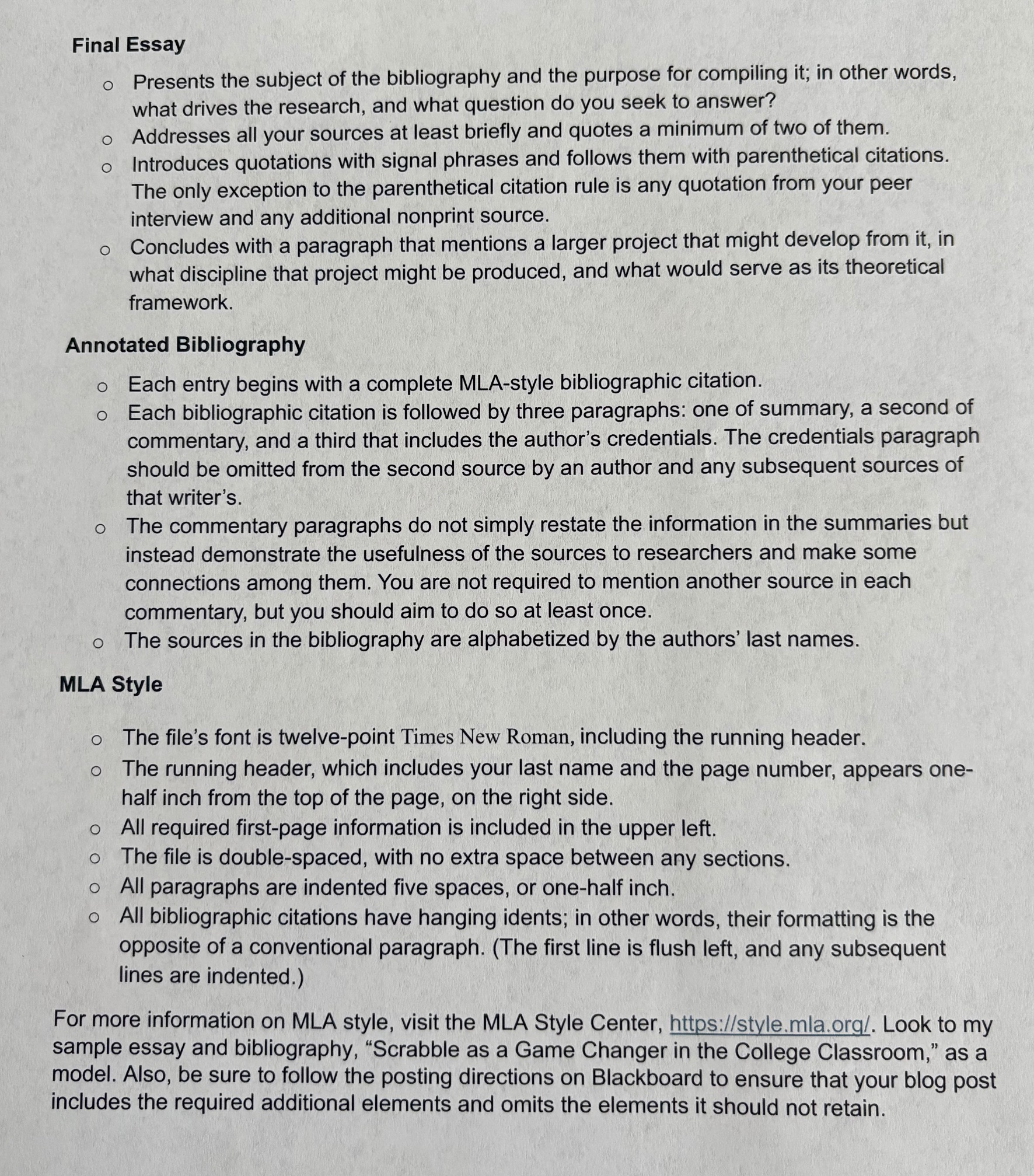
As one of the last steps in your revision process, consult the checklist I distributed in class. An additional copy is included below.
Checklist
Preparing for Your Reflection
In tomorrow’s class, you will compose a reflective essay focusing on the processes of researching, drafting, and revising your final essay and annotated bibliography. In your reflection, you will include a relevant quotation from Writing Analytically or from one of the sources included in your bibliography.
If you quote a line from “Integrating Quotations into Your Paper” or “Strategy 1: Make Your Sources Speak,” include a work cited entry for that section of the textbook at the end of your reflection. Write the work cited entry in the correct format in your journal, along with the line you will quote in your reflection for your reference.
Rosenwasser, David, and Jill Stephen. “Integrating Quotations into Your Paper.” Writing Analytically, 9th edition. Wadsworth/Cengage, 2024. pp. 343-36.
Rosenwasser, David, and Jill Stephen. “Strategy 1: Make Your Sources Speak.” Writing Analytically, 9th edition. Wadsworth/Cengage, 2024. pp. 328-29
You are welcome to quote another relevant section of Writing Analytically, but be sure to record the work cited entry in the correct format in your journal. Do the same if you plan to quote one of the sources in your annotated bibliography. During the writing of your reflection, which is a handwritten assignment, you will not have the option of referring to any parts of your essay and bibliography in electronic form. You may refer only to your journal, your textbook, your class handouts, and a physical copy of your essay and bibliography, if you opt to print one. You are not required to submit a paper copy of the assignment, but you are welcome to print one for your own reference.
Model Final Essay and Annotated Bibliography
I have included below the essay and bibliography on Tom Junod’s writing that I composed as a model for you. In my remarks about the project-in-progress in last Wednesday’s class, I mentioned that although the addition of a final essay of four hundred words (or slightly fewer) would fulfill the project’s 1,800-word minimum requirement, I would likely exceed the minimum to adequately chronicle my writing and research.
I far exceeded four hundred words, by roughly one thousand, making the complete project (essay and bibliography combined) about 2,800 words. If a 1,400-word final essay seems daunting as a model, look to my previous model, “Scrabble as a Game Changer in the College Classroom.” That essay and its bibliography are much shorter, a total of about 2,000 words, only three hundred more than the minimum word requirement. PDFs of both model essay and bibliography projects are posted in the sample papers folder on Blackboard.
“Writing by Ouija Board”: The Art of Tom Junod’s Prose
In late August 2003, the September issue of Esquire arrived at my house. The door of my town home had a mail slot—as many houses in Richmond’s Fan district do—so the magazine first appeared to me not in the confines of a mailbox but on the floor of the foyer amid a sea of catalogs and junk mail. I picked up the magazine with the intention of thumbing through it only briefly before placing it on the coffee table. But as I turned the pages, I glimpsed Richard Drew’s now-iconic 9/11 photograph of the unidentified Falling Man appearing to bisect the Twin Towers. I scanned the opening lines on the facing page—again with the intention of reading only briefly—but I was captivated by the first words: “In the picture, he departs from this earth like an arrow” (Junod, par. 1). I sat down and kept reading.
I didn’t stop until I’d read them all, all 7,334 words.
The next day, I walked into my freshman composition classes with copies of the opening paragraphs of “The Falling Man” in hand. Together, my students and I pored over Tom Junod’s words in what would become a yearly September ritual. Later, it became a twice-a-year ritual. For freshman writers, the value of examining those words extended beyond commemoration.
More than twenty years and two houses later, the current issue of Esquire arrived in the mailbox of my craftsman bungalow in High Point, North Carolina. As I thumbed through the pages, I was surprised to see the name, Tom Junod. It wasn’t a byline I saw; Junod had left Esquire in 2016 to join the staff of ESPN. Instead, his name appeared in the first lines of a profile by John Hendrickson, written on the occasion of the publication of Junod’s first book, his memoir, In the Days of My Youth I was Told What it Means to Be a Man—a title that alludes to Led Zeppelin’s “Good Times, Bad Times,” which opens with that line.
In my mind, I’d been turning over ideas for a bibliography project to complete as a model for my students. When I saw Hendrickson’s profile, I knew I’d found my subject.
Ever since “The Falling Man” first captured my attention, the pull of Junod’s prose has intrigued me. The renewed attention to his writing—prompted by the publication of his memoir—provided the impetus for a search for what specifically imbued his words with what seemed to be the proverbial je ne sais quoi, but in fact could be identified through careful study.
The starting point for my students’ research was a text they’d read for class—either by a writer we’ve studied or one that focuses on one of the aspects of the course (blogging, writing longhand, limiting screen time, playing Scrabble). For any student focusing on the writing of Tom Junod, “The Falling Man” was the starting point, so that’s where I began.
As I reread and marked up print-outs of “The Falling Man” and Junod’s Esquire profile of Fred Rogers, clear but complex patterns emerged. Repetition, which at first glance appeared solely for emphasis, was also a device linking images and ideas.
Take, for instance, the first and last words of the opening line of Junod’s Rogers’ profile, “Can You Say . . . ‘Hero’?”: “Once upon a time, a little boy loved a stuffed animal whose name was Old Rabbit” (par. 1). Once upon a time, a staple of bedtime stories, recurs five times (pars.6, 15, 21, 34, and 45). That repetition not only emphasizes the children’s world that the subject inhabits—as the host of the long-running Mr. Rogers’ Neighborhood—but also connects the once-upon-a-time anecdotes of Rogers’ life with those of some of the viewers whose lives have been profoundly affected by his television show, and by him. A case in point: The first once-upon-a-time sentence ends with “Old Rabbit” (par. 1). Because readers know from the article’s headnote that the subject is Fred Rogers, they assume that the opening anecdote about a young boy who throws his stuffed rabbit out of the car window is Rogers himself, but later—a quarter of the way through the article—readers learn that the little boy is actually Junod, who uses the once-upon-a-time trope to link his story, and others’, to Rogers’.
Another instance of Junod’s strategic repetition occurs in his locker-room description of Fred Rogers as he changes into swim trunks for his daily laps in the pool. Junod repeats the word slightly to emphasize how Rogers’ aging has altered many aspects of his appearance: “slightly wattled at the neck, slightly stooped at the shoulders, slightly sunken in the chest” (par. 5). The signs of Rogers’ aging are numerous, the repetition reminds readers, but the choice of slightly also stresses its limits. He has aged, yes, but he is still the young-at-heart host beloved by viewers. In Junod’s words, “[W]hen he speaks, it is in that voice, the famous one, the unmistakable one, the televised one, the voice dressed in sweater and sneakers . . . the sly voice that sounds adult to the ears of children and childish to the ears of adults” (par. 5).
In that description, Junod also describes Rogers as “white as an Easter Bunny” (par. 5), a simile that not only adds another element to the portrait of the aging Rogers, but also connects to the Old Rabbit of the opening line, to the return of Old Rabbit a quarter of the way into the story—where he is identified as Junod’s stuffed toy—and to a child whose encounter with Rogers appears midway through the profile, a little girl holding “a small stuffed animal, a sky-blue bunny” (par. 22).
That image of the child’s sky-blue rabbit also links to a detail about Rogers’ perceptions, one that Junod withholds for most of the profile. Near the end, Junod writes: “[H]e was born blind to color. He doesn’t know the color of his walls, and one day, when I caught him looking toward his painted skies [in his TV studio], I asked him to tell me what color they are, and he said, ‘I imagine they’re blue, Tom.’ Then he looked at me and smiled. ‘I imagine they’re blue’” (par. 37). I could go on, but those deceptively simple instances of repetition demonstrate the complex mosaics of Junod’s prose.
In a podcast interview marking the twentieth anniversary of 9/11, Junod told the PressBox’s host, Bryan Curtis, that writing “The Falling Man” was “a little bit like writing by Ouija board.” For readers who marvel at the quality of Junod’s writing, that simile applies to his other stories as well. Picture his hand on the board’s planchette, gliding mystically from the letters O-L-D-R-A-B-B-I-T to E-A-S-T-E-R-B-U-N-N-Y, to S-K-Y-B-L-U-E . . . .
The interview that reveals Junod’s Ouija-board image of his composing process is one of the six sources in the bibliography that follows. Two of the others are a couple of his most admired stories: “Can You Say . . . ‘Hero’?”—the focus of the commentary you have just read—and “The Falling Man.” Rounding out the list are Hendrickson’s profile in the current issue of Esquire, an interview with a current student of mine, and a peer-reviewed article on Don DeLillo’s novel The Falling Man (2007), which references Junod’s article of the same name as a point of contrast.
That last source, written by a University of Buffalo professor, could serve as a starting point for a cultural or historical study of 9/11 writing. But as a teacher of freshman composition and a lifelong student of writing, I am interested primarily in Junod’s writing not for its treatment of 9/11, or any of his other subjects, but rather in how he renders them—with an artfulness that led his ESPN colleague Wright Thompson to call his oeuvre “the greatest collection of magazine stories that’s ever been assembled by one person” (qtd. in Hendrickson 29). Whether my continued study of Junod’s writing will lead me to pen a large-scale literary analysis of his prose, I do not know. Either way, the deeper understanding I have gained of his writing through the process of studying his words—and the commentary they’ve prompted—will inform my teaching, especially on those days when I hand my students the opening paragraphs of “The Falling Man.”
In “Don DeLillo’s Falling Man and the Age of Terror,” Joseph M. Conte probes novelist Don DeLillo’s fictional chronicle of the destruction of the Twin Towers and the scarred lives of a survivor, Keth Neudecker, a corporate lawyer who escapes the North Tower; and his estranged wife, Lianne, who was not at the World Trade Center but who is subsequently haunted by images of a Manhattan performance artist who dangles from bridges and buildings, imitating the posture of the Falling Man in Richard Drew’s now-iconic photograph. Conte explores the characters and landscape of DeLillo’s novel, as well as the challenges of rendering in fiction the virtually unspeakable events of 9/11.
Although the focus of Conte’s analysis is not Tom Junod’s own Falling Man, his study is pertinent to those researching Junod’s work, as it references his 2003 article “The Falling Man,” and demonstrates the contrast between DeLillo’s aims as a novelist and Junod’s as a journalist. While Junod aimed to depict photographer Richard Drew’s Falling Man as a human symbol of what the United States became on 9/11, DeLillo’s fictional Falling Man haunts the New Yorkers who witness him imitating the posture of the still-unidentified Falling Man in Drew’s photo. Notably, Conte cites Junod’s criticism of DeLillo’s The Falling Man in his June 2007 Esquire review of the novel, addressing his objections to DeLillo’s decision to write a 9/11 novel whose scope is not equal to that of the loss.
Joseph M. Conte, a professor of English at the University of Buffalo, is the author of Transnational Politics in the Post-9/11 Novel, Design and Debris: A Chaotics of PostmodernAmerican Fiction, and Unending Design: The Forms of Postmodern Poetry.
Hendrickson, John. “Family Secrets.” Esquire, March 2026, pp. 28-31.
As a prelude to the publication of Tom Junod’s new memoir, In the Days of My YouthIwas Told What it Means to be a Man, journalist John Hendrickson profiles Junod at his home outside Atlanta, where he asks the author about his relationship with his father, Lou (the focus of his memoir), as well some of his most well-known magazine stories, including the highly-praised feature on Fred Rogers and the much-maligned profile of Kevin Spacey. Hendrickson incorporates observations on Junod’s prose by a host of other writers and editors, includingmemoirist J. R. Moehringer; Peter Griffin, former deputy editor at Esquire; Taffy Brodesser-Akner, New York Times staff writer; Wright Thompson, Junod’s colleague at ESPN; and journalist Bronwen Dickey, who teaches Junod’s work at Duke University.
“Family Secrets” provides researchers with the personal history that informs Junod’s writing, especially his new memoir, which Hendrickson refers to as a book whose “concerns hum beneath almost every magazine story Tom has ever written” (29). Along with its vital background on Junod’s formative years, Hendrickson’s article offers the insights of other writers and editors who admire Junod’s prose.
John Hendrickson’s stories have appeared in The New York Times, New York magazine, Esquire, Rolling Stone, and The Atlantic, where he is a contributing writer. He is also the author of Life on Delay, a memoir about his lifelong struggle with stuttering.
“Can You Say . . . ‘Hero’?” brings together Tom Junod’s conversations with Fred Rogers in New York City, where he met architect Maya Lin at her giant clock in Penn Station, to tape a segment for his TV show; in Pittsburgh, at his studio, where he produced Mr. Rogers’Neighborhood for thirty-one years and 865 episodes; and in Latrobe, Pennsylvania, where he navigated the perimeter of his childhood home on Weldon Street. Together, those conversations build the foundation for Junod’s profile of Fred Rogers, a portrait of a music major at a small Florida College who shelved his plans for divinity school when he first watched his parents’ new television. He detested what he saw—slapstick pie throwing—but, in Junod’s words, “[H]e believed, right then, that he was strong enough to enter into battle with that—that machine, that medium—and to wrestle with it until it yielded to him” (par. 32).
Junod draws on the repetition used both by and for children to chronicle the life of a man who dedicated himself to creating and sustaining an imaginary neighborhood where he and his Land of Make-Believe characters say the words that children need to hear. Junod’s profile offers vital background information for researchers examining the life and legacy of Fred Rogers and also serves as a primer for Junod’s signature style. Paired with “The Falling Man,” “Can You Say . . . ‘Hero’?” showcases the patterns that are hallmarks of his prose, such as the metaphors and similes he crafts, which not only provide comparisons but also link the recurring images and ideas in his stories.
Tom Junod, a senior writer for ESPN, has also written for Life, Sports Illustrated, and GQ, where his articles garnered two National Magazine Awards. Among Junod’s other notable works are his Esquire feature “The Falling Man” and his newly published memoir In the Days of My Youth I was Told What it Means to be a Man.
Published in the September 2003 issue of Esquire, Tom Junod’s “The Falling Man” focuses on the now-iconic 9/11 image of an unidentified man in downward flight, who appears to bisect the Twin Towers. Junod chronicles the moments leading up to AP photographer Richard Drew capturing the photo, Toronto Globe and Mail reporter Peter Chaney’s search for the true identity of the Falling Man, the reactions to the picture—both those of the public and of grieving families (whose loved one could be its subject), and the photograph’s status as a national symbol.
Junod’s thorough and riveting account of Richard Drew’s photograph and its life beyond the frame illuminates the role of the Falling Man in American culture and highlights the writer’s award-winning prose. “The Falling Man” remains an essential reference for studies of the iconography of 9/11, as well as studies of Junod’s writing.
In his interview with Tom Junod, Bryan Curtis, editor-at-large of The Ringer and cohost of The Press Box podcast, talks with Junod on the occasion of 9/11’s then-upcoming twentieth anniversary. In his Q and A with Junod and the one with James B. Stewart that precedes it, Curtis asks the writers about their approaches to writing about 9/11, their writing processes, and the public’s reactions to their magazine features devoted to 9/11: Tom Junod’s on the unidentified Falling Man and James B. Stewart’s “The Real Heroes are Dead.” The latter, published in The New Yorker, focuses on Rick Rescorla, the decorated Vietnam War veteran and head of security for Morgan Stanley, who died in the South Tower’s collapse after leading an evacuation that saved hundreds from the same fate.
The September 2, 2021, episode of The Press Box podcast offers insights into the intricacies of writing about 9/11 and the writing processes of two journalists who reflected on the tragedy after the initial shock subsided: Stewart, six months later, and Junod, two years later. Their conversations with Bryan Curtis provide key first-person accounts for researchers studying the writing of Junod or Stewart in particular, or the journalism of 9/11 in general.
Welch, Sierra. Interview. Conducted by Jane Lucas. 23 March 2026.
English 1103 student Sierra Welch discusses first encountering Tom Junod’s writing when she read the opening paragraphs of “The Falling Man” in class and recognizing the distinctive qualities of his prose. In her words, “[H]e could have explained what he saw, but instead, he went into a description of one man, how he was falling, his pants, his legs, and used different similes to convey how significant 9//11 was and capture the emotional aspects for the readers.”
Welch’s remarks provide a detailed first-person account of a reader’s initial response to Junod’s prose. Her observations provide insights relevant to researchers examining general readers’ reactions to Junod’s words, as well as educators contemplating his writing as a subject of classroom study.
Sierra Welch is a criminal justice major at High Point University, currently enrolled in English 1103.
Up Next and Coming Soon
Tomorrow, Thursday, or Friday morning, you will complete your final essay and annotated bibliography. The due date for posting it to Blackboard and WordPress is Wednesday, April 8 (before class); the hard deadline is Friday, April 10 (before class).
In class tomorrow, you will compose an essay that reflects on the processes of researching, drafting, and revising your annotated bibliography and final essay. If you do not submit your essay and bibliography before class, refer to your work as ongoing. Carefully review the section of this post devoted to preparing, to ensure that you will be able to comply with all the assignment’s guidelines. Your reflection by itself will not be assigned a grade, but a reflective essay that doesn’t comply with the guidelines will lower the grade for your final essay and annotated bibliography.
As you revise your reflection for Wednesday, review the pages of The Norton Field Guide to Writing that cover key features (259-61) and methods of organizing a reflective essay (262-63).
If you find yourself stuck, browse the opening paragraphs of the reflections in the textbook. The first lines of one may give you an idea for your own starting point. Try the same browsing exercise for your concluding paragraph. Since conclusions can be particularly challenging, I have included a link here to Harvard’s excellent guide on closing paragraphs, “Ending the Essay.”
Below you’ll find a comprehensive list of the reflections as well as literacy narratives and memoirs (both forms of reflection) in The Norton Field Guide to Writing. One of the essays, “Us and Them,” is part of David Sedaris‘s* book-length memoir Dress Your Family in Corduroy and Denim, which is featured in the photograph in this post.
Young adult author Matt de la Peña, who wrote one of the literacy narratives we studied in early February, has posted a series of thoughtful blog entries for home bound students. If you have children or younger brothers and sisters at home, I encourage you take a look at “Dear Stuck-at-Home Student #1-#12.”
You are not required to comment on this blog post. Your online assignments for this week are (1) post your revised reflection to the 111 Blackboard site, (2) post your revised reflection to your blog, and (3) complete the 011 quiz on MLA documentation.
*Note that the possessive form of the last name Sedaris appears above as Sedaris’s with an apostrophe followed by an additional s. AP (Associated Press) style, which most newspaper use, omits the second s. MLA (Modern Language Association Style), which we use in the humanities (English, history, philosophy, religion, and art) includes the second s. For more information on apostrophes and possessive, see the MLA Style Center and Merriam-Webster
Remember to check your CVCC email and Blackboard regularly for updates and assignments.
Reflections and Memoirs in The Norton Field Guide to Writing
Barrientos, Tanya Maria. “Se Hable Español.” The Norton Field Guide to Writing with Readings and Handbook. 5th ed., by Richard Bullock, Maureen Daly Goggin, and Francine Weinberg, 2019, pp. 693-96.
de la Peña, Matt. “Some Times the ‘Tough Teen’ is Quietly Writing Stories.” The Norton Field Guide to Writing with Readings and Handbook. 5th ed., by Richard Bullock, Maureen Daly Goggin, and Francine Weinberg, 2019, pp. 688-91.
Dubus III, Andre. “My Father was a Writer.” The Norton Field Guide to Writing with Readings and Handbook. 5th ed., by Richard Bullock, Maureen Daly Goggin, and Francine Weinberg, 2019, pp. 891-99.
Feslenfeld, Daniel. “Rebel Music.” The Norton Field Guide to Writing with Readings and Handbook. 5th ed., by Richard Bullock, Maureen Daly Goggin, and Francine Weinberg, 2019, pp. 81-84.
Kassfy, Ana-Jamileh. “Automotive Literacy.” The Norton Field Guide to Writing with Readings and Handbook. 5th ed., by Richard Bullock, Maureen Daly Goggin, and Francine Weinberg, 2019, pp. 84-86.
Lepucki, Edan. “Our Mothers as We Never Saw Them.” The Norton Field Guide to Writing with Readings and Handbook. 5th ed., by Richard Bullock, Maureen Daly Goggin, and Francine Weinberg, 2019, pp. 256-59.
Sedaris, David. “Us and Them.” The Norton Field Guide to Writing with Readings and Handbook. 5th ed., by Richard Bullock, Maureen Daly Goggin, and Francine Weinberg, 2019, pp. 883-89.
Tan, Amy. “Mother Tongue.” The Norton Field Guide to Writing with Readings and Handbook. 5th ed., by Richard Bullock, Maureen Daly Goggin, and Francine Weinberg, 2019, pp. 697-703.
Vallowe, Emily. “Write or Wrong Identity.” The Norton Field Guide to Writing with Readings and Handbook. 5th ed., by Richard Bullock, Maureen Daly Goggin, and Francine Weinberg, 2019, pp. 75-81.
Yousafazai, Malala. “Who is Malala?” The Norton Field Guide to Writing with Readings and Handbook. 5th ed., by Richard Bullock, Maureen Daly Goggin, and Francine Weinberg, 2019, pp. 900-04.

 As you revise your reflection for Wednesday, review the pages of The Norton Field Guide to Writing that cover key features (259-61) and methods of organizing a reflective essay (262-63).

