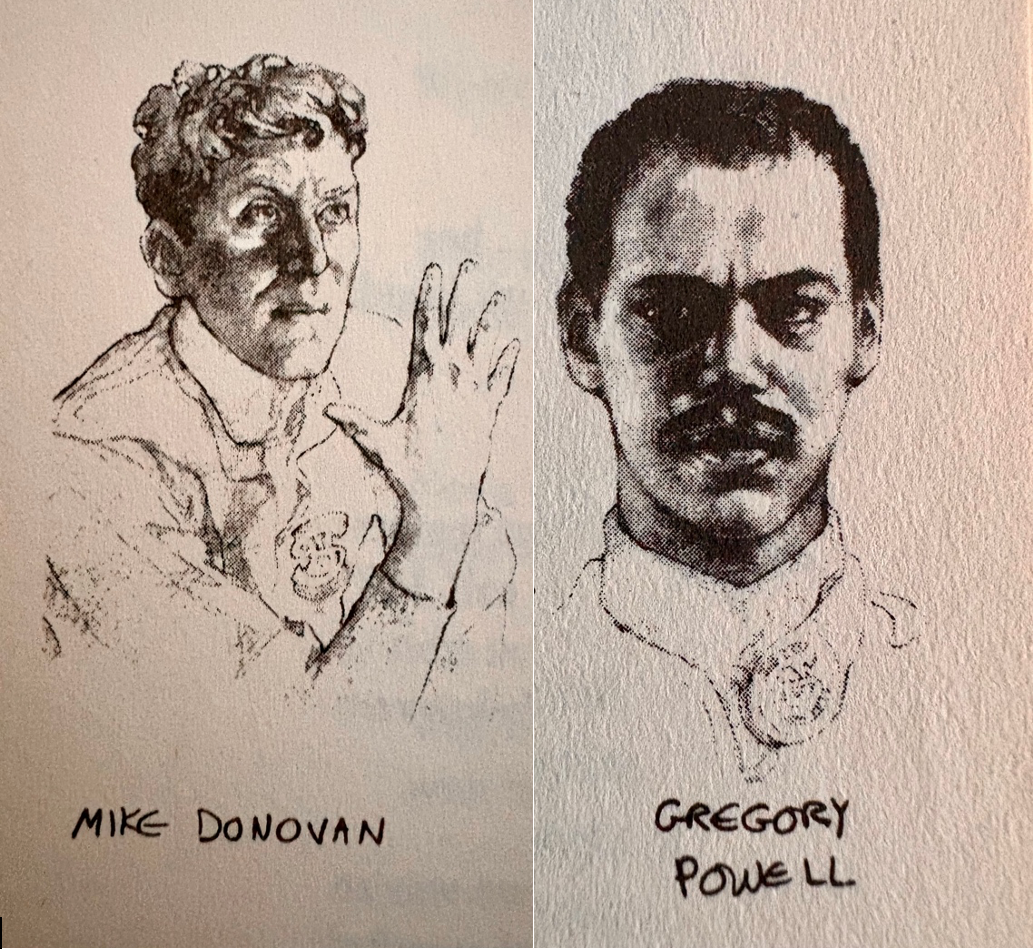
Yesterday in class, in groups, you and two or three of your classmates began your examination of Isaac Asimov’s “Runaround” by identifying the central conflict in the short story and composing a short piece of writing that stated the conflict in your own words. In your statement, you included (1) the first and last name of the author, (2) the title of the short story, and (3) the first and last names of the characters. If you mentioned the malfunctioning robot, you named him as well.
Here is my version of that exercise:
In Isaac Asimov’s short story “Runaround,” astronauts Gregory Powell and Mike Donovan, stationed on Mercury, find their lives in jeopardy when the photo-cell banks on their life support shields begin to fail. To repair the shields, their robot, Speedy, must retrieve selenium from the Sunside of the planet, a place humans cannot withstand. But rather than completing his mission, Speedy circles the selenium pool, leaving Powell and Donovan in danger of burning alive.
Along with composing a statement that outlined the central conflict in Asimov’s story, you developed talking points for our discussion, including these:
- The differences between Powell and Donovan
- The differences between the treatment of the older robots from the first expedition in 2005 and Speedy, the new robot, the 2015 SPD 13
- How did the older robots from the first expedition still work?
- Why were the older robots left behind after the first expedition?
- The need for Powell and Donovan to ride the old robots like horses
- The status of robots in the hierarchy of work
- Speedy’s malfunction–something akin to drunkenness–due to the conflicts between Laws Two and Three
- The Three Laws of Robotics
- What aspects of “Runaround” led it to be considered an influential work of science fiction?
- At the end of the story, why did Asimov employ dark humor about the freezing cold when the robot couldn’t understand it?
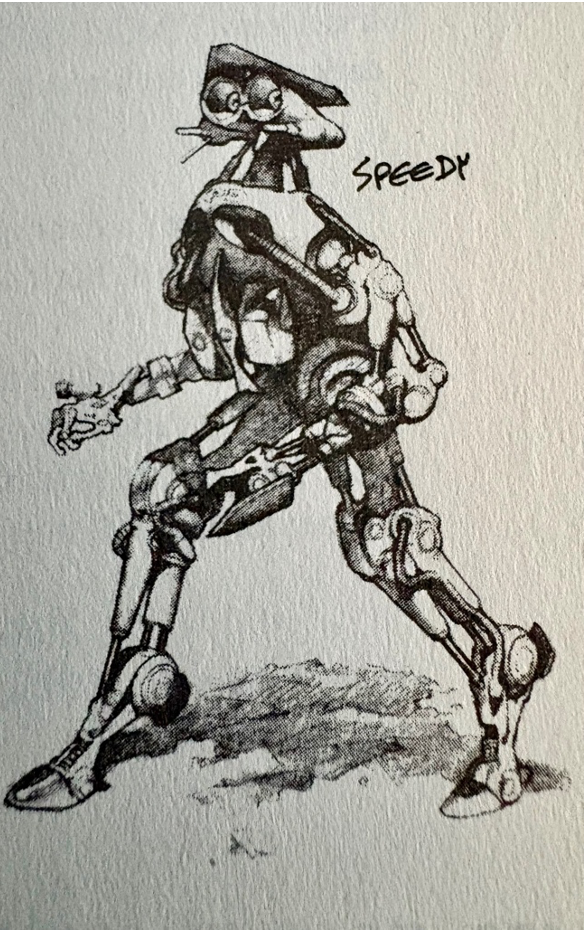
The illustrations in today’s blog post were drawn by Mark Zug for I, Robot: The Illustrated Screenplay, by Harlan Ellison and Isaac Asimov. The screenplay was never produced as a film, but it was serialized in Asimov’s Science Fiction magazine in 1987. In 1994, it appeared in book form under the title I, Robot: The Illustrated Screenplay. That book is one of the paperbacks you will examine when we visit Smith Library on Wednesday.
Though the film I, Robot (2004), starring Will Smith, shares its name with Asimov’s short story collection, it isn’t an adaptation of the book. It includes elements of Asimov’s story “Little Lost Robot,” some of Asimov’s character names, and the Three Laws figure in the film as well, but the similarities end there.
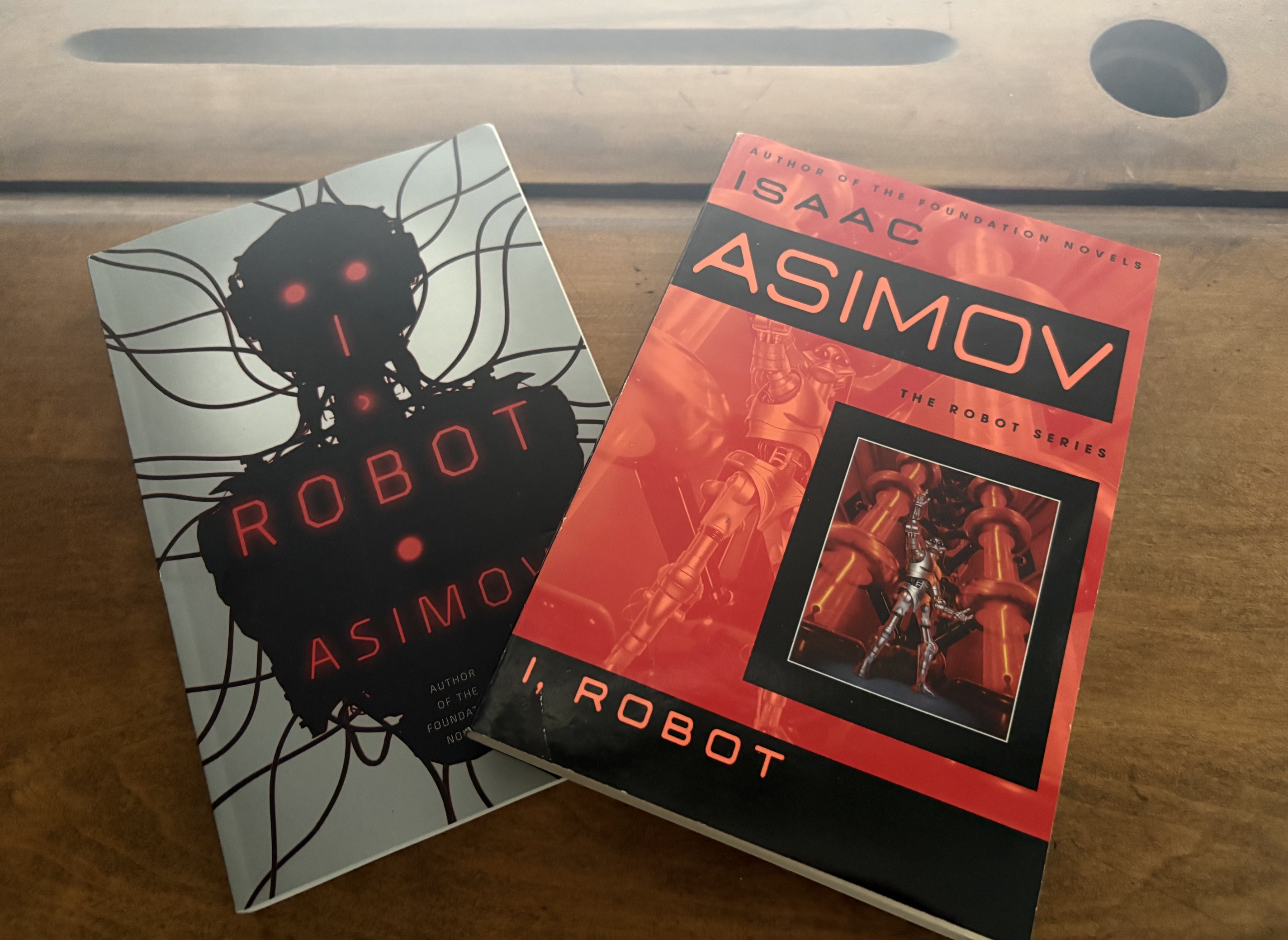
Congratulations to Claire Jahnke and Leslie Mendoza Arreola for winning copies of I, Robot in yesterday’s drawing.
Next Up
For Wednesday’s class, you will read and annotate Brian Aldiss’s short story “Supertoys Last All Summer Long,” which I distributed in class yesterday. If you were absent or misplaced your copy, print one from Blackboard.
Wednesday, we will meet on the lower level of Smith Library, where we will examine some of the science fiction books in the Asimov Collection, donated to the library by Dr. John L. Hubisz, a retired physics professor who taught at North Carolina State University. In your perusal of the novels’ and short story collections’ covers, you will explore how artists have depicted science fiction in their cover illustrations and what those images reveal not only about the stories themselves but also about readers’ perceptions and marketing.

