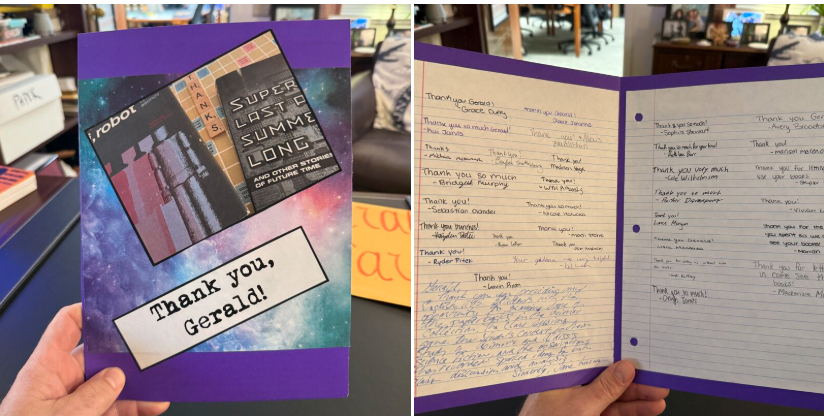
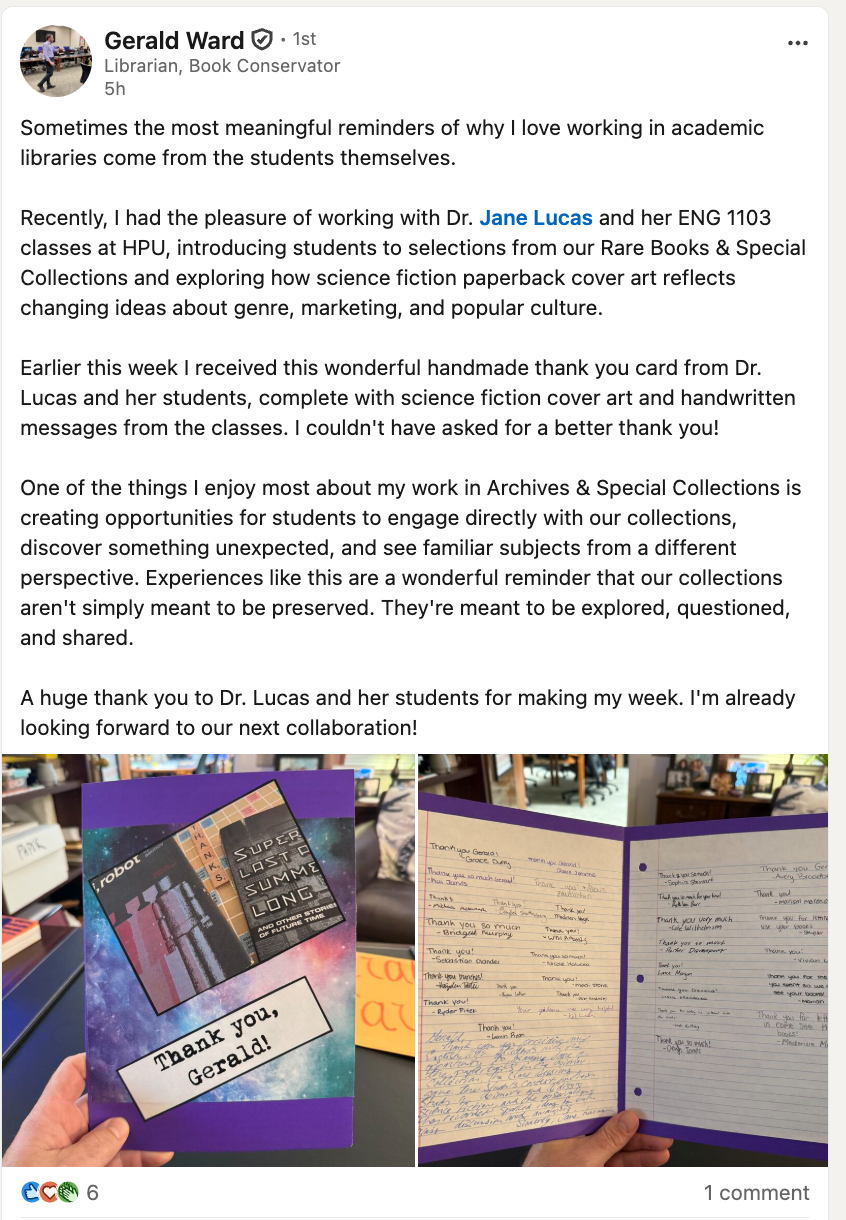
The pictures above, featuring the card we gave to Gerald Ward, Assistant Director and Head of Archives and Special Collections at HPU Libraries, are from a LinkedIn post he made about the card and our library session devoted to cover art from the Asimov Collection. The complete LinkedIn post appears later in today’s class notes.
Using AI Ethically for Your Analysis
Just as I turned to ChatGPT as a model for your own possible literacy-narrative brainstorming with AI, I prompted ChatGPT to ask me a series of questions to help me choose a topic for a textual analysis. The images below are screenshots of that conversation.
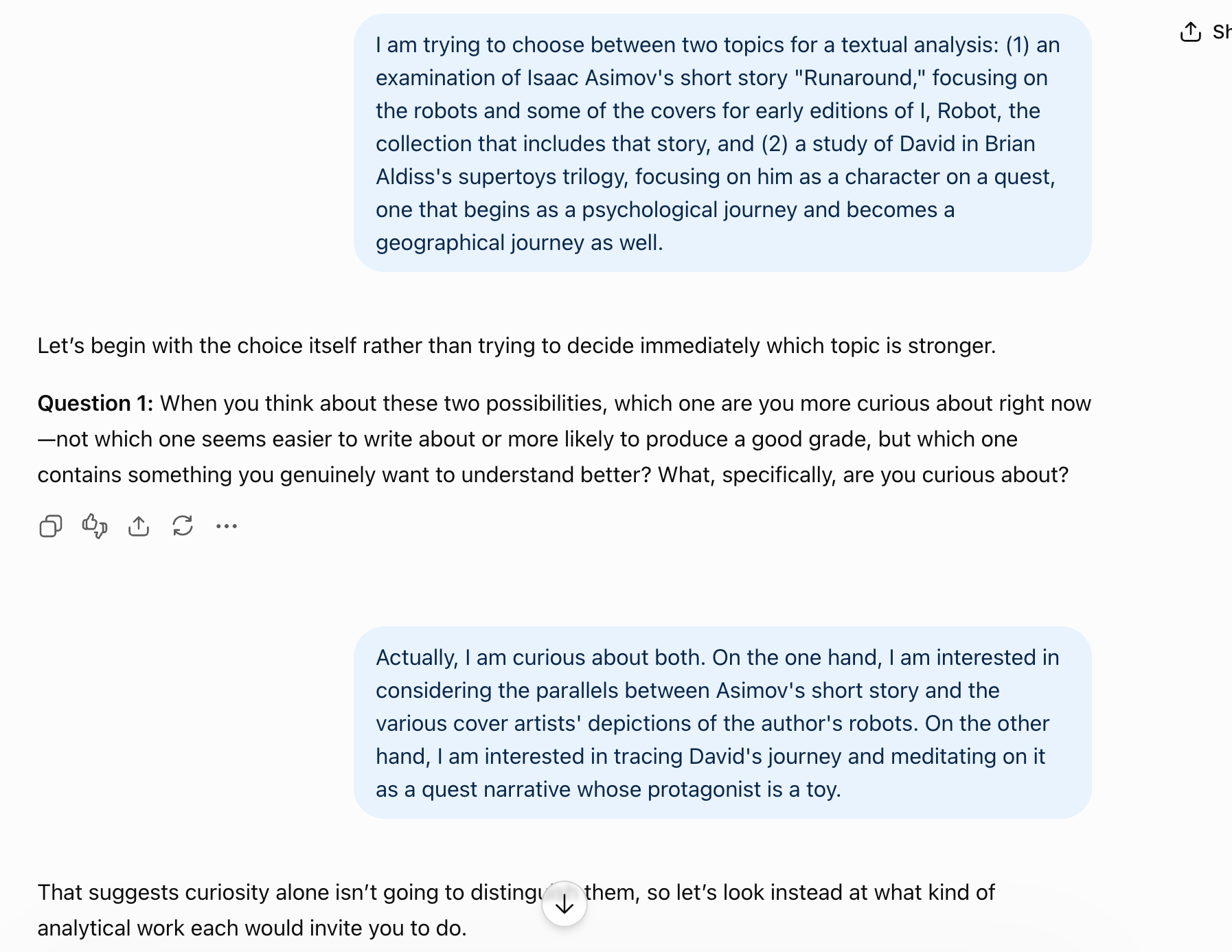
Review the screenshot above and note how many specifics I offer about the two topics I’m considering and how I ask the AI agent to ask me a series of questions. Developing your initial question and requesting multiple questions in response will lead to a more productive exchange of ideas.
In response to my answer to the first question, the AI agent asks me a question I would ask you: “When you think about these two possibilities, which one are you more curious about right now . . . ?” If you’re still trying to decide between two or more topics, ask yourself that same question.
Note that the AI agent shifts from the question of curiosity to the kind of analytical work each topic involves. In the second question (pictured below), the AI agent asks me to imagine that I’ve already written each essay and what the writing might have led me to discover.
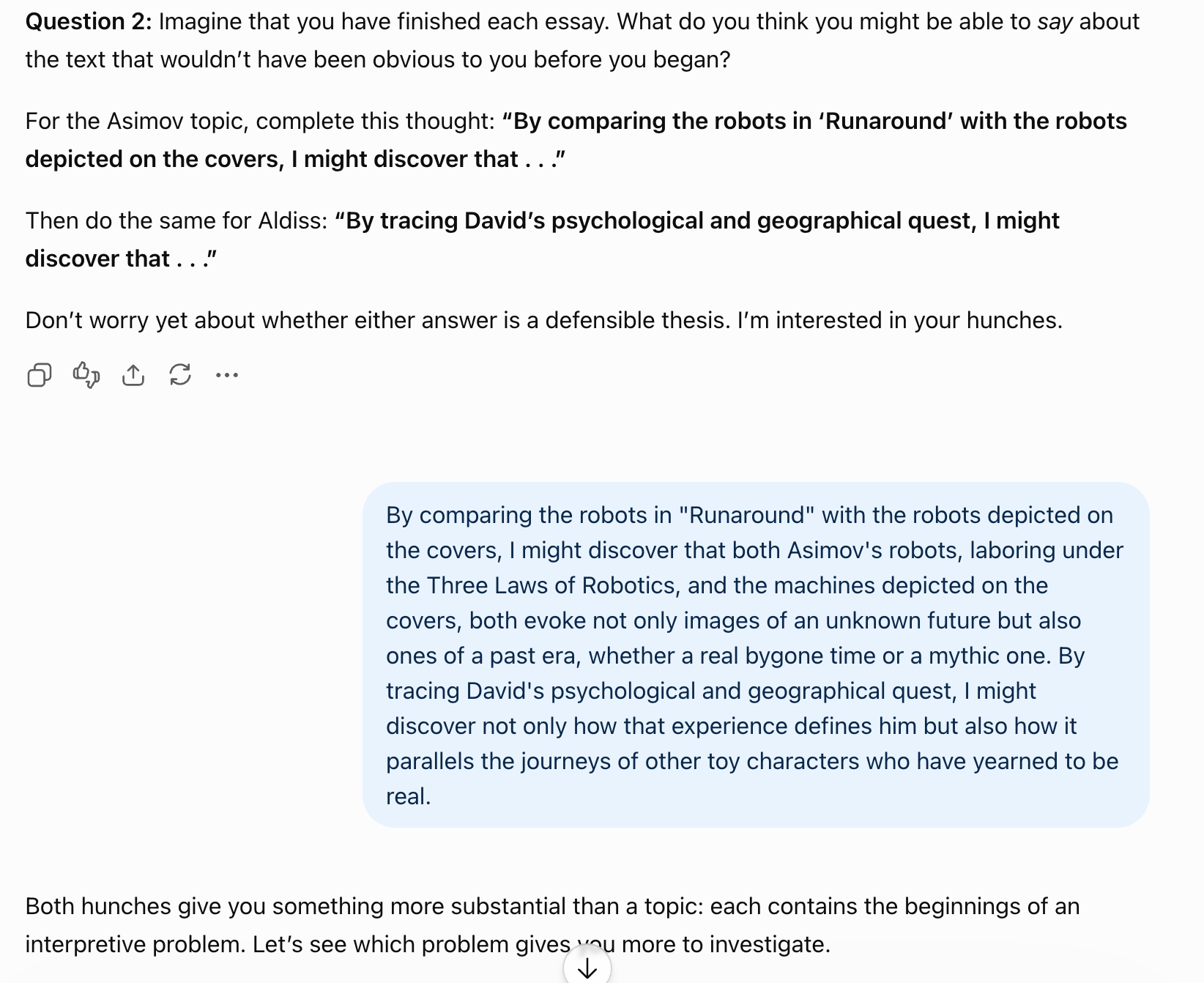
Notice how my reply to question two (pictured above) provides me with paths for my writing. Also note that the AI agent tells me, “Don’t worry yet about whether either answer is a defensible thesis.” Those words echo ones in your assignment: “Think of your preliminary draft as your down draft; your aim in the early stage of the process is to get your ideas down on the page. You may need the process of drafting to discover what you think the text means and how it conveys its meaning.”
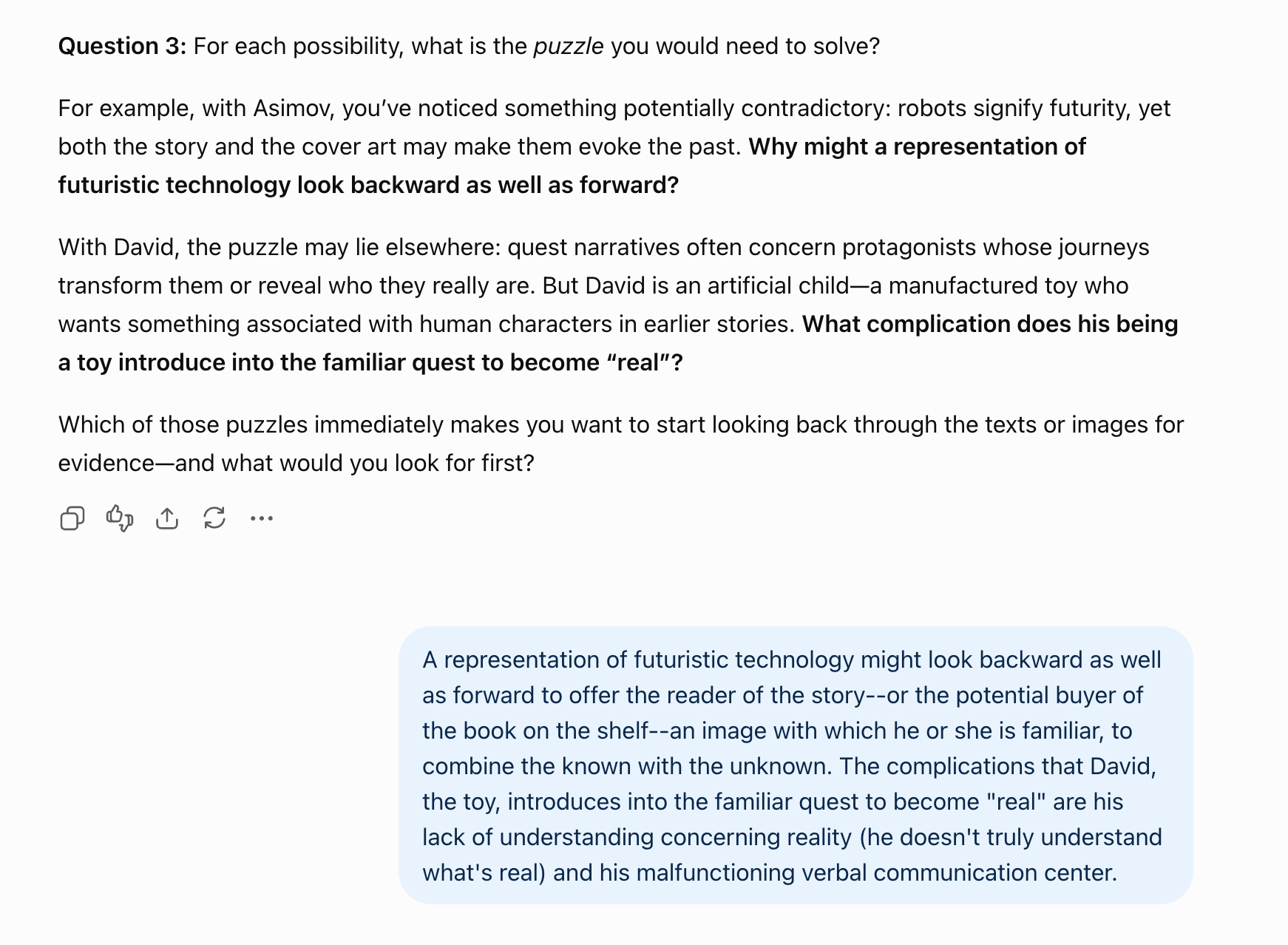
The AI agent’s third question (pictured above) and its examples lead me to additional points to consider by asking what puzzles I would need to solve.
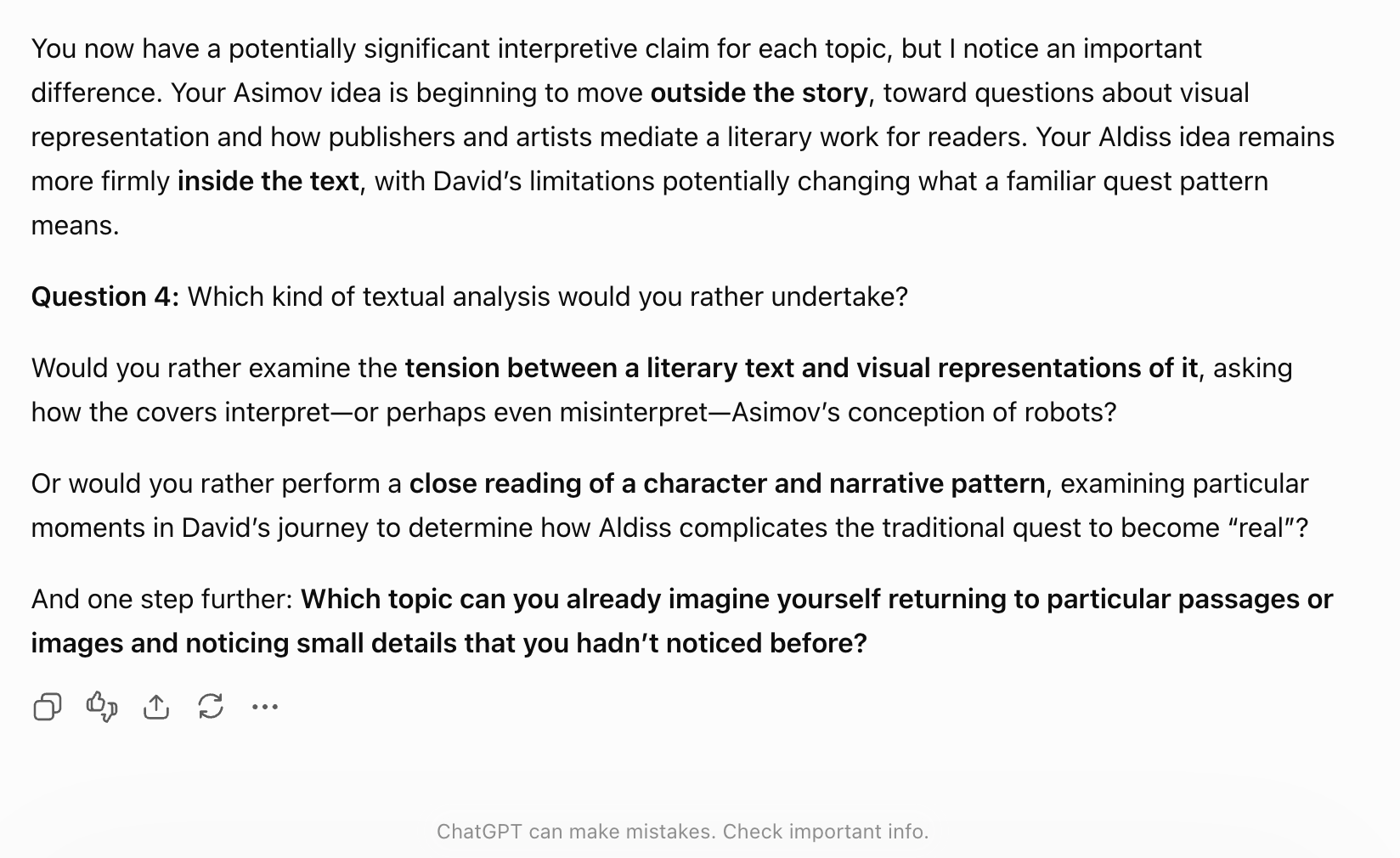
ChatGPT’s fourth question (pictured above) and the commentary that precedes it address the two distinctive types of analysis the projects would require. Would I rather “move outside the story” of “Runaround” or remain “more firmly inside the text” of the supertoys trilogy? The answer isn’t clear to me yet. It will emerge as I continue to put pen to paper and see where it leads.
Though I could have continued the conversation after question four, I was ready to turn away from AI and from the screen. As you continue your own draft, remember that using generative AI to write your analysis and presenting an AI agent’s words as your own violates High Point University’s Honor Code and is grounds for an F. However, using AI ethically, as I do in the model above, can be a useful step.
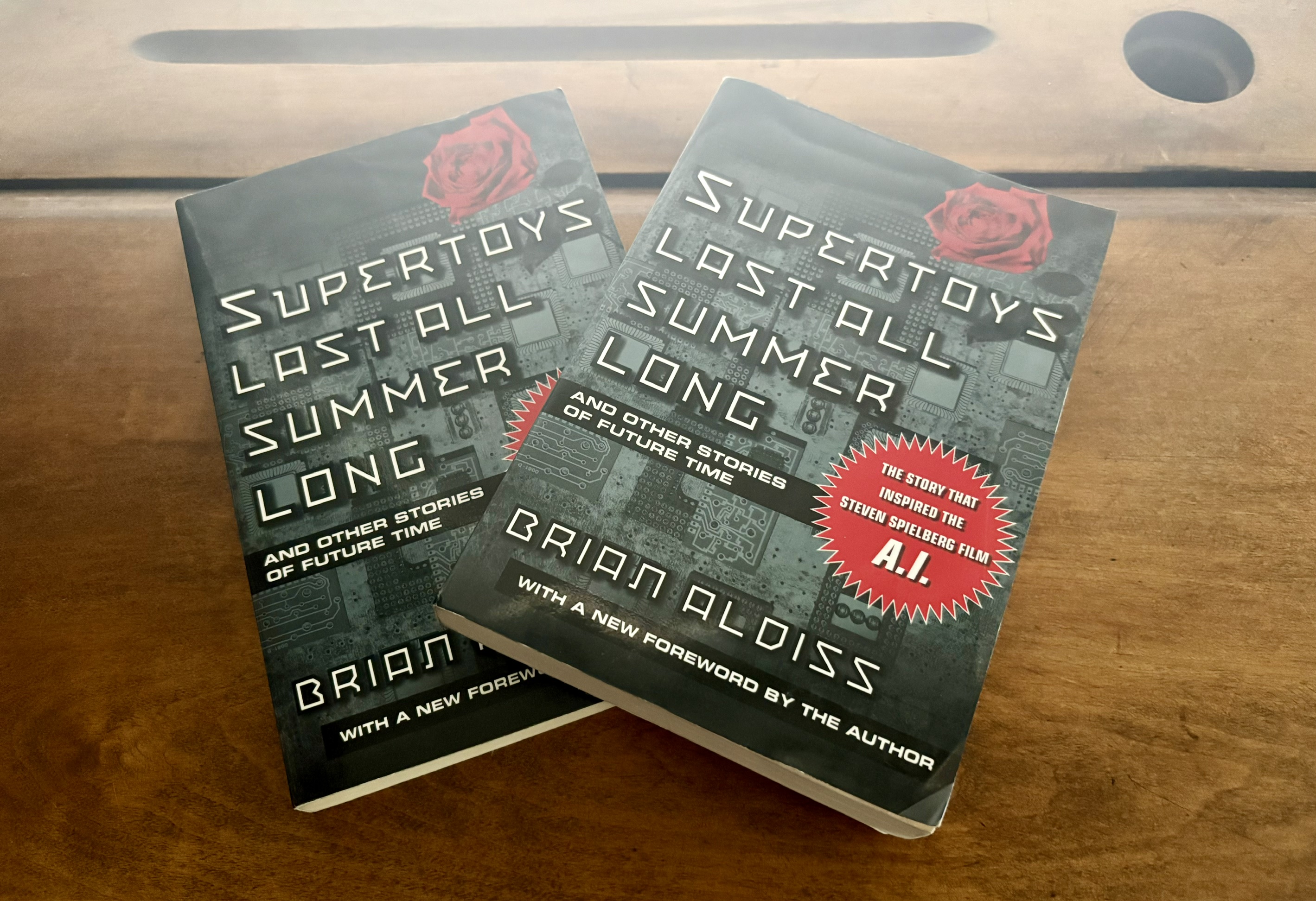
Congratulations to Brenna Murphy and Avery Broadbent, winners of yesterday’s drawings for Supertoys Last All Summer Long and Other Stories of Future Time.
Gerald Ward’s LinkedIn Post
Bonus Assignment Opportunity
Students who correctly respond to question below will earn a bonus assignment credit.
Uncovering the I, Robot Cover Blunder
One of the eight early covers featured in the September 22 post includes a typo. Which one would have benefited from additional proofreading?
Directions for Finding and Submitting Your Answer
- Examine the I, Robot covers in the September 22 post, and identify the one with a typo.
- Compose a response of one or more complete sentences that identifies the edition of I, Robot by publisher and year (see the photo caption) and briefly explains the error.
- Post your comment as a reply to this blog post by 7:30 a.m. on Monday, September 28.
- To post your comment, click the title, “ENG 1103: Using AI Ethically . . . ,” then scroll down to the bottom of the post. There you will see the image of an airmail envelope with a rectangular box for your comment. Type your comment in the box and hit return. Voila! You have submitted your answer. I will make the comments visible before class on Monday, September 28.
Next Up
Wordplay Day! To prepare for class, revisit the Merriam-Webster Scrabble Word Finder page, and review your journal notes and the blog posts devoted to Scrabble tips.

