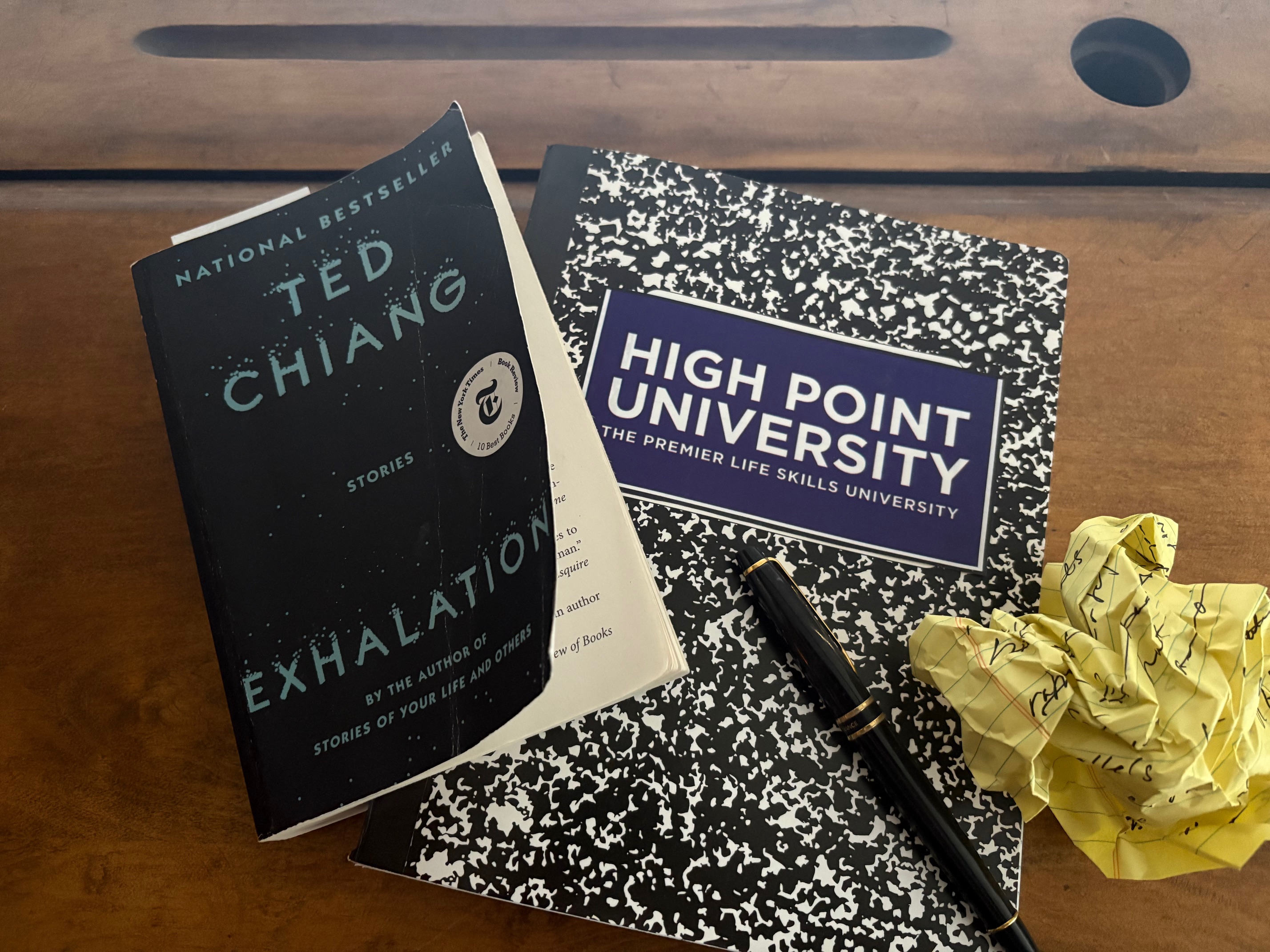
This morning, after your Scrabble debriefing, you and two or three of your classmates will compose a short written response to one of the developments in your recent reading in Ted Chiang’s The Lifecycle of Software Objects. The two prompts you will choose from follow.
The Sophonce digient Voyl and his owner, Gerald Hecht, enter the narrative through a conversation the Neuroblast digients Marco and Polo have with Derek Brooks, their caregiver. Why does Ted Chiang introduce Voyl and Hecht into the story, and what may their circumstances indicate about the future of the digients?
Ted Chiang’s depictions of Ana Alvarado and her Neuroblast digient, Jax, show the two interacting in both of their terrains: in the physical world through Jax’s SaruMech robot body, and in the virtual world through Ana’s avatar. Later, Jax tells Ana about witnessing a different attempt to merge digital and biological life. Why does Ted Chiang include that exchange between Jax and Ana, and what may it indicate about the digients’ future?
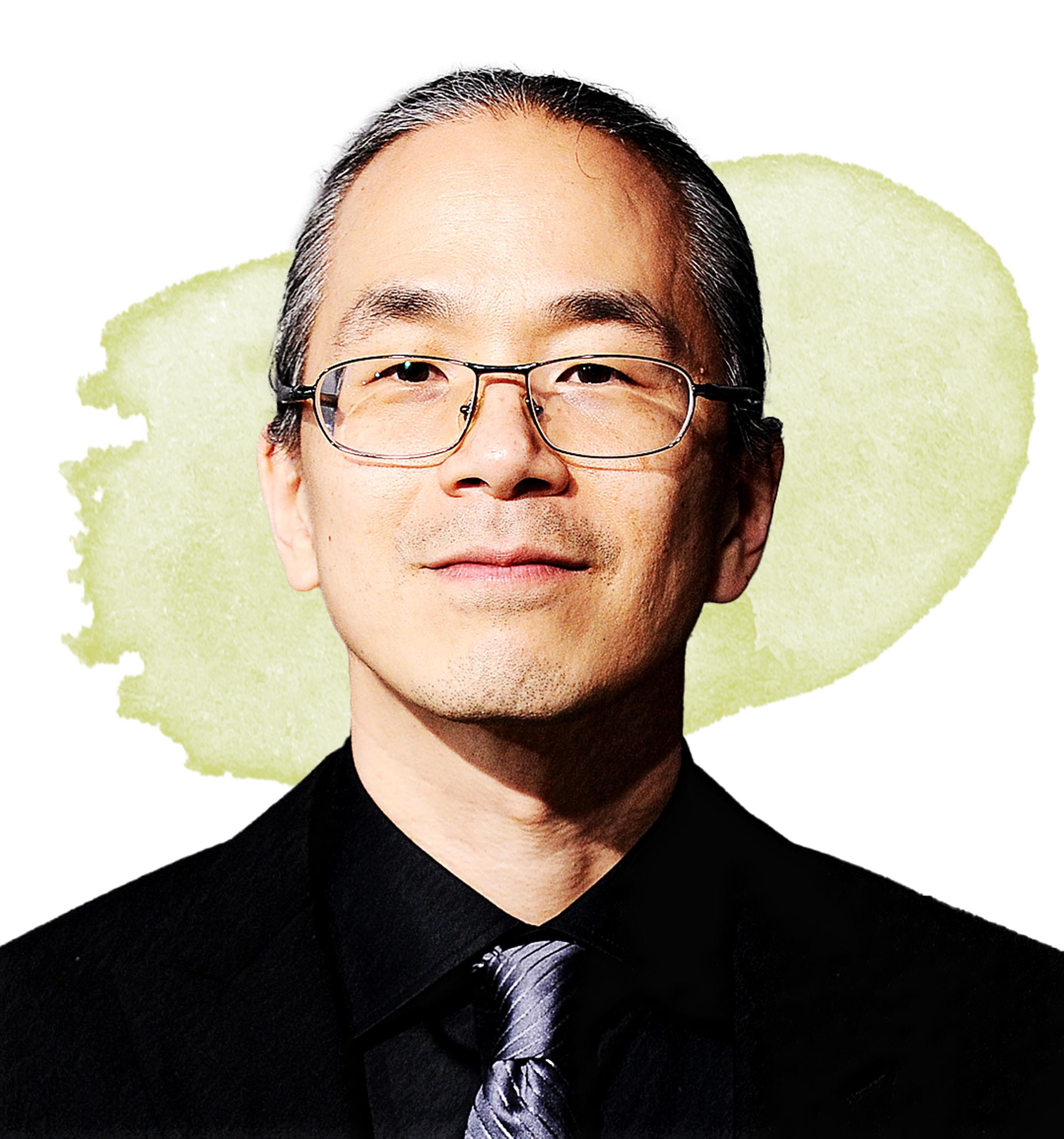
Ted Chiang, author of The Lifecycle of Software Objects. Illustration by Time; photo credit: Jason LaVeris, FilmMagic/Getty Images.
Continuing Your Research and Writing
After you complete your group exercise, you will have the remainder of the class period to work independently on your annotated bibliography and preface.
Tasks to undertake include these:
Using the HPU Libraries databases to locate an additional source and begin reading that article or book chapter.
Composing or revising an annotation for a source.
Reviewing the sources you have gathered and noting what similarities and differences you can identify among them. Those similarities and differences may serve as additional material for your preface or the commentary paragraphs in your annotations.
Drafting your preface.
Determining a theoretical lens for a larger project that may develop from your final essay and annotated bibliography.
In the last few minutes of class, you will compose a short piece of writing, a minimum of one complete sentence, that notes the particular task, or tasks, that you undertook during class.
Unexpected Finds–Sample Annotation
Last Thursday’s class notes detailed how perusing the works cited list for the peer-reviewed article “The Everyday Life of Artificial Intelligence: The Humanism of Ted Chiang’s The Lifecycle of Software Objects,” by Sunyoung Ahn, led me to three potential sources, one of which I have decided to include in my bibliography as a second peer-reviewed source. You are required to include only one peer-reviewed article or chapter from a university press book, but you are welcome to include more than one.
Tomorrow’s class notes will include a draft of my annotated bibliography entry for my second peer-reviewed source: “Losing Data Earth: Technological Obsolescence and Extinction in The Lifecycle of Software Objects,” by Stina Attebery.
Next Up
On Wednesday, we will examine Chapter Eight of Ted Chiang’s The Lifecycle of Software Objects, and you will have additional time to devote to your research and writing.
The October 23 Scrabble post listed toponyms (place names and words derived from places) in the first half of the alphabet. Today’s post includes a list of toponyms in the second half. Studying these playable proper nouns–playable because they’re also common nouns–offers you additional opportunities to broaden your vocabulary and up your game.
oxford: a type of shoe, also known as a bal or balmoral
panama: a type of wide-brimmed hat
paris: a type of plant found in Europe and Asia that produces a lone, poisonous berry
roman: a romance written in meter
scot: an assessed tax
scotch: to put an end to; or to etch or scratch (as in hopscotch)
sherpa: a soft fabric used for linings
siamese: a water pipe providing a connection for two hoses
swiss: a sheer, cotton fabric
texas: a tall structure on a steamboat containing the pilothouse
toledo: a type of sword known for its fine craftsmanship, originally from Toledo
wale: to injure, to create welts on the skin
warsaw: a type of grouper fish
waterloo: a definitive defeat
zaire: a currency of Zaire
Unexpected Finds Follow-Up
Yesterday’s post detailed how perusing the works cited list for the peer-reviewed article “The Everyday Life of Artificial Intelligence: The Humanism of Ted Chiang’s The Lifecycle of Software Objects,” by Sunyoung Ahn, led me to three potential sources.
Future posts will likely included annotated bibliography entries for two or more of those. For now, I offer the first draft of my entry for Ahn’s article:
Sample Annotated Bibliography Entry
Ahn, Sunyoung. “The Everyday Life of Artificial Intelligence: The Humanism of Ted Chiang’s The Lifecycle of Software Objects.” Science Fiction Studies, vol. 47, no. 1, Mar. 2020, pp. 73–92. EBSCOhost, https://doi.org/10.5621/sciefictstud.47.1.0073.
In Sunyoung Ahn’s “The Everyday Life of Artificial Intelligence: The Humanism of Ted Chiang’s The Lifecycle of Software Objects,” Ahn cites French philosopher Henri Lefebvre’s The Critique of Everyday Life (1977), in which Lefebvre speculates “that in the not-too-distant future human cells will be created artificially (which is perfectly conceivable) and given consciousness” (qtd. in Ahn 73). From that premise, Lefebvre supposes that such artificial intelligence will face the same struggles in everyday life as humans. For Ahn, Lefebvre’s philosophy aligns with Ted Chiang’s depiction of his digients’ development and their relationships with the trainer Ana Alvarado and the animator Derek Brooks, the humans who work with the digients at Blue Gamma and later become their caregivers. Ahn notes that such scenarios in science fiction are rare. Rather than turning to the trope of the cautionary dystopian tale, Chiang presents characters who “take responsibility for their own creation[s]” (88) and who, along with the digients, “stay useful and relevant by constantly modifying themselves” (87).
Ahn’s study delineates Chiang’s focus on the formative stage of artificial intelligence as a point of contrast to AI as it is widely imagined as “developed, perfected, and therefore culminant” (78). Ahn demonstrates the singular vision of The Lifecycle of Software Objects as a narrative in which “humans anthropomorphize the digients” (87) and the digients lead the humans to “think digitally” (87).
Sunyoung Ahn, an associate professor of English at Korea University in Seoul, is the author of “New Sincerity, New Worldliness: Post 9/11 Fiction of Don Delillo and David Foster Wallace.”
Secondary Quotations
The summary paragraph of my annotation includes a secondary quotation, also known as a secondary citation or indirect citation, which is line from another source quoted by the author of the source I am annotating. Because I name the author, Henri Lefebvre, in the sentence, the paranthetical citation is (qtd. in Ahn 73), which denotes that his words are quoted by Ahn on page 73. If I had not named Lefebvre in the sentence, his last name would be included in the parenthetical citation: (Lefebvre, qtd. in Ahn 73).
If you are quoting a writer or speaker who is not the author of your source, be sure to present the words as a secondary quotation. Otherwise you will commit a factual error.
Next Up
Monday, we will examine Chapter Seven of Ted Chiang’s The Lifecycle of Software Objects, and you will have additional time to work on your annotated bibliography and preface
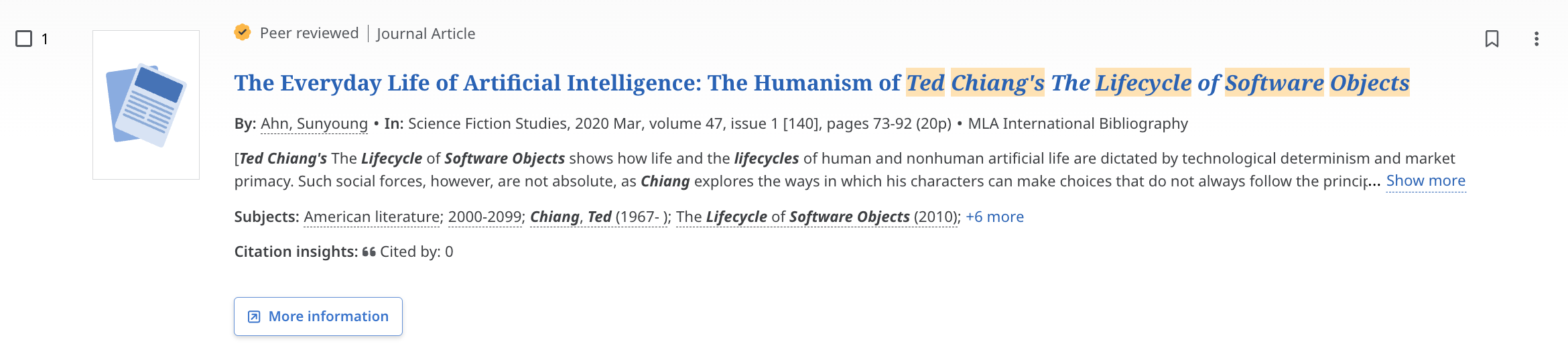
When I explored the MLA International Bibliography, one of the databases in the HPU Libraries A-Z Database List, my search yielded the listing for the peer-reviewed article “The Everyday Life of Artificial Intelligence: Humanism in Ted Chiang’s The Lifecycle of Software Objects” (in the screenshot above). That article will serve as one of my sources, but it also led me to additional sources, ones I did not find in my search of the MLA International Bibliography.
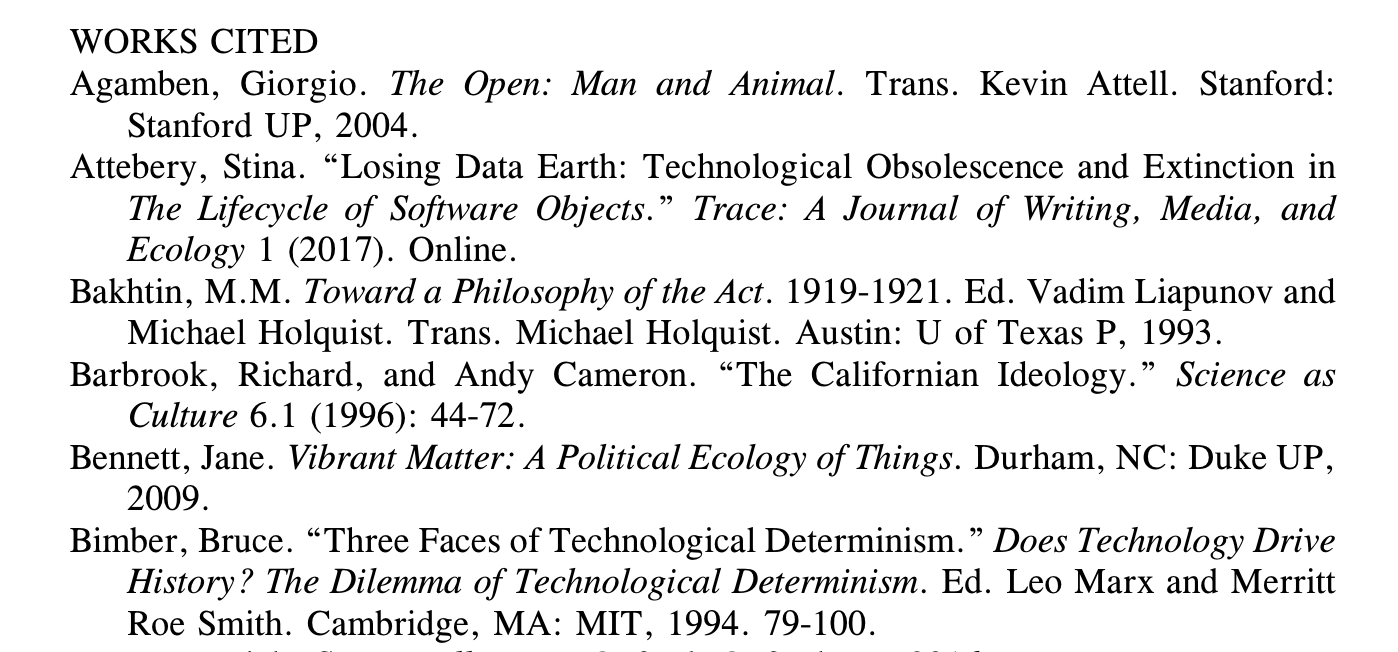
After I accessed the full text of the article, I scrolled down to the works cited list: the list of sources that the author, Sunyoung Ahn, cites in her study. In the screenshot below, you see that four of the first five sources focus on science and philosophy, not on Chiang’s novella specifically. However, the title of the second entry, Tina Attebery’s article, clarifies that her article is a study of The Lifecycle of Software Objects, one that isn’t listed in the MLA database.
Farther down the list of works cited (see the screenshot below), I discovered a source devoted to Ted Chiang’s science fiction, an essay published in The New Yorker, the same magazine that published one of your assigned readings for the course: Dan Rockmore‘s “Should the Classroom Be More Like the Gym?” Directly above that essay is another source from The New Yorker. The title doesn’t indicate that it’s devoted to Ted Chiang’s fiction, but a search of the HPU Libraries’ catalog revals that it’s an essay-review of The Lifecycle of Software Objects. New Yorker articles are available through the ProQuest database, but they do not show up in searches of the MLA International Database because The New Yorker is a mainstream magazine, not a scholarly journal.
Takeaways on Unexpected Finds
Once you have found a peer-reviewed article for your bibliography, peruse the list of works cited for possible additional sources.
You may not be familiar with the magazine, journal, or book publisher, but the source’s presence in a peer-reviewed article tells you that it’s already been vetted. Determining the validity of an article or book chapter’s citations is part of the peer review process.
If you question whether you should include the source in your bibliography, ask me, Lauren Ksa, Assistant Director and Head of Research and Instructional Services, or use the Ask an HPU Librarian chat feature on the HPU Libraries site. It will connect you with an HPU librarian, not a chatbot.
Quiz Follow-Up
Rather than listing the answers to the questions on Monday’s quiz, I have followed each question below with a note regarding where to find the answer. By finding the answers yourself, you will learn more than you would from simply reading the answers in a list.
Last Thursday’s class notes, a follow-up to our library instruction, includes my recommendation for your next step for your research project. What is that step? See the October 29 class notes.
Thursday’s class notes include a segment of a research project I wrote as a model for you. What is the segment (what part of the project is it), and what is its subject? See the October 29 class notes and the November 2 class handout.
Last Friday’s class notes include two lists of words. What are the topics of those two lists? Note that Scrabble is the subject, not the topic. The topic is something more specific. See the October 30 class notes.
How have the digients’ circumstances changed since Chapter Two? See Ted Chiang’s The Lifecycle of Software Objects,Chapter Three, 88; Chapter Four, 100-102; Chapter Five, 118-19; and others.
How have Ana Alvarado and Derek Brooks’s personal and professional lives changed since Chapter Two? See Chapter Three, 91; Chapter Four, 94, 95, 98,108; Chapter 5, 121; and others).
Your quiz also included a bonus opportunity. Possible answers for that bonus are found in the October 30 class notes.
Next Up
Wordplay Day! To prepare for class, revisit the Merriam-Webster Scrabble Word Finder page, and review your journal notes and the blog posts devoted to Scrabble tips.
Today in class, you will conduct a short personal interview that will serve as one of the sources for your annotated bibliography. An overview of the assignment and the directions are included below.
Overview
For practice in conducting an interview as well as providing a peer perspective for your research project, today you will interview a classmate whose conversation with you will serve as one of the five sources in your bibliography.
If you decide that you do not want to use the interview that you conduct today, you are welcome to include another one in your project. Keep in mind, however, that the interview you include in your project must be conducted with a student currently enrolled in section one or eight, and the subject of the interview must be the subject of your project.
Questions to ask your interviewee include the following:
What experience, if any, did you have with the subject (the reading or the aspect of the course) before you encountered it in English 1103?
Has it changed your perspective on reading and/or writing? If so, how?
Will you continue to pursue the subject (read more work by the author, continue the classroom practice or activity) after the conclusion of the semester?
You are welcome to limit your interview to the questions above, or you may add one or two follow-up questions during class. If you would like to continue your interview later and ask additional questions, plan to meet with the interviewee again, face to face or virtually.
Directions
Compose an MLA-style bibliographic entry following the format below. See the model on the handout labeled Sample Annotated Bibliography Entry: Peer Interview.
Last Name, First Name. Interview. Conducted by Your First Name Your Last Name. Day + Month + Year.
Next, compose a short, one-paragraph summary of the interview that includes a sentence in which you introduce a quotation from the interview with a signal phrase, such as, According to . . . , or [first and last name] notes or observes or points out that . . . .” Your quotation will not be followed by a parenthetical citation because it is a form of oral communication (without page or paragraph numbers).
Follow your summary with a short paragraph of commentary or analysis. Keep in mind that at this point you may not know how the interview will figure in your research. You may mention it briefly, or you may link it to one or more of your other sources. For your draft today, you may simply write that the interview provides a peer perspective on the subject, and specify the subject.
Follow your commentary with a short paragraph that identifies the student by class and major, and notes that he or she is currently enrolled in English 1103, section one or eight, at High Point University.
Brewer, Jesse. Interview. Conducted by Jane Lucas. 20 Oct. 2023.
English 1103 student Jesse Brewer recounts how he has played Scrabble for most of his life. Since he was a young child, he has played the game with his grandparents whenever he visited their home in Pennsylvania. Brewer will continue to play Scrabble after the end of the semester because the game remains a tradition in his family. In his words, “[M]y grandmother is still going to want to play it every summer.” Brewer also notes that the game has expanded his vocabulary, saying it has “introduced me to new words, which allows me to read and write more capably in everyday life.”
Brewer’s remarks on vocabulary building highlight the game’s verbal benefits, and his observations on Scrabble as a family tradition serve as a point of contrast to that of some other students’–such as Ava Salvant’s–who had not played Scrabble before playing it as a weekly exercise in English 1103.
Brewer is a freshman computer science major at High Point University, where he is enrolled in English 1103, section 20.
*Note that the bibliographic entries in your MS Word file or PDF should have hanging indents, and the first line of each paragraph should be indented five spaces or one-half inch.
After Completing the Interview Worksheet
After you have drafted your annotated bibliography entry, proofread and edit as needed. When you have completed your editing, submit your assignment. Once you have given it to me, you may devote the remainder of your class time today to additional work on your research project.
Want More Class Time for Research and Writing?
You will have portions of the class periods on Monday, November 9, Wednesday, November 11, and Monday, November 16 to devote to research and writing. If you would like additional class time, you may request an alternate assignment for Friday, November 6. To request and complete that alternate assignment, follow the steps below.
Email your request to complete the alternate assignment no later than 4 p.m. on Thursday, November 5. You will not be permitted to work on your research project in lieu of participating in Wordplay Day unless you submit your request before the deadline.
Devote the class period to one or more research and/or writing tasks.
In the last few minutes of class, complete the short-answer worksheet (you will receive in class) that asks you to summarize the task, or tasks, that have been the focus of your work.
Submit your worksheet at the end of class.
Your worksheet will serve as your short assignment grade for Friday, November 6, in place of your Scrabble assignment. You may have a similar option for Friday, November 13. If so, instructions will be included in upcoming class notes.
Writing Center
As you continue to research and write, consider visiting the Writing Center. If you do so, you will earn five bonus points for your annotated bibliography and preface assignment.
To schedule an appointment, sign up online or scan the QR code below. To earn bonus points for your assignment, consult a Writing Center tutor no later than Thursday, November 19. The due date for posting the assignment to Blackboard and to your WordPress blog is Wednesday, November 18 (before class); the hard deadline is Friday, November 20 (before class).
Writing Center Statistics
Section One
Literacy Narrative: 3 of 18 students, 16%
Analysis: 3 of 18 students, 16%
Section Eight
Literacy Narrative: 3 of 18 students, 16%
Analysis: 2 of 18 students, 11%
If you are one of the students who has not taken advantage of the opportunity to earn bonus points for meeting with a Writing Center consultant, please don’t miss your last opportunity to do so.
Next Up
Wordplay Day! To prepare for class, revisit the Merriam-Webster Scrabble Word Finder page, and review your journal notes and the blog posts devoted to Scrabble tips.
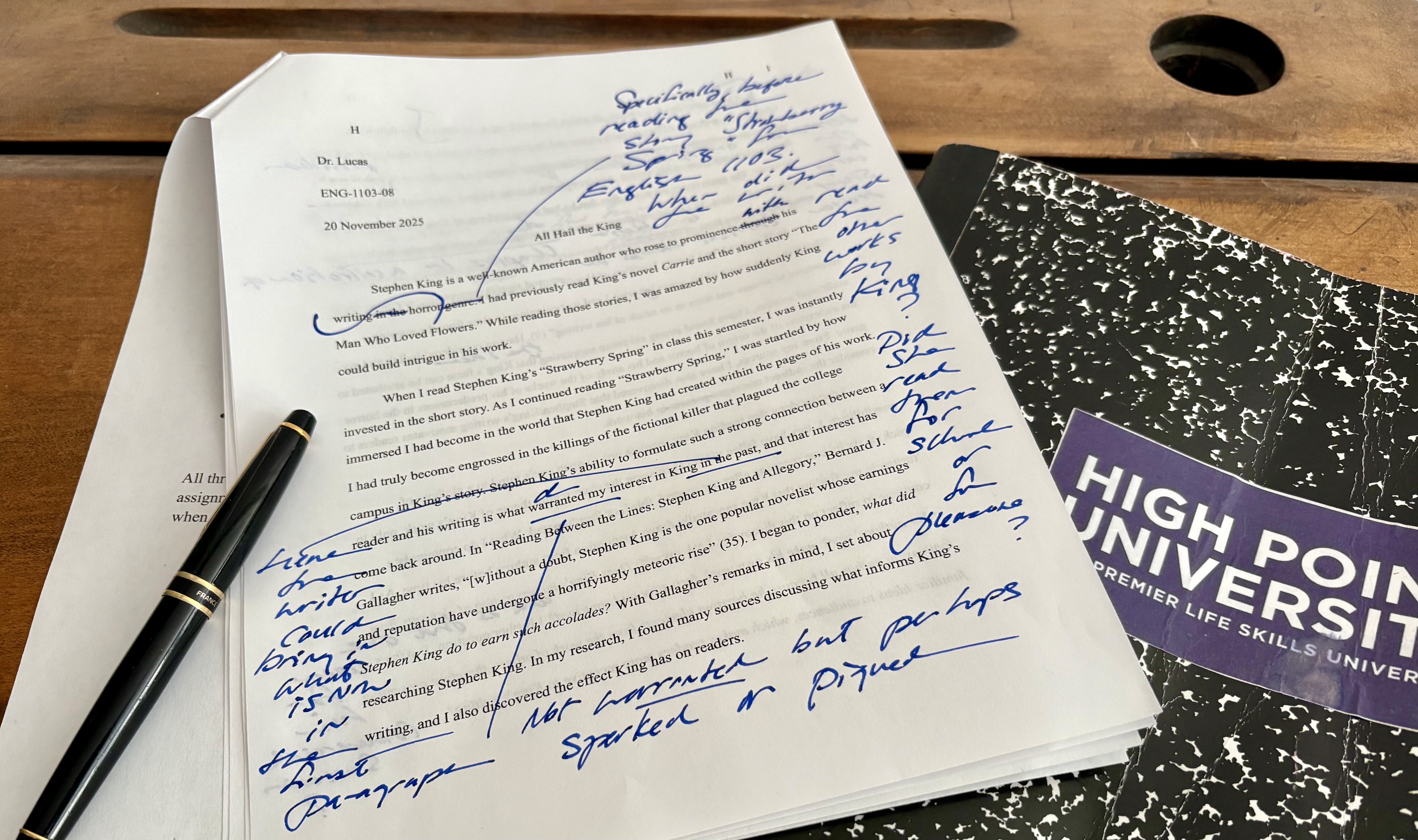
Yesterday, you and two or three of your classmates composed a short assessment of the student bibliography and preface “All Hail the King” and used the assignment’s guidelines and rubric to determine a letter grade. Notes on the bibliography and preface’s content and form follow, along with details on bibliography’s three additional print sources.
“All Hail the King”: Notes of Content
Instead of beginning the preface with the three-and-a-half-line paragraph that currently serves as the introduction, the writer could start with what is now the second paragraph, which draws readers into the writing by placing them in the classroom with the writer as she reads “Strawberry Spring.”
The phrase “my interest in King in the past” (par. 2) offers a place for the writer to introduce the details that are now in the introduction.
The next paragraph should omit the first sentence that begins “I have compiled” (par. 3) and begin with a revised version of the second sentence: “The following bibliogrpahy includes . . . . (par. 3).
The words “excerpts from a collaborative book critiquing” (par. 3) should be replaced with “chapters in a collection of critical essays on” (par. 3).
The words the idea should be added between “supporting” and “that” (par. 3).
In the annotation for James Egan’s “Technohorror: The Dystopian Vision of Stephen King,” the writer should omit the phrase “is useful because” (par. 2) and instead show its usefulness.
In the annotation for Egan’s essay, the writer notes that he “published articles devoted to horror and other authors,” but horror is not an author; it’s a genre. The word “horror” should be followed by writers.
In the annotation for Ben P. Indick’s critical essay “King and the Literary Tradition of Horror and the Supernatural,” the writer doesn’t clarify whether Indick claims that King’s work is derivative of Edgar Allan Poe’s or Shirley Jackson’s or simply inspired by it.
Also, the writer notes Indick’s observation that King references other authors in Carrie, Salem’s Lot, and The Dead Zone but doesn’t specify which authors.
The writer should omit “in his time” (par. 3) from the annotation for Indick’s essay becuase he could not publish out of his time.
In the annotation for Stephen King’s “Strawberry Spring,” the writer states the short story is “a great introduction” (par. 1) to King but doesn’t explain why. Also, since readers know the story wasn’t the first work of King’s the writer read, readers may question why the writer chose to address the story’s value as an introduction to the author.
Elsewhere in the annotation for “Strawberry Spring,” the writer notes “similarities can be found between the story and the work of Edgar Allan Poe” (par. 2). That line should be rewritten in active voice, and the writer should include a detail from “Strawberry Spring” and one from a Poe Story to support the claim reagrding their similarities.
Since the bibliography raises the question of the relationship of King’s fiction to his influences, the writer might have asked her classmate whether “Strawberry Spring” reminded him of any stories he’d read. Asking that question may have enabled the writer to link her interview annotation to the one for Indick’s critical essay.
“All Hail the King”: Note on Form
The preface and bibliography have minimal errors of form, notably the omission of the period at the end of four of the five sources. Only the fifth source, the peer interview, includes the required period at the end.
Three Additional Print Sources (in One)
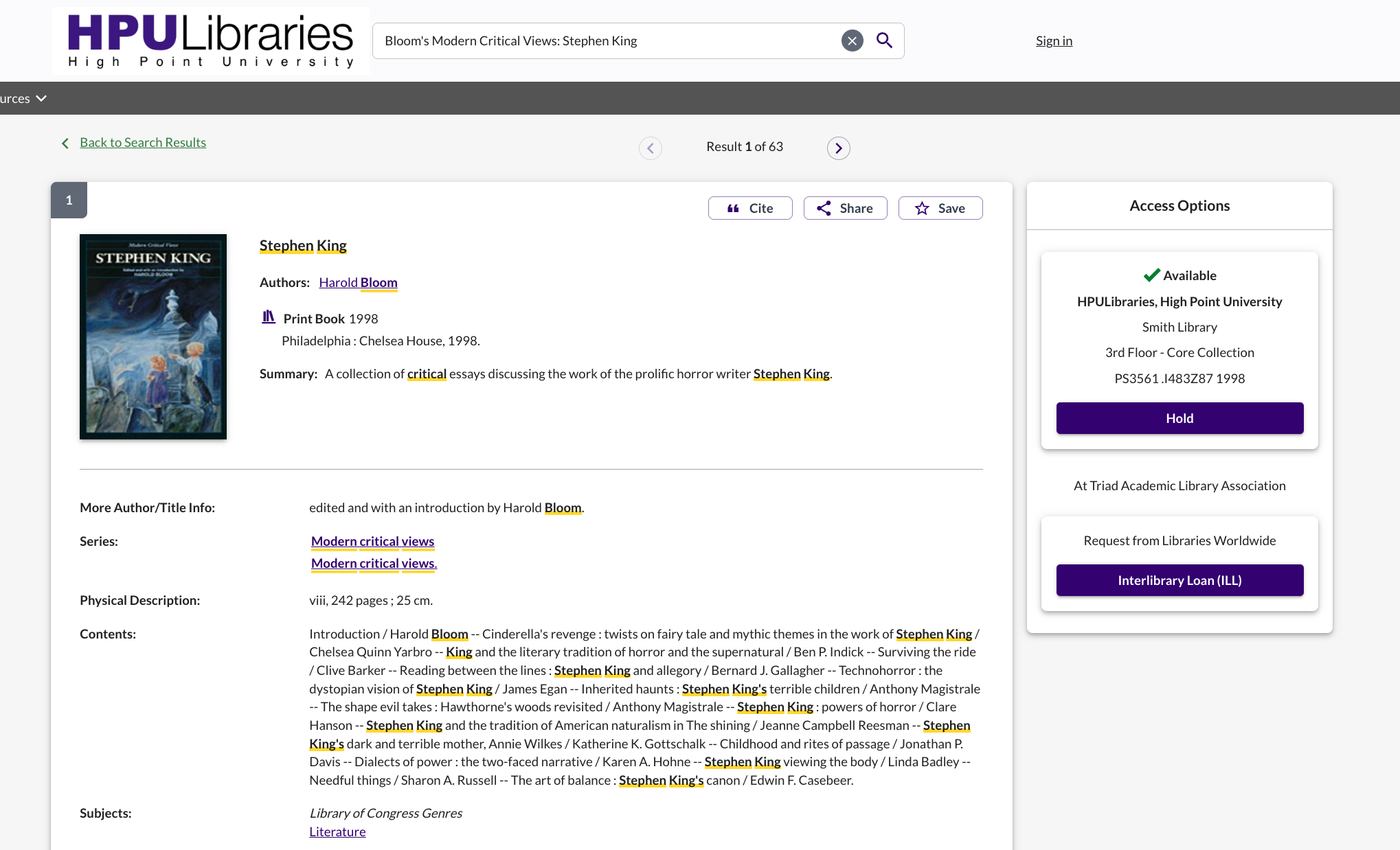
As I noted in class yesterday, the three additional print sources that the writer of “All Hail the King” included in her bibliography comply with the assignment’s requirements. All three were originally published in peer-reviewed journals. The screenshot above features HPU Libraries‘ catalog listing for the book, Stephen King: Bloom’s Modern Critical Views, where they were later published as part of a collection of analyses devoted to King’s work.
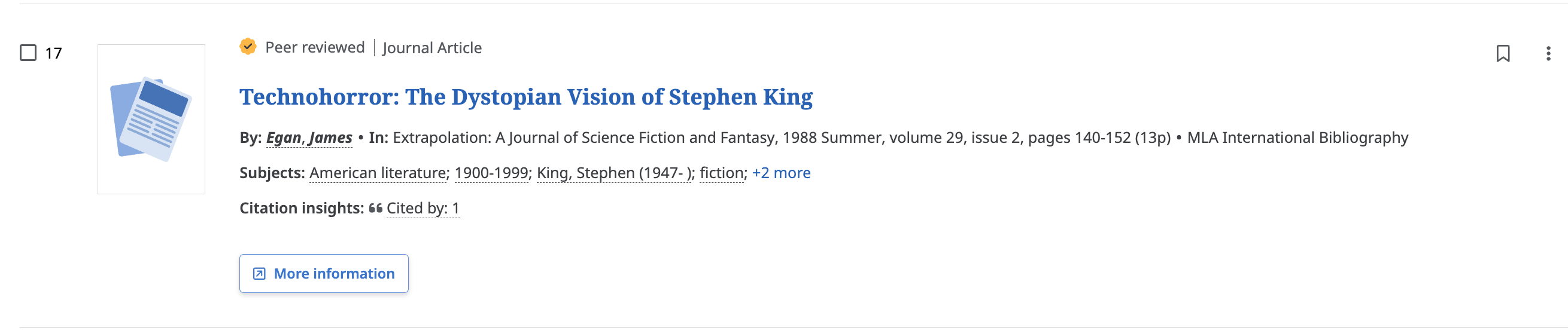
The screenshot below shows the listing for one of the three, James Egan’s “Technohorror: The Dystopian Vision of Stephen King,” in the MLA International Bibliography database on the HPU Libraries site. That listing shows that Egan’s essay was published in the journal Extrapolation: A Journal of Science Fiction and Fantasy in 1988, ten years before it was included in Stephen King: Bloom’s Modern Critical Views.
Next Up
Wednesday, in the first half of class, you will conduct a short personal interview that will serve as one of the sources for your research project. If you decide that you do not want to use the interview that you conduct on Wednesday, you are welcome to include another one in your project. Keep in mind, however, that the student interview you include must be conducted with a student currently enrolled in section one or eight, and the subject of the interview must be the subject of your bibliography. In the second half a class, you will have time to continue your research and writing.
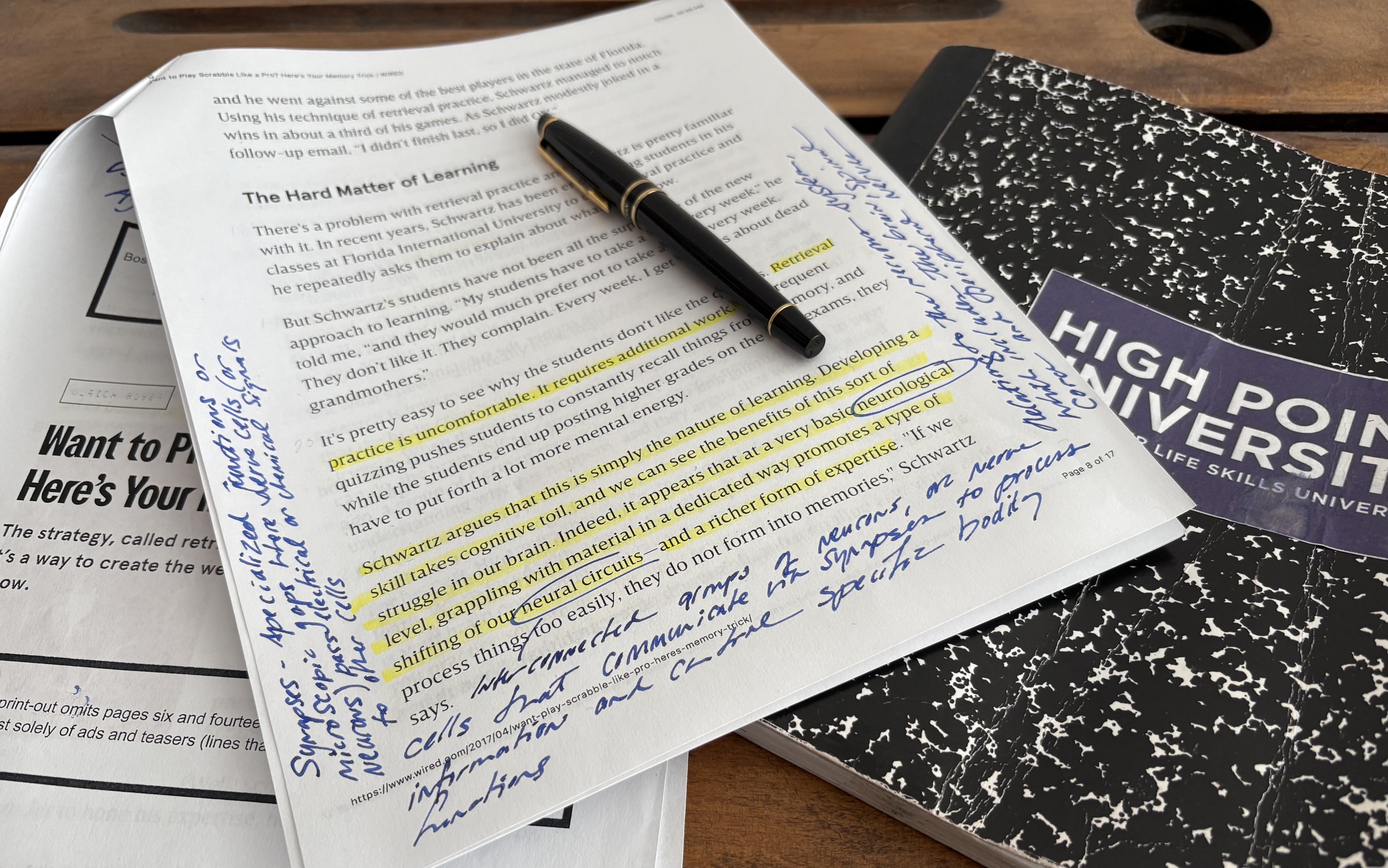
Ulrich Boser’s “Want to Play Scrabble Like a Pro? Here’s Your Memory Trick?” the Wired magazine article I found through a conversation with ChatGPT.
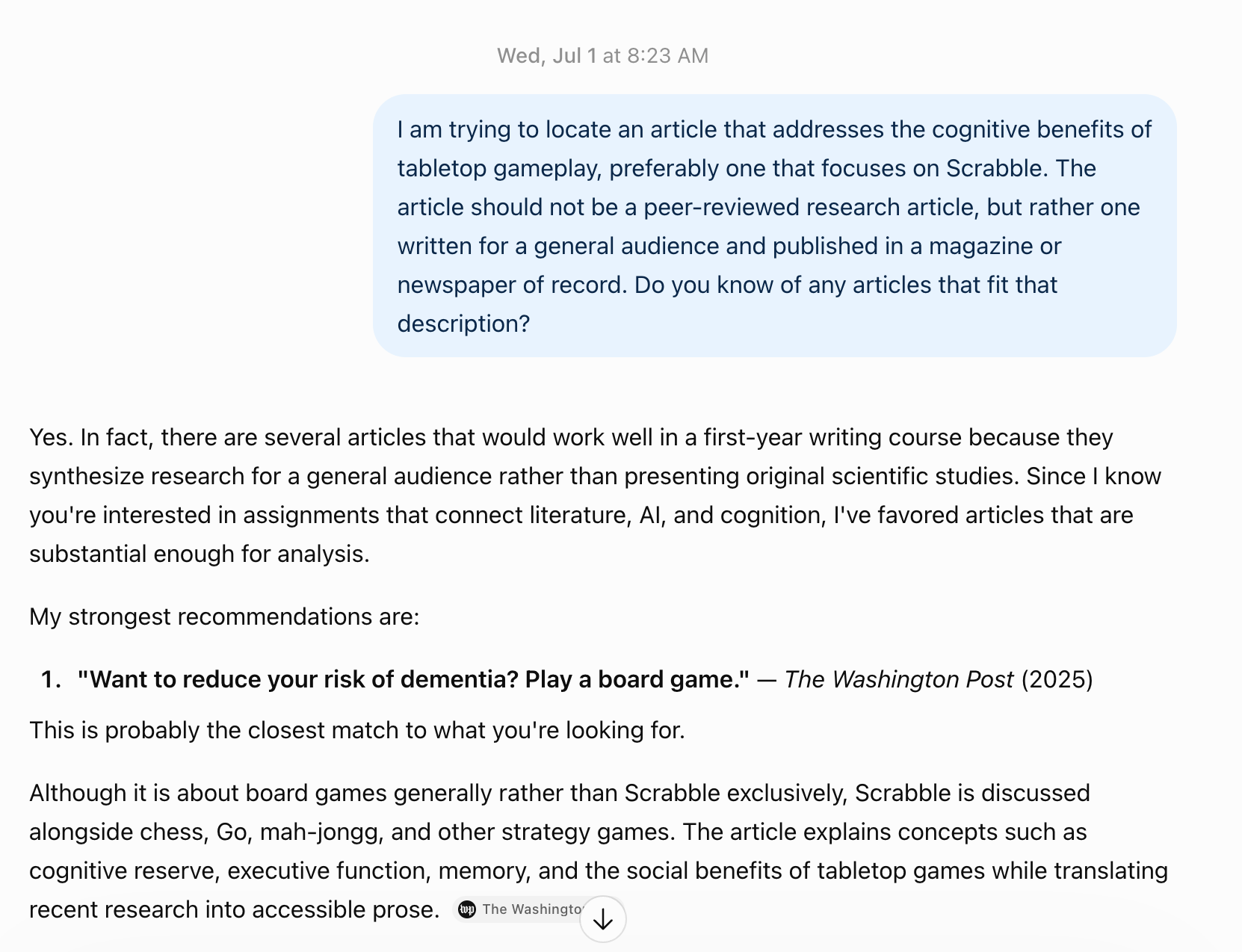
During last Wednesday’s library session in the 10:40 class, Lauren Ksa, Head of Research and Library Instruction, mentioned that she didn’t know what my policy was regarding students’ use of A.I. for online searches. I am grateful to Lauren for mentioning that because it prompted me to provide you with images of my own A.I.-assisted search for an article, followed by my commentary, as a model for using A.I. ethically in research. Turning to A.I. was a step I took only after I had explored other options thoroughly, and that’s when you should turn to A.I., if you use it at all.
For several years, my students have delivered group presentations on articles devoted to aspects of English 1103, but none of those presentations included an article on Scrabble. That’s because I was unable to find one that was comparable to articles on other aspects of the class. Although I knew of scholarly articles on the subject–and have cited some in my own writing–for the purposes of both the group presentations and a starting point for research, I needed an article written for a general audience.
Last summer, as I was planning for the fall semester, it occurred to me that I might see whether a conversation with ChatGPT would yield what I’d been looking for.
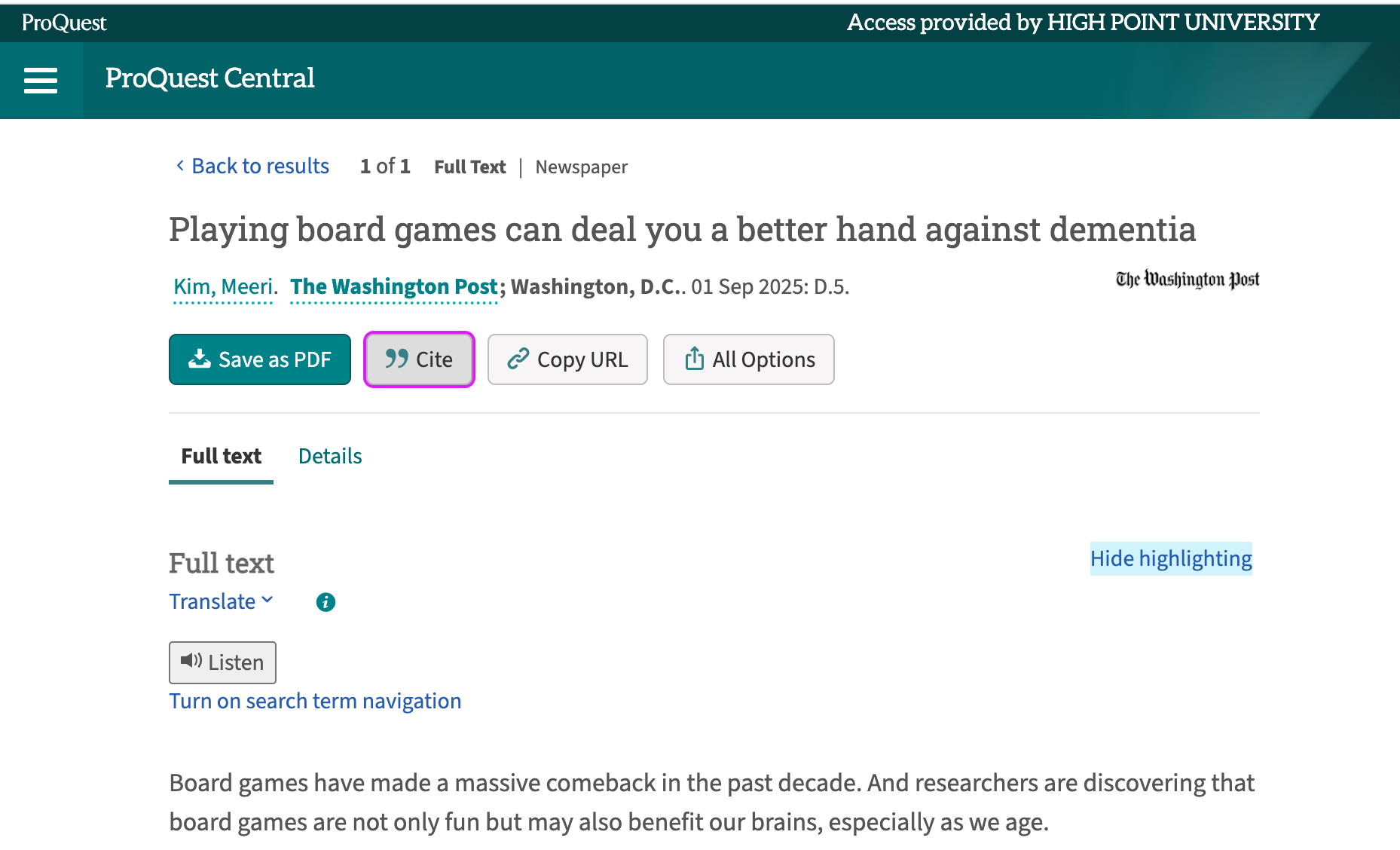
In the screenshot above, you can see ChatGPT’s first recommendation, a Washington Post article that could serve as one of the sources in a bibliography devoted to the cognitive benefits of Scrabble play, but it isn’t what I sought for a presentation article that could also be a starting point for research. I omitted the other two recommendations from the screenshot because they were off base. One was a health system site and the other was a general recommendation for the Washington Post ‘s Brain Matter column, written by Richard Sima, rather a particular column on the subject.
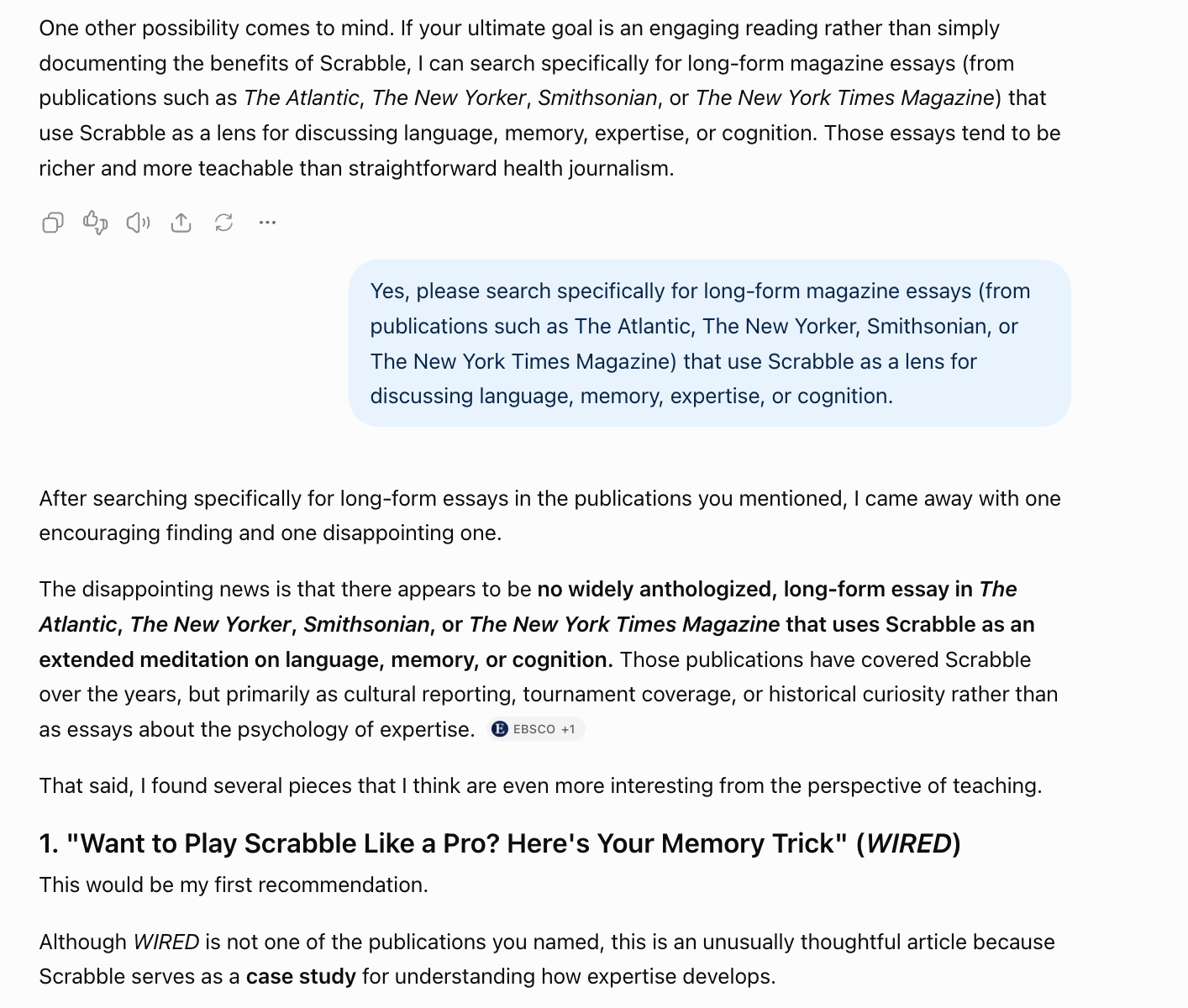
Although I had requested magazine articles, ChatGpt’s initial response included none, but a later reply from the A.I. assistant led me to what I’d sought.
ChatGPT’s number-one find (in the screenshot above) seemed to be precisely what I was looking for. I omitted the three suggestions that followed because the second one, Stefan Fatsis‘s Word Freak, while a valuable source and an engaging read, is a book rather than an article. The third recommendation was a Time magazine article on the history of the game, and the fourth was my own study of Scrabble, which ChatGPT located on my blog–and yes, identified as my own writing.
A.I. Recommended It, Now What?
If I had not been familiar with the magazine Wired, my next step would have been determining whether it’s a reliable and reputable source. Searching for Wired on the HPU Libraries site confirms its credibility. The magazine is cited in sources available through the library and the magazine itself is available through the ProQuest Central database and as an open source on the web.
Takeaways
Turn to A.I. for searches only after you have explored other options thoroughly.
If the conversation leads you to a promising source, determine whether its reliable and reputable and double-check the accuracy of A.I.’s details about the source.
With the second takeaway in mind, look back at the first screenshot in this post. There, the A.I. agent recommends a Washington Post article titled “Want to Reduce Your Risk of Dementia? Play a Board Game.” As you can see in the screenshot that follows, the actual title is “Playing Board Games Can Deal You a Better Hand Against Dementia.”
As you continue your own research and writing, remember that using generative AI to write your bibliography, and/or your preface, and presenting an AI agent’s words as your own violates High Point University’s Honor Code and is grounds for an F. However, using AI ethically, as I do in the model above, can be a useful step.
Sample Bibliography and Preface: “All Hail the King”
This morning in class, after your Scrabble debriefing, you and two or three of your classmates will compose a short assessment of the student bibliography and preface “All Hail the King,” and use the assignment’s guidelines and rubric to determine a letter grade.
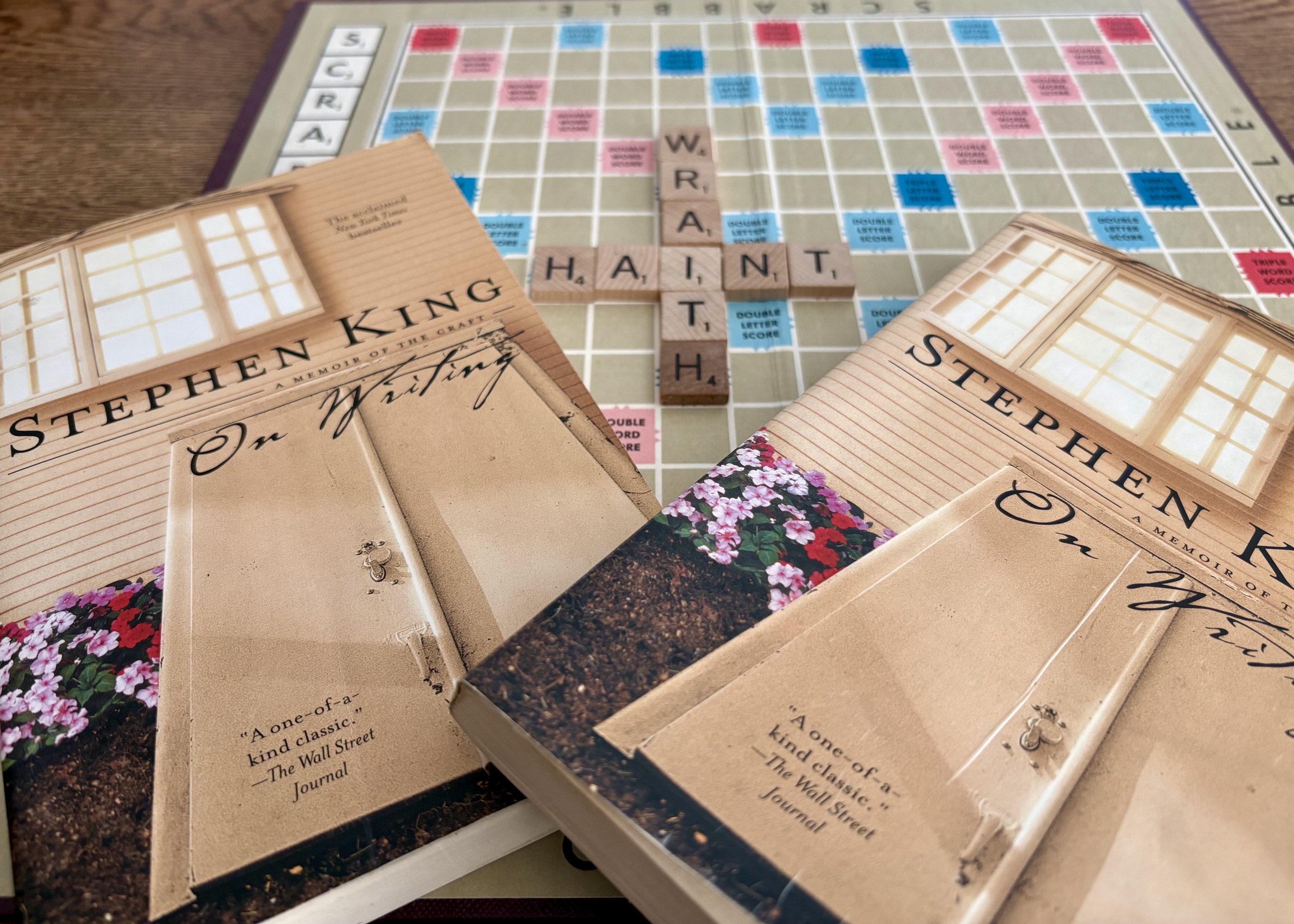
Congratulations to Gavin Godfrey-Ryan and Layla Rothberg, for winning copies of Stephen King’s On Writing (pictured above) in Friday’s drawings.
Next Up
In the first half of Wednesday’s class, you will interview a classmate, compose an MLA-style bibliographic entry for that interview, and craft a sentence incorporating a quote from that interview, a sentence you may include in your preface or your annotation for the interview. In the second half of class, you will have time for additional research and writing.