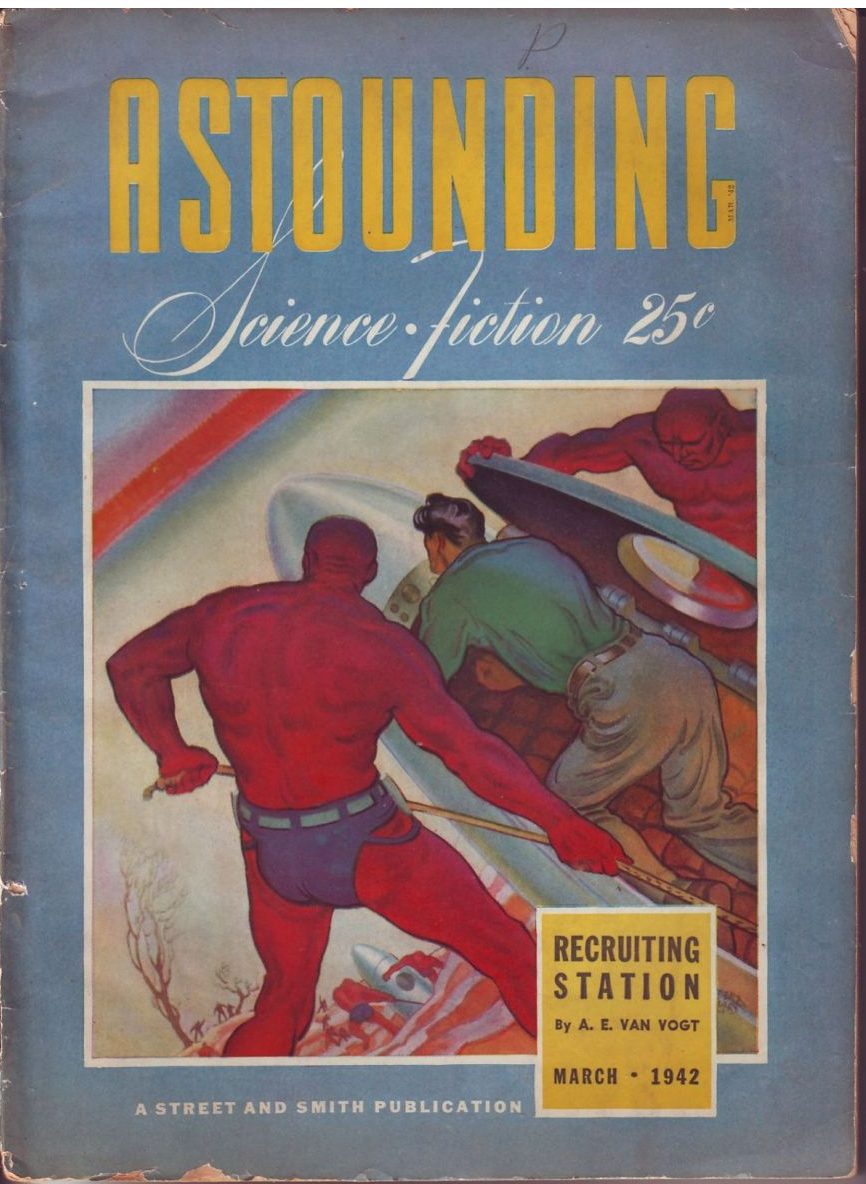
Isaac Asimov’s short story “Runaround” introduces his Three Laws of Robotics, the fictional rules that figure prominently in his short stories exploring the relationships between humans and robots. For Gregory Powell and Mike Donovan, the astronauts in “Runaround,” reexamining their application of those three laws–in a sense, tinkering with them as they would a machine–enables them to resolve the central conflict in the story.
Identifying that central conflict and expressing it in your own words will be the focus of your group exercise in the first half of today’s class. In groups, you will also develop talking points for the full-class discussion that will follow in the second half of class.
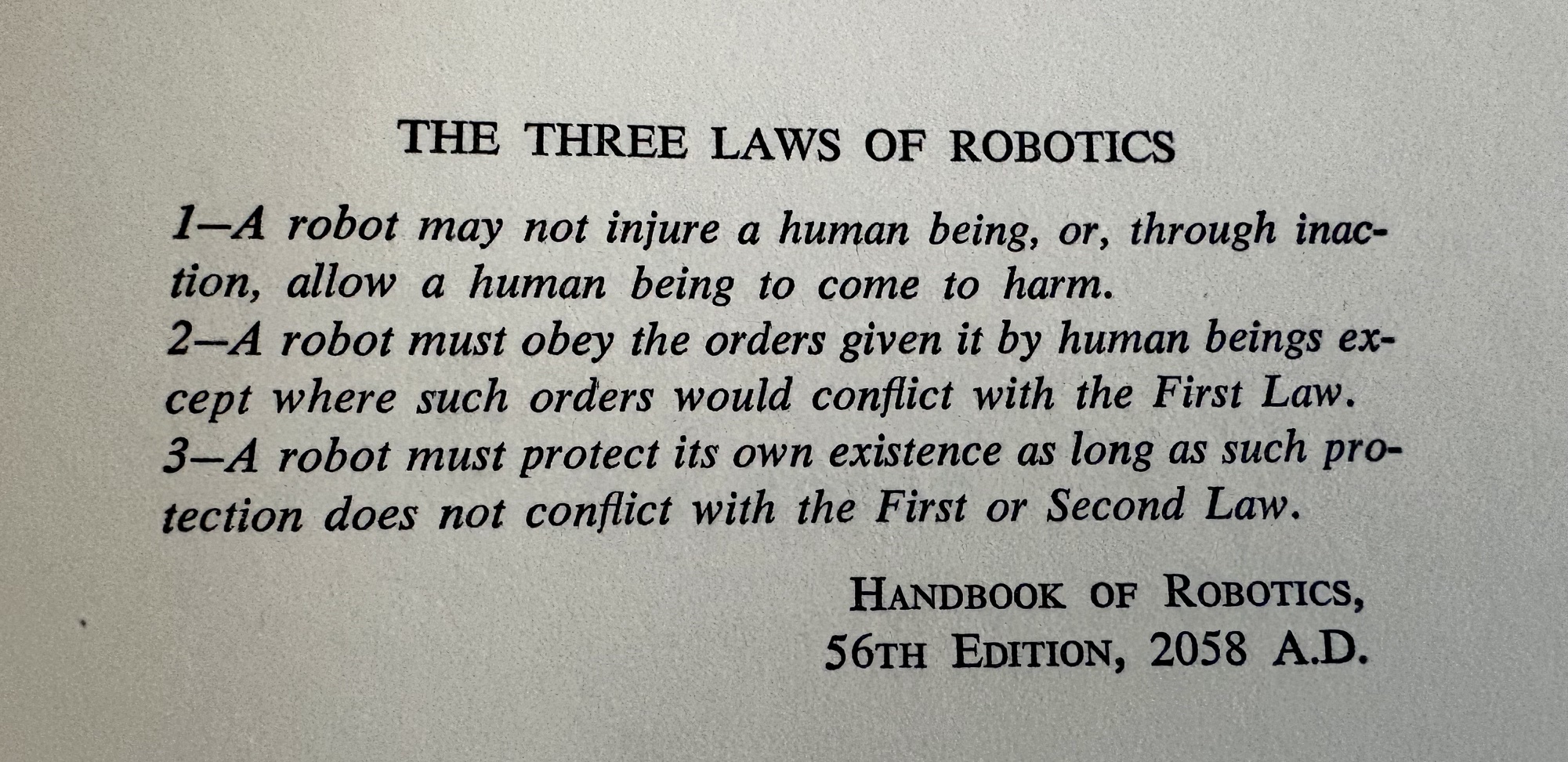
Asimov’s Three Laws of Robotics appear both in the stories collected in his book I, Robot (1950) and as the book’s epigraph: a short quotation at the beginning of a book intended to suggest its theme.
What do the Three Laws of Robotics indicate about Asimov’s vision of humans’ relationships to artificial intelligence?
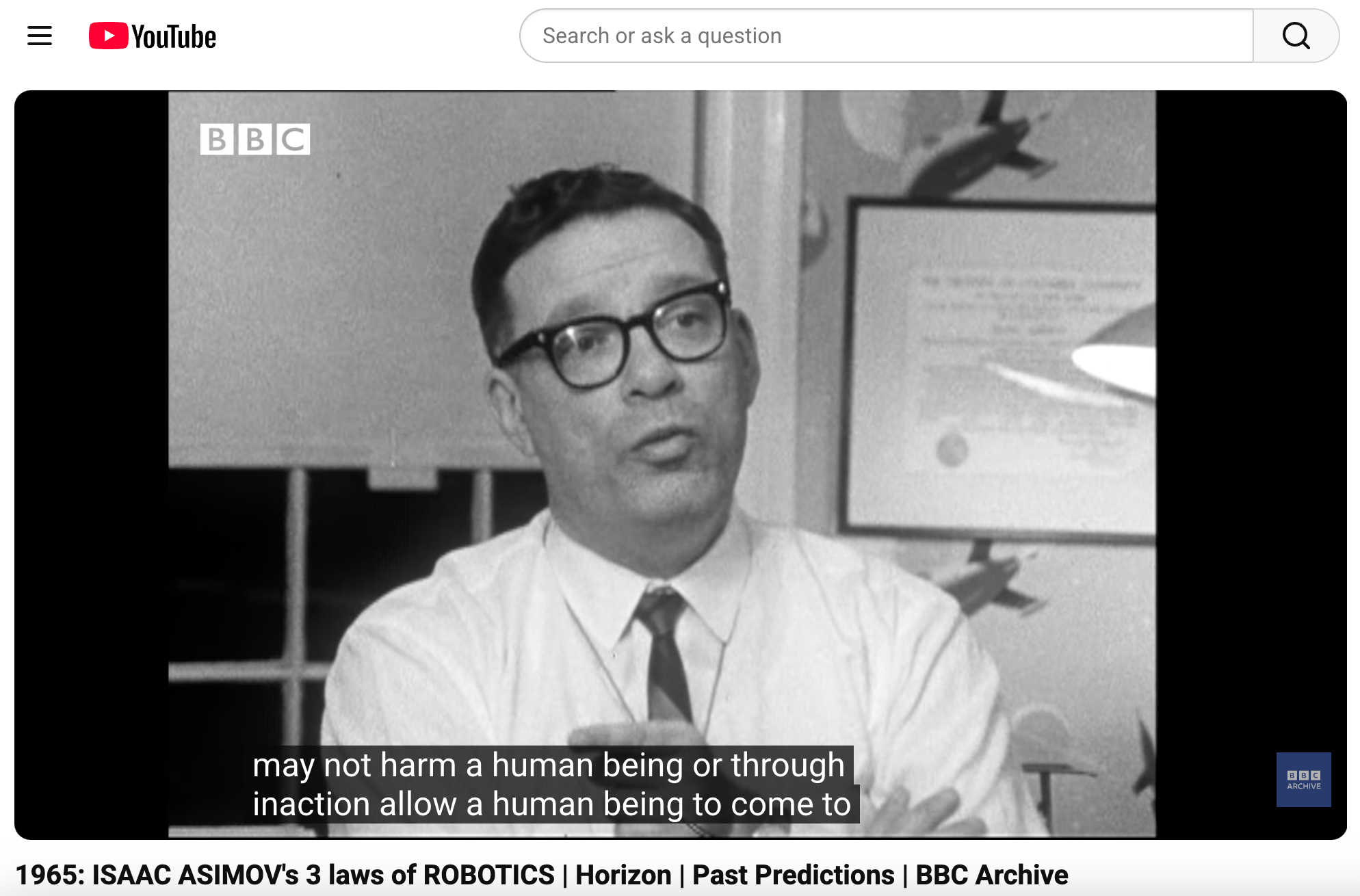
In a 1965 interview for the BBC, Asimov discussed his Three Laws of Robotics and the value of science fiction.
Information Versus Knowledge
As a model for your own ethical use of generative AI for English 1103, the August 25 blog post featured screenshots of a conversation in which I developed ideas for my literacy narrative with the help of ChatGPT. After you read my literacy narrative, it should have been apparent that despite the AI assistant’s wealth of information, one of its answers revealed a lack of knowledge about the comic strip Henry. What did the AI assistant not know? (What did it say about Henry that was false?)
The September 7 class notes included a bonus assignment for correctly answering the question above. What is the answer?

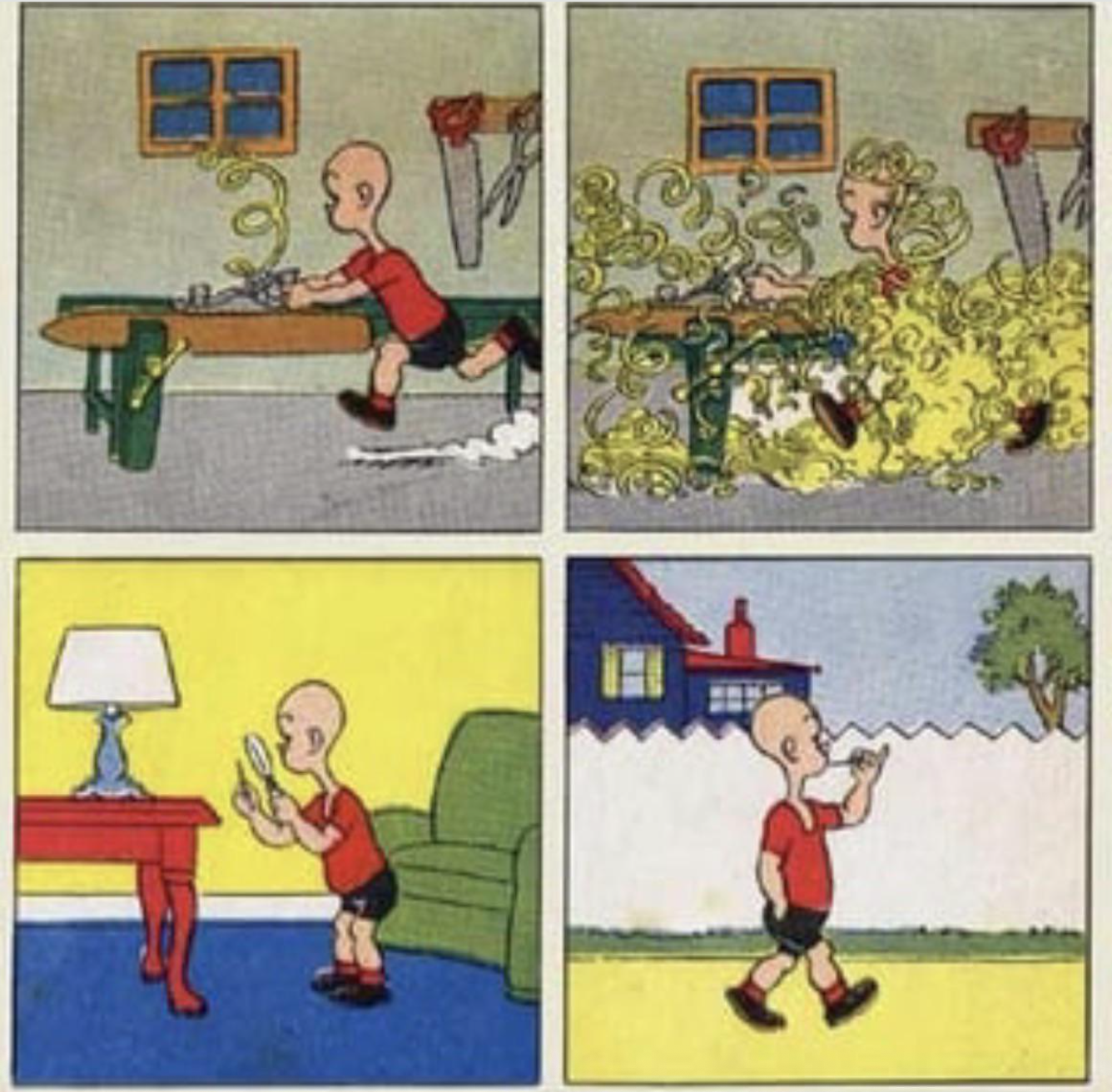
Henry, created by Carl Thomas Anderson in 1932, is a comic strip in which the title character communicates through pantomime. The AI’s observation that I could “‘read’ the strip even though [I] could not yet read its words” reveals the agent’s lack of knowledge about the comic; it did not know that Henry is wordless.
Kudos to Claire Jahnke and Devyn Jones for correctly identifying that error in ChatGPT’s response. For their efforts, they received a bonus assignment credit.
Today’s class marks the beginning of our study of science fiction exploring the nature of artificial intelligence: Isaac Asimov’s “Runaround,” followed by Brian Aldiss’s “Supertoys” stories and Ted Chiang’s “The Lifecycle of Software Objects” in Exhalation.
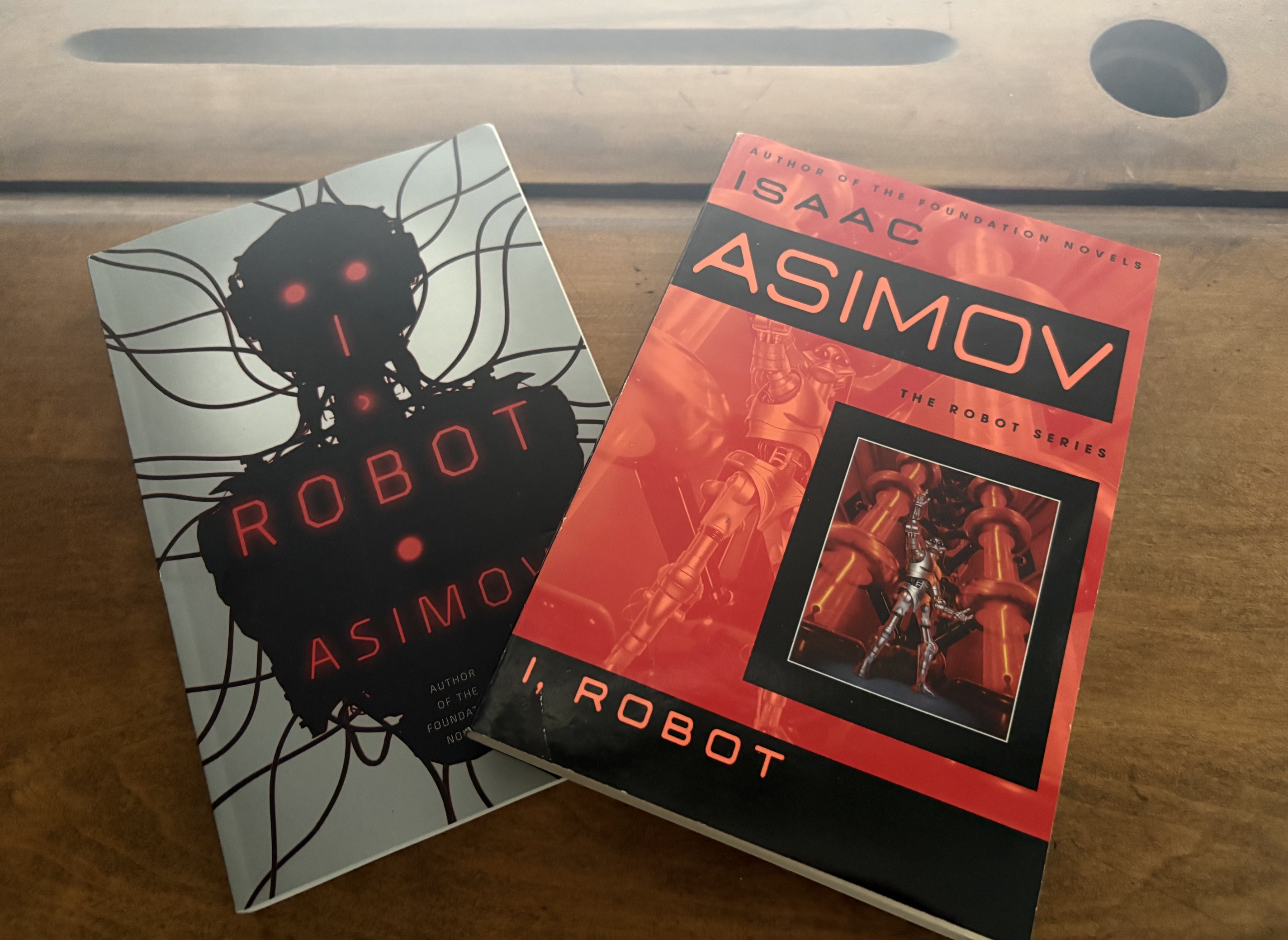
In a drawing in the second half of today’s class, you will have the chance to win a copy of the book pictured above: Isaac Asimov’s short story collection I, Robot, which includes “Runaround.”
As we continue our study of science fiction, consider how Asimov, Aldis, and Chiang use their imaginations as testing grounds for questions about humanity and the future.
Next Up
For Wednesday’s class, you will read Brian Aldiss’s short story “Supertoys Last All Summer Long,” which I will distribute in class today. If you are absent or misplace your copy, print one from Blackboard.
Wednesday, we will meet on the lower level of Smith Library, where we will examine some of the science fiction novels in the Asimov Collection, donated to the library by Dr. John L. Hubisz, a retired physics professor who taught at North Carolina State University. In your perusal of the novels’ and short story collections’ covers, you will explore how artists have depicted science fiction in their cover illustrations and what those images reveal not only about the stories themselves but also about readers’ perceptions and marketing.


